Category Archives: Lisa Dennis

Keep Talking! Discussion with a Twist, a Tweet, and a Terrifically Fast Pace

While we’re on the topic of talk (please see Jessica’s fantastic insights on discussion techniques that build confidence and community), I humbly piggyback off of yesterday’s post to bring you a few more talk ideas.

Some fresh.
Some fun.
Some follow-up.

Rotating Symbol Discussion:

On Wednesday, I made reference to helping prepare my AP students for their test, by keeping our discussions focused on the real world. So…test prep as a natural byproduct to authentic discussion.

We were wrapping up our unit on Community, and I borrowed a discussion technique from my bestie Erin, that I have now fallen in love with. It was fast paced, kept kids engaged (as they not only participated in the moment, but had to be ready to get called into the conversation at any time), and really honed skills of building dialogue, as opposed to just reporting an idea around a circle.

Here’s how it goes:

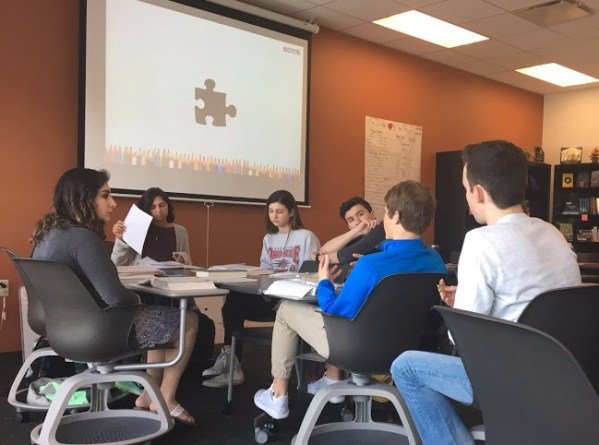
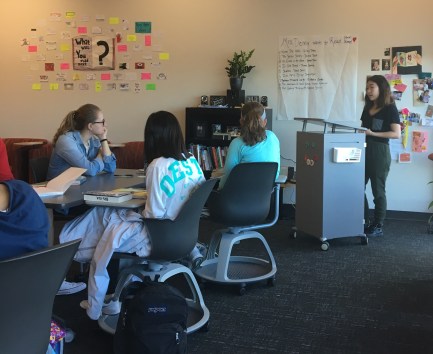
Students enter the room and randomly receive a card with a symbol on it. I explained that the symbol would determine their small groups (4-5 people). Throughout the course talk3of the class period, we used our essential question (What is the individual’s responsibility to the community?) to guide a discussion. I used PowerPoint slides to project a symbol and that group went to the front of the room to start talking. Other groups made notes on where they would take the conversation when they were called into the discussion.

On the next PowerPoint slide, I might add a group or switch out groups completely. Students spoke for 5-6 minutes at a time for single groups and 7-8 minutes if I had two groups up there.

Students reported that they liked hearing the ideas of the entire class. Often we do graded small group discussion one group at a time; this however, involved everyone.

From this discussion I heard some beautifully insightful comments:

  • As the discussion expanded from one group, who was discussing the binding forces of similarity in communities, to include a new group of thinkers, Priyanka said, “Maybe a community shouldn’t only be about similarities. Similarities cause us to be more isolated than differences do.
  • Later, along that same theme of isolation, Dani shared that “social media makes it easy to isolate ourselves” as we discussed the communities we partake it through our phones. The group decided that social media lets users hide in a way that is detrimental to civil discourse.
  • Alexis, in response to the idea that communities can be strengthened by tragedy, said that community is vital as it allows us to “come together for a common idea that can heal us.” 
  • Directly relating to the essential question, JJ suggested that when “all individuals put effort in, community succeeds.”
  • Francesca was quiet until she raised her hand at the very end to say: “This unit was hard. In other units [education and gender] you could easily point the finger at other people. The problem is there’s. The problem is because of them. With community you had to speak to yourself. You had to realize that any problem within communities you belong to requires that you turn the finger around and point at yourself.

Twitter Talk

Conversations can go online, as well. I asked my sophomores to extend our Transcendental Experience speeches (take two weeks and embrace a Transcendental tenant in their lives, then tell us about what they learned/liked/loathed by live tweeting after each speech and then responding to some of the insightful ideas from the speeches of their peers. Students reported that they loved seeing their ideas quoted and/or reframed as inspirational by their classmates. It gave me time to write down comments, which was helpful. We then had a phones down policy during the actual speeches.

twitter

My AP students will start their #langbreak experiences today as well. Their excitement to see each other’s tweets was palpable yesterday and one student even said, “Can I post something each day?”

Wait. Can you actively engage with experiences that promote self actualization and growth more than once over a break from school? Amen, Lisa says from her knees.

Amen.

Speed Dating (again and again and again)
whatnext

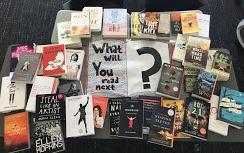
The last day before spring break, I had my students speed date the new books in the room. As Jessica mentioned yesterday, I LOVE conversations and the enthusiasm that occur with speed dating.

talk2

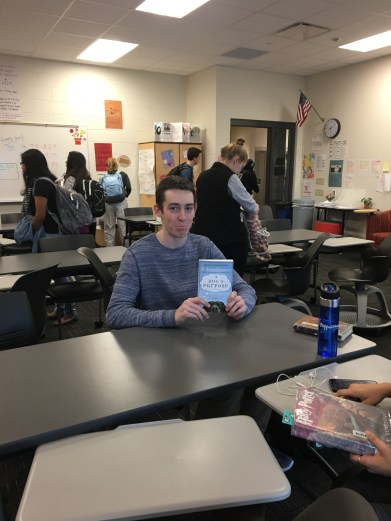
Alexis responds to JJ’s speed date selection, imploring him to read the book in his hands, I’m Thinking of Ending Things 

Students get to judge books by their covers or pick up titles they have heard about but never had in their hands.

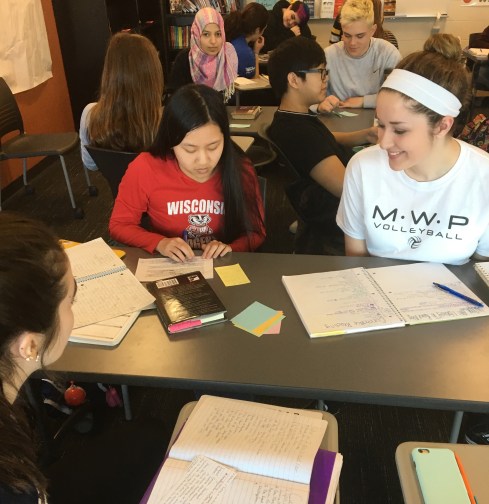
They get to spend just a few minutes “getting to know” the book and then share their insights with their tablemates.

We then share out by having students raise up the books they are intrigued by. We chat around what hooked them and students write furiously on their “I Want to Read” lists.

The only danger of speed dating? Hook-ups. Students meet and fall in love with books they
want to take with them right away. It makes it hard to keep the pool of fresh titles, well, fresh. I LOVE having this problem.

talk1

JJ challenges back, that if he is going to read her selection, she must read Small Great Things by Jody Picoult 


Lisa Dennis teaches English and leads a department of incredible English educators at Franklin High School near Milwaukee. Her favorite student talk is the variety that keeps students talking long after the bell rings. Follow Lisa on Twitter @LDennibaum and follow her students’ AP Spring Break adventures on Twitter #langbreak. 

5 Ways to Avoid the Trap of Test Prep

The AP Language test is a month away. Only 14 school days (Spring Break, y’all. Woot!), which means 7 class periods with each of my AP classes between now and the big day.

This imparts in me equal parts excitement, dread, and crippling panic. I’m not sure what my problem is. I’m not the one taking the test, but my test anxiety runs high.

test 3

Now, Amy has written beautifully in the past about the test scores and how little they really mean. How AP and workshop can be beautiful partners.  I applaud her conviction. I need to learn from her resolve. Because all year, I can workshop and weave in test prep (in other words, my priorities are straight – I’m building readers and writers, not test takers), but when the test draws near, I start thinking in numbers. Always dangerous.

When this happens, I feel my brows furrow. I’m suddenly focused on the wrong thing.

I can FEEL it.

Experimenting with workshop during semester two of the 2014-2015 school, I very purposefully placed reading and writing experience above test prep. My scores went up. Last year, I was all in. Lots of student choice. More focus on why and how, instead of what. My scores went up.

Do students need practice with the multiple choice format? Yes.

Should they write several AP practice essays over the course of the year with self scoring, student sample analysis, peer and teacher feedback? Certainly.

Will students be prepared for the test if test prep is secondary to building authentic readers and writers all year. Unequivocally, yes.

Just a few days ago, Donalyn Miller beautifully stated that the best way to improve test scores naturally is to “provide access to books, encourage free choice, give children time to read, and actively support their reading development at school and home.” Her piece for the Nerdy Book Club furthered my determination to remain focused on my students as readers, not as test takers. This is what workshop does. Focuses on readers, writers, and the humans who are so much more than test scores.

Here are a few suggestions to keep focused on what really matters (in my humble opinion), even as AP tests draw nigh, and frankly, in the face of any “big” test.

1. Focus on Experience

I tell my students every year, that living life and being aware of humanity in general is the best argument preparation there is. So, when I saw Elizabeth Matheny‘s spring break Twitter challenge, I immediately asked if I could adopt the idea. Matheny provides her students with a hashtag to document their adventures and several suggestions of ways to really live it up over break as a way to not only build community, but provide inspiration for narratives her students will write in the coming weeks.

I’ve got some ideas brewing to have my students write their own author bios (like the quippy book jacket variety) after break to celebrate themselves as writers. Documenting new experiences may be just the thing to provide focused attention to new passions  and open eyes to the wider world.

My students will start Friday using #langbreak. Follow our adventures and feel free to add your own if you’ve been waiting all this time for break like we have!

2. Write from the Heart First

I used to have students write endless practice essays. Knowing the format seemed important to scoring well, so I had students write in class, take prompts home over the weekend for homework, and churn out essay after essay of (no offense former students) formulaic crap that I dreaded grading.

These days, I’ve embraced a new philosophy. My students need to write more, but practice essays aren’t the thing. Quick writes in class are the thing. Weekly one pagers building their fluency and skills of expression about quotes that stick with them from readings are the thing. Poems about community are the thing. Book reviews on texts that make them feel smart are the thing.

The thing is, students build their writing skills in writing what they care about. They can then apply that to the essay at hand, regardless of the essay type. I spend a small amount of time going through the specifics of the argument and analysis essays, and then we look at countless mentors, we read as writers, and we learn how to effectively break the “rules.” The College Board suggests that effective essays are built from developing a “personal style.” No mention of five paragraph essays to be found.

3. Talk

  • Speed date prompts for the sake of brainstorming (not more and more writing – do that elsewhere)
  • Discuss current events
  • Share insights on readings (assigned and independent) through the lens of analysis (or argument, or synthesis)
  • Reflect on multiple choice passages without the questions
  • Solicit feedback on writing and make connections to specific skills to move that writing forward

discussion

4. Review Your Reading Lives

At least one class period each year, right before the test, is reserved for a trip down memory lane. Students get into small groups and list common themes they have seen in argument prompts we’ve discussed over the course of the year (good vs. evil, power struggles, individuality, etc.). They then make lists of everything they’ve read, studied, reflected on that might be good evidence for arguments related to those ideas.

We fill posters upon posters of ideas to put around the room and remind ourselves how incredibly smart we all are. No one need fear “not knowing what to write.” Students have been preparing for this test since they learned to read, just by reading and living. Little review required.

5. Make Class Time Count

This is a “to each their own” example. Many classes do very little after the AP test. Students relate that they “worked really hard to get to the test” and the class periods up until the end of the year are free time as a reward.

I reward my students after the AP exam too. We have another book club (students are choosing this year from this extensive list of nonfiction titles, to which I just added the Pulitzer Prize winner Evicted) and they complete a multigenre project on an area of study we’ve not explicitly studied together (sports, politics, language, pop culture, etc.).

My class is about reading, writing, speaking, listening, and investigating life. That doesn’t stop because students took a three hour test.


Lisa Dennis teaches English and leads a department of incredible English educators at Franklin High School near Milwaukee. Her spring break will include finishing Sabaa Tahir’s A Torch Against the Night, spending time tiptoeing through the tulips with her daughter Ellie, and taking her own advice to live a little and try something new (curling, anyone?).  Follow Lisa on Twitter @LDennibaum and follow her students’ AP Spring Break adventures on Twitter #langbreak. 

10 Things Worth Sharing Right Now

I love the little ripple of a thrill that runs through to my fingertips when I find something that I want to share with my students. That borderline codependent excitement that comes with wanting to share a book, an article, a statistic…immediately.

“They NEED to see this,” I think, fumbling around on my phone to figure out how and where to save it.

“They NEED to read this,” I say to my husband, as I make him pause his own life to listen to yet another passage of my latest read.

“They NEED to know about this,” I mutter, linking wildly to our syllabus (just another in a long line of moments where I’m grateful that life happens and we share it in class).

So today, I’m taking a page from one of my newest obsessions, the newsletter put together weekly by the brilliant, inspiring, and wildly creative, Austin Kleon. Each week, delivered to your inbox, arrives a list of “10 things [he thinks are] worth sharing.” Simple. Intriguing. Very, very useful in the classroom.

I’m honestly not sure how I stumbled on this one, but in the month since subscribing, I’ve used three of his images to inspire quick writes, and book talked (loosely) the newsletter itself, suggesting to students that they should subscribe in order to broaden their horizons to current happenings, inspiring visuals, and commentary on books, shows, and cultural phenomenon. In other words, link up to something that delivers items to keep you reading texts other than social media updates (“Made a sandwich guys…bet you’re all jelly. Get it? Jealous, but jelly instead.? God, I am such a genius”).

  1. Austin Kleon’s Weekly Newsletter
    Kleon reflects on a central image each week, along with linking to intriguing articles, a poem of the week, ear candy audio, eye candy visuals, and other noteworthy insights from across the vast expanse of the internet. If someone comes up to you and says, “Hey, did you see…?” chances are Kleon will have it linked on his list for the week.
  2. The Power of Exemplars
    A few weeks back, I was bemoaning to my fellow Three Teachers Ladies, how disappointed I was in a recent project my sophomores had completed. My vision for a poster that brilliantly illustrated their insights on their latest reading, was met with large sheets of paper with haphazard cutouts of text, crudely taped across the page, accompanied by printed book covers in black and white, and the occasional hurried pencil addition to the project (last minute insight for forgotten components). Needless to say, I was frustrated AND without any way to hold students accountable for the quality of the visual they submitted (not the central point, for sure, but a consideration certainly). Take pride in your product, and all that, had fallen short. In my irritation, I searched in vain for something in the Common Core that might suggest students consider carefully how they convey their ideas.

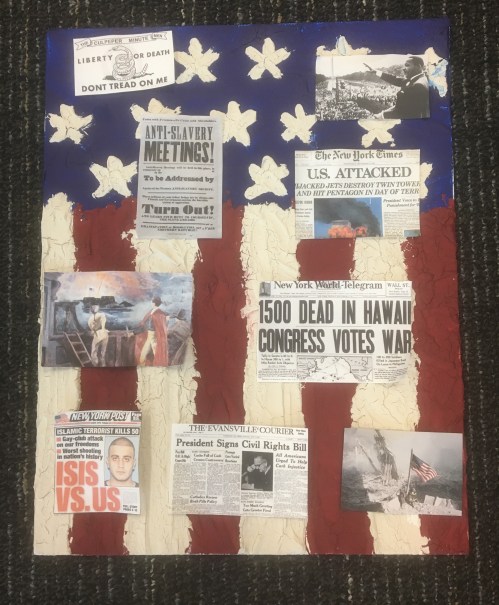
    Then, I took a deep breath. I realized I had what I needed, I just hadn’t used it. See below the power of exemplars. My AP students were completing their community visuals (which I wrote about last year in a reflection on the use of essential questions), and I had no rubric for this work either. However, the power of suggestion, in showing them some of the brilliant work from the year before, was more than enough. They knew the expectation, saw what I thought was praiseworthy when it comes to presenting their insights, and we enjoyed some brilliant symbolism in the presentation of these visuals. Amen.
    img_1163

  3. Musical Genius
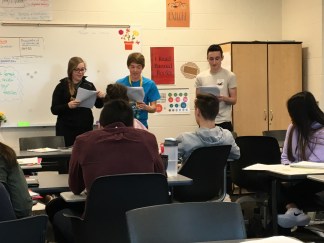
    One of my groups took a creative leap for their community unit visual and put together a musical. Franklin’s production of Joseph and the Amazing Technicolor Dreamcoat opened this past weekend. Several members of the cast in my first period class asked if they could complete the project in a slightly different way. Their project would still include analysis, present their ideas to the class, and involve audience feedback after the presentation, but…there would be singing.

    img_1092

    Francesca, Joe, and Parker

    Since I always joke with my kids about presenting their ideas through interpretative dance, this musical idea intrigued me. Their mini musical included several skits that detailed life within the community of a musical cast/crew. Watching students sing their way through a summative, I was reminded that my vision for a project is rarely as broad and brilliant as what students can come up with on their own. My exemplar pool had just expanded in verse.
    img_1095

  4. Bag o’ Books
    Remember to beg for books. Want to build that classroom library? Get down on your knees and remind your students of how good it feels to give back…to you.Maija recommend the book Dangerous Minds a few weeks back. When a fellow student was at the bookshelf looking for it the other day, I asked Maija if she’d be willing to bring it so, AJ could borrow it. I even turned on a sweet smile and said, “If you don’t need it anymore, I’d be happy to take it off your hands.”

    The book was outside my door the next day, in a bag with a sweet note and several other books. Score.

  5. Amy Poehler on Writing
    I’m training for a half marathon. Without audiobooks, I might not make it. Seriously. I need to get lost in a story to pound out the miles. So, when I started 10 miles on Sunday and realized my Overdrive audiobook had expired, I had to quick download something new. Ugh.Enter, Amy Poehler’s Yes, PleaseI smiled for nine miles (it takes awhile to download when you’re actively running down the street). Poehler’s voice is sincere, relatable, and funny as all get out. Easy to book talk.

    Here’s the golden ticket: The Preface. I heard it and knew I needed to play it for my students. Poehler writes with undeniable voice about writing. She says of her text and the writing process that she “had no business agreeing to write this book” and wrote it “ugly and in pieces,” because “everyone lies about writing…they lie about how easy it is or how hard it was.” She says, and students really related to the idea, that “writing is hard and boring and occasionally great, but usually not.” In reflection afterward, students also noted her use of stream of consciousness, aside, and self deprecating banter to tell her story, not just inform her audience about what the book would be about. Classes agreed that they could really get behind her idea that, “Great people do things before they are ready.” Amen, Ms. Poehler. Let’s all put pen to paper.

  6. langchat#17
    I recently started following the brilliant Elizabeth Matheny on Twitter. Her AP insights and resources have helped fuel my work recently and her AP Language slow chat last week was a great opportunity to have my kids practicing analysis with students across the country. I’m thinking of several things to extend this activity:
    – Have students organize a slow chat for peers
    – Get students to live tweet peer feedback during speeches or discussion
    – See #7 below
  7. Tweeting Authors
    I tweeted Angie Thomas to tell her that her book The Hate You Give is stunning and I’d be getting into the hands of as many students as possible.She liked my tweet.Fangirl moment.img_1024
    Have your students reach out to authors. They often reach back.
  8. Creativity Visual
    I love what this suggests to students about the power they possess.
    img_1157
  9. Get it to the Big (or small) Screen
    My students often buy into the idea that great books are made into (sometimes great) movies. The Underground Railroad is being made into a series with the director from Moonlight. Having just finished this intriguing read myself, I book talked the text this week and shared the movie plans.
  10. Quick Write – Psychopath
    This came across my Facebook feed the other day, and I tossed it on my PowerPoint. As is the way in educator, my students surprised in noticing it, and we ended up doing a quick, quick write about changing social norms. AP Language test prep comes in many , many forms.
    img_1122
    What would make your list of 10 things we need to see and share this week? Add your ideas in the comments below! 

Lisa Dennis teaches English and leads a department of English educating gods and goddesses at Franklin High School near Milwaukee. She loves lists, especially lists with links to beautiful thoughts and ideas. Follow Lisa on Twitter @LDennibaum 

disclosure


Can We Talk? The Silence is Killing Me.

Let me start by acknowledging the following : We all work hard.

Day in, day out, passionately, for hours outside the classroom, over breaks, through the night, in the summer, at the expense of our own health, sanity, and in some cases children, tirelessly, endlessly, hard.

We wrestle with accountability, making the right choices, bankrupting our personal finances, moving in new directions, providing substantive feedback, reinventing our curriculum, and capturing that often elusive “I’m making a difference” feeling.

And all of these opportunities, obstacles, maneuvers, struggles, negotiations, blessings…are well worth the effort. We know this to be true.

We grow. Students grow. The world brightens.

This week, however, a week of extra meetings, assigned readings, professional development planning, ACT Interim test data analysis, sophomore research papers and practice AP tests in all of my classes, has me feeling cranky, irritable, and disenchanted with the whole thing (and apparently listy, because I’ve got a lot of lists rolling here).

But it’s not all of these “bonuses” to my week that really have me in a funk. silence2

It’s the quiet.
The file in and file out of my classroom.
The silence of compliance.

My students have not been talking the past few class periods, and the absence of their ideas has me crankdified.

While it might seem nice to have a “break” to work while kids complete practice tests and independent study, it didn’t feel nice. It felt…empty.

It hit me last week during a discussion of Scott Brown’s “Facebook Friendonomics.”

We’re in a unit on community in AP Language and wrestling with the following:

What is the individual’s responsibility to the community? 

I had just read the piece aloud, asked students to respond to it in a quick write, and was now listening to a discussion on the author’s use of allusion. Brown suggests that the natural evolution of friendships is corrupted by social media.

The discussion was not initially brilliant. Students wrestled with some examples of allusion that meant nothing to them (the author details contacts in a Rolodex, quips about watching 90210, and references Garbage Pail Kids), so I suggested we try to update references, eliciting an enthusiastic walk (dance) down memory lane for my seventeen year olds, back to Pokemon cards and “Soulja Boy” (Ahhhh…2007).

As I listened to them reminisce about cultural touchstones in their lives, I had to smile.

“So, what is this author trying to tell us about community?” I asked.

Our discussion continued for another few minutes, encompassing author craft, the existence of Finsta (I am suddenly SO old), the unnatural qualities of social media “friends,” and the duality of both fake and fulfilling relationships through online communities. I sent my students back to their notebooks and they reflected a bit further on how discussion had expanded their understanding of the ways this piece answered our essential question.

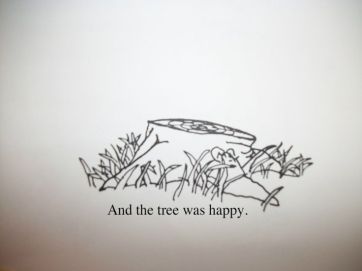
And I…was happy. tree

I had listened, mostly. Invited a few students into the discussion who hadn’t shared. Pulled us back to the task at hand.

But I had let them talk. No agenda. No time limit. No right answers.

Now, I’m not here to suggest that having a discussion with your class is revolutionary. Obviously it’s not, but it occurred to me:

My individual responsibility to this community is to keep my students talking.

And while I’m on this soapbox (it’s not my preferred method of communication, thankfully, but I sort of like it up here), I’ll say it another way:

We need to listen. More.

Educators the world over, both seasoned and virginal, know, but all too often forget (so guilty myself), that the talk in our classrooms that is most vital to engagement, progression, retention, and overall enthusiasm for learning, is not our own.

Facilitated and guided by the teacher – yes.
Framed by objectives, teaching points, and standards – of course.
Aimed at gradual release – ideally.
Supplemented with our insights, passions, and ideas – I certainly hope so.

Talk to their small groups, talk to the class, talk to me, talk to their notebooks, talk about talk. It’s all talk that can promote discovery.

We need students talking, not just to check comprehension (flashback to the initiate, respond, evaluate cycle of classrooms I grew up in), but far more importantly, to develop their thinking.

My modeling and guided instruction is far more beneficial in the long run, as the goal of each is to get students involved in a way that has them taking the torch and forging ahead on their own.

That’s where the emptiness of this past week had come from. We weren’t involved in anything together, and I felt the absence of the interaction keenly.

With the testing behind us and the research papers waiting patiently for another hour (or seven hours, if my calculation for that stack is correct), I conferred with several students during reading time, to selfishly feel better myself. During our quick write, I sat down at a table with my kids and wrote, as opposed to staying at my desk. I started several writing conferences during workshop time with, “Tell me about…”

I’m not in any sort of denial that what I’ve written here is new or different in any way,  but I am certain that the reminder did me good. I hope it does for you too.

Let’s talk about talk in the comments below. I’m a good listener. 

Lisa Dennis teaches English and leads a department of English educating gods and goddesses at Franklin High School near Milwaukee. She loves to listen to the Decemberists, the call of redwing blackbirds, and audiobooks read with British accents. Follow Lisa on Twitter @LDennibaum 


Going Broke Buying Books

Disclaimer: There are countless ways to save money when securing books for your classroom library. I, however, often lack the patience for such measured and responsible procurement of texts. This is my story (and possibly my defense should my husband discover just how much I spend on books).


My husband Nick is a dear man. He has to be, to put up with the amount of time, energy, and hard earned cash I devote to this passion called teaching.

In the 14 years I’ve been at this, or rather the 2 years I’ve been building a genuine classroom library, I have probably spent $4, 398,291 (hyperbolic numbers are my favorite, because I’ve never been good at math).

It often happens before I know what I’m doing. Like those poor souls who sleepwalk and end up in the middle of a busy road in their pajamas, I find myself “just putting a book in my Amazon cart so I remember the title,” or “checking Thriftbooks for a minute (or 27), to see what’s new.”

Hi. My name is Lisa, and I buy a lot of books for other people’s children. 

doryThis “problem” sort of took me by surprise. With my head hanging low, I must admit there was a time, not too long ago, when there were very few books in my classroom. There were very few books in my life period, besides the ones I “taught” year after

year. My classroom was rich in many valuable thoughts, inquiries, and experiences before workshop, but it was not full of books.

How, as a teacher of literacy, had I allowed my classroom to become devoid of the very tools of reading I kept suggesting to my students would be their salvation in the face of collegiate ambitions, thematic exploration, and aspirations of world domination?

Apparently, it wasn’t important to me.

Ugh. That reflection looks ugly in print.

I didn’t purposefully create a text desert in my classroom, of course. If someone had said, “Hey, Dennis. You teach English. Where are all the books?” I would have smiled and pointed to the textbooks and countless copies of Uncle Tom’s Cabin. Students bought any books they needed for independent reading, and I happily progressed with assigning reading, providing study guides, giving content quizzes, lather, rinse, repeat. This is what I knew. This is what I had experienced myself. This is how I was taught to teach.

But then, one day, a big rock fell on my head. I dreamt of rows upon rows of bookshelvesryan gosling lining the walls of my classroom and students clutching copies of countless titles to their bosoms. Ryan Gosling walked into the room and said, “Hey girl. I really love the work you’re doing for public education. Let’s get those kids reading more. Cool?” When I came to, I was blushing, but more importantly, I knew that my students needed more choice. More challenge. More access to books.

Ok. Not really. But the conclusions I came to after some workshop research, training by the lovely workshop team of Three Teachers Talk, and logical reflection about how I wanted my students to view reading, that part is true.

There is still a very important place for whole class novel work in my classroom. There is still a place for short lists of books with a central theme to get kids working in book clubs. There is still a place for the classic and contemporary. But there is also now a place for a lot more choice right in my classroom, always located just a few steps away.

And though we might not want to believe that we have to hold our kids’ hands and walk them to our bookshelves, instead of trusting them to take their own time to go to the library or while away the hours at the local bookshop, at least in the beginning, we do. We need to make the books so wildly available, that kids can’t help but wade through them in the course of our time together.

Think of elementary classrooms. Books upon books, upon teachers reading aloud books. If books aren’t at home, they are certainly at school, and when kids are learning to read, they are showered with books. Why not shower them with texts when we are trying to reignite that love of reading?

Given time to read, talk about books, formative and summative work around independent novel study, goal setting, book challenges, quick writes on choice reading, daily book talks, a teacher who pours passion about books all over their every class period AND shelves of books three feet away, progress in building and rebuilding readers is very possible, and even, probable.

We can teach children to read, but for reading to become a habit, they need ready access to books. We also know, they need choice, choice, and more choice (thank you a million times for your brilliance, Donalyn Miller).

When it comes down to it, we might not want to believe our students evade the reading we ask them to do, but they often do. Many fake read very, very well. Others simply smile, or avert their gaze, or defiantly say, “I didn’t do it” or “I’m just super busy.”

I’ll put it this way, my dentist hands me floss, but I don’t use it as often as I should. There. I said it. I am a college educated, do-gooder, who knows she should floss…every day. I do not floss every day. I know my teeth will suffer for it. I know when I go to the dentist I feel bad for having to say that I could probably floss more. I know it’s with the best intentions for my own self-interest that the professional tells me to do it, but…I don’t do it. I’m just super busy.

Perhaps a bad analogy, but our students don’t always make the right choices when it comes to reading. They prioritize other things. If my dentist were handing me floss every day, chances are good, I’d get in the habit. Should he have to? No. Should I just do it on my own because I know it’s good for me, of course. But, I’m flawed. We all are.

So, at least for awhile, I’m going to care enough about my students’ teeth, er, reading habits to make it highly visible, readily accessible, and as entertaining as I can.

The payoff just this week is real:

  • Josh is a super smart kid who hadn’t been devoting time to reading. He, like so many others, used to love to read, but had fallen out of the habit. With our 10-15 minutes of reading a day, and my suggestion that he add just 10 minutes before falling asleep each night, Josh is back into books. Major texts, in fact, and just book talked The Name of the Wind by Patrick Rothfuss to our a class. A little bit here and a little bit there made the reading a habit again. I bought the book and handed it to one of his peers who flew through it too.
  • I saw Brianna standing at the bookshelf yesterday morning. Sort of swaying back and forth. I skipped over (ok, I was skipping in my head, but I was excited to help her find something magical).
    “What are you in the market for, my dear?”
    “Uh…I’m not sure. I just read Think Like a Freak: The Authors of Freakonomics Offer to Retrain Your Brain. It was really good, but I might be over nonfiction for a while.”
    “Makes sense. How about a really good story? Try this. Oooo! And this…and I had someone read this one last month. And…this (The Help). Have you read this one yet? Take a look at the reviews in the front from past readers. This is a great book.”
    Brianna was 20 pages into The Help and picked up the book between activities in class that day.
  • The somewhat shocked and surprised smile on JJ’s face when, after book talking Jodi Picoult’s Small Great Things: A Novel last week, I put in his hands a copy of her incredible new release. He had asked for my copy a few days later when he finished his latest read, but it had already been checked out. He looked crestfallen. When I saw it yesterday on the new release cart in the library, I checked it out, and hunted JJ down during our resource period. “Wow. Thank you!
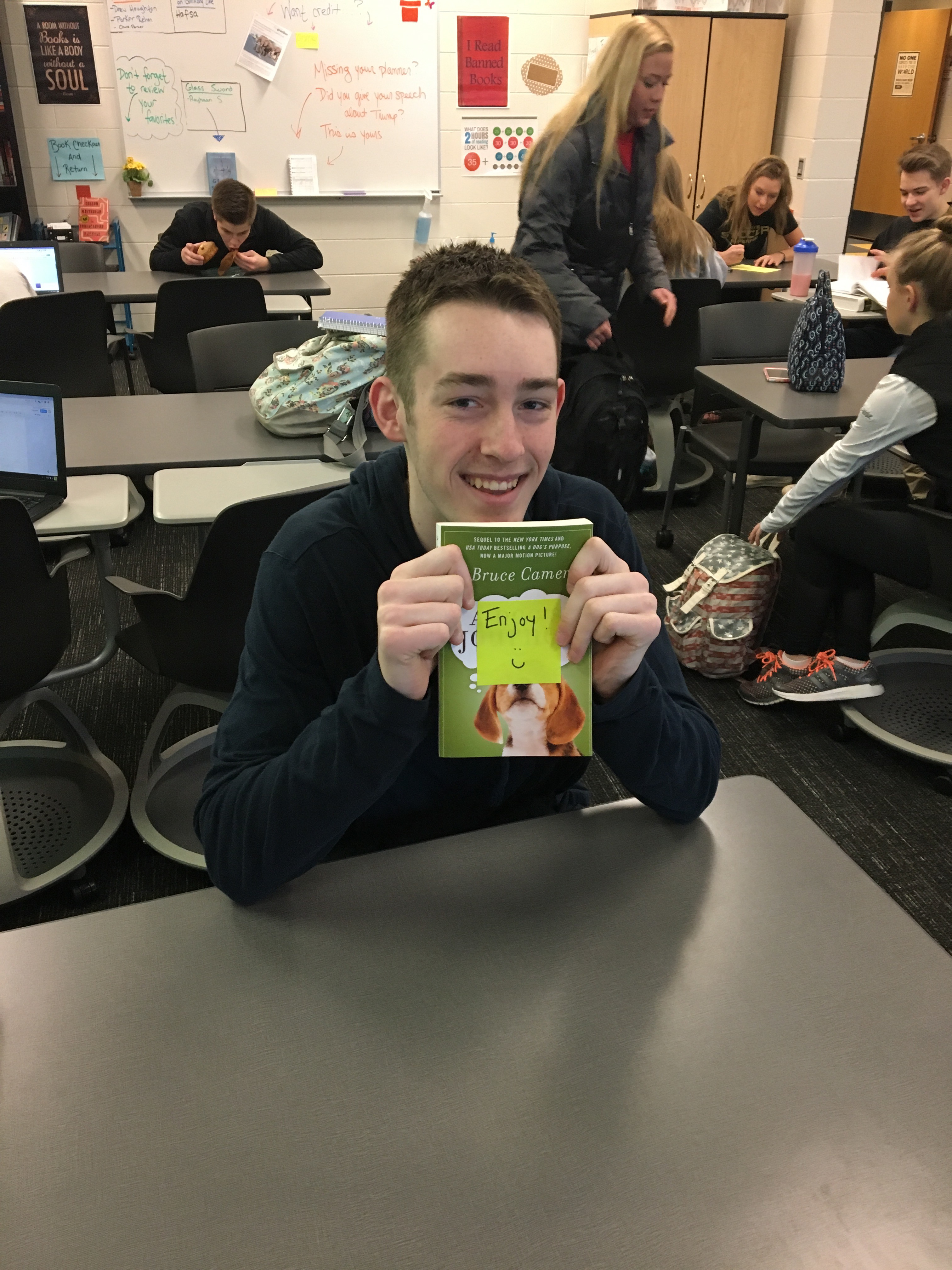
  • And this…You might remember Nathan from a few weeks back after he finished A Dog’s Purpose:
    img_0266
    I was at Barnes and Noble and used one of my gift cards to buy the sequel A Dog’s JourneyI think this smile is worth the expense:

Truth be told, I’m very lucky to work in a district that has put a huge amount of money into funding the classroom libraries of our English department as we’ve moved to workshop. And there are countless ways to put on your thrifty teacher cap and get the texts rolling into your room if your district isn’t yet on board with choice reading:

  • Write letters to your local bookstores and appeal to their sense of community pride, favorable Yelp reviews, and goodwill to all.
  • Loiter in bookstores and flash your teacher credentials. Sometimes a pleading jessicasmile and/or a small purchase will secure some free or discounted books.
  •  Apply for grants (Nothing says #booklove like free books…next year).
  • Rummage, thrift, estate sale your way through the summer.
  • Gather some research on classroom libraries and get it in the hands of your administrators. You might be surprised.
  • Ask Shana for books. She loves to give away books to fellow workshop teachers.
  • Befriend authors via social media! Jessica is trying her hand at scoring some Matthew Quick books through Shana’s connection. No shame, Jessica! Twirt (twitter flirt, I believe) away!

You don’t necessarily have to spend your own money on books, but I do. Something inside of me saying that I need more. I need more variety. I need more to recommend. I need more books.

I keep telling my husband that I’m helping to inform, inspire, and impassion the electorate. I’m also in charge of the money, so my little addiction should be able to continue a little while longer.

I consider you all my support group in this matter. Thank you for your support.

How do you surround your students with books? What titles have you added recently that keep flying off your shelves? We’d love to hear from you in the comments below. 

FTC guideline affiliate links

Lisa Dennis teaches English and leads a department of friends at Franklin High School near Milwaukee. Her latest classroom library purchases were The Hate U Giveby Angie Thomas, American Street by Ibi Zoboi,  and Violent Endsthe story of a school shooting told from various perspectives and written by 17 YA Lit. authors.  Follow Lisa on Twitter @LDennibaum. 

Need a Friend? Yup, Me Too.

Our juniors spent last Tuesday morning taking the ACT test, along with every other junior in the state of Wisconsin. I spent the morning watching them take the test. Talk about mind numbing.

“You will now be taking the fourth part of the test in Science. You will have 35 minutes to complete this test. Please open your test booklets and try not to fall out of your chairs after three hours of testing, during which I have listened to you sniffle, shuffle, and sigh to the point of my own mental health crisis. I mean…you may begin.”

On days when I hand out Kleenex and monitor bubble fill in, I long for interactive class periods of inquiry, exchange, and exploration. However, that sometimes is a pipe dream as well.

Lately, it’s been a bit like pulling teeth to get kids to participate. Pushing them to meet their reading goals feels less like inspiring work, and more like drudgery (How much more inspirational do you need me to be with this whole reading gig? Just DO IT already.). Their quarter three blank stares and exhausted sighs have me resisting the urge to fix my vacant eyes right back at them and mouth breathe until they see their reflections in the mirror of my face.

worksheet

 At times like these, I am reminded by fellow trench mates that we teachers need love too. I don’t want to feel tired, occasionally demoralized, and ill tempered, but I’m there, and part of the reason is that I know my kids are there too.

Workshop can be legitimately magical. Students reading more than they ever have, writing for authentic audiences, and hearing each other speak deeply and passionately about real life issues through literacy. But, Shana didn’t post 9 Books to Hook Your Holdouts for nothing. Amy had the Tissue Issue and needed to Write When It Was Hard.  Jessica is finding her way in a brand new workshop classroom. And countless sources across the web detail teacher burnout and student engagement struggles.

So when our newest contributor Jessica to 3TT reached out over the weekend with: “You ladies are rockstar teachers. Do you ever have discipline or complacency struggles in your classroom?” I had to smile. And then laugh. And then cry a little. And then…

I was taken back to a conversation with a colleague a few years back, where an offhanded comment poked me right in the teacher feels. We had actually been talking about this very idea – the slump we can all feel when teaching gets somewhat less Stand and Deliver and more, students loitering around the complacency trough.

“Well,” he had said somewhat smugly, “As long as you have engaging lessons, students don’t check out.”

Oh. Really? That’s awesome for you…

Listen, I get his point, and to some extent I agree, of course engagement has to be at the heart of what we do, but from personal experience as a learner, it’s not always possible to engage all of the kids all of the time (collective gasp, coupled with Lisa polishing her resume). And that can be exhausting and frustrating to educators, and disruptive to the class.

But today, I am not here to provide advice for how to move forward with this issue in the classroom (I happen to know for a fact that my 3TT ladies have several posts up their sleeves all about engagement. Stay tuned!).

strong

I’m actually here to quickly remind everyone, because I needed the reminder too, that when you are feeling like you could arrange for Big Bird to walk in the door and hand out cookies to everyone in the class, but no one would crack a smile, you need…friends.

Teacher friends.

In your building, down the hall, gathered at PLC, across the country, on the phone, send a quick note, smile at your neighbors, friends.

trouble

I, for one, am a lucky duck in this department. I work with friends. Dear friends.

Stand up in her wedding, give a quick tearful hug, giggle over buffalo chicken dip, join a bowling league, talk about Ryan Adams, compare Lularoe leggings, grab a drink, bake some cookies, geek out over Out of Print literary shirts, talk about being daddy’s girls, Irish Oatmeal, send each other lip sync videos, eye roll at the same time, laugh first and ask questions later, friends ( I think I hit everyone in the department. Seriously. I love you people). 

So, whenever possible, and especially when you feel like you might voluntarily throw yourself down the stairs rather than walk into 3rd period, find people to spill your guts to. Find people to share your successes and colossal failures with. Friends who share mini lesson ideas and friends who share unbelievable content knowledge. Fresh out of college and boundlessly energetic friends, and experienced, measured, and wise friends. Those who have seen decades in the classroom and those who weren’t born yet when you started teaching.

Take the time to engage with the people you work with, both as educators and as humans. Engagement at work increases when we have friends. Harvard said so.

And if the people you work with don’t do this for you, branch out.

The ladies at 3TT have been WhatsApp-ing (verb I just created) lately. We use voice messages, pictures, texts, and links to talk about classroom questions, vent about burnout, explore possible post ideas, and discuss who’s drinking which variety of wine tonight.

There are always ways to connect with like-minded, similarly leaning, comparably focused educators. And there are ways to connect with challenging, make you reflect on your practice, I can’t believe I used to do that too educators who can help reassure you that you are making the right moves, even when those moves are difficult.

Hand someone a cup of coffee and take a seat.

Open up Twitter and join a #chat.

Send one of the Three Teachers (really five of us now, how cool is that?) an email and we’d be glad to listen. 

Don’t close your door and let handing out Kleenex to kids feel like a highlight of positive, professional interaction.

Friends can help you feel sane, productive, positive, and human again. A few kind words, commiseration, a hug, and a maybe a quick snack.

Little else is needed to take the deep breath necessary and get back to 3rd period.

Except maybe, Spring Break.

We’d love to hear your shout-outs to fellow educators who help you right your ship, stay afloat, and just keep swimming! Please share in the comments below. 

shout out.png


Lisa Dennis teaches English and leads a department of friends at Franklin High School near Milwaukee. She almost left the profession in year one, and would have, if not for fellow English teacher Erin Doucette who took Lisa under her wing and taught her the importance of being yourself in the classroom, challenging you students, and celebrating St. Patrick’s Day every year without fail. I love the teacher you are and the teacher you have helped me to become. Follow Lisa on Twitter @LDennibaum. 


Quick Writes That Work

QUICK WRITE

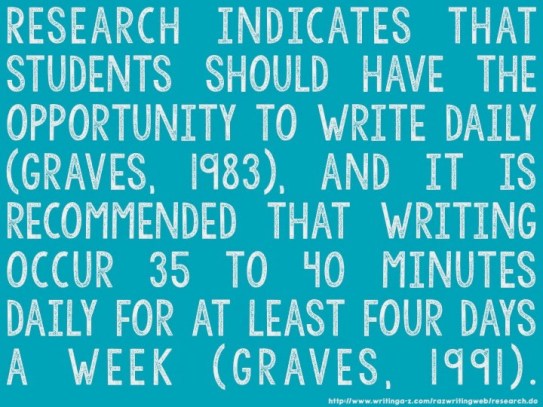
It appears daily on my agenda and often sparks great writing, discussion, and even revision. My bestie Erin said it beautifully: “Quick writes produce pure honesty and they’re a good place for me to “talk” with my students.” The writing is low stakes, the creativity can be high, and we can “talk” with our kids and provide feedback on issues and ideas, over syntax and conventions. Plus, it helps with the endless struggle for volume, volume, volume.

But sometimes, quick writes can end up feeling a bit routine, which is not cool as I am trying to keep writers excited about their writing and producing more and more of it.

writers-block

So, because I’m sometimes known to Google my life (Last weekend my foot hurt after a run and the Mayo Clinic suggested I might have cancer, so there’s that.) I often head to the internet for curricular inspiration.

There are countless sources online that will lead you to quick write topics, if that’s what you are in the market for, and I am often in the market for someone’s fresh thinking to get my students writing when I haven’t left enough time to plan or the same old quick write feels bland.

graves

Quick writes are just the start! 

For example, I was inspired to write this post after I saw our friend Gary Anderson tweeting a journal topic of the day on Twitter. I’ve used several, and loved writing along with my students on his thought provoking prompts.

Here are a few reflections I have on quick writes. The process, their power, and providing writing opportunities to our kids every day.

  1. Link your quick write to what you’re work on in class that day, an essential question you’re studying, or relevant topic to your study. Or don’t! Quick writes can lead naturally into a mini lesson. They can also put that mini lesson on hold as students take off into small group and then passionate/uproarious/contentious whole class discussion. I’ll often have my students go back into their notebooks after discussion to add to their thinking, so even if they didn’t share, they are working with the ideas that class is chewing on and writing more.
  2. Let students write about what inspires them. At the beginning of the year, many students balk at the “opportunity” to write about whatever they like, but by the time you’ve established a rapport and let your students know that they belong to a community of writers, many are excited to be given time to get their thoughts on paper. And when you have them take some time to revise at the end of the writing and share their ideas or powerfully written lines with others, they take more seriously the production of that work.
  3. Give limited choice to guide writing toward a necessary discussion for that day’s mini lesson or topic of discussion. When I do want the quick write to lead into the mini lesson, I try not to lead too much. I want kids to write and discover. I don’t want to slip back into old habits of guiding students to a fixed answer. They feel duped, I feel cheap, the whole thing is a mess. So, when I am heading in a specific direction, I really try to give choice in these instances. Our mini lesson in American Literature the other day was on bias for our argument writing unit. I could have had them write about where they see bias and how it impacts an argument’s credibility. Totally fine. Instead, I asked them to choose:
    • Write on any topic from the perspective of someone who is heavily biased toward a particular outcome. Then, write the same appeal from the opposing viewpoint.
    • Consider the bias of an author you’ve read or a story you know well. How did the bias serve the author? How did the bias impact the story?
    • Defend, challenge, or qualify the idea that media bias is detrimental to a functioning democracy.
  4. Early on, I stole something I heard Amy say during the professional development she and Shana ran at Franklin last year. I always remind my students to “write as much as you can, as fast as you can, as well as you can.”Amy taught me that kids need to outwrite their inner critics, and I’ve coupled that with the discovery that, often times, a student’s inner critic sounds an awful lot like…a teacher. We need to help retrain kids to see the first quick draft of anything as just that, a quick draft. I scrap half of what I write when I consider it for revision. This is something new to most kids, who train themselves to pour writing out on a page and see that as the first, last, and only draft. We work to write quickly, revise in the moment, and later, choose some pieces for further expansion, refinement, and polishing. But in the six or seven minutes I am giving them to write, their job is to write in that moment and to keep moving.
  5. Remind students to write and respond as they see fit. Students can write, jot, draw, change colors, compose a poem…Students often limit themselves unconsciously by the “rules” they have been taught over the years. Quick writes are a place to explore, not fit in the lines or a box. Unless you want to write in boxes.

  6. Have students respond to quotes, images, poems, videos, their own writing (we are doing this today!), the writing of other students, current events, lists, song lyrics, letters to the editor, overhead conversations…You get the idea. Students can creatively explore just about anything and should. Their opportunities for creative expression are often too few and far between. We can be the place where questions, emotions, fears, innovations, and discoveries find a safe place to take root.

Some of my recent favorite topics are below. These are quick writes that generated some fantastic discussion in small groups and whole class debriefs.


From Gary Anderson a few weeks back, I had students choose one and write:

Today…
I am concerned about…
I am upset about…
I do not understand…
I wish I could change…
I am grateful for…


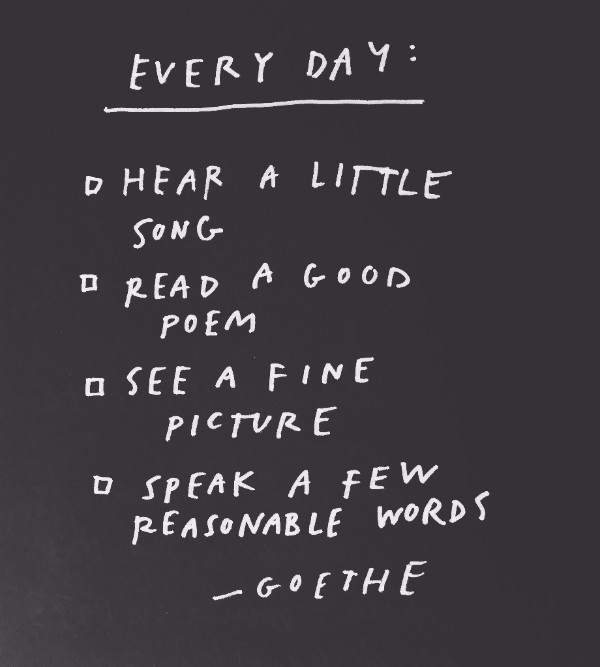
From Austin Kleon’s blog that I started following last week, students took this image in a thousand directions and one class even had a collegiate level discussion on the implications these suggestions (directives? nudgings?) could have for society:

goethe


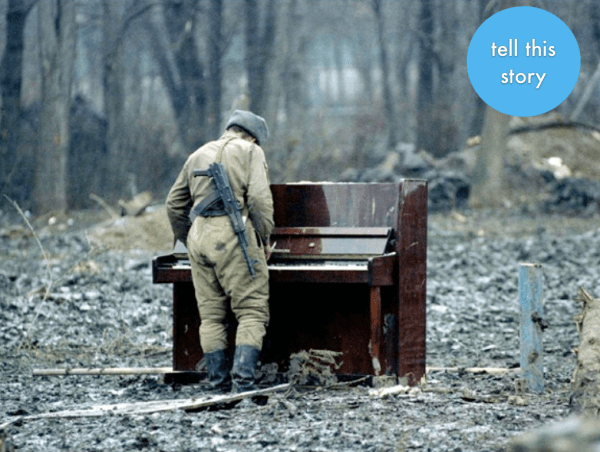
I will sometimes choose several images and have my students respond to one, or try to tie them together, or imagine they are the photographer, or…whatever best suits our purpose for that day. The exploration of the human condition is reason enough to put pen to paper. “Tell this story” is a great search term to yield a wide variety of results.

tell-this-story-2


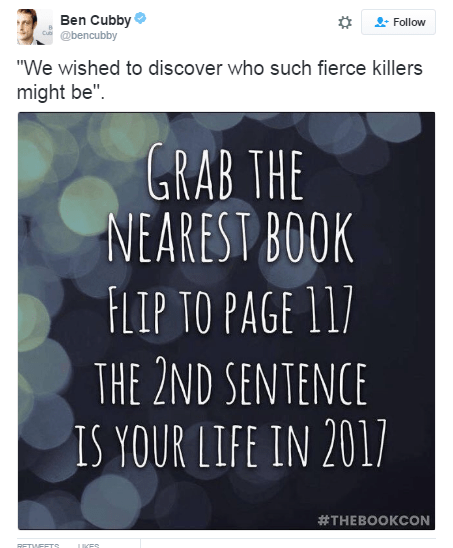
Quick writes can even be 2-3 minute reflections on the simplest of reading adventures. At the start of the new calendar year, I had my kids search for what their lives would hold in 2017, according to their independent novels.

quick-write

Have a favorite quick write topic that gets the pens moving in your classroom? Please share your ideas and insights in the comments below! 

Lisa Dennis teaches English and leads a department of English educating gods and goddesses at Franklin High School near Milwaukee. She has no fewer than six quick write journals going at once, mostly due to her inability to settle on spiral vs. bound. She added to Goethe’s list that we should smile at the thought of someone each and every day. Follow Lisa on Twitter @LDennibaum 

Feel Good Friday

It’s been a looooooong week.

We had parent teacher conferences on Monday night. Monday night. It felt a little cruel and usual at the time. Then it just felt like this week might never end.

But end it has. Here we are..FRIDAY!

I feel like celebrating, because this, my friends, has been a week when feel good moments snuck up on my classroom when I was almost too sleepy to notice.

Such as…

Logan is a self proclaimed sports man.

His dad teaches PE here at Franklin and coaches our wildly successful football team. I believe Logan said not long ago that he “lives for sports.” But this week, it seems, he’s been living for books.

So far this year, Logan has completed four books ranging from Redeployment by Phil Klay to Sky on Fire by Emmy Laybourne. He is currently eating up Dark Matter by Blake Crouch, so much so that he enthusiastically book talked it this week before he even finished it.

Last class period, before the bell rang, I let Logan know that he needed to run to guidance and clear up a little confusion around signing up for AP tests. To my heart’s delight, Logan said the following words:

“Can I go after reading time? I want to read first.”

Amen.

img_0269

Logan devouring Dark Matter 


Priyanka stopped by my desk only moments ago.

association“Mrs. Dennis, do you remember emailing me about my one pager this week? You asked how I was liking The Association of Small Bombs.”

“I do! I was wondering how it’s going. You’re the first to read it and I was so excited to get that free copy at NCTE.”

“I LOVE it. You know how sometimes you aren’t sure what the theme of a book is? Like, you have to work to find it? This book’s theme IS THE COVER! All of these intricate stories and characters coming together. I can’t put this down.”

“Making you think, hmmmmm?”


Nathan was struggling to read at the start of the year.

Not his thing, he told me. Then…he found Suzanne Young’s The Program series. He couldn’t put it down and flew through all three books.

Then he launched into A Dog’s Purpose by Bruce Cameron. He finished it in class today.

img_0266

This was Nathan at the end of class. A fellow student asked him if he was ok.

“It was just…SO good.”

A few moments later, Nathan was at the bookshelf returning the text. And I observed, “Nathan, you look like a man without a country. You ok?”

“Mrs. Dennis, I just found out this book has a sequel. I wanted to read The Kite Runner next, but…a sequel. I want to read that now too!”

“How about I give you The Kite Runner while you wait to get the next Cameron book and you read that quick over the long weekend. You won’t be able to put this that down either.”

“Oooooo…good idea. Yeah, can you get me a copy?”

(Clapping excitedly in her head, Mrs. Dennis sprints next door to get a copy of The Kite Runner. He’s reading!!) 


We are fighting fake news in our classrooms.

Today, the posters I had made of the IFLA’s infographic on how to vet sources and avoid getting duped by fake news got delivered. I’m geeking out over these posters.

img_0267


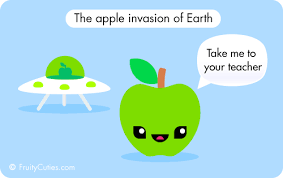
Lastly, this just made me laugh out loud.

apple-2


Happy Friday, everyone!

What made you smile this week? Please share in the comments below! 


Lisa Dennis teaches English and leads a department of English superheros at Franklin High School near Milwaukee. Fridays make her happy, but so do books that smell old, buffets that include ice cream for dessert, and infographics made into classroom posters. 


Stop the Slaughter: Lifeless Literary Analysis

Teaching is a reflective practice. If you’re doing it right, that is.

We question, we research, we dig deep to update, invigorate, and refresh our work on a daily basis. And while this can be utterly exhausting (I think we need to investigate the ingenious cultural practice of siestas), it’s also exciting. As we push ourselves to grow and change as teachers, we impart that commitment to be better to our students.

I remember when I was student teaching several (cough, cough) years ago. The English and Social Studies departments shared an enormous office, and I was lucky enough to be afforded some space in that room to work. The fresh-faced 21 year old with boundless energy and enthusiasm for making a difference and connecting with “kids” (I was teaching 18 year olds. I’m pretty sure I was in elementary school with one of my students).

Then, I met *Mr. Pumblechook. (Names have been changed to protect the identities of very nice, well meaning people whose educational practices make me shutter.)

Pumblechook was a social studies teacher with perhaps six or seven years under his belt. He had a bright smile, hearty laugh, great expectations for his students (I had to. Thanks Dickens) and a file cabinet.

But this, ladies and gentlemen of the jury ( got serious quick, didn’t I?)this was no ordinary file cabinet. For in this file cabinet was a collection of folders. And in those folders were lesson plans.

One folder for each day of the year containing (because I pretended to be impressed with his organization and asked to see): a lesson plan, several worksheets to make copies of (even leftover handouts from the year before), and overhead slides of prewritten notes.

Was I student teaching in 1962? No.
Was I student teaching under a dictatorial regime? No.

This was 2002, people. Suburban Milwaukee.

And every time I tell this story to fellow educators, they nod, and I hear similar stories of educators from days gone by. Worksheet after worksheet, recorded lessons from first hour played to subsequent hours, teachers knitting in the back of the room, and countless acts of readicide across the land. Is seems Mr. Pumblechook had good historical precedent for imparting knowledge to children by opening up their brains and pouring in the same ideas year after year without regard to their role in that programming or real world applications of classroom material.

Enter: My classroom last week.

My AP students are armpit deep (my quip to convey complexity over the waist, but less perilous than the nose) in literary analysis. I wrote last week about our journey with diction analysis, as we got down and dirty with how an author conveys meaning with words.

Along my merry way I skipped, confident in this unit that I’ve taught several times, the tweaks I’d made in planning it for this year (updated mentors, current event references, jokes that students last year hadn’t heard yet – he he), and last year’s solid AP test scores. Not quite a folder for each day, but not too terribly far off either.

Then, I read Rebekah O’Dell’s post from Moving Writer’s, “Three Reasons Literary Analysis Must be Authentic.”

Gulp. Authentic.

I (shamefully) hadn’t really thought of that. I was preparing my students for the AP Language test. Wasn’t that authentic enough?

Of course, the skills of analysis are invaluable. Critical thinking across the curriculum is bolstered by the development of analysis skills which help students recognize patterns, decode information, compare and contrast concepts, classify elements under examination, and utilize inferences to support ideas. As one of the elements utilized by the College Board to determine students’ readiness for college level curriculum in English, rhetorical analysis is obviously important. The traditional essay format is required to pass this test and the analytical skills necessary to do so are a benefit to students far beyond the classroom.

But here’s the rub…

Even AP readers are looking for students to write outside the box. Yes, the skills of analysis must be present. But top scoring papers are those that challenge convention, take risks, and (I’m hanging my head in shame here) speak to a more authentic and far-reaching audience.

O’Dell’s post, like literary providence, reminded me that I needed to climb out of my car with tinted windows (I’m in here doing my thing. Nothing to see here) and pick up a mirror to reflect why I was doing what I was doing.

Her 3 key reflections on teaching literary analysis hit me right between the pencils. She reminds us that:

  1. Our job isn’t to produce English teachers.
  2. Writers need models in order to write.
  3. The traditional academic, literary analysis essay hurts student writing.

So,  am I hurting my students with what I’ve been doing? Absolutely not.
Could it be better? Absolutely, Mr. Pumblechook, because they might be better at formulaic writing with what I’ve been working on, but we’ve taken some steps back in their growth as authentic writers.

To address each of O’Dell’s points, which I felt compelled to do immediately (I had the mirror up and didn’t like what I was seeing), I changed some plans for this week and next.

  1. Our job isn’t to produce English teachers: I have to tell myself this more and more. O’Dell reminds us that 2% of college students major in English, and of those 2%, only 1% will enter professional academics.

    It did occur to me though, that our students will need to engage with the world around them and likely need to synthesize ideas in order to share them. As such, I had my kids choose editorials on current events and topics of interest to present 1-2 minute speeches on. They needed to make claims about how the author achieved his/her purpose through DIDLS.The fluency of their writing for these speeches has blown me away. We’d been “writing analysis” last week, but none had the same voice, passion, or deep analysis that these had. Speaking the analysis had the power to remove the formula. Students concentrated on engaging their audience in a way that a practice AP prompt could not replicate.

    When my students sat down to write a full AP analysis practice today, I reminded them of how they had to work to capture the audience of their peers through their speeches, and that the nameless/faceless AP writers still wanted that same engagement. They want students to be successful on the test. This exercise seemed to solidify that and afford my kids the opportunity to reignite that natural voice we have been working with all year.

    img_0180

    Katie presents her editorial analysis speech this morning

    speech-form

    A quick Google form that I fill out as students are speaking provides immediate feedback via email 

    speech-feedback

    A sample of the detailed feedback on both content (helps with literary analysis prep) and public speaking (a real life skill for all)

    img_0179

    Students give peer feedback on the rhetorical analysis they heard, as well as the speech overall. 

  2. Writers need models in order to write: I’ve been using student samples from AP to accompany the prompts we’ve been analyzing for years. That’s honestly helpful. I have students score them and discuss with peers what constitutes a high, middle, and unacceptable essay according to AP so they can apply or avoid the same ideas.

    However, those high scoring essays were always met by my students with comments that suggested that top scoring essays held some undefinable magical quality.

    What is it? Style.

    Those essays, as I said earlier, not only develop complex ideas, but they do so in a way that keeps the reader engaged.To work with this, I’m going to share with my students some of the literary analysis that O’Dell’s post links to as well. The Atlantic‘s “By Heart” where authors share their insights on their own favorite passages in literature, is a website that makes literary analysis real, full of voice, and peppered with references to texts/authors my students know.
    My post a few weeks back on Arts and Letters Daily is another place we’re going to explore. How do writers write about texts without using a five paragraph essay? How can we, as Penny Kittle says, stand on their shoulders as writers and work to write as they do?

    al-daily

  3. The traditional academic, literary analysis essay hurts student writing: We want our students to be able to master the structure and form, but yet we want them them to break free of it too.I’ve often told my kids over the years that you have to know the rules in order to effectively break them.

    Maybe it’s true. Maybe, I just don’t have them break them soon enough and get to that authentic voice for an authentic audience.Because there, in the place where they have something to say with confidence, passion, precision, and critical thoughts developed by honed skills, will they bridge the gap between possessing the skills we want them to master and making their writing shine with the creative use of those same skills.

And now…it’s Wednesday morning and the lovely Tricia Ebarvia just ran a post about authentic audience through blogging. I’m headed there next.

I should just carry a mirror. I need it. Always.

How do you help move students move beyond the traditional literary analysis? We’d love to hear your ideas in the comments below! 


Lisa Dennis teaches English and leads a department of English superheros at Franklin High School near Milwaukee. A joke her students haven’t heard yet, but soon will, is:  Why did the librarian miss the conference? She was overbooked. Her students are sure to chuckle, if not pumblechook (used as a verb with creative credit to Dickens), at that one. 


What Will You Read Next?

I’m always on the lookout for ways to keep moving my readers forward. To stave off the lethargy that unrelenting mid-forties temperatures and 17 weeks of gray skies (winter makes me hyperbolic) can leave in a classroom. The novelty of a new year, with its resolutions and fresh semester, has succumb to the bleak midwinter pall of third quarter and we need something that says, “If that groundhog claims six more weeks of winter (rat-face that he is), we’re going to need a plan…and a good book or two.”

Well, thank goodness I have an unhealthy addiction to Twitter (Ummm…Cornelius Minor just started following me last night. I’m going to need to step up my game. Significantly).  Years ago, it was Pinterest, but that was back when I had time to scroll and save ‘Best Brunch Recipes to Feed a Hangry Crowd’ and ’19 Ways to Burn Booty Fat’ (not to say I couldn’t still use both).

My scrolling these days, however, is far more literary in focus and professional in nature (19 Ways to Burn Booty Fat for Educators – Conferring as Cardio). Seriously though, Twitter has led me to countless quick write topics, mentor text ideas, blogs to follow, inspirational quotes, professional development opportunities, booklists, laughs, collegial exchanges, and pedagogical articles to stretch my practice. #TrachersWin, #LoveToLearn, #StrongThumbs, #TwitterScrollingSavesLives.

A few days back, Penny Kittle posted this photo:

I quickly screenshotted the image to replicate in my room. This visual reminder of where we’re headed (another book and/or a swing toward spring) will provide the push forward we need. Get it on the wall!

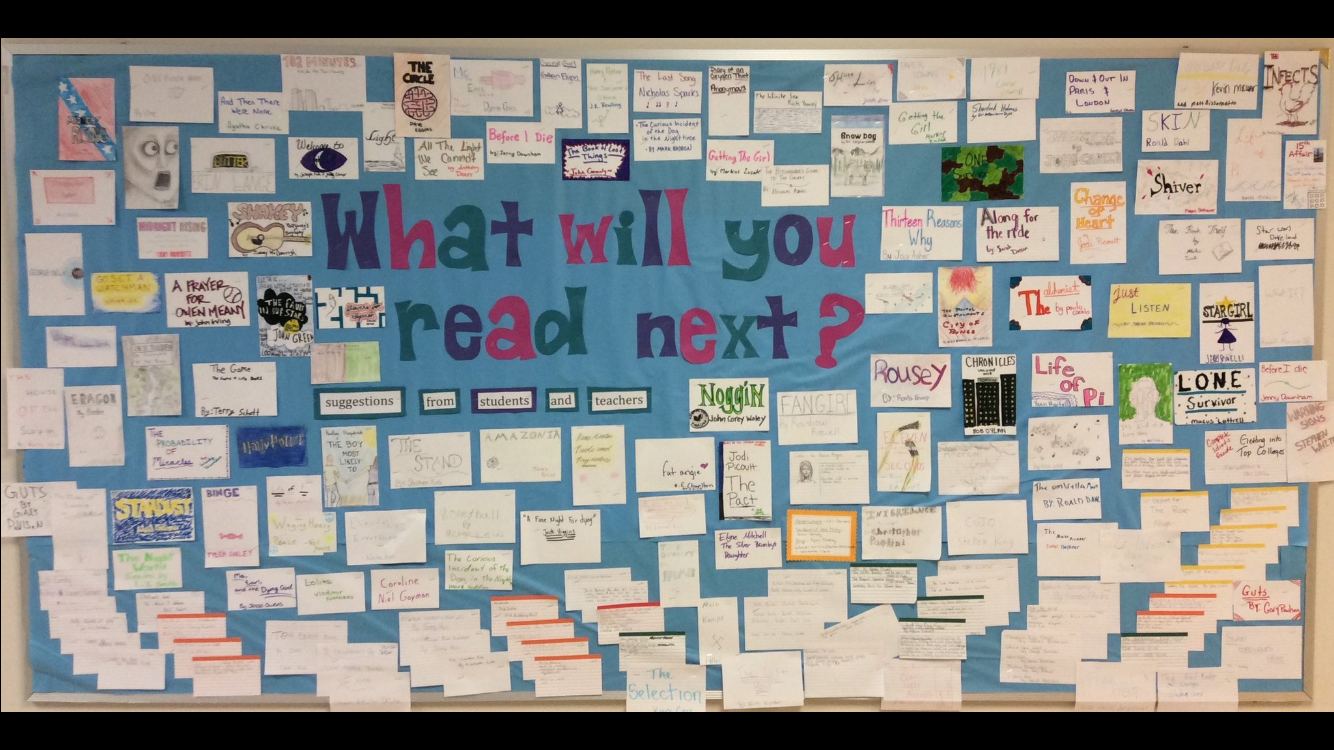
My students needed something to set their sights on, so I asked them to take a look at their ‘I Want to Read List’ and choose what their next reading would be. This wouldn’t just be a goal to finish our current texts, but would also give us something to look forward to.

I encouraged students to take this as an opportunity to challenge themselves outside what they have been consistently reading, either in complexity or genre, and select a book they were excited to get their hands on.

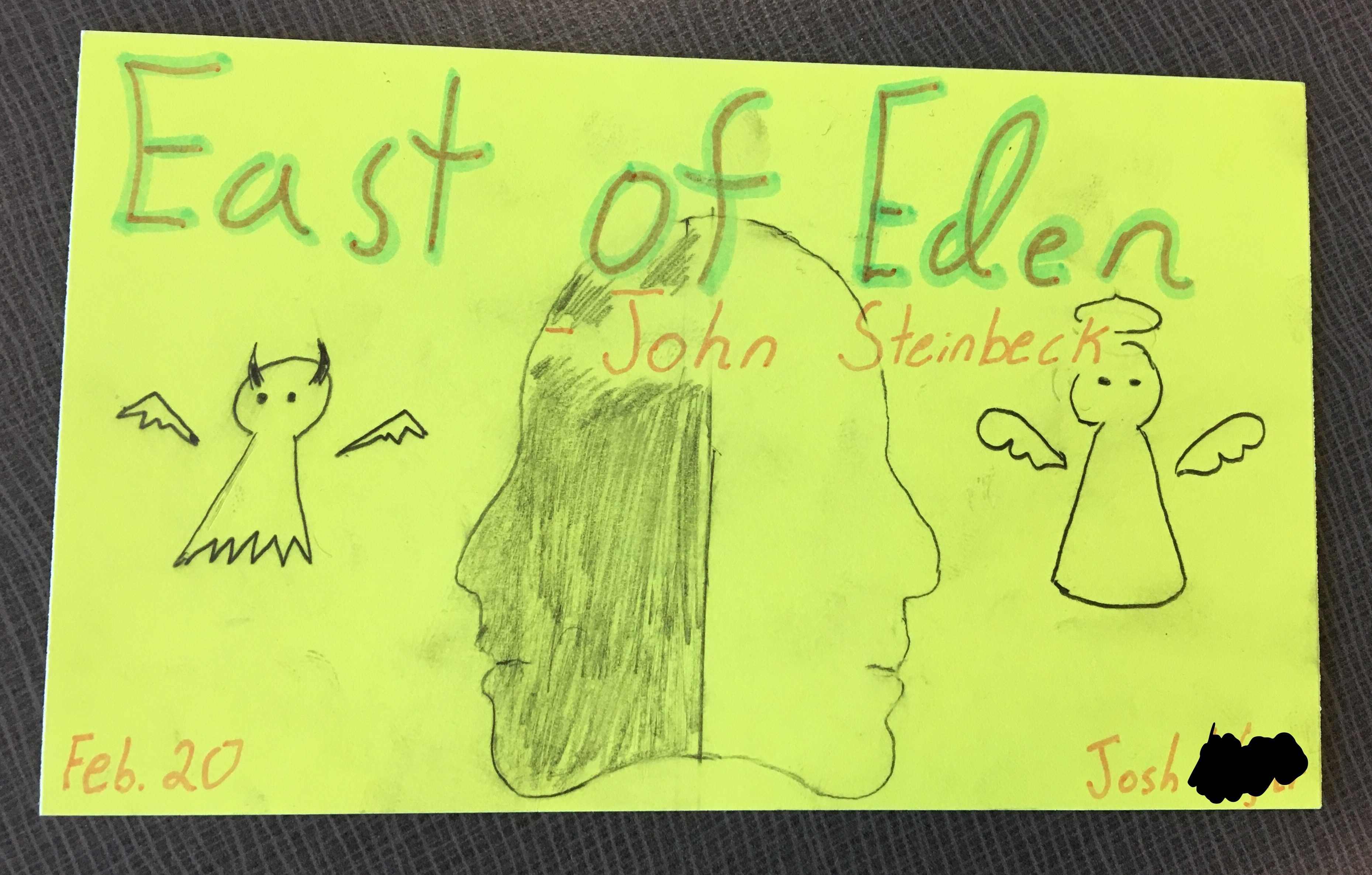
Each student then took an index card, on which went the name of the book, the author, and the date they plan to start this next text.


My aide, an artistic genius, drew the book that would be the center our our display (It even has dozens of book titles written on the first page – I LOVE it, Hailey!) and started arranging the ‘Next Text’ cards around it. The whole back wall of my classroom is going to be a sea of texts we can look forward to.

I’m loving my current read (Shout Out: #3TTTBookClub – Jodi Picoult’s Small Great Things), but I too will be adding a card: In Cold Blood by Truman Capote.

(A freak and serious arrest of my artistic development in the second grade prevents me from sharing my card with you. Please imagine it’s simplistic beauty and that might help me create something wall worthy)


Let’s Get Excited About Where We Are Heading! What Will You Read Next? Please leave your text choices in the comments below. Happy Friday. 


Lisa Dennis spends her school days teaching AP Language and Honors/Pre-AP Sophomores, while also leading the fearless English department at Franklin High School, just outside Milwaukee, Wisconsin where she lives with her husband Nick, daughter Ellie, and beagle Scout.  She is a firm believer that a youthful spirit, a kind heart, a big smile, and a good book can ease most of life’s more troublesome quarrels. Follow Lisa on Twitter @LDennibaum.