Category Archives: Jackie Catcher

Whole-Class Novels: Why Do We Teach Them, Anyway?

This past summer Shana and Jackie found that we’d both taken on a unique experiment within some of our classes–we had decided to strip them of whole class novels and instead focus on independent reading, book clubs, and smaller whole-class texts.  As workshop teachers confident in the power of choice reading, we each felt that this shift would be both empowering and inspiring within our classrooms.  After our year of experimentation, we both left our classrooms with unique perspectives on the power of whole-class novels as well as how we would incorporate them moving forward.

Here is day two of our insights and discussion we’ve had over the past week using Google Docs (click here for day one).  Please, join the conversation in the comments!

Question 3: After a year without whole-class novels, how did you feel?MTI5MzY0OTk4NTM0MjQwNzM0

Jackie: At the beginning of the year, I felt like a rebel.  The thought of not only allowing but also empowering students through independent reading went against the entire curriculum within our department.  All of my colleagues taught whole class novels, which meant that none of my students had experienced the pure freedom of choice.  That being said, three-quarters of the way through the year, I missed whole class novels.  Despite having unique successes with the independent reading, my classes lacked the communal experiences of reading, discussing, and simply just enjoying (or sometimes hating) a novel together.  By the end of the year, I found that both my students and I missed some components of reading whole class novels.

Shana:  I reflected on my teaching after a year without whole-class novels (mind you, many novels were read through book clubs, literature circles, reading challenges, and independent reading), but I felt like the one thing that was lacking in all of my instruction was the idea of sustenance.  I wasn’t seeing my students sustain an idea for an extended period, or grapple with an issue over time, or try to live with a topic for more than two drafts and three weeks.  The case was the same in their reading and writing–I wanted them to have more length in their thought processes and I wanted us to engage in those long thought processes together.

Question 4: Why is teaching a whole-class novel valuable?  More specifically, why do we do it, and what skills are taught?

brave-new-world-bookShana:  I am not sure why I used to teach whole class novels, or, specifically, why I taught the novels I taught.  I know that there were valuable instructional methods behind the way I taught them (thematic units, Socratic circles, exploratory essays), but I don’t know if I had a sound rationale behind the obligation I felt to actually teach multiple novels to all of my students.

After a year without them, though, I find that the collective classroom experience of reading, interpreting, and discussing a novel produces a route for a unique connection to a text that cannot be achieved without reading as a group.  I missed the experience of coming to a new, shared understanding of a text as a whole class, and I felt that my students missed out on that experience as well.  I don’t believe that when I read plays independently in my undergraduate Shakespeare capstone that I would have comprehended, connected to, or engaged as passionately with those plays alone as much as I did through our frequent in-class discussions, activities, and writings.  I don’t want my students to miss out on that experience either.

Jackie: This year I am teaching AP Literature for the first time.  I took the challenge believing that this new course would be somewhat of a paradigm shift for me compared to my contemporary-lit based freshman English class.  The more I prepared, the more I yearned to discuss my thoughts, questions, and analyses of texts.  I went so far as to ask everyone around me to read these canonical classics and discuss them with me.  Preparing to teach AP Lit reinforced the social significance of reading literature.  At its base, dissecting stories as a group is interesting and engaging.  Beating the crap out of them is not.  I agree with you, Shana, in that the experience of sharing a text is one of the blessings of being in an English classroom.  Once students graduate from high school, they rarely have the opportunity to interact with texts in a classroom setting.

Shana: I love that the way you prepared to teach was to ask friends to read books with you, then discuss them.  You engaged in an authentic book club there, as I know you have your students do now.

More of our discussion will follow tomorrow.  Be sure to join the conversation today in the comments!

Whole-Class Novels: To Teach, Or Not to Teach?

This past summer Shana and Jackie found that we’d both taken on a unique experiment within some of our classes–we had decided to strip them of whole class novels and instead focus on independent reading, book clubs, and smaller whole-class texts.  As workshop teachers confident in the power of choice reading, we each felt that this shift would be both empowering and inspiring within our classrooms.  After our year of experimentation, we both left our classrooms with unique perspectives on the power of whole-class novels as well as how we would incorporate them moving forward.

Over the next three days, we will post our insights and discussion we’ve had over the past week using Google Docs.  Please, join the conversation in the comments!

imagesQuestion 1: How did you decide to get rid of of whole class novels?

Jackie: Last year I was faced with a unique opportunity: the English Department voted to end popular College Preparatory Advanced Composition course.  Despite the well established curriculum, I tossed aside the typical whole class novels in favor of independent reading. As a primarily freshman English teacher, I am required to teach one Shakespeare play and To Kill A Mockingbird.  Advanced Composition gave me the opportunity to focus on smaller whole class reads and mentor texts within daily writing workshops without devoting whole units to one book.

Shana:  After six years of teaching, I wasn’t really sure why I felt compelled to teach whole-class novels.  Every year, when I picked up Catcher in the Rye, I dreaded my job.  I hated that book, and I had no idea how to get my students to love it or connect with it.  It felt like a chore to drag my students through “reading” that text (mostly they were SparkNoting it, sometimes with the assistance of their football coaches–true story).  I knew that not every student loved every novel that I did (particularly Their Eyes Were Watching God), and I knew that I didn’t love every novel my students read on their own (particularly everything by Nicholas Sparks).  I started to wonder–what would my teaching be like if I didn’t feel compelled to teach a whole-class novel…merely because I should?

Jackie: The eye opening experience for me was definitely during my first year of teaching.  I began integrating independent reading into my curriculum and I suddenly found out how many voracious readers I had in class.  My teaching was getting in the way of these students’ education! I like how Shana puts it–I also knew that my students didn’t love the novels I did (Speak by Laurie Halse Anderson) and in the end, if I gave them freedom, I too would learn much more about literature, reading, and teenagers.

Shana:  I like that Jackie mentions the issue of devoting whole units to a book–I loved having the freedom to design units of study that weren’t anchored around a novel, but rather a different genre.

Rye_catcherQuestion 2: What were the positives of having no whole class novels and what were the negatives?

Jackie:  After a year, I have found both positives and negatives to removing whole class novels.  Getting rid of whole class novels allowed me more time to focus on the positive aspects of the workshop model.  Naturally student choice led to easier student buy-in, and I spent less time convincing students of the value of reading.  As a result, we spent more time cracking apart smaller whole class reads like essays, poems, and articles and truly contemplating the author’s choices and craft.  Additionally, I liked that I could assess students and discuss their growth based on their own reading goals and progress.  

I have yet to find a solution to the “be on this page by this day” debacle that comes with teaching whole class novels.  Too often whole class novels lead to less differentiation and more stress, which can lead to the “gotcha” feel that comes with discussing larger, longer texts.  

That being said, there was a lot that I missed about having whole class novels.  Losing a longer common text meant that students didn’t have the common classroom experience of connecting over both the successes and frustrations of working through a complex text together.  I was surprised by how much students want to discuss their reading with classmates.  While reading can at times feel solitary and maybe even isolating during the actual act, in reality, reading complex texts is a communal activity that unites groups through a variety of perspectives, opinions, and interpretations.

Shana:  The positives were that I felt like my curriculum map was much more relaxed and flexible, in contrast to the years where I felt like I had to teach a minimum number of novels and “fit them in.”  I also loved seeing my students’ love of reading skyrocket as they engaged in choice and challenges on only an independent or small-group basis.

The negatives were more nebulous–I just felt like something was missing.  Our learners crave a challenge, and navigating a difficult novel is a challenge all readers relish if they have autonomy in their reading of that novel.  Reading a novel together provides an opportunity for me to create instruction that scaffolds a student’s reading skills up to the level of that novel, allowing them to participate in a reading experience they may not have been able to enjoy otherwise.

I also really missed being able to ascertain the barometer of a class’s feelings on a certain theme or issue through discussions of a complex text.  Crime and Punishment explores issues of morality, regret, and psychology in a far more complex way than “The Tell-Tale Heart” ever could, and although both stories have very similar themes, the novel lends itself to the sustenance of thought, evolution of a character, and length of a reading experience that I so craved for my students.  I also think that some reading skills specific to stamina, fluency, and automaticity cannot be practiced or taught effectively without a lengthy text, so I felt that last year, my students missed out on practicing those skills.

Jackie: While we both feel similar in the value of whole class novels , I know that neither of us would return to a set list of novels.  Whole class novels allow us to engage in common discussions but independent reading lays the groundwork for students’ stamina and confidence.  I don’t start my first round of literature circles until the second quarter because of this.  As much as students need a communal reading experience, I believe they first need a taste of independence and success.
Shana:  I still haven’t figured out the whole reading schedule thing either, nor how to create buy-in for every single student so that they autonomously, independently want to read a novel.  I struggle with the this-page-by-this-day conundrum, too, mostly because I feel like that creates a certain accountability that kids get hung up on, because it relates to the dreaded word GRADES. 

More of our discussion will follow tomorrow.  Be sure to join the conversation today in the comments!
Click here to read day two of our discussion.

Cliché College Essays and Why I Hate the “Three Ds”

IMG_0040On the Monday their essay was due, I handed out a rubric. “I cannot and will not grade you on this essay,” I said to my AP Literature class.

In all honesty, I don’t care what they get for a grade on this piece. After days, weeks, and months of toil, a number cannot and will not determine the actual value of this paper: the college essay.

I have a love-hate relationship with the college essay. I love that students have the opportunity to express themselves through writing and that they are encouraged to provide personal stories. I especially love the emphasis on creativity that draws them away from the rigidity and structure of standardized tests and check-box-surveys. What I hate is the overwhelming weight that accompanies telling “your story,” the crowning piece of one’s 17 years of life.

My first year of teaching, I fretted over college essay advice. I told students to steer clear of the three Ds—death, disease, and divorce—and to instead explore a wider variety of ideas that included mundane moments. I wanted them to beware the standard cliché essays of human suffering.

What I found was in restricting these three topics, I also restricted the very stories that shaped these students’ identities. After all, our students are still teenagers; they have many more stories to live and we mustn’t undermine those stories of death, disease, and divorce that have framed their present reality.

Sarah’s essay on her father’s death and her inability to hold his hand during his last moments tears at my heart every time I read it, and I have been working with Sarah on this piece for a year. She writes:

It is nearly two years after my father has passed, and my inability to hold my father’s hand on his deathbed still haunts my dreams and consumes my thoughts. I am sixteen years old, I have done regretful things in my life, but the singular moment I regret most in my life is not holding my dad’s hand during the one time he needed it to be held by me.

Sammie’s poetic piece on coping with her best friend’s severe eating disorder and eventual hospitalization and rehabilitation has a place in Sammie’s college folder. Maddie’s experience meeting her mother’s boyfriend for the first time after the shock of her parents’ divorce belongs filed alongside her SAT scores.

Instead of limiting their stories or categorizing them as cliche, we, as teachers, must help our students explore these experiences through expert narration and craft. After all, doesn’t the beauty in literature rest in its familiarity? Its common story? Its trumpeting of empathy, underdogs, and resilience?

How do you approach college essays, and how do you help students who are struggling with essay topics?

Studying Vocabulary Through Choice Reading

IMG_2886“Reading increases one’s vocabulary,” I tell incoming freshmen every fall. But up until now, I have had little evidence to support this claim. It is true that reading exposes students to new words, but I never went out of my way to help students sort through these new words.

Instead, as a junior English teacher, I regularly taught SAT vocabulary as part of my Advanced Composition curriculum. Students completed chapters from the Sadlier-Oxford Vocabulary Workshop books and took quizzes every other week. While some students relished the challenge, many saw little relevance to their own lives, retaining few words by the end of the year.

In turn, this year I have turned from my well-worn Sadlier Oxford books and have instead had students reference their independent reading books for new words. Students develop their own lists of eight words every other week. My goal in doing this is not only to have students slow down their reading, but to also expose them to diction and complexity within their independent books. Once again, like many of the mini-lessons within the workshop classroom, this practice also turns into a lesson on craft and intention within a writer’s work.

Too often students skim over large words, failing to activate context clues and prior knowledge to help them draw out meaning. By creating vocabulary lists, students must practice these skills while also recording definitions, synonyms, passages, and parts of speech.

The benefit is twofold: students have a say in their vocabulary and immediately see both the relevance and payoff of understanding a new word. At the same time, having independent vocabulary lists eliminates cheating and encourages independence. Instead of worrying about students’ wandering eyes during quizzes, I spend time helping students understand the words they have picked. In addition, independent vocabulary lists provide insight into students’ reading levels and comprehension. I have learned more about my students’ reading lives simply by becoming aware of the words they find challenging.

Every other week, students complete a summative assessment that helps gauge their understanding of their eight vocabulary words. Two weeks ago I had students complete “Rock and Roll Vocabulary,” an activity that requires students to roll dice and answer questions about their vocabulary corresponding to specific numbers. This week students will complete a grid about various words.

While I am still new to this vocabulary approach, I feel confident in my students’ choices. Oftentimes I have seen the typical “SAT words” pop up in multiple lists, reinforcing that students will indeed choose challenging vocabulary. The process is far from perfect, and my students and I are still ironing out some of the flaws. Some students intentionally pick easy words, but the next assessment will require them to rank the difficulty of their words. In addition, I allow retakes of vocabulary summative assessments considering students made a “good faith effort” according to our school’s retake policy. Finally, not all independent books offer complex language, which can be a struggle for students who love the content yet can’t seem to find their eight or so words. In those instances, students may pull from in-class readings, articles, and textbooks. If they still struggle, I have books of SAT vocabulary they may choose from instead.

While this method of teaching is somewhat nontraditional, it provides students with continued say in their education. Not only are they empowered by their newfound words, but also by the end, I hope my students will see that reading truly does increase one’s vocabulary.

Mini-lesson Monday: Exploring a Page’s White Space in the Writer’s Workshop

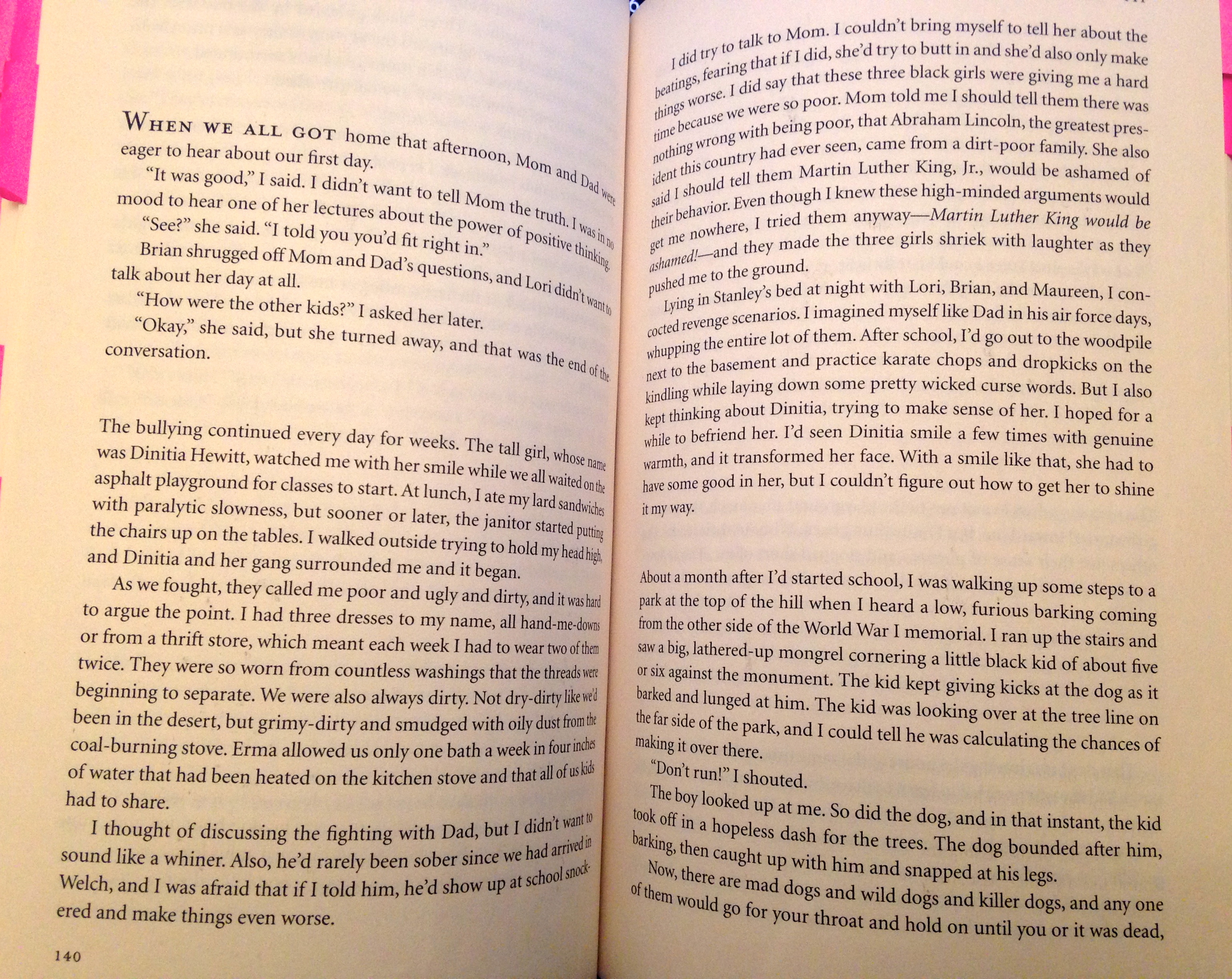
PrintCircling the room, I hand out books in preparation for book speed dating. I place Ellen Hopkins’ Crank on a student’s desk.

“There’s no way I’m reading this,” she mutters to her friend. “This thing is huge.”

“Open it up.” I turn towards her, waiting for her to crack the book. She flips to a page and realizes the entire book is in verse. She flips again and again, every page has a minimalist feel, the text spread out, placing emphasis on each word within the sea of white. The sheer length of the book disappears and she is sucked into Hopkins’ narrative.

The more time I spend with teenagers, the more I value the use of that essential “white space.” I love book talking Patricia McCormick’s Sold or Jonathan Safran Foer’s Extremely Loud and Incredibly Close; despite their complex and emotional content, the books are instantly more accessible simply because of their unique structure.

This is why when we discuss paragraph breaks in writing and aesthetics and structure in reading, we also discuss the glory of giving the reader’s eye a break.

Objectives: Using the language of the Depth of Knowledge levels, students will recognize the use of white space within a piece of writing. They will make observations about the author’s use of this tactic, assessing the writer’s effectiveness in employing the use of white space. Finally, use choice reading and whole class examples as mentor texts, they will practice using white space within their own writing by formulating paragraphs at various lengths, revising these paragraphs through peer conferencing, and applying this craft in future writing assignments.

Lesson: Divide students into groups of three or four and have them open up their independent reading books to any page. Ask them to brainstorm what they see based on the page—tell them not to look at content, but instead the structure of the page—the text, paragraph breaks, and length. Have them compare their pages to each other, noting the similarities and differences. Once they have completed this, bring them back together into a whole class discussion. While they discuss their observations, compile a list on the board of what they noticed.

I love to breathe life into authors and remind students that a writer consciously makes decisions on the craft of their pieces. In turn, I have them to return to the structure of their page, focusing mostly on the line breaks, white space, and the spacing and formatting of the text in general. They reflect on this in their writer’s notebook, asking themselves: why do you think the author made this decision? What did they want the reader to think and/or experience?

IMG_2906Following their reflection, we return to discuss their individual pages as a class. Students volunteer to share why their author might have made the stylistic or structural decisions they did, which in turn, inspires other students to reflect further on their own page choices.

We discuss “one sentence paragraphs” and how they stand out surrounded by the white space of heavier paragraphs. They explore how white space can frame longer paragraphs and why exactly writers might use longer paragraphs to convey their point or tell a denser story. We notice how the white space of line breaks can show the passing of time and why it is important for readers to visually have a moment to internalize this time lapse. And finally, as readers, we share how we respond to cramped passages versus double spaced books.

The process of using choice books paired with class discussion helps students recognize the value of their role as a reader as well as how they can utilize these methods within their own writing.

Following our discussion, I take a few minutes to reinforce the points we’ve made either on the white board or through a prepared PowerPoint. These slides provide visual examples from books I am currently reading as well as some tips for applying this knowledge to our own writing.

Follow-Up: At the beginning of the year, students complete a snapshot narrative followed by a longer personal narrative. Using the mentor examples as well as the examples from our choice reading, we look at how we can integrate white space into our own pieces either through line breaks, diverse paragraph lengths, or one-sentence paragraphs. Based on this mini-lesson, they can also trade narratives and provide peer feedback to one another.

What are some mini-lessons you use to help students analyzing the structure of books? How do you help them integrate these observations into their own writing?

Top Books for Reluctant High School Readers

IMG_2877“I’m not a reader.” I hear this multiple times during my first weeks of conferencing. The non-readers are easily identifiable; their body language alone speaks volumes of their disdain for books.

“You just haven’t found the right book,” I tell them, and they smirk, knowing they’ve heard that statement before.

The first week of school is a vital week of matching students with books, and while I itch to recommend titles, I hold back, giving my freshmen the independence and freedom they so desperately crave in high school. Too often students blindly accept recommendations without so much as a thought to the contents. They lack self-awareness when it comes to their reading interests or style, which is why those first two weeks are essential to not only organizing but also empowering them through choice.

Throughout the week, I book talk popular titles, engage in “speed dating” with books, and provide ample free time for students to explore our classroom library, but I also get out of their way. Instead of telling them what to read, I model ways to find a strong candidate, considering reviews, awards, contents, genres, and summaries.

While the majority of the class tends to quickly settle into their books, there are always stragglers who remain convinced they’ll never enjoy reading. These students sometimes grab the first book they see off the shelf, and oftentimes these books are too dense, difficult, or in some cases “boring.” That is okay! I settle into conferences with these students, getting to know their hobbies and eventually handing them two or three books that might pique their interest. In the end, they still choose what to read, but in the process they might require some initial guidance.

IMG_2870Regardless of who picks the book, the end result remains the same—to find a plot that envelops and consumes students, forcing them into the story. Here are some of my number one titles that tend to break down the shell of even the most reluctant readers.

Ready Player One by Ernest Cline

I’ve already had three students read this book, one of which is Leah, a gamer and self-identified non-reader. When I asked if she has ever had a favorite book, she thought for a second then said, “I think this one might be the only book I’ve ever really liked.”

The Compound by S.A. Bodeen

Adrian initially picked a sequel to a book he read last year. “You must have liked the first one then?” I asked.

“Not really,” he replied. “I just didn’t know what else to read.” The next day he picked up The Compound, which is full of the fast-paced suspense he craves.

Paper Towns and Looking for Alaskaand basically everything by John Green.

I chased Emily up the stairs for this recommendation. When I asked her which one sparked her interest in reading, she said she couldn’t remember which had sucked her in. She just knew that despite her protestations at the beginning of the year, by the end she “loved them both.”

The Eleventh Plague by Jeff Hirsch

Damion had only ever loved one book and he was bound and determined not to like any in my classroom; that is until he came across this futuristic, survival story. Upon sitting down beside him for a mini-conference last year, he looked away from his book briefly to say, “Ms. Catcher, I’m at a really good part and I can’t talk right now.”

Gone Girl by Gillian Flynn

“I’ve had people give me ‘dark’ books before, but they aren’t dark at all,” Sarah tells me. I hand her three options, one of which is Gone Girl. Three days later she tells me, “I’ve spent my whole life hating books, and you’re the first teacher who ever found one I actually liked.”

Unwind by Neal Shusterman

I book talked Unwind second this year. It’s a given crowd pleaser because of its twisted plot and graphic scenes. The fact that I only have one copy of my four originals is a testament to its popularity.

The Perks of Being a Wallflower by Stephen Chbosky

Carter claims he hasn’t read a book cover-to-cover since third grade, but he has fallen in love with Chbosky’s classic on teenage life. He said to me today, “Ms. Catcher, I love that this book talks about real things, things that are actually happening to us.”

“That book is only the beginning, Carter,” I said

What books do you recommend for reluctant readers?  Which titles are most popular in your classroom?

Kids Want to Write! (and why my writers need yours)

photo(1)Two weeks before the end of summer break Kayla shared a three-page Google doc of writing exercises with me. Yesterday morning Kate showed up at my door at 7:15am, brimming with writing prompts and workshop plans. And yesterday afternoon my writing meeting with two students turned into an impromptu gathering of ten. The odd part is that these aren’t my students. In fact, I haven’t even met the vast majority of these students who show up at my door. But they keep arriving, and the reason is that kids want to write.

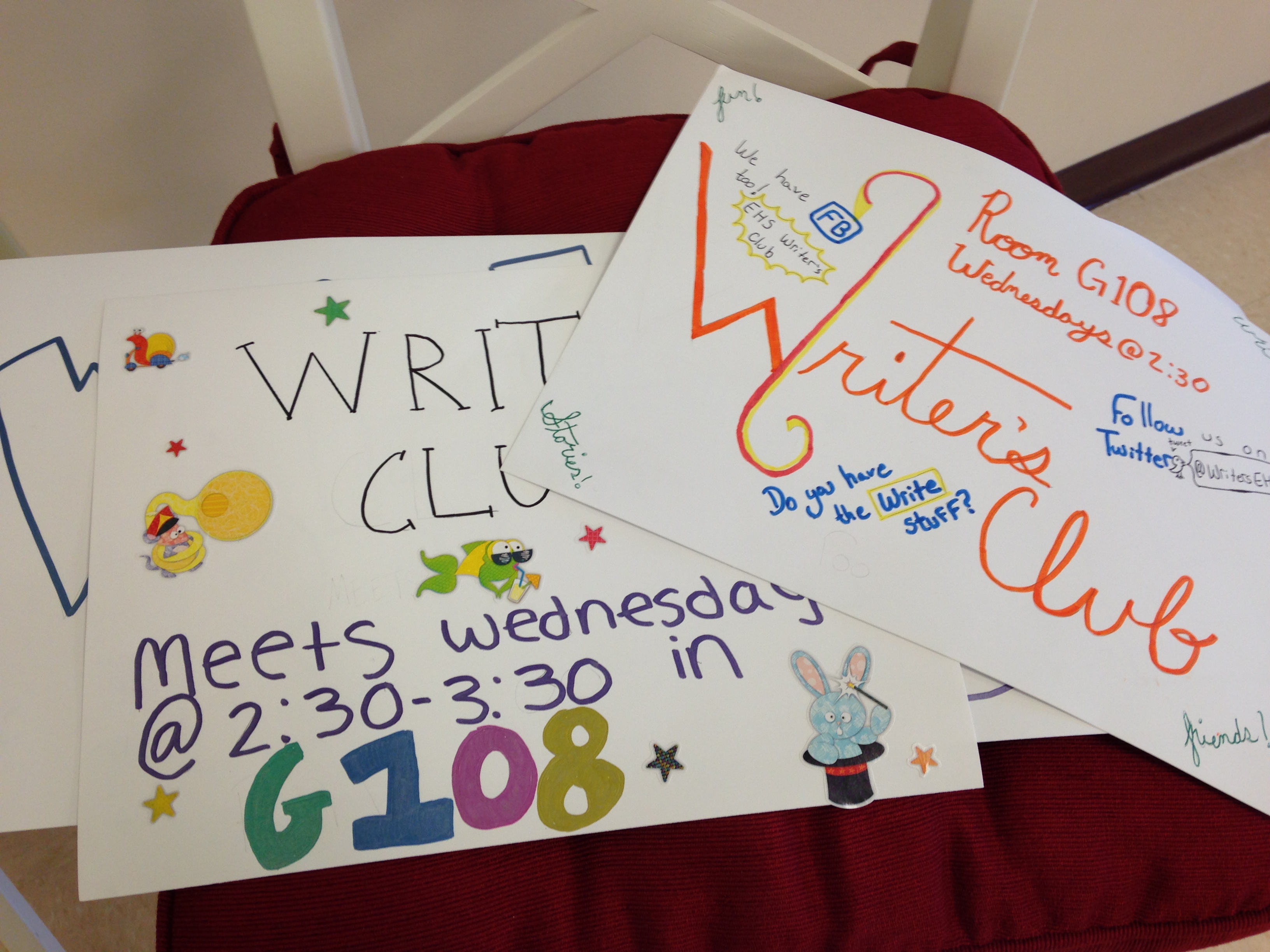
I know this because for the last two years, I have co-advised my school’s Writer’s Club, a community of students who set aside time each week to explore words, laugh over prompts, and share their writing.

When I inherited Writer’s Club last year, I didn’t think the concept was unique to many schools. A teacher established the club before I was even hired, but as I grew to know my members, I realized Writer’s Club served a larger purpose. Students ranging from freshmen to seniors and academics to honors showed up at my door with notebooks. Students who had been writing their entire lives arrived with laptops packed with stories. While many of these students had tried out newspaper club, yearbook, and literary magazines, they told me they had found their niche here among like-minded peers. Unlike other clubs that focus on publication, Writer’s Club focuses on the process.

This club provides a safe space free from the pressures of classmates, peer groups, and lesson plans. Even my best classes (and believe me I love my classes) don’t capture the pure acceptance and kindness these students have for one another. Just like with adult writer’s groups, these students rely on each other to explore their thoughts and work. Some students carve out time to work on a book they’ve been writing, others plug away at fan fiction, and the majority dabble in a wide variety of styles and genres. This club gives them their fix of creativity that can’t always be reached within the classroom.

This year we have a variety of activities lined up. We’re already planning to decorate writer’s notebooks and create a colorful display for the club fair. We’re creating lists of workshop dates so members can sign up and discuss one of their pieces with the group. We’ll have lunch with visiting writers and invite local authors to discuss their craft. As the foliage turns, we’re planning a field trip to downtown Exeter where we’ll take a walking tour then settle into the park with donuts, cider, and notebooks in tow. But above all, we will write and share to our heart’s content.

Yesterday afternoon one of my freshmen stumbled into my room to look at the homework board. She froze in the doorway, scanning the room of students who were brainstorming on the white board and sitting at tables painting and coloring club posters. Music was blasting and kids were engrossed in their individual projects, laughing with each other, and telling stories of their summer.

“What is this?” she asked me.

“It’s Writer’s Club! Want to join?” I said.

“Well I’m part of yearbook club. We meet at the same time,” she said.

From across the room a student yelled to her, “Cool sweatshirt! I like that” while another struck up a conversation about writing fan fiction on the student’s favorite TV show Supernatural.

“Do you want to stay?” I asked.

She smiled, looked around, and took off her backpack. “Yeah, I think I fit in here.”

What do you do to inspire writers outside the classroom? Do you have a Writer’s Club or a writing group for us to team up with? We’d love to Skype, e-mail, share, and chat with writers from across the country!

Window Shopping and Writer’s Notebooks

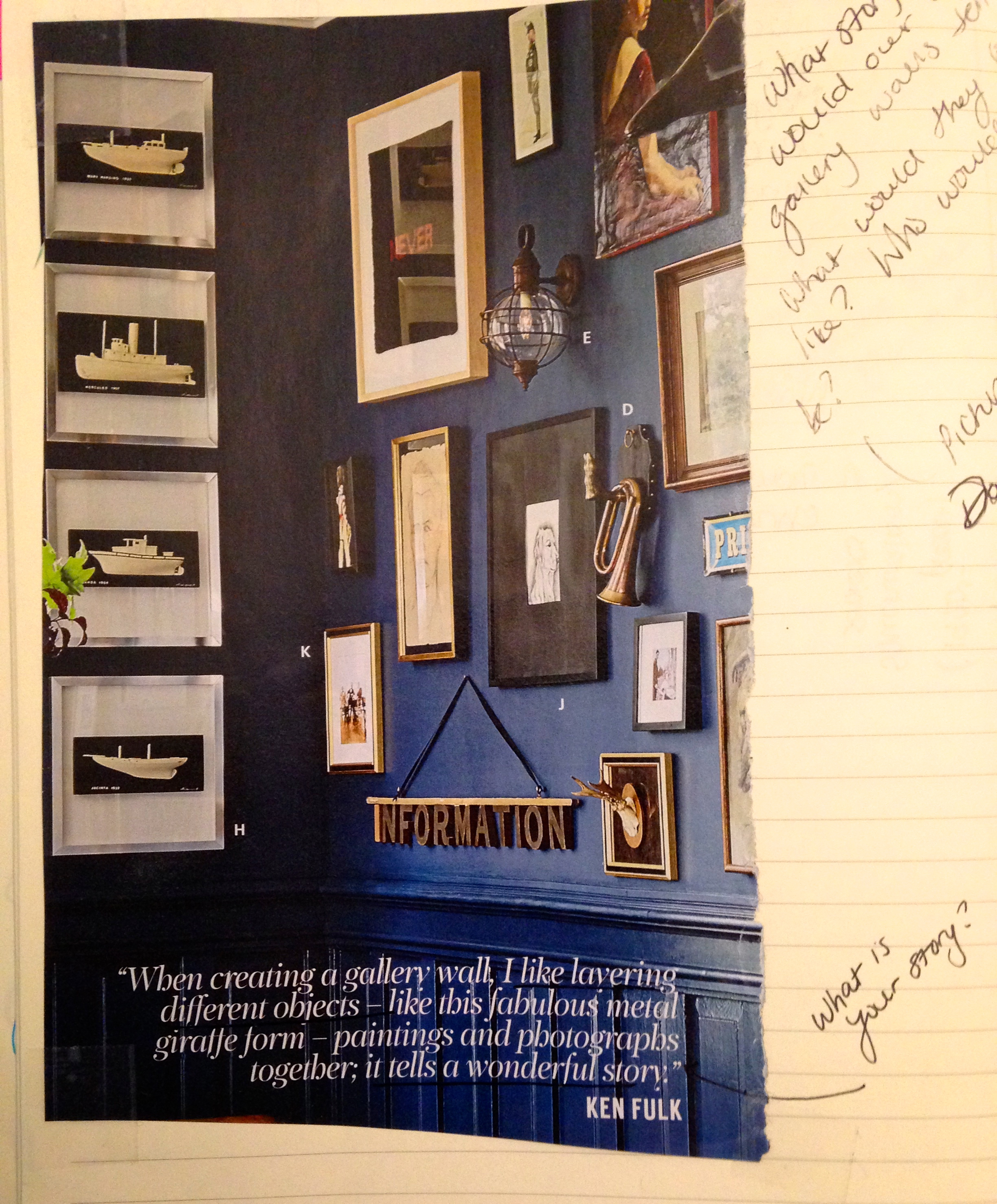
IMG_2848While thumbing through a Pottery Barn catalog, I paused to appreciate a navy gallery wall. Inky prints, gold frames, and brass hardware framed an assortment of images, below them designer Ken Fulk wrote, “When creating a gallery wall, I like layering different objects…paintings and photographs together; it tells a wonderful story.” I looked at the images, trying to decipher the story these antlers, ivory boats, dogs, and pencil sketches communicated. To be honest, I have no idea what he was going for, but I ripped out the page anyway, taped it into my writer’s notebook and started writing around it: “What story would our own gallery walls tell?” “What is your story?”

These are the questions I want my students to answer, and bit-by-bit their stories unravel. But all too often the process of answering these questions through writing intimidates them. In turn, one of the first activities we did this year to establish classroom culture involved designing and decorating our writer’s notebook covers. In the past I had students create inspiration page collages on the inside of their notebooks, but these were hidden and personal. They didn’t distinguish one’s self or serve as a conversational piece between peers. These images, which could serve as gallery walls for my students, were tucked away.

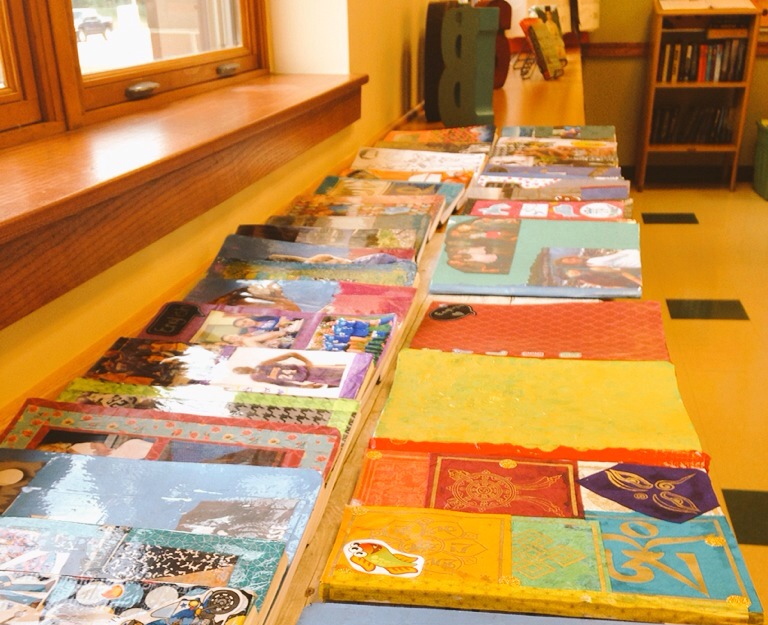
Student notebooks ready for writing.

Student notebooks ready for writing.

In turn, this year I stocked my classroom with scrapbook paper, patterned tape, and stickers. I lined tables with butcher paper and allowed for the messy process of gluing and cutting and painting. Together, my class sat listening to music and chatting about TV shows, cars, sports, summer vacations, and the scary transition between middle and high school. While this artistry and expression is typically celebrated at the elementary level, I encounter few secondary teachers who value setting aside class time for these collages. Some of my colleagues use it as a homework assignment, but I love how blocking out one class period and allowing for exploration becomes an icebreaker in and of itself. After all, these interactions mirror the same writing process students will engage in as they begin filling their notebooks and sharing the stories of their images.

Today we’ll circle around the classroom, sharing our notebooks with each other and highlighting one meaningful aspect of our covers. This activity is low stakes and comfortable; they have a choice in how much or how little information they provide. Hopefully they’ll find that these collages are snapshots in time of who

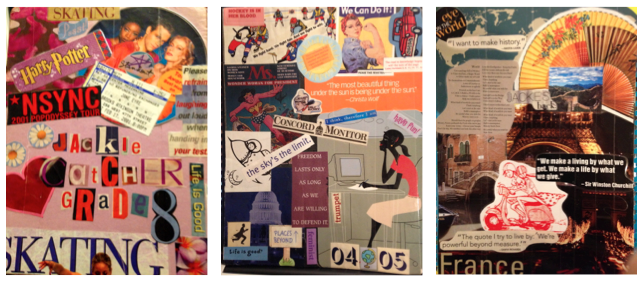
we are, reminders of what we value, and visual hopes for who we’ll become. I know this because as we sit in a circle, I will share, for the first time, the cover I created in 8th grade when I was caught between childhood and adulthood, the cover from 11th grade when I thought I wanted to be a journalist, and the cover from my junior year of college when I left on a great adventure to study abroad in Ireland. In the end, we’ll take a great leap forward in beginning our process of sharing who we are through words and images.

My notebook covers through the ages: 8th grade (far left), 11th grade (middle), junior year of college (far right).

My notebook covers through the ages. 8th grade (far left), 11th grade (middle), junior year of college (far right).

Syllaboom or Syllabust

IMG_2809

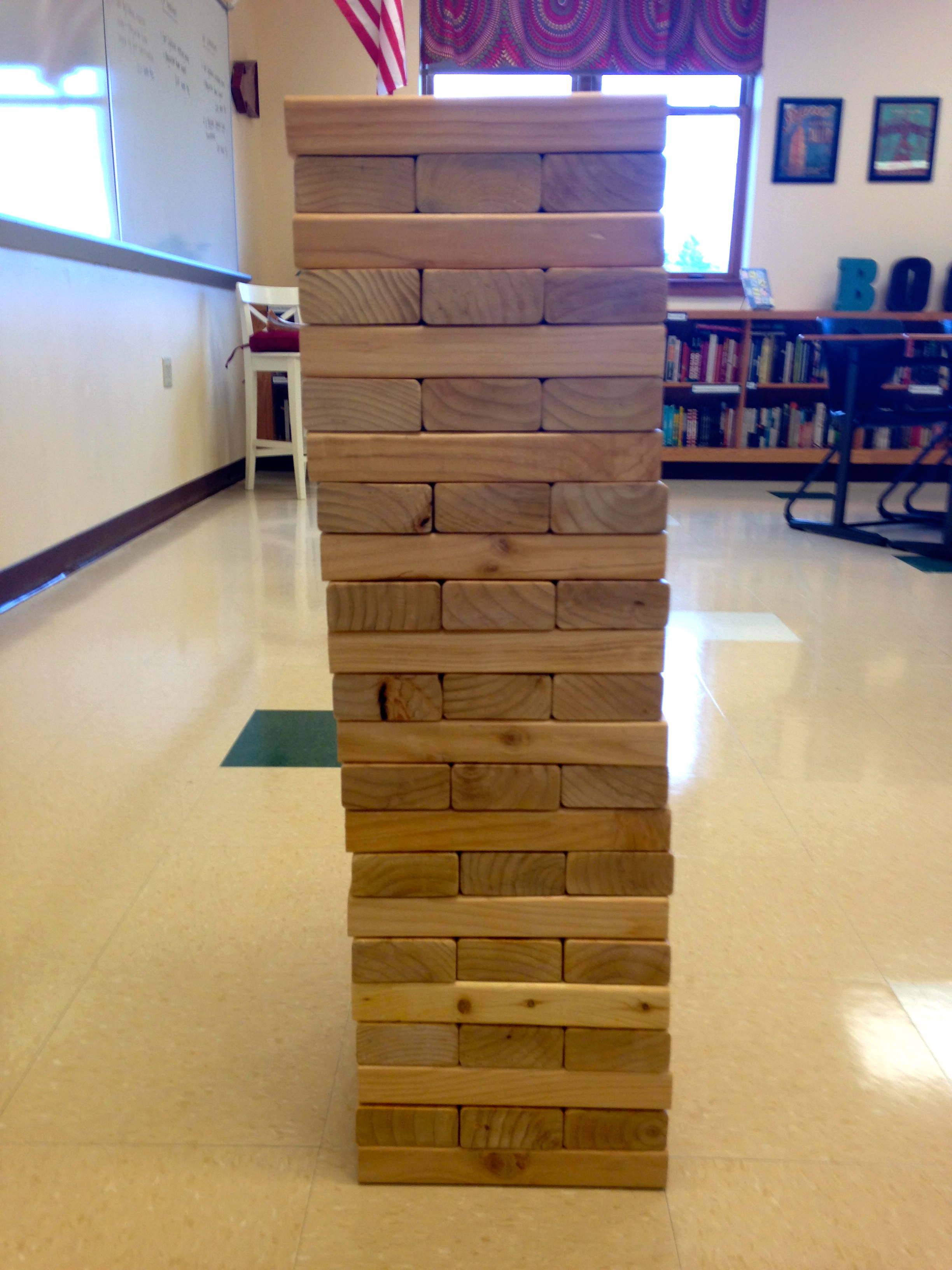
Giant conversational Jenga for a first day ice breaker.

The air of an empty classroom vibrates with excitement the days before the first bell rings. Polished floors gleam, new composition notebooks sit stacked evenly, crisp bulletin boards stand brightly against cinderblock walls. The energy feeds over into the freshmen who see my classroom for the first time. This is one of the things I love most about this job—the cyclical process of reinvention, the ability to start fresh and new for both us as teachers and them as students.

I do not start my class with reading the syllabus for this exact reason—syllabi, oftentimes stuffy and long, don’t nurture the charge of possibility. Too often they stifle it. No matter how many times I condense, rewrite, and inject personality into them, between the required plagiarism description and the cell phone policy, I am afraid I come off as a jail warden.

Because of this, I wait until the second day of school to review the syllabus and instead fill my first day with low stakes, community-building activities. Last year I felt pressure to kick off the year with a summative assessment to assess the baseline writing skills of my students. I felt pressure to keep up with my colleagues, so I’d bumped up my plans and jumped straight in the first week. Instead of spending time fostering exploration and growth, I focused on individual final products, forgetting the organic process of building up an environment that praised the formative process.

I focused less on establishing their writer’s notebooks and more on ensuring students had three polished pieces within the first quarter. Number-wise it felt like a success—I could back my curriculum and process with hard numbers; my assessments aligned with many of my colleagues, but my classroom atmosphere lacked the supportive community we had worked so hard to establish the year before.

The classroom is ready for our first day of school!

The classroom is ready for our first day of school!

This year I’m returning to my “old” ways—focusing on the need for consistent quickwrites, notebook work, and small group and whole class sharing to promote trusting relationships among my students. Based on Carol Dweck’s research on the growth mindset, I’d rather give my students the time and space to make mistakes and struggle through their writing.  This year, our first day won’t involve immediately reviewing our new standards-based grading policy. It won’t require students to write their first paper by Friday. Instead, our first day will be full of giant conversational Jenga where students simply talk to one another. We’ll learn each other’s names in methods that DO NOT involve finding an adjective that rhymes with our first name. We’ll have workshop time to establish the individuality of our notebooks with collages of paint, pictures, tape, and stickers. We’ll share our favorite reads, listen to spoken word poetry like “What You Will Need in Class Today” by Matthew Foley, write, and speed date with books.

Instead of focusing on the rules, the assessments, the end, we’ll praise the process, the journey, the beginning.

Mini-lesson Monday: Pickup Lines and Leads

709bdc7d84adf63af46e2d12dffae90eEvery book has a pickup line, a sexy statement right at the beginning that either draws you in immediately or leaves you wishing for the end.

I knew that first lines could either make or break a student’s date with a book, but I’d never thought of them as “pickup lines” until I read Thomas C. Foster’s How to Read Novels Like a Professor. We’ve all had that one awful date; I remember one sorry soul singing Coldplay’s “Green Eyes” to me: “And honey you should know/That I could never go on without you/Green eyes.” The problem was I don’t have green eyes; they’re unmistakably blue (and he wasn’t colorblind either—I asked).

So in the spirit of bad pickup lines…and some outright phenomenal ones, an early minilesson I teach is on leads in narrative writing, how to catch a reader’s attention, and how to miss it altogether.

Objectives: Using the language of the Depth of Knowledge levels, students will recognize a wide variety of opening sentences (leads) in writing. They will identify patterns and compare effectiveness through discussion. They will formulate their own leads, revising them, and finally applying their understanding to future writing assignments.

Lesson: To begin the lesson, I start with a list of opening lines from past students. The sentences are at least five years old and from a different district; they have no identifying details, and they range from outright hilarious to cryptic. Independently students pick their three favorite and three least favorite; they combine these within small groups. We then compile this list on the white board, noting which sentences show up multiple times. While I jot down their observations on the board, students discuss what drew them to the leads they liked and what made them dislike other leads. This provides us with a framework for what makes a lead strong and how we can model this in our own writing. If there is anything they have missed, I take the time to add it in at this point, backing it up with an example.

Following the discussion, I share Thomas Foster’s explanation of an opening page: “We’re being asked to commit a lot of time and energy to an enterprise with very little in the way of guarantee of what’s in it for us…The opening of a novel is an invitation to come inside and play. The first page, in this context, is not so much a guarantee as a promissory note: ‘Hey,’ it says, ‘I’ve got something good here. You’ll like it. You can trust me. Give me a whirl.’ And that’s why the very first line is so important” (How to Read Novels Like a Professor 21-22). I reinforce that we’re are creating this atmosphere for our own readers by convincing them that our story is worth their time and effort.

Finally, we turn to our own independent reading books, looking at the first line on the first page (or if they’d like the first line of any chapter). Students copy down the line in their writer’s notebooks, recognizing what about the lead makes it strong, weak, exciting, or lackluster. We come back together to discuss their findings once again before breaking into writer’s workshop.

Follow-Up: At the beginning of the year, students complete a snapshot narrative followed by a longer personal narrative. Using the mentor examples or the mentor lead from their independent reading book, students can explore multiple ways to write or revise the lead of their story. Based on this minilesson, they can also trade stories and provide peer feedback to one another

What are some narrative mini-lessons you use to kick off the year? Share in the comments!