 Join us for a summer series revisiting our top posts from this school year, and please “turn and talk” with us in the comments section each week!
This post from guest writer Amy Menzel struck a chord with readers in 2019. Amy writes here about ‘aha’ moments that strengthened her convictions about choice reading.
I can’t put my book down. I’m (finally) reading Extremely Loud and Incredibly Close and I am loving it. I book talked it a week ago and I’m 75 or so pages from finishing. I’m not sure why I didn’t read it before! I’ve book talked it before, so I assume I was so engrossed in another title that this one had to wait. Anyway, I’m already anticipating a serious book hangover upon finishing.
As I crawled into bed and turned on my reading light last night, I had two lightbulb moments. In addition to the obvious one, there was the realization that I am not rereading a book for the eleventy-seventh time this year. In fact, I haven’t reread an entire book for the past two years. Not that there’s anything wrong with that. But there may be something misguided about an English teacher focusing all her efforts on teaching the same few books year after year.
I spent nearly the first decade of my high school teaching career doing just that. I could still deliver a solid lesson on To Kill a Mockingbird, Fahrenheit 451, The Great Gatsby, or The Kite Runner at a moment’s notice. Give me an hour or so to prep and I could review layers upon layers of annotations in my personal copies of each and make a solid lesson a good one. But I’ve been there and done that. Sure, I found new insight with each reread, but I don’t think enough to warrant the time it took. I’m not convinced my lessons got that much better from year to year, despite my thoughtful (and time-consuming) planning and preparation. And, really, that shouldn’t surprise me.
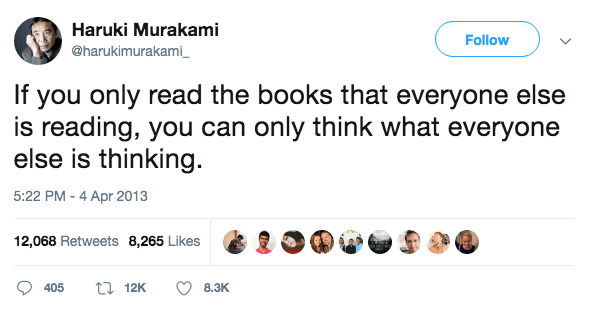
Writer Haruki Murakami once tweeted, “If you only read the books that everyone else is reading, you can only think what everyone else is thinking.” And, there I was, only reading the books that I had read, and only thinking what I had thought. I mean, I added related readings to ever-expanding text sets and used new pedagogical practices, but I was basically the academic equivalent of a Taco Bell drive-thru. It was all the same stuff just packaged differently.
That’s no way to live. It’s no way to grow.

I see my job as an English teacher much differently now than I did as an eager newbie. I’m still eager, alright, but I also have this sense of urgency. Part of it is that I teach seniors now. And second semester Senior English is basically the pressure cooker of secondary education.* I have 90 days to help students identify as readers. Let me tell you, it’s not going to happen with a traditional approach. At best, a traditional approach might convince them that reading is “not that bad” as they grind their way through a couple assigned books (or the SparkNotes of a couple assigned books) that they may or may not find all that engaging. I’m striving for more than that.
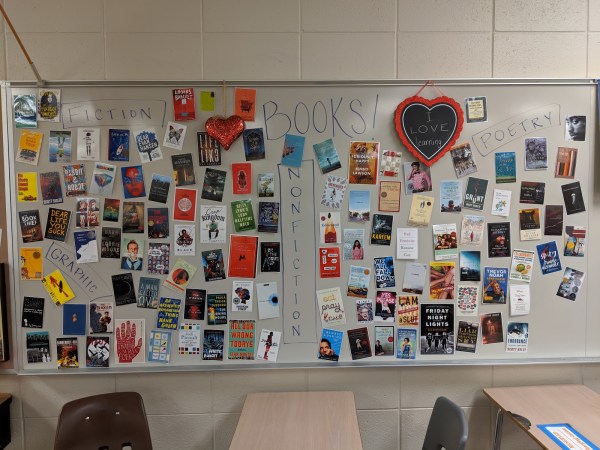
I don’t have a lot of time with these young scholars and there’s no time to waste. It’s time they find books that intrigue them, inspire them, and challenge them. It’s time they find books they actually want and will read. And it’s really important that we shift to students finding their own texts. “Real world” readers don’t read because some lady named Mrs. Menzel tells them they should. They read because they find books that speak to them. Of course, I’m here to help. I book talk a new title every single day. I make it my job to play nerdy cupid and match the right title with the right reader. It all takes a lot of time. But not more time. I’ve simply reallocated my time. I don’t spend hours rereading the same books and turning last year’s burritos into this year’s enchiladas. Instead, I read. For real. I read a lot. I read books I want to read and books recommended by librarians and students. I read novels and nonfiction and graphic memoirs and collections of poetry. I read magazine and newspaper articles and blog posts and lyrics and scripts and transcripts. And I share what I read. And I ask students to share what they read. And we talk about it and we write about it.
 my book board, featuring all the title’s I’ve book talked this year so far
And I’m finally living a reading life I want my students to follow.
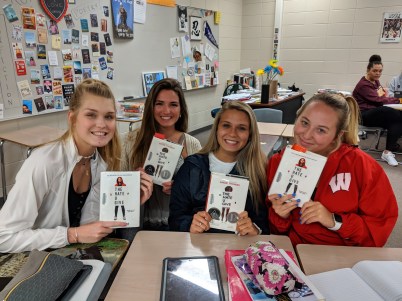
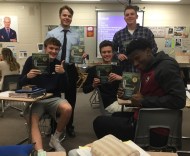
(And look at them follow!)

*I’m pretty certain this analogy checks out. It sounds good. Truth be told, I’m much more Taco Bell than I am pressure cooker kinda person in the nonliterary, culinary sense.
Amy Menzel finished Extremely Loud and Incredibly Close nearly seven books ago. She just got around to revising and submitting this guest post because teaching. She knows you understand. You might also understand why she’s contemplating spending $20 on this “SAVE THE WORD TACOS” t-shirt. She hopes you have a great end of year and a fantastic, restful summer filled with great reads.


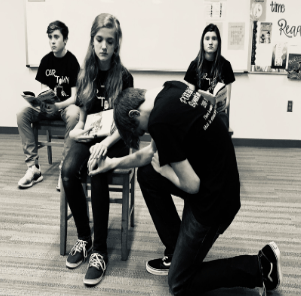 In writing workshop, my students’ favorite things to compose were Spoken Word poetry and film analysis. When I asked students what their favorite mentor text was at the end of the year, most of them chose
 In addition to being inspired by Spoken Word poets, particularly Taylor Mali and Phil Kaye, my students enjoyed the autonomy of writing about memorable characters when we studied book and film analysis. Our favorite mentor text for character study was

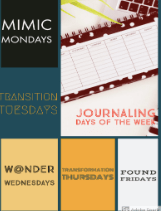 Creative Writing elective course, instead of writing into day (
 facilitating the Rhode Island Writing Project’s
  my Barnhart Brownie Points system which creates class to class, class to self, class to whatever connections (


 been in love with all things literacy and education for as long as she can remember. She believes to share that love with students and teachers has been the greatest of honors. She says, “I am proof that literacy and education can change a person’s destiny in the best ways.” Along with being an instructional coach and teacher, Bridget is also the mother of one adorable book-loving little boy and the wife of one giant man-child. Her life goal is to love like Lizzy Bennet, fight like Harry Potter, and live like Atticus Finch. Follow her on Twitter







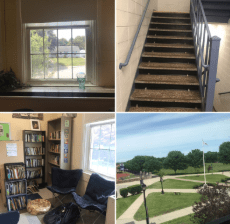
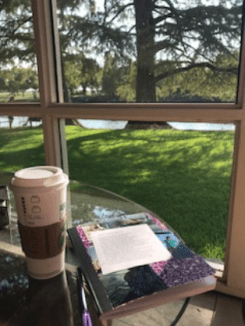 It’s amazing that a place of scenic tranquility and beauty could rouse such feelings of rebellion and determination.

 As I reflect on these moments, I ask myself whether these moments would have occurred if we had done STAAR test packets and STAAR test prep. I ask myself whether the students would have continued to show up day after day. I ask myself if I would have grown as a writer myself through the help of these kids. But I already know the answers.
 Three Teachers Talk