Category Archives: Erika Bogdany

Shhh…We’re Thinking!

Our Compass Shifts 2-1  As we near the end of 2013, there is an exuberance that has sprinkled itself all along the United States as Winter Break has arrived.  Holiday lights decorate homes.  The unbelievable smell that emanates from wood burning fire places gently floats through the chilly night air.  The streets are bustling with last minute holiday shoppers.  Celebratory gatherings have begun.  The decadent hot chocolate, whose heat, penetrates our gloved hands.  Yet I have cuddled into one of my favorite nooks on my oh-so-comfortable couch to think…reflect…and wonder, “How will 2014 be a year that embraces the power of introverts?”

Random?  No.

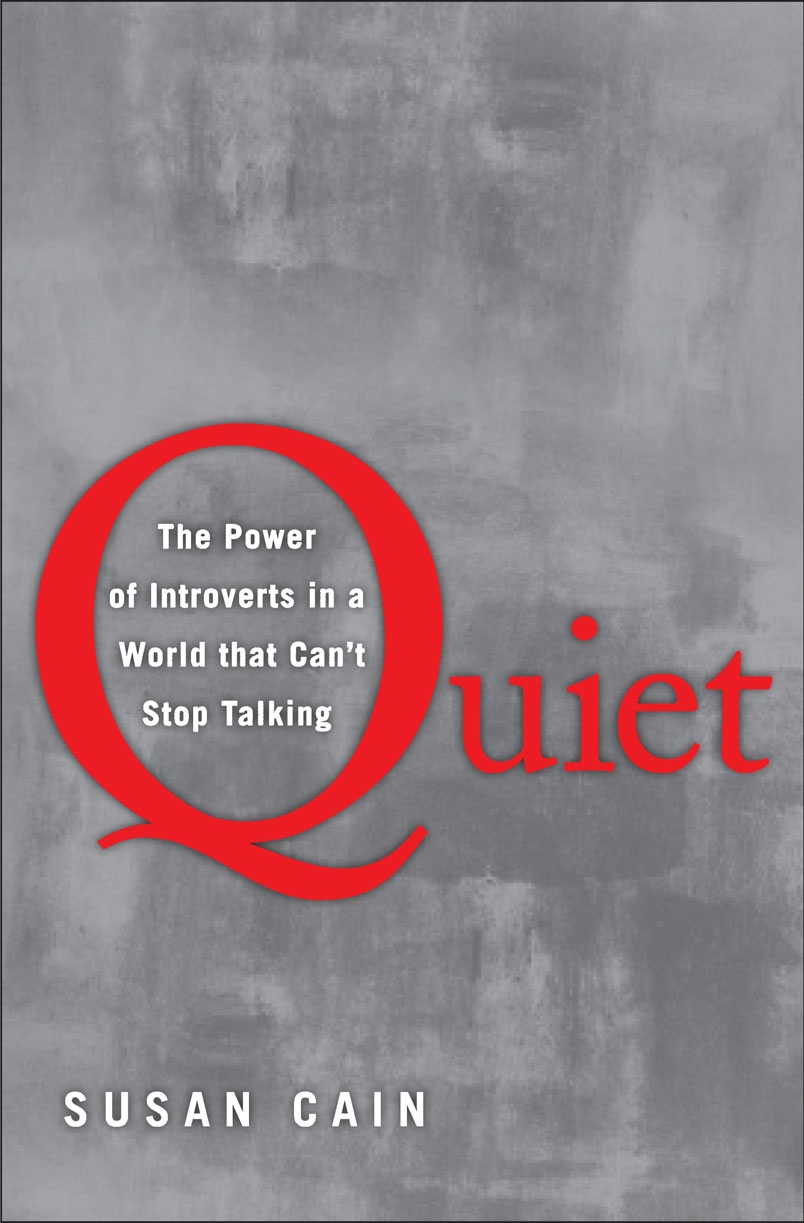
Understanding the world of introversion has been very prevalent, as of late.  My principal finished Quiet by Susan CainQuiet:The Power of Introverts in a World that Can’t Stop Talking by Susan Cain during Book End (our school wide reading program) and placed it in my hands for my own research and understanding.  As I started flipping through the piece, I felt compelled to do more research because the concepts surfacing were a detailed description of how I  move through the world.  Before I allowed my vulnerability to take over and believe everything I read in this book, I wanted to know exactly who Susan Cain was.  As an introvert, deep and thorough understanding of theoretical ideals feeds my soul.  Just saying.
After watching Susan Cain: The Power of Introverts, I felt this overwhelming sense of needing to message this information to my students.  I know, in my own journey as an introvert, there have been moments of painstaking chaos when all I needed was time.  I needed time to gather my thoughts; time to sift through all of those insights; time to expand my ideas; time to understand the surfaced layers of complexity…  I recognize students suffering through the same struggle in room 382 as well.

All students who struggle to find their voice in writing, reading, and communicating need time to build confidence and skill; and this does not necessarily mean they are introverts.  A safe space to explore is essential.  Risk-taking allows students to recognize their mistakes and empowers them to find ways to feel success; and only happens when they know their vulnerability will not be taken advantage of.  We, as educators, are aware of this.

However, the idea of knowing who our introverts are would not stop gnawing at me.  Which students find comfort and growth utilizing outside factors and people to fuel their creativity? (Extroverts)  Which students are comforted by finding their ‘nook’ and looking inside of themselves to embrace their creativity?  (Introverts)  So I decided as a community, we were going to get to know the ‘real’ personalities learning in 382.

If you haven’t already, I highly recommend taking the Myers Briggs Personality Test to gain insight into your own world of learning and understanding.  I introduced the concept to students, passed out laptops, and off they went…embracing an activity that was soon to explain why they are who they are!  Chuckles along the way made the process that much more beautiful.

Students read all about their personality type and were captivated by its accuracy in some circumstances, and inaccuracy in others.  That’s the beauty of this experience; people are “not all or nothing” in any circumstance, this one included.  However, the assessment allows us to be privy to the dominant features of our personality.  This information is priceless.  I love having a better understanding of who the procrastinators are in the room because it’s my obligation to direct anti-procrastinating skills at these students.  Who needs just those few extra minutes when free writing in our Writer’s Notebooks in order to complete a detailed thought?  What students will ‘go with the flow’ because it’s innately who they are?  What students thrive on making decisions with their own best interest in mind vs. the students who think of the impact on others based on their decision?

To understand who is occupying 382 daily; we physically moved to one side of the room or the other as we debunked each category and made sense of what it all means.  It was insightful to see students embracing who they are as young adults; and most importantly, as part of humanity.  Students went on to create posters filled with insight, activities, and “Aha!”s that described the four categories of one’s personality.  The buzz throughout the room was infectious and not one student sat this one out.  Because, when students are invested in learning about themselves, each other, and the world that surrounds them; they thrive.

As students moved about the room, I had a moment.  I was shocked to see 2/3 of my students as introverts!  What?!  Shocked.  I had rationales as to why there was chaos ensuing as the new cycle (and new infusion of students) just started.  I know that deficiencies in literacy typically lead to behavioral concerns if not managed.  I know a two hour intervention course pushes students to limits.  Yet, I had NEVER contemplated that the majority of my students could be introverts.  I mean, the room is always so loud…and chaotic.  Introverts?

Yes. Introverts.

It was at that moment that I realized the loud, chaotic vibe encircling us all was simple.  Students’ innate needs were not being met.  Students did not have the time they needed to think, write, and communicate.  So, after the activity we took straight to our Writer’s Notebooks and reflected.  One student proudly announced, “Many people who think they know me think I’m an extrovert.  They’re wrong.”

So, as I continue to ponder (in awe) about the world of introversion, I can’t help but wonder: How will 2014 be a year that embraces the power of introverts?

The Unexpected Trio

Our Compass Shifts 2-1“Miss Bogdany, isn’t writing a narrative the same thing as writing a story?”

“Yes, it is.  However, we’re going to spend time exploring writer’s craft by infusing a few strategies.  We’re going to be in tune with our five senses; explore the power of short sentences; and work through personification all while sharing an important moment in our lives.  Ready to play?”

Over the course of the next two weeks, the playing had begun. My students were charged with the task of choosing a moment in their lives that has, and continues to, shape them as individuals.  As students took to their Writer’s Notebooks and scribbled words and ideas as they began to chronicle the very moment that guided their paths – struggle, strength, and empowerment; you could feel the intensity.

***

Since my time at UNHLIT13 this summer, I have been experimenting with ways in which to inspire my students’ writing.  While asking students to ‘play with’ their five senses, short sentences, and personification may seem like a tall order, or at the very least, completely random; I realized they were willing to try.  (I’m still not exactly sure why I grouped these three concepts together.  I’ll chalk it up to trusting a whim!) As each skill was introduced, it was partnered with Mentor Activities and/or Mentor Texts so students could see how other authors used these strategies.  Take a peek – Craft- Mentor Texts, Activities and Skills

I know giving students the time to think through what they’re thinking (I love this concept!) is vital to building their self trust, worth, and importance as writers.  So, I made sure to do just that.  I took each concept and taught it as a separate entity so students could narrow their focus to just one concept at a time.  We started with the five senses.

And yes, while the five senses have been part of their writing journeys for the last ten years, I was asking them to do it in a way that was elevated – full with adjectives and adverbs – so we could start with the fundamentals and work our way through.  A mentor activity involved pairing students together so they could collectively guide their readers on a vibrant, sensory tour of a destination.  Giving students access to this foundational, yet imperative, practice empowered them.  They made the leap from understanding the descriptive power of touring a destination to the descriptive power in bringing their own moments to life.  Here is an excerpt from one young woman’s journey:

I remember picking her up off them white sheets on the hospital bed and laid her on my white spaghetti strapped dress that was then covered in the blood that fell from baby N’s mouth.  I rocked her and rocked her until she got cold and stiff.  I held her hands.  Her little fingers got hard around my finger and I couldn’t even get my finger out of hers. 

I breathe deeply.  Saniyyah’s use of setting and color infuses wonderfully into the stark reality of what is happening.  You can’t help but to be invested, and then saddened, through this experience.

*

This summer, I also had the luxury of moving through Dave Cullen’s work (Columbine) with my ever- wonderful book group consisting of Amy, Emily and Lauren; and it could not have been a more exhilarating experience.  For the first time I was combing through a text, peering in with the scope of a writer not a reader.  This was formative in elevating my own view on literature and imperative for my students.

So, when we started studying Mastering the Short Sentence, I brought Columbine into our community and shared how beautifully (and masterfully) Cullen utilizes this technique.  (How could I not?!  It was where my own literacy scope shifted profoundly.)  The short sentences were highlighted prior so when students received their copies the ‘skill’ jumped out at them immediately upon first glanceWe took our time in debunking their individual power.

I also showcased some of my own writing with Day One Disaster? to show students where and how I played with this technique.  When I have writer’s craft questions, I secretly wish I had the opportunity to converse directly with the author who made the decisions, yet in most cases I’m left to my own analysis.  So sharing my efforts (albeit scary at times); affords students the opportunity to engage in dialogue around specific techniques, writing, and literacy as a whole.  Here’s an excerpt from a writer who is willing to take risks:

“I have a confession… I like you more than a friend and I think we will make a great couple”, he began to say. He stutters and chokes on his words. It was so cute to see him choke on those words.

My body starts to fill up with all sorts of amazing emotions. It’s unexplainable. I can’t think straight. He asks me what I think about him. My plan was to say I feel the same way.

Or, so I thought.

The next thing that comes out my mouth changed my whole life completely.

My heart and soul is working against each other like the U.S. vs. Vietnam. Blood and Crips.  A war against Heaven or Hell.

“I think I love you Sherwin”

Everything stopped. Everything except my heart.  Beating ever so loud at that. Boom, boom. Boom, boom.

The court case: Ife’s heart vs. Ife’s mind is finally over. My heart wins.

I’m Free.

Do we not all remember specific encounters with love?  Ife uses the power of short sentences to bring us into her piece; shares her inner-most thoughts with us, and affords us the opportunity to watch her play with mastering the use of short sentences.

*

If you haven’t had the chance to read I AM MALALA by Malala Yousafzai, make it a priority.  This piece is so beautifully written that I found myself rereading excerpts just to hear the words (and arrangement) over and over.  Beyond the craft, you can’t help but to take this young woman (and her journey) home with you, on your morning commute, to a coffee house on a rainy afternoon…or into your classroom to book talk and indulge in during independent reading.

I burst into class the day we started studying personification with MALALA and projected, “M’s, p’s and k’s were all enemies lying in wait.”, a line so eloquently phrased I read it three times over and each time students were awed that Malala chose to chronicle her father’s speech impediment so carefully, precise, and through the use of personification.  They couldn’t wait to try it out in their writing:

Cue me, seven or so years old standing on the flat of the plateau that was my grandfather’s land. A red hillside dirt road leads to a house, body made of wood and a roof of zinc. Being in front of it after all those decades of it being desolate, you almost felt as though the termites couldn’t eat away at it faster than the unfilled silence of children turned adults.

Kurt explores the use of personification while journeying his readers through this historic moment in his life.  “The body made of wood”…wow.


I am in awe (you can see why).  I am awed by students’ bravery, courage, and commitment to developing their moments and their crafts.  Who would have thought that the five senses, mastering short sentences, and personification would prove to be a beneficial trio?  While I was riding the wave of a whim, students were firmly grounded in their trust – trusting me to guide them and trusting themselves in taking risks.

What skills and techniques have you (accidentally!) combined to challenge and motivate students to push beyond their limits in writing?    

The Practicalities of Reading Workshop

ocs

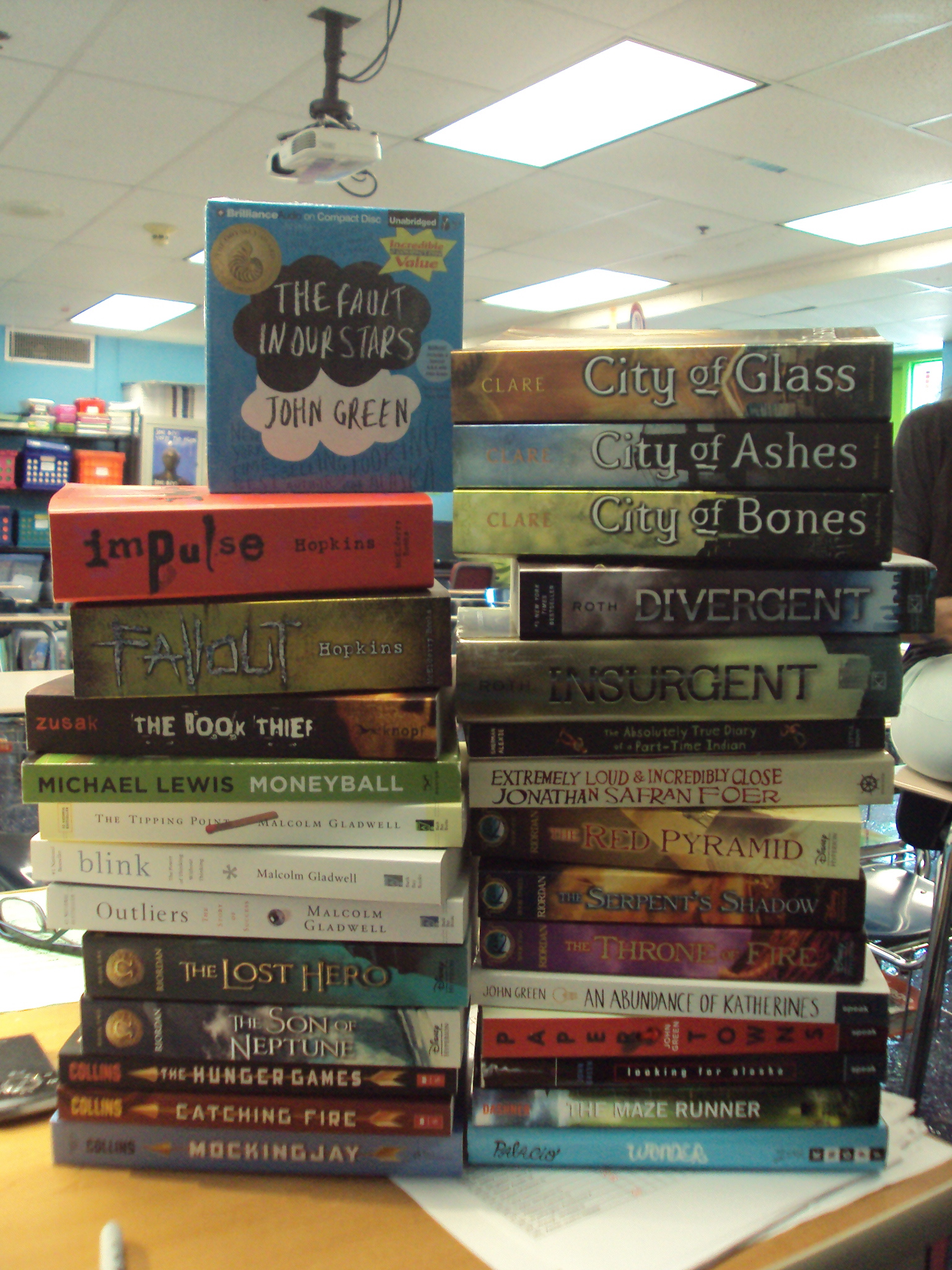
Incorporating reading workshop into your curriculum is easy once you have access to lots of great books for your students.  Some of you might be lucky enough to have a wonderful librarian at your school who cultivates a diverse collection of books (like I was last year), but others may be without that (like I am now).  After running into dead ends with our school and public libraries, I thought the best solution was to focus on building my own.

DSC03271

Books donated from a Donors Choose project

Anyone who is a reading fiend like me knows that books are expensive.  Because I haven’t won the lottery yet, I had to seek alternative means for funding my future fabulous library.  Great suggestions from Amy and Erika led me to Donors Choose, an amazing charity website that funds classroom projects for teachers.  Writing grants on this website has netted me over $1,500 worth of books of my choice!  I also had great success with Half Price Books, who donated hundreds of young adult and teen novels to my classroom.  Lastly, I’ve tapped an unusual resource–local businesses.  Large companies like Target, Sam’s Club, and Kroger have a budget they can only use for donations, and anything they give is tax deductible.  I wrote letters to these businesses explaining my needs, and they have donated gift cards each month, netting me a total of $450 in books.  All of this grant/letter/request-writing has paid off, and I’ve been able to build a large, dynamic library.

IMG_0129

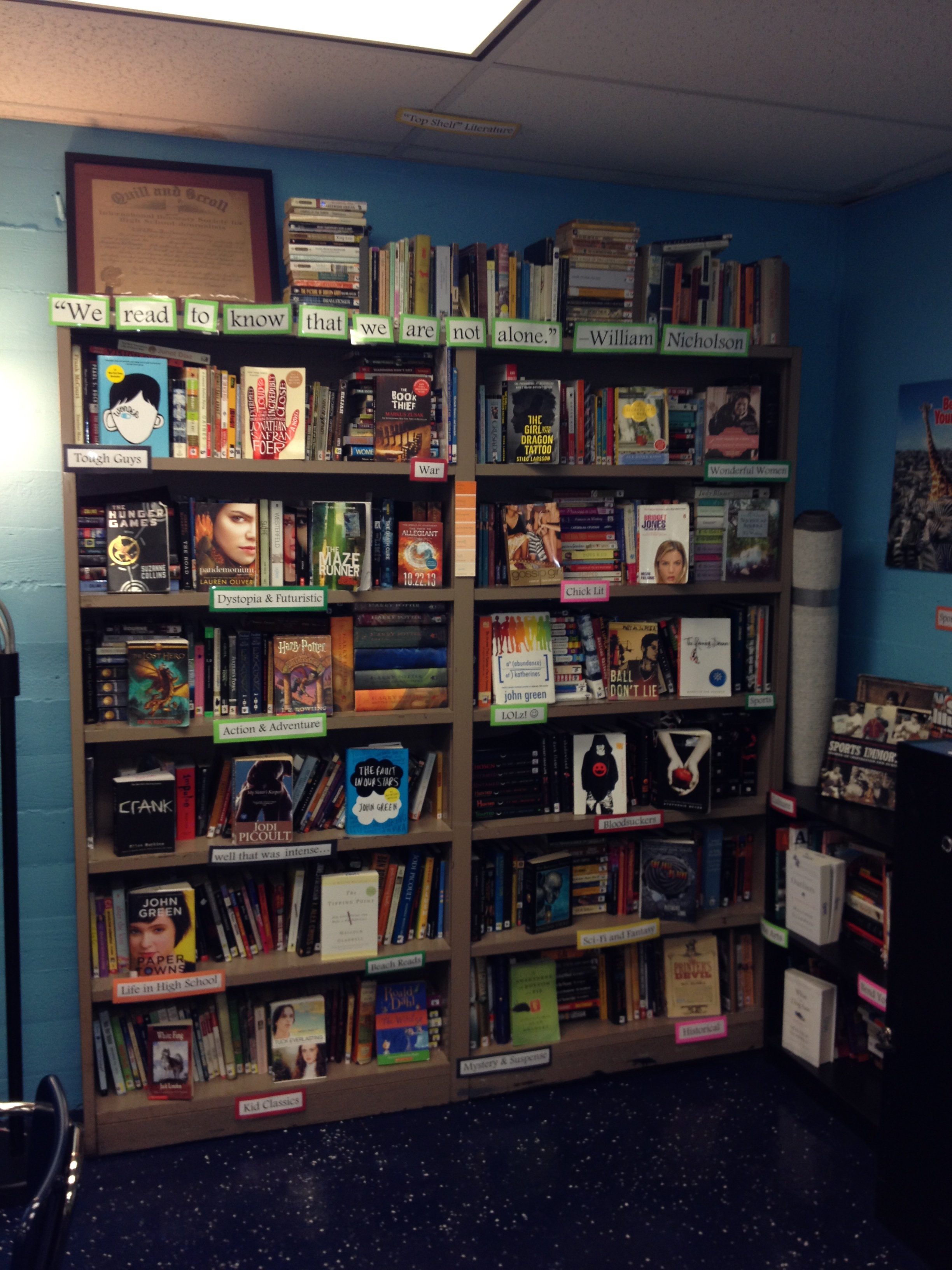
Once I had my books, I knew I wanted to organize them in a fun way that spoke to my teaching style.  My students and I came up with some inventive categories–“Top Shelf Lit” (classics, which are actually on the top shelf), “Bloodsuckers” (vampire novels), “LOLz” (humor), and “well that was intense” (books about death/powerful issues that will make you cry).  A wonderful problem I’ll need to tackle soon is where to find another bookshelf!

IMG_0138

I’ve already written about fangirling in such a way that gets students excited and informed about books.  Once a student knows what he or she wants to read, the only problem is tracking that book down.  I took an idea from Emily and started a “reading wait list” whiteboard, where students can leave a public request for something they’ve been clamoring for.  In terms of determining who’s got what, I have a binder that lies on the cabinet near the bookshelf where kids check books in and out.  Because I show them my grants and letters, and I rip open the boxes of freshly-delivered books in front of them, they can see the hard work being done to build the library.  I think that’s what makes them so conscientious about returning books, because they’ve been great about that so far.

IMG_0140

Once you’ve built your library, and once your students are reading the books they’ve been dying for, you have to somehow keep track of all that they’re doing.  I’ve modified Penny Kittle’s excellent reading log sheets just a bit to make tracking my students’ reading easier.  These logs get passed around every bell, and students write down what page they’re on of their independent reading book.  I’ve added a “Last Friday page #” column, in which they copy down their latest page number from the previous week.  This makes giving them credit for weekend reading much simpler.  At the end of the week, my student Teacher Assistants count up the pages read and write them in the column on the far right.  It’s a simple matter to compare this number to the students’ reading rates and give them a quick grade based on how much they’re reading (two hours per week is the requirement).

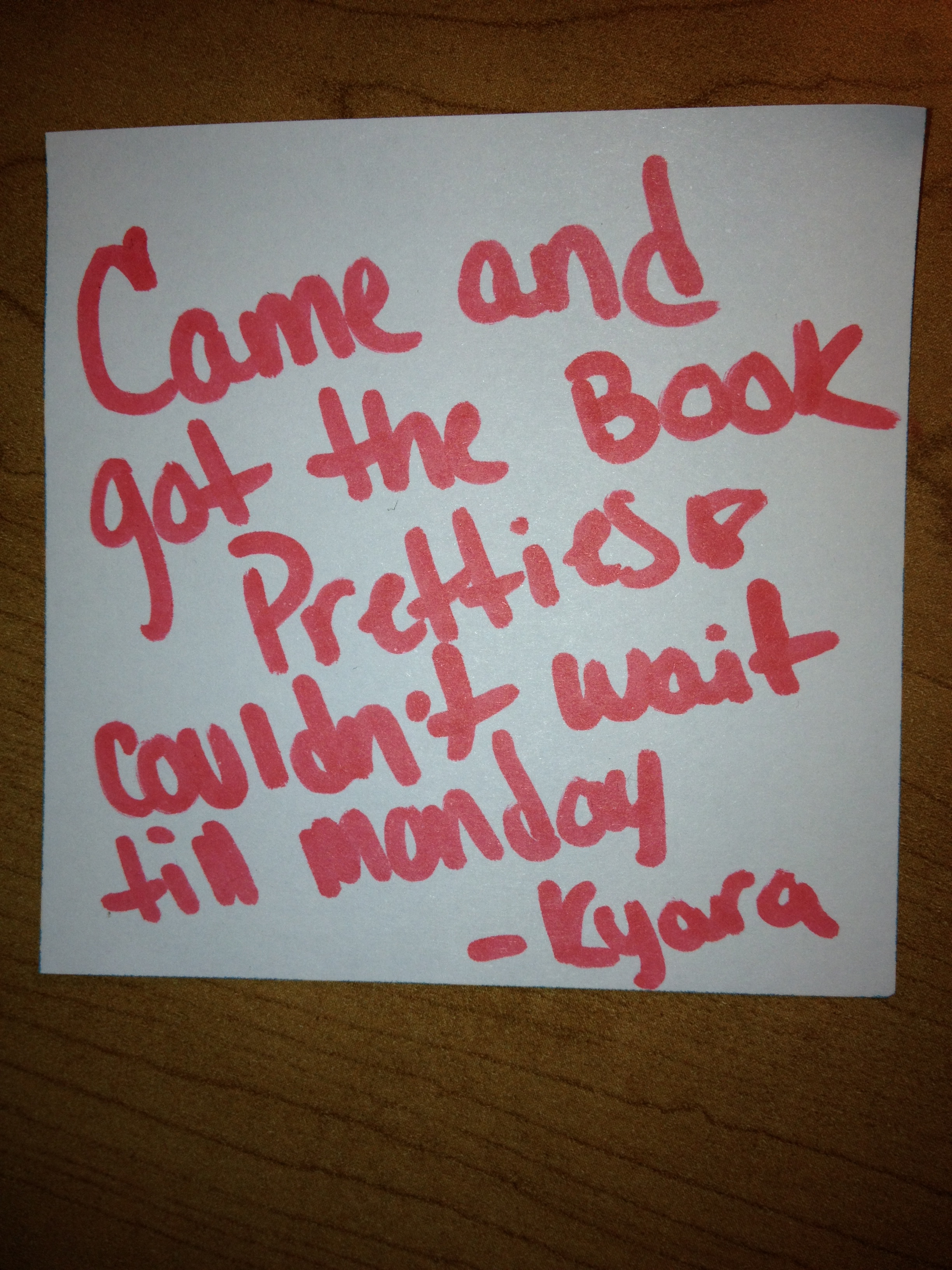
So, there you have it…all of my tips and tricks for building, organizing, keeping track of, and assessing the reading of books in a classroom library.  I’m still working hard to keep improving mine, and I’m sure things will continue to change.  However, it seems like my current system is doing its job, since I found this note on my desk yesterday after school…

IMG_0128

…and there’s no more rewarding way to end your week than that.


Calling All Principals!

ocs    “I’m curious.  Tomorrow as you wake up and head out the door to start your day, you are faced with the reality that all educational institutions have been permanently shut down.  How does this impact your lives?  And, most importantly, what are you going to do about it?”  

As I set out to write this piece, I internally chuckle as I reminisce about the beginning of the school year.  Three weeks ago, if you had peered into room 382 to see what my Social Justice and Student Voice class was up to, you’d be welcomed by silence and quizzical looks replacing the vibrant and eager-to-learn sparkle in students’ eyes.  This off-the-cuff question became the catalyst for an unplanned three week project.  Here’s how: 

  1. I happened to be curious about something.
  2. Students couldn’t stop talking about it.
  3. All other plans were pushed aside. 
  4. Then, magic!

At that very moment, eleven principals were born.

From Dr. Collins to Principal Senat, students decided the only way to ensure that all human beings are given a fair shot at pursuing their dreams and goals is to reconstruct our educational system.  And they were very clear about this – the system needs to be customized to meet the needs of students far and wide.  Who better to do so then those most versed on the issue?  Vision, passion, and commitment ooze out of these change agents as they take to the process.  

As students have welcomed and emerged themselves in taking on this charge, there’s not much room for me in the process!  The way in which I sliver my way in is by providing guidance and options regarding organization.  Here’s what it looks like:

Write!  Just write!  There need not be any organization at first.  Students glanced at me through the corners of their eyes, caught each other’s eyes, glanced back, and repeated this eye game various times.  When they noticed I was not giving any further guidance they realized “she’s serious”.  And they tried it.

* Get dirty!  (Again, the eyes.)  When I explained that getting dirty means you can tell Principal Gordon “has been here” because he’s ruffled up his thoughts, he’s playing with his words, and he’s continuing to shift around his ideas…they liked the sound of others knowing “they had been there”.  Armed with highlighters, post-its, and colored pens.  Again, they tried.  

PP - self-edits

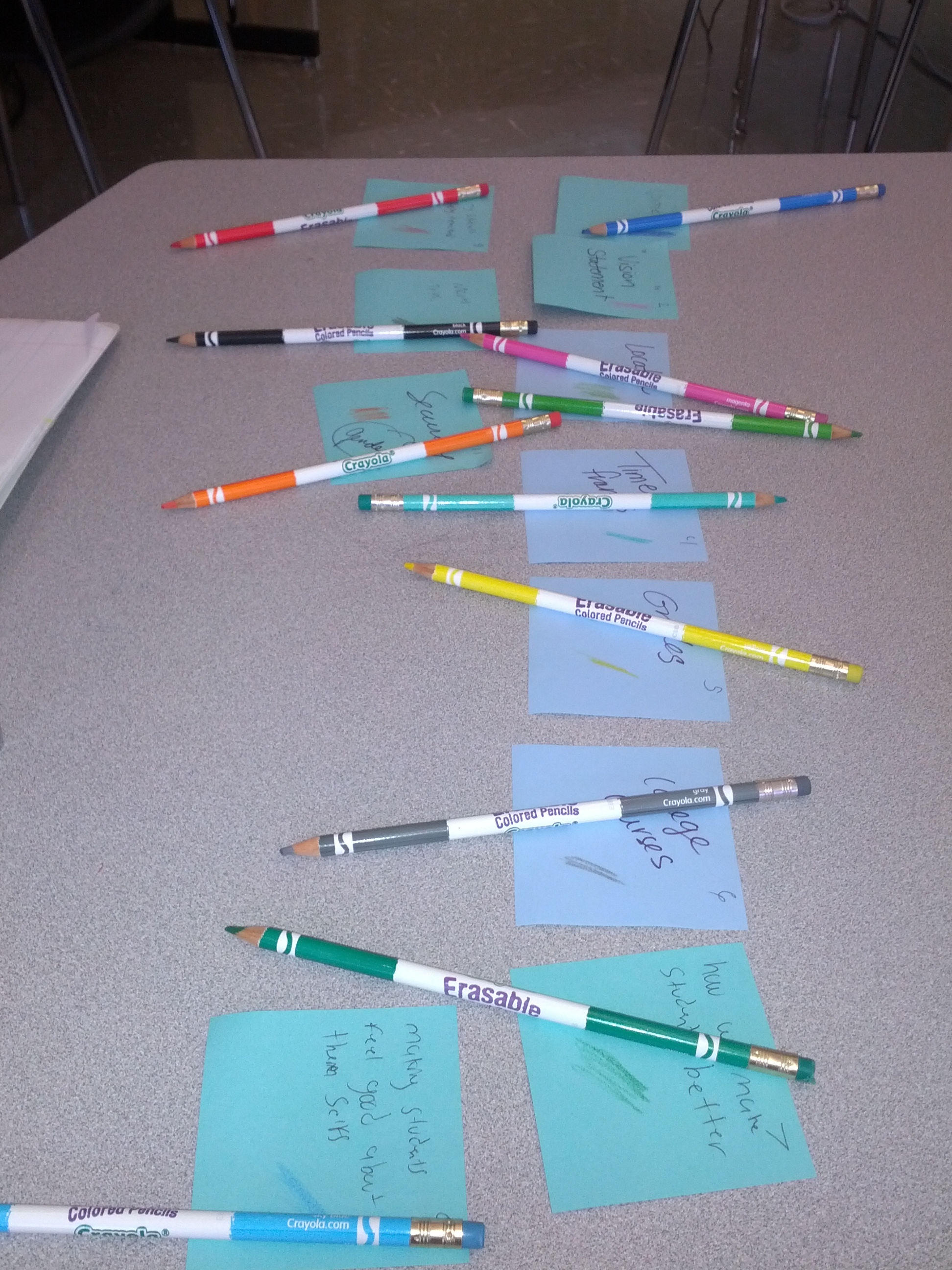
Now, let’s start to organize!   I know I know…it feels a little backward, but without students feeling as though they have to write in boxes, this process frees them.  They write first, organize next.  Yes, the key to the Writer’s Workshop! Write down the main topics in which you have decided to write about.  (See loose leaf)  Partner a topic with a color.  Each topic deserves its own post-it with the same color.

PP - color coded paper

*Once topics are color-coded and placed on post-its, now students have freedom to move their topics around! Literally.  Students have a holistic scope on all of the topics they have written about and now move post-its around in the order in which they want to introduce (and discuss) their topics.  

PP- color coded more pencils

 *Now, go into your paper using the color you indicated for each topic and underline wherever you find ideas about the topic!  Many times students enjoy seeing the same color throughout additional parts of the paper.  This visual guide helps them realize that their writing is (while sometimes scattered) valuable, and even though they (unintentionally) drop the topic into various parts of the paper, they have the power to locate it, restructure it, and reorganize it.  

*Would you like to take a look?  Students, when comfortable, reach out to other students to peer review their work.  This is a wonderful opportunity for students to talk practice, content, and work through ideas together.  I provide them with guidelines on how to productively, and respectfully, provide feedback.  (Pardon the red marker.  Students gravitate toward them!  Next up: using gentler colors for all revisions!)  

PP- peer edits

*When all of our drafting has landed in a comfortable place, we take to formalizing “Best Drafts”. (Thanks to Penny Kittle for this wonderful and inviting phrase students and I have comfortably adopted).  Each principal now makes themselves cozy in their “offices” and takes to their visual presentation.  Our principal and assistant principal will be in the audience when students present their projects next week.  Students have expressed some nerves, but little do these experts know we’re all here to borrow a few ideas from them!  

PP- Office


Eleven principals, three weeks of hard work, and one wildly proud educator makes for quite the beginning-of-the-year journey.  While finding the moments in which I can guide students along their writing paths, and support them individually in the way in which they succeed best; I can resort less to asking how to educate, and listen to what they are offering.  They are whispering to me through their vision.  These educational leaders have invited me to understand their views on what an educational system, derived on justice, looks like.  I am now the student.  

Day One Disaster?

Our Compass Shifts 2-1  Fact has it that my wonderful Personal Learning Network (PLN) was back in the swing of things well before the 2013-2014 school year started in the boroughs of New York City.  So, for the entire last week of August and into the beginning of September, I was watching magic take place all over the country through my computer!

I was with Amy @amyrass, in Texas, as she embarked on her first day of Writer’s Notebooks which brought tears to those who were starting their writing journey together; as honest writing so often does.  Shana’s @litreader themed library, standing tall against newly painted bright blue and green walls, inspired her students to embrace literature from the moment they walked into their West Virginia oasis.  Out in California, Emily’s @booknerdkim community of learners were so enthralled to be engaging in the Writing Workshop, that decorating their individual notebooks became a source of (very!) friendly competition.  I was taking note.  I was excited.  I was ready.

Or, so I thought.

Day One has arrived.  I am channeling the beauty of the work being done throughout the country and greeting my students with smiles and complete calm.  Yes, calm.  And yes, I myself am a bit in awe that “I” and “calm” have been partnered to describe the beginning of this journey.

Day One comes and goes in the blink of an eye, as it so often does, and I find myself sitting alone in my classroom with a wild mix of emotions.  I’ve taught my classes; students have left the building and are transitioning into their evening lives; and as I look around I notice…there are no traces left behind that any learning has taken place.  Chairs are pushed in, supplies are neatly organized in each table’s bin, and the floors are still glossy from this summer’s wax.  Did anything happen in here?

As I journeyed home that night, uncomfortable and uncertain, I was unsettled with how calm I remained.  As I reflected on the day I was consumed by the flat energy, the lack of bubbling conversation, the quiet minds, the mechanical smiles…  I couldn’t help but wonder that if I was the most prepared and ready to educate than ever before, how could Day One be so disappointing?  And, if I was this disappointed, I couldn’t imagine what students must be feeling.  Sigh.

Day Two comes, as it always does.   As I’m getting situated to begin the day, there is a knock on the door.  I look at the clock and it is 8:33a.m. – not time for class.  Surprised to see this student with a huge smile on his face peering through the tiny window separating us, I open the door.  There are no words, only actions.  He passes me, what seems to be a blank composition notebook.  I look at him with a puzzled look.  His smile grows.

“I wrote.  Here.”

As I walk back into the classroom alone, I open this Writer’s Notebook.  I happen upon pages of text…full pages, with words scratched out, abbreviations, acronyms, exclamation points, (unintentional) disregard for punctuation, grammar and spelling.   Yesterday, when asked, he thought he was being honest about not being a writer.  So, as I carefully maneuver through and reach the end, I am moved by how brave this student is.  He is courageous to explore his stream of consciousness – in writing- for the first time.  He is an evolving man full of character.  He is willing.  He is hungry.  He is fighting for more.  He shared this all with me. 

Mid-week students’ energy starts surfacing; hands are finding their way into the air in hopes of answering a question; the buzz (I so desperately missed) is starting to fill our community with a new excitement; and while this year is going to be unique (as all others are) we seem to be starting to find our groove.  This groove is calm yet exciting; quiet yet intellectually stimulating, and most importantly…it’s all ours to explore and share as a collective.

Day Five greets me (again!) before the start of the school day.  A student comes rushing toward me with an urgency that stops me in my tracks (hands full of bags, books, and dangling keys) as I’m just about to unlock the door to unload.

“Ms. Bogdany, I LOVE my book!  I was reading last night and shut off the TV so I could concentrate more.  My mom asked me why I was doing that.  She said, “You never shut the TV off to read.  What are you doing?!” I explained that I wanted to focus on my book because I’m really starting to like it.  I still want to read Jesus Land, but I’m going to finish this one first!”

Without interruption, and as we move over the threshold from the hallway to our shared learning space (where I finally put down everything I am carrying), this wonderful young woman continues.

“Yesterday, when I was on the bus, I was reading.  You know my boyfriend he’s in your other class.  When we got to his house he said, “You know we have to read for fifteen minutes.”  I told him of course I knew!  I took out my book, he took out his and we read.  It was awesome!”

I’m smiling, and in my head thinking “Forty-five minutes…forty-five minutes of reading, but we can start with fifteen!”  And just as the bell begins to sing, there is one last message this student wants to leave me with before she rushes to her class.

“You know, Ms. Bogdany, my twin siblings; they’re not good at reading.  I wasn’t either when I was young.  Actually, people told me my mom should pull me from school because I was never going to learn.”

Yes, people actually told her that.

“So, I know what they’re going through and I want to help them be better.  Tonight (Friday) we are going to sit as a family and read; I’m going to help them with their books from school.   I want to do this every week with them.”

My heart starts to swell.

“I’m scared though.  Next year I want to go away to college so who will help them get better?”

While I’m not sure I have the answer to this, and so many other questions, I do know that what seemed to be a disastrous Day One was really an illusion.  I recently heard someone say, “My mind shuts off and my soul takes over.” I made the mistake of allowing my mind to interpret quiet and calm for an educational atrocity.  Students are listening.  They are engaged.  They are passionate.  I am now taking solace in knowing I don’t always have to be swinging from rafters and tap dancing on tables to educate.  My soul truly believes in the power of calm.


“Why Should I Trust You?”

Our Compass Shifts 2-1Every year at this time just as I’m about to focus on, and plan for, this upcoming school year; I remember a very powerful moment I keep with me – always.  This moment, and more specifically this very innocent yet profound notion, continually resonates with me.  I make sure to put myself back in my Day One shoes, standing in front of my class comprised solely of eager male high school freshmen looking to challenge me, test me, but ultimately, accept me (as their educator).

*****

“Good Morning!  I’m Ms. Bogdany.  I am…”

(And we’re off!  This introduction (being oh-so-carefully crafted and rehearsed) had a very distinct mission: do not lead on to the fact that this moment marks your very first day educating in Brooklyn, one of the five boroughs of New York City; the most comprehensive public school system within the United States.  Breathe.  Just keep breathing!  You’ve got this!)

As my introduction was coming to a close, it was time.  Questions.

“So, does anyone have any questions for me?”

At that, I see one particular student’s hand confidently emerge into the air.  This unique student coolly, and wildly presuming, asks:  “Why should I trust you?”  (Wait, Wait, Wait.  Wait!  No one prepared me for this!  Ok.  Just keep breathing, Erika…I mean Ms. Bogdany.  I mean…   Breathe and answer the question.  Quickly, all eyes are on you.) 

I found myself simply replying, “You shouldn’t.” (Did I just say that?!)

 At that, he put his hand down, smirked, and the weight in the room (for all of us) lifted.  The truth surfaced.  I realized what I just admitted.  This unique student was satisfied.

 *****

Throughout the years, I’ve come to realize that Day One truly defines and shapes the journey we all embark on together as a class community, so I need to be ready.  While each year presents unforeseen opportunities and obstacles, I ask myself endless questions before the school year even commences; before I know who my students are; and way before I know how our community is going to function as a whole.  Annually, I will probably continue to do so; yet I always end up finding my way back to this guiding, eight-year-old question, “Why should I trust you?”  Once this question rests its reassuring presence on my question-filled mind, I settle back into the comforts of the same revelation: It’s simple, in order for students to trust me, I need to trust myself.

Disclaimer:  Starting the school year needs to feel authentic…for students and educators alike.  In answering my student’s question for him and the students in that same class; and for all of my students to come…I am not certain of much, but I am certain that the following three intangibles prove to create trust among all of the communities in which I have been fortuitous to be a part of.  For me the most authentic success resides largely within the art of teaching, not the science. 

Create the classroom you’ve always dreamed of!

See beyond the institutional green walls and peeling paint.  Do you see the mismatched desks, tables, chairs, bookshelves…?  You shouldn’t.  This is your canvas so paint it.  There are limitations to all of our working environments, and we know it.  Take charge…change it around…move things…turn things upside down…whatever it takes.  Students know when we’ve invested our time and energy into our shared space; and they are appreciative of it.

Students are less resistant to become a part of a class community when they know educators are doing the best we can to make them feel welcomed in a space that lends itself to learning, teaching, challenging, questioning, struggling, and movement.  Give them the paintbrush, they’re sure not to disappoint.

Where’s the library?!

The inquiries students have about the world never cease to amaze me.  They internalize their own struggles, or struggles of their families and friends, and don’t often know how to process what they’re experiencing.  Hill Harper guides our young men and women via Letters to a Young Brother and Letters to a Young Sister as Esmeralda Santiago does in When I was Puerto Rican.  Other times students want to explore worlds beyond their own; they want someone to guide them through the land, culture, religion…differences.  The Alchemist by Paulo Coelho takes them on quite the journey.  Sometimes students want to just escape; don’t we all?  Speak by Laurie Halse Anderson is comical, relative to students’ lives, and wildly crafty.

Despite the content area in which we educate, it is powerful beyond measure to have literature lining our walls, stacked on tabletops, and accessible to students.  Teaching math this year?  Stock up on biographies of mathematicians such as Emmy Noether: The Mother of Modern Algebra.  Science educators, have you thought about The Hot Zone by Richard Preston or The Last Lecture by Randy Pausch?  Art and Music educators, books with visuals, lyrics, memoirs, and struggles of artists (of all kinds) are empowering for our young emerging artists; it makes it real.  Howard Sounes takes on an enlightening journey with Down the Highway: The Life of Bob Dylan.  History.  Non-fiction heaven!  Night by Elie Wiesel, A Long Way Gone by Ishmael Beah, The Autobiography of Malcolm X by Alex Haley.  There are more…

Make a decision! 

There are so many unknowns we face daily as educators: We take risks before we even realize we’re doing so.  We find ourselves as the ‘go to’ when we know we don’t have answers.  We internally battle if students should leave their ID card in return for a writing utensil.  We wonder when to push a student verse when they have truly reached their limit (for the time being).  We grapple with riding the waves of a ‘teachable moment’ or tossing aside our planned lesson.  We all know, the list is endless.

Rest assured.  When we allow ourselves to make decisions we are giving ourselves permission to trust ourselves.  We are setting the tone for students that while decision making can be difficult, we must trust ourselves in the process, and make students privy to the journey through this process.  Because here’s the reality, when we model our own decision making, students start to follow our lead.  When we exhibit our ability to be independent thinkers and change agents, students are inspired to do the same.  Before we know it, students are showing us the way.

And so, as we all gear up and find ourselves in the midst of the ‘get ready whirlwind’; let’s think about how we can answer (so our students don’t have to), “Why should I trust you?”