Category Archives: Amy Rasmussen

It’s Monday, What are You Reading?


Mon Reading Button PB to YA

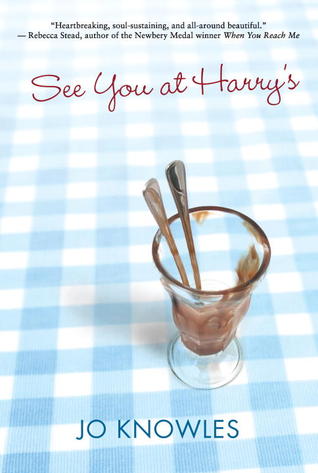
Recently, a student held a book to her chest and asked if I had any more books by Jo Knowles. My answer was no, and this girl walked away sad. I knew I needed to read the one Knowles’ book I had in my classroom library.

See You at Harry’s is not what I expected. It is more about unconditional love than anything, and it has left an indelible impression on my heart. 12384984

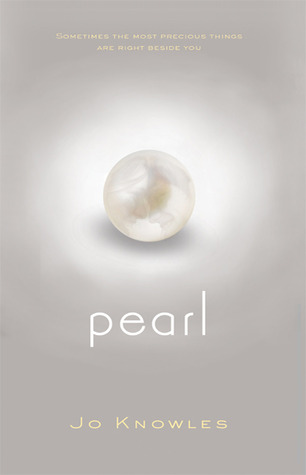
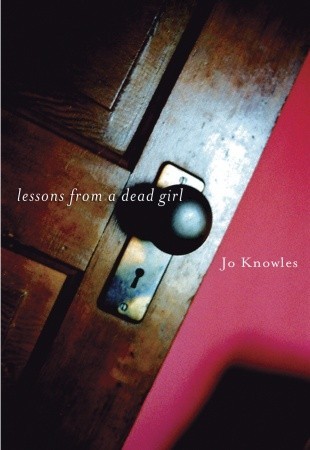
I have added Jo Knowles’ other books to my classroom shelves. Her descriptions are vivid, and her characters are real.

So, this Monday, and this week, I am having a Jo Knowles’ bookfest. My student, Raquel, can have them when I’m done!

9462571

451220

 6378239

Reel Reading– Zombie Lovers Beware

20130207-190708I hate a love/hate relationship with zombies. I love the man and boys in my house who love “The Walking Dead;” I kind of hate that the whole zombie deal has infected their thinking as to what makes good entertainment on Sunday night. Nevertheless, my guys love it, and I spend the evenings on the downstairs couch with a good book, usually about anything but zombies. Usually.

Then, I got this zombie-project idea from a colleague, and I must admit, I am a bit fascinated. My students are, too. Two book trailers that got our attention this week? The Enemy by Charlie Higson and Rot and Ruin by Jonathan Maberry.

http://www.schooltube.com/video/84a36b25d5924352a77c/

Do you know of other zombie books students love?

Writers on Writing: Thanks, I Needed This

Wow. Just wow. Maybe this won’t be new news to you, but I just found this awesome site:

Writers on Writing  –A complete archive of the Writers on Writing Column from the NY Times.

I decide to read a few of the opening paragraphs. The first link I open is Geraldine Brooks from July 2, 20o1:

My writing desk is a tankard-scoured tavern table that once saw service in an 18th-century inn. When I look up, the waved and bubbled window panes of my study offer a view that has changed very little in the 200 years since the glass was set in place. A small paddock rises gently to an apple orchard, the trees laced with white blossoms. An elderly stallion flicks at flies with a long, supple tail.

At this time of year boughs of unfurling oak leaves hide the black slash of electric wires. And that’s helpful; for every morning, after I turn off the urgent chatter of news radio — its breathless headlines and daunting traffic reports — I make my way up to this little room and attempt to leave my own time behind.

Tell me that’s not a tiny literary treat?

And this one from Jamaica Kincaid, June 7, 1999. It’s hard to stop at just two paragraphs:

How do I write? Why do I write? What do I write? This is what I am writing: I am writing “Mr. Potter.” It begins in this way; this is its first sentence: “Mr. Potter was my father, my father’s name was Mr. Potter.” So much went into that one sentence; much happened before I settled on those 11 words.

Walking up and down in the little room in which I write, sitting down and then getting up out of the chair that is in the little room in which I write, I wanted to go to the bathroom. In the bathroom Mr. Potter vanished from my mind; I examined the tiles on the floor in front of me and found them ugly, worn out.

 I open more, Annie Proulx, Amy Tan, Scott Turow, Kurt Vonnegut, and they all have elements of story. Interesting. I was just part of a Twitter chat where the question rose:  Can non-fiction help us make life-long readers? Some responded yes, most responded no. Me? I think yes. Good non-fiction dwells in story. It sucks you in and spins you around and opens your eyes to thoughts, emotions, facts that you’d never considered before the telling. These short texts are evidence of that. And these short texts are about to become mentors in my writing class. Thank you, Literary God, I needed this!
images-2

Reel Reading– Todd Strasser Books for Reluctant Readers

20130207-190708.jpgEvery Friday I show book trailers in class with the hope of getting kids interested in a weekend read. Sometimes I am more successful than others. I hit paydirt today with these book trailers for two of Todd Strasser’s books: Can’t Get There From Here and Give a Boy a Gun. I showed the trailers, one right after the other, and I sat the books on the whiteboard rail. Both were signed out within five minutes–one by a boy who “hates to read.”  Me = smiling.

Join us in Reel Reading for Real Readers:

What:  Weekly posts of book trailers of our favorite and most student-engaging YA books.
 
Why:   Visual images can intrigue the most reluctant and even hostile readers.
 
When: Thursdays so you can find the book in preparation for showing the trailer on Fridays. (We might get some traction with weekend readers here.)
 
How:  We’ll post ours. You post yours, using the meme Reel Reading for Real Readers. Leave us a comment with your blog link, so others can add to their book trailer libraries.
 
 
Mini-lesson Tip:  tone, setting, characters
 
 
Mini-lesson Tip: notice the last frame; make connections to real events
 
Have you read these or other books by Todd Strasser? Tell us about them.

It’s Monday. What are You Reading, Love?

582396_10100174944782984_1347535788_n

When my children were young, I started a tradition during the week of Valentine’s Day, and we celebrated LOVE WEEK. The children got new books that centered on loving thoughts and themes. They got little treats that were meant to remind them to Be Sweet. They delighted at the pink milk and the pink mashed potatoes and the pink everything foods we ate.

Now, my children are all grown. The last of my seven turned 18 last October. I can hardly stand it. It really is true: they grow up so fast. I am learning to deal.

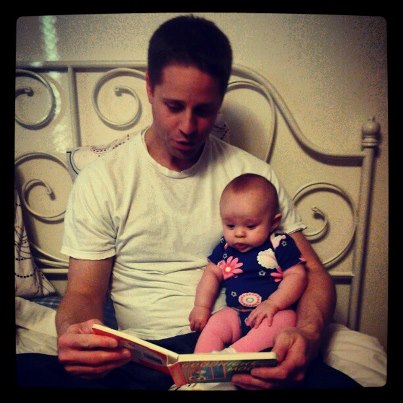
While I am dealing, I am focusing my mothering on being grand– the grandmother of one tiny little girl named Linden.

So, what am I reading during the week of love? Books on love that are perfect for this Little Miss.

11134463

273718

380710


 756247

Can’t Get Students to Write? Try These Mentor Texts for More Engagement


I had a dream the other night where I was in a conversation with my principal about student engagement. Of course, I’d just spent the day in Internal Rounds at one of the other high schools, specifically looking for and analyzing data that was supposed to show if students were engaged in their learning– not compliant, maybe committed,  and hopefully, taking ownership. In my dream I felt exasperated. I struggled, and I probably hit my husband in the head. I finally threw up my hands and said, “I can’t do it! You’ll have my resignation tomorrow!” and I huffed out the door.

What the heck?

Yes, student engagement. Those seem to be the buzz words I keep hearing lately. Well, those or student apathy, the ugly step-sister. I’d rather at least try to stay positive.

I teach 9th grade English. I try to teach students how to write. Sometimes I want to beat my head against the wall because I have so many kids who just don’t get into what I try to get them to do. I imagine this sounds familiar to some of you–at least I hope I’m not alone here.

In my search for ways to get students engaged, I’ve discovered a few texts that serve as friendly mentors to help me get my students to care about what they have to say and how they say it. These mentors have interesting text structures or themes–or, hey, they are short, which goes over well with my kids.

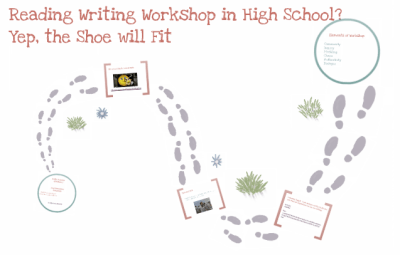
I shared a few of these during my presentation at TCTELA in Dallas last week. The Prezi posted two weeks ago called “Reading Writing Workshop in High School? Yep, the Shoe Will Fit” has images of the book covers, and the handouts have some excerpts and ideas from some of my favorite mentors: The Book of Awesome by Neil Pasricha, The Dictionary of High School B.S. by Lois Beckwith, Six Word Memoirs from SMITH Magazine, and  The Encyclopedia of an Ordinary Life by Amy Krause Rosenthal. I’ve used excerpts from all of these and have had great success in getting students to take interest and ownership of their writing. We read the mentor, analyze the author’s craft–specifically looking for the moves he makes, and then we write our own version or addition to that text. Sometimes I require certain devices like metaphors or alliteration or parallel structure or whatever; sometimes not. Always I allow for student choice in the subject matter. I get the best student writing this way.

At the end of that presentation at TCTELA, I asked the audience to contribute ideas for mentor texts that they’ve had success with in getting students to write. Take a look at these fun books; you’ll see the value in how these can work to give students choice in what they write, while you give them say in how they write it.

(Thanks, Goodreads.com, for the synopsis and book cover images.)

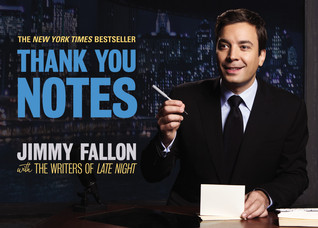
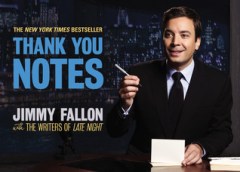
Thank you Notes by Jimmy Fallon
10505349
Thank you, slow walking family walking in front of me on the sidewalk. No, please, take your time. And definitely spread out, too, so you create a barricade of idiots. I am so thankful that you forced me to walk on the street and risk getting hit by a car in order to pass you so I could resume walking at a normal human pace.Jimmy Fallon has a few people and a few things to thank. In this brand-new book, the very first to come from his show, he addresses some 200 subjects in need of his undying “gratitude.” Each page will feature one note and a photograph of its recipient.
_____________________________________________________________________
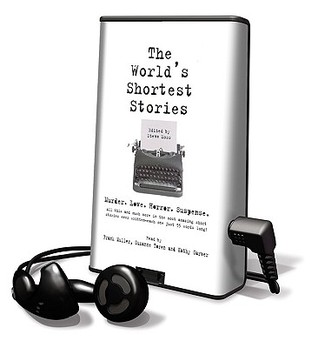
World’s Shortest Stories by Steve Moss
8791206
Murder. Love. Horror. Suspense. All this and much more in the most amazing short stories ever written each one just 55 words long! Consider for a moment 55 words. It’s an absurdly tiny number. No, it’s an impossible tiny number. It’s what O. Henry might have conjured up if he’d only had the back of a business card to write upon. You’ll find murder and suspense, horror and intrigue, love and betrayal, plus distant worlds and inner demons.
All in a measly 55 words.
_______________________________________________
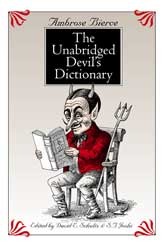
Devil’s Dictionary by Ambrose Bierce
49256
A virtual onslaught of acerbic, confrontational wordplay, The Unabridged Devil’s Dictionary offers some 1,600 wickedly clever definitions to the vocabulary of everyday life. Little is sacred and few are safe, for Bierce targets just about any pursuit, from matrimony to immortality, that allows our willful failings and excesses to shine forth.

________________________________________________
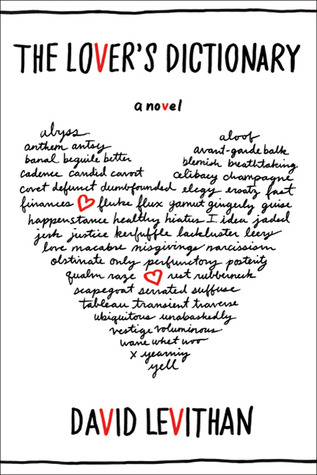
Lover’s Dictionary by David Levithan  [This one fits the list appropriately after the last one. I read this book in one sitting. It’s tender and sweet, and the cover is AWESOME!]
9279177
How does one talk about love? Do we even have the right words to describe something that can be both utterly mundane and completely transcendent, pulling us out of our everyday lives and making us feel a part of something greater than ourselves? Taking a unique approach to this problem, the nameless narrator of David Levithan’s The Lover’s Dictionary has constructed the story of his relationship as a dictionary.

_________________________________________________
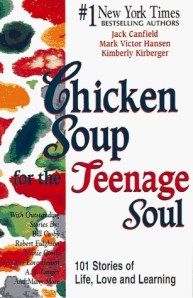
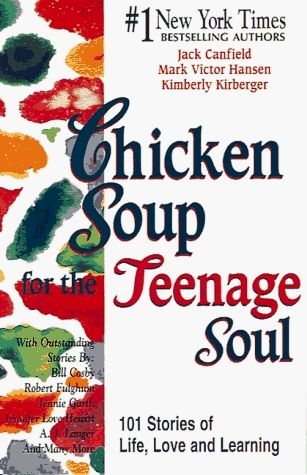
Chicken Soup for the Teenage Soul by Jack Canfield, Mark Victor Hansen427920
This first batch of Chicken Soup for Teens consists of 101 stories every teenager can relate to and learn from–without feeling criticized or judged. This edition contains important lessons on the nature of friendship and love, the importance of belief in the future, and the value of respect for oneself and others, and much more.
_____________________________________________
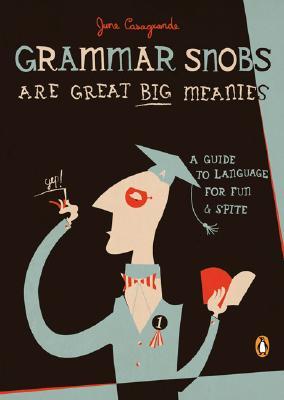
Grammar Snobs are Great Big Meanies: A Guide to Language for Fun and Spite by June Casagrand
14106
What do suicidal pandas, doped-up rock stars, and a naked Pamela Anderson have in common? They’re all a heck of a lot more interesting than reading about predicate nominatives and hyphens. June Casagrande knows this and has invented a whole new twist on the grammar book–a laugh-out-loud funny collection of anecdotes and essays on grammar and punctuation, as well as hilarious critiques of the self-appointed language experts.

Do you know of any more fun texts to use as writing mentor texts? Please leave your suggestions in the comments.
NSTWP Saturday Session

How might the use of technology be redefined and better utilized in the classroom?

It’s Monday. What are You Reading?

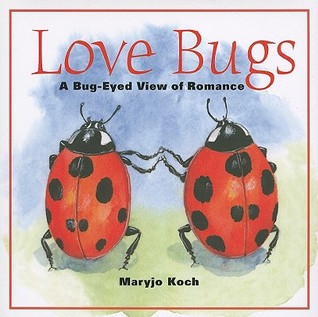
Mon Reading Button PB to YAI just want you to know that I love love stories. I especially like to read about love as we get closer to my Favorite Holiday– Valentine’s Day! So, with that in mind, I asked my sweet school librarians to find me David Levithan’s book The Lover’s Dictionary. I found it on my desk this morning. I know nothing about this book except:

1) It has an awesome cover.

2) It is written with page headings like dictionary entries.

3) It has me hooked with this on page 3:

abyss, n.

There are times when I doubt everything. When I regret everything you’ve taken from me, everything I’ve given you, and the waste of all the time I’ve spent on us.

9279177

Writing Instruction that Follows the North Star

writing notebookCan you remember when you learned to write? I can’t. Not really. I remember the lined paper and the fat pencils. I remember trying to have the very best penmanship because I wanted my name listed on the chart that covered the side of my teacher’s desk. I remember that writing came pretty easily. I was one of those students. My teachers loved me because I was well-behaved, listened, learned, and made all A’s.

I do not teach those students. Well, maybe a few, but most of them would be my antonym if my student-self were a word.

When I began teaching, I had no idea that my students would not be like me. I know, funny, right? I thought I could teach them comma rules, show them where the commas went, and I would see beautifully crafted commas in all the right places. (Don’t even get me started on the period.)

I had to learn to be a writing teacher.

Thank God for the North Star of Texas Writing Project. Fortunately, for me and the hundreds of students I’ve instructed since, I’ve learned how to create a community that fosters a love (or at least some days, a tolerance) of the written word.

A couple of weeks ago, the leadership team of NSTWP met and crafted the tenets of our site. We decided that community encompasses and interweaves itself throughout our work, and authenticity, inquiry, modeling, dialogue, and re-visioning make it shine.

A few of us jumped on a Google doc yesterday to craft our proposal for NCTE 2013 where we defined our points and described how we would share them at the conference. This got me thinking about my own practice:  do I walk the walk as well as I talk the talk?

Here’s a glimpse into our thinking, plus a little of my own:

Community— Trust, communication, sharing, feedback, and transparency all lead to a safe place for learning. Community is the core of a workshop classroom, so it must be a constant focus. (National Writing Project, Gomez, 2010) Read-alouds, and classroom and school-wide book clubs, among other relationship-building activities, can all help build community.

Authenticity— How do we make learning real? By allowing for real life connections and experiences. When we expose students to real-life situations and allow them choice in topics, we can engage them more effectively, stimulate more critical thinking, and get them to read more abundantly. At the end of 2011 only three young people in ten now read daily in their own time, down from five out of ten in 2005 (Secondary Annual Literacy Survey, 2011). How do we change lives? We allow students choice. Just as in reading, students must have choice in writing; teachers must allow students to choose topics that interest and intrigue them, and they must allow students to publish in mediums and to audiences that students believe matter, i.e., student created blogs, ebooks, and portfolios.

Inquiry— An inquiry stance goes beyond the use of essential questioning and places the creative thought process into the hands of students, inviting them to questions in every aspect of literacy from responding to texts, engaging in research, to broadening their horizons as writers.  An effective response protocol that fosters inquiry can be adapted and applied to a myriad of literacy experiences.

Dialogue— Authentic conversation transforms classroom community. Learners take ownership of their craft and develop a sense of agency in a student-centered approach to dialogue.  In Choice Words (2004), Peter H. Johnston explains that language “creates realities and invites identities.” Thus, dialogue in our classroom becomes an essential part of student growth.

Modeling— An integral part of literacy instruction, modeling as reader and writer is essential to an effective workshop classroom. Mentor texts that engage students and provide for in-depth study of craft allow for authentic reading and writing experiences.

Re-visioning– NSTWP invented this word to describe the complexity involved in revising our instruction and engaging students in revision of their work. Adaptive Action, “the iterative process we use to leverage unpredictable change for individuals” is crucial to making workshop work. (Adaptive Action, 2013). Conferences, written feedback, and portfolios can all be managed and used to revise our classrooms.

For more information about North Star of Texas Writing Project LIKE us on Facebook.

Reading Writing Workshop in High School? Yep, the Shoe Will Fit

TCTELA 2013

Handouts from the session: Reading Writing Workshop in High School

Click image below for the presentation

Screen Shot 2013-01-19 at 6.40.49 PM