Welcome June! And welcome to Friday Night Quickwrite where I give a prompt each Friday and invite you to write along with us anytime this week.
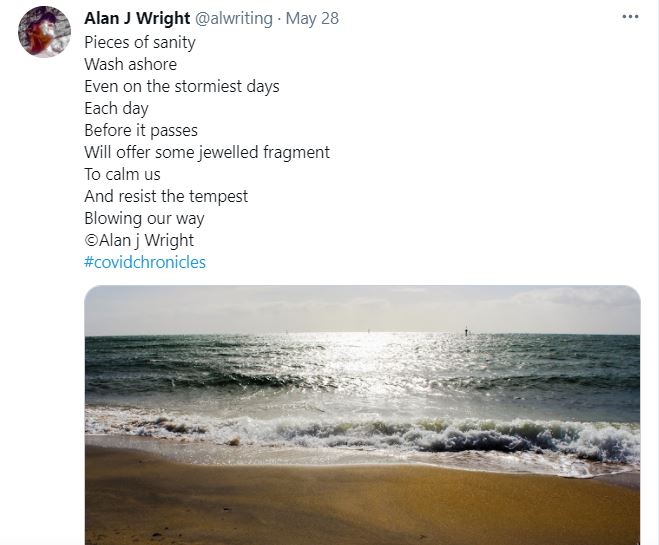
Today’s prompt is a tweet from Alan J. Wright. Alan wrote this poem while in the middle of the pandemic, but I think we can still take his wise advise on any given day and at any time in our lives. Read his words and let them take you to a time, a place, or a moment in your life that was stormy. What jewelled fragment did you find? How did you resist the tempest? Where did you find the strength? You could even take a line or a word and write off of it. The important part is that you free your mind and let your words flow.
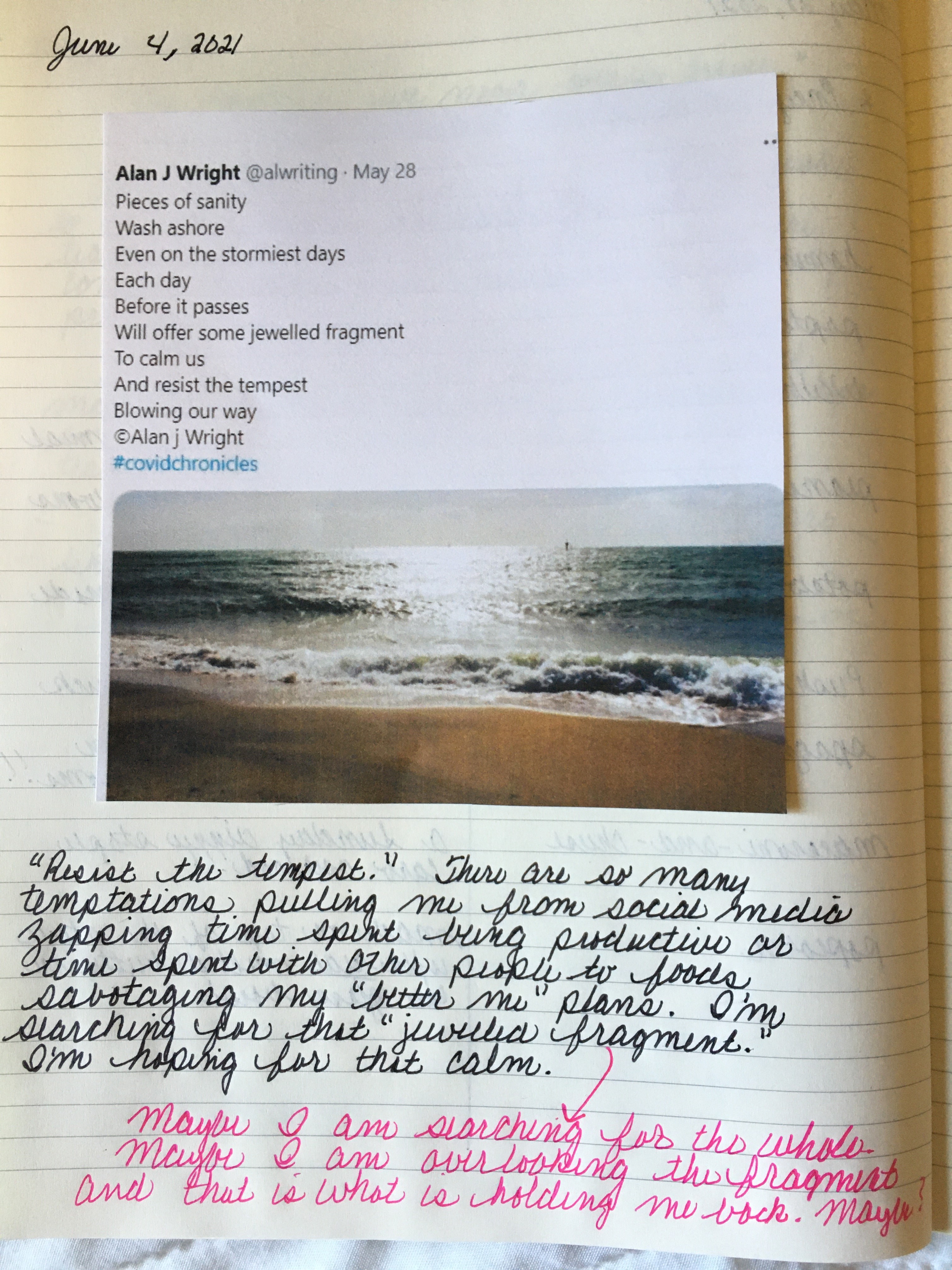
The line “resist the tempest” is what was speaking to me today. I have so many temptations that are keeping from doing things I need to be doing. I am trying to take care of ME this summer, and there are too many temptations. I am searching for that “jewelled fragment” that is being offered. As I wrote in my notebook, I realized that maybe I am searching for the whole jewel and not just a fragment. Maybe I am wanting too much, too soon.
Please share your writing or your process with us in the comments below, and please spread the word with your writing friends. We welcome all writers!
Leigh Anne jumped into summer today, as today was the first pool day of the season. When not teaching 6th grade ELA, she enjoys reading and writing poolside.
Many of us are enjoying the beginning of summer, while others still have a few weeks of school left. No matter where you are in the end-of-the-school-year process, I hope you take some time to write. Writing and journaling have so many health benefits, which is why I extend this writing invitation to you each week.
Although it is titled Friday Night Quickwrite, you can join us and share anytime during the week. I will provide a spark or prompt with some kind of inspiration to get your mind going, and when you are ready, just write and share.
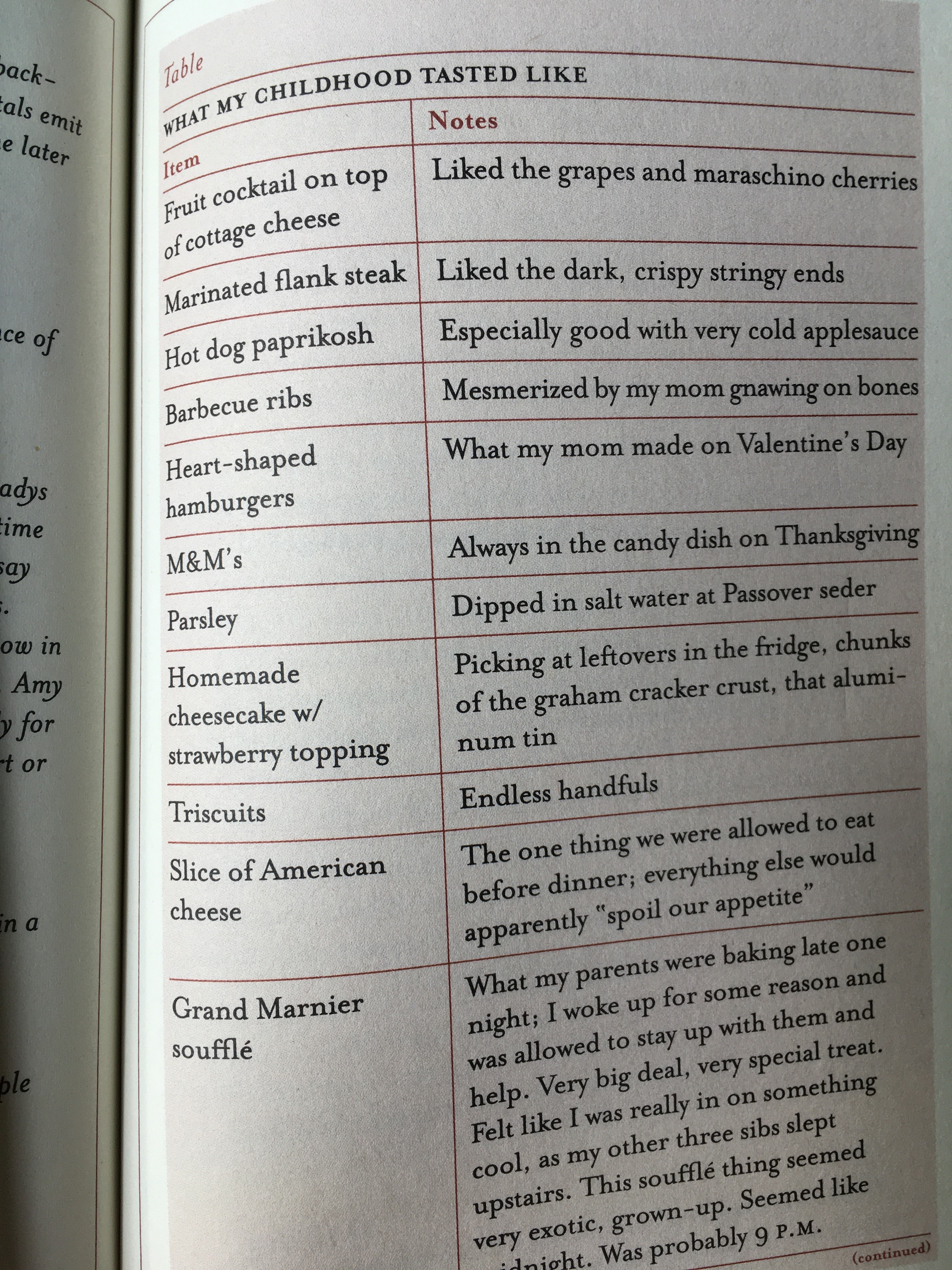
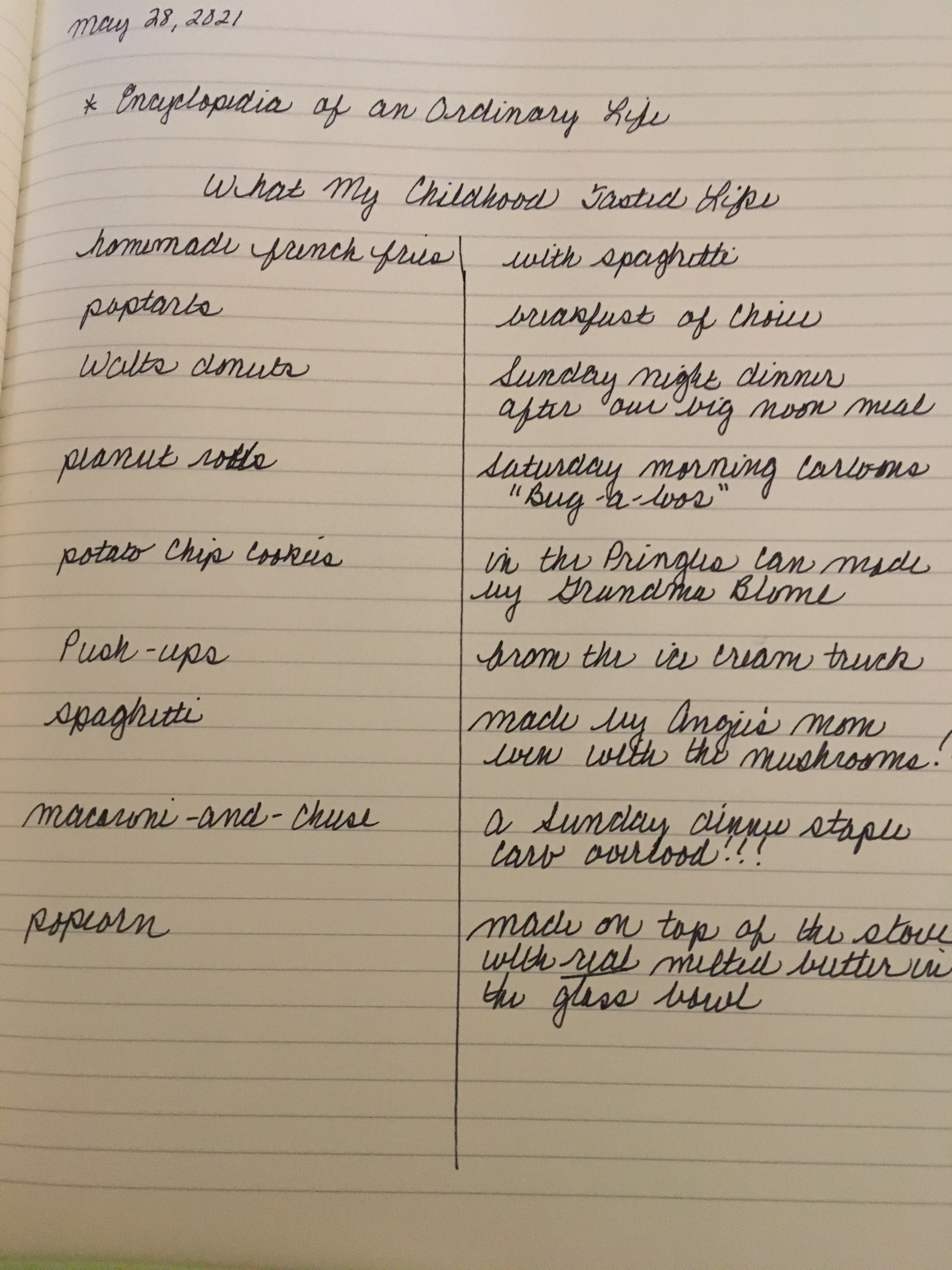
This week I am sharing a text from Encyclopedia of an Ordinary Life by Amy Krouse Rosenthal. This book is full of short entries organized from A to Z that captures moments, observations, and emotions from her life. This book is full of writing ideas and inspiration. The one I used tonight is filed under “Childhood Memories” and includes a table with the heading of “What My Childhood Tasted Like.”
In my notebook I made a table similar to AKR’s with food items and a little snippet of what they remind me about my childhood. It was fun to recall these special memories. I even texted my siblings and asked them about foods, and we share many of the same memories.
I am always intrigued how foods, smells, and songs attach themsleves to memories. Many of these food items on my list could be written as a memoir, a poem, or even a short story. Full of writing possibilities!
Please join me and writing about your childhood tastes and share it with us below. Happy writing and enjoy your long weekend!
Leigh Anne is currently on summer break and is waiting for the water temperature to warm up so she can read while relaxing with her sister and daughter (both teachers!) in the pool. When not on summer break, she teaches 6th grade ELA in southern Indiana.
Welcome to the weekend and another Friday Quickwrite. Remember you can come back and write any time with us. It doesn’t have to be Friday night (it just rhymes with quickwrite!)
I saw this post by Tera Jean Elness on Instagram last week and it got me thinking, and of course, it got me writing, too.
To honor is to revere and to revere is to regard with respect tinged with awe. (and big thanks to dictionary dot com cuz I really LOVE that definition) Yes. Tinged with awe. Pretty awesome, amen? Honor your brave Beloved. Hold it in high regard and give it the weight it deserves. Honor your brave. Your brave in staying. Your brave in going. Your brave in trying despite the risk. Your brave in holding on. Your brave in letting go. Your brave in finally – FINALLY – living fully and freely as YOU. Yes. Honor your brave Beloved. Your brave in the heartache. Your brave in the tears. Your brave you’ve been hiding all of these years because you believed that your voice was simply one of many and not one that needs to be heard. What a lie amen. Honor your brave Beloved. Honor it. It deserves it.
The words “honor your brave” really spoke to me, and I began to think about the times when I didn’t think of myself as brave. The brave in holding on and letting go and living fully.
I made a list in my notebook and was led by an item on that list. An item that is too private to share but one that needed to be written. I hope you find some inspiration in Tera’s words this weekend, and I would love to hear what path these words led you.
Happy Writing!
Leigh Anne finished up her 14th year of teaching today. It was a wild and wacky one but amazing nevertheless. She is looking forward to some summer reading and writing time by the pool.
Welcome to Friday Night Quickwrite, a time to sit back, relax, and get a few words on the page. My orignal intention was to post this once a month. However, I received positve feedback from teacher-writers, and they enjoyed writing last weekend. They found that it was a good way to wind down from the week and take some time just for them.
So, here we go for week two.
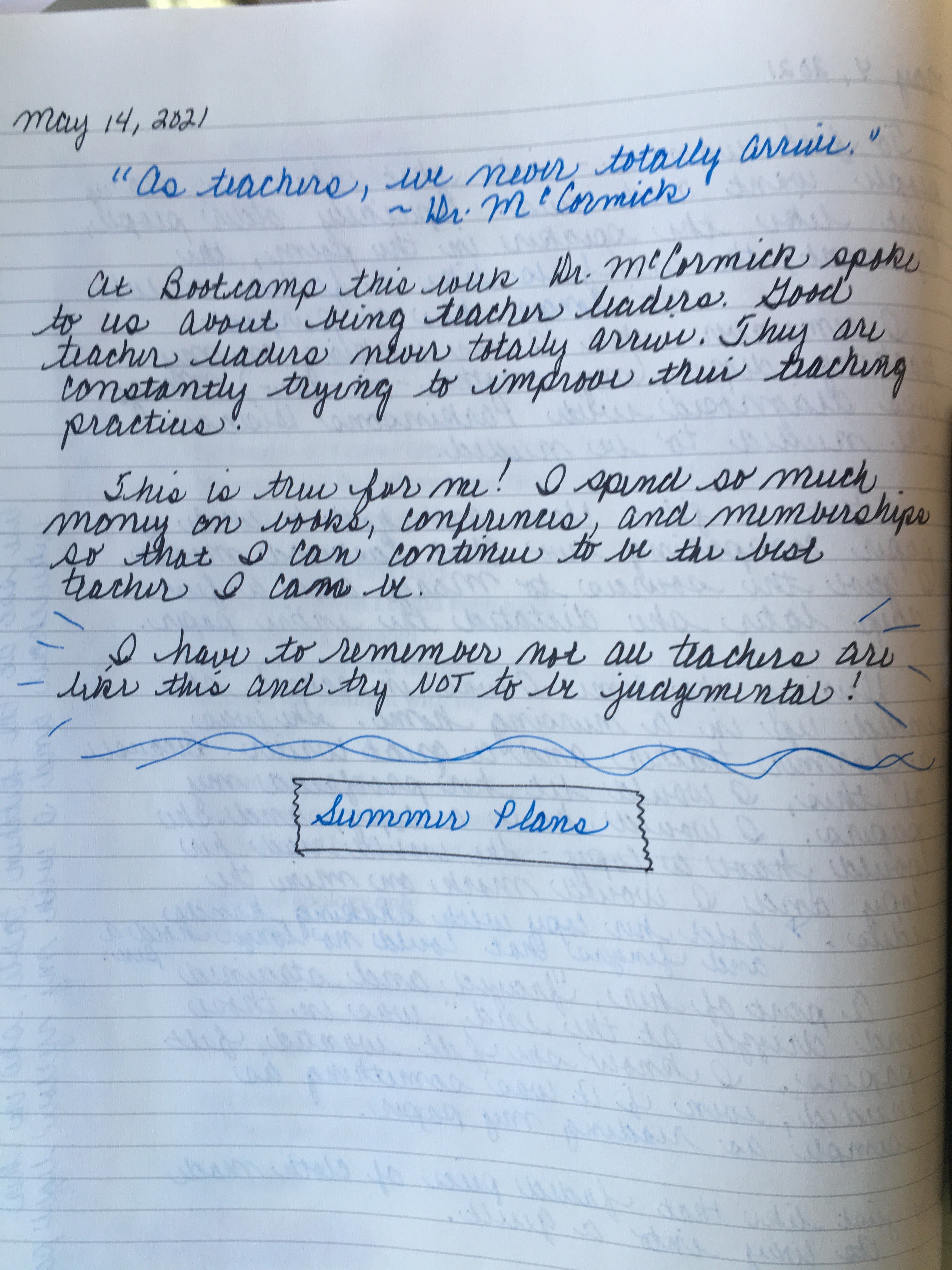
This year I have been particpating in a Teacher Leader Bootcamp for Indiana teachers. Thursday was our wrap-up, and our former State Superintendent made a surprise visit. She talk about how important teacher leaders were right now and how as teacher leaders, “we never totally arrive.”
I took to my notebook to write about this quote. It lead me to begin thinking about my summer plans to grow as a teacher – I know I have not totally arrived!
What does this quote make you think about? Have you totally arrived as a teacher? As a parent? As a partner? Take a few minutes this weekend and jot in your notebook. Come back and let me know where this quote took you? I would love to have a conversation.
Leigh Anne is a mom to Megan, who is a third grade teacher and Ethan, who is a behavior coach for elementary children. She enjoys being a parent to “adult children” but knows she has not “totally arrived” in this area either.
I’ve been thinking about how we use informational texts in our classrooms–if we use them and how often–since Tosh wrote about this topic about a month ago. Her statement is so me:
“I, like many other language arts teachers, overvalued and overemphasized the genres of fiction in the lessons I taught, and now I’m on a mission (crusade?) to help teachers connect students with interesting and complex informational texts that can broaden their knowledge of the world around them as well as model the writing they will have to do in that world.”
Like Tosh, I have my own 20/20 hindsight. And while I never taught my own children in an ELAR class, I did facilitate years of workshops where students “wrote prolifically in their journals and experimented with different writing styles. . . [and] a lot of poetry writing and narratives and imaginative stories” and little focus on reading “more complex informational texts.” Like Tosh, I felt “by focusing on the beauty of language and expression, I neglected the power and practicality of strong informational reading and writing skills.”
And then I got smarter.
It wasn’t that I needed to do away with the the reading and writing practices I had been doing. This kind of reading and writing works magic in developing relationships and beginning the habits of mind of authentic readers and writers–engagement soars when students feel the emotional tug of a beautifully written story or poem, and we invite them to write beside it and then share their writing with their peers. What I needed to do was use these practices as a springboard into an exploration of the more complex informational texts I knew my students needed.
I also knew that to keep students engaged, the spring in my board needed just a little bounce not a 10 foot one. Instead of a sharp shift from one type of reading and writing into another, we took a slow curve. We started mining our own expressive writing for topics we could research, read, and write about in other forms.
For example, since our first major writing piece was narrative, we’d packed our writer’s notebooks with multiple quick writes that sparked reflections about personal events in our lives. Imbedded in these events were topics–topics that could lead to a search for information.
Take my student Jordan (name has been changed for privacy) as an example. He wrote a touching narrative about his first memory after arriving in the United States from Mexico with his parents. He was five. A few of the topics Jordan identified in his piece included: immigration, parent/child relationships, parental responsibilities, financial hardships, mental health, physical health, citizenship both in home and new country. Jordan had a lot of ideas to work with as he chose a topic for our next major writing piece, an informative essay.
Topic mining like this can take time. Many students had a difficult time putting a name to the topics they had written about in their narratives. They also had difficulty in narrowing down those topics. But this is the beauty of talk in a workshop classroom–students talked about their writing. They reflected on it more. They shared their ideas–and they gave one another, writer to writer, authentic feedback.
Photo by Bruna Fiscuk on Unsplash. Narrowing topics is often like this quarry: stair step it down until the topic is small enough yet rich enough to write enough. Photo by Bruna Fiscuk on Unsplash.
Of course, as my writers moved into thinking about their informational writing, I started sharing informational texts we used as mentors. This is when we challenged ourselves with text complexity. We read and studied structure and language use. We discussed objective and subjective views and determined if we read any bias. We delved into how writers use data and statistics or why they might choose not to. And more.
And the bounce from narrative into informational writing worked. And it worked again later as we moved from informative writing into argument and later into spoken-word poetry.
Topic mining like this saves time. More often than not, students stuck with the same topic throughout the school year they wrote about during the first three weeks of school. And with each deep dive into form, students practiced layering skills, be it a variety of sentence structures, precise diction, or good grammar. (Skills all learned and practiced via mini-lessons.)
Informational reading and writing is vital to the success of our students beyond high school. We know this. (Think contracts, lease agreements, college textbooks.) I think we also know that some informational texts are downright boring (contracts, lease agreements, college textbooks.) And if your students are like mine, any text over one page–no matter what the writing style–is not likely to get much more than a quick skim without some pretty intense pleading.
When students choose their topics, our chances of engagement–pivotal for learning–grow exponentially. And the student who chooses to write a narrative about her family getting evicted after her father’s illness just might end up being the adult who writes that complex lease agreement.
While not your typical complex informational texts, here’s two I’ve used with high school students with great success: Joyas Voladores and How to Change a Diaper both by Brian Doyle. (P.S. If you are not familiar with The American Scholar, it’s a gold mine of fine writing.)
I’d love to know your favorite informational texts you use to teach your readers and writers. Please list them in the comments.
Amy Rasmussen reads voraciously, writes daily, and chooses texts to use with students wisely. She’s an advocate for student choice in every teaching practice. She lives and works in N. Texas. You can find her on Twitter @amyrass, although these days she’s mostly a lurker.
One thing I have learned by being a teacher of writers, is that I must write myself if I am going to be an effective teacher. When I write, I understand what my students go through when they are stuck or can’t come up with an idea. I understand the importance of organizing my random thoughts into something coherent and the power of a just-right word or perfectly structured sentence. I feel the joy of having written and sitting down with my students – writer to writer.
Today is the first Friday Night Quickwrite, a chance for you to grab a notebook and a favorite pen or open to a blank document on your computer. I invite you to take a a few minutes out of your weekend and write with me. I will share a poem or a text that has inspired me to write beside it. Sometimes I may share my notebook pages while other times I may share where the text led me in my thinking and my writing.
I invite you to share your own writing, your writing process, or your writing path in the comments section below. The importance doesn’t lie in the sharing; rather, it lies in the joy of writing.
For National Poetry Month, I wrote poems about quilts and shared them on my blog, A Day in the Life. I guess I still have quilts on my mind as that is the topic for this first quickwrite.
Tonight’s Prompt:
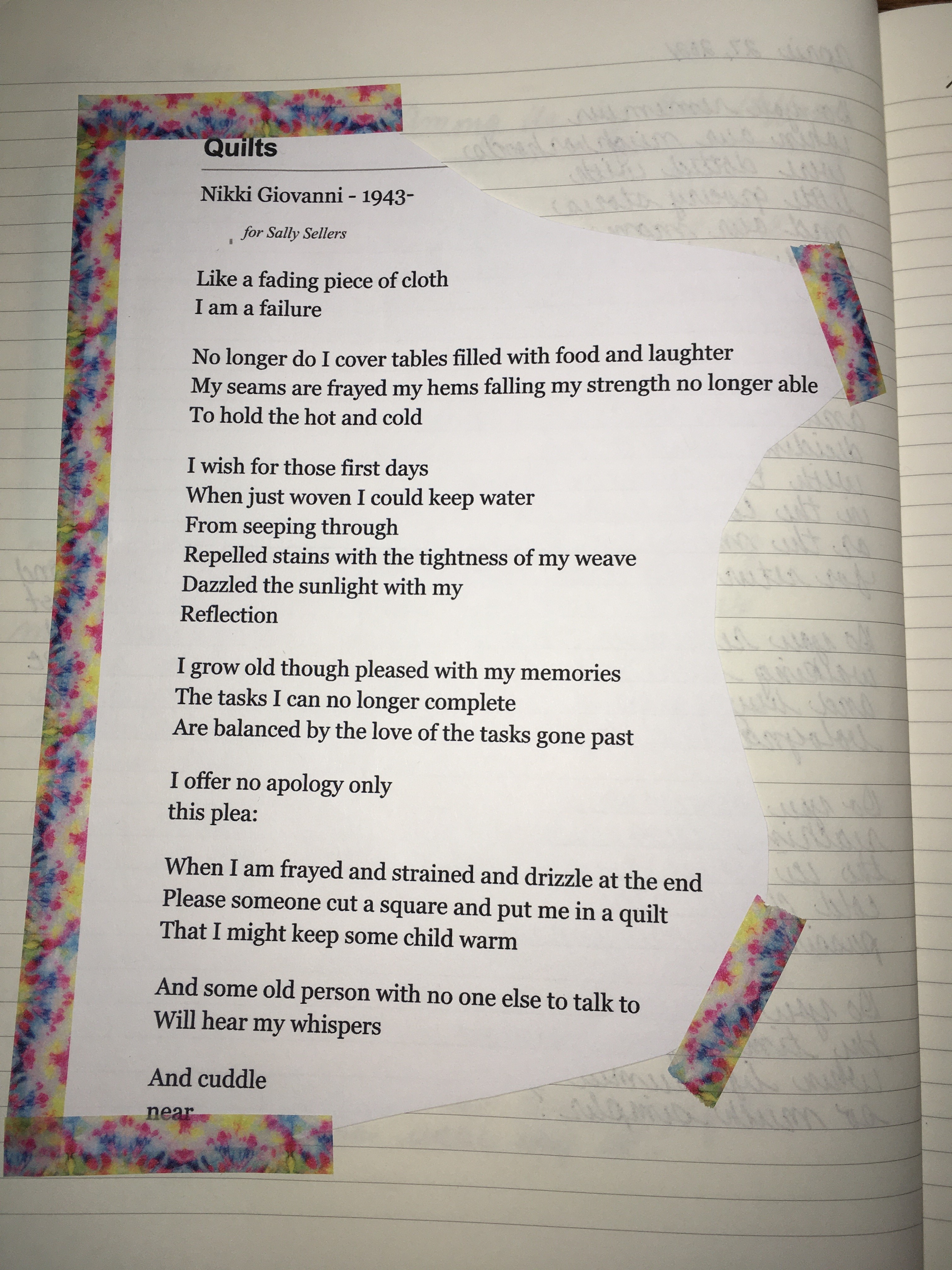
Quilts
Nikki Giovanni

Like a fading piece of cloth
I am a failure

No longer do I cover tables filled with food and laughter
My seams are frayed my hems falling my strength no longer able
To hold the hot and cold

I wish for those first days
When just woven I could keep water
From seeping through
Repelled stains with the tightness of my weave
Dazzled the sunlight with my
Reflection

To read the rest of the poem, please visit Poets.org
What does this poem remind you of? Where does it lead you? Is there a line that stood out for you?
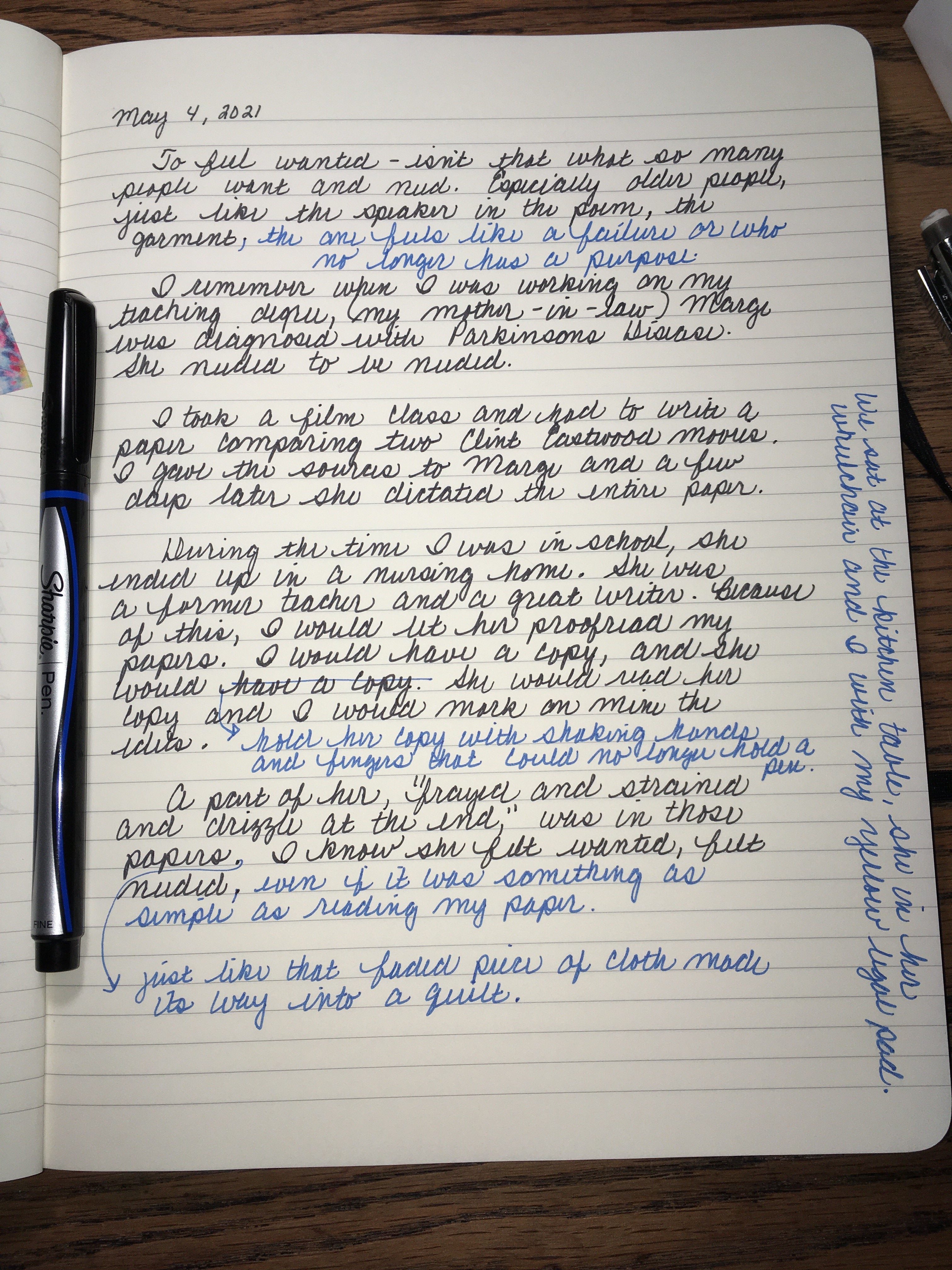
When I read this poem, I immediately thought about elderly people, people who sometimes don’t feel wanted or needed. I taped the poem inside my notebook and wrote beside it. I wrote about my mother-in-law during the time I returned to college to become a teacher. She had Parkinson’s disease and was confined to a wheelchair, but she would help me write my papers. It was a special time between us, and I am glad I captured these moments in my notebook.
I would love for you to join me in this first Friday Night Quickwrite! Write anything that Nikki’s words bring to mind for you and share it in the comments. I look forward to reading your words.
Leigh Anne Eck is a 6th grade English Language Arts teacher in southern Indiana, and she has been teaching face-to-face this school year. Although this has been a great class, she will be glad to see this year come to close in ten days!
A few weeks ago I was scrolling through social media and I read an excerpt from Fear and Art by David Bayles and Ted Orland that resonated with me and made me reflect on my teaching practices. In the section titled “Perfection”, Bayles writes:
“The ceramics teacher announced on opening day that he was dividing the class into two groups. All those on the left side of the studio, he said, would be graded solely on the quantity of work they produced, all those on the right solely on its quality. His procedure was simple: on the final day of class he would bring in his bathroom scales and weigh the work of the “quantity” group: fifty pounds of pots rated an “A”, forty pounds a “B”, and so on. Those being graded on “quality”, however, needed to produce only one pot — albeit a perfect one — to get an “A”. Well, came grading time and a curious fact emerged: the works of highest quality were all produced by the group being graded for quantity. It seems that while the “quantity” group was busily churning out piles of work-and learning from their mistakes — the “quality” group had sat theorizing about perfection, and in the end had little more to show for their efforts than grandiose theories and a pile of dead clay.”
― David Bayles, Art & Fear: Observations on the Perils (and Rewards) of Artmaking
So often we are taught that we should focus on quality over quantity making it easy to overlook the simple fact that, sometimes, we need quantity to get to quality. It makes complete sense to shift away from the idea of perfection and just start making things- or in the case of our ELA classrooms, writing things. The skill will grow with practice. Unfortunately, it isn’t always so easy to convince our students.
The fear of a blank page can be crippling for any writer. It stares back at the best of us with a terrifying mix of expectation and possibility. I see it in my students all the time- that quest for a flawless piece of work. They want reassurance that their writing is “good” or “perfect” before submitting it for a grade. Others become so stressed about failing, they never even start.
How do we help our students work through their perfectionism and just start writing? Enter the Writer’s Notebook.
I’ve always been on a bit of a mission to find ways for my students to create a sort of writing portfolio, but I also wanted them to have a place to keep quick writes, notes, and other short pieces of writing. A few years ago, I started utilizing Writer’s Notebooks in my class and noticed how easy it was for students to flip around to different pieces they’ve written.
My students have the space to make multiple attempts at writing in a low stakes manner. They explore their voices as writers, play with language, journal, finish pieces, scrap pieces, start over, revisit previous pieces to examine and evaluate their progress. I absolutely love this tool in my classroom.
My goal for Writer’s Notebooks with my students, in addition to helping them keep up with notes, handouts, and their writing, was to help my students gain confidence in their ability.
I was in the middle of transitioning my students into more choice reading and the idea struck me- if my students are self-selecting texts to read, why can’t they also choose the writing that I grade? So, I flipped the script a bit and opted to let my students select which of their writings I would grade.
Oh. My. Stars.
When I say that this was a total game-changer in my teaching practice, I am not exaggerating. It eliminates so much of the emotional roller coaster that is grading. It gives students agency to choose the best example of their work which provides the opportunity for focused feedback on areas of improvement instead of feeling like I need to help them correct basic errors.
I observed this simple change help many of my struggling writers ask specific questions as they were working or in our writing conferences. Once they knew they’d be able to select the piece I’d be grading, their fear of writing badly lessened enough that they’d actually begin. I definitely count that as a win.
What does this look like in the classroom?
Limit the choices to showcase a skill and not a specific prompt without making it overwhelming. This will vary depending on the lessons and skills, but I always make sure to build in multiple opportunities for a student to practice so their choice comes down to piece A, B, or C.
How will you help address perfectionism in your students and get them writing?
Samantha is a wife, mom to three tiny humans, high school English teacher, perpetual student, Texas transplant, and lover of beautiful stories. She spends her days seeking levity in the chaos, sharing her passion for writing and storytelling with students, and searching for her constantly misplaced cup of reheated coffee. You can follow Samantha on Twitter @SimplySivils and on her blog http://simplySivils.wordpress.com/.
The first of the year I began participating in the #100DaysofNotebooking. The goal is to write in our notebooks for 100 days. Although I have missed a few days, notebooking has certainly become a habit.
Writing for over 50 days, come many lessons. Some of these lessons I learned as a writer and others as a teacher of writers.
What I have learned as a notebooker and how that will help me as a teacher of writers:
Notebooks are personal – Our notebooks are an extension of ourselves and consequently become personal. They become a container to hold our thoughts, our rants, our emotions, our struggles, and our hearts. If I want my students to see value in notebooks, I must allow them time to make them personal. I can do this by giving them choices and the freedom to write what they want.
Sharing is not always easy – The #100DaysofNotebooking group uses social media to share pages. Sometimes, this was not easy to do, and some days, we decided to keep them personal and not share. We acknowledged that we had written but kept the words private. I must allow my students to maintain that level of privacy as well, even from us, their teacher. Not everything they write is shareable, and I must respect that.
Writing creates more writing – I think I first heard that writing is generative from Kelly Gallagher. Writing daily in a notebook and developing a habit created other ideas and led me in new directions. I have written more in these 50 days than I have in a long time. I currently give my students time for independent reading but often neglect independent writing. Adding more notebook time in our day will help to develop this habit as writers, which will lead to more writing.
Notebooking is not a competition – When I saw the pages from other notebookers, it was difficult not to become envious. Their pages were gorgeous with sketchnoting, doodles, and lettering. I needed to remind myself that this was my notebook, and it was perfect for ME. Middle school is a breeding ground for competition. I must remember how it felt when I saw the pages from my fellow notebookers, and remember that notebooks are personally perfect for one person only – ourselves.
Looking toward the second half of the challenge, I want to begin mining my notebook to gather ideas for longer pieces. Yes, the notebook is a container to hold ideas, a playground to play with words, and a garden to grow as writers, but taking these seed ideas in my notebook and developing them into poems and blog posts and stories is the next step. This experience has taught me lessons as a writer, but more importantly, it has taught me lessons about being a better teacher of middle school writers. I can’t wait to continue notebooking and taking what I have learned about myself as a writer into my classroom.
Leigh Anne is a 6th grade ELA teacher at a middle school in Southern Indiana. She has been a notebooker wannabe for many years and is close to shedding that label. You can find her slicing the month of March on her blog, A Day in the Life, or you can connect with her on Twitter at @teachr4.
As we ring in 2020, many of us begin to reflect on the previous year and to think about new starts and new beginnings. Some create resolutions or goals while others choose a one little word to guide them along the way.
My one little word for 2020 is commit, and I have created my own set of “10 Commitments.” One of my commitments involves writing, specifically notebook writing.
Notebooks are essential in a workshop classroom, but I have to admit that I lack commitment when it comes to using them regularly with my students. Using notebooks more in my classroom is always a goal of mine, but it is also a personal goal in 2020. It is important for teachers to model the writing process and to write with their students, including using writer’s notebooks.
So, when I saw the #100daysofnotebooking challenge by Michelle Haseltine, I had to check it out.
Michelle’s goal for starting this challenge was to help others develop a meaningful habit of writing and to discover the power of writing and the joy it can bring. I decided that if I want my students to become more committed to using their notebooks and if I wanted to be more committed as a teacher, then I needed to be more committed as a notebooker myself.
Looking at the pages in my current notebook, I found I typically write about my reading through the collection of quotes and snippets of writing that I can use as mentor texts for my students.
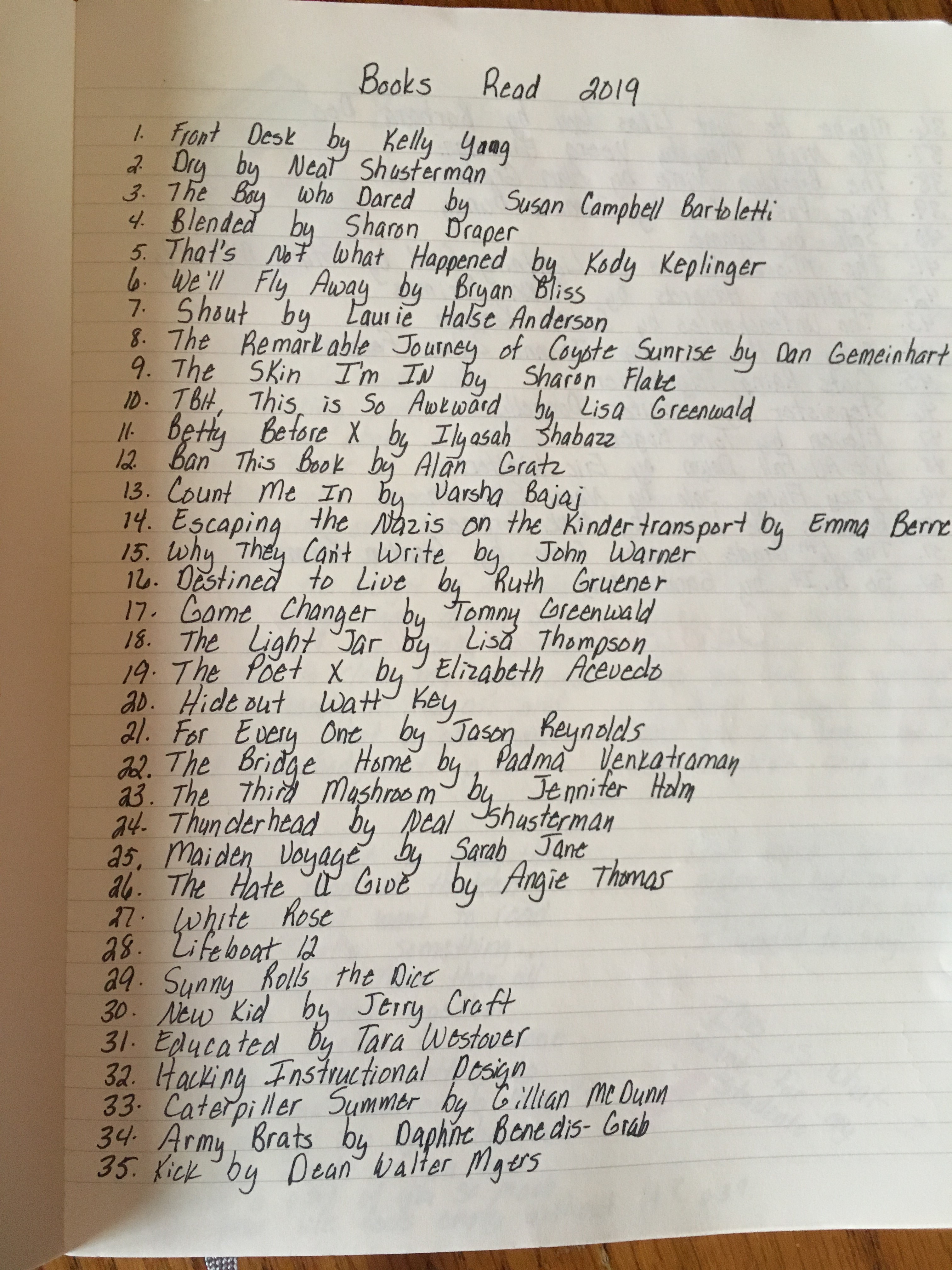
At the beginning of each year, I start a “books read” list. Although I have a Goodreads account, I like having easy access to a list of books I have read.
I also play with words and do some initial drafting and explore for potential blog posts.
But here’s the thing…I am not consistent. These pages are actually weeks and sometimes months apart. This is why I have accepted Michelle’s #100daysofnotebooking challenge. I believe that teachers who write make better writing teachers and keeping a writer’s notebook is an important part of that development.
For more notebook inspiration, follow the #100DaysofNotebooking on Twitter or check out the Facebook group. You may also want to take a peek inside Shana’s notebook here and here or see how Amy reflected on an entry in her notebooks here. Seeing notebook pages from other writers always gives me new ideas and loads of inspiration.
If you want to create a better notebook writing habit, why don’t you consider joining me in the challenge? It is not too late to start, and you can find all of the information on Michelle’s website.
Happy New Year and Happy Notebooking!
Leigh Anne teaches 6th grade ELA in southern Indiana, is a notebooker-wannabe, and is ready to commit to a daily notebook habit.
I always appreciate the expanse of winter break. After the joyful rush of the holidays (and sometimes the excess–so many cookies), I find myself with the time and space and never ending mugs of coffee needed. To think. To properly think and reflect. During this deliberate withdrawal from the world, I recenter and refocus. Usually, I develop new visions for my classroom, my students, and myself (professionally and personally). Last year, discovering #OneWord via my PLN energized my thinking. Jon Gordon describes it here as choosing the one word that will give “meaning, mission, passion, and purpose.” Beyond the fun of ruminating over possible words (always the nerd for words, here), I loved the intentionality of choosing the words that would anchor me for the year. I chose two: outside and feed.
Outside moored me personally and professionally. I knew I wanted to spend more time literally outdoors, and so, I sought ways to do so: walking, running, hiking, scootering, skating, floating, fishing…even working outside. In fact, this one word led me to my best outside adventures of the year–hiking and running in Norway and enjoying a fjord cruise. This particular journey also fit my other interpretation of outside–seeking ways to go beyond or outside my comfort zone. The trip was the first long trip with my husband away from my children. Anchoring to outside helped me take risks professionally, too, which is why I write this now as an instructional coach.
Feed became a mainstay in my classroom. I thought of feed as the ways in which I provided, maintained, or sparked the energy of the classroom and my students. So, I worked on delivering feedback that fed forward. I managed pace, working to stay brisk and lively. I altered mini lessons so that they stayed consumable. Feed nurtured my students and me.
Reflecting now, I wish I had engaged my students in this kind of reflective anchoring. It’s a different way of goal setting, certainly. Here and here are some resources for getting started with students. But the possibilities for use during workshop make it worth further consideration. These extend beyond the variation of the New Year’s Resolution.
Use OneWord to…
Set purpose each week for your class or for workshop time. Tethering to a carefully selected word might help students move more intentionally through the week and allows a reflection point at the end of the week. Class this week is brought to you by the word ___________.
Craft one word summaries of how their writing is going prior to conferring with you or their peers. Perhaps these one words are more about their affective states (build emotional intelligence further by providing them with a list); perhaps they indicate progress; perhaps they demonstrate the most valuable word of the piece.
Employ in quick writes. Encourage students to apply one word from independent reading into multiple quick writes from the week. That word might take on different meaning for that student.
Shape perspective. Instead of or in addition to essential questions, these one words become the essential ways for filtering reading and writing in the classroom. Maybe students use a blend of whole class (community perspective and individual one words (identity driven) through which to view reading and writing.
Create a Words to Watch list of your own as a class. Consider using this list as a mentor text of sorts. Maybe students tie in Article of the Week and develop a word list based on their explorations of contemporary issues.
Identify the developmental arc of a character. Students could choose one word to describe a character at each stage of transformation.
Craft one word summaries of their reading. This isn’t a new idea but maybe a reminder of how students might use words as mainstays–perhaps starting with what’s accessible before
Ground in reflection. Invite students to choose one word (provide them with a list if necessary) to depict their progress as readers, writers, or thinkers over the course of the week. They could use Flipgrid or SeeSaw or a Jamboard or just their notebooks or post it or notecard to present the word and reflect on it as their choice.
And what else? I’m certain there are other ways to adapt the one word perspective. And I’m also certain that as we encourage students to ruminate over words–whether for the purpose of goal setting, reflecting, or creating–that we give them ways to anchor their thinking.
I’m still ruminating over my word for this year. Pause is a strong possibility. So is perspective. And leap, dive, explore, and elevate. I think I’ll pour another cup of coffee.
Kristin Jeschke taught high school English for nineteen years, twelve in Waukee, Iowa at Waukee High School. She now serves as Instructional Coach (20 years in education in 2020!) and is as big a word nerd as ever. Follow her on Twitter @kajeschke.








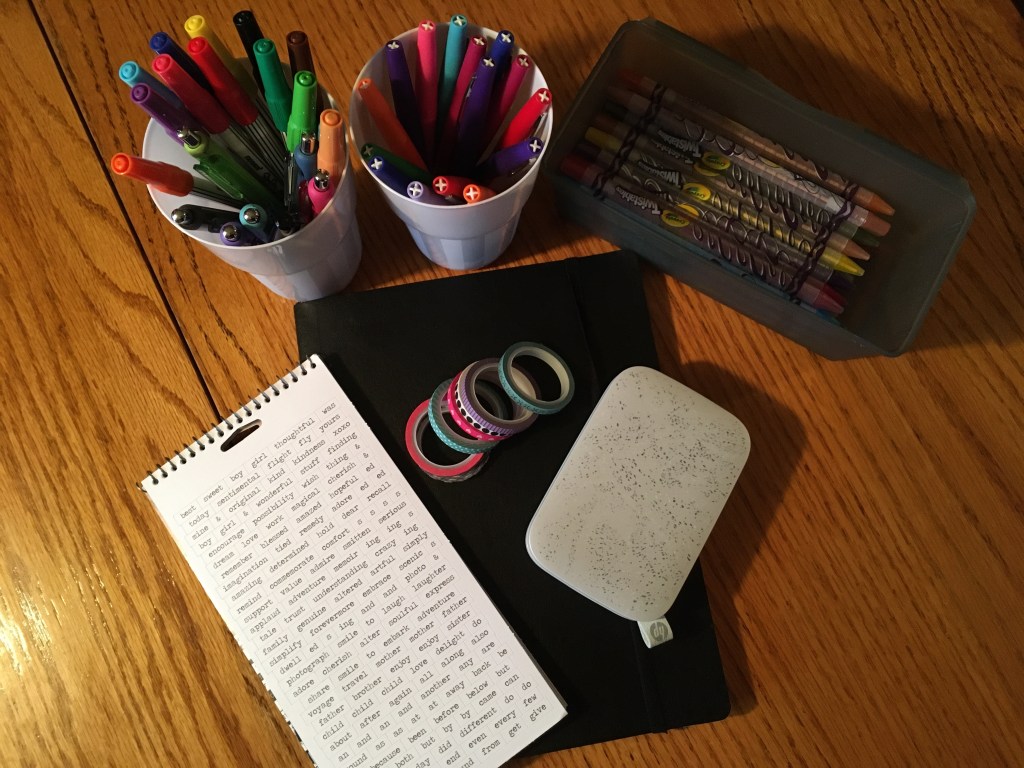 The first of the year I began participating in the #100DaysofNotebooking. The goal is to write in our notebooks for 100 days. Although I have missed a few days, notebooking has certainly become a habit.




 Three Teachers Talk