Category Archives: Writers Workshop

Ode to Moving

The Beckers are on the move again, which means boxes. Lots of boxes.

I’m no stranger to moving boxes, having packed and unpacked thousands of them over my lifetime. I’ll never forget moving to Seattle, Washington, shortly after my college graduation. Seventeen boxes shipped via Greyhound Bus – yes, leave the driving to us Greyhound Bus – full of blazers with shoulder pads, photo albums, stuffed animals, and books. Lots of books.

It’s hard to believe now that my life fit into 17 boxes then. I’ve added a few more boxes of memories since that first big move to Seattle when boxy blazers were in. Very in.

According to my memory and Mapquest ®, the latter certainly more reliable than the former, I’ve made ten significant relocations, adding up to 20,083 miles moved. With each move comes the sober reminder that while our possessions can be put in boxes to arrive, hopefully unscathed, at our next destination, our memories fade over time, the photograph of what we left behind becoming a little less clear with each passing day, week, and year.

That’s where my writing finds me today – possessions in boxes and memories of the last 20,083 miles of my life still (thankfully) vivid and poignant.

Not calculated in my frequent mover statistics are the eleven miles I moved in Summer 2019 from Clear Creek to Clear Brook High School, and then a few months later, the seven miles I moved from high school teaching to an administrative position in the Learner Support Center of Clear Creek ISD.

When I left the classroom, I gave away most of my teaching books. But there’s a box labeled “Not ready to get rid of yet” still lurking in my garage, wondering if it will ever go back to a school, wondering why its owner can’t bear to get rid of the contents

Enter the brilliant, sweet, encouraging Amy Rasmussen.

When Amy Rasmussen approached me about writing regularly for Three Teachers Talk, I voiced some concern as to my relevancy, especially since I’m not in the classroom anymore. “Amy,” I emphasized, “I’m in the Assessment Office now.” As if that retort meant I wasn’t qualified to write about writing anymore. But that’s when I zeroed in on the boxes of my teaching life, the years and years of lessons that, even in a new paradigm of pandemic-era teaching, are tried and still true.

So that’s what I’m calling my segment: Tried and (Still) True. The first Monday of each month, I will recap a lesson from my teaching past that still has impact today, a timeless lesson available for teachers to adapt and make their own, much as I did many years ago with my own lessons.

Tried, and (Still) True, Monday, May 3, 2021

“When I Read, I Feel…” List Poem adapted from the brilliant mind of another mentor of mine, the late Shelly Childers.

When I taught Junior English at Deer Park High School – South Campus, many of my students rediscovered their love for reading. Some actually realized for the first time that they liked reading after dreading it throughout previous years of school. And, well, some still hated reading no matter how hard I tried. Regardless, at the end of the school year, instead of having students write a benign reflection paragraph, I had students compose a poem based off a list of adjectives describing their reading lives. Here’s a rough idea of how I paced the lesson:

I began by inviting students to list three (3) adjectives describing how they felt when they read. Of course, I modeled a few words of my own, but since we had previously done some writing with Ruth Gendler’s Book of Qualities, students already had a descriptive vocabulary. After waiting and conferring with students as they thought and wrote, I then invited students to think about the first word they recorded (we called it Word A) and then write three (3) statements that said more (I always referred to that step as say “s’more”) proving the range of their emotions, comparing their feelings to something else, and of course, modeling with my own example. I repeated the instruction for Word B and Word C. I next modeled how to take what we had just written and express it in poetic fashion. When I nudged students to do this next step on their own, the magic happened. Students had words to describe their feelings, and in the end, I got an honest, perhaps too honest, self-assessment of each student’s reading identity.

Teacher note: In most cases, students could generate some surface-level emotions for the first two describing words, Word A and Word B. It was when I asked students to come up with a third word, Word C, to describe their feelings for reading that I hit a core of emotions reflecting a student’s authentic experiences.

Teachers can easily adapt the “When I read, I feel _____” invitation to different tasks: reading, writing, researching,…even moving! Here’s my opening stanza from a work-in-progress:

When I move, I feel free.

I ride the bus in a foreign country,

            my new home,

            making new friends with my kind eyes and a smile.

            No language skills, just an open mind

            and open heart.

            Open to new adventures.

I bet you’d like to see some student samples, wouldn’t you? I have a few, but guess where I’ve kept them all these years?

You guessed it. They are in the box of things I just can’t bear to get rid of yet. If ever.
About the author, Dr. Helen Becker

Helen Becker currently serves the education community as a Research Data Analyst for Clear Creek ISD in the Houston, Texas area. Prior to being a numbers and stats girl, Dr. Becker taught all levels of high school English for Deer Park and Clear Creek ISDs. Maybe you’ve attended a workshop facilitated by Dr. Becker, or perhaps you’ve been in her Reading/Writing workshop sessions. Or maybe she was your high school English teacher. Regardless of your relationship, you probably know that Dr. Becker wants nothing more than for you to take her ideas, make them your own, and bring powerfully authentic writing experiences to your own classroom. If you want more information on this Tried and (Still) True lesson cycle, feel free to e-mail her at beckerhelenc@gmail.com. She hasn’t packed her computer yet, so it’s all good.

By the way, Dr. Becker really is on the move, this time to a house down the street more fitting for new grandparents!

If you enjoyed this post, read this one from Shana Karnes entitled Mini-Lesson Monday:  Imitating Poetry: https://threeteacherstalk.com/2015/10/26/mini-lesson-monday-imitating-poetry/

Addressing Perfectionism in Student Writing

A few weeks ago I was scrolling through social media and I read an excerpt from Fear and Art by David Bayles and Ted Orland that resonated with me and made me reflect on my teaching practices. In the section titled “Perfection”, Bayles writes:

The ceramics teacher announced on opening day that he was dividing the class into two groups. All those on the left side of the studio, he said, would be graded solely on the quantity of work they produced, all those on the right solely on its quality. His procedure was simple: on the final day of class he would bring in his bathroom scales and weigh the work of the “quantity” group: fifty pounds of pots rated an “A”, forty pounds a “B”, and so on. Those being graded on “quality”, however, needed to produce only one pot — albeit a perfect one — to get an “A”. Well, came grading time and a curious fact emerged: the works of highest quality were all produced by the group being graded for quantity. It seems that while the “quantity” group was busily churning out piles of work-and learning from their mistakes — the “quality” group had sat theorizing about perfection, and in the end had little more to show for their efforts than grandiose theories and a pile of dead clay.”

― David Bayles, Art & Fear: Observations on the Perils (and Rewards) of Artmaking

So often we are taught that we should focus on quality over quantity making it easy to overlook the simple fact that, sometimes, we need quantity to get to quality. It makes complete sense to shift away from the idea of perfection and just start making things- or in the case of our ELA classrooms, writing things. The skill will grow with practice. Unfortunately, it isn’t always so easy to convince our students. 

The fear of a blank page can be crippling for any writer. It stares back at the best of us with a terrifying mix of expectation and possibility. I see it in my students all the time- that quest for a flawless piece of work. They want reassurance that their writing is “good” or “perfect” before submitting it for a grade. Others become so stressed about failing, they never even start. 

How do we help our students work through their perfectionism and just start writing? Enter the Writer’s Notebook.

I’ve always been on a bit of a mission to find ways for my students to create a sort of writing portfolio, but I also wanted them to have a place to keep quick writes, notes, and other short pieces of writing. A few years ago, I started utilizing Writer’s Notebooks in my class and noticed how easy it was for students to flip around to different pieces they’ve written. 

My students have the space to make multiple attempts at writing in a low stakes manner. They explore their voices as writers, play with language, journal, finish pieces, scrap pieces, start over, revisit previous pieces to examine and evaluate their progress. I absolutely love this tool in my classroom. 

My goal for Writer’s Notebooks with my students, in addition to helping them keep up with notes, handouts, and their writing, was to help my students gain confidence in their ability.

I was in the middle of transitioning my students into more choice reading and the idea struck me- if my students are self-selecting texts to read, why can’t they also choose the writing that I grade? So, I flipped the script a bit and opted to let my students select which of their writings I would grade. 

Oh. My. Stars. 

When I say that this was a total game-changer in my teaching practice, I am not exaggerating. It eliminates so much of the emotional roller coaster that is grading. It gives students agency to choose the best example of their work which provides the opportunity for focused feedback on areas of improvement instead of feeling like I need to help them correct basic errors. 

I observed this simple change help many of my struggling writers ask specific questions as they were working or in our writing conferences. Once they knew they’d be able to select the piece I’d be grading, their fear of writing badly lessened enough that they’d actually begin. I definitely count that as a win.

What does this look like in the classroom?

Limit the choices to showcase a skill and not a specific prompt without making it overwhelming. This will vary depending on the lessons and skills, but I always make sure to build in multiple opportunities for a student to practice so their choice comes down to piece A, B, or C. 

How will you help address perfectionism in your students and get them writing?

Samantha is a wife, mom to three tiny humans, high school English teacher, perpetual student, Texas transplant, and lover of beautiful stories. She spends her days seeking levity in the chaos, sharing her passion for writing and storytelling with students, and searching for her constantly misplaced cup of reheated coffee. You can follow Samantha on Twitter @SimplySivils and on her blog http://simplySivils.wordpress.com/.

The Culture Code and Writing Conferences: Part 1

I’m a sponge

“I love taking in so much new information that it just oozes out of me at the slightest provocation.” A friend recently described herself this way and, gross imagery aside, I get it. The feeling of having just read or heard or watched something new and being so INTO the idea that you can’t help but bring everything in every conversation back to that idea. We call this sponging. We’re very original.

She sponges…a lot. I sponge…less.

So when I do sponge, I stop and take notice. Last week I finished Daniel Coyle’s The Culture Code*,  which outlines ways to build effective, productive cultures by examining everything from the San Antonio Spurs to Zappos to a call center in India while sprinkling in a healthy amount of research to support his claims. I soaked it all up, finishing the book in a day – and then began oozing ideas about culture and long-term flourishing all over everyone and everything.

See, the book rests upon the idea that humans are constantly (consciously and unconsciously) asking themselves questions as they interact with others:  

  1. Are we connected? 
  2. Do we share a future? 
  3. Am I safe? 

If we can find ways to answer these questions for members in our groups, we can create robust cultures. Confronted with the powerful notion that our brains are trying to answer these three questions all the time even when we’re unaware, I couldn’t help but think of the implicit ways our writing conferences answer these questions and then began to think of ways to make the implicit explicit. So, over my next few blog posts, I’d like to discuss those three questions and how they relate to writing conferences, looking at strategies and routines we could implement to get more from this common practice.

Unpacking the Questions

Question 1: Are we connected? 

Coyle quotes MIT Professor Alex Pentland: “Modern society is an incredibly recent phenomenon. For hundreds of thousands of years, we needed ways to develop cohesion because we depended so much on each other. We used signals long before we used language, and our brains are incredibly attuned to certain types of behaviors.” In short, our brains are constantly and UNCONSCIOUSLY looking for clues that we are connecting to other individuals. It’s why we pay so much attention to facial expressions, why we maintain eye contact, why we turn our bodies to face the people we’re interested in. We’re looking to see that the energy we’re bringing to any given conversation is being matched, that we’re being treated as unique individuals. These often non-verbal cues speak loudly and help answer the second question humans are constantly (and again unconsciously) asking of each other. Part 2 of this series will look at the physical set up of writing conferences and routines I’ve built to answer the “are we connected” strategy. One such routine is my system of weekly feedbacks. You can read about them here

Question 2: Do we share a future?

The non-verbal cues from question one signal that the relationship will continue into the foreseeable future, letting us know that we are connected to others and, thus, are safe. In our social engagements, we have some choice about the kinds of relationships we engage in and the level to which we feel safe. For example, this question makes me think of a volleyball team I play on. With the end of the season nearing and none of us quite sure we want to continue to play together next season, that “do we share a future” question looms large. This uncertainty leads to awkwardness and doubt amongst the teammates, which, unsurprisingly, translates to the way we play on the court. We need a better culture. However, in the classroom, we can’t choose which kids sit in front of us day in and day out. So we might amend that question to “do we share a mutually respectful and productive future?” This safety question becomes even more important because those interactions are created non-voluntarily. Essentially, in our classrooms, our students might consistently be asking themselves (consciously or unconsciously), about the state of their relationship to us, checking in to see where we stand with each other. Answering that question often can put the brain at rest, prepping it to learn and grow more efficiently. Part 3 of this series will look at how we can answer this question through feedback routines and quick check ins with students AFTER the writing conference is over. 

Question 3: Am I safe? 

Maslow had it right – humans just want to know that they’re safe in any given situation. Granted, we’ve developed past the “is that a tiger in the bush” phase in our evolutionary cycle, so we’re less worried about getting actually eaten and more worried about getting metaphorically eaten. The combination of the physical cues (Q1)  that tell a student they belong and that we share a future together (Q2)  work to assure a student that she is safe in our room- safe to learn, to take risks, to grow.  Coyle writes, “They [the cues] seek to notify our ever-vigilant brains that they can stop worrying about dangers and shift into connection mode, a condition called psychological safety.” Part 4 of this series will look at how the one on one attention provided  by conferences allows students to calm the worrying part of their brain and focus more comfortably on the task at hand. I’ll also talk here about how I use writing conferences to navigate the move to a gradeless classroom inspired by Sarah Zerwin. You can read about fellow contributor Sarah Krajewski’s work in the gradeless classroom here

Where do we go from here?

As we begin to answer these questions for students we can work towards communicating our actual message: I care about you as a person and a student. I want you to learn and grow. From here, we can begin to say to students as Coyle writes: “You are part of this group. This group is special; we have high standards here. I believe you can reach those standards.”

*Affiliate link: If you purchase through this link, 3TT gets a little something.

Sarah Morris teaches AP English Language & Composition, AP Seminar  in Murfreesboro, Tn. She is currently rewatching The Good Place. She can’t help it. There’s something about this line from Chidi in Season 2 that gets her every time: “I argue that we choose to be good because of our bonds with other people and our innate desire to treat them with dignity. Simply put, we are not in this alone.” She tweets at @marahsorris_cms. 

Shifting to a Lego mindset to teach writing during a remote learning pandemic

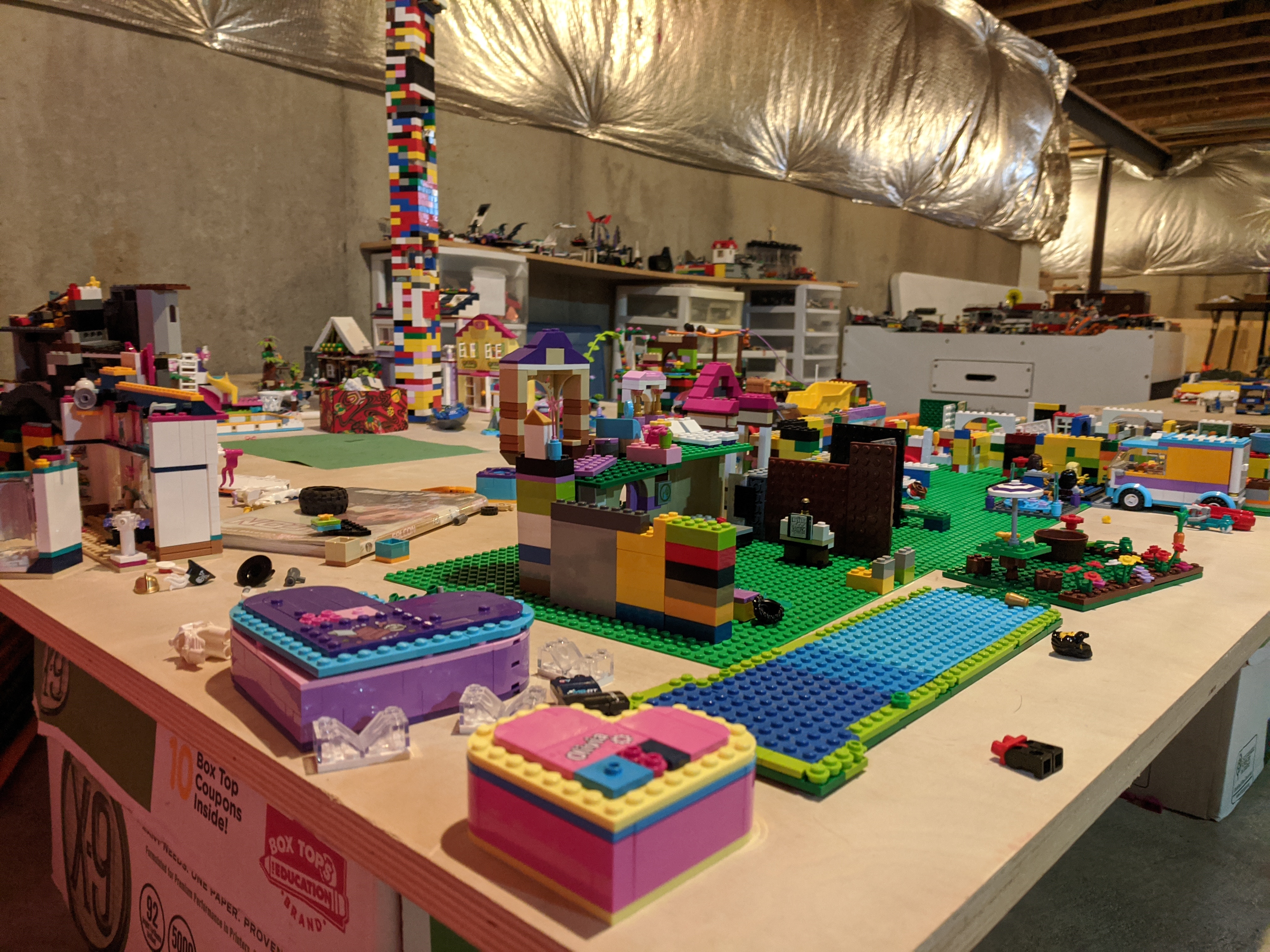
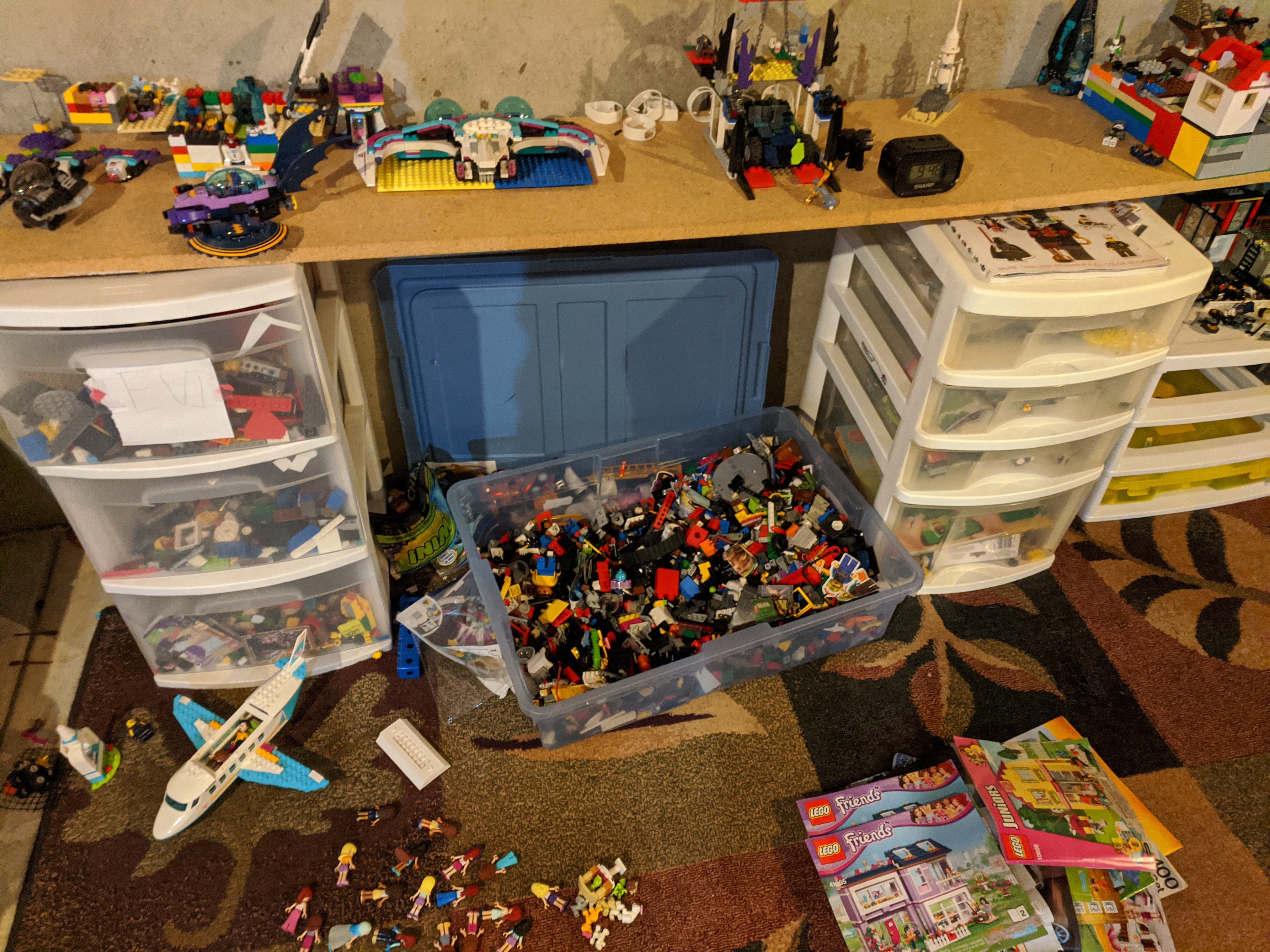
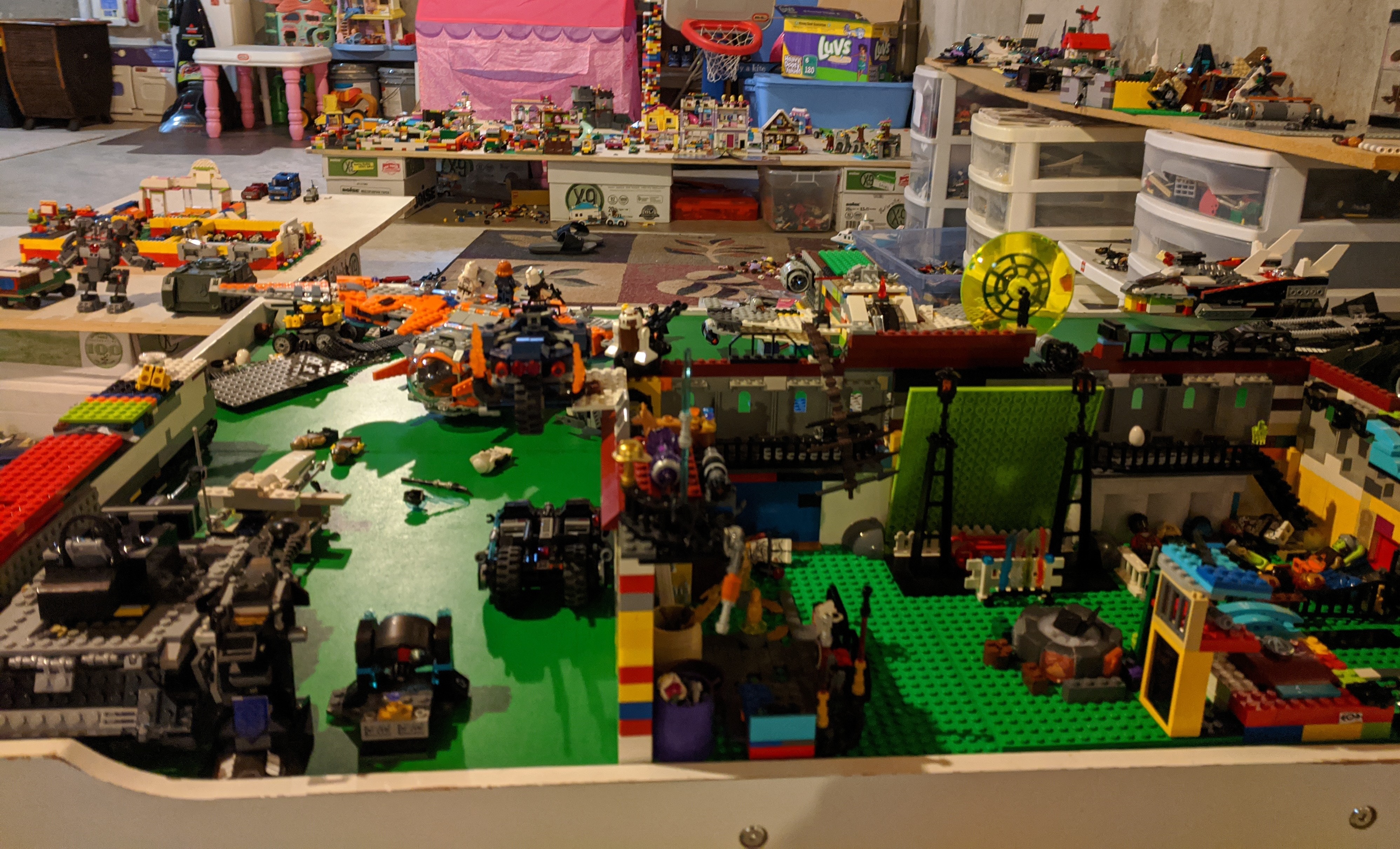
Since my kids have been home from school, they have reinvested themselves in their basement Lego worlds comprised of an embarrassing number of Lego sets. The kids disappear for an hour every now and then and build, and they don’t really need my help but sometimes appreciate my approval. That’s the kind of mindset that I’d love for my students to have as we think about writing in this online world. Dad’s not here–now I can finally build what I want to. 

Coates family basement Lego world

In the best of circumstances it is difficult to teach writing. To do it online for the past six weeks has felt at times impossible. But as I look back I can see how it’s forced a few shifts that have helped push me closer to a Lego mindset as we consider how to prepare for an uncertain fall.

More frequent, shorter tasks: In class we tend to focus on timed tasks or processed tasks. My favorites, though, tend to be the pieces that take a day or two. They’re often more polished and experimental than timed pieces and more lively and raw than processed pieces. As we moved online, my goal was for students to continue to read and write independently each week. Here is how I tried to manage the writing portion:

  • Week 1: Writing Challenge 1 (300 words)
  • Week 2: Writing Challenge 2 (300 words)
  • Week 3: book club discussion boards (2 posts+replies)
  • Week 4: poetry discussion Padlets (3 responses)
  • Week 5: Writing Challenge 3 (300 words)
  • Week 6: informal independent reading reflection (personal email)

I tried to find lengths and formats that allowed for a sustained, multi-paragraph thought but were still short enough to ensure weekly completion without overwhelming a student facing a list of tasks from seven different teachers. 

More choice: Kelly Gallagher and Penny Kittle recently published a terrific piece called “The curse of helicopter teaching” in ASCD. In it they argue, “When students haven’t been required to wrestle with difficult writing decisions–and when much of that decision making has been done by the teacher–they lose their sense of agency and their confidence as writers.” Teaching remotely definitely thwarts my helicopter tendencies. I’ve tried to take advantage of this in each of the writing challenges by giving a bigger variety of prompt options (in topic as well as in mode). In addition, I worked to bring in structural choices to push the thinking: based on the topic I chose, what structure makes sense? I think this lines up pretty well with what Angela Faulhaber said about focusing on content before form…what you say should drive how you say it but it’s hard to get there in class sometimes if we’re all writing an argument essay. Since the tasks were short, they were a little more willing to experiment. See a sample task here.

More challenges: This idea comes from John Warner (see his article “I’m never assigning an essay again”), though he calls them “writing problems.” The idea is to give some parameters that foster experimentation rather than a rubric that restricts choices. It’s a narrower focus for the writer, which I think works well remotely. For example, in the first task I challenged students to focus on the specificity in a reflective piece about their Covid-19 experience. For the second Writing Challenge they chose a specific structure to explore (deductive, inductive, anecdote, listicle). The idea is that by narrowing to one aspect of writing they’ll have more space to consider their decision-making. This also allows for more targeted feedback on my end. 

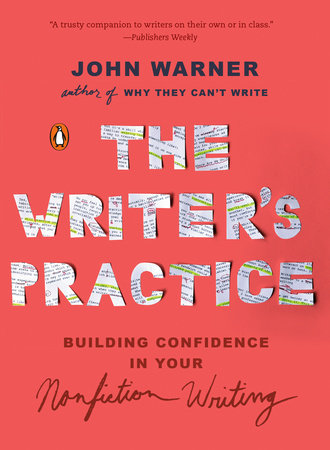
John Warner’s newest book has many writing challenges/problems to explore.

More personalized options: Each task I’ve given remotely has included an option that allows students to focus on their current personal experience. For some it’s clearly therapeutic. For others it’s a chance to document their experience. It’s an easier entry point if they’re home alone and stuck than if we used a traditional academic prompt. But they can still practice specificity and structure; they can still work on adding complexity to their observations. I’ve had to loosen up but it’s empowered them in positive ways. Examples we’ve tried:

  • from Writing Challenge 1: What was the moment that you knew things were not normal, that this was going to be different? How has your life been disrupted? What’s been good, bad, memorable?
  • from Writing Challenge 2: Describe something you’ve been learning about one (or more) of the following: yourself, your family, remote learning, politics, science, your faith, a new hobby or interest. This piece is more personal in nature, so you’ll likely tell a story as you did in the college essay.

More feedback, fewer grades: Instead of grades, then, the focus in our remote learning environment is on feedback (see Sarah Krajewski’s recent tips on feedback here). I try to articulate what they did well and what I noticed about their attempts toward meeting the challenge. Essentially, and I think this is true for in-class writing, too, it’s not about giving more grades but giving more ungraded opportunities to build and experiment. I was also really challenged by this feedback article from Harvard Business Review to reconsider what helps and what hurts, especially if the feedback I give is not face-to-face.

Online writing has got to be more like the end of the first Lego movie, when Will Ferrell realizes that if his son has some freedom about what he can build and is allowed to recombine and go beyond the direction packets, he finds more joy and ownership over the experience. Our feedback can help cultivate this kind of mindset in the writing process whether it’s online or live. 

Nathan Coates teaches junior English at Mason High School, a large suburban district near Cincinnati, Ohio. He has really grown a lot this year from being allowed to post some reflective pieces on Three Teachers Talk. His first Lego set was the classic 1980-Something Space Guy set. @MHSCoates

Walk and Confer: Another Way Back

The eleven year old (11 yo) and I–and sometimes the 8 yo–have been going on a lot of walks. Usually initiated by me, he readily (and sometimes the 8 yo but usually if we scooter) accepts. On these walks, I mostly listen. I’ve learned much about Star Wars, the Percy Jackson series, the Harry Potter series, LEGOS, Minecraft, the history of baseball, birds… and whatever else he’s been reading and viewing and creating. As we walk, shoulder to shoulder (he’s getting taller!), looking at the trees and for birds, we connect. But I’ve also discovered that I can ask questions. Yesterday 11 yo offered his opinion that books are really preferable to movies because the movies always leave out or change key details (yep, full on book nerds in this house). So I asked him why he thought the movie makers would choose to leave out details. He launched into an animated explanation involving the Harry Potter books versus the movies. Our walking and talking, at times it seems, has been connecting and conferring. We’ve been moving together toward shared meaning. 

This kind of meaningful movement may be just what we need when school resumes. When my 8 yo learned about her first class meeting over Google Meet, she was delighted to learn that she too would get to be the little box on the screen. I laughed, but it’s heart-wrenching. We’ve all become little boxes on the screen. And the limited dimensionality of that is an effect of this shared trauma. When school resumes, then, how do we move together toward shared meaning with the now larger than life persons gathered between our four walls?

We move. We listen. We talk. We engage our learners in the walking reading or writing conference. Instead of pulling up the stool alongside the desk or sitting across the table from one another, business-as-usual acts that might now evoke anxiety and fear after months of social distancing, we walk. Walking will allow us to fall into rapport (body mirroring), to find an easiness with our body language that will make it easier to talk and to connect. Feeling scared or anxious can make it difficult to look someone in the eye, and walking removes that pressure. And knowing that learners will not only need to re-learn how to share a physical space with our bodies and with our words, everyone in the room can walk with a partner as we walk and confer with individual students or pairs of students. We can use questions or prompts (on cards to flip through) or post around the building; here and here are a few resources around walking and talking. Our typical conferring prompts remain valuable, too. Moving and conferring is another way back. Not just to each other. But to meaning and creativity and possibility and hope.

In my head, I keep hearing the words of Virginia Wolff: “Better than these walks…”. These walks with my 11 yo and 8 yo may be what I remember most about this time in quarantine. Better than these walks as learners will be when we can be shoulder to shoulder, connecting, moving together toward renewal. 

Kristin Jeschke likes to move (unless her nose is in a book). She serves an active and caring staff as an instructional coach at Waukee High School in Waukee, Iowa. Follow her on Twitter @kajeschke. 


Pairing Poetry & Nonfiction

One of my favorite literary pairings is that of a nonfiction piece and a poem. Opinion columns, argumentative essays, editorials, and biographies strike me so much more strongly when I connect them to a short, sweet, descriptive text like a poem.

Maybe it’s because I feel like the prose of Leonard Pitts, Jr. reads more like poetry. Maybe it’s because when I read Ta-Nehisi Coates I feel like I’m listening to a song. Maybe it’s because when I read Mary Karr or Tina Fey or Roxane Gay or Elizabeth Gilbert or Joan Didion I feel like I’m enjoying a piece of performance art rather than just reading “nonfiction.”

So, connecting nonfiction and poetry seems natural to me, which is perhaps why I so loved “Black Like Me” by Renee Watson. Watson, a prolific YA author who’s also an educator, reimagines John Howard Griffin’s original book into a combination essay/poem that feels like a cohesive narrative rather than two separate genres. I loved reading it alongside students this week and discussing how relevant this piece still is, although it’s describing a time fifty years in the past.

The pairing of a poem with an essay was a powerful one with which our students practiced intertextuality and close reading. I urge you to take a look at this text with your students, or try out the poem-nonfiction pairing of your choice…and consider sharing those pairings with us in the comments!

Shana Karnes works in Madison, Wisconsin alongside fabulous students, colleagues, and a professional learning community second to none. She works with teachers in the Greater Madison Writing Project and 9th through 12th graders in all content areas. Connect with Shana on Twitter at @litreader.

Three Reasons We Should Stop Teaching the 5-Paragraph Essay (and what we can do instead)

Wait! Before you get ticked off, hear me out.

I had never heard of a “5-Paragraph Essay” when I was a student. We wrote essays. Sometimes stories, sometimes research, sometimes about the books we read. In college, my professors wanted me to have a strong thesis, but never did they talk to me about how many paragraphs I should have.

When I became a teacher, though, I was inundated with this new (to me) way of thinking about writing. I had no clue how to teach kids how to write. I was just good at it, I thought. Therefore, this formulaic approach to writing clicked with me. I liked the directness, the accessibility. And frankly, I liked how it made it just a little easier for me to assess writing. “It’s like training wheels,” I told myself.

Here’s the thing, though. We never took the training wheels off. Kids were going to college, or into life, without knowing how to ride the bike.

So, why do I think we should abandon this idea of the “5-Paragraph-You-Know-What” (a term coined by my favorite writing teacher, Tom Romano)?

This writing doesn’t exist in the real world

I can’t remember the last time I clicked on a blog, or read a newspaper or a smart analysis of a film, and counted the paragraphs. I read to find the idea, to see how the writer leads me through their thinking. There are no editors anywhere telling writers, “Okay, this is a good start, but you don’t have five paragraphs.”

Because I want to develop students who see themselves as writers beyond my classroom, I have to ask myself why I continue to privilege a genre that seems to only live in school (if your answer is the test, keep reading). Can high quality writing be five paragraphs long? Sure! Does it have to be? Nope.

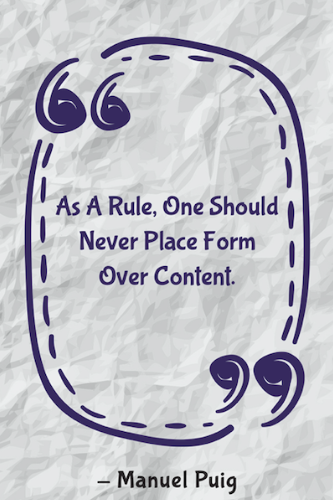
This writing privileges form over content

Screen Shot 2020-03-02 at 2.02.28 PMWhen students are overly concerned with how long their writing is, they lose sight of the important stuff, like content. They fill paragraphs with half-plagiarized evidence, or sprinkle in cumbersome transition words. They’re more concerned with adornment than substance.

Conversely, for many students, focusing on the number of paragraphs shuts them down. They see it as insurmountable, so they don’t even try. And before anyone accuses me of saying kids don’t have to know how to organize their writing, let’s just stop right there. Writers organize their writing. What writers don’t do, though, is say “This has to be a body paragraph with 5-7 sentences, and evidence.” No, instead writers focus on WHAT they want to say and then they figure out HOW to say it.

This writing doesn’t grow writers

About four years into teaching, I had an epiphany. Students weren’t getting better at writing 5-paragraph essays. Many of the kids I’d taught as 9th graders still needed the support when I had them again as juniors. Often kids ended up filling in a graphic organizer I created just so they had something to write about (and by graphic organizer, I mean fill-in-the-blanks dressed up like an outline. Cringe.)

I realized that this kind of writing wasn’t helping them to become better at thinking, at teasing out a train of thought, and developing it across a piece of writing. And if the thing I kept doing wasn’t working, than maybe… I should think about doing something else.

So what do we do instead?

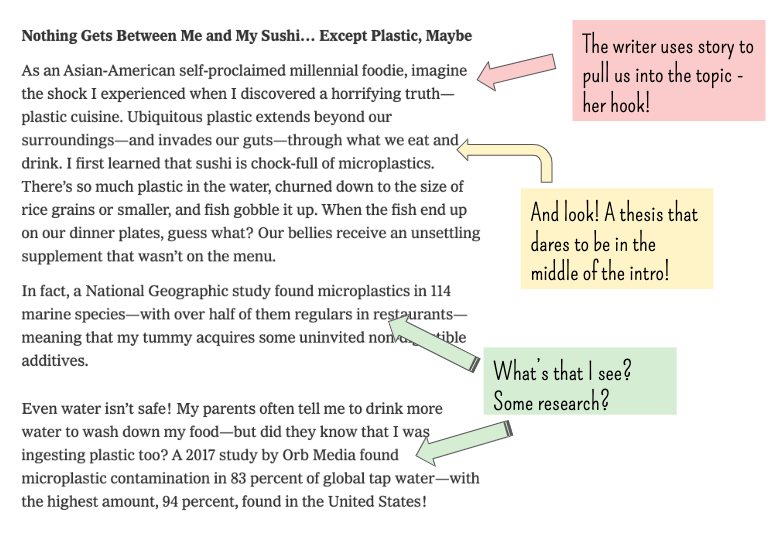
  • Read Like Writers: I have a total teacher crush on The New York Times Writing Curriculum. When I read through one of the winner’s of last year’s Student Editorial Contest “Nothing Comes Between Me and My Sushi...Except Plastic” I notice a few things:Screen Shot 2020-03-02 at 1.27.53 PM When I model for my writers what it looks like to read like a writer, we start to notice thing we can do in our own writing, and more importantly, we can start to think about HOW we can do them in our own writing.
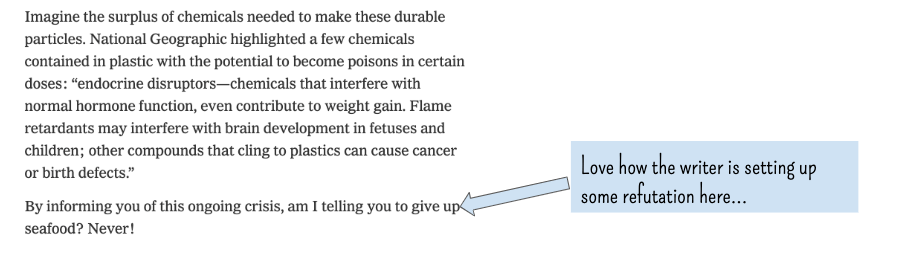
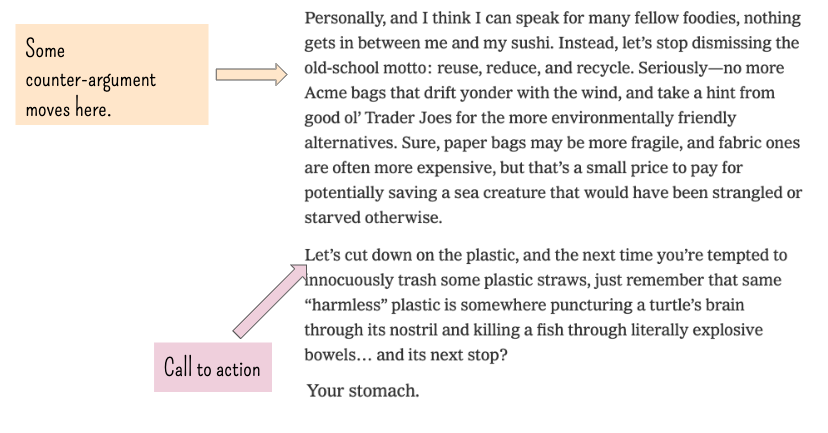
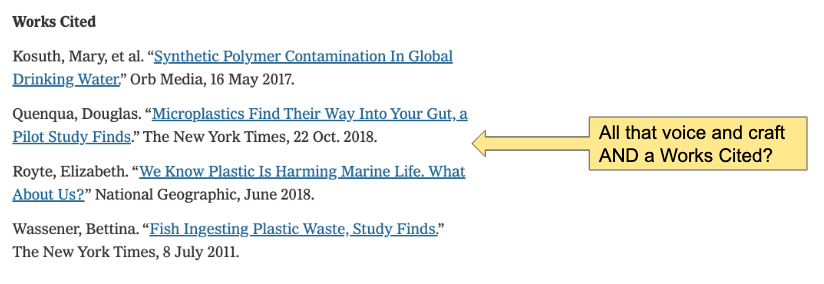
 

  • Focus on Content Before Form: When I look further into this piece of writing, I notice how the writer develops an idea. She’s doing all the things I hope for my own writers. In addition to what’s above (a thesis, a hook, incorporating research), she also anticipates the counter argument AND pushes back. She’s not dropping this counter-argument in because it’s what she has to do. She’s doing it because it makes sense. She has been building up to it.Screen Shot 2020-03-02 at 1.26.24 PM

Screen Shot 2020-03-02 at 1.26.33 PM

Screen Shot 2020-03-02 at 1.26.39 PM

  • Teach test-writing… and LOTS of other kinds of writing too: If you feel you absolutely have to teach the 5-Paragraph Essay because they’ll need it on The Test, then I encourage you to spend most of the year immersed in the study of the craft of writing (start checking out The AV Club, Players Tribune. Follow #wildwriting or #beyondanalysis). Teach students about the moves writers make in writing. We still talk about transition words, thesis statements, adding reasoning, and writing effective conclusions. But now, it is within the context of the craft of writing. Then, a few weeks before the test, teach students how to transfer all those skills to the test. Remember that nowhere in our standards does it mention that students have to write five paragraphs. They have to write multi-paragraphs, sure. But that could be three, or seven, or five. Nowhere in the rubrics from the state (if you’re using Common Core or something like it) does it talk about how many paragraphs students should have. Instead, it looks at content development, ideas flowing. 

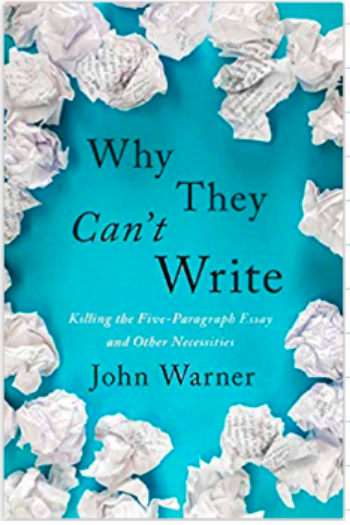
Still not convinced? That’s okay. I encourage you to read John Warner’s book Why They Can’t Write: Killing the 5-Paragraph Essay and Other Necessities. Screen Shot 2020-03-02 at 2.02.12 PMIn here, Warner, who’s a college professor, talks about how limiting this kind of writing is, and explores other ways of teaching. For ways of thinking about literary analysis, check out Rebekah O’Dell and Allison Marchetti’s book Beyond Literary Analysis. And Kim Campbell and Kristi Latimer’s book Beyond the 5-Paragraph Essay is a great resource. Sign up for a class at your local National Writing Project site.

Whatever your next step is, I encourage you to help kids take the training wheels off, to ride the bike on their own. They might crash, and that’s okay. That’s when the learning is happening!

Angela Faulhaber is a literacy coach in Cincinnati, OH. She is blogging this month as part of the Slice of Life challenge at Two Writing Teachers, and thus, is seeing every interaction as a potential writing piece. Join her!


Moving Around the Bend

bendLike so many teachers blessed with a growth mindset, there are always several ideas bouncing around my head that, if realized, might temporarily satisfy my constant need to innovate my teaching practice. Hopefully, new moves and ideas lead me toward maximizing the delivery of instruction and the transfer of learning. Heading into the TCTELA convention back in January, my head was like a Dumbledore’s pensieve, ideas swirling like memories.
My sophomore classes had been building towards a persuasive essay major grade and their writing showed me that they needed some direct instruction centered on the elements of argument: claim, evidence, and commentary. Instead of focusing on the persuasive task from the outset, we worked hard on building arguments and then we “bent” our writing towards persuasion at the last moment.

Reflection on the genesis of this move points my thinking towards the argument writing that is so often the learning focus of my AP Lang classes and the learning progression of authentic writing instruction that focuses on the process rather than the end task.

Last year, I learned how writing can focus on specific, foundational elements that we practice over and over, gradually increasing the complexity of the task up to the point that the data tells us that the learners are ready to put their newly developed skills on display. In this philosophy, the publishing piece is merely a chance to showcase our writing prowess and highlight our growth as writers. I hear over an over that we should teach the skills, not the essay. We should teach the student, not the subject. This is my “how.”

Each lesson cycle circled through a routine that included deep dives into the skills we see demonstrated in mentor texts. At a recent campus professional learning session, I got to learn more about teacher clarity. Specifically, I can be more clear in designing the learning intentions if I understand the skill and teach to the level of the standard. It was an effort to approach our state standards, the TEKS, that helped me determine which parts of a mentor text we would magnify and dissect. Hopefully, that sentence level instruction will support our reading comprehension in addition to increasing the effectiveness of our writing.

Each lesson cycle blended reading and writing, providing multiple opportunities for both. I started each lesson by reading the mentor text aloud, and students only had one task: circle words you don’t know. After the brief read-aloud, we would take three minutes for a quick write connected to a big idea from the text.  Each quick write starts with “write about a time…” so that we tell real stories from our lives that we might be able to use as concrete evidence when we approach argument writing tasks at a later time. Before digging back into the mentor text, we would take a few moments to review the words we didn’t know and to look for the “big ideas” that we noticed while we were reading. I’m obsessed with readers seeing the “big ideas” in what they are reading because I believe it helps us recognize arguments, and maybe we can support our arguments with textual evidence if we make the connection.

After working through the mentor text, we would look at an argument prompt that forced us to take a position.  This was a chance for us to practice our argument writing every day for between ten and fifteen minutes, and we could share our ideas with other writers in the room so that we could give each other feedback.  We took a position and defended it every single day. At first, some of us struggled with the surface level skill of deciding on a position while others struggled with providing concrete evidence to support their claim. That’s one of the difficulties about writing instruction: we are all in different places. A class of twenty writers are going to be in twenty different places in their learning progression, and we have to be ready to teach to the standards while scaffolding for our writers who find themselves struggling. By lesson seven, the writers looked forward to flexing their argument muscles and eagerly dove into the writing tasks. We still encountered struggle, but our newfound skills gave us the confidence to attack those struggles without fear.

This unit asked writers to work hard and switch back and forth between reading and writing, blending literacy skills in a way that demanded significant effort from the students. The lessons were organized so that the students would have to move quickly between tasks, linking their reading and writing. This work is not easy and sometimes the students find gaps in their capabilities that cause them to react negatively. Teachers must balance high expectations with an awareness of students’ needs. They deserve it.  They crave it. They embraced the process.


Charles Moore is a father, teacher, writer, and obscure pod-caster. He’s starting to get his pool ready for warmer weather and kicked off the crawfish season in peak form. In May, he will receive his master’s degree in curriculum and instruction from the University of Houston.

Lessons from #100DaysofNotebooking

notebookThe first of the year I began participating in the #100DaysofNotebooking. The goal is to write in our notebooks for 100 days. Although I have missed a few days, notebooking has certainly become a habit.

Writing for over 50 days, come many lessons. Some of these lessons I learned as a writer and others as a teacher of writers.

What I have learned as a notebooker and how that will help me as a teacher of writers:

  • Notebooks are personal – Our notebooks are an extension of ourselves and consequently become personal. They become a container to hold our thoughts, our rants, our emotions, our struggles, and our hearts. If I want my students to see value in notebooks, I must allow them time to make them personal. I can do this by giving them choices and the freedom to write what they want.
  • Sharing is not always easy – The #100DaysofNotebooking group uses social media to share pages. Sometimes, this was not easy to do, and some days, we decided to keep them personal and not share. We acknowledged that we had written but kept the words private. I must allow my students to maintain that level of privacy as well, even from us, their teacher. Not everything they write is shareable, and I must respect that.
  • Writing creates more writing – I think I first heard that writing is generative from Kelly Gallagher. Writing daily in a notebook and developing a habit created other ideas and led me in new directions. I have written more in these 50 days than I have in a long time. I currently give my students time for independent reading but often neglect independent writing. Adding more notebook time in our day will help to develop this habit as writers, which will lead to more writing.
  • Notebooking is not a competition – When I saw the pages from other notebookers, it was difficult not to become envious. Their pages were gorgeous with sketchnoting, doodles, and lettering. I needed to remind myself that this was my notebook, and it was perfect for ME. Middle school is a breeding ground for competition. I must remember how it felt when I saw the pages from my fellow notebookers, and remember that notebooks are personally perfect for one person only – ourselves. 

Looking toward the second half of the challenge, I want to begin mining my notebook to gather ideas for longer pieces. Yes, the notebook is a container to hold ideas, a playground to play with words, and a garden to grow as writers, but taking these seed ideas in my notebook and developing them into poems and blog posts and stories is the next step. This experience has taught me lessons as a writer, but more importantly, it has taught me lessons about being a better teacher of middle school writers. I can’t wait to continue notebooking and taking what I have learned about myself as a writer into my classroom.


Leigh Anne is a 6th grade ELA teacher at a middle school in Southern Indiana. She has been a notebooker wannabe for many years and is close to shedding that label. You can find her slicing the month of March on her blog, A Day in the Life, or you can connect with her on Twitter at @teachr4.

Check Yes for a Writer’s Checklist

It’s been a hot minute since I used a checklist in my practice as an educator. I’d largely abandoned the checklist because it felt too simple, too bossy, too uninspired. But, as part of learning the in’s and out’s of being an instructional coach, I’ve confronted these assumptions–in theory and am starting to in practice. In fact, for a recent professional development, I created three different checklists about formative assessment from which my colleagues could choose to mediate their reflection. Watching them interact with these checklists rekindled my interest in the checklist as a tool promoting growth. So, I began to reimagine my writing classroom through that lens.

A writer’s checklist …. 
Reinforces the process or its parts 
Insures nothing is overlooked (curse of knowledge!)
Encourages reflection 
Provides direction
Allows for agency 

Reinforces the Process or Its Parts 

When I taught ninth and tenth grade English (early in my career), I created checklists for some of the writing students created: for the more formalized research paper, for instance, a checklist for folding in sources or for how to begin and end.  Though more prescriptive in some ways than I care to remember (see Allows for Agency), for some of my students this correlated more directly with the student samples, modeling, and mini lessons we explored. And, the concision of the checklist provided clarity and accessibility. 

Insures Nothing Is Overlooked 

Beyond providing clarity and direction, the checklist may also ensure writers employ the strategies proven to best impact their audiences. The checklist items can help users of the checklist confront that whole curse of knowledge thing.  When my colleagues used the checklists in our recent professional development, the checklist items grounded us back in the qualities of formative assessments. Of those I directly supported, I observed them grappling with a particular element of assessments and considering what adjustments they might make. They also engaged in this with a partner, an approach I used with my students (back in those early days) as well. This not only insures the quality but also promotes the dialogue that leads to reflection.

Encourages Reflection 

The checklist acts as a third point, a neutral document with a set of qualities that partners or small groups can reference or as the neutral point of comparison when placed adjacent to work. For students, it helped guide their peer revision and editing processes. For my colleagues, it prompted them to consider whether or not certain elements were present or what it might look like if they made adjustments to their assessment. In fact, these kinds of reflections help point learners in a direction when otherwise there may be too many ways to go. 

Provides Direction 

For learners, the checklist may break revision (or reimagining or retooling or relearning) into actionable steps so that they are not overwhelmed, directionless. For my colleagues , the checklist helped them zero in on one direction they may take to adjust their assessments and the necessary steps. Any no’s my students received from their peers on their checklists allowed them to seek additional feedback, ideas, and resources during our conferences. The precision of the checklist can incite more precise action. And the learner gets to choose what adjustment and how to adjust it, fostering more ownership.
Allows for Agency 

This is perhaps the most critical function of the checklist, and it’s the function I didn’t recognize in the classroom and have underemployed as a coach. With my more novice ninth and tenth grade writers, I got by with those prescriptive checklists. But with my AP Language and Composition writers and my College Prep senior writers, I didn’t use checklists (all too often). My colleague and I–in determining whether or not to use checklists–ultimately decided that checklists would do little to foster the kind of autonomy we hoped to nurture in our students. We felt it might be telling them what to do in a time where they needed (developmentally) to drive their own processes. And we weren’t wrong in that. Using that same prescriptive approach with seniors as I used with freshman would not have been productive. But we shouldn’t have wholly abandoned the checklist. We could have used checklists to elevate their autonomy. Maybe students could have built their own checklists based on a mentor text set. Maybe students modify a checklist–adding or subtracting qualities– based on the needs of their audience. Maybe students create a checklist of all the strengths they possess as writers they want to make evident in their writing. There are possibilities here. There were possibilities for my colleagues, too: why didn’t I invite them to adjust the checklist they selected in ways that made sense for their students and for them? Clearly, I needed to use the checklist on checklists!

A checklist should not stifle. A checklist should not reject. A checklist should not merely confirm or affirm. A checklist should elevate (my other word for 2020). Yes!

Kristin Jeschke is watching the Cubs’ manager David Ross closely to see how he shifts from player and teammate to coach. She’s begun a mental checklist of his moves so far but most appreciates his intentionality. Follow Kristin on Twitter @kajeschke.