Category Archives: Writers Workshop

Students Need Real-Life Writing

suit-and-tieWe live in a technical world. People rarely see one another face-to-face anymore, which is why writing has become our hypothetical suit-and-tie. To get a job, one uploads and sends a cover letter and resume. To apply to college, one submits a college essay. To correspond with a colleague, one sends an e-mail. To be engage in online discussions or to communicate on social media, one must post or blog or tweet or comment. More than ever before, we are our words. We live in an age where we can look and act like slobs behind the screen while our words tell a different story. It’s empowering and liberating but also terrifying. Terrifying because too often our students don’t understand the value of formality in writing.

This has become even more apparent as I, a 26-year-old, am both exposed to and part of a generation of socially illiterate people. We, as well as our students, understand text language, chatting, posting, and tweeting, but our colloquial language seeps into our every day interactions, handicapping us in other ways.

While students can effectively communicate with their peers, they have not received the training to engage in formal written conversations—the types of conversations that drive the academic and business world. In turn, students arrive in college lazily piecing together informal e-mails to their professors that poorly represent their abilities and knowledge. We assume that because they have grown up as Internet babies and that because they are constantly on their phones, they understand the unwritten rules of Internet writing, but they don’t. This year I have made it a point to inject the discussion of voice, formality, and audience into my reading and writing units in an attempt to widen my students’ understanding of and comfort with writing.

In all of my classes I have sought to push my students outside of their comfort zones by exposing them to diverse mentor texts and assignments that force them to play with words. For many students, voice is a challenging concept. They struggle with finding a voice in their own writing, which makes it even more imperative students be exposed to comedic, sardonic, opinionated, and academic pieces. The only way to develop voice is to study it. Not all of the pieces I show my students are high brow; I pull from a variety of sources ranging from blog posts to articles from The Atlantic. But the pieces I choose are intended to show that a wide range of writers and voices exists. The more students understand that there is no one-size-fits-all structure, the sooner they will be willing to dabble in their sarcastic or silly side.

In learning about voice, students must also understand the value in formality and audience in their writing. Too often the e-mails I receive from students look like a long rambling text message. We’ve all received them—the ones riddled with grammatical errors, making us cringe and wonder if they’ve learned anything this year! Teens quickly become comfortable with the fact that teachers are the only people reading their writing. Students become overly comfortable with teachers reading their writing at times. We’re seemingly safe and familiar; we know their quality of work. Exposing their writing to new eyes and ears increases the stakes and makes their work more relevant.

This year, I was determined to push my lower level freshmen beyond the classroom and get them engaging with mentors. I could tell my students to work hard, which I did many times over, but in the general scheme of things, I was their teacher (akin to their mom). So I recruited a Navy Seal, an elementary school teacher, a forensic anthropologist, a photojournalist and others to do the job for me. Students were required to research a career. While they completed their research, I sat down with each student and helped him or her to draft an e-mail that they would send to a professional with which I paired them. Oftentimes I would return to find my students’ e-mails plagued with the same grammatical errors I’d seen so many times before,Depositphotos_7626816_m only this time, I was with them on the sending end.

My mini-conferences turned into minilessons on the importance of editing and the impression it had on the e-mail recipient. Students struggled with how to start their e-mails, how to address the recipient, and how to sign their name at the end. We practiced online manners, thanking the professionals for their time and answers while also noting something the student found to be interesting or appealing from the professional’s answers. In the end, their attention to detail paid off. A forensic science professor who teaches college students included the following in his e-mail:

“I was taken aback when I saw that he is only in ninth grade; I have students much older who do not bother to write properly and it disappoints me.  I am not your friend on FB nor are you texting me so no need for brevity at the expense of complete and correctly written sentences.  Salutations?  Maybe next year.

I have a 12 year old son so I think I will have him peer over my shoulder as I write to Carter so he can see how polished someone so young can be.  Thanks!”

Our students are going to college arguably without knowing or understanding the importance of voice, formality, and audience. To prepare them for life beyond high school, we must strive to incorporate real-life writing assignments into our classrooms. While some of my students may never write a research paper after they graduate from high school, I know that nearly all of them will use e-mail, apply for jobs, and engage on social media.

My role as an educator is to help mold and train productive and intelligent citizens and while giving them lifelong skills that translate beyond the classroom. Part of this is continuing to develop and adapt my classroom to better fit the needs of 21st century students. So regardless of what my students do in their free time whether they enjoy lounging in sweatpants with a tub of Doritos or taking selfies in a bathroom mirror, I want them to sound like poised, intelligent, and confident individuals. I want the world to be open to them—both online and in real-life.

The Value of Talk

Talk is one of the most powerful tools at work in my classroom.  Now, I’m talking about talknot discussion, sharing, peer editing, Socratic seminars, think-pair-share, or any other structured form of communication that might occur.  The simple act of letting our students just talk is invaluable, and we must create spaces in our curriculum for it to take place.  Here are three ways I encourage talk in my classroom.

Conferences – Reading and writing conferences aren’t just about assessment.  They’re also a valuable time for teachers and students to just talk to one another, getting to know each other as the humans that we are.  Creating a space for talk breaks down the teacher-student barrier, humanizes both parties, and by and large erases discipline problems in my classroom.  I begin every conference with a simple, “How are you today?”, and after genuinely listening for the child’s answer, direct the conference from there.  Some conferences, we don’t talk about books or writing–we just talk, because the student needs to.

IMG_6441

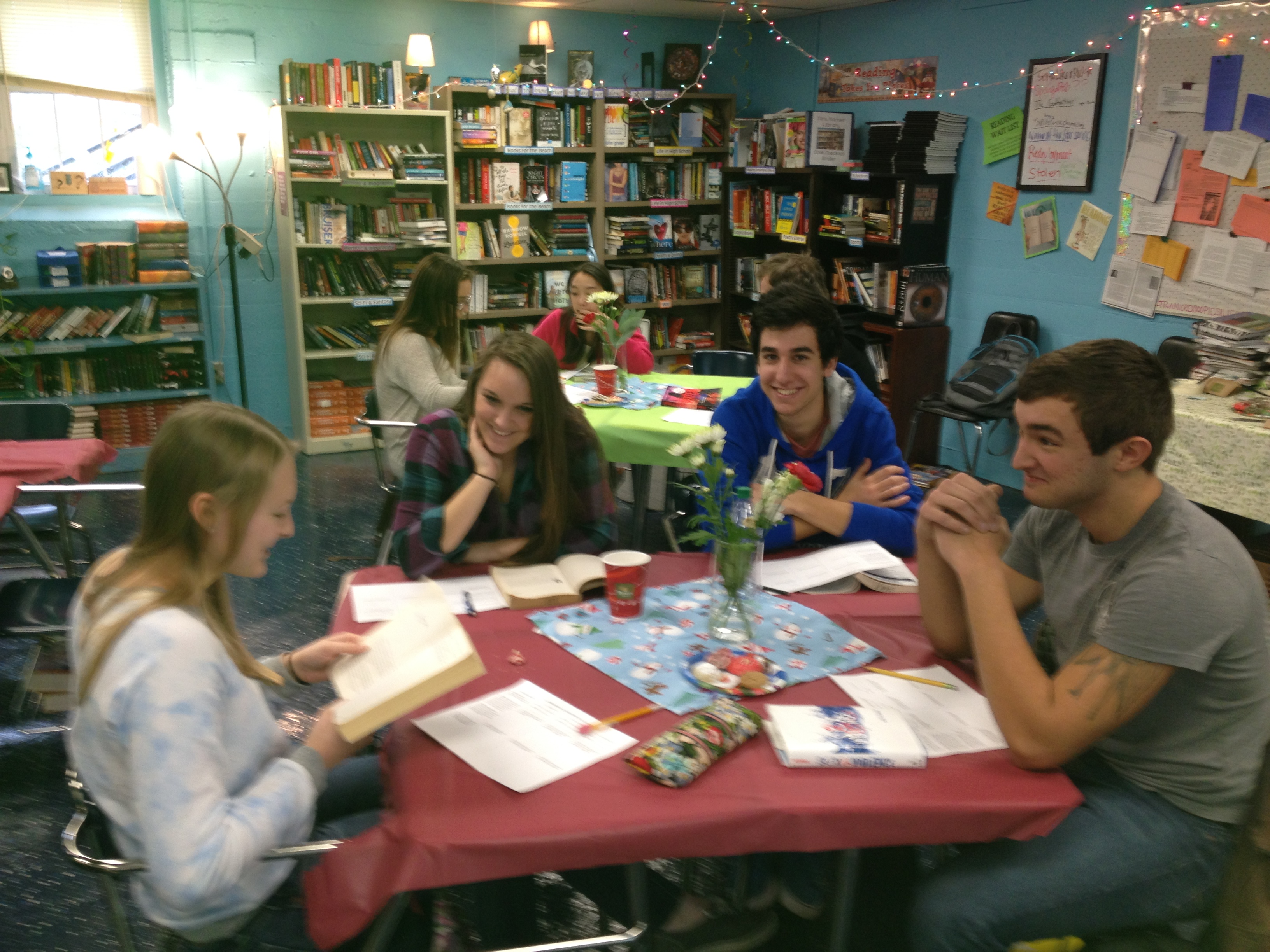
Students chat during the ‘Book Bistro’

Book Clubs – Not every book club meeting requires structure or an agenda to be valuable.  During this most recent unit, I simply asked students to keep the conversation going for 20 straight minutes.  They sometimes had to cast about for topics, but they always found something to discuss–mostly their books, but often text-to-text/self/world connections they’d made, which spun off into generalized, real-life conversations between kids who wouldn’t ordinarily find themselves chatting.  After finishing book clubs, Ana wrote, “I loved our book clubs because I felt like I got to know everyone better.”  She wrote other things about how she grew as a reader and writer…but she LOVED the unit because of the TALK that happened.

Root of the Writing Process – My journalism students consistently talk out their ideas at the very beginning of the writing process.  They chat in groups, usually starting with, “so what should I write about?”  It takes a few minutes, but enlightenment inevitably follows–the other day, Shay threw a few silly ideas out for Kenleigh about bathroom graffiti, but then they got serious about that as a story idea.  “You could call your piece ‘Signs from the Stalls,'” Shay said.  “AHHHH, that’s a great idea!!” Kenleigh enthused.  What kids like to talk about is often what they’d like to write about, and they need to talk to get to the heart of those topic ideas.

Talk builds community.  Talk is the tool that made my former student Emily say, “I felt like by the end of the year, everyone in the class became my best friend, including you.”

How do you see talk improving your classroom and its community?  What spaces do you create for talk in your classes?

Grading vs. Feedback

Let me be honest:  I hate grading.

Hate hate hate it.

I hate it, but you know what I love to do?  Read my students’ writing.  Talk to them about their reading.  Absorb the creative projects on display after they’ve completed a reading or writing unit.

So, if I love to listen to and read and wonder about their work, why do I hate to grade it?

The idea of reducing a piece of student work to a number, or assigning some arbitrary value to a reading conference, or trying to measure precisely the growth of a writer from one genre to the next is not only intimidating to me…it also seems a little ridiculous.  Unnecessary.  Trivial.  The beauty of a learner’s work is its creation, its completion, its courage.  It’s out there…for me to read, for their peers to see, for their creators to reflect on.

But, too many of my students only know how to think in numeric terms when trying to measure their own achievements.  Few are well-versed in knowing how to feel proud of finishing a tough book, or pleased with the revision of a piece of writing, or excited about the hard work that went into a project.  They don’t know how to authentically self-evaluate, because for years, they have relied too heavily upon someone else’s assessments of their work–mainly their teachers’.  I keep wondering how that’s fair.  I’ve had conversations recently with the lovely Amy about this, and Jackie wrote a great post about this same dilemma last October.

FullSizeRenderLast week, this tweet from the always-wonderful Kelly Gallagher helped to focus my wondering.  His words are not only true of writing, but of all other acts of learning as well.  A grade can’t improve a student’s skills.  Only feedback can do that–authentic, speedy, specific feedback.

So now, thanks to the combination of conversations with fellow teachers, Kelly’s words, and my own wondering, I know what I need to do.  I need to focus more on feedback and less on grading.  I know if I do less of the latter, I’ll free up time to do more of the former.

So, I’m pondering how to shift the balance.  I’d really like to return written drafts with my comments and questions, but no number or letter grade at the top.  I’d really like to have just one reading conferences without hearing the question, “what grade do I have in here?”  I’d really like for students to abandon the habit of looking to me for grades, and instead look within themselves to figure out how they’re doing.

Because I can’t entirely forsake grades altogether (we need to update our gradebook weekly), I’ll move my focus toward improving my feedback instead.  I’ll do this in three important ways:

During reading or writing conferences.  Until now, I’ve tried to stay fairly quiet during conferences in order to let my students do most of the talking.  Most of my talk is in the form of questions.  Now, I’ll shift to giving students more feedback–much more than the one or two statements I try to make at the end of a conference, which usually are to give suggestions about where to go in terms of goals and growth.  I’d like to comment more on my observations of students’ growth, strengths, weaknesses, and skills, so they can learn the language to begin evaluating themselves more effectively.

In writer’s notebooks.  Although I collect notebooks every two weeks, I don’t read everything my students write–I don’t have time, and shouldn’t–they should write much more than I could ever read.  Generally, I thumb through the pages, check that students have given a good faith effort in all of their various sections, and give a completion grade.  Now, I’d like for each student to flag one page in their notebook they’d like me to attend to–maybe a woefully short to-read list, a favorite quickwrite, or a particular reading reflection.  That way, they can decide what’s important to them, and I can give feedback accordingly…just comments and questions, mind you–without the pressure of a grade for reader or writer.

Through monthly “Meta Meetings.”  I’d like to sit down with each student about once a month and just have a whole-person conference…not a reading or writing conference.  Just a little checkup, to see how their brains and hearts are doing.  I adore alliteration, and I want these chats to encourage my students to be metacognitive…so I think I’ll title them Meta Meetings.  I’ll ask students a few questions about their strengths and weaknesses, and try to get to the heart of all the little bits of the language arts they’re curious about…strengthening their similes, or finding a system for keeping track of found vocab words, or writing metaphorical recipes (all questions I’ve had from students at random times).  I also think that during these meetings, I’ll get lots of awesome curricular ideas–what do my students want to learn how to do?  What things are they really wondering about that I might be able to help them discover?

What are your suggestions for improving feedback?  Shifting away from grades?  Providing more authentic evaluation?  Please share in the comments!

Choose to Become a Classroom of Writers

Note:  I enjoy emails with questions about my teaching practice. They help me clarify my thinking, and they often lead to new posts here. This post is Part I of my response to this question:

How does your district handle classes that are very content specific? For example, I teach Honors/Pre-AP American Literature. This is a sophomore (with accelerated freshmen course) that has a pretty traditional literary movement focus, which includes several of the classics (The Scarlet Letter, Huck Finn, Of Mice and Men, The Great Gatsby, The Things They Carried). And while I feel I have made great strides over the years in terms of student driven lessons, focus on discussion and annotation, skill vs. content based assessment, the one area I continue to struggle with as I look to workshop is how to facilitate the choice. 

Do you have a similar class in your district? Are any of these texts still used as whole class works? As options within specific unit studies? Or is the year open to student choice throughout? 

First of all, while my district ELA coordinator would love for all teachers to move to readers/writers workshop, and he has introduced that idea through various means, many teachers are not there yet and some are determined not to budge. Like many other issues related to change in schools, they nod their heads and keep doing what they’ve always done. We know that sometimes this is best for kids (I’ve done the nodding and door closing, too), and sometimes it is not, which is the case when it comes to continuing to make all the choices in English classes at the expense of student readers.

My own department manager reminds me often that we have to take our movement one step at a time. This is my first year on this campus, and while most everyone is making positive and impacting change. It’s slow, and I get antsy. I’ve been doing readers/writers workshop with my students for seven years now, and I still work on refining plans, lessons, mentor text selections, mini-lessons, and more. Truly, workshop is constant motion, which I am sure, if you practice it, you already know.

Recently, I was asked, “What is the one step that will give us the most movement as we continue this transition?” I paused for a moment, and then the answer focused clearly:

Become classrooms of writers.

Many high school English classes are literature laden. All the lessons revolve around specific texts, mostly whole class novels, and sometimes teachers spend five, six or nine weeks reading and discussing that one text. Sure, they might include other instructional practices and activities, but the most common mode of writing taught is analytical (the least likely of all the modes of writing students will use in their lives after English class. Teachers, when was the last time you wrote an analytical essay for your job?).

When we move to becoming classrooms of writers, teachers realize that if we want to practice other modes, read mentor texts, model the writing process, lead revision workshops, publish our best work, and truly live the lives of writers, we simply do not have time to devote class after class time to the study of one particular book.

A mentor once told me:  “You choose to do this, which means you choose not to do that.”Faulkner on reading

Say I choose to create a unit where my students write narratives (I always start the year with narrative because it is builds community, and contributes so much weight to other modes of writing. See tom Newkirk’s book Minds Made for Stories.) I prepare by gathering a variety of narrative texts of various lengths. I can use passages from an assortment of books in my classroom library, or I can pull passages from popular short stories, or classic novels. [See note on this at the end.]

Some passages I will use to teach leads. Others I will use to teach how authors deal with time. I may pull out specific parts and teach effective use of dialogue or character development, setting, whatever. [Gathering a variety of texts in different genres around the same theme is another way to approach the same type of reading then writing task I describe here. I’ll write about this soon.]

First, we read like readers. We practice comprehension strategies and discuss the meaning of the text.

Next, we read like writers. We deconstruct the text and discuss how the author makes that meaning.

In my AP class, we almost always talk about these texts via a Harkness discussion. Students do the thinking and speaking after I’ve done mini-lessons and modeled answering focusing questions. I’ve learned to trust that students will discover the elements and devices that I hope they will. Sometimes I have to prod, but they rarely never get there.

The skill I need to teach determines the reading passages I select. That’s an opposite approach to how I used to plan when my teaching was driven by various pieces of literature.

And now, I have time to talk about books, allow students to select books they’d like to read, and confer with students about their reading. They read tons more than they ever did before, and they become much more effective writers. Win/Win.

cool quote memes from our friends at http://www.TeachMentorTexts.com

Watch for Part II of my response soon.
 ©Amy Rasmussen, 2011 – 2015

6 Ways to Spend Your Snow Day

snow-day2So it’s your fifth snow day this winter…or your fifteenth.  Either way, you’ve done all of your spring cleaning, you can’t grade or lesson plan because you haven’t seen students for a week, and you’ve completely emptied your queues on Netflix and Hulu.  What’s a teacher to do?

1. Read a good book.  If you’re anything like the hundreds of English teachers I know, you love reading.  Use the time you’ve been cooped up to read something you’ve been wanting to but just haven’t had the time to start.  I haven’t stopped hearing about Jennifer Niven’s All the Bright Places, Atul Gawande’s Being Mortal, and Anthony Doerr’s All the Light We Cannot SeeI’ll think I’ll try to tackle the last two this week.

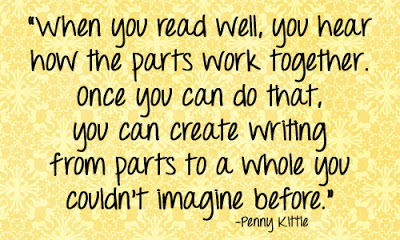
2. Write around a poem.  Penny Kittle shared once that she likes to tape poems into her notebook and write around them–it’s one way to move toward doing your own beautiful writing, she advised.  So, I signed up to receive the Poetry Foundation‘s daily poem via email, and when I read one I love, I print it and tape it into my writer’s notebook.  I’m amazed at the nuggets of written wisdom I arrive at after responding freely to a poem in writing.

3. Read a teaching book.  I’ve been wanting to finish Tom Romano’s Zigzag and Donalyn Miller’s Reading in the Wild for quite some time now, but with the day-to-day craze of the school year, it seems like the only time I find to read teaching books is over the summer.  This is the time of year, though, that I often need a little lift in my teaching spirit, so it’s always rewarding to explore some new thoughts from some of my old favorites.  Since I’m in the middle of a nonfiction book club and writing unit right now, I think I’ll settle down today with Georgia Heard’s Finding the Heart of Nonfiction.

4. Check out that dreaded State Test.  Dana Murphy at Two Writing Teachers reminded me that when our students are accustomed to writing in a choice-based, unit-driven workshop, they are not accustomed to writing to a prompt, and that while standardized tests do leave a bitter taste in our mouths, they are a reality our students must face.  If we want them to feel confident as writers in all environments, we must prepare them for all writing situations–especially the two or three standardized writing tests they may face each year.  Here in West Virginia, we’ve elected to go with SmarterBalanced as our Common Core-aligned assessment.  Today I’d like to spend some time looking at the writing portion of that test and brainstorming some lessons to help my students feel confident writing to those prompts.

5. Catch up with your tweeps. Twitter is a bottomless pit (seriously; you can get lost in it) of resources, ideas, and inspiration for teachers.  I could spend hours perusing the archives of #engchat, #titletalk, and #litlead, just to name a few.  I’d also love to look at the archives of some chats I missed recently–#mindsmadeforstories, for one.

6. Read incredible teacher blogs. I could browse the virtual thoughts of my colleagues forever!  We have so many brilliant and inspirational people in our profession, from the genius team at Nerdy Book Club to the marvelous ladies at Moving Writers; the steady wisdom of What’s Not Wrong to the joyful inspiration of the dirigible plum.  I’ve also been loving the thoughts of Hunting EnglishThe Reading Zone, and countless more…really.  I could never list all the great teacher blogs I’ve stumbled upon.  I feel so grateful to the many, many teacher-writers who have helped me fill my writer’s notebook with thoughts and ideas on dreary snow days like these.

What are your favorite ways to relieve the restlessness of several snow days?  Share in the comments!

My Top 3 Tips on How to Find #MentorTexts

Yesterday I met with a teacher-leader, and she said that one of her main concerns in implementing writer’s workshop into her classroom is finding the right mentor texts. I’ve heard other teachers say the same. Knowing what mentor text to use to teach which skill can be daunting for teachers just starting out using the workshop model.

Here’s my top three tips on how to find mentor texts to teach writing (and some reading):

1. Read. Read everything from novels to plays to news articles and food reviews. The more we read a variety of texts the more we will have little “aha!” moments when we realize how the whole text, or even a part of it, will work to teach our writers.

2. Tweet. Twitter is the place for educators. Join in, or just tune in, to an #engchat or an #elachat or a number of other chats on Twitter. See Cybrary Man’s Educational Chats Schedule. You are sure to find a chat suited to your needs. Educators use Twitter to share ideas:  mentor texts, strategies, links to blog posts that share mentor texts and strategies. If you need it, you can find it on Twitter. And if you cannot find it, tweet a question and someone is apt to find the answer for you.

3. Follow or favorite or sign up for RSS feeds. I find mentor texts in a variety of places. I watch for updates from Izzit.org, and Essay5W.com. I also visit MovingWriters.org Mentor Text Dropbox Project. On Twitter I follow @brainpickings and @voxdotcom and and @NewYorker and many other news sources.

(Bonus:  A source for texts, specifically to use for reading and practicing the Notice and Note signposts, is the Notice and Note Facebook Group when I found these links to video clips and short stories and poems that can be used to teach the signposts. Thanks @msetha23 for these docs.)

What about you, do you have any ideas or resources you are willing to share? Leave a comment.

©Amy Rasmussen, 2011 – 2015

5 Ways to Meet Your Writing Goals

Posted on the bookshelf behind my desk is this quote from Horace:

“Nulla Dies Sine Linea”

It means “Never a day without a line.” I learned it from Penny Kittle who I assume learned in from one of her mentors.

I thought if I posted the reminder, it would help me write more. It didn’t.

Sitting on my desk right behind where I place my laptop is this quote that I found in one of the many books on writing that pack my shelves:

“Write when you write.”

I thought if it stared at me everyday, it would help me avoid distractions. It didn’t.

I’ve learned.

The only way for me to write is to create some discipline. I almost said find discipline. Then develop discipline. Neither quite work. Knowing myself quite well. I know I have to carve out the time and cleverly create some. I can be tricky like that.

So, this is my five step plan to meet my writing goals this year. Maybe something similar can help you meet yours:

1. Get a part time job. That’s how I’m going to have to think about it — as a job. I’m committing to leaving the school an hour after the bell and going to my writing place: the public library just across the street, or the Starbucks around the corner, or the Barnes and Noble down the Interstate. I cannot stay in my classroom and write. I find a million other things to do — plan, grade, organize the books on my shelves in alphabetical order. I cannot go home and write. I find other things to do — cook or clean or lay on the couch or pet the dog.

2. Start a writing club. I started a book club with my friend, Tess, and some friends I used to work with in my prior district. The idea started as a way for us to stay connected because we know how hard it is to stay friends with folks we never see. Now, we meet once a month, late in the afternoon at a cute little restaurant not too far from where we all teach, and we talk about a book. We’ve only met once so far. Our next meeting is soon, but I’ve read two books I would not have read without these friends and this book club accountability. The same will work for a writing club. If I will really write and not just meet for scones and hot chocolate (like I did the last time I tried it).

3. Free the notebook. I have a perfectionist problem in all aspects of my life, except for my mess of a closet. The throw rug on the floor in my classroom has to be straight, the markers lined up in neat rows on the whiteboard rail, the anchor charts on the wall in absolute alignment. The blank page in a new notebook. Why is it so hard to just write? If my handwriting is weird or sloppy or whatever, even if it’s the pen’s fault (you know how your writing changes depending on the pen), I hate it. I have to stop hating it. Who cares? Absolutely, not a soul. My husband says that my parents put too much pressure on me as the first daughter after three son and then being followed by four younger sisters. Middle Child Syndrome with complications of being the oldest daughter. Really? That’s what makes me afraid to mess up on a page in my notebook? Whatever it is, I must set it loose. I have to free my mind and let my thoughts loose on the page.

4. Join a writing challenge. I found a welcoming group of writers called My 500 Words in a Facebook group. The encouragement and kindness is contagious. I found myself reading others’ posts and sincerely commenting. I also began following Poets & Writers. They have a “Tools for Teachers” page with prompts. I wrote my first poem of the year after reading one. It’s at the end of this post. I know that a lot of my problem with putting in writing time is the blank that envelopes my head at the end of a long day. While I have a love/hate relationship with prompts in my teaching life, I do think they are valuable tools to get stagnated thinking flowing.

5. Write as much as writing students. For several years I prided myself on writing every assignment that I gave my students. They wrote weekly blog posts. I wrote them, too. They wrote reflections on literature. I wrote them, too. They wrote analysis essays in preparation for the AP Lang exam. I wrote them, too. Everything my students wrote, I wrote, too. Then, I stopped. I don’t even know why, but it has made a difference — and not a good one. I know that if I want to be a credible writing teacher, I have to show my students that I am a writer. They must see me struggle through the thinking, the planning, the drafting, the revising. I used to be great at all this. I need to be great at it again. I saved a slip of paper that one student wrote at the end of the year on her last evaluation:  “I love it that Mrs. Rass writes everything she asks us to write. I’ve learned to love writing because of her. Thank you, Mrs. Rass.”

Anything else? Help me out here, dear reader, what are your suggestions for helping busy teachers meet our writing goals?

All it Takes is a Tutu and Some Focus

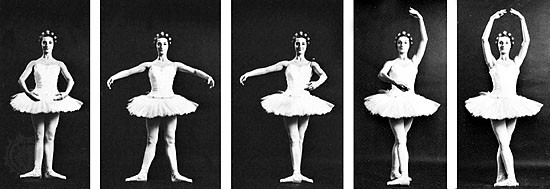
iballep002p1

It’s been a month since I realized that my 2014-2015 school year was going to throw me for loops, spins, twists and twirls.  And while I am by no means a self-proclaimed ballerina; I’m smiling, pointing my toes, and pirouetting with the best of ’em.  Because when the music starts the core needs to be strong, the back straight, muscles tight, and breath steady.

As I stretch daily, as all practicing and proficient ballerinas do, I prepare to move in ways that are brand new; ways in which I never thought my body knew how to.  Legs outstretched, arms over extended, and of course…hair tightly wrapped in a bun – not one hair out of place.  Grace and elegance: the aspiration of all ballerinas.

Ballerinas and educators.

And while ballerinas make their every move seem effortless, the reality is that every motion is executed with deep thought and delivered with exact precision.  The bar is set wildly high and only the best of the best can gently thrust their leg onto that bar as fingertips reach for and surpass beautifully pointed toes while bodies align with a diagonally extended leg.

But, what about the ballerinas who approach the bar with a “Hrmph!” and a stubborn knee that won’t align with the rest of the leg and an unmaintained balance as a ‘steady’ foot is anything but?  And that sleek bun?  That bun has come undone and wisps of hair are continually getting caught on eye lashes and tickling cheekbones refusing to cooperate.  And no, you cannot move your hands from First Position for a moment’s reprieve.

Focus.

When we continue to throw on our tutus and ballet slippers and head straight into the studio before the sun has risen from its slumber: We are not giving up.  We are wrapping our bruised and bleeding toes accompanied by “Ouch!” and “Arghh!” but, we are not giving up.  We are placing even more bobby pins in our hair in hopes that today will be the day we are not tempted to twitch out of First Position.  Today, we stretch just a wee bit further in reaching for our little nubby toes.

As we wiggle and wobble…biting our lower lip oblivious to this false stability…we realize that our calloused hands are resting on those little nubs we’ve so desperately been trying to reach for weeks.  Yes, we are now touching our toes.  Wait.  What?  We did it?

I want to show you something.

Amazing isn’t it?  A young man in my Social Justice and Student Voice course was not willing to explore his 35-60 word biography (modeled after Visa Go World commercials) as it applied to his life.  But, he was willing to explore a puzzling injustice that he firmly believes has a feasible solution.  And his questions.  I could most definitely learn how to shape Essential Questions by conversing with this young man.

I’m still aiming for balance.

My knees are still a little bent.  My tutu is sometimes on backwards.  But, there’s hope!  While the majority of students were actively engaged in chronicling a moment in their lives, one student decided he needed to do things his way: focused, dedicated, and with a little pizzazz.  Is that not what the art of ballet truly encompasses?

As I continue to learn the intricacies of this art form, I take pleasure in exposing students to it as well.  We dance together…sometimes in beautiful unison and well, let’s face it, other times as if we’re all petit sauting to a different tune.  That day, this tenacious student decided to wear sneakers to ballet practice.  And, I’m so glad he did.


Please Don’t Judge Me

“So, uh, yeah this is pretty embarrassing for me.” I could feel my face flush in front of my 1st period Advanced Composition before I’d even begun. My voice shook as I stood in front of the 24 pairs of 17-year old eyes—the most vulnerable position one can be in. I had captured their attention at 7:45 in the morning, but I could feel my innards twist as I stammered through some of the usual excuses I hear from my student-writers: “I need to tell you the backstory first” and “I hope you get what I’m trying to say.”

Then I started, reading line by line the maid of honor speech I will deliver in fewer than two weeks at my best friend’s wedding. It wasn’t the first time I had shared my writing; I write with my students during quickwrites, share finalized pieces with them throughout the year, and discuss drafting pieces for this blog, but this speech was different—it was raw, personal, and untraditional. I had made some major stylistic decisions that pushed me, particularly as a writer, outside my comfort zone.

“I really need your feedback,” I said to them. And I was honest, practically on the verge of begging. “You see,” I continued, “writing happens throughout your life, and in this instance I need your help to make sure I don’t make a fool of myself in front of 200 guests.”

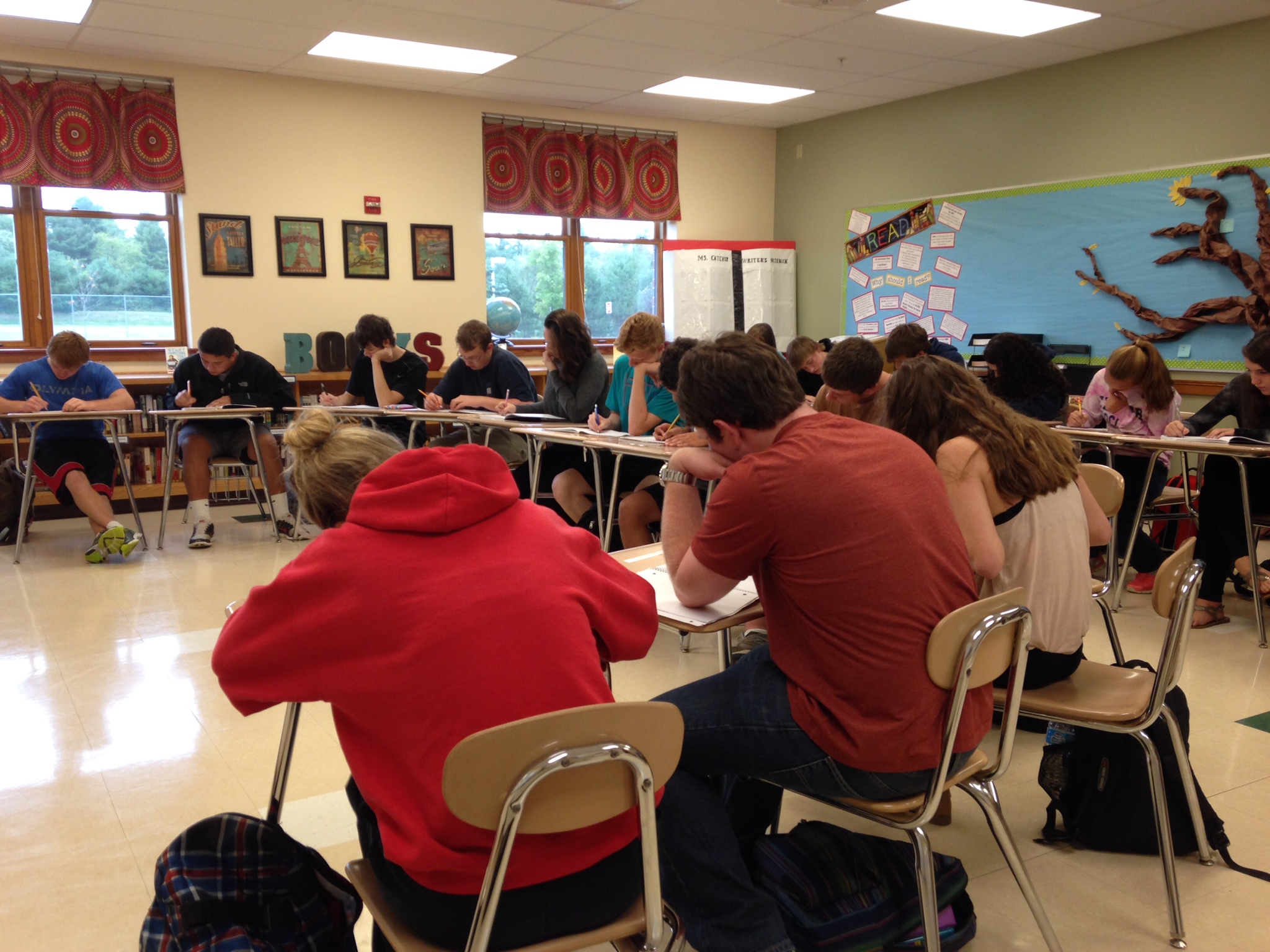
photo-1

My Advanced Composition class, pictured here, helped to walk me through the revision process.

“You’re going to trust us?” a student asked.

“Yeah,” I responded, “Plus, at the wedding I’ll be in front of 200 people I might never see again, whereas here, I’m with you guys for the rest of the year. So, if I’m embarrassed here, it’s going to be really bad at the wedding,” they laughed and they listened to me recite the piece with a calm voice and a racing mind, a mind that begged them to chuckle at the jokes and coo at the memories. When I came to the end, I looked up, realizing again, as I have realized so many times before just how vulnerable it is to share writing. This time though, as much as it made me nervous, I knew that the only way to teach writers was through modeling. If I was asking them to expose their writing to each other, I had to be willing to expose my writing flaws as well, even if it felt like singing solo karaoke stone-cold sober.

Then the suggestions came: “I’m not sure what you were doing with that transition, maybe try to make it more specific.” “I would like to hear about when you first met her fiancé.” “I think you could add another story.” Their words were carefully chosen as not to offend but instead encourage and help. While some students doled out praise, others helped to polish the piece. Even trailing side conversations pertained to how to make the piece stronger. I typed their comments into the document, repeating what each of them would say, and then I sent them to begin a similar process of reading aloud their personal narratives within groups of three.

Next week I will arrive in class with another draft of my speech, and I will repeat the cycle. They must see me live the life of a writer if they are going to believe what I say. They must see me absorb their feedback if they are going to understand the value of peer review. And above all, they must watch me return, raw nerves and baited breath, if they are to believe that I see value in their words.

Getting Students Hooked on Poetry

“Poetry is boring.”

“What does poetry have to do with anything?”

“What does poetry even mean!?”

“I hate poetry.”

Poetry is a timeless form of writing, yet students struggle to see its relevance to their lives.  Further, they struggle to understand the themes and messages poetry attempts to communicate.  After weeks of asking them to read like writers, my students did begin to find some value in poetry, but they still didn’t like it.

Thus began my endeavor to present poetry as exciting, interesting, and most of all–fun.  What follows are three poetry activities my students were engaged and challenged by.

IMG_5382Spine Poetry

Creating book spine poetry is not a new concept–it can be found all over the internet.  I first got the idea to do this activity in last year’s UNH Literacy class with Penny Kittle.  Not only does creating spine poetry get students playing with language, it also exposes them to a wide variety of titles.

I modeled the creation of a spine poem for my students, stacking and re-stacking titles by John Green, Max Brooks, Jon Krakauer, Malcolm Gladwell, and more.  I modeled, with their input, until we had a poem that satisfied us.  I also showed examples of a variety of spine poems on the projector.  Then, students worked in groups to create their own spine poems, eventually writing their finished products in their writer’s notebooks after adding punctuation and a creative title.  I noticed many of them adding new titles to their what-to-read lists, too.

IMG_5332Cemetery Poetry

Edgar Lee Masters’ Spoon River Anthology is a wonderful collection of poems inspired by graveyard epitaphs.  Lives and legacies are explored in Masters’ work in a variety of styles.

I wanted to have students practice imitating this poet’s craft, as he is a master (pun intended!) of showing, not telling.  We have a beautiful old cemetery quite close to our school, and it was a gorgeous September day for a walk.  My students toted their writer’s notebooks to the graveyard and we read three of Masters’ poems together.  I asked students to wander the cemetery and find a gravestone that appealed to them, then imitate one of the poems we’d read, using that headstone as a subject.  My boy students especially loved this assignment–they were drawn in by the quiet atmosphere of the cemetery and its prevalence of Civil War graves.

IMG_5125Spoken Word Poetry

Shane Koyczan, Taylor Mali, and Saul Williams have soared to YouTube fame with their spoken word and slam poetry performances.  They are forceful presences on stage, and their-in-your-face styles often hook my students.

Sarah Kay provides a lovely contrast with her soft-spoken performances, her clear voice spinning tales of love, motherhood, and femininity.  We read “Point B”, pulled out its richest lines, and hung them around the room.  There were eight in total, and students responded freely to these beautiful words on post-it notes in a silent discussion.  They wandered the room, sticking their responses onto their favorite lines, and then responded to one another.  Their close readings gave way to analysis as they challenged each other, left questions, and cheered classmates on.  Weeks later, a student quoted a line from “Point B” in a discussion–this activity had seared “this life will hit you hard in the face” into her memory.

Stacking books into spine poetry, imitating poems about gravestones in a cemetery, and silently discussing spoken word poems transformed my students’ perceptions of poetry.  Words that were once lifeless on the page came alive.  This week, they reshape their own identities and wear new hats as poets and writers–hats that, thanks to our poetry fun, are not as unappealing as they once seemed.