Category Archives: Pedagogy

Choose to Become a Classroom of Writers

Note:  I enjoy emails with questions about my teaching practice. They help me clarify my thinking, and they often lead to new posts here. This post is Part I of my response to this question:

How does your district handle classes that are very content specific? For example, I teach Honors/Pre-AP American Literature. This is a sophomore (with accelerated freshmen course) that has a pretty traditional literary movement focus, which includes several of the classics (The Scarlet Letter, Huck Finn, Of Mice and Men, The Great Gatsby, The Things They Carried). And while I feel I have made great strides over the years in terms of student driven lessons, focus on discussion and annotation, skill vs. content based assessment, the one area I continue to struggle with as I look to workshop is how to facilitate the choice. 

Do you have a similar class in your district? Are any of these texts still used as whole class works? As options within specific unit studies? Or is the year open to student choice throughout? 

First of all, while my district ELA coordinator would love for all teachers to move to readers/writers workshop, and he has introduced that idea through various means, many teachers are not there yet and some are determined not to budge. Like many other issues related to change in schools, they nod their heads and keep doing what they’ve always done. We know that sometimes this is best for kids (I’ve done the nodding and door closing, too), and sometimes it is not, which is the case when it comes to continuing to make all the choices in English classes at the expense of student readers.

My own department manager reminds me often that we have to take our movement one step at a time. This is my first year on this campus, and while most everyone is making positive and impacting change. It’s slow, and I get antsy. I’ve been doing readers/writers workshop with my students for seven years now, and I still work on refining plans, lessons, mentor text selections, mini-lessons, and more. Truly, workshop is constant motion, which I am sure, if you practice it, you already know.

Recently, I was asked, “What is the one step that will give us the most movement as we continue this transition?” I paused for a moment, and then the answer focused clearly:

Become classrooms of writers.

Many high school English classes are literature laden. All the lessons revolve around specific texts, mostly whole class novels, and sometimes teachers spend five, six or nine weeks reading and discussing that one text. Sure, they might include other instructional practices and activities, but the most common mode of writing taught is analytical (the least likely of all the modes of writing students will use in their lives after English class. Teachers, when was the last time you wrote an analytical essay for your job?).

When we move to becoming classrooms of writers, teachers realize that if we want to practice other modes, read mentor texts, model the writing process, lead revision workshops, publish our best work, and truly live the lives of writers, we simply do not have time to devote class after class time to the study of one particular book.

A mentor once told me:  “You choose to do this, which means you choose not to do that.”Faulkner on reading

Say I choose to create a unit where my students write narratives (I always start the year with narrative because it is builds community, and contributes so much weight to other modes of writing. See tom Newkirk’s book Minds Made for Stories.) I prepare by gathering a variety of narrative texts of various lengths. I can use passages from an assortment of books in my classroom library, or I can pull passages from popular short stories, or classic novels. [See note on this at the end.]

Some passages I will use to teach leads. Others I will use to teach how authors deal with time. I may pull out specific parts and teach effective use of dialogue or character development, setting, whatever. [Gathering a variety of texts in different genres around the same theme is another way to approach the same type of reading then writing task I describe here. I’ll write about this soon.]

First, we read like readers. We practice comprehension strategies and discuss the meaning of the text.

Next, we read like writers. We deconstruct the text and discuss how the author makes that meaning.

In my AP class, we almost always talk about these texts via a Harkness discussion. Students do the thinking and speaking after I’ve done mini-lessons and modeled answering focusing questions. I’ve learned to trust that students will discover the elements and devices that I hope they will. Sometimes I have to prod, but they rarely never get there.

The skill I need to teach determines the reading passages I select. That’s an opposite approach to how I used to plan when my teaching was driven by various pieces of literature.

And now, I have time to talk about books, allow students to select books they’d like to read, and confer with students about their reading. They read tons more than they ever did before, and they become much more effective writers. Win/Win.

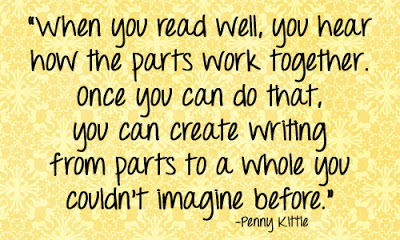
cool quote memes from our friends at http://www.TeachMentorTexts.com

Watch for Part II of my response soon.
 ©Amy Rasmussen, 2011 – 2015

Yes, You Can Get Teens Reading: One Senior High Campus Proves It

My department manager is wise, and I admire her leadership skills. She often asks, “What is your temperature?” to see how I am adjusting, coping, feeling, managing, dealing, doing with all that I must at my new school. Thankfully, although it’s my first year here, it rarely feels new anymore.

I like that Rhonda asks me questions about my readers and writers workshop classroom. She asks me to participate in discussions and professional development sessions. She validates me as an individual and as an teacher. I trust her, and I know she trusts me.

Trust is the greatest gift in the life of an educator.

We are an 11th and 12th grade campus. We are moving to a workshop pedagogy. Our district has changed the model of intervention by bringing in local National Writing Project consultants to write curriculum and train teachers. (I write about that in part in this post.) The ELA coordinator also hosted trainings with Penny Kittle and Donalyn Miller, two of the brightest minds in workshop, last summer. Every time we meet as an English team, we talk about some aspect of reading, writing, and workshop in our classrooms.

Suggesting that we might like The Color of Law by a homegrown TX author

Suggesting that we might like The Color of Law by a homegrown TX author

Teachers are trusted to get their students reading. At LHS in every English class, visitors see students reading during the first 15 minutes of the period. Teachers have had training on giving book talks and conducting reading conferences, and we’ve started building classroom libraries.

I got an email message today: “What’s the title of that book, Story of Angel, or something. My copy has gone missing.”

The Book of Life by Angel,” I replied. It’s a hot title in my classroom, too. I have to replace it every year.

Our students are reading, and behaviors are changing for the better.

I heard one teacher say to another, “I like how reading at the beginning of class helps my students calm down. We get started with ease because they know to come in and get their books out.”

To build a culture of readers, we must trust that students will read when we give them time to so. We must model what that looks like.

Sharing a love for the work of R. A. Salvatore

Sharing a love for the work of R. A. Salvatore

We must trust our teachers to be readers themselves. How can we talk about books to kids if we are not reading them? Children of all ages revere authenticity.

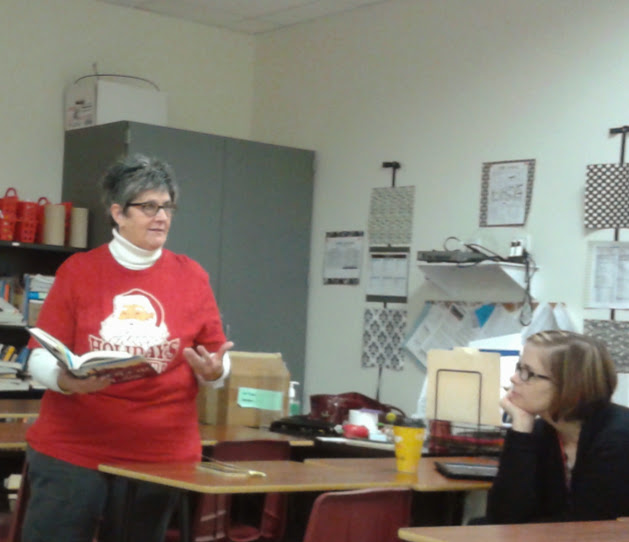
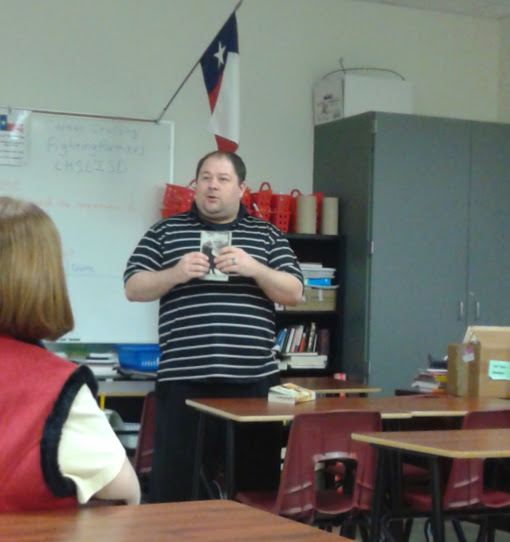
Each week when we meet in our department meeting, a teacher gives a book talk. They share a bit of the passion they have for an author or a book.

Jeremy shared his love of fantasy, and Jayne shared a bit of Dickens in her fun fake British accent then talked about a new book she enjoyed by a Texas author. Karen read from The Yellow Birds and The Things They Carried and talked about how they made a nice pairing, and, most recently, the baseball coach Mike talked about a book he loved. (I wish I could remember what it was, but I forgot to write it down.)

Administrators must trust that when visiting classrooms they will, and want, to see rooms of students silently reading. What better activity in a class designed to improve literacy skills than to see all students engaged in the practice of it?

Students come to trust that reading and books provide value to their lives because the adults in which they trust value it, talk about it, model it, and, if necessary, enforce it.

Too many teenagers claim to be non-readers. Ask them, if you haven’t. They will tell you truly.

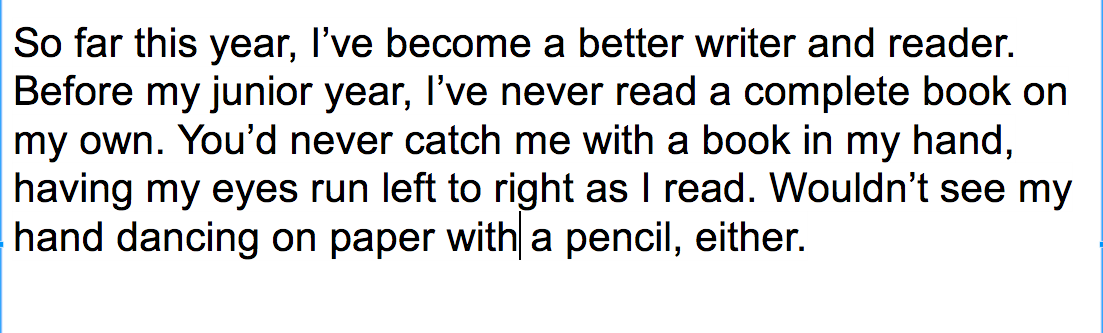
They will also tell you when they experience a shift in that thinking. They are surprised — and grateful.

an excerpt from my student Joseph’s last independent-reading evaluation

©Amy Rasmussen, 2011 – 2015

Finding the Right Book for Growth in AP English

Several tiles similar to this one dot the ceiling in my classroom.

Sometimes I just want to say: “You are wrong.”

Of course, I try to be a little more diplomatic than that, but really, many critics of balanced literacy are that — wrong.

The argument I hear the most against allowing students to choose which books to read in AP English is that they will never choose to read anything other than Young Adult fiction and graphic novels. To that I want to say “So?” (For a great list of graphic novel titles, see Donalyn’ post Comic Book Girl.)

What I do tell those who assert this nonsensical claim is “I wish you could visit my classroom and talk with my students.”  Here’s what they would see:

Everyone in the class is reading. Everyone except Rebecca. She stands in front of the book shelf I’ve labeled “Literature at Its Finest.” Between bookends on the top are paperback classics; authors ranging from Ray Bradbury to H.G. Wells. The first shelf is stacked with anthologies from my university studies in literature: Homer, Sophocles, Chaucer, Milton –the Complete Works, and more texts from the canon: The A Tale of Two Cities, Adventures of Huckleberry Finn, The Awakening, To Kill a Mockingbird. And many I have never read: 1984, Lord of the Flies, Heart of Darkness, A Farewell to Arms, Brave New World.

I walk over and ask, “Whatcha looking for?”

“I want to read a romance,” she says.

“Why are you looking on this shelf?”

“I need a challenging book.”

“So you want a romance that’s a challenge?” I say.

“Yes, they make those, right?” she answers, and we both laugh.

I pull Pride and Prejudice, Jane Eyre, and Wuthering Heights. I hand Rebecca each book as I talk a bit about them. Why I love Jane Austen and a little about the Regency Era, a quick bio of the Bronte sisters, and a tad about Gothic literature.

She asks, “Which should I read?”

I answer, “You decide. Read the back covers and the first few pages of each. See which voice you like best, and go from there.”

A few minutes later, I see that she has the clipboard where students sign books out from our class library. Rebecca has decided to read Pride and Prejudice.

A week passes. I meet with Rebecca for a conference. She tells me that this book is hard. She has to re-read parts of it for it to make sense. We talk about her strategies for comprehension. She says she is not giving up.

Two weeks pass. I ask students to share out with the class what they are reading. Rebecca says P & P and smiles as she declares that she’s finally figured it out. “I get it now, and I am getting better at reading it.” When I get a chance, I walk over to her desk and ask her what she means.

“The characters, everything,” she says. “It was the language that was really throwing me, but I understand the story now. I like Jane — her attitudes and opinions.” I make a note to follow up on this conversation.

Critics may say: So, she’s reading Pride and Prejudice. She won’t understand the nuances, the humor, the satirical elements, or even the social commentary without guiding questions and class discussions to help her.

They are right. Rebecca probably won’t get all that. But she and I are fine with it.

We have learned how to look at language and deconstruct texts, analyzing as we go with short texts we read and study in class. If I asked Rebecca to select a page and analyze some aspect of Austen’s language, I know that she could do it. She is a a critical thinker and a competent writer.

And she has challenged herself into a beautifully written complex piece of literature. And she likes it.

We read, discuss, and work with other titles in book clubs to understand and be able to analyze the scope of a novel. (I facilitated #APLangchat on the topic of book clubs. Here’s the planning for that and the Storify. And I wrote about little about my class book clubs here and here.)

I want students to love literature. I want them to become readers. The best way I know how to accomplish both is to let them choose the books they read.

I surround my students with rich literature. I talk about books daily. They talk with one another about what they are reading regularly. We build a community where they know my expectations for them as readers, and they evaluate themselves — setting, reviewing, and adjusting expectations for their own reading lives often.

When we model the life of a reader, students will follow our lead. Like Chris who chose this National Book Award Finalist.

We are well into the school year, and more and more students have moved into more complex books, and they are thinking about their reading choices.

Chris:  Currently reading Station Eleven. Chris asked me recently to recommend a book. He said, “I’ve liked everything you suggested so far this year.” I asked him what he liked best, and he said The Curious Incident in the Nighttime, which was part of our first book club. Somehow the conversation turned to my book club with some colleagues at my last school. I showed him my copy of Station Eleven with the marked and dogeared pages. He asked to borrow it, and we’ve since talked about the multiple story lines and how the author eventually ties them all together. He gives me updates as he’s making sense of this story that is unlike anything he’s read in the past.

Jasmine:  Currently reading Let the Great World Spin. Jasmine asked me for recommendations for books with multiple story lines. She’d read Extremely Loud and Incredibly Close in our first book club and A Thousand Splendid Suns in our second. I mentioned Colum McCann’s Pulitzer Prize winner, and she noted the ceiling tile that decorates our classroom. Jasmine reads about 120 pages a week and told me in her last conference: “In the next two weeks, I plan to up that number to 200. I also want to find more books with intertwining story lines so I can be motivated to read each week.” Station Eleven is already on her To Be Read Next list.

When we talk about rich literature and use passages to teach skills, some students will choose to read the whole text.

Doreen: Currently reading The Goldfinch. Doreen is quiet, studious, sometimes even somber. I used a passage from The Goldfinch when I introduced rhetorical analysis. I wrote about it in the post Starting with the Ending. My copy sat in the front of the room under a potted plant until one day it was gone. Doreen had swiped it, and is currently about half way through. When we did a quick whip around the room to share out and rate our current reads today, she rated it a 9 out of 10. I’ll talk to her soon about why Donna Tartt doesn’t get a ten for her Pulitzer Prize winner.

Other students are reading just as complex and important books:  Nawoon/The Thirteenth Tale, Neydy/The Great Gatsby, Lillian/The Scarlet Letter, Pedro/Dracula.

Do I have other students reading YA fiction? Yes, and that is okay because they are reading.

Ivan finished Winger by Andrew Smith last week. He told me, holding out the book with tender care:  “This is the first time I have made a connection with a book. I get what you mean about literature now.” He is in an 11th grade AP English class!

Last summer at UNH Literacy Institute, I wrote a piece that references the reading theory of Louise Rosenblatt extensively. Below is an excerpt.

I believe this with all my heart:

What does it mean to experience literature? First, we must define “literature.” A text can only be considered such if the reader “responds to it in terms of sense and emotion and thought (106). If a book is “to be considered “literature” for any students, it must be experienced” by them (94), and it requires “a particular kind of reading process” (89).

All too often teachers of English and those who set the “critical theories dominating the college and university teaching of literature…” simply intensi[fy] the tendency to hurry the student away from any personal aesthetic experience” of it (102). We see this as teachers select the books students will read, usually in whole class settings, assigning reading homework with the expectation that students will read primarily complex literature outside of the classroom. These teachers often give reading quizzes as an assessment of their students’ reading lives, and make the only experience a non-reader has with the text punitive. This is detrimental to the growth of the individual. This is contrary to “our main responsibility” as the educator:  “to help the student to find the right book for growth” (67).

How are you, the expert in the room, helping students find the right book for growth?


©Amy Rasmussen, 2011 – 2015

6 Ways to Spend Your Snow Day

snow-day2So it’s your fifth snow day this winter…or your fifteenth.  Either way, you’ve done all of your spring cleaning, you can’t grade or lesson plan because you haven’t seen students for a week, and you’ve completely emptied your queues on Netflix and Hulu.  What’s a teacher to do?

1. Read a good book.  If you’re anything like the hundreds of English teachers I know, you love reading.  Use the time you’ve been cooped up to read something you’ve been wanting to but just haven’t had the time to start.  I haven’t stopped hearing about Jennifer Niven’s All the Bright Places, Atul Gawande’s Being Mortal, and Anthony Doerr’s All the Light We Cannot SeeI’ll think I’ll try to tackle the last two this week.

2. Write around a poem.  Penny Kittle shared once that she likes to tape poems into her notebook and write around them–it’s one way to move toward doing your own beautiful writing, she advised.  So, I signed up to receive the Poetry Foundation‘s daily poem via email, and when I read one I love, I print it and tape it into my writer’s notebook.  I’m amazed at the nuggets of written wisdom I arrive at after responding freely to a poem in writing.

3. Read a teaching book.  I’ve been wanting to finish Tom Romano’s Zigzag and Donalyn Miller’s Reading in the Wild for quite some time now, but with the day-to-day craze of the school year, it seems like the only time I find to read teaching books is over the summer.  This is the time of year, though, that I often need a little lift in my teaching spirit, so it’s always rewarding to explore some new thoughts from some of my old favorites.  Since I’m in the middle of a nonfiction book club and writing unit right now, I think I’ll settle down today with Georgia Heard’s Finding the Heart of Nonfiction.

4. Check out that dreaded State Test.  Dana Murphy at Two Writing Teachers reminded me that when our students are accustomed to writing in a choice-based, unit-driven workshop, they are not accustomed to writing to a prompt, and that while standardized tests do leave a bitter taste in our mouths, they are a reality our students must face.  If we want them to feel confident as writers in all environments, we must prepare them for all writing situations–especially the two or three standardized writing tests they may face each year.  Here in West Virginia, we’ve elected to go with SmarterBalanced as our Common Core-aligned assessment.  Today I’d like to spend some time looking at the writing portion of that test and brainstorming some lessons to help my students feel confident writing to those prompts.

5. Catch up with your tweeps. Twitter is a bottomless pit (seriously; you can get lost in it) of resources, ideas, and inspiration for teachers.  I could spend hours perusing the archives of #engchat, #titletalk, and #litlead, just to name a few.  I’d also love to look at the archives of some chats I missed recently–#mindsmadeforstories, for one.

6. Read incredible teacher blogs. I could browse the virtual thoughts of my colleagues forever!  We have so many brilliant and inspirational people in our profession, from the genius team at Nerdy Book Club to the marvelous ladies at Moving Writers; the steady wisdom of What’s Not Wrong to the joyful inspiration of the dirigible plum.  I’ve also been loving the thoughts of Hunting EnglishThe Reading Zone, and countless more…really.  I could never list all the great teacher blogs I’ve stumbled upon.  I feel so grateful to the many, many teacher-writers who have helped me fill my writer’s notebook with thoughts and ideas on dreary snow days like these.

What are your favorite ways to relieve the restlessness of several snow days?  Share in the comments!

Aim Higher: A Case for Choice Reading and a Whole Lot More in AP English

I’m going to just say this right up front:  I hope to challenge some thinking.

I asked some friends for feedback on this post and got opposing advice. I let it rest for half a week. I prayed about it. And then today I read this post by Donalyn Miller, author of The Book Whisperer and Reading in the Wild. I’m not positive, but I’m pretty sure she wrote it in a response to a comment on this post by Amanda Palmer, Secondary Language Arts Coordinator in Katy, TX. I’ve written about my own students and their experiences as they’ve grown as readers before at Nerdy Book Club and on this blog; and I’ve presented on how I advocate for choice in AP English at conferences.

I hope I can be a voice of reason and an inspiration for the good of all students. So, if you’ll hang with me here, I’ve got a case for choice reading in AP English.


“I wish my daughter was in your AP English class,” my friend told me. “She has to decorate Kleenex boxes in hers.”

We’d had this conversation before:  I am an advocate of self-selected reading, and I fully embrace readers and writers workshop in my AP English Language and Composition classroom; Sarah is an advanced reader in an AP English course where the teacher chooses all the texts and assigns “clever” ways for the students to show that they are reading. Anyone who knows Penny Kittle’s work, and Donalyn Miller’s work, and my work, which is so much about helping students develop as life-long readers, understands that Sarah is not having the kind of experience in her English class that we advocate and hope for all children.

Making the Move to Move Readers

Many teachers and administrators across the country have recognized that students in secondary classrooms are not reading. If students are not readers, they tend to struggle in all academic subjects — not just English. Schools adopt interdisciplinary practices, whole school vocabulary instruction and stop-everything-and-read programs in an attempt to improve reading scores on standardized tests. Many have moved to readers and writers workshop, where choice-independent reading is key, instead of the traditional secondary-English pedagogy where the teacher selects all the texts, usually classics, and all the writing topics a student is expected to write about for class. Those who have made the move will tell you that choice matters, along with time to read and write, when it comes to student engagement and real movement in our teenage readers and writers.

However, from what I’ve seen and heard, most of this choice is happening in general education classes — not honors and AP English. The teachers in most advanced classes I know of are still making all the choices. It’s like we do not trust our high-achieving students to move themselves into complex texts. We focus on the literature instead of the literacy. And we rob children who already have a grasp of language, who already have many of the study skills they need to pass English classes, with the opportunities to grow as much as they are able.

We make changes in our pedagogy that allow our reluctant and struggling learners to grow but not our proficient kids? Where is the sense it that?

Evidence that Readers and Writers Workshop Works

One day last week, I sat and listened to my district’s ELA director share our state re-tester data. I usually hate this kind of meeting, but our gains are huge — due in large part because of the redesign of tutorial lessons, many of which teachers have adopted into their mainstream instruction. The ELA director changed the model and worked closely with North Star of TX Writing Project to produce writing workshop lessons (most of which came out of my classroom and pedagogy) that broke the mold of Response to Intervention. The dramatic increase in re-tester scores (an average of 200+ point increase per student) proves the lessons are working to move student readers and writers. Workshop-style writing lessons and a campus-wide, district-wide commitment to independent reading is working.

Making the Move in Advanced English Classes — or Not

The next day I sat in a meeting with the AP English team on my home campus. (Important note:  The same day that in second period a young woman asked me to recommend her a book of classic literature because she wanted to read something more complex. She and I stood in front of my “Challenge Yourself” shelf, and in about six minutes while the rest of the class read silently, I taught a mini-lesson on Gothic literature and the Regency Era and book talked the Bronte sisters’ books and Jane Austen. Rebecca left class with Pride and Prejudice, a book she chose to read because she wanted a romance that sounded interesting.) In that vertical alignment meeting, the conversation bounced around to what students must know and returned a few times to the books “all students must read.” After a while, someone asked me what I thought.

“Is it really about the book, or is it about the reader?” I asked.

“Well, it’s both,” two teachers answered.

“Then why does the book matter as much as the students’ abilities to read the books?”

“Because they will never read these books on their own, and they have to read a storehouse of canonical texts in order to write on the AP Lit exam,” they said.

“So you’re basing the reading lives of all pre-AP students in 9th and 10th grade on one open-ended question on the AP exam their senior year?”

“Well, they also have to analyze a passage,” one teacher added.

“Yes, and that’s like studying lists of SAT words hoping students learn the few out of 5,000 that might be on the SAT exam. It’s a total crapshoot.

“Shouldn’t we be more concerned about students being able to read at complex levels than deciding which books they must read?”

Another teacher joined in “I want my students to be prepared for the kinds of reading they will be expected to know when they go into college classrooms. That is providing equity. If they know The Iliad, Beowulf, Dante, they will be on equal footing as those classmates who read those things at the affluent schools across town.”

“Shouldn’t the equity be in the skills our students possess? Can they read and understand complex texts like the students across town?”


How Do We Know If Students Are Reading

I know that many, if not most, of those students at other schools are not reading those books. Few high school students read the assigned texts in English classes. Ask them. I have student writing from the past five years that tells me in their own words about their reading habits in high school. And there are plenty of well-researched articles like this one from the English Journal that concur. It is true: few high school students read the assigned texts in English classes. Why doesn’t this matter to their teachers?

“How do you know they are reading the independent reading books you let them choose?” a teacher asked me.

“Because I talk to them about what they are reading,” I answered.

“I do that, too, about the books I assign,” she said, but I am pretty sure that her idea of talking about books with students and mine are very different. I call it conferences. She calls it lectures.

I felt disheartened and sad for the honor student at the outcome of that vertical alignment meeting:  AP teachers deciding what four books teachers in preAP 9th and 10th grade must teach in order to prepare students for Advanced Placement in 11th and 12th grade.*

I fear that students will be just as prepared as they have been, which in my one-semester at this campus is not much. At the most, they will read four books a year, and the only students who will read the assigned texts are the ones who are readers anyway, who are studious enough, or care about their grades enough, to do what the teacher says. Everyone else will read a little and Sparknotes a lot, listening in to class discussions, and learning enough to pass exams that cover the conflict, plot, symbolism, and theme of the assigned text. Few, if any, will grow as readers who fall in love with words and characters and the beauty and the texture of carefully crafted stories.  It happens over and over and over again.

We deprive the students who take advantage of the College Board’s open enrollment policy, the students who voluntarily agree to more rigor, and we allow them to make it through high school English without growing as readers. I would argue that in many cases, there is high probability that they regress as readers.

How does that make any sense?


Looks Like the College Board Advocates for Readers Writers Workshop

The College Board provides course descriptions for each of the 34 AP courses and exams it offers. The descriptions reflect the course material that might be taught in a comparable college course. This makes designing a curriculum relatively easy for many of the courses taught. Biology and World History, for example, have definite knowledge-based skills that must be covered throughout the course. AP English courses are another story. Since first-year college composition courses are so diverse and vary from college to college, the structure of these classes on high school campuses can be diverse as well. AP programs, and even individual teachers, may design their courses based on their own interests and desires. Of course, the AP classes must reflect and assess college-level expectations, but that’s pretty much the only requirement. There are no prescribed essays that students must write, although there are suggestions of form. There are no required novels to read, although there is a suggested list of authors. Suggested being a key word. Teachers have a great deal of freedom in how they design their courses and what they put on their syllabi. See

AP English Language and Composition Course Overview

AP English Literature and Composition Course Overview

We can still read texts spanning from the 1600’s to the 21 century. We can still read literature that we deem important to our literary canon. But do we have to make all the choices in our Advanced Classes?

We can foster literate lives if we will take the same approach to literacy that is working in thousands of classrooms across the country:  Readers and Writers Workshop where choice matters and time to read and write mean deep and lasting learning.

So What’s the Real Deal

After talking this over with several of my peers, I’ve decided on a few reasons why honors and AP English teachers refuse to “drink the Kool Aid” (Isn’t that a nice derogatory way of describing readers/writers workshop? I hear it often):

  • Some teachers loved the experience they had with literature in their high school English classes. This is the reason they chose to be English teachers. (I am one of these teachers.) They want to duplicate those positive experiences for their students. A worthy ambition. However, I wonder if they have considered how many of their classmates experienced the same excitement at reading (or not) the literature that the teacher mandated.
  • Some teachers are not readers themselves. They love the books they’ve chosen to use in their classes, but rarely do they read anything from a best-seller list, or an awards list. They want to stay with what is known and comfortable. Many times these teachers mistake their duty:  to teach the child and not the book.
  • Some teachers believe that certain pieces of literature must be read by every student on the planet. “If I don’t teach this book, then these students will never read it” is a statement I’ve heard many times. My answer is always “Yes, but many are still not reading it when you teach it.” We ruin the the taste of great literature for many students when we force books on them that they are not ready for. I’ve asked all of my students this year about their reading in 10th grade. Not one of them has said they love To Kill a Mockingbird, one of two books they had to read last year. Why would we want to turn students off of a much beloved book like TKMB?
  • Some teachers believe that 10 to 15 minutes of sustained silent reading at the beginning of class is the same as instruction with choice reading. Sure, this reading time, especially if students are reading books that they choose, is important. It is a step. But it is not the same as structuring instruction around readers workshop where students not only read books that they choose, they think about them, talk about them, learn within them. They confer with a teacher intent on moving the reader in the best differentiated instruction possible.
  • Some teachers are afraid of giving up control. They fear that if students are all reading different texts they won’t know how to manage the class or guide the learning. This is a valid concern, but it is also something they can learn how to do. Many of us are doing it. We are happy to share how.

I am sure there are other reasons, and really, I mean no disrespect. I know my colleagues are hardworking and loving educators. I like them a lot. I respect them for the work they do, and I am sure that their students are learning in their classes. I know this is true for many other teachers and classrooms across America, too. I just really want to challenge some thinking.

What if we can do more?


Let’s Allow all Students the Advantages of Choice

More than anything, I want all students to have opportunities to rise above the norm, and maybe, just
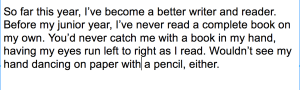
~Joseph, AP English Language and Composition Student

maybe, we will see many more students, not just our struggling ones, immersed in books they love, and thinking about their reading in ways we’ve never imagined. Their engagement will improve. Their growth will astound us. They will develop as critical thinkers, accomplished writers, and as empathetic individuals ready to take on the challenges of college and their world.

I mentioned at the beginning of this post that I shared a draft of it with my writing partners. This response from Shana is important:

“I was an AP Lit kid, and an Honors English kid.  I SparkNoted The Scarlet Letter, Beowulf, Iliad, Catcher in the Rye, and the rest.  I never read a bit of it.  In fact, I didn’t read ANYTHING that was assigned to me simply because of the fact that it had been ASSIGNED.  I was stubborn like that.  And I got A’s all the way through.  And a 5 on the AP test.  All the while tearing through John Grisham, Elizabeth Peters, and the entire Bestsellers section of my public library outside of class.

“Then, my freshman year of college, when I took a workshop class in which I was allowed to self-select what I read, I chose the Scarlet Letter and thought it was the most beautiful love story I’d ever read.  I finished it and read it again.  Since that day, when I realized that because I was one of those AP kids and I COULD read those works, I’ve discovered that I LOVE them.  But I never read a single one of them until after high school.  My well-known love for Jane Austen didn’t emerge until I wrote a paper on Pride and Prejudice and A Midsummer Night’s Dream for my Shakespeare capstone.  I just read Mockingbird last summer for the first time ever.  [Note: I read it when I was 40.]

“I was never allowed to choose for myself in AP or Honors English, but had I been allowed to…I would have read all of those books, and arrived at a deeper level of love and reverence for literature, much earlier in my reading life.

“One thing I might add — I totally disagree with that AP Lit teacher saying that students needed to draw from classic lit for the test.  Many of my AP kids who got 5s wrote about modern classics…Oscar Wao, Life of Pi, whatever.  You don’t have to know CLASSICS to ace the Lit exam…you just have to know how to write authentically about complex texts, and that’s what we do in workshop, and what kids should be doing in AP classes.”

I know there are others who have made the shift. I got this in an email message just today from Jeannine in CA. We had a nice chat at NCTE:  “Thank you for our November communication. I have altered much of my instruction to incorporate choice reading.  The students are soaring!!!”

Another AP English teacher trusting herself and her students enough to make a change and see where it takes them.


Why, Yes, There’s Research to Support This Pedagogy

I mentioned Donalyn’s post at the beginning of this long one. It is all about the research, the theory that outlines and supports what it takes to grow readers. Allington, Atwell, Krashen, Moss, Fisher, Ivey, and Kittle, and Gallagher and more.

I add another:  Last summer at the University of New Hampshire Literacy Institute Penny Kittle had us read Making Meaning with Texts, Selected Essays by Louise Rosenblatt. Rosenblatt’s research spans decades and is just as applicable today as when she wrote it years ago. I challenge every English educator to read the whole of Rosenblatt’s essay “The Acid Test for Literature Teaching, published in 1956. Or, at least to respond honestly to Rosenblatt’s conclusion. Odds are you will make the shift to choice, if you haven’t already:

“As we review our current high school programs in literature, we need to hold on to the essentials, or take the opportunity as re-adjustments come about, to create the practice that will meet the acid test:

Does this practice or approach hinder or foster a sense that literature exists as a form of personally meaningful experiences?

Is the pupil’s interaction with the literary work itself the center from which all else radiates?

Is the student being helped to grow into a relationship of integrity to language and literature?

Is he building a lifetime habit of significant reading?”


*In an email after I’d written this post, I received the notes from that meeting, and I am happy to say that there were no specific book titles listed, just the admonition that students in 9 and 10 grade preAP classes read 3-5 whole class texts of a complex nature. And students need to read 15-20 books a year to grow as readers. (Yes, I did throw in that bit of research while in that meeting.)

©Amy Rasmussen, 2011 – 2015

Beyond These Four Walls

Believe it or not, there is an actual term called ‘seat time’.  Yes – states, the national government, school boards, and the rest of ’em, refer to the amount of time a student needs to be learning as “the time they spend in their seats.”  So, we create spaces where students feel safe, comfortable, and willing to risk as we maneuver around this idea of ‘seat time’ because really, who wants to be in a seat for hours upon hours a day?

We move furniture around and engage in Sky Writing (writing on the windows), we use bright colors to liven the spot up and throw rugs on the floor, we use wind chimes and zen gardens to channel our collective inner peace.  I love all of this.  I do.  Because our classrooms are our homes away from home, we invest in them.  For students, sometimes it’s their only home.

Until now.

This year I’m taking the show on the road.  And by show, I obviously mean the Reading Writing Workshop…because I wouldn’t stay home or head out without it.

I’m not alone in this vein of thought.

Amy has gently drenched us with her new found love for teaching poetry; inclusive of strategies, techniques, and student buy-in that emerged for her this summer at Frost Place.  Shana (and her hubby) have taken us to England where we virtually toured historically majestic places where remarkable literaries once stepped foot.  And, Jackie has provided us the opportunity to be audience members through Poetry Out Loud as we envision the poetic brilliance eminating from our New England youth.

Thank you, ladies.  I’d like to return the favor.

IMG_20141219_131929

Welcome to the streets of NYC where students and I take on the challenge of reading throughout the entire day ‘outside of seat time’!

We know, educating our youth is a collective effort – always.  Therefore when my principal afforded our students the opportunity to purchase books of their choosing, he envisioned handing them their individual gift cards and letting them be on their way.  While this is lovely and most definitely appreciated, I needed to be part of the process with our emerging and evolving readers.

This journey needed to be a collective.

IMG_20141219_111942

Our ‘seat time’ for the day!

The goal was to ensure that the day was full of all things literature – from the moment we left the building.  So, as students and I bundled up to head out into the winter cold, we locked the door to Room 382 with metrocards in hand, Writer’s Notebooks in tow, and independent reading books tucked into our bags.  While enroute to the four-story Barnes and Noble located in the heart of Union Square, the NYC subway became our independent reading haven.  Students were aghast at first to know that I was serious about reading, not only on the train…but in public.  Yet, once reality set in, one-by-one books started to surface.  Students started to seep into their pieces and some decided to (unconsciously) ignore the fifteen minute benchmark; they found their time on the subway to be soothed by the lull of everyday noises that so typically distract them.  Today is different.

Today we are readers.  Public readers.

On the hunt for literature

On the hunt for literature

As we arrived at our destination, students were given a lay of the land and had the opportunity to go explore.  I learned a lot in that moment, and in the moments to follow.  I learned that while working with students for five months now, I still do not know all of their literary interests…or that some prefer to read graffitti art books because they are fueled by creativity…or that some have been intrigued by forensics since they started the course about a month ago – and so of course – they want to read up on it…or that graphic novels are still at the core of young men’s desire to read.  As students traveled up and down escalators to find what they were looking for I was proud of their willingness to take on an adventure that had the potential to be wildly overwhelming.

***

Weeks later, back in Room 382 and in true RWW form, we took to our Writer’s Notebooks and students were asked to chronicle a vivid moment in their lives.  What you are about to read took my breath away, literally.

A vivid moment comes to life...

A vivid moment comes to life…

Davon decided to chronicle this moment:

The first time I went to Barnes and Noble it shocked me a lot. I didn’t even know what Barnes and Noble was intill I got there with my teacher and classmates.  When we got there and I realized it was a book store, I was shocked.  I started feeling all types of bad feelings running threw my body.  I was nervous and had butterflys in my stomach.  Seeing all the people at different book shelf’s in there made me feel like I didn’t have no business being there.The fact that everyone looked like they knew what they were doing and looking for, made me just want to stay out of everyone way and get out of there.  

IMG_20141219_140616

Davon in deep thought


Davon’s honesty is brave.  And from the looks of it he managed just fine. Better than fine.  He found a piece that would keep him company over the holiday break, that would fuel his imagination, and that would support him in his literacy quest.  A piece he is calling his own.

Using our ‘seat time’ in the most unconventional ways proves that as educators, we know how to support the needs of our students. Sometimes we borrow strategies and ask for guidance, but innately we know what each new group of students needs.  Sometimes it takes a minute to figure it out or customize differentiated plans to make it work.  However, I propose that instead of always rearranging our seating chart or window decals or placement of colored pens…we need to bust out of the four walls in which we learn everyday and let the RWW guide us through the wonders just outside.

In what ways do you foster student learning through the RWW outside of your classroom walls?

Why My #onelittleword Will Work

My friend Jackie sent me a link to this blog: Setting a Work Schedule to Make Us Better, Saner Teachers. Somehow she sees inside my head.

My teaching world grew when I changed my pedagogy to readers and writers workshop. Over time, I also became so passionate about helping my students move as readers and writers I kind of lost my love for what started this change in the first place. Sometimes I get so busy reading the next great YA novel, or searching for mentor texts, or inventing new ways to get my reluctant students to write that I forget that I really just love my students. I love them.

I need to let them know that.

With all my musings about resolutions, (If you haven’t seen my posts for the past three days…) I probably need to give it up and follow the trail of those leaving the #onelittleword hashtag.

My word is L-O-V-E. sunshine-wallpaper-6

Do you remember when you first learned to spell it? I do. I wrote it everywhere. On notebooks. On desks. On the wooden slat holding my sister’s bunk bed above my head. (Years later I would also write the names of every boy I ever crushed on. It’s quite a collection.)

I need to reclaim the feeling I felt when I first learned to spell love. I need to spread it like I spread the lead of those pencils so long ago. My students will respond to my urgings to read and to write with quality and care, if they know I love them — not as readers and writers, although that is true, but as humans who deserve it because all humans do.

So, I’m thinking about how. How do I show my students love?

I read this post by my friend Jennifer: Teach Like An Artist. I like this idea of minimalism. I need to clear the clutter and refocus on the things I know work. My values are similar to Jennifer’s, and it’s by focusing on these things that I will show greater love for the students in my care. [It only looks like I copied Jen’s values. We just hunk alike.]

The Core Values of My Classroom

1. Empathy. We talk about windows and mirrors in my class a lot. We read to know what it means to be human. Do you see yourself in this book? What do you learn about someone else in this one? Do we make connections with individuals and characters as we read. Do we try to learn where their thoughts and feelings are coming from?

My classes are more diverse than they’d been in years. We have an incredible opportunity to step inside another’s shoes — if we only will.

Also, I must learn about my students lives.

(from Empathy in Education) Empathy has long been an intrinsic part of the education system, “if schools are involved in intellectual development, they are inherently involved in emotional development” (Hinton, 2008, p. 90). A student’s emotions coming into the class affect the way, and how much they learn. Educators must be able to connect to, and understand their students in order to best serve those students’ needs “focused on nurturing learning rather than judging performance” (Hinton, 2008, p. 91). Teachers in the classroom face students from all different backgrounds, sometimes very different from their own.

I think about this at the start of every school year. I am glad I’m thinking about it again now. I can do more now.

2. Authenticity. I cannot keep touting choice when I sometimes forget that “Choice without boundaries is no choice at all,” per Don Graves. I need to make sure that students are able to explore what matters to them, but I must guide them in directions that truly help them explore. Too many are afraid of the struggle of research and evaluation. They take first pick or rely on me to share my opinion. I want them learning how to form their own. I believe this is where TALK in the classroom is so important. Students are free to be themselves because we’ve established a comfortable learning environment — it’s safe — so students know they can express and share their beliefs.

I mentioned in another post that I used to write every assignment I gave my students. I commit to doing that again. They need to see me struggle and grow and share as a writer just like I ask them to.

3. Quality.  Somewhere along their learning journey, many of my students missed the bit on producing and turning in quality work. They focus on completion instead of quality. So far this year, it’s been an uphill battle with students expecting to do well on work that is poorly done. I spoke with a colleague just today. She said that she’s noticed the same problem in the business world:  a bank telling a customer to go to a different branch because “I’ve never done this before,” instead of attempting to learn how to do a task. Imagine if doctors, mechanics, the engineers who build our roads just shirk their duties and look for the quick and easy way through tasks? We are in trouble. My students need to know the value of producing work they know represents their best selves. I will refuse to take anything less.

“If it’s not worth doing well, it’s not worth doing,” my mother often said (mostly about chores around the house, but still.) I must make sure my students see the value in the tasks I ask them to complete. The quality of these tasks will reflect the quality of the work students put into them.

photo

More talk, better conference, additional Harkness discussions. That is how I will show my love for my students, and how I will help them have an even better than the first second semester.

Penny Kittle taught me that “writing floats on a sea of talk.” Natalie Goldberg taught me “Talk is the exercise ground.” I believe that when students talk about their thinking, about their plans for writing, they write more — and they write better. I believe that when the classroom is lively with energetic voices we learn and grow together. We learn to listen and to care for the thoughts and feelings of others. It’s through our formal class discussions that my students have learned how to analyze a text. It’s through my one-on-one discussions that I’ve learned where they struggle and how to help them grow as individual readers, writers, thinkers, and contributors in our society.

I’ve started writing notes to my students. Here’s another thing I used to do that brought positive results. I bought nice cards (Half Price Books has a lovely selection as teacher-friendly prices.) Every day I write one or two notes per class period. I highlight traits that I admire. I encourage. I notice. Students respond with higher quality work, more participation in class, sometimes even happier faces. My handwritten message, signed “Warmly, Mrs. Rasmussen” often works better than any conference with a student face-to-face.

And tomorrow students think and explore and decide upon their own #onelittleword.

My Take on Your Resolution Tricks

Before I wrote anything down for 2015, I needed to think through this idea of resolutions. (If you read yesterday’s post, you already know that.) Maybe more importantly, I started reading posts about resolutions and how I might make mine actually come true this year.

I found this article “The Tricks Psychologists Say Make Resolutions Stick.” Okay, then.

(Of course, I get the gist of the article, but let’s look at it through the lens of an educator.)

Don’t Have a Back up Plan

Evidently, “having a plan B at the back of the mind or simply using the wrong language to frame our resolution can end up scuppering the best intentions.” I’m not sure I buy it for every goal we set, but I really like the word scuppering.

I get that we can sabotage our best intentions when we frame our goal-setting around failure, but imagine if we never have a back up plan in the classroom? Many a day I conduct my first period, thinking I’ve got a good plan, all is well, students will learn, and BAM! it doesn’t work and slams right into the hardwood door. I have to do some fast thinking to create a better learning opportunity for my second period.

A teacher’s job is all about alternatives, especially in a readers and writers workshop classroom. We reflect on our practices. We rewrite lessons. We revision our classrooms.

So, really, when it comes to setting goals, we have to use language that allows us the freedom to change our minds without feeling like we’ve failed. It is okay if I set the goal to read 101 books this year, and I only read 58. Really, 58 books is a lot. And every one of them I can talk about with knowledge and passion and place in a young reader’s hand.

Sleep on It

This is a hard one. Every teacher I know is sleep deprived. If this is true, every school in the nation is in big trouble: “New research from the University of Hertfordshire found that lack of sleep can reduce self-control.” Of 1,000 people, “Sixty percent of people who slept well said they were able to achieve their resolutions, compared to just 44 per cent of those who slept poorly.” Teachers, we get an F.

Wouldn’t it be great if sleep were a talking point in ed reform conversations?

I could engage more students if I had more sleep. I could teach them how to have grit. I could create better assessments. I could prepare more kids for mandated tests.

Not really.

I lose sleep because I have a student whose mom has cancer. How can she focus on school work when she might lose her mom?

I lose sleep because I have students who read far below grade level. They want to go to college, but they are far from college ready.

I lose sleep because I’ve had students who were abused by uncles and fathers and strangers. They are still hurting deep within their beautiful souls.

I lose sleep because I am always learning, trying to find new ways to reach my hardest-to-reach kids. They are happy and out-going, but they are not ready for the challenges of 21 C literacy.

Don’t Say Don’t

We know we must use positive framing as we teach. We must be encouragers, facilitators, even hand-holders sometimes. Yet is a powerful word when students try to turn to the negative. “I am not a reader” so many of them say. “Yet” I interject, and they usually smile and repeat me. “I am not a reader yet.”

There is a time and place for the word don’t in education though — I’ve said it plenty when it comes to testing. I imagine you have, too.

Chop it Up

“Why give yourself one tick when you you can have 20? It’s more gratifying to work towards lots of smaller goals than one enormous (and potentially overwhelming) one,” the article says, and I know this strategy works, especially with students who do not identify themselves as readers.

We set small reading goals. Sometimes they are for overnight, sometimes a week, sometimes a semester. And we celebrate achieving them. Often in my conferences with students who’ve been stuck in a book for a long time, or they’ve been fake-reading way too long, I will challenge them to finish a book in a certain number of days. They come tell me when they reach our goal, and this usually turns into a happy dance (usually mine, not theirs).

Of course, short writing goals work, too. That’s what a focus on process in writing workshop is all about. We use mentors to show us how to frame our thinking. We practice writing leads and using supporting evidence, or whatever skills we need. We provide mini-lessons that target these specific skills. And we write and confer and write some more. Chopped up, little bits of effective and powerful instruction.

The large goal:  “My students will be prepared to write all three of the essays on the AP English Language exam in May” can only be reached in tiny bite-size writing instruction in one workshop after another.

Try ‘temptation bundling’

“This idea is to bundle ‘should’ activities with ones we have a strong desire to do.” I do this all the time. When I work out on the elliptical machine, I read. When I run, instead of listening to music, I listen to audio books. I read right before I go to sleep. This calms my mind much quicker than scanning my Twitter or Facebook feed.

I share these ideas with students, too. A few of them told me that they now read on the bus to and from school, or on the way to extracurricular activities. One student told me that she loves to read when she is babysitting her siblings. “They don’t bother me as much,” she said. (Of course, I want here reading, I hope she still pays attention to the children!)

One of the biggest problems I face with reluctant readers is what they perceive as a time factor. “I don’t have time to read,” they like to whine. In conferences, we often chart our time, hour by hour. Teaching students to not only monitor their time — few really know what that means — we have to teach students how to value their time. The cell phone in their hands is a mean master when it comes to the value of our young people’s time.

Raise the Stakes

Here’s a new take on high stakes:  money-losing incentives to help us reach our goals. Seriously, there are companies out there where we can bet against ourselves. StickK.com is one of them.

“The site asks users to sign a commitment contract, which they say helps define the goal. Users then decide how much money they’ll put on the line and where the money will go if they don’t fulfill that contract. (For extra motivation they can even designate an ‘anti-charity’, a cause you don’t believe in, to receive their funds.)”

Who’s in?

I did play along with something similar at my former campus. We’d have Hollywood Weight Loss Challenges. Choose the name of a celebrity, so you are incognito on the weight chart. (I always chose the pseudonym of Queen Latifah because she’s so beautiful.) Pay $20 to the pot. Weigh in weekly, and at the end of say three months, the biggest loser gets the cash. I did this challenge four times. Four times I gave my money, just gifted it really, to the biggest loser and didn’t lose a thing.

Obviously, $20 didn’t cause enough pain. High-stakes testing does.

It will be interesting to see how Texas Education deals with the huge number of seniors this year who have not passed their state mandated exams needed for graduation. They are seniors, credits earned and all, but they will not graduate according the House bill if they do not get qualifying scores on all five of their exams. Many of these kids have taken this test six times now. Failure after failure after failure.

Raising the stakes does not work when it comes to the benefit of a young person about to take her place in the world. Somehow there has to be a better way to see our students off into their futures.

Personal goals not withstanding, I wish the psychologists quoted in this study would conduct a study on the yearly goals of educators and how we put it all on the line to honor and serve and teach our students, year after year after year.

Cliché No More

Yes, I’m going there.  I’m making it wildly obvious and apparent that we have made it to the end of yet another year.  Cliché, I know.

cli·ché – klēˈSHā/ noun –a phrase or opinion that is overused and betrays a lack of original thought.

As if we haven’t been counting down the days for sometime now or looking forward to a fresh start as 2015 rolls around in less than 24 hours; this is a time when we allow ourselves the luxury to think about everything we’d like to leave in the past (and slip into the belief that we actually can leave whatever it is we don’t want anymore in 2014 – simply because the clock strikes twelve).  We’ve been detailing and tweaking our New Year’s resolutions to complete and utter perfection (because in these euphoric (some would argue – desperate) moments we believe perfection actually exists).  We’re ready for a change.

But, should we be?

I’ll be the first to admit that my 2014 was as tumultuous as tumultuous can be.  No, really.  Room 382 has been turned up, shifted around, marked, bruised, taken advantage of, and sadly (at moments) not utilized to its fullest potential.  Yet, every morning with the heat blasting (awaiting student complaint) there’s an essence that is viscerally undeniable.  I walk into a space, a quiet and waiting space, that invites risk, mistakes, setbacks, and quite frankly – the undeniable ugly.  Yet, there is no judgement, discerning undertone, nor slight anticipation that today there will be no progress.

Why would I want to leave all of that in 2014?!

I want these feelings, these realities, these quiet moments of hope to stay tightly tucked in my pocket as I make the invisible leap into 2015.  I don’t want to leave the struggle, nor the beauty, behind – it has become a part of who I am (as an educator, woman, thinker, problem solver, learner…).

can’t forget those moments when students found their way through pieces of literature that sparked their love for reading.  And I’m talking: “we’re-so-thirsty-we-can’t-get-enough”esque love of reading!

won’t allow myself to pretend none of this happened – because it did.  I know it.  Students know it.  It’s been what we’ve all held onto when it seemed there wasn’t anything else to keep us grounded, or stable, or…moving forward.

But, we have moved forward, right into the New Year.IMG_20141223_083315

And, while we are half way through our 2014-2015 winter break, I hold tightly to this: Our Reading Plan for Winter Break.

Students have committed, willingly, to really think through which books they want to explore during our hiatus.  Every student’s list is vastly different than the next, yet their pride in taking on this challenge (an hour of reading per day) is evident.  They are playing with genres; being honest about time constraints and the length of specific books; some wildly ambitious, others playing it safe.  Regardless, this is the tangible that will be welcoming us all into the New Year.

This will be the first thing we talk about upon re-entering room 382 and our time together on January 5, 2015.  We will be exploring all we learned about reading in 2014 and see how we all (myself included) challenged ourselves independently.  How did we fly?  When did we feel our wings getting clipped? What did we learn?  What do we want to share?  And so on and so on.

So, as the New Year always brings new promise and a sense of intrigue, I challenge us all to not lose sight of the beauty of the year past.  Bring with you the moments that challenged you the most. Capture, in vivid detail, the time you (and students) felt alive and connected.  Take a moment to massage the inner strength you know has become dormant sitting right below the surface and embrace it.

We owe it to ourselves and our students to relish in the relaxation, adventure, and exploration that this break offers, yet continue to embrace the challenges of late and invite the unforeseen new ones in.  This year, I am shouting loudly and proudly,”Cliché No More!” because with every year comes a newness balanced with a familiarity of knowing.

Here’s to a happy and healthy to you and yours!

The Gift From One Teacher to Another

33cef1aI had one minute to complete the “holey card,” a card riddled with rows of holes in which I filled in the answers to multiplication facts. One minute. And then time was up. Only half of my card was completed; I had failed. The embarrassment and discouragement welled in my eyes and for the first time in my elementary school career, I cried in front of the entire class. That’s when it all began.

Fast forward through high school geometry and calculus, extra help sessions with teachers, and math team meets so I could simply accrue extra credit. I never did poorly in my classes but I always felt like I just got by without fully understanding the concepts, scraping out As and Bs in a subject I knew so little about.

Needless to say, my math education has culminated in my hating, loathing, despising numbers. So when I enrolled in a graduate level statistics course last semester, I had high anxiety and low expectations. I could do this, I told myself; I was no longer an intimidated high schooler or struggling college student. Until two weeks into the course when the textbook and my professor began speaking a foreign language.

In my frantic search for help, I found Kevin, a baseball coach and AP Statistics teacher who worked at the opposite end of the high school. On that first day Kevin assuaged my fears, told me he could help me easily and opened his schedule to meet with me after school. I am not crier, but in that moment, I almost shed tears over math for the second time in my life. Kevin gave me hope that somehow I would make it through statistics, somehow I, the queen of number avoidance, would do well.

Kevin made me feel valued. When I first arrived in his classroom I was overwhelmed and uncomfortable. I felt bad asking for extra help from a teacher who already had a full course load and plenty of students to attend to, but Kevin never made me feel like a nuisance. He welcomed me into his classroom and told me I was helping him prepare for his future units of study. These afternoon minilessons, he told me, were helping him develop his second semester lessons. I’m not sure whether or not that was true, but he convinced me that somehow my presence was valuable.

Kevin made himself available. Every day Kevin would stay after school to help his students on their math. I remember one time distinctly when I arrived fifteen minutes after school to find him excitedly reviewing concepts with two of his students. I sat at the back of the room and waited my turn in line. There were no time restrictions and Kevin always cast aside whatever he was working on to pull up a chair alongside me. One week he spent two hours sitting with me on a Friday afternoon, long after the janitor swept circles around our desk.

Kevin made me feel like an equal. Walking into his classroom for the first time felt exposing; I was acknowledging to another teacher just how much math baffled me. Yet Kevin openly admitted his perplexity with English. He told me how mentors and friends had helped him throughout his life in areas he had struggled with, and that because of their guidance, he was able to succeed. I told him that I would edit or write anything he needed—I’d pay him back with my pen. Somehow this trading of trades made me feel less weak and more empowered as both an educator and student.

Finally, Kevin acknowledged my hard work and determination. Too often we grade based on whether an answer is right or wrong. I got my fair share of answers wrong, but Kevin praised my work. He actually saw the countless hours I committed to my assignments and study instead of discrediting me for being slow. He praised the fact that I was balancing a job and class; he was understanding of my determination to succeed both as a teacher and a student.

Ultimately, Kevin’s compassion and kindness brought me to reflect on my own classroom and the students who arrived at my door, terrified of reading, loathing writing, shutting down simply because they too had a scarring moment or incidence that defined their disgust for my subject. I learned more than math from Kevin this semester. I learned that to lead students into our subject, we must make them feel valued within our community. We must work to acknowledge their strengths and show them that we are all equals when it comes to developing as readers and writers. We must praise their hard work and determination far more than their failures, and we must make ourselves available both in and outside of class to have meaningful conversations and connections. In the end, we are never too old to change our outlook and education. After all, one teacher can make the difference.