Category Archives: Pedagogy

#3TTWorkshop — Part Two Student and Teacher Buy In

This post is the continuation of a conversation from the previous post in response to an email we received from our friend an UNH colleague Betsy Dye.

How do we help students understand what we mean by choice, especially when they’ve been given ‘choice’ before in the form of ‘choose from this list of books or topics.’?

Shana:  Again, I think modeling is key here.  I show students my roller-coaster of reading, including the trashy romance novels I indulge in despite my Masters degree in literature.  I show them my pile of abandoned books, for “life’s too short to finish bad books.”  I show them classics that I sort of wish I’d read, but never have.  And then I show them my notebook pages of books I’m currently reading or want to read.

It also helps that I have students complete visual and written reading ladders each year, and I show new students the previous year’s ladders to illustrate individualized choice.  And again, here’s where the class reputation comes in handy as well.

Lisa:  ^This. Our stories as readers and writers are gold, especially to some kids who have no such models in their lives. My students laugh at my copy of Don Quixote on my desk. I started it in September. I am 200 pages in. I’ve read over a dozen books since I unintentionally stopped reading that tome, and I had to promise some of my juniors that I would finish it before they graduate next year, but I’ve covered a lot of ground by not allowing myself to get weighted down. Yes, we must press students to finish texts and not become kids that drop book after book without really pushing themselves, but we must also remember that when they do find the one, it can lead to the next one (especially with our gentle guidance) and hopefully many more to come.

In terms of writing, it’s more modeling and the application of the skill each and every day. Sometimes, it seems, it really comes down to endurance. Many kids only write when they have to, which causes them to sit in front of a screen, pound out the required pages, and move on. However, when they get into the habit of writing, when it becomes exploration instead of a narrowly focused task, it becomes less like completing your taxes and more like picking out what to wear. One you do not only do once a year with heavy sighs and confusion because you are basically out of practice and unwilling to do more than the required work. The other provides you with an opportunity to choose, express yourself, and build confidence.

Finally, the classroom library comes to mind. Variety here is key. Students need to see that they aren’t limited by the short list they might receive at the beginning of the year in other classes. If your library has options and you talk about those options often, they will believe. If you build it…they will come.

Amy:  I’ll repeat Shana:  Confer. Confer, Confer. The more we engage in conversations with our students about what we mean by choice and books and writer’s notebooks and everything else in the sphere of workshop, the more they will understand and take ownership of their choices. We must be willing to admit that choice is hard when they’ve never had it, or they’ve only had tiny tastes of it. So many students are afraid of being wrong, afraid of “the grade.” It’s through our conversations that we have the best chance of eliminating these fears and helping students trust themselves along the way.

How do we open the library shelves to our seniors and help them move beyond the four to six novels they’ve read each year for the three previous years?

Amy:  I’ll start with stating the somewhat controversial:  I doubt most of our seniors read

Screen Shot 2016-05-17 at 10.29.37 PM

Not my students’ actual conversation but still. 🙂

all the required novels teachers selected in those earlier years. Every year I ask my juniors how many books they read the year before. Some say they read only the required books. Some admit to starting but not finishing them. Some tell me they didn’t read those books at all. If we are going to make all the decisions about the books we choose for our students, we have to be okay knowing that not all of our students will read them.

Shana:  Ha–I know that kids don’t always read what’s assigned, because little goody-two-shoes me didn’t read what was assigned.  And I loved reading.  In fact, I read John Grisham under my desk while my teacher talked about Catcher in the Rye.  I tell students that story, and show them the many weather-beaten Grisham novels on my mystery shelf, and ask them about their guilty pleasure reads, or their life-changing reads, or their escape-from-reality reads.  [Amy:  or their Wattpad reads] All of those discussions start a conversation about the possibilities choice reading might offer, and we go from there.

Lisa:  I asked. They don’t read. They tell me sweetly, but still, they don’t read. Students I had as sophomores will gladly share with me as seniors all the ways they worked to convince me they read The Scarlet Letter, Uncle Tom’s Cabin, and The Adventures of Huckleberry Finn. 

Amy:  Lisa, I had students publicly confess to not reading a thing in my class in a Facebook group I had several years ago. Stabbed me right in the eye because at the time I had no idea they could be so sneaky — and smart — and still make high grades in my class without reading the same American literature books you mention. It’s like they subconsciously deny the canon!

Lisa:  So…how do we open our shelves and help seniors move beyond the books they never read? By offering up a wealth of books they can read, telling them to look through the books at home they’ve always meant to read, sending them to book recommendation lists, talking with them about what they might want to do after high school and suggesting books in that vein, having them talk with peers who have kept up with reading and have recommendations to share.

I had a student who graduated in 2013 come back to observe some of my classes this week. He book talked Ishmael to my AP students today, and I just received an email from a student saying that he went to Half Price Books and picked up a copy tonight. 

The power of suggestion is strong. If I am surrounded by people working out, I might consider getting off my couch. If I am surrounded by people complaining all the time, I start to complain too. If I am surrounded by readers, I am going to see what all the fuss is about. Many of our students want to read, but they need time. We can provide it. Many of our students want to read but need suggestions. We can provide those. Many of our students want to read, but only what they want to read.

Bingo. Let’s start there and build on it.

How do we help our colleagues get started with workshop?

Lisa:  By inviting Three Teachers Talk to provide professional development! No, seriously. It’s how my team in Franklin saw all the possibility that workshop holds and how to actually make it work day to day. So that comes down to support. Comparatively speaking, curriculum in a textbook is easy. Curriculum you’ve taught for fifteen, twenty, twenty-five years, provides comfort. Running off packets of study-guide questions isn’t too terribly difficult either. Building meaningful lessons from scratch is really hard work. I’ve lived it, and I’ve seen it happen at Franklin as we work to move our 9th and 10th grade classes to workshop. If we didn’t work at it together, it would be infinitely more difficult.

Shana:  Support is essential.  Whether it’s the kind of support one finds in a workplace colleague, or connecting with a like-minded friend via Twitter or a blog, workshop teachers are part of a community just as nurturing as the ones we strive to create in our classrooms.  It warms my heart and fuels my spirit to think of Lisa and Amy working on this craft in their Wisconsin and Texas classrooms, and it invigorates me on days I think I’d rather just run copies of a worksheet.  We’re all trying our best to craft strong, student-centered classrooms, and whatever guidance and support we can provide one another is a non-negotiable.  Pedagogical reading recommendations, webinars, and Twitter chats can all help our colleagues dive into workshop, and be buoys when we need them, too.

Amy:  Yes, to all that, and I can think of two other little things we can do to share this work with our colleagues:

1) invite colleagues to visit our classrooms. I am such a visual learner. When I see a strategy taught, over reading about a strategy in a book, I am much more able to use it successfully with my students. The same holds true for how workshop works. I read Nancie Atwell’s book In the Middle. It is a great book! But I could not imagine how I could make what she described work in my 9th grade classroom with 33 students. It wasn’t until I experienced writing workshop myself via the North Star of TX Writing Project Summer Institute that I got a vision of what workshop looked like.

Too often we teach like castaways on tiny islands, cut off from everyone else. Invite other teachers to walk through, sit a spell, engage in the same routines the students are doing. I think that is the single most powerful way to share the workshop philosophy with other teachers.

2) share student work, excitement, and testimonies. More than our own testifying to the power of workshop, it’s our students’ voices that move teachers. Do you remember the first time you watched one of Penny Kittle’s videos where she interviewed her students? Shana, I think this is the video we watched the summer we met at UNH. I love these boys.

Student voices = the sometimes needed push to fall over the cliff into this exciting workshop way to teach and learn.

Do you have topic ideas you would like us to discuss? Please leave your requests here or in the comments. Thank you for joining the conversation.

#3TTWorkshop — Teaching Students How to Thrive in Workshop

#3TTWorkshop Meme

We received the following request from our UNH-loving friend and inspiring educator Betsy Dye who teaches in Illinois. She got us thinking.

Betsy’s email:

What advice do you have for a teacher about introducing workshop to classes who are unfamiliar with it?  What are some of the effective ways to explain to students what they’ll be doing if they’ve never experienced a workshop classroom before?

While of course I’ve had students who have taken to and embraced the idea of workshop immediately,  I’ve had others who often fall into one or more of the following categories:

–students who have become so apathetic to what they’re doing because of no choice that they now prefer to be told exactly what to do which doesn’t require a lot of effort on their part
or
ninth graders who used to be enthusiastic readers and writers until middle school when whole class novels replaced independent reading and when whole class prompts were assigned for all writing and who’ve consequently lost their passion for reading  and writing
or
students who have been told they will have choices … but then have been pigeonholed when an actual assignment was given (‘you can write about anything you want as long as it happened in the 1700s in England’; you can read anything  you want as long as it’s a fictional historical novel’); these students don’t really trust me when I say I’m all about choice
or
seniors who have spent three years stuck in the whole class read/whole class discuss/whole class write essays cycle, and who have read only about 4 to 6 novels a year

I’ve also had a few colleagues ask how to get started and while I’ve been able to provide a few suggestions, I’d sure love some other input.

Amy:  First of all, I think asking ourselves how we get students, no matter their predisposition, to engage in a workshop-inspired classroom is something we should revisit often. Every year and every new group of students deserves our focus and best efforts so they have the best year of learning possible.

I have to remind myself that just because one group of kids understood and engaged well one year does not mean the incoming group of kids will the next. This year is a perfect example. I’ve wracked my brain, but I must have missed a core piece of the buy-in pie at the beginning of the year because many of the things that have worked in prior years have produced constant push back in this one. I’ve already got two pages of notes with what I want to do differently, or better, next year.

What advice do you have for a teacher about introducing workshop to classes who are unfamiliar with it?

Shana:  My strongest piece of advice is to make sure students know what they’re doing and why they’re doing it during each lesson segment in a workshop structure.  At the beginning of last school year, I had a student named Robert who was constantly angry with me for what he saw as workshop “catching him off guard.”  He didn’t know how to predict what we might do next after ten years of whole-class novel sameness.  He felt afraid that choice amounted to a trick, and that he wouldn’t be able to be as successful as he’d been in previous English classes.  

Robert reminded me that for many of our students, the workshop is wildly unfamiliar, and that for many teens, change is scary.  I had to be deliberate in my language, in our routines, and in my classroom organization in order to constantly reinforce for students what we were doing and why we were doing it.  I made sure to always have an agenda on the board, including a “what’s next” segment that showed how the day’s lesson related to the next class, and also made sure to review and preview during each day’s mini-lesson.  I found that once I reiterated to students that a day’s lesson was going to be used in a specific way, they began to make the connections between lessons that I only saw in my lesson design.

Lisa: Our district has been utilizing workshop for several years in the K-8 realm, but high school workshop is relatively new to our department, and completely new as the prefered delivery method. That said, I think the most important element to stress with teachers is that the enthusiasm they project has a huge impact on student willingness to buy in. This is true with or without choice, but when I am suggesting to my students that they be readers and writers, I need to model, live it, breath it, and love it.

Amy:  One of my first exposures to workshop instruction came from Marsha Cawthon who teaches in Plano, TX. She invited me to visit her classroom. Wow. The walls were painted deep inviting colors, and she’d moved out the ‘school-looking’ furniture and brought in home furnishings. The room welcomed something different. At that time, Marsha told me that when the room is different than what they are accustomed to — desks in rows and stereotypical school posters, etc — students know that the class and the instruction will be different. I started painting my walls, grouping my desks into tables, throwing a rug on the floor, and bringing in cast off furniture and book shelves.

Lisa:  Amy speaks about the impact the physical classroom has on this process. I think that makes a huge difference, too. Our enthusiasm shows in our classroom design. We as teachers know that we are selling a product. That means if we convey our enthusiasm through the way our rooms look, the level of excitement we project about a text through a book talk, and/or our sincere line of inquiry during conferences, students know if we really practice what we preach and use what we are selling. Let your enthusiasm for literature and writing, and in this case they are broad terms because they afford so many options, set the foundation for the year. Ask students a lot of questions, invest in their answers, and moving forward with confidence in what you have to offer them can, and in many cases will, empower them and change them for the better.  

What are some effective ways to explain to students what they’ll be doing if they’ve never experienced a workshop classroom before?

Amy:  Of course, I tell students on day one that the teaching I do and by extension the learning they will do will be different in my classroom. I know they don’t believe me. I teach 11th grade. Talk about kids that are set in their ways. Some checked out of school a long while ago, and they are just going through the motions. Most hope to go to college though — that’s a plus for the AVID program in which all of my students are a part of. I have taught 9th, and 10th grade before though — often the students at these younger grades are even harder to convince that workshop instruction differs from a traditional approach where the teacher makes all the choices in reading and writing. Sometimes kids do not want to make choices. It’s sad, but they are way too jaded already. I know everyone who’s taught for even a little while already knows this. So what can we do?

Rituals and routines. I think that’s at least part of the answer. We set up rituals and routines that we stick through like super glue, and we do not waver or change plans if at all possible. We practice, practice, practice until the routines become the norm. We help students recognize the moments that work and work well. For example, my students read at the beginning of every class period. The routine is set:  walk in the door, get out your books, begin reading. When I am on my game at the beginning of the year, and I welcome students at the door and remind them to sit down and begin reading, I have a much easier time than the daily reminder I end up resorting to. We save valuable reading and instructional time when we get right into our books. Then, when students read, I confer. This routine is the spokes in the wheel that keep my workshop instruction thriving. The more I consistently confer, the more students read and write in abundance and at high levels.

Lisa: I will echo what Amy says with wild abandon. Routine. Use the precious minutes for, as Penny Kittle says, what matters. Again, with our students entering high school with a workshop background, I think the biggest challenge for our official move to workshop next year will be for teachers to learn/grow through experimentation and for students to see what the accelerated expectations are at the high school level. Though, I think for all students, whether they have workshop experience or not, the routine provides a normalcy that quickly unifies the classroom. When students know what to expect every day (time to read, book talk, mini lesson, etc.), expectations have already been set. Then those routines can be built on to encourage consistent reading, deep analysis, focused revision of work, collaboration, and ultimately, the community of readers and writers forms.

Shana:  Again, we are in accord.  Routines and rituals are essential to the workshop.  Once those student-centered practices are made normative, and students know that their risk-taking within a workshop community will not result in punitive actions like bad grades, it is then that we can encourage the freedom and autonomy essential to advancement in a workshop classroom.  In addition to all this, I’ll say that after a few years teaching at my high school, my class established a reputation, and students entered the room trusting my practice rather than questioning it.  Students talk to one another about workshop classes, and those who’ve heard about the concept come in willing to try it out because they know the gist of what it’s all about.

How do you help inspire learning and engage those students who seem to prefer to be told exactly what to do?

Amy:  Everyone on the planet loves to have choices. This includes students who seem to be so apathetic they wait until we make the choice for them. Of course, Don Murray said something like this “Choice without parameters is no choice at all.” Sometimes too much choice looms too large for students. Lighten the load. Lower the stakes. Instead of saying “Read anything you want,” say things like “Why don’t you try a book from these interesting titles?” (and set down a stack of five or six) or “Let’s talk some more one-on- one. I bet I can make a reader of you yet.” This puts the challenge on you instead of on the student. Interesting how many non-responders will respond. Sometimes it takes awhile, but we can almost always win the challenge of engagement.

Shana:  I agree–all choice is no choice.  That’s why I like to consistently model what choice in literacy looks like.  When students see my example–I know the kinds of books I like, and I choose from within those genres, or I know the kinds of writing topics I’m interested in and write within those topic frames–they begin to understand what choice might look like for them.  Lisa’s colleague Catherine wrote about intentional modeling here, and I think that’s an essential part of the workshop.  When students see my passion for creating my own path of literacy advancement, they begin to see what theirs might look like, too.  Oh–and never relenting when kids ask for the easy path helps, too.  🙂

Lisa: What comes to mind immediately is how ironic that teenagers would ever want to be told what to do! In so many areas of their lives, like all human beings, we desire to forge our own path if we are truly given the resources and support to do so. Students often want to be told what to do when they are too afraid to take a risk or too trained to let other people think for them. Shana’s point about being a model is my strategy here too. Never be afraid to be geeky about your love of reading and writing.

Where I think I may have gone a bit wrong in the past is that I would try to translate my love of reading and writing through the texts that only I chose. This will hook some students, but without the ability to take a passion for reading and apply it to what they want to read, I was only ever hitting a few kids with each text. It’s like mushrooms. My husband, sweet as he is, has been trying to get me to like mushrooms for over a decade. Now, I do enjoy food, and I will gladly eat all day long, but I am never going to like mushrooms. In fact, when they appear, I am basically done eating (and yes, mushrooms just appearing is a real, hard hitting issue). Mushroom rants aside, we can’t take what we like and expect kids to invest.

We need to show them that we read and write, that reading and writing connects us to what it means to be humans (all humans), and we can all grow from it. Sometimes it takes a long, long, long time, but with the wide expanse of choice, we have a much better chance of reaching each and every student. And…bribe them. 😉

How do we reinvigorate a student’s passion for reading and writing?

Amy: I hesitate to lay all the blame on middle school, but I do think something happens during these years that can often dampen a love of reading and writing in our students. I remember reading a text by Alfie Kohn wherein he said something like “Just when students are old enough to start making wise choices, we take the choices away from them.” I know some would argue that sixth graders are not very wise, but I’d argue right back. Sure, they are. They are wise to the things they like to read and the topics they like to explore in their writing.

My twin sons had a workshop teacher in middle school — the only two of my seven children who did — I think it was seventh grade. Both Zach and Chase learned to like reading, something that did not happen in middle school. They also learned to write. They chose topics like football and winning the state championship like their older brother. They wrote hero stories about saving their friends as they imagined themselves as soldiers surrounded by gunfire. My boys are now close to 22. Chase has spent his first full week at Basic Training with the Army, and Zach plans on joining the Navy when he returns in a year from his mission in Taiwan. They are both masterful writers and eclectic readers. I owe a lot of thanks to that middle school teacher.

Lisa: Show them you care about what they care about, and you care enough to push them to care about a wider and wider world.  That means meaningful conversations (conferring), opportunities to explore student interests (choice writing/reading), passionately sharing your own ideas and insights (book talks, selection of mentor texts), and subscribing to the motto that variety is the spice of life.

I’ve read a lot in the past few months that I would have thought was out of my comfort zone. For example, I read my first graphic novel, Persepolis. Ahhh-mazing. I’ll be honest. I was judgey about graphic novels before, but now, I am hooked! Once hooked, I book talked the text and shared with students the story of how wrong I was about graphic novels. We talked then about books, genres, and experiences with reading that surprise us. I think it’s good for students to be nudged (shoved) out of their own comfort zones sometimes. At the same time, they aren’t going to jump back in the game without those experiences that come from a place of pure passion and joy. So…we must really get to know our kids, make suggestions that speak to them as best we are able, and then give them time. Time is precious to all of us, but to teenagers, it would seem, they have little to no time to read. We must make time for them in class (give them a taste) and then work with them to make the time (even ten minutes at a time) to keep coming back for more.

Shana:  Confer, confer, confer.  When we talk to kids and find out what they are passionate about, we can help them see the connections between their passions and literacy.  Further, we can introduce them to important links between success in their interests and how reading and writing can put that success within reach–my vocation-driven West Virginia students aren’t interested in the literacy skills that college might require, but they do care about being able to read or write a technical manual.

We can also help students discover new passions through reading–after reading Jon Krakauer’s Into Thin Air in tenth grade, I fell in love with Mt. Everest, and I still read anything I can get my hands on about it.

We’ll continue with part two of this discussion tomorrow. In the meantime, please add your comments. How would you answer Betsy’s questions? What did we leave out?

Mini-lesson Monday: All Good Writing Begins with a Good Question

One of the hardest things I ask my students to do all year is choose their own topics. We start generating ideas on the first day of school. We watch video clips, read quotes and short passages, listen to poems, look at cartoons — and we write responses. We create various versions of writing territories in our writer’s notebooks. We have many ideas stored in our well-used notebooks by this time each year.

But with every writing task, students seems to always start the topic journey right back at square one, even when I remind them that they have a mine of ideas sitting in the pages of their composition books. I’ve decided that just like me they like the process of discovery.

My goal is to get them to move past topic discovery into writing discovery. Too often, students think they have to know what they want to say before they ever start writing. No wonder so many kids have a hard time approaching the blank page. (See NCTE’s 10 Myths of Learning to Write #4)

The last writing assignment my students complete each year is a multi-genre type piece wherein they show they’ve improved in the various writing modes we’ve practiced throughout the year. They have almost total choice in terms of what they write, and they have most of the choice in terms of the forms they write in.

I have just two mandatory suggestions (oxymoron intended):  one piece must be a Rogerian argument, and somewhere in their master piece, students must show they know how to use an academic database to find valid sources, and then they must use the sources in the correct context, and cite the sources correctly.

We look at a few mentor texts that use multiple genres within the same piece. Narrative, informative, persuasive — plus images and info-graphics, or other types of forms that present information, including videos and interviews. My favorite is the award-winning feature article, Snowfall: Avalanche at Tunnel Creek by John Branch.

Once students know their end-goal: the creation of their own multi-genre writing piece that shows off their writing journey for the year, they must choose a topic. Some will want to stick with a topic they’ve written about multiple times this year. Depending on the topic, and the student, I may be oaky with that.

This mini-lesson came about in an attempt to help students figure out a topic that they know enough about to ask questions but not so much about that they could answer all of them.

Objective:  Using the language of the Depth of Knowledge Levels, students will construct a list of things that make them wonder; they will formulate questions about a self-selected topic derived from their wonderings. They will then categorize the questions in sets that make sense. Finally, they will determine which questions may best be answered through a specific genre or form of writing.

Lesson:  I tell students that we are about to play in our notebooks. “Turn to a new page, and write a list of all the things you wonder about,” I say. They usually sit there writing nothing, so I get them started:  “I wonder if teens got paid to go to school if they would want to learn more.”

Most students start to write, but I keep wandering the room, stating things that make me wonder as students list their own wonderings in their notebooks.

“I wonder when the state of Texas will get wise to the lack of wisdom in state testing. I wonder why students choose to do their APUSH homework over AP English. I wonder if the Dallas Cowboys will ever win the Superbowl again.”

Once students have at least a half a page of wonderings, I ask them to talk with one another in their small groups. “Perhaps your peers will remind you of something else you wonder about. Add it to your list.”

“Okay, look at your list and zero in on one topic that you think you can find the answer to with a little bit of research. Now, let’s think all the way around this topic.”

I ask students which of my wonderings I should use as a model for their next step, and they tell me the one about the Cowboys. I write it on the board. “Okay, help me come up with questions that look at this from every perspective possible — like who has a stake in whether the Cowboys win the Superbowl again.”

When was the last time the Cowboys won the Superbowl?

Who led the Cowboys to the Superbowl in the past?

How many times have the Cowboys been in the Superbowl?

Is the Cowboys coach as good as the coaches in the past? Are the players as good as the players in the past?

What is different or the same about the NFL?

What do the Cowboys need to do to win more games?

Who would be a better quarterback than Tony Romo?

Does the current team consist of Superbowl quality players?

Which teams are in the way of the Cowboys going all the way again?

Some questions get silly — pretty sure the Dallas Cowboy Cheerleaders don’t matter all that much to the reality of getting to the Superbowl. Sorry, girls — but students get a hang of the idea. “Ask as many questions as you can think of. After you write a list of your own, ask your peers for help in writing others.”

Next, we need to put our questions in categories. I ask students to talk with one another and determine which of our questions about the Cowboys might go together. We decide we’ve got questions about 1. the history of winning the Superbowl, 2. similarities and differences in the game, the coach, the players, 3. current Cowboys, 4. the opponents.

We talk about what genres and forms might work to convey the best answers to our questions.

“Compare and contrast the differences. That’d be easy,” someone says.

“The history of the Cowboys’ past wins would be information, right?” another student says.

“What could be the topic of a persuasive piece?” I ask.

“The question about the ability of the current players. Easy.”

I tell students that they get the idea, and I charge them with reading through their questions and categorizing them into groups that seem to go together.

I remind them:  “All good writing begins with a good question.” And they’re off.

Follow up:  Students should use their questions and their categories to guide the choices they make as they write their end-of year multi-genre pieces. In conferences, I read through questions, helping students add to and clarify. I remind them that form helps determine meaning, so as they make choices, they need to think about the best way to share meaning with their intended audiences. Students will present their writing projects as their final exams.

#3TTWorkshop — Assessing Student Work in a Workshop Classroom

What does assessment look like in a workshop classroom?  #3TTWorkshop Meme

Amy:  Interestingly, I just saw a tweet by @triciabarvia yesterday that said “Growth, when ss do something better than they did before (as a result of assignment/lesson, that’s success.” In away that’s really what assessment should be, right? We should be noting growth and improvement, and celebrating successes. I think we forget this sometimes, especially in regard to what we view as assessments and students call grades. Too often we overlook the learning and focus on the 78 or the C+. (That is all most of my students focus on.)

Assessment in my classroom drives my students crazy. I think they feel like I am that elusive balloon they cannot pin down and pop. Poor darlings. I refuse to give in to the grades routine. I want to see improvement. I want to see them take the skill I know I’ve taught and then apply it — better yet, go beyond and do something clever with it. So to answer the question, “What does assessment look like?” is kind of tricky. I think too often teachers spend time assessing student work in ways that is not meaningful. We can waste a lot of time.

But if we’d plan a little differently and make assessment a natural and moving part of our learning journey, we would save time scoring work and enjoy talking to our students more. At least that is always my goal.

In my classroom, assessment takes the shape of written work:  play in notebooks or on notecards, exit slip quickwrites, and sticky note conferences, plus, of course, major writing tasks with formal and informal conferences and oral and written feedback. Assessment also shapes itself into lots of student self-evaluation: “Look at the instructions, the model, the expectations, did you meet them, why or why not?”

If I didn’t have to take grades I wouldn’t, but I assess everything all the time.

Shana:  I go back and forth when it comes to how I value process vs. product vs. what Tom Romano always called “good faith effort.”  There are students who have mastered skills important for reading and writing, but who haven’t fully committed in terms of being vulnerable and trying to advance their skills.  Then there are those students who explore powerful themes and show amazing growth in their abilities, but still can’t spell or use commas to save their lives.

Because I wrestle so frequently with this dilemma, I end up grading not on where each student is at in relationship to our academic content standards, nor on where each student is at in relation to their peers, but rather how far they’ve come since the start of the unit/school year/week.  And I do this by doing what Kelly Gallagher does– “a lot of fake grades.”  🙂

Amy: Me, too!

How do you design assessments?

Shana:  I used a lot of scantrons my first year of teaching.  Those kinds of assessments were pretty easy to make, if time consuming–long, multiple-choice tasks that were topped off by a few essays.  After a year or two of fighting with the scantron machine and my conscience when I noticed that oftentimes a kid’s essay was much stronger than his multiple choice section (or vice versa), I threw tests out the window.  I haven’t given a test in five years.

Now, I focus on designing assessments that are as unique as the units we work through.  A unit of study revolving around the exploration of complex themes cannot be assessed, well enough, in my opinion, using a multiple choice test.  So instead of trying to gauge a student’s interaction with Macbeth that way, I use Socratic Seminars.  Or projects.  Or reflections.  Or presentations.

Amy:  Yeah, I tossed out the multiple choice tests at the same time I introduced choice-independent reading. Even the shorter texts we read together as a class are worthy of much more than a scan tran. Harkness discussions and writing about our thinking allow students room to stretch a bit and show us what they really know.

I design assessments by thinking through my end game. Of course, teaching AP Lang means I must prepare my students for that exam each spring. I know my students have to write convincing arguments, synthesize sources into their arguments, deconstruction other writer’s arguments, and read critically — sometimes some pretty old texts. To design assessments means to start there and then work backwards into the instruction.

For example, I know my students must be able to synthesize sources into their arguments. So I may decide on a couple assessments — say a Socratic Seminar where students discuss three related texts. They must come to the discussion armed with questions, annotated texts, and join the conversation. Then, I may challenge students to find three more texts related somehow to the first three. Now, we move into writing an argument in which they must synthesize at least three of the texts. That essay becomes another important assessment because all along the way I’ve taught mini-lessons:  academic research via databases, proper citation, embedding quotes, transitions between paragraphs, interesting leads, combining sentences, etc.

Everything I teach as a mini-lessons gets a matching mini-assessment somewhere along the line to learning. By the time I read those synthesis essays I have a pretty good idea of which of my students understands and can apply each of those skills. I’ve conferred with them and retaught as necessary, and when I read that final paper I rarely have any surprises.

I think maybe one of the reasons I love a workshop pedagogy so much is because of the grading. It is just not the same as it was when I taught in a traditional model — it is better!


Do you have topic ideas you would like us to discuss? Please leave your requests here.


Choice as the Keystone in Secondary English Classes

Shana and I were privileged to present a session during #TheEdCollabGathering on Saturday. If you joined us live, thank you! If you’d like to see our session, here it is. If you have questions we did not answer, leave them in the comments. We’ll do our best to answer.

Choice as the Keystone in Secondary English Classes

A big thank you to @iChrisLehman and the EdCollab Community.

#3TTWorkshop — Why Teachers Must Talk about Their Reading Lives

#3TTWorkshop Meme

Why is it important to talk about our reading lives with our students?

Amy:  If I want my students to be readers, I have to be a reader myself. The same holds true for writing. I am always surprised to meet English teachers who do not read and who do not write. This is our content! Seems like if we want to have any kind of credibility, we must practice the craft we want our students to learn. At least that’s what makes sense to me.

Of course, I’ve grown into this philosophy and this practice. When I first began teaching, I taught literature instead of teaching students. I think when I learned enough about my role as a secondary English teacher, and when I began challenging the status quo, I learned the importance of walking my talk. If I want students to read, I must model for them my life as a reader.

Shana:  Many of my students don’t have a role model who’s a reader.  I know that a large part of my identity as a reader growing up was shaped by my mother who was a reader.

I remember weekly trips to the library, a mom who held up her hand to finish a page before I could ask her a question, and having a bookshelf for a headboard in my childhood bed.  I lived a reading life from day one, because my mother did.  That is not the case for many of my students.  There is no one to model for them self-selected reading, the act of reading for pleasure, or the skill of choosing texts that will absorb a reader.  That’s why I have to be that person for my students–or at least, another person to model those skills for them.

How has your reading life changed since you began sharing it with your students?

Shana:  I know that when I’m tempted to be a lazy reader, remaining on the downhill portion of my reading roller coaster, I think of how often I encourage my students to push themselves with an unconventional genre, an award winner, or a lengthy tome. Then I feel like a hypocrite if I just pick up another trashy romance novel, so I challenge myself with something weightier instead.  Now, during pregnancy, I find myself much more deeply affected by difficult themes in books, so when I’m tempted to avoid them, I remind myself to be a better role model (as I’m doing now with Leaving Time, whose themes of a missing mother and elephant grief make my cry at the drop of a hat).

Amy:  I didn’t know you read trashy romance novels, Shana. Ha. I love a good romance, but I rarely find time for that kind of pleasure of late.  I’ve been a reader since the time I fell in love with Anne of Green Gables way back when. Now, I am a purposeful reader. Maybe that’s why I have a hard time relaxing — I always have some master plan. I cannot even remember the last time I just read for the pleasure of it. Shana, you and I both wrote about that in the past. Here and here. Look at this recurring theme.

While writing this I’m realizing that I have not been a good reading model lately. I haven’t snuggled under the covers with a book and let the language carry me away. I   read because it’s a responsibility. Kinda the way many of my students feel about reading for my class.

Aha! I need to do some things differently. Starting now.

During which portion of class do you tend to share your reading life with your students?

Amy:  Sure, I share my reading life during class, but my favorite time is the impromptu talks that happen with students in the hall or just before class starts. I love talking about books, and students come to know that about me.

Just today, a former student stopped in my room and asked if I could tell him about a book. I said sure, and he proceeded to tell me in a waterfall of words about the midterm this week in his new English class.

“They read The Crucible, and I need you to tell me what it’s about.”

I know, not exactly the same as sharing books for the love of them, but hey, this kid knows I know a lot about a whole lot of books. (I did not tell him about The Crucible. I might have mentioned Sparknotes.)

Shana:  I share mostly during conferences or booktalks.  When I booktalk, I tend to tell the story of my reading of the book (like on the treadmill at the gym, when I cried publicly while finishing We Were Liars), including when and where and how I read it.  During conferences (both formal at a student’s desk, or informal at the bookshelf), I use anecdotes to help illustrate a skill’s development with students.  And, occasionally, I use a snippet of my reading life to introduce a quickwrite–like creating an ideal bookshelf.   

Amy:  I am glad we discussed our reading lives. As always, you’ve pushed my thinking here. I can do more to model and talk about my reading life with my students, especially reading for pleasure. That means I need to walk the talk I give my kids a lot more often. Maybe I’ll take a stroll through the shelves at Barnes & Noble, asking myself:  If you had nothing on your schedule — no expectations from anyone or for anything — what book would you want to curl up and read?

Readers, I’d love your suggestions. Any amazing books you’ve read lately?

Do you have topic ideas you would like us to discuss? Please leave your requests here.

#FridayReads: Required Reading “Our Students Want to Write”

Confession:  I buy a ton of pedagogy books. I rarely read them all the way through. I blame it on my blossoming OCD. I can only take in so many ideas before I run out of space in my head to hold them all long enough to use them.

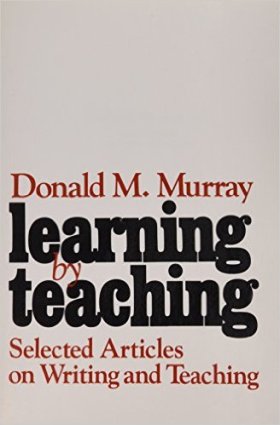
412bcpby4iol-_sx326_bo1204203200_That is not the case with this classic, suggested to me by my friend and mentor Penny Kittle, Learning by Teaching by Donald Murray.

I remember when Penny recommended it. She was in the DFW metroplex teaching a workshop, and I’d asked if we could meet up and talk about my writing. She graciously agreed, and we met at a Starbucks inside a Target. As always, Penny radiated positive energy. She told me about the work she was doing with Kelly Gallagher. I told her about my struggle trying to write a book, a book I am still trying to write.

I still cannot believe I had a writing conference — yet again — with Penny Kittle! (My first was during her class at The University of New Hampshire Literacy Institute the summer of 2013.)

At one point in our conversation, Penny paused and asked if I had read Don Murray’s book Learning by Teaching. I said no. At the time I hadn’t read any of his books, but I’d heard Penny talk about Murray with such affection, quoting him often. I knew this was a book I need to not just purchase, but one I needed to read. I’ve read and re-read and marked page after page.

Don Murray validates the moves I make in my workshop classroom, the moves I make

pageinMurraybook

My thinking while reading the essay “The Process of Writing” by Donald M. Murray


when planning instruction for my AP Language and Composition course. I have learned from those who learned from Murray, and his work reminds me again and again why teaching with student choice in mind works. Every time I feel like I fail, every time I get frustrated with the way an assignment flopped, or I didn’t reach a certain student what I’d hope to teach him, I turn back to this book of essays by Murray. (I did this recently after most of my students bombed an assignment, which was mostly my fault.)

Here’s an excerpt from Murray’s essay titled “Our Students Will Write –If We Let Them” published in North Carolin English Teacher, Fall, 1977. I probably break a copyright law by sharing, but I’ll risk it if it means freeing more writers. (See more about freeing writers in Penny Kittle’s piece “What We Learn When We Free Writers.”)

Our students want to write — but not what we want them to write.

Our students want to write of death and love and hate and fear and loyalty and disloyalty; they want to write the themes of literature in those forms — poetry, narrative, drama — which have survived the centuries. They want to write literature, and we assign them papers of literary analysis, comparison and contrast, argumentation based on subjects on which they are not informed and for which they have no concern.

We should see that their desire to write proves the vitality and importance of literature and literature-making in each generation, that language is central to the human experience, not just as a communications skill but as the best way to recall and understand experience. We tell our students the unexamined life is not worth living, yet we seldom allow those students to examine their lives firsthand through what is termed creative writing.

It is time that we, as a profession, not only support the reading of literature but the making of literature; that we encourage our students to write what they want to write and realize that what they want to write is more intellectually demanding, more linguistically challenging, more rhetorically difficult than the writing we usually require in the English class.

The biggest problem in the teaching of writing is ourselves. We do not encourage, allow, or respond to our students’ desire to write. We do not believe that our students can write anything worth reading, and they prove our prediction. Conditions will not improve until we realize that what we face is a teacher problem, not a student problem.

There are many important reasons to consider taking what is usually tolerated, at best, in the elective creative writing course and placing it at the center of the writing curriculum. Some of them are:

  • Writing about individual human experience motivates both the gifted and those we often consider disadvantaged. In fact, we may find that the disadvantaged aren’t in terms of experiences which can be explored through writing. Students who are not motivated by our lectures on the need for writing skills–they know the need does not exist in the lives they expect to live–still share the human hunger to record and examine experience. Students who are bored with papers of literary analysis or even incapable of writing such a paper at this state in their development may be able to write extraordinary papers based on first-person experience.
  • Students discover…that they have a voice, they have a way of looking at their own life through their own language. They discover and learn to respect their own individuality.
  • Through writing, the student increases his or her awareness of the world, and then works to order that awareness.
  • As students follow language towards meaning they extend and stretch their linguistic skills.
  • The experience-centered, doing nature of the writing curriculum will reach many students who are not comfortable with the analytical passive-receptive nature of the typical academic curriculum.
  • Creative writing gives students a new insight to literature. The study of literature is no longer entirely a spectator sport, but an activity which they can experience and appreciate.
  • The creative writing class may be the place where some students learn to read. Test results in many community colleges and other colleges of the second chance show that many students who test as not being able to read are also the best writers. They are able to read their own words and to perform the complex, evaluative techniques essential to revision. They learn to read by writing.
  • Students and teachers of creative writing rediscover the fun of writing. Art is, at the center, play, and perhaps that is the reason it is so little tolerated in the school. If it is fun can it be learning? Yes.
  • Finally, we should teach creative writing because it is more intellectually demanding than the study of literature or language as they are usually taught in the English class. This runs directly counter to the stereotype believe by most English teachers. IT is easier to complete a workbook on grammar, easier to tell the teacher what the teacher wants to know about a story than it is to use language to make meaning out of experience. The writing course is a thinking course, and it should be central to the curriculum in any school.

There is more. I believe Murray’s writing, like Penny’s books Write Beside Them and Book Love, should be required reading for every English teacher. I wish they would have been required reading in my education classes. For the first few years of my career, I struggled like many teachers I know with student engagement and learning while I taught literature instead of readers and writers. (Someday I’ll write about the Dickens I subjected my 9th graders to. It’s a sad sad tale of student, and teacher, woe.)

And someday I’ll finish this book I’m trying to write. I think Don Murray would want me to.

What books do you think should be required reading for all English teachers? I’d love to read your suggestion in the comments.


Book Talks & How To Do Them–#3TTWorkshop


img_0331-1

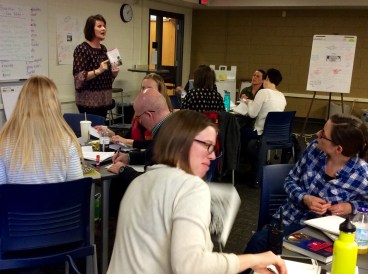
Amy booktalks during our visit to Franklin High School

Conversation Starter:  What’s a book talk and why do you do them?

Shana:  Booktalks are a structured way to fangirl about my favorite things in the world: books.  I do two booktalks per class, right after independent reading wraps up.  They’re a great way to transition from the relaxed reading mood of the classroom and move into the fast-paced work of critical reading and writing, but they’re also the number one change I’ve made to my teaching that has influenced how much I can get my kids reading.  Three years ago, I only did booktalks whenever the mood struck or whenever I got new books into my library, but now I do two a day, every day, no matter what–and it’s made an incredible difference.

Amy: You are an inspiration in consistency, Shana. I’ve done better at doing book talks this year than I have in the past. I try to do two a day as well — one non-fiction book and one fiction. I always seem to fall off the wagon at some point though. The demon, impending testing, pulls me to the dark side every year. I’m putting up a good fight this time around, and I have a plan to reinvigorate, not just my book talks, but the reading that’s happening in my room. Curiosity and intrigue: my goal for better book talks.

Is there a set protocol for a book talk — like length, reading a passage, etc?

Shana:  Just talking books is the biggest nonnegotiable for me.  While most days I do follow a protocol–one fiction, one nonfiction; 2-3 minutes per book; always share a passage, a brief plot teaser, and my own reading experience; try to mention a student who’s read the book–some days I just have to gush over a book that’s been recently returned, or a book I am reminded of during conference time, or some new items I’ve purchased.  Either way, I talk books every day, no matter what, which helps students become accustomed to exposure to new titles, adding books to their what-to-read lists, and hearing about trends in authors, genres, or topics.

Amy:  Remember at Penny Kittle’s Book Love class at UNH two years ago how she had everyone model a book talk? She set no guidelines other than modeling a few for us. After just a few turns, it became clear:  The best book talks are short, energetic, and introduce the book in some insightful or clever way. I try to do that.

When I read the books in my library, I look for passages for craft studies or beautiful sentences we can use as mentors. Sometimes I share those in book talks without doing the study — we just enjoy the language or listen to the voice of the narrator. I’ve started asking questions and trying to get my students to think about the topics the writers might address in the books. Just another way to get my readers to make a connection with writing.

The hardest books to book talk are the ones I haven’t read yet, but even those are doable when we show genuine excitement about the book. Why would I have a book in my library if I am not excited about students reading it? That’s a pretty easy sell in and of itself. It’s fun to get students to ask questions about the cover and to read the comments.

41drZBnWSzL._SY344_BO1,204,203,200_How do you decide which books to talk about within each unit?
Shana:  This is pretty easy for me since most of my units of instruction are themed.  For reading units themed around a topic, I find lots of books about that topic, or that contribute an alternate perspective to whatever central text we might be reading.  (Example:  While reading Siddhartha and thinking about coming of age and going on journeys, Outliers, Marcelo in the Real World, The Other Wes Moore, Paper Towns, and Their Eyes Were Watching God fit right into our unit.)  While in the  midst of a writing unit, I think about books that might serve as mentor texts in terms of topic or structure, or that are written by authors who serve as good mentors in general.  Other times, I have no rhyme or reason to my booktalks, because I simply MUST talk about a new book (like Dumplin’, which I just read and LOVED and had to booktalk randomly.)

Amy:  I structure my units more around genre than theme, so my book talks are more random than yours. Hey, maybe that’s the problem with my consistency!

My students and I talk a lot about aesthetic and efferent reading. I want them to understand the importance of making connections with the books they choose to read, and lately, I’ve seen that there is a real disconnect. Just because students choose books does not mean they are making personal connections to them. This is in part why so many of my students this year are having a hard time sticking with the books they choose. Because I know many are abandoning books so quickly, I’ve been working on getting students to talk a lot more about topics and how writers approach these topics. My hope is that my non-readers will find interest in learning about things, even if they are not interested in reading for the pleasure of it.

I’ve done several book talks this year around a topic; for example, depression, which is one of my 11th graders’ favorite topics to write about this year. Forgive Me, Leonard Peacock, Every Last Word, My Heart and Other Black Holes all flew out of my hands, and I had to get more copies.

Do you ever have students conduct book talks?

Shana:  Very occasionally, I do, when it’s really authentic.  When a student finishes a book and just raves about it during a conference, I ask them to share that enthusiasm with the class.  Last quarter, I asked all students to read a challenge book and then complete their choice of follow-up activities with the book–one choice was a booktalk, and the students who shared about the titles they loved did spark some interest in their peers.  However, those booktalks didn’t go over as well as the ones that arose from sheer exhilaration, so I think my future goal will be to limit student booktalks to spontaneous ones only.

Amy:  Like you, I rarely have students conduct book talks — at least the way I do. I’ve tried, but you are right, without the spontaneous excitement about the book, the other students just do not respond the same as they do when I conduct the book talks.

However, I do have students talk about books with one another. Most of the time it’s pretty informal:  Talk to your table mates about what you are reading. Sometimes it’s a little more formal:  Speed dating with a book, which is one of our favorite ways to share books.

What are some other ways you talk about books with your students?

Shana:  Basically, I bombard them with talk about books all the time.  When I see current or former students in the halls, I ask them what they’re reading.  When they come to visit me, I urge them to leave the room with a new book.  I make lots of segues in conversations from all topics to all books (mostly because this is just what I do in real life…ask anyone who knows me).  I also share with students all the time what I’m reading, and why they might like a given book.

Amy:  We are so much alike! I love to have former students borrow books, and I talk about books with every person who will listen — and some who don’t. I also try to get students to engage with me on Twitter, using the hashtag #FridayReads to share what they are reading each week. A few students set up accounts and we follow each other on Goodreads. I love those kids! I’ve also started a favorite quotes wall, and I’ve asked students to pull significant lines that lead to theme and/or beautiful sentences that show author’s craft. Getting students to pay attention as they read, noticing how writers use language to create meaning, leads to significant improvements in their own writing. Without fail, it’s my best readers who are also my best writers. If only more students would get that.

Do you have topic ideas you would like us to discuss? Please leave your requests here.

The Winds of Change Smell Like Books

Everywhere I look, I see books. bookshelf

Open in the hands of students.

Shared at the hands of teachers.

I’m dreaming about books. Like the pursuit of the one that got away, I am chasing after unopened books in my sleep. Waking in a state of minor panic – When WILL I have time to read all of these books?  I need a prep period just to read. I need an extra hour in the day. I need a sabbatical.

In the days since TTT came to share their wisdom and enthusiasm with the English Department at Franklin High School, literary excitement is wafting through our hallways and it’s all about books, books, and more books.

Students are buzzing about books.

As I walked through the commons a few days ago, I saw one of my AP Language students, Maddie, reading during her free block. I smiled and walked on. Then, I stopped, turned around, and went back to talk with her.

It was the best move of my day.

Sitting on the table next to Maddie was a copy of A Monster Calls (Since I sobbed over this book and poured myself into sharing it  with students in a book talk a few weeks back,  I’ve acquired six copies for my classroom and not seen one of those copies in days. Kids are handing them off in the hallway. Meeting for coffee to discuss. Making their parents read it. It’s beautiful) and in her hands The Girl on the Train. I asked her how it was going. “Ugh! Mrs. Dennis! I can’t read fast enough. I need to meet my reading goal and finish this book so I can start A Monster Calls.”

I almost hugged her.
Okay…
I hugged her.
Maybe a second longer than was necessary, but I think we had a moment.

Only a few weeks earlier, before I had recommitted to book talks every day and conferring with kids about their independent reading, we had talked in class about how independent reading was going. Maddie had shared that while she likes to read, she wasn’t making time for it. She had been enthused earlier in the year, when getting time to read in class was something new and different, but hadn’t kept up with the expectation to read 2 hours per week.

I was reminded that Penny Kittle says teachers sharing their passion for books is contagious. In this area, I needed to do better.

While I was giving time to read, sharing lists of books to choose from, and piling books on the shelves, I had let my own passion for texts slip away into the haze of curriculum redesign, semester exams, and lesson planning. In essence, I was asking students to make reading matter without me. Not cool.

So, I grabbed a copy of Stiff, by Mary Roach and got reading.

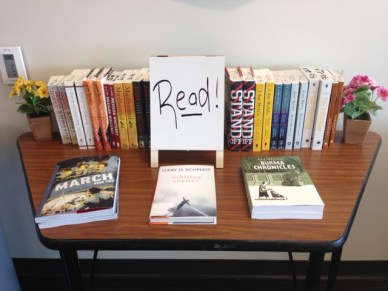
Of course, I couldn’t put it down. Of course, I wanted to tell my kids all about it. So,  I shared my passion in a book talk, we ended up chatting about the use of humor in nonfiction, and my students were reminded that we are a community that makes time for what matters. READbooks

Reading matters.

And our commitment to that as teachers needs to be visible and constant if we are to have any hope in keeping kids enthusiastically discussing what they are reading and reaching for more.

My colleagues are buzzing about books.

I’ve been wonderfully lucky to work with brilliant and passionate English teachers for each of the thirteen years I’ve been in the classroom. In the past two years, I’ve even been lucky enough to be their department leader and do my best in recent weeks to facilitate our move toward workshop.

While we all share the very traditional love of To Kill a MockingbirdPride and Prejudice, and The Great Gatsby, our passion for reading runs so much deeper. In workshop, it’s our responsibility (and pleasure!) to get kids reading all manner of texts. Not just glancing in the direction of a book, but digesting it.

In short, we know that to get a majority of our students excited about reading, their teachers need to be readers.

Tickled to share a passage, can’t wait to see what you think too, ask a million questions, highlight in multiple colors, adorkable readers. The classics have a role in this, but so do countless other styles, genres, and soon-to-be classics.

Our district has blessed us with a huge surge in classroom library materials in preparation for our shift to workshop instruction. This puts dozens of books in the hands of teachers who are now chatting about Patrick Ness in the hallway between classes, feverishly searching for texts that are suddenly in high demand (Anyone have a copy of Columbine? They are ALL checked out! How about The Nightingale? I’ve got a wait list. With six names on it. For a book)and frequenting Thriftbooks.com to compare how much money they have saved to add even more titles to their libraries.

When in doubt, promote. We enlisted the help of some art students and had a poster made to show how super cool it is to read. A nicer group of people, you will never meet, but this poster says read, or else.

Reading Poster (1)

The students think it’s a riot…and have asked on more than one occasion which books we are reading in the picture.

Mission accomplished.

So, as the wind ushers in both spring and a journey with workshop, let the books come raining down as well. The more I see, the more I want to read. And the more I want to read, the more excited I get to prove to kids that we can all be readers.

How do you keep the beautiful buzz that surrounds books going in your classroom? Please share your ideas in the comments. 


From John Green to Jane Austen: Student Choice and Motivating Non-Readers

Anyone who knows me knows I talk a lot about moving readers and writers by offering choice in the classroom. Without a doubt, the more I study the research on reading acquisition, the more I confer with my students and try to write about it, the more I immerse myself so I can immerse my students in engaging YA and award-winning literature, the louder my voice gets.

I am a full fledged advocate of readers and writers workshop at the secondary level.

And I’m not backing down.

This semester I have a student teacher who hears it from me every second of every day. Almost.

My ultimate goal is to tattoo Zach’s brilliant young mind with everything I’ve learned about teaching the past ten years. Everything that sent me to and cemented my pedagogy in workshop. And I think choice seals the ink that may change his teaching career forever.

But this pedagogy is not easy. Just like in a traditional classroom, students put up their fists and sometimes fight dirty. Sometimes they want to be told what to read and what to write and how to think. Sometimes too often.

And that is when this job gets hard.

Lately, it has been hard, and Zach has seen my frustrations. But he is smart, and he sees through student b.s with laser-like charm, problem-solving as I vent and complain.

I should be more controlled I tell myself every morning. Careful-what-you-say-Ame. But I can’t help it — my job is my sleeve. If I didn’t care so much about my students, their lives, their futures, I’d call it a day and tell Zach to take charge and have fun.

But I want him to learn. I want him to last in this profession that eats ’em up and spits ’em out. So I’ll share.

I’ll share what I’ve learned and how I’ve learned it. I’ll encourage. I’ll prod. I’ll challenge.

He’s a keeper I can already tell.

How do I know? Well, I asked if he’d write a post for this blog about reading YA literature for the first time. What does Zach do?

Oh, he writes, but he starts his own blog and tells me today: “I’ve got this friend who’s student teaching over in Northwest ISD, and she’s started blogging, so maybe we’ll start this new-teacher blog thing….”

You can still see my smile.

Here’s Zach’s post about his first adventure into YA literature. You’ll read it, and then you’ll want to hire him.

Yeah, I know.