Category Archives: Readers Writers Workshop

A Whole New Take On He Said, She Said

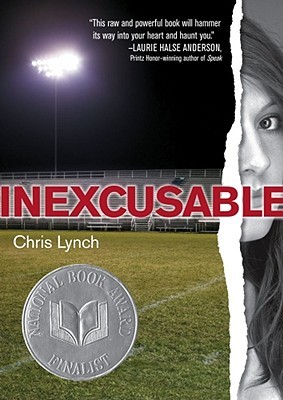
307652“This raw and powerful book will hammer its way into your heart and haunt you,” says Laurie Halse Anderson, and boy, is she right.  Keir Sarafian, the narrator of Inexcusable, is one I won’t soon forget.  Not only is he guilty of having committed a horrible act, he’s also guilty of being completely unaware that he did anything wrong.

Keir is a rambling narrator, spilling sentences onto the page in an attempt to understand his past even as the reader struggles to alongside him.  He is a subtly unreliable narrator.

The narrative structure is my favorite part.  We jump back and forth between the present–as Gigi accuses Keir of rape, while he focuses on the fact that he’s a good guy–and the past–as we see the senior year storyline that leads up to the climax.

The focus is on perception–Keir sees the same events completely differently than Gigi does, which is so amazingly educational for my students.  The jumps in time are difficult for some, but the compelling subject of date rape keeps them hooked.  Inexcusable makes a reader feel empathetic, disgusted, confused, and ultimately, thoughtful–all in 176 pages.

From Inexcusable by Chris Lynch – p. 1

The way it looks is not the way it is.

Gigi Boudakian is screaming at me so fearsomely, I think I could just about cry.  I almost don’t even care what the subject is because right now I am sick and I am confused and I am laid so low by the very idea that Gigi Boudakian is screaming at me that the what-for hardly seems even to matter.  I love Gigi Boudakian.  I hate it when people I love scream at me.

And I don’t feel guilty.  That is, I don’t feel like I am guilty.  But I sure as hell feel sorry.

I am sorry.

I am one sorry sorry bastard.  And I feel very sick.

I am so sorry.

Professional Development Doesn’t Have to Be Painful

We all know–and perhaps fear–the Disrespectfully Disengaged Learner.  You know the one I mean:  rolling his eyes, muttering under his breath.  Asking to recharge her phone so she can keep playing games instead of listening.  Sometimes, that learner is even you or me.

IMG_5737

Materials for our workshop are ready!

They say teachers are the worst students, so maybe that’s why I’m so nervous about the workshop I’m helping to lead today.  My colleague and I will present to 20 of our fellow teachers, and we have worked incredibly hard, for many hours, on our presentation and materials.  Even if 19 leave our classroom with smiles on their faces and a new spring in their steps, there will almost certainly be one person we can’t reach.  Sadly, that one person is the one I’ll obsess over for weeks to come.

The phrase “professional development” has somehow become synonymous with “eyeball gouging”, at least in all the schools I’ve taught.  But professional development doesn’t have to be painful.  Its purpose (like so many other well-intentioned ideas) is a positive one–to advance a person’s career or personal development through learning.

That doesn’t sound so bad, right?

IMG_5610

Kristin Ziemke presents during “Notebooks, Pens, and Pixels”

Don’t get me wrong:  horror stories abound.  I recently sat through eight straight hours of lecture at a “training”, zero hours of which were relevant to my classroom, and ended up lying in the hallway of a hotel conference center with a very pregnant colleague, who simply couldn’t sit in her chair any longer.

But, even more recently, I sat on the edge of my seat as I listened to Penny Kittle, Troy Hicks, and Kristin Ziemke present on using technology in language arts education.  This free Heinemann webinar lasted a little over an hour, but it felt like only a moment had passed as I listened to those teacher-leaders share their mind’s inner workings.  That amazing webinar, which also granted me insight into Kelly Gallagher and Tom Romano’s thinking-through-writing processes, falls under the same umbrella that torturous eight-hour lecture did.

My professional to-be-read shelf

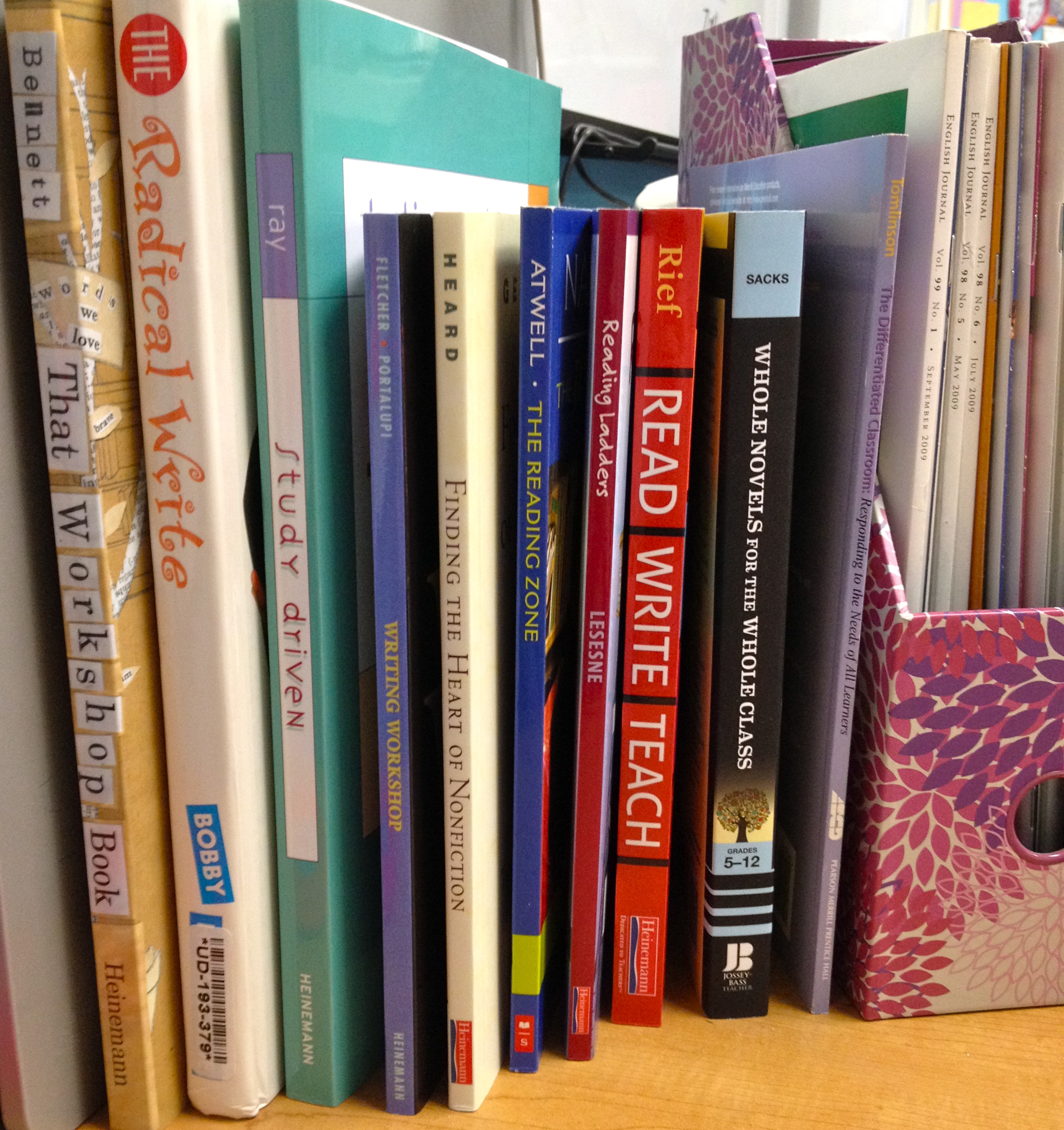
My professional to-be-read (and re-read) shelf

Presentations and lectures aren’t all there is to professional development.  Simply reading the latest research is PD–sharing ideas over lunch with a colleague is PD–sitting down to write and reflect in the mornings is PD, too.

I’d argue that professional development is a teacher’s duty.  Teachers really shouldn’t be the worst students–we should be the best.  As professors of knowledge, shouldn’t we crave knowledge?  Hunger for new ideas?  Salivate over scholarship?  If we seek to inspire a thirst for learning in our students, we must have it in ourselves.  There are too many ways to grow in our profession–Twitter, online journals, NCTE, the National Writing Project–for us to not take advantage of the many opportunities for growth that come our way.

Professional development is something to aspire to, not to dread.  Seek it out.  Savor it.  Lead it.  It will make you a better teacher, and a more richly knowledgeable professional–and there’s nothing painful about that.

Starting with the Ending

I am not one of those people who jumps to the last few pages to read how a book ends before I’ve ever started it. I do not understand those people. At all. I like to savor a good book, take it slow, breathe in and out the beauty of the language. OR, I like to devour it in one sitting, holding my breath and wanting more. So, it’s a little surprising that I’ve pulled the last paragraph of a book to use as a craft study.

I promise it gives nothing away. I also promise:  you may just shudder at the loveliness of the language like I do.

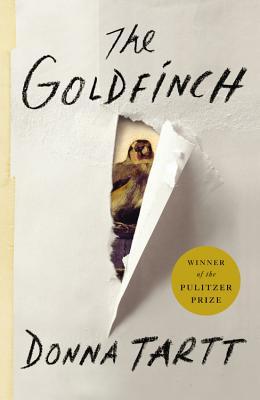
If you have not read The Goldfinch by Donna Tartt, you must. Find the time. It’s worth it.

I don’t know if I can motivate my students to read this lovely book though– it is thick with 771 pages, and the story itself is long, and there are times your love/hate relationship with the main character makes you want to shout the house down. But I’ll try. Because I love it.

This is why:

The Goldfinch by Donna Tartt P771

Whatever teaches us to talk to ourselves is important:  whatever teaches us to sing ourselves out of despair. But the painting has also taught me that we can speak to each other across time. And I feel I have something very serious and urgent to say to you, my non-existent reader, and I feel I should say it as urgently as if I were standing in the room with you. That life — whatever else it is — is short. That fate is cruel by maybe not random. That Nature (meaning Death) always wins but that doesn’t mean we have to bow and grovel to it. That maybe even if we’re not always so glad to be here, it’s our task to immerse ourselves anyway:  wade straight through it, right through the cesspool, while keeping eyes and hearts open. And in the midst of our dying, as we rise from the organic and sink back ignominiously into the organic, it is a glory and a privilege to love what Death doesn’t touch. For if disaster and oblivion have followed this painting down through time — so too has love. Insofar as it is immortal (and it is) I have a small, bright, immutable part in that immortality. It exists; and it keeps on existing. And I add my own love to the history of people who have loved beautiful things, and looked out for them, and pulled them from the fire, and sought them when they were lost, and tried to preserve them and save them while passing them along literally from hand to hand, singing out brilliantly from the wreck of time to the next generation of lovers, and the next.


Let’s just take it sentence by sentence. Then let’s choose a sentence we like and respond to it. That’s enough for now.


I Am Malala…Too!

From the moment I learned of Malala Yousafzai, she captured my heart.  Two short years ago, this young woman was targeted by the Taliban in Pakistan for her activism in support of accessible education for females.  She went to great lengths to ensure she, and her female classmates, were granted the right to their education.  And that was all before her life changed drastically on that fateful day when the Taliban tried to silence her through unthinkable violence.

Yet, she lives to tell about it.

Not only does she live to tell about it; she writes about it, campaigns about it, continues to fight for it.  So, it is no wonder that just yesterday, Malala was granted the honor of a shared Nobel Peace Prize for her unshakable efforts, astounding heroism, and courageous bravery.

Here’s what I love even more:

IMG_20140908_143856

There are two versions of her story!

In the more complex version (right) aside from learning the intricacies of Malala’s extraordinary life, it chronicles the inner workings of Pakistan, its politics, its back story, and so much more.  It vividly weaves us through the timeline of events taking place in a country that Malala (til this day) calls home.  We visit her classroom, accompany her while doing chores at home, meet her family, join her while eating the foods of the land, watch fearfully as the Taliban circles the streets…This is the piece I read.  Students willing to take on a piece sprinkled with higher level vocabulary and concepts, also enjoy it thoroughly.

And in exposing students to Malala and her cause, we visit her on Facebook at: MalalaFund, on Twitter at @Malala, and on the internet at http://www.malala.org.  We also support the “I Stand with Malala” initiative by sharing our love for literature with the world!

IMG_20130418_155448

So, when Patricia McCormick decided to pair up with Malala to create a YA version of her story, I (and students) could not have been more thrilled.  This piece (left) is written in a more linear fashion.  While it would be remiss to alleviate all of Pakistan’s intricacies, it focuses more on Malala and her journey.  It is a narrative that provides students an opportunity to learn about this incredible young woman, be motivated by her desire to push agendas in the most positive of ways, and gently guides them through an understanding of what life is like for those fighting for their basic right to education.  This piece pairs beautifully with students who have a thirst for knowledge yet are still diligently building their literacy skills.

And so I recommend Malala finds her way (in both forms) into each one of our classrooms.  Let her spark a fire within our students.  Let her show us the way to having the world hear our voices.  Let her age be only a number.  As Malala so eloquently states at the end of the Prologue:  Who is Malala?  I am Malala and this is my story.

And, what a story it is.


All it Takes is a Tutu and Some Focus

iballep002p1

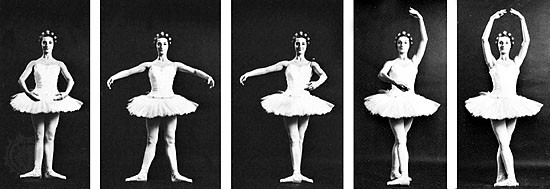
It’s been a month since I realized that my 2014-2015 school year was going to throw me for loops, spins, twists and twirls.  And while I am by no means a self-proclaimed ballerina; I’m smiling, pointing my toes, and pirouetting with the best of ’em.  Because when the music starts the core needs to be strong, the back straight, muscles tight, and breath steady.

As I stretch daily, as all practicing and proficient ballerinas do, I prepare to move in ways that are brand new; ways in which I never thought my body knew how to.  Legs outstretched, arms over extended, and of course…hair tightly wrapped in a bun – not one hair out of place.  Grace and elegance: the aspiration of all ballerinas.

Ballerinas and educators.

And while ballerinas make their every move seem effortless, the reality is that every motion is executed with deep thought and delivered with exact precision.  The bar is set wildly high and only the best of the best can gently thrust their leg onto that bar as fingertips reach for and surpass beautifully pointed toes while bodies align with a diagonally extended leg.

But, what about the ballerinas who approach the bar with a “Hrmph!” and a stubborn knee that won’t align with the rest of the leg and an unmaintained balance as a ‘steady’ foot is anything but?  And that sleek bun?  That bun has come undone and wisps of hair are continually getting caught on eye lashes and tickling cheekbones refusing to cooperate.  And no, you cannot move your hands from First Position for a moment’s reprieve.

Focus.

When we continue to throw on our tutus and ballet slippers and head straight into the studio before the sun has risen from its slumber: We are not giving up.  We are wrapping our bruised and bleeding toes accompanied by “Ouch!” and “Arghh!” but, we are not giving up.  We are placing even more bobby pins in our hair in hopes that today will be the day we are not tempted to twitch out of First Position.  Today, we stretch just a wee bit further in reaching for our little nubby toes.

As we wiggle and wobble…biting our lower lip oblivious to this false stability…we realize that our calloused hands are resting on those little nubs we’ve so desperately been trying to reach for weeks.  Yes, we are now touching our toes.  Wait.  What?  We did it?

I want to show you something.

Amazing isn’t it?  A young man in my Social Justice and Student Voice course was not willing to explore his 35-60 word biography (modeled after Visa Go World commercials) as it applied to his life.  But, he was willing to explore a puzzling injustice that he firmly believes has a feasible solution.  And his questions.  I could most definitely learn how to shape Essential Questions by conversing with this young man.

I’m still aiming for balance.

My knees are still a little bent.  My tutu is sometimes on backwards.  But, there’s hope!  While the majority of students were actively engaged in chronicling a moment in their lives, one student decided he needed to do things his way: focused, dedicated, and with a little pizzazz.  Is that not what the art of ballet truly encompasses?

As I continue to learn the intricacies of this art form, I take pleasure in exposing students to it as well.  We dance together…sometimes in beautiful unison and well, let’s face it, other times as if we’re all petit sauting to a different tune.  That day, this tenacious student decided to wear sneakers to ballet practice.  And, I’m so glad he did.


Painting With Words: Sold

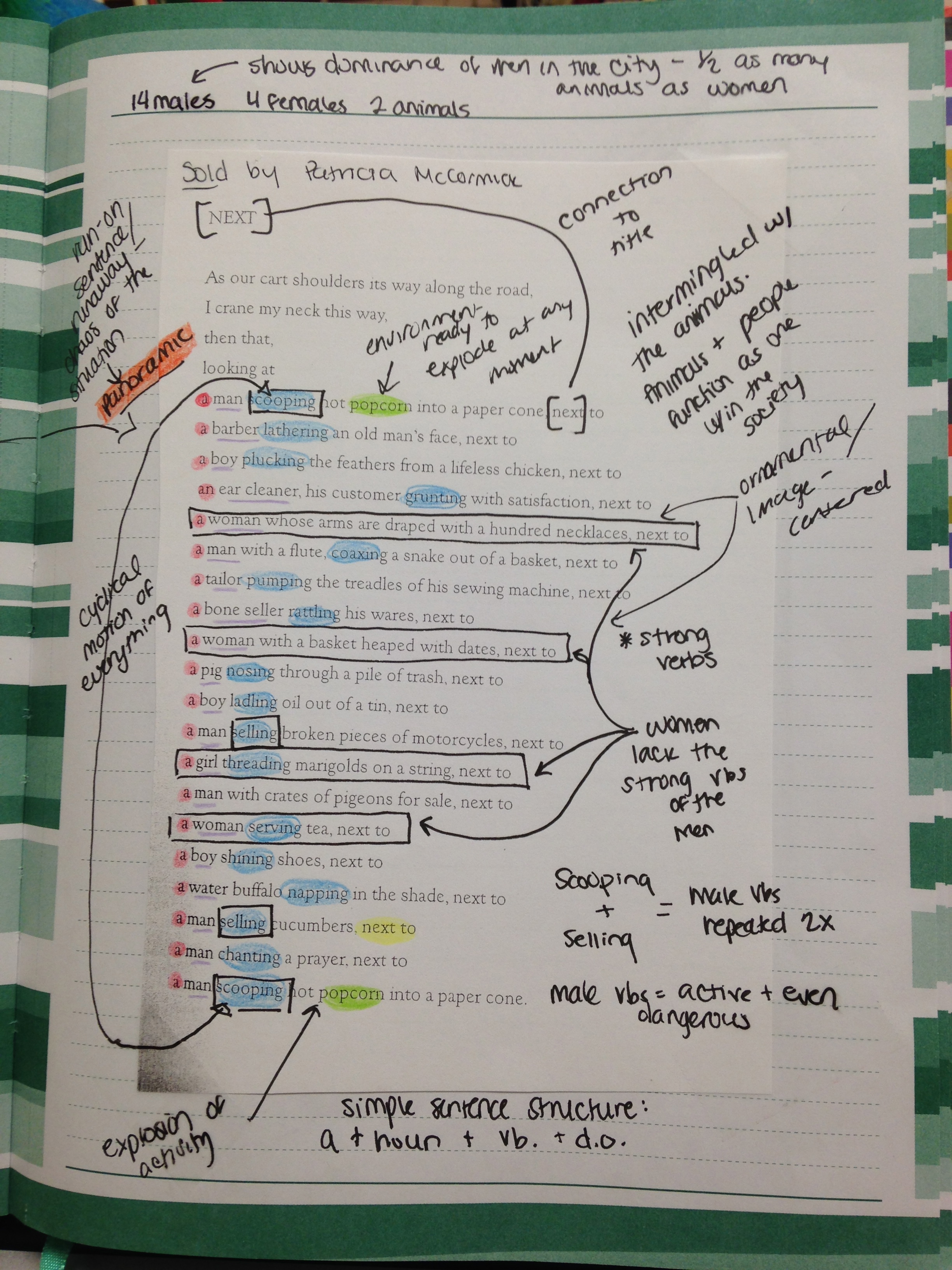
c_soldPatricia McCormick is a painter. Not literally, but she might as well be given the way she writes. Her vivid imagery and poetic prose paired with her short vignettes make Sold a must-read.

Somehow, Patricia makes the heavy subject of sexual slavery both approachable and manageable. Whereas many of my heavier books on women’s rights or international affairs sit dormant in my classroom library, Sold has made it through many hands. I believe there are multiple reasons for this: first, Sold isn’t intimidating in length or size. It feels manageable for many students. Second, Sold is written in short vignettes with wide spacing between the lines. Students can find themselves ten or twenty pages into the book with minimal effort.

Furthermore, the book lends itself to close reading and craft study. Each vignette is chock full of exceptional writing as Patricia McCormick plays with diction, descriptions, repetition, and a wide variety of craft marks. In turn, I can’t pick only one example, so bear with me as I walk you through two of the many passages with which I am obsessed:

Everyday, students walk into my classroom burdened by mammoth backpacks and equally sized worries. It’s tough to be a teenager, which is why I love the vignette “What I Carry.” I hope to use this as a quickwrite to find out what students carry with them throughout the

One of the many passages I have photocopied and dissected in my writer's notebook.

One of the many passages I have photocopied and dissected in my writer’s notebook.

day.

WHAT I CARRY

Inside the bundle Ama packed for me are:

my bowl,

my hairbrush,

the notebook my teacher gave me for being the number one

girl in school,

and my bedroll.

Inside my head I carry

my baby goat,

my baby brother,

my ama’s face,

our family’s future.

My bundle is light.

My burden is heavy.

In the second passage, “Between Twilights,” I love McCormick’s use of sensory details. This is an excellent passage to model the concept of “show don’t tell” in writing.

BETWEEN TWILIGHTS

Sometimes, between the twilights.

I unwrap my bundle from home

and bury my face in the fabric of my old skirt.

I inhale deeply,

drinking in the scent of mountain sunshine,

a warmth that smells of freshly turned soil and clean laundry

baking in the sun.

I breathe in a cool Himalayan breeze,

and the woodsy tang of a cooking fire,

a smell that crackles with the promise of warm tea

and fresh roti.

Then I can get by.

Until the next twilight.

Please Don’t Judge Me

“So, uh, yeah this is pretty embarrassing for me.” I could feel my face flush in front of my 1st period Advanced Composition before I’d even begun. My voice shook as I stood in front of the 24 pairs of 17-year old eyes—the most vulnerable position one can be in. I had captured their attention at 7:45 in the morning, but I could feel my innards twist as I stammered through some of the usual excuses I hear from my student-writers: “I need to tell you the backstory first” and “I hope you get what I’m trying to say.”

Then I started, reading line by line the maid of honor speech I will deliver in fewer than two weeks at my best friend’s wedding. It wasn’t the first time I had shared my writing; I write with my students during quickwrites, share finalized pieces with them throughout the year, and discuss drafting pieces for this blog, but this speech was different—it was raw, personal, and untraditional. I had made some major stylistic decisions that pushed me, particularly as a writer, outside my comfort zone.

“I really need your feedback,” I said to them. And I was honest, practically on the verge of begging. “You see,” I continued, “writing happens throughout your life, and in this instance I need your help to make sure I don’t make a fool of myself in front of 200 guests.”

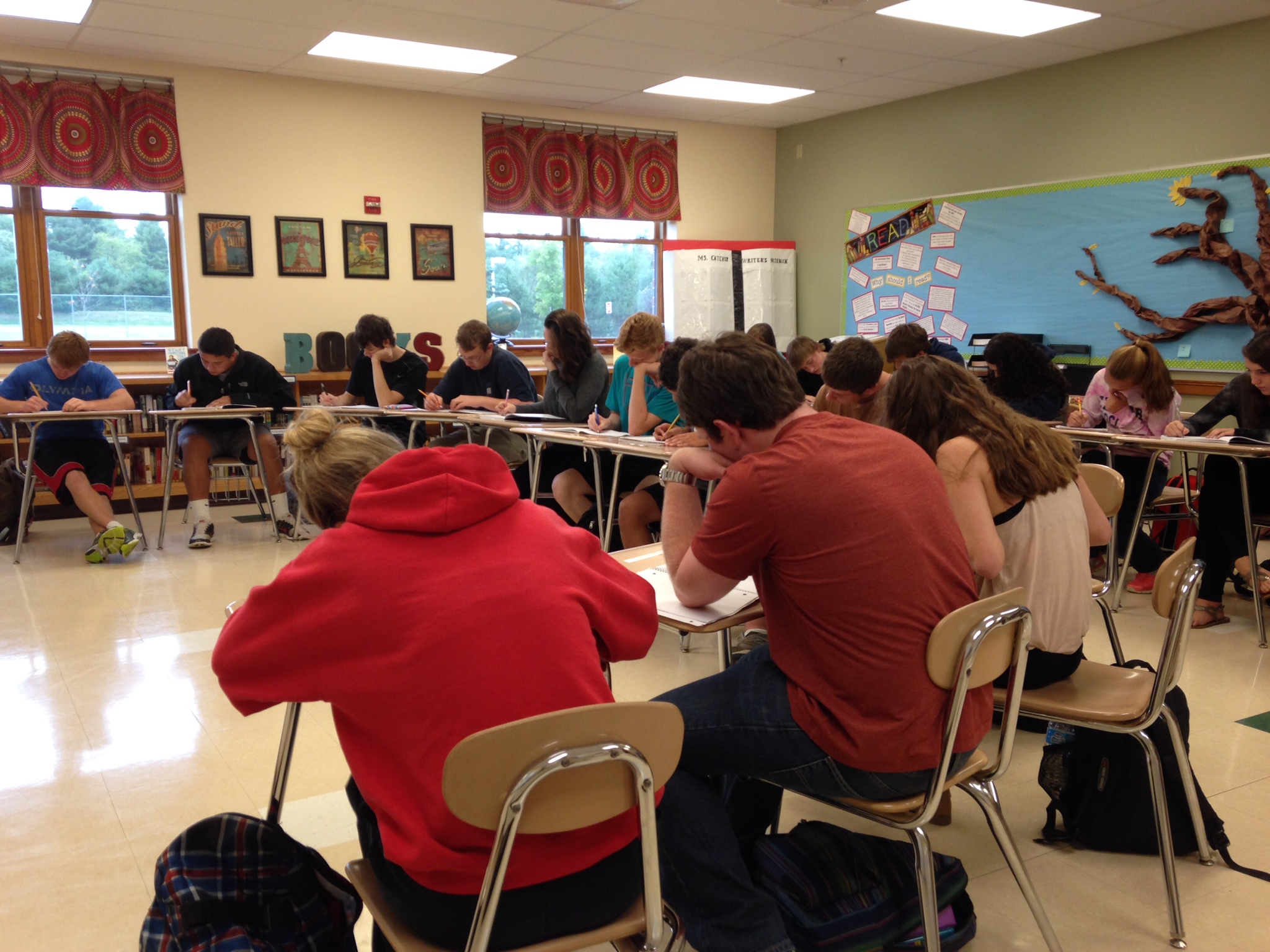
photo-1

My Advanced Composition class, pictured here, helped to walk me through the revision process.

“You’re going to trust us?” a student asked.

“Yeah,” I responded, “Plus, at the wedding I’ll be in front of 200 people I might never see again, whereas here, I’m with you guys for the rest of the year. So, if I’m embarrassed here, it’s going to be really bad at the wedding,” they laughed and they listened to me recite the piece with a calm voice and a racing mind, a mind that begged them to chuckle at the jokes and coo at the memories. When I came to the end, I looked up, realizing again, as I have realized so many times before just how vulnerable it is to share writing. This time though, as much as it made me nervous, I knew that the only way to teach writers was through modeling. If I was asking them to expose their writing to each other, I had to be willing to expose my writing flaws as well, even if it felt like singing solo karaoke stone-cold sober.

Then the suggestions came: “I’m not sure what you were doing with that transition, maybe try to make it more specific.” “I would like to hear about when you first met her fiancé.” “I think you could add another story.” Their words were carefully chosen as not to offend but instead encourage and help. While some students doled out praise, others helped to polish the piece. Even trailing side conversations pertained to how to make the piece stronger. I typed their comments into the document, repeating what each of them would say, and then I sent them to begin a similar process of reading aloud their personal narratives within groups of three.

Next week I will arrive in class with another draft of my speech, and I will repeat the cycle. They must see me live the life of a writer if they are going to believe what I say. They must see me absorb their feedback if they are going to understand the value of peer review. And above all, they must watch me return, raw nerves and baited breath, if they are to believe that I see value in their words.

A Lesson in Craft: The Yellow Birds

If you have not read The Yellow Birds by Kevin Powers, go buy it and start reading it today. It’s that good. Maybe I loved it because Powers is a poet, and his poetry flows into the language on every page. Maybe I loved it because I have similar fears as the mothers portrayed in this book. At least one of my sons will join the Army in a year.

Whatever the reason, I love this novel, and I know many of my students will appreciate the beauty of it, too.

Many passages are worthy of study, but when I read myself into this one, I knew that the discussion around it in class would be powerful. What do you think students might discover about language by reading this?

I hadn’t know what I was doing then, but my memories of Murph were a kind of misguided archaeology. Sifting through the remains of what I remembered about him was a denial of the fact that a hole was really all that was left, an absence I had attempted to reverse but found that I could not. There was simply not enough material to account for what had been removed. The closer I got to reconstructing him in my mind, the more the picture I was tying to re-create receded. For every memory I was able to pull up, another seemed to fall away forever. There was some proportion about it all, though. It was like putting a puzzle together from behind: the shapes familiar, the picture quickly fading, the muted tan of the cardboard backing a tease at wholeness and completion. I’d think of a time when we sat in the evening in the guard tower, watching the war go by in streaks of read and green and other, briefer lights, and he’d tell me of an afternoon in the little hillside apple orchard that his mother worked, the turn and flash of a paring knife along a wrap of gauze as they grafted uppers to rootstocks and new branches to blossom, or the time he saw but could not explain his awe when his father brought a dozen caged canaries home from the mine and let them loose in the hollow where they lived, how the canaries only flitted and sang awhile before perching back atop their cages, which had been arranged in rows, his father likely thinking that the birds would not return by choice to their captivity, and that the cages should be used for something else: a pretty bed for vegetables, perhaps a place to string up candles between the trees, and in what strange silences the world worked, Murph must have wondered, as the birds settled peaceably in their formation and ceased to sing. And I’d try to recall things until nothing came, which I quickly found was my only certainty, until what was left of him was a sketch in shadow, a skeleton falling apart, and my friend Murph was no more friend to me than the strangest stranger.

Viral Titles

ifistay1Every year, one or two books go viral. The Fault in Our Stars by John Green, Lone Survivor by Marcus Luttrell, and Hate List by Jennifer Brown have all held the Viral Title award in the past.  I couldn’t keep those books on my shelves, and students couldn’t read them fast enough.

This year, If I Stay by Gayle Forman is everywhere I look.  All of my students want this book–AP, on level, male, female, black, white, readers, non-readers.  I have six copies and all are checked out.

I got into bed Tuesday night with my Nook, where I’d recently downloaded If I Stay.  It’s been about a month since I’ve read a book for pleasure, so I intended to just read a chapter or two and then go to sleep after my 14-hour day.

I stayed up ’til midnight and finished the book.

Silent tears dripped down my face around page 15, when Mia’s family is destroyed in a car accident.  Forman’s writing shoves me into the moment and I am right there with Mia, feeling her anguish as she sees her parents strewn across the road.  I agonize with her over the whereabouts of her younger brother, Teddy, and I hear the eerie quiet of a post-collision highway.

I was captivated from that moment onward, terrified for Mia as she watches her own injured, unresponsive body be flown to the hospital.  Watches her now-daughterless grandparents in the waiting room.  Watches the surgeons and nurses frantically try to save her.  She vacillates between wanting to stay in this world, and wanting to leave it behind.

NPR calls this story “achingly beautiful,” and I would agree.  Its language, its structure, haunts me, days later, and I know my students and I will study Forman’s craft soon…the way she brings us into a moment, frozen in time, and suspends our disbelief as we stay beside Mia’s spirit, watching all of this unfold.  Please read this book, and get it into the hands of your students, too.

ifistay2

If I Stay, Gayle Forman, pp. 15-16

You wouldn’t expect the radio to work afterward.  But it does.

The car is eviscerated. The impact of a four-ton pickup truck going sixty miles an hour had the force of an atom bomb.  It tore off the doors, sent the front-side passenger seat through the driver’s side window.  It flipped the chassis, bouncing it across the road and ripped the engine apart as if it were no stronger than a spiderweb.  It tossed wheels and hubcaps deep into the forest.  It ignited bits of the gas tank, so that now tiny flames lap at the wet road.

And there was so much noise.  A symphony of grinding, a chorus of popping, an aria of exploding, and finally, the sad clapping of hard metal cutting into soft trees.  Then it went quiet, except for this:  Beethoven’s Cello Sonata no. 3, still playing.

Getting Students Hooked on Poetry

“Poetry is boring.”

“What does poetry have to do with anything?”

“What does poetry even mean!?”

“I hate poetry.”

Poetry is a timeless form of writing, yet students struggle to see its relevance to their lives.  Further, they struggle to understand the themes and messages poetry attempts to communicate.  After weeks of asking them to read like writers, my students did begin to find some value in poetry, but they still didn’t like it.

Thus began my endeavor to present poetry as exciting, interesting, and most of all–fun.  What follows are three poetry activities my students were engaged and challenged by.

IMG_5382Spine Poetry

Creating book spine poetry is not a new concept–it can be found all over the internet.  I first got the idea to do this activity in last year’s UNH Literacy class with Penny Kittle.  Not only does creating spine poetry get students playing with language, it also exposes them to a wide variety of titles.

I modeled the creation of a spine poem for my students, stacking and re-stacking titles by John Green, Max Brooks, Jon Krakauer, Malcolm Gladwell, and more.  I modeled, with their input, until we had a poem that satisfied us.  I also showed examples of a variety of spine poems on the projector.  Then, students worked in groups to create their own spine poems, eventually writing their finished products in their writer’s notebooks after adding punctuation and a creative title.  I noticed many of them adding new titles to their what-to-read lists, too.

IMG_5332Cemetery Poetry

Edgar Lee Masters’ Spoon River Anthology is a wonderful collection of poems inspired by graveyard epitaphs.  Lives and legacies are explored in Masters’ work in a variety of styles.

I wanted to have students practice imitating this poet’s craft, as he is a master (pun intended!) of showing, not telling.  We have a beautiful old cemetery quite close to our school, and it was a gorgeous September day for a walk.  My students toted their writer’s notebooks to the graveyard and we read three of Masters’ poems together.  I asked students to wander the cemetery and find a gravestone that appealed to them, then imitate one of the poems we’d read, using that headstone as a subject.  My boy students especially loved this assignment–they were drawn in by the quiet atmosphere of the cemetery and its prevalence of Civil War graves.

IMG_5125Spoken Word Poetry

Shane Koyczan, Taylor Mali, and Saul Williams have soared to YouTube fame with their spoken word and slam poetry performances.  They are forceful presences on stage, and their-in-your-face styles often hook my students.

Sarah Kay provides a lovely contrast with her soft-spoken performances, her clear voice spinning tales of love, motherhood, and femininity.  We read “Point B”, pulled out its richest lines, and hung them around the room.  There were eight in total, and students responded freely to these beautiful words on post-it notes in a silent discussion.  They wandered the room, sticking their responses onto their favorite lines, and then responded to one another.  Their close readings gave way to analysis as they challenged each other, left questions, and cheered classmates on.  Weeks later, a student quoted a line from “Point B” in a discussion–this activity had seared “this life will hit you hard in the face” into her memory.

Stacking books into spine poetry, imitating poems about gravestones in a cemetery, and silently discussing spoken word poems transformed my students’ perceptions of poetry.  Words that were once lifeless on the page came alive.  This week, they reshape their own identities and wear new hats as poets and writers–hats that, thanks to our poetry fun, are not as unappealing as they once seemed.