Category Archives: Logistics

Try it Tuesday: Taking Your Classroom Library Digital

Spring break in Wisconsin is sort of a misnomer. Thank the heavens, it is a break. Time enough to make to-do lists that are far too long to actually do, but blessedly, reading time abounds and my tented texts are multiplying.

IMG_0216

Ice covered trees just last week

But Spring? Not so much. Not usually. The cherry blossoms may be bursting into bloom in Washington and roadtrippers to Florida are finding warm sunshine and sand, but in Wisconsin, we’re a bit…behind.

Mother nature likes to tease Wisconsinites. Sixty degrees one day and snow that evening. Literally. My toes are cold just thinking about it.

However, as is the eternal promise of rebirth in spring, there are signs. Robins have returned, tiny buds are appearing on the trees, and the first flowers have pushed their tiny heads above the snow and suggested that warmer weather really might be on its way.

FullSizeRender

Crocus braving the elements

And so, with the hope that warmer days might actually be on the horizon, I get the undeniable and somewhat inexplicable urge to clean, organize, and pull my brain out of the numbing chill of winter. Throw open the windows (brr!), place hands on hips, and get to work. You’ll recall my to-do lists mentioned earlier? Several closets are in my sights and I geekishly delight in the thought of heading to the Container Store to finally wrangle the toys my daughter received for Christmas.

In the same way, before break, I surveyed my classroom (hands on hips and a waning desire to grade papers) and decided to tackle my number one organizational nightmare.

Mainly? My classroom library check in and check out.

With a recent influx in books for this library, there is excitement, variety, and chaos.

It’s new. It’s wondrous. It’s a big, ugly, mess.

As students clamour for new books (Yay!), their attention to our sign-out sheet has gotten messy at best, and completely ineffective at worst.

I was getting emails from kids weekly – Hi Mrs. Dennis, I accidently walked out of class with the book I grabbed. Could you sign it out for me?  or  Mrs. Dennis, I stole one of your books. Well, I didn’t steal it, I’ll give it back, but I have it and didn’t sign it out. Is that ok? 

Please, steal a thousand books if they are going to get read. However, it’s tricky. I can’t find books I thought I had. Students look for a texts and I don’t know if they are there or not. I go to book talk a text and it’s nowhere to be found.  #biblioissues.

But short of a full library scanning system and detectors that wail if you try to take out a book that’s not checked out, I was sort of at a loss.

So I turned to my friend Google, in search of different ways to handle the blessing of enthusiastic readers. And what I came up with has worked really well for my students that don’t always remember to sign books in or out during class, as they can now take care of it both in class and out.

I wanted it to be simple and provide me with some insights into both my students and the texts they choose. I needed to be accessible and easy for kids to use too. And, I wanted to try and create something that would run itself.

Enter – Google Forms.

Below, you’ll see the steps I took to digitize my classroom library, quickly and easily. 

  1. Create a Google Form that students can access easily. Forms provide you with a URL that can be sent to students’ email, pasted to a digital class syllabus, and/or shared on a class website. Once students fill out the form, all of the data is collected on a spreadsheet that you can alphabetize by student name, book title, or any category you like.

    Library 1

    The opening page leads students to differing questions depending on their need

  2. Differentiate questions on the form to gather the data you want. Below, you’ll see the questions I asked depending on whether a student was checking a book out (tell me what you are taking) or checking a book in (tell me how the reading went).
    • Checking out a book, I’m just looking for the basics:

      Check Out

      The basics so that I know where the book went.

    • Checking in a book, I’m looking to see if a student successfully completed the reading or didn’t, and why.

      Sign In 1

      The first page of the check in.

    • If students abandoned a book, I’m looking to find out why and if they successfully completed the book, I’m interested to find out what they thought.
      Abandon

      Reasons a student might have abandoned a text.

      Finished Book

      Insights once a student finishes a book.

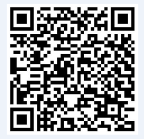
  3. If you want it used, place the link to this form everywhere! I have the form linked to the top of my digital syllabus, I sent the link to students to save via Remind, I emailed it to their school account, and I made QR code for my classroom wall that students can scan, taking them directly to the form. Library Mangement
  4. Much like a mini reader’s conference, read what students are saying about they are reading. In the few weeks I have been asking students to use this form, I have taken away several key insights.
    • Book talks ARE making a difference. 

      Screen Shot 2016-03-28 at 9.56.27 PM

      Forms gives you data to help guide future text selections, book talks, and recommendations.

    • Students do read more simply because we give them time! Several students commented that they picked up a book for in class reading and then checked it out to keep reading.
    • Kids care about what their peers are reading. In the section where students suggest why they choose a book, many suggest that hearing their peers talk about a book, or simply seeing someone else read it, piqued their interest.
      Screen Shot 2016-03-28 at 9.57.24 PM

      You can take a look at student responses by submission, or…

      Screen Shot 2016-03-28 at 9.55.53 PM

      Go to a spreadsheet that you can organize to best supply data in any category you choose.


All in all, my organizational itch has been…digitized.  And as I sit and wait for spring during this week off of school, my closets may stay messy and I’ll never get through all the books I want to read (I did manage to start Animal Farm during my daughter’s nap today. A student recommendation and a sneaking suspicion I may be asked not to return to work if someone found out I haven’t ever read it have fueled my most recent read), but over 70 students have used my new classroom library form and that warms my heart, if not my toes.

UPDATE: Here is a link to a copy of my Google Form. Please feel free to make a copy of it for your own use! Enjoy! 


How have you made your classroom library run more smoothly? Other ideas on collecting usable data from readers workshop? Please leave your comments below! 


Mini-Lesson Monday: Setting Up New Notebooks

img_0966

Our first semester notebook sections

My students and I have filled up one notebook thus far this school year, and as the second quarter comes to a close, we’re going to buy new ones and decorate, personalize, and organize them together.

At the beginning of the year, I asked my students to create quite a few sections in our notebooks.  This helped us stay organized at first, but as the year went on and sections filled up, the variety of sections caused more stress than they relieved.

img_0959

Brand new notebook! I love this one by “Punctuate” from Barnes & Noble.

Over break, our friend Erika shared an excellent article about the health benefits of journaling.  Amy said this about the article: “I wish composition notebooks were cheap right now. I’d get new ones for my students, read this piece, and start over when we get back to school. We’ve got notebooks, but we are not as into them as I would like. Could be a jump start.”

I feel the same way Amy does.  Our notebooks have turned more into workspaces and less into journals.  I want to change that as we begin the second semester.

Objectives — Using the language of the Depth of Knowledge Levels:  Formulate ideas about topics during quickwrite time; Construct language that reflects beliefs and ideas. Or, from the Common Core: Write routinely over extended time frames (time for research, reflection, and revision) and shorter time frames (a single sitting or a day or two) for a range of tasks and purposes.

Lesson — I’ll begin by telling students this story:  “I read Tom Romano’s Write What Matters again over break, looking for ideas for meaningful notebook activities.  From his chapter titled “Notebook: Playground, Workshop, Repository,” Tom gives this advice about journals:

“Buy one. Write in it every day. You’ll strengthen your writing muscles and keep them supple. You’ll learn to accept words your mind offers. You’ll consolidate writing skills you’re developing. You’ll sharpen your perceptions, live more alertly. You’ll expand your vocabulary, too.

img_0961

My first page of all my notebooks–a photo and a tracing of my hand, inspired by Penny Kittle and Sarah Kay’s poem “Hands.”

“This quote resonates with me.  It reminds me why I write, and why we should all write often.  Why do you find value in writing?”

We’ll have a conversation about the meaningfulness of writing, then set up our notebooks together.

“Last semester felt hectic when all of our sections filled up.  This semester I want to keep it simple.”  I’ll put the following guidelines on the board:

  • What-to-read list goes on very last page
  • Vocab words go on the page before that (see our posts here and here to know how we “do” vocab)
  • Quotes go on the page before that (craft studies usually go here)
  • Small section for heart books at the very end

“And that’s it.  I want to just write in chronological order every day, keeping just a few pages in the back for our usual routines.”

We’ll spend the remainder of class setting up our sections and collage-ing our notebooks to personalize them, as Jackie describes here.  I’ll do this alongside my students, adding ultrasound pictures and magazine cutouts to represent the upcoming year of change that’s in store for me.

Over the coming weeks, we’ll focus on using mini-lessons from Write What Matters–ones that involve drawing, writing therapeutically, and telling the narratives of our writing places and experiences.  I’ll hope to jump start, in Amy’s words, my students’ passion for writing with new notebooks and new notebook routines.

What routines will you change as the first semester ends?  What elements of your teaching will you revise?  Please share in the comments.

Writing My Wrongs: How I’m Learning From My Mistakes

FullSizeRender

A student caught sneaking his independent reading book into his lit circle novel…this is a first.

Every year I arrive at the second quarter with a new approach, idea, or plan.  This will be the solution! I think.  This will sustain momentum.  This will help us make it through the slump.  This will be the difference between dreading quarter two and praying for quarter three, but year after year, I am wrong.  For the past three years I’ve convinced myself it is the book—Lord of the Flies is too boring; they can’t appreciate Bradbury’s language in Fahrenheit 451.

The problem isn’t with my students though—it’s with me.  I am doing it wrong, and while I am ashamed to admit the honest truth, I realize now the error of my ways.

I “gave up” traditional teaching three years ago, when I transitioned to a workshop model of education.  I carved out time for reading, instated notebooks, poured over workshop guides, and asked countless questions of my mentors and colleagues.  The bare bones were in place, and I was convinced that I had the structure necessary to shift from a teacher-centered classroom to a student-centered classroom built on choice.  In many cases I did; every start of the school year began smoothly with excited readers and passionate writers.  We told stories, read poetry, shared quick writes, and analyzed craft, but I dreaded quarter two, the quarter when together, we would read our first of three required whole class novels.

Quarter two was when I lost their voices, their attention, and their passion.  With whole class novels, our focus shifted from “who are you and what are you thinking?” to “who is your author and what is he thinking?” 

Under the weight of scaffolding, curriculum standards, core competencies, and competency based rubrics, my mini-lessons focused on literary terminology instead of literary exploration.  To me, reading mini-lessons meant teaching the same terms I’d grown up with: symbolism, Freytag’s pyramid, direct and indirect characterization, round and flat characters, etc.  This meant my lessons shifted from writing-centered lessons that started with the question, “What do you notice about the author’s craft?” to terminology-centered lessons, that started with, “Apply your understanding of (fill in the blank) to the book.”  The latter produced significantly less empowering results.

So, I asked and probed my students.  I peppered them with questions during study halls and extra help; I snuck in questions with the straggling Writer’s Club members after meetings, gave out surveys, and chatted at lunch with colleagues.  And while I was convinced that it was because I was “forcing” them to read unrelatable classics, I couldn’t shake the fact that I was missing something bigger.

By the time I sat down with my living mentor Linda Rief at a coffee shop in Exeter, I realized I was doing it wrong in quarter two.  The pieces gradually added up—I knew the three reading options I had given them for literature circles weren’t choices at all.  I was hoping they would read the books in their entirety, but I knew that this year would lend itself to additional groans, frustration, and abandonment.  At the end of the day, I was a workshop teacher defaulting to a traditional methodology or worse, was I a traditional teacher pretending to run a workshop?

The two greatest pieces of advice came first via my special educator mother, who asked, “Why not just teach them good writing?  Isn’t that what classics are?” And second through Linda Rief, who pointblank asked me why I needed to teach plot triangles anyways.

Were there successes in my literature circle unit? Most definitely.  Sure, the vast majority didn’t fall in love with Golding, and it breaks my heart that they couldn’t revel in the beauty of Bradbury’s language, but in final surveys, nearly every student appreciated the time they had to discuss the novels in small groups.  They enjoyed talking about the stories with peers, and while not all of them loved the books, many pointed out that this was the first time they engaged in authentic conversations about literature without a teacher moderating the discussions.  They learned; they just didn’t learn the way I had hoped.

Part of me feels like I lost four weeks that we could have spent more effectively growing together as readers and writers while looking at the beauty of craft in book clubs centered on young adult lit of their choosing.  The other part of me feels like I failed my students in providing this idealized version of what I hoped our class would be and then slamming them back to reality with the same sort of stock analysis I question.

I am impatient when it comes to growth, particularly when it comes to my teaching.  While I understand my students’ needs as developing readers and writers, I am quick to judge my own struggles.  Even as an intern, one of my personal goals was “to be at the level of a second year teacher.”  I repeated this mantra knowing full well that the only way to be at the level of a second year teacher was to be a second year teacher.

All I can promise my students is that I will continue to reflect, move forward, and become the teacher they deserve.  But alas, growth takes time, trial, and error.  It requires me to unravel years of traditional education, analyze what works, what doesn’t, what I should carry with me, and what I can discard.  It will take time for me to unwind my own brain just as I ask my students to unwind theirs.  I am still learning to be a writer, a reader, a student, a teacher, and that takes time, time that sometimes feels all too precious when I only have one year with my kids.  Fortunately, teaching is like writing.  Every day, I begin the process of drafting a new story, and every year, I get the chance to revise my work.