Category Archives: Community

He read ZERO books before he came to me. Not Good Enough.

He came to me pretty much hating to read. This tall freshman, eager to talk and laugh, and constantly wanting to do anything else but open a book. He admitted that he read zero books his 8th grade year.

The first book I got him to attempt was Game, a chapter book of about 160 pages that took him four weeks to get through. Every day I had to put a hand on his shoulder and whisper “Get to reading.” Next, he tried Gym Candy, and while he seemed to read it faster, he couldn’t tell me much about the plot or the characters.

Finally, with a stroke of luck, this young man picked up Stupid Fast by Geoff Herbach. I had book talked it a week or so before, reading the first few pages to the class. At the time, R.J. wasn’t interested. When I saw him with this book, I hurried over and practically begged him to give it a try. “Okay,” he shrugged and moved away from the bookshelf toward his table.
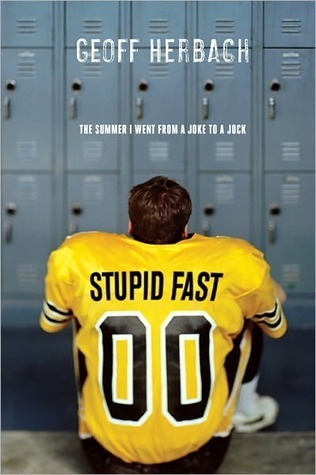
Every day for two weeks, R.J. came to class and told me how much he had read. “I like this book,” he smiled at me more than once. He finished this book in two and a half weeks, and then took himself to the bookshelf to find I’m with Stupid. (At the time, we thought this was the next in the series.)

When I finally made it over to kneel by R. J.’s table and conference with him about his reading, he told me that the beginning was hard to read because the main character’s family was “weird,” but he really liked the parts about football. We talked about character development and how the main character Felton changes throughout the book. “He grows up,” R.J. notices. I asked him what kinds of questions he would ask the author if he had the chance, and then I remembered:  I follow this author on Twitter.

“Hey, R.J., let’s take a picture of you reading this book and tweet it to the author. I bet he’ll respond.”

“No way…. Oh, okay.”

So we did.
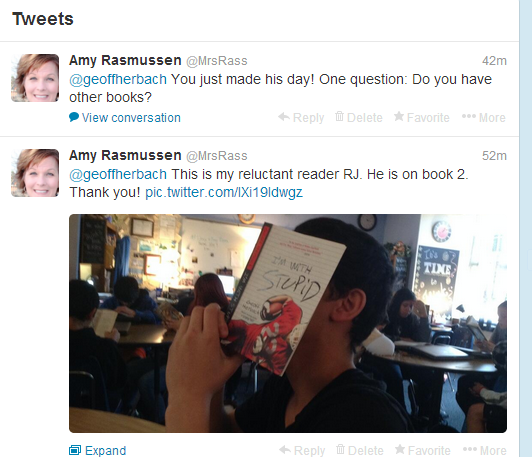
RJ tweets to author

RJ tweets to author responses


R.J. left class that day feeling pretty special. He will finish his fourth book this week. His personal reading goal for the whole year was only FIVE.

Now, here’s the really cool thing:  While wondering the exhibition hall at NCTE in Boston, I struck up a conversation with the representatives from Sourcebooks Publishers. They asked if I knew of the books by Geoff Herbach, and, of course, I had to tell them about R.J. Then one of those very sweet insightful women reached under the table and handed me this:

Fat Boy cover

She understands the value of nurturing readers. She’s helped me make a difference in the life of this young man. I wish I could describe the yelp I got when I told R.J. he’d been gifted with an ARC of an ARC — how cool is that?

I’d love to hear your best “Conquering the Reluctant Reader” story. Please share.

Multi-purposing My Quickwrites

Photo Credit: Jennifer

At NCTE last week, Penny Kittle reminded me of the need to consistently share beautiful language with my students. If I ever want them to be able to read it, understand it, and use it in their own writing, I must make conscious choices about voicing that which is lovely. I do a fine job of this right until my students choose their own topics and begin their compositions. Then the room gets stale, and the feeling of “what a chore” begins.

No wonder. I stop sharing short texts and poems. I stop having students respond in their notebooks. I stop allowing them to share their thinking.

While in Boston, I stole a moment with Penny and asked her about my problem, and she simply said, “I keep sharing beautiful language every day.” I must do this, too.

I made a list in my notebook of the things I need to do better when I return to the classroom. Continuing to share poetry and short passages that students can respond to sits at the top of my list, but I want to try to multi-task this activity.

My students are in the process of writing a feature-length article. They chose topics and began drafting before the break. I want them to think about ways to make what they are writing pop into 3D on the page; I want them to see vivid verbs and colorful word choice, and all kinds of devices that they might include in their own writing. My goal is to use poems and passages from now on that will serve several purposes:

1) rhythms of beautiful language,

2) models for sentence structure,

3) examples of figurative language,

4) built-in book talks,

5) questions that aid student thinking about things that matter in their lives.

We will read, and we will respond. We will notice author’s craft as we craft ourselves.

I know, I know, I am slow on this boat. Good planning would make this possible with all my quick writes.  I get that. Thus far, I’ve been a bit disjointed because I struggle with doing it “all:” Independent reading time, quick writes, mini-lessons on craft, grammar, mechanics, student-to-student reading response, reading and writing conferences, book talks. . . I keep most plates spinning, but more and more are crashing lately. My #nerdulation is to do better. (Search that hashtag on Twitter if you don’t have a clue.)

Here’s the passage I will use today. I think it’s appropriate to read a beautiful passage about books since I got a ton of new ones at NCTE. My classroom library welcomes them, but it’s screaming “crowded.” I gotta get a new shelf.

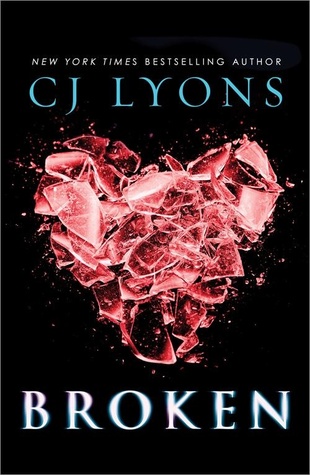
From Broken by C.J. Lyons: 

Kids fill the hall from wall to wall. Despite the unfamiliar press of bodies, I don’t panic. Instead, I let them steer me, like running with a herd of wild, untamed horses. At the end of the corridor, the herd separates into two, leaving me alone in front of a high glass wall.

The library.

Footsteps and lockers banging and voices colliding barrage me. Then I open the door, cross over, and step inside. I’m greeted not by silence, but instead by a hushed burble, relaxing, like the sound of a water fountain. I stand, enjoying the sensations, and take a breath.

School smells so much better than the hospital. And the library smells the best of all. To me, a good book is hot cocoa on a stormy winter day, sleet battering the window while you sit inside, nestled in a quilt.

A room filled with books?

I inhale deeply, a junkie taking her first hit. Sweet, musty paper. Ebony ink so crisp it threatens to rise off the pages and singe my nostrils. Glue and leather and cloth all mixed together in a menage a trois of decadence.

Another breath and I’m drunk with possibilities. Words and stories and people and places so far from here that Planet Earth is a mere dust mote dancing in my rearview mirror.

Hugging myself, containing my glee, I pivot, taking in books stacked two stories high, couches and chairs strategically positioned to catch the light from tall windows lining both sides of the corner, like the bridge of a battle cruiser, broad, high, supremely confident, and comforting. In here, I dare to imagine that I might just survive high school after all.

Respond in your notebook:  Describe a place where you find  peace or refuge?

How do you revision your instruction when you know something isn’t working?

Reel Reading for Real Readers: Girl, Stolen

ReelReading2I picked up this title at the thrift store, and the moment I talked about it in class a young woman grabbed it and wouldn’t let go. Later, I found out that this is a popular book in some of my colleague’s classroom libraries. I don’t know why teenagers like books with disturbing themes, but they do. I guess it’s part of the psyche trying to make the plight of others worse than their own. Or something. Right now there is a waiting list for it in my room for this book. Maybe someday I’ll get to read it.

Girl, Stolen by April Henry

Teaching the Lessons of #NCTE13

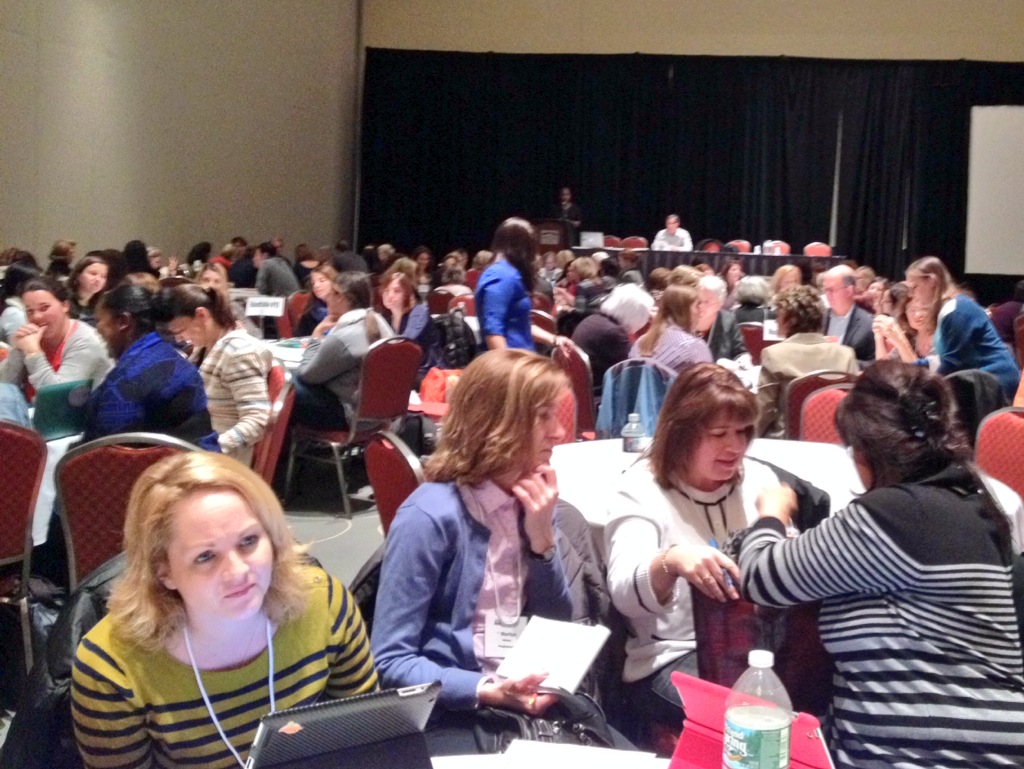
ocsBeing in Boston with all of these excellent minds has been a balm for my bedraggled teaching soul.  Something about November wears me down every year, as both my students and I yearn for the holiday breaks that are dangling just out of our reach.  Every year, I just pray for the second quarter to speed by so it’s out of the way and over with, but this year, that is not the case.  Reinvigorated by NCTE, I’m now filled with wonderful new ideas that I can’t wait to introduce my students to, and I’m wishing for more time before winter break so I can squeeze more of them in!!  I know without a doubt that my winter is now going to be much more pleasant, but it’s no longer me I’m worried about–it’s all the other teachers, those who are still suffering in the winters of their discontent.

According to the census bureau, as of last year there were 3.3 million public school teachers in America.  Three million, and that’s not including private and charter schools.  Yet, I’ve heard that only around 10,000 of us will attend the NCTE Annual Convention.  That’s an abysmally low percentage, and even assuming there are another 10,000 out there who will access the materials on the Connected Community, that’s still not enough.  We need more teachers aware of the best practices shared here, more educators experiencing the energy of this conference, and more students benefiting from the meetings of great minds.

IMG_0891

Teachers converse between talks by Carol Jago and Kelly Gallagher

I’m normally a very optimistic person, but I really don’t think enough people know about some of the wonderful teaching mentors in our country.  Yesterday while walking through the Heinemann booth, I watched a woman pick up Penny Kittle’s Book Love, glance at the back, and then replace it on the shelf.  WHAT??!!  I simply had to intervene.  “That’s an amazing book,” I told her, and she turned toward me, interested.  “It completely changed the way I teach, and my students are reading more now than they ever have.”

“Really?” she said. “Well, that’s a ringing endorsement.”  I smiled and urged, “Read it.”  She added the book to her little pile.

IMG_0886

Nancie Atwell sits on the floor to listen to Romano, Rief, and Heard

I felt a small sense of victory–I’d introduced her to a new mentor!  A wonderful set of best practices!  A beautiful book about the love of reading!!  But over the next few hours, the sense of discomfort returned to me.  There are still far too many teachers clinging to antiquated, alienating practices.  There are still too many teacher education programs whose students have never heard of Cris Tovani, Louise Rosenblatt, or Ralph Fletcher.  There are still too many attendees of this conference, even, who don’t understand the elation I felt as I sat on the floor beside Nancie Atwell, Tom Newkirk, and Katie Wood Ray while listening to a talk by Linda Rief, Tom Romano, and Georgia Heard.

Why do so few people know about the insane genius of Penny Kittle? Don Graves? Peter Johnston? Teri Lesesne, Richard Kent, Jim Burke?  These, my teacher heroes, are unknowns to too many.  How can we spread their ideas around?

My hope is that others will do what I’m going to do, and share these findings formally with our departments, districts, and colleagues.  We’ll blog about them, and tweet about them, and most importantly, practice them, so that they spread as rapidly as possible.  So if you’re here at #NCTE13, share these ideas.  Spread the love.  And enjoy the rush that you will ride on for weeks to come.

Reel Reading for Real Readers: The Collector by Victoria Scott

20130207-190708I’m really not sure what to make of this, but I think my female students are going to clamor for this book.

I got an email from my school librarians inviting me to bring my students to a panel discussion with YA authors who would be visiting the CFBISD Literacy Night. Of course, I said yes. I didn’t even care who the authors were. I did ask for a list of names though, and then I searched for their books.

This is the first cover I saw:  Can you hear the girls whispering?

Then I did a search for a book trailer and came upon this great site called the “Teen Fiction Fiend.” Although the book was released last April, it will be brand new to my students–my copy arrived from Amazon last weekend, and the clever reveal here will have my girls who loved Perfect Chemistry falling all over one another as they clamor for the check out clipboard.

See for yourself:  Alice Marvel’s for theTeen Fiction Fiend

From the back cover:  “Dante is the kind of guy I wish I’d met when I was seventeen. And the kind of guy I’d kill if my daughter brought him home.” ~Mary Lindsey, author of Shattered Souls

Oh, brother… to be young again. *scurrying off to read (this book)*

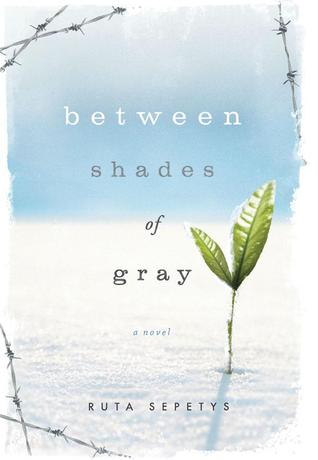
Reel Reading for Real Readers: Between Shades of Gray

20130207-190708.jpgI’ve wanted to read this book for some time now, but it wasn’t until I was searching the shelves at my  favorite Salvation Army that I got my hands on it. (That’s a post for another day:  Building a Killer Classroom Library by Hanging out at Charity Shops) I have a students who is passionately interested in WWII literature. He’s already read two books a

bout it this grading period. I will put Between Shades of Gray in his hands as soon as I am finished with it.

I’m doing a good job this year of talking about a lot of books. Of my 140 students, I’m down to just threefake readers. Many students are reading slowly, but they are reading. I’ve decided I need to do a bit more than just talk about books. I need to step up my use of videos and book trailers to get them interested. The only problem? Every time I use visual images like this, I have more than one student who wants the book. I want to believe that this is a good problem, but it’s pretty sad when not everyone gets a copy of a book when they are excited about it.

Here’s a clip of Ruta Sepetys talking about the story behind the story.  I just know I’m going to need more than one copy.

Gifted and Talented Teacher Leaps off Cliff of Faith and Experimentation

Guest post by Tess Mueggenborg

Make no mistake about it: I’m a classical canon gal.  Always have been, always will be.  And when I say “classical,” I also mean “really old” – few things written after 1650 hold much interest for me.  Favorite work of literature? Milton’s Paradise Lost.  Favorite time period of literature? Early Roman Empire (Ovid & Virgil).  Favorite English Lit class from my undergrad days? Greek Tragedy.

But as much as I love the canon – and I’ve had surprising success with teaching the canon in the past – I’m also a pragmatist.  I know that what I love isn’t always what’s best for my students, and their learning should take priority over my passions (I know … radical idea, right?).  I also acknowledge that the real world in which I live and work is far from my ideal.  Would I like to devote all of my class time to discussing Beowulf and Canterbury Tales?  Of course.  But can I realistically get my students to read and engage with these texts, and develop a passion for them?  Not likely.  Some, of course, will – and I’m happy to guide them on their own paths of classical literature studies.  But I bet (I hope) that those students will wind up as English Majors, and they’ll get their fill of such works in college.  I must work with the students I have, not the students I wish I had.  And the students I have are awesome: bright, curious, hungry for meaningful learning and wisdom.  So this classical pragmatist has started to break her own mold.  Here’s how …

I teach a class known as World Experience; it’s for Gifted and Talented sophomore students, and it combines AP World History with literature.  The history drives the course – it sets the pace, scope, and sequence for the year.  It’s then pretty easy to match up literature with the corresponding time periods.  leap off cliffAncient River Valley civilizations at the start of the year? We read Gilgamesh and Horus the Hawk.  Classical civilizations come next – that mean Antigone and a few selections from Metamorphoses.  Next up is the Medieval period … and this has always been a struggle.  I love Medieval lit, I can read Middle English, and I can wax poetic on the virtues and merits of The Song of Roland and Sir Gawain and the Green Night ad nauseum.  And while the students usually enjoy these stories, they don’t usually get much out of this unit in terms of literature.  They don’t learn much about author’s craft, they can’t do much literary analysis, and they become so frustrated with the archaic language of the text that most of them give up … and it takes me another six weeks to pull them back into literature.  So this year, I’ve scrapped all this, and leapt off a cliff of faith and experimentation.  The results have been pleasantly surprising.

Our district head of English Language Arts was kind enough to buy $600 of books for my classroom library.  I got to choose every one of them: all award-winners (or by award-winning authors), all world literature, all contemporary, all high-level.  No softballs in this classroom library – these are, after all, GT students.  Each student got to pick a book (this was a time-consuming and sometimes contentious process, but it certainly got every student interested in the books and invested in their choice).  Once a week, they’ve been blogging about their novel, based on someone generic questions posed by me.  Some of the questions are just opinion (Do you like this book so far? Why or why not?); some of the questions are analytical (Who is the main protagonist of your novel? What problems do they encounter in the course of the novel? How do you predict they will resolve these problems … or not?); some relate back to the history half of the course (In what ways does your novel relate to the history we’ve studied so far this year?).  Some responses have been good.  Some have been profound, moving, passionate, and elegant.  None have been outright bad, and none have been missing.  That’s right: NONE have been missing.  Every student has been reading and blogging.  Even the student who earned a grade of 9 (yes, a single-digit 9) for the first 9-weeks is reading and blogging about her novel.  I’m calling this experiment a success.

To be fair, I should say: this hasn’t been easy, and it hasn’t been without challenges.  But they’re good challenges, and not insurmountable.  Some students read their novels in a week – and then wanted to borrow another book.  YES!  Many students didn’t devote enough time to reading their novel, and they’ve fallen behind.  But they haven’t given up: they’re still reading.  I haven’t had any complaints of “this book is boring,” though I’ve had many complaints of “this book is so sad/depressing/pessimistic/disheartening.”  Which has led to some great discussions about the point of literature, analysis of tone, and some hefty doses of maturation (I’m pretty sure the girl who read The Kite Runner in a weekend has been inwardly weeping for two weeks now).

We’re wrapping up this unit, and thus this great experiment.  And I think it bears repeating: I’m calling this experiment a success.  Enough of a success that I’ll be spending this weekend revamping the next unit (which starts Monday) to include more student choice and incorporate more of these novels, though in a slightly different fashion.  Stay tuned.

Am I still a classical canon gal? Heck yes. Always have been, always will be.  But my students don’t need to be classical canon fans – they just need to be readers, eager to engage with the world and its complexities.  I think they’re well on their way.

“Professor” Tess Mueggenborg teaches English (and anything else with which her students need help) at RL Turner High School.  Her academic passions lie in comparative language and literature.  The Professor lives in Dallas with her husband, Jeff. Tess’ on Twitter @profmueggenborg

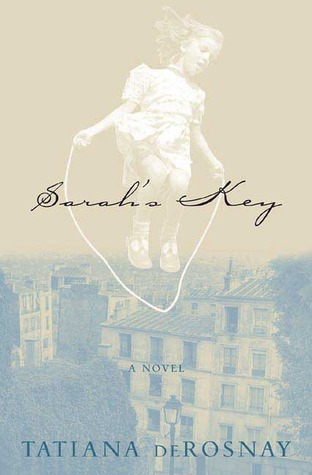
Reel Readers for Real Reading: Sarah’s Key

ReelReading2When my friend Tess got all her world literature novels, one of the hot student favorites proved to be Sarah’s Key by Tatiana de Rosnay. Tess called my room to see if I had another copy. Sadly, I did not– then.

I remembered how much I loved the movie, and while I know that books and movies are often very different, I could see why students were clamoring for this book.

My copy of Sarah’s Key should be here by the time this post runs. I’m sure when I show the movie trailer I’ll have a waiting list of students eager to read it. I already have one young man and another young woman who are passionate about Holocaust literature. My collection of this genre grows year after year because I love it, too. So many tragic yet heartwarming stories that teach and remind us to love.

For the past several years I’ve taken students to the Holocaust Museum in Dallas. We’ve listened to survivors speak to us on several occasions. Sadly, they are all getting so old. In a very few years, these great warriors of a terrible time will be gone. It will only be through great literature that we keep their stories alive.

When a Student Tells You What to Teach: Sweet

I mentioned before that I gave a Pulitzer Prize winning novel to one of my AP English students recently. He gave it back to me three days later.

“Did you read it?” I asked.

“Well, I tried,” he said. “There’s just too much description. I couldn’t get into it.”

“What do you mean?” I asked.

“I don’t know exactly, but it’s the kind of book you should pull passages out of and teach with,” he said.

Okay, then.

I still haven’t read the novel Tinkers by Paul Harding, but I did take a look to see what Levi meant. (He’s a bright young man–taking both AP Lit and Lang his junior year.)

Just read the first page. You’ll see what I did.

Yes, I can teach some skills with this. It’s beautiful, and now I’m reading it– on the lookout for mentor slices that engage and inspire great reading and writing.

Screen Shot 2013-11-03 at 10.02.26 AM

Unsolved Mysteries and The Serenity Zone

ocs

We made it! We’ve come to the end of October, one of the longest (feeling) months of the school year. And I’ll tell you, I need to do some celebrating of the good stuff, because October was a doozy, especially with my sophomores.  We made it through All Quiet on the Western Front, which I personally find to be a beautifully written, truly evocative war novel.  My sophomores, however, had a hard time getting into the book, and many of them never really did.  I struggled with feeling like a hypocrite, because here I was emphasizing choice and pushing my students to (re)discover the pleasure of reading, and I had effectively halted the train we just got moving.  Some of my students had read more in the first month of school than they had in years, and I felt guilty about derailing the progress they had made.

The compromise I came up with was that we would go read the book as fast as possible, slow down for close readings in particularly meaningful passages, and I would book talk war books every day.  Still the students withered during the past two weeks, their GoodReads updates full of longing for their “real books.”  When we finished the book yesterday, some students tried to turn them in to me on the way out of class.  They were horrified when I told them we weren’t done with the novel yet.

Needless to say I haven’t figured out how to strike the balance between the independent reading and whole-class texts.  Our department has determined a certain of novels to be “core texts” that every teacher will teach.  I agree that the novels on the lists are amazing works of literature.  But I know that many of my students have not been sold on reading to begin with, so it’s laughable to think that somehow I’m going to get them to be engaged with books that were written on average of over 125 years ago (thanks to Shakespeare at every grade level).  One student protested, “My mom read these exact same books when she went here.”

As I write this post, I have no answers. I know what is in my heart of hearts.  And, by the way, my students can tell too.  One girl asked suspiciously but tentatively, “Um…Ms. Kim, did you choose this book for us to read?”  I was diplomatic in my response, using the Socratic method to ask a question of her.  But the fact remains that come Monday, I need to have some essay options for my students.  That is a whole ‘nother beast, since trying to engage my sophomores in their writing is even more challenging for me.

So rather than try to present some amazing answers to this question (since I have none), I am going to show off some pictures of my happy place – aka The Serenity Zone.  How’s that for a completely abrupt subject change?

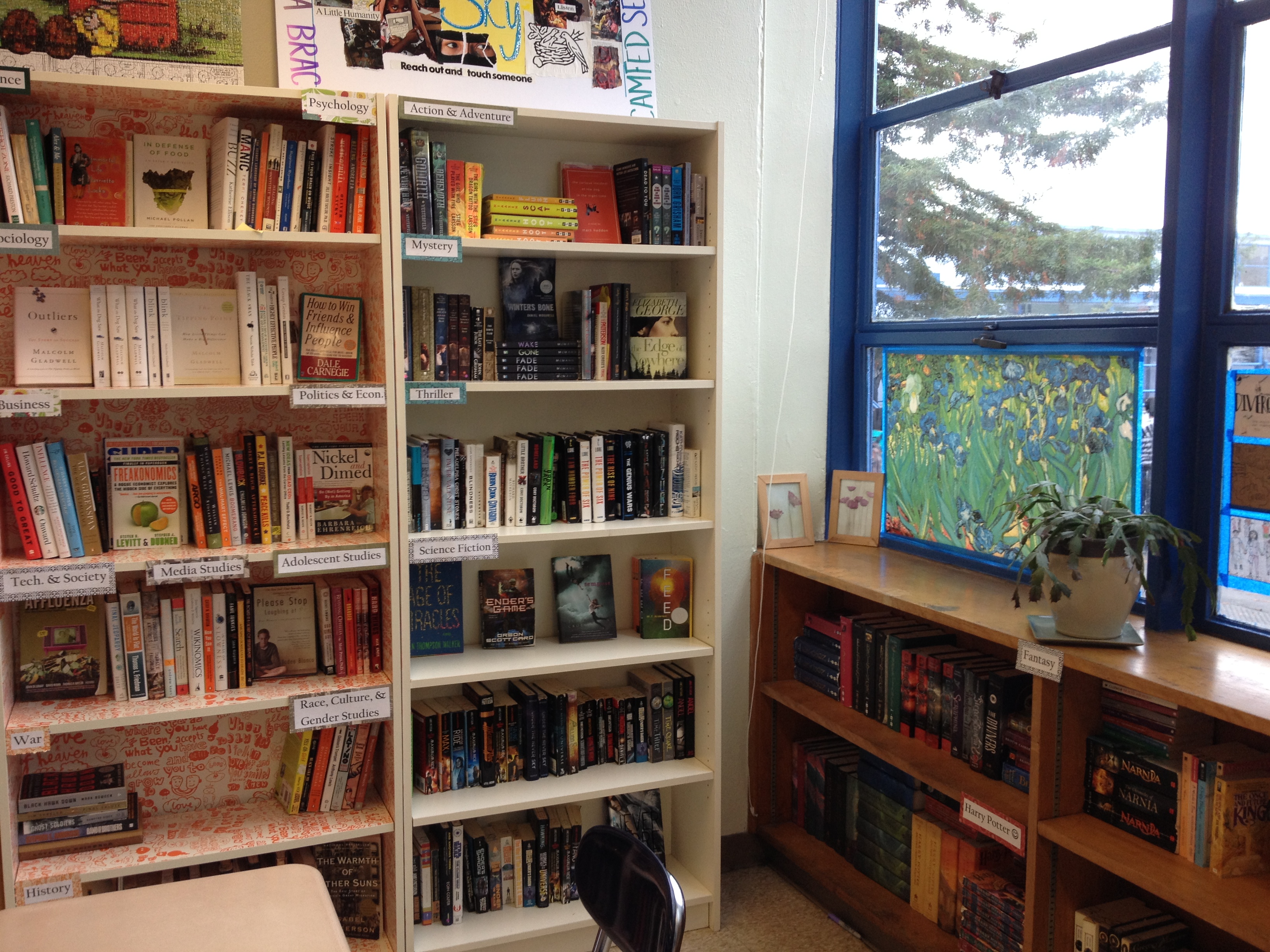
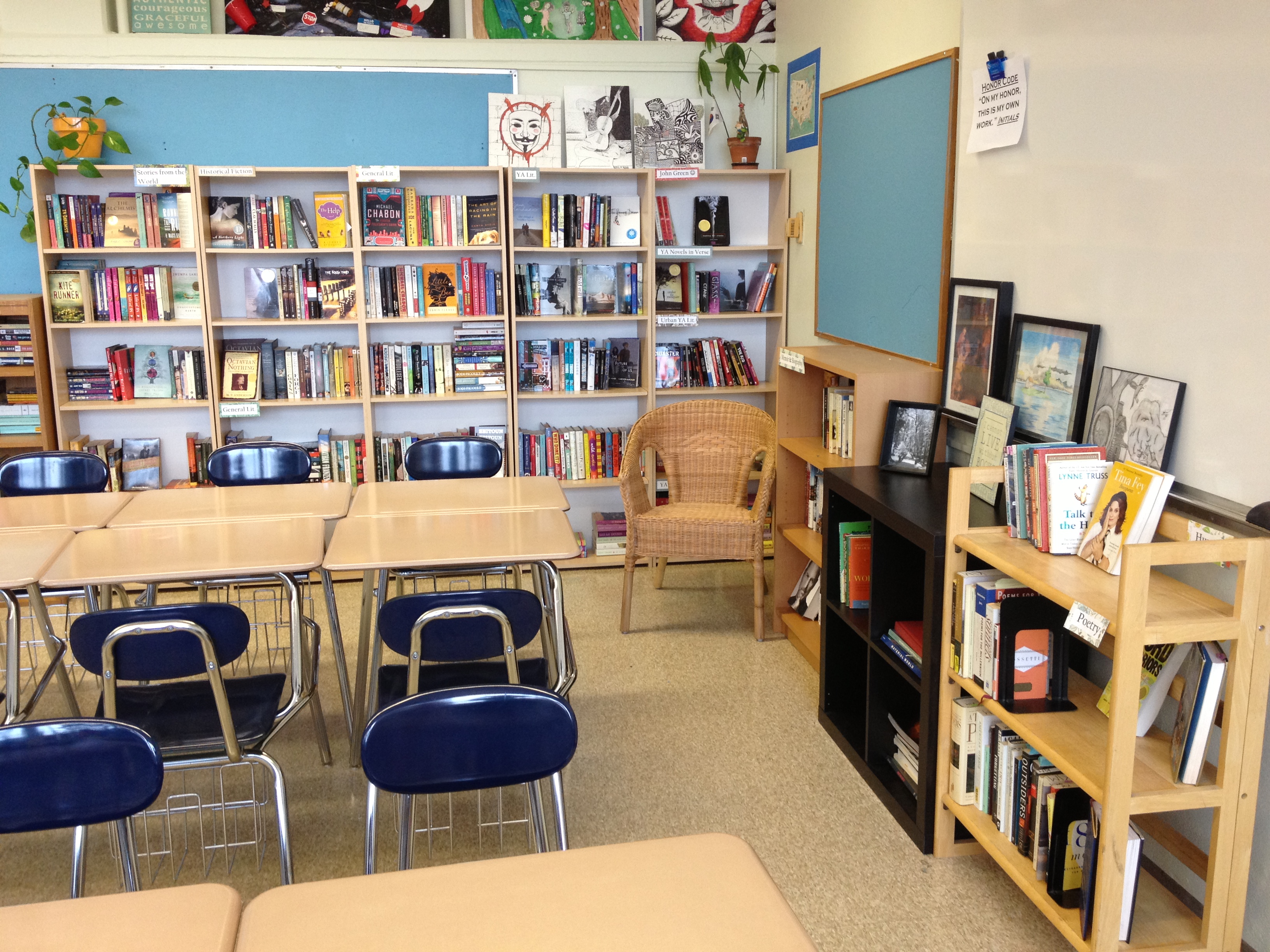
I don’t brag often, but I am definitely proud of my classroom space, and especially my library.  I have worked hard to make it a space that I want to be in, and a place where I can experience serenity (my version of Amy’s “zen”).  That means tons of (organized) books, thriving plants, natural light (no fluorescents!), and good music.  I know a lot of colleagues who lock their rooms for lunch and escape for needed time away from the “crazy kids,” but I actually love the fact that I have a space students want to come and have their lunch, read their books (during lunch?!), catch up on homework, and chat with friends.  It’s the little things, but it tickles me when former students, or students I don’t even know, come and ask if they can look at the books and even borrow one.  Don’t even get me started on how books have forged community and relationships and trust with students – that’s for a whole other post!  To leave you, here are some pictures of my serenity zone.  (I wish you could hear some of my music – one student looked up from her book while rocking in the rocking chair declaring my room her “chill zone.” That’s props you can’t buy!)  Next time I’ll include pictorial proof of students in my room. 🙂

*Thanks for reading this all-over-the-place post!

half of my library

half of my library

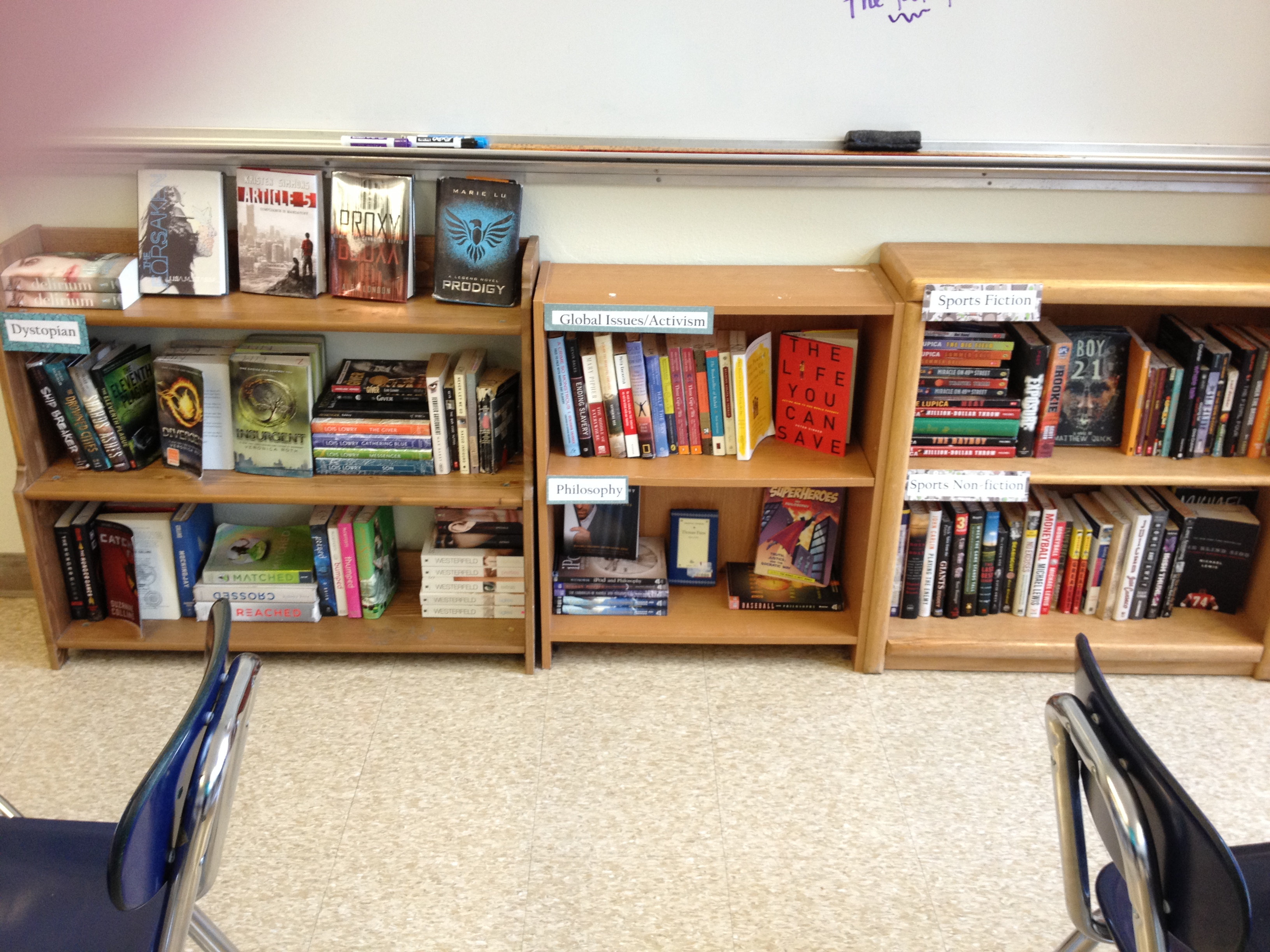
'twas unwise to have the dystopians and sports sections in such small shelves...

’twas unwise to have the dystopians and sports sections in such small shelves…

we need a better "book wait list" system. (notice my nerdfighter posters? DFTBA, y'all!)

we need a better “book wait list” system. (notice my nerdfighter posters? DFTBA, y’all!)

the ever-growing list of books i've book talked this year!

the ever-growing list of books i’ve book talked this year!

who would have thought i'd run out of shelf space?!

who would have thought i’d run out of shelf space?!