Category Archives: Community

Painting With Words: Sold

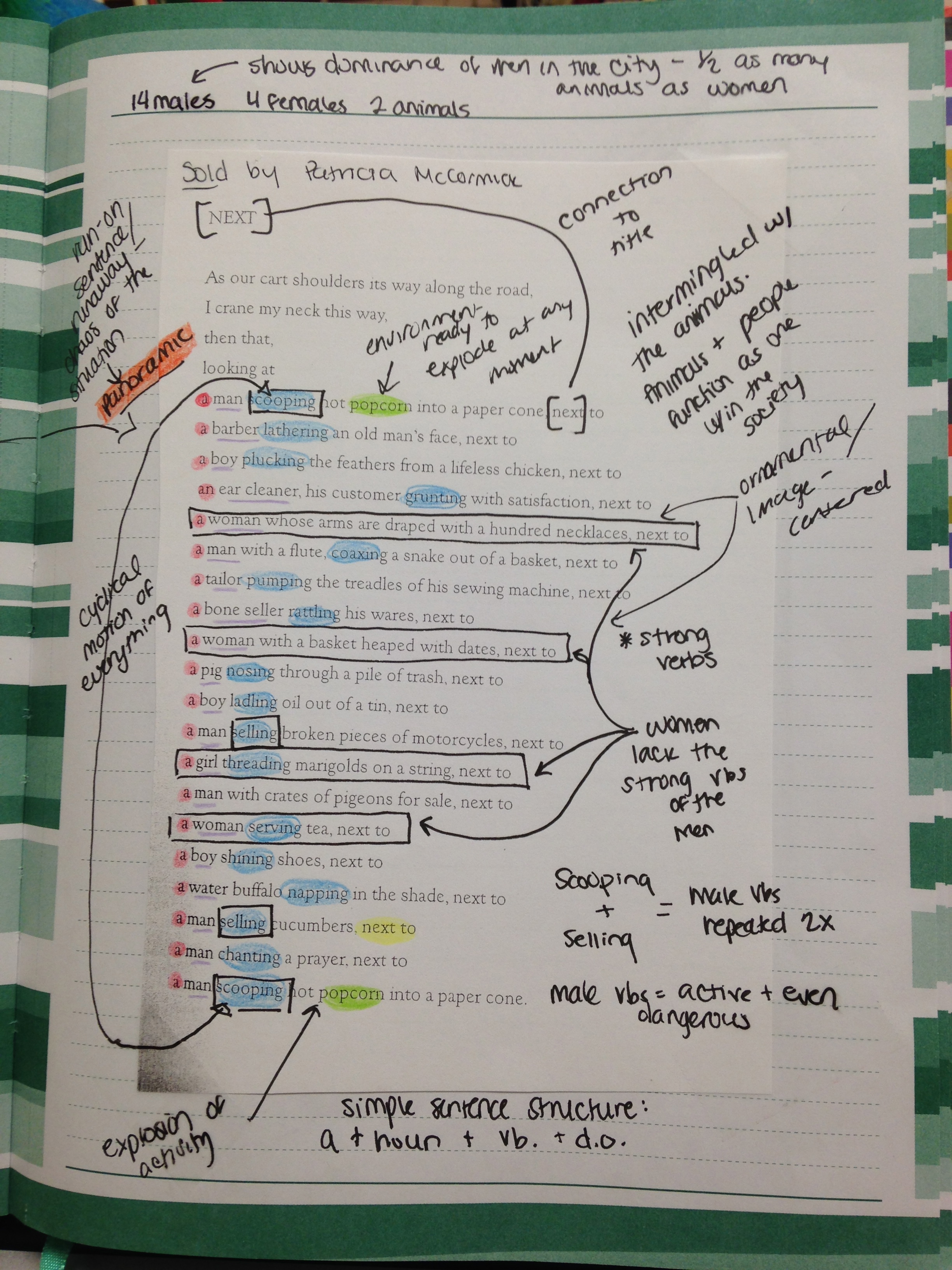
c_soldPatricia McCormick is a painter. Not literally, but she might as well be given the way she writes. Her vivid imagery and poetic prose paired with her short vignettes make Sold a must-read.

Somehow, Patricia makes the heavy subject of sexual slavery both approachable and manageable. Whereas many of my heavier books on women’s rights or international affairs sit dormant in my classroom library, Sold has made it through many hands. I believe there are multiple reasons for this: first, Sold isn’t intimidating in length or size. It feels manageable for many students. Second, Sold is written in short vignettes with wide spacing between the lines. Students can find themselves ten or twenty pages into the book with minimal effort.

Furthermore, the book lends itself to close reading and craft study. Each vignette is chock full of exceptional writing as Patricia McCormick plays with diction, descriptions, repetition, and a wide variety of craft marks. In turn, I can’t pick only one example, so bear with me as I walk you through two of the many passages with which I am obsessed:

Everyday, students walk into my classroom burdened by mammoth backpacks and equally sized worries. It’s tough to be a teenager, which is why I love the vignette “What I Carry.” I hope to use this as a quickwrite to find out what students carry with them throughout the

One of the many passages I have photocopied and dissected in my writer's notebook.

One of the many passages I have photocopied and dissected in my writer’s notebook.

day.

WHAT I CARRY

Inside the bundle Ama packed for me are:

my bowl,

my hairbrush,

the notebook my teacher gave me for being the number one

girl in school,

and my bedroll.

Inside my head I carry

my baby goat,

my baby brother,

my ama’s face,

our family’s future.

My bundle is light.

My burden is heavy.

In the second passage, “Between Twilights,” I love McCormick’s use of sensory details. This is an excellent passage to model the concept of “show don’t tell” in writing.

BETWEEN TWILIGHTS

Sometimes, between the twilights.

I unwrap my bundle from home

and bury my face in the fabric of my old skirt.

I inhale deeply,

drinking in the scent of mountain sunshine,

a warmth that smells of freshly turned soil and clean laundry

baking in the sun.

I breathe in a cool Himalayan breeze,

and the woodsy tang of a cooking fire,

a smell that crackles with the promise of warm tea

and fresh roti.

Then I can get by.

Until the next twilight.

A Lesson in Craft: The Yellow Birds

If you have not read The Yellow Birds by Kevin Powers, go buy it and start reading it today. It’s that good. Maybe I loved it because Powers is a poet, and his poetry flows into the language on every page. Maybe I loved it because I have similar fears as the mothers portrayed in this book. At least one of my sons will join the Army in a year.

Whatever the reason, I love this novel, and I know many of my students will appreciate the beauty of it, too.

Many passages are worthy of study, but when I read myself into this one, I knew that the discussion around it in class would be powerful. What do you think students might discover about language by reading this?

I hadn’t know what I was doing then, but my memories of Murph were a kind of misguided archaeology. Sifting through the remains of what I remembered about him was a denial of the fact that a hole was really all that was left, an absence I had attempted to reverse but found that I could not. There was simply not enough material to account for what had been removed. The closer I got to reconstructing him in my mind, the more the picture I was tying to re-create receded. For every memory I was able to pull up, another seemed to fall away forever. There was some proportion about it all, though. It was like putting a puzzle together from behind: the shapes familiar, the picture quickly fading, the muted tan of the cardboard backing a tease at wholeness and completion. I’d think of a time when we sat in the evening in the guard tower, watching the war go by in streaks of read and green and other, briefer lights, and he’d tell me of an afternoon in the little hillside apple orchard that his mother worked, the turn and flash of a paring knife along a wrap of gauze as they grafted uppers to rootstocks and new branches to blossom, or the time he saw but could not explain his awe when his father brought a dozen caged canaries home from the mine and let them loose in the hollow where they lived, how the canaries only flitted and sang awhile before perching back atop their cages, which had been arranged in rows, his father likely thinking that the birds would not return by choice to their captivity, and that the cages should be used for something else: a pretty bed for vegetables, perhaps a place to string up candles between the trees, and in what strange silences the world worked, Murph must have wondered, as the birds settled peaceably in their formation and ceased to sing. And I’d try to recall things until nothing came, which I quickly found was my only certainty, until what was left of him was a sketch in shadow, a skeleton falling apart, and my friend Murph was no more friend to me than the strangest stranger.

Viral Titles

ifistay1Every year, one or two books go viral. The Fault in Our Stars by John Green, Lone Survivor by Marcus Luttrell, and Hate List by Jennifer Brown have all held the Viral Title award in the past.  I couldn’t keep those books on my shelves, and students couldn’t read them fast enough.

This year, If I Stay by Gayle Forman is everywhere I look.  All of my students want this book–AP, on level, male, female, black, white, readers, non-readers.  I have six copies and all are checked out.

I got into bed Tuesday night with my Nook, where I’d recently downloaded If I Stay.  It’s been about a month since I’ve read a book for pleasure, so I intended to just read a chapter or two and then go to sleep after my 14-hour day.

I stayed up ’til midnight and finished the book.

Silent tears dripped down my face around page 15, when Mia’s family is destroyed in a car accident.  Forman’s writing shoves me into the moment and I am right there with Mia, feeling her anguish as she sees her parents strewn across the road.  I agonize with her over the whereabouts of her younger brother, Teddy, and I hear the eerie quiet of a post-collision highway.

I was captivated from that moment onward, terrified for Mia as she watches her own injured, unresponsive body be flown to the hospital.  Watches her now-daughterless grandparents in the waiting room.  Watches the surgeons and nurses frantically try to save her.  She vacillates between wanting to stay in this world, and wanting to leave it behind.

NPR calls this story “achingly beautiful,” and I would agree.  Its language, its structure, haunts me, days later, and I know my students and I will study Forman’s craft soon…the way she brings us into a moment, frozen in time, and suspends our disbelief as we stay beside Mia’s spirit, watching all of this unfold.  Please read this book, and get it into the hands of your students, too.

ifistay2

If I Stay, Gayle Forman, pp. 15-16

You wouldn’t expect the radio to work afterward.  But it does.

The car is eviscerated. The impact of a four-ton pickup truck going sixty miles an hour had the force of an atom bomb.  It tore off the doors, sent the front-side passenger seat through the driver’s side window.  It flipped the chassis, bouncing it across the road and ripped the engine apart as if it were no stronger than a spiderweb.  It tossed wheels and hubcaps deep into the forest.  It ignited bits of the gas tank, so that now tiny flames lap at the wet road.

And there was so much noise.  A symphony of grinding, a chorus of popping, an aria of exploding, and finally, the sad clapping of hard metal cutting into soft trees.  Then it went quiet, except for this:  Beethoven’s Cello Sonata no. 3, still playing.

Sometimes There’s This One Book

Before the first day of school this year, I learned that a student who was to attend our campus took her own life. She was 15. This would have been her 16th year. It should have been a shining time for her:  a junior in high school, a driver’s license, maybe her first job, and if her family was like mine, her first date (I had to be 16).

Her family, of course, is devastated. I didn’t even know this child, and I am devastated, as I am every single time I hear of the awful reality of suicide.

We have to do something.

I don’t know what, really. I do know that the world should be a hopeful place. I also know that so often adults refuse to act like it is. I am as guilty as the next guy of going through the motions, mirroring the depressive nature of my Bad Day. But I vow to stop.

I want to be an example of hope. I want to smile more. Love more. Laugh more. I want my students to see that I love my job. I cannot wait to get there. (That’s what being at a new school has done for me this year. I’ve let the negativity that I let nag at my soul so long go, and I feel new, reborn, liberated. Strange to use those words, I know, but they describe the “freeing” best.)

Recently, I read Matthew Quick’s book Forgive Me, Leonard Peacock, and it rocked my world. Seriously. You know when you read a book, and then it haunts you — like forever? This is one of those books for me. I am, and will be, a better teacher, friend, wife, mother, daughter, colleague, leader, consultant because I read this book.

Here is a bit that I will use in class. Maybe we’ll use this passage for close reading. It’s a good one for tone or sentence structure. Maybe we’ll use it to launch a class discussion about hopes and dreams and how to hold on to them. I don’t know yet. But there’s something important here — for us and our students. Read it. You’ll see what I mean.

Forgive Me, Leonard Peacock by Matthew Quick, p46-47

The whole time I pretend I have mental telepathy. And with my mind only, I’ll say– or think?–to the target, “Don’t do it. Don’t go to that job you hate. Do something you love today. Ride a roller coaster. Swim in the ocean naked. Go to the airport and get on the next flight to anywhere just for the fun of it. Maybe stop a spinning globe with your finger and then plan a trip to that very spot; even if it’s in the middle of the ocean you can go by boat. Eat some type of ethnic food you’ve never even heard of. Stop a stranger and ask her to explain her greatest fears and her secret hopes and aspirations in detail and then tell her you care because she is a human being. Sit down on the sidewalk and make pictures with colorful chalk. Close your eyes and try to see the world with you nose–allow smells to be your vision. Catch up on your sleep. Call an old friend you haven’t seen in years. Roll up your pant legs and walk into the sea. See a foreign film. Feed squirrels. Do anything! Something! Because you start a revolution one decision at a time, with each breath you take. Just don’t go back to that miserable place you go every day. Show me it’s possible to be an adult and also be happy. Please. This is a free country. You don’t have to keep doing this if you don’t want to. You can do anything you want. Be anyone you want. That’s what they tell us at school, but if you keep getting on that train and going to the place you hate I’m going to start thinking the people at school are liars like the Nazis who told the Jews they were just being relocated to work factories. Don’t do that to us. Tell us the truth. If adulthood is working some death-camp job you hate for the rest of your life, divorcing your secretly criminal husband, being disappointed in your son, being stressed and miserable, and dating a poser and pretending he’s a hero when he’s really a lousy person and anyone can tell that just by shaking his slimy hand–if it doesn’t get any better, I need to know right now. Just tell me. Spare me from some awful f******fate. Please.”


Note:  There are two footnotes in this passage. I left them off quite simply because I do not know how to format them in WordPress. Sorry, Mr. Quick.

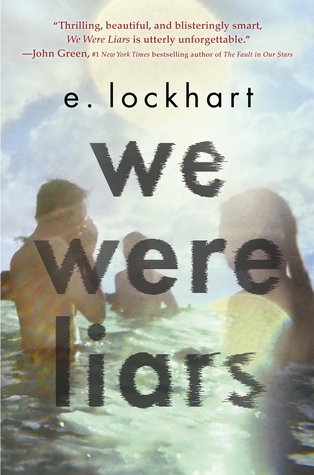
Sentence Imitation with We Were Liars

I listened to the audiobook, and liked the novel so much I had to go and buy it in hardback for my classroom library. The story still haunts me. (I read it soon after I read Jellicoe Road, and that story haunts me, too. These two books make an interesting pairing.)

The following is the beginning of chapter two in We Were Liars. It’s an compelling list of sentences that create the the basics of what we need to know about our protagonist. It will be an interesting passage to use for sentence imitation.

I wonder what my students will say about themselves.


We Were Liars by E. Lockhart P4

My full name is Cadence Sinclair Eastman

I live in Burlington, Vermont, with Mummy and three dogs.

I am nearly eighteen.

I own a well-used library card and not much else, though it is true I live in a grand house full of expensive, useless objects.

I used to be blond, but now my hair is black.

I used to be strong, but now I am weak.

I used to be pretty, but now I look sick.

It is true I suffer migraines since my accident.

It is true I do not suffer fools.

I like a twist of meaning. You see? Suffer migraines. Do not suffer fools. The word means almost the same as it did in the previous sentence, but not quite.

You could say it means endure, but that’s not exactly right.


Growing Readers

Autumn in my New Hampshire school district.

Autumn in my New Hampshire school district.

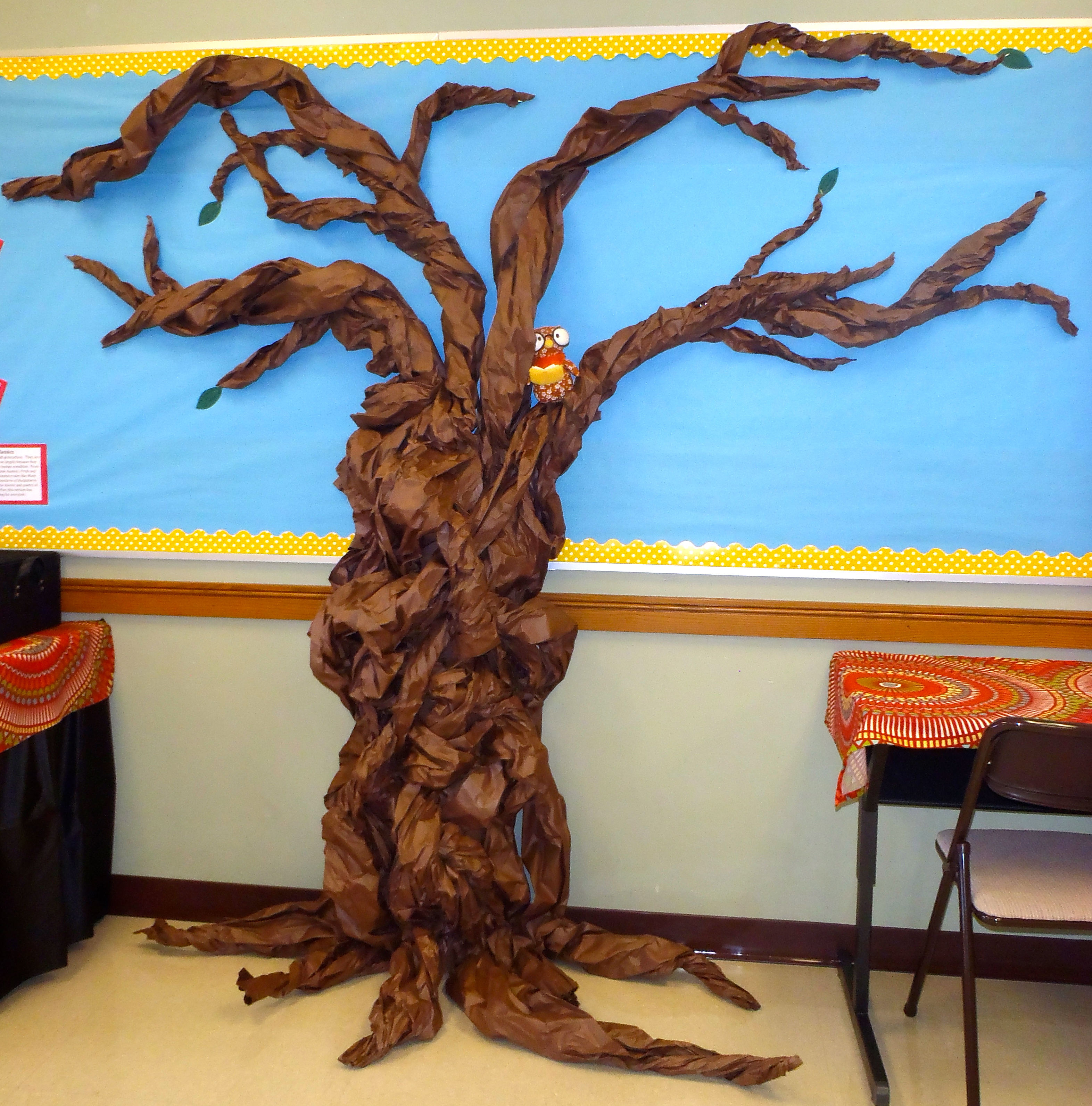
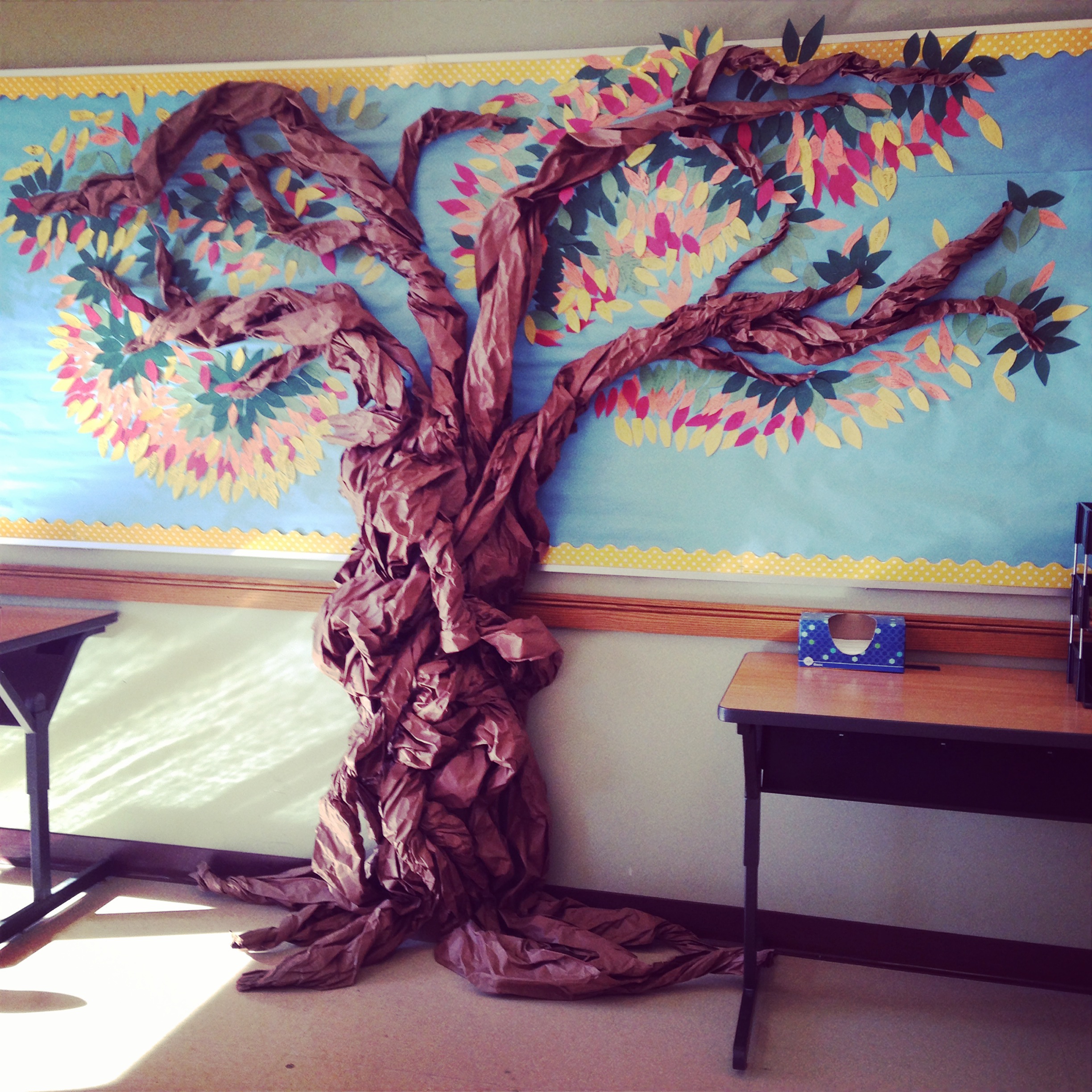
In New England, where I teach, time is measured by temperature. New Englanders cherish Indian summers (the bout of warmth before fall settles in); we sense the bite of autumn, and can smell an oncoming snow. We are a community of seasons, and ultimately these changes dictate the course and development of our year. In turn, to show the development of my classes’ reading progress throughout the year, I drew my inspiration from what New England is famous for—its foliage. To visually represent my classes reading progress within the reading workshop, I developed a reading tree.

The concept of the tree is simple: for every book read, students received a leaf. On the leaf they wrote their initials, the book they read, and the author. They would then staple the leaf to their class’ branch. In turn, students had a visual representation of their individual progress (because they put their initials on the leaves) as well as their class’ progress. They would look to the tree to see what books were the most popular/appeared on the tree most often.

The bare tree before students arrived.

The bare tree before students arrived.

The reading tree exhibits student work and promotes individual success. In addition, it also reinforces teamwork since students look to see how their class is doing as a whole. Furthermore, the tree inspires friendly competition between classes. When I first introduce the tree, I tell students that the class with the most books read wins an ice cream party at the end of the year. This year, due to increased federal health regulations on snacks during the school day, my rules have changed. Instead, students will be able to drop two of their lowest reading scores. Unlike last year, I will tally the total books per class every quarter instead of at the end of the year to determine each quarter’s winner.

Construction for the tree is relatively simple and can be used from year to year.

Materials:

  • One concrete form tube sawed in half. I purchased mine from Home Depot and they sawed it in half for me
  • Two cans of brown spray paint. I used a textured spray paint similar to Rust-oleum’s multicolored textured spray paint, but you can use any type
  • A ream of brown paper—the same type you use to cover bulletin boards
  • A staple gun and staples.
  • Four packs of different colored paper for the leaves.
  • Brown or black duct tape
  • Bulletin board

Process:

  1. Spray paint the concrete form tube with the two cans of brown spray paint. This will serve as your trunk.
  2. Pull large sections of the paper of the ream and begin twisting the paper. As you twist the paper, begin stapling it to the concrete tube using the staple gun. Continue ripping off multiple pieces of paper from the ream, twist and intertwine them as you go along. This will make your trunk look three-dimensional and more realistic. Leave long ends on the bottom. Twist these to a point to create the roots of the tree.
  3. Before you get to the top of the trunk, fashion what looks like a strap. I did this by taking a piece of the brown paper and folding it to make a 2’ X 6” rectangle to wrap around the top of the trunk and affix to the wall. I reinforced the back of the piece of paper with brown duct tape. I then put this strap around the front of the trunk where the bulletin board first meets the concrete tube. I stapled the strap to the tree then the excess ends of the strap to the bulletin board to ensure that the tree wouldn’t fall over once it was complete.
  4. Finally, I continued twisting individual brown pieces of paper and then layering them by twisting multiple pieces together to create a thicker branch. Make sure to create a branch for each of your classes that will be participating.
  5. As you create the larger branches, staple them to the bulletin board. Because the paper is pliable, it is easily to manipulate to look more like a tree. Add smaller branches by twisting additional paper scraps.
  6. Cut out small leaves and store them in a jar or bag to give out to students as they finish their books. I usually have a volunteer cut them out for me so that I have a bulk amount for each quarter.
  7. Get excited to watch your tree (and readers) blossom!
    The reading tree full of leaves at the end of last year.

    The reading tree full of leaves at the end of last year.

While the tree may look complex, it does not take an extraneous amount of time to complete or teach to students. Last year, I allowed my classes to pick which branch they would like to use. Furthermore, I color coded the leaves based on the quarter. Each quarter, I would let my students pick the new leaf color. Green was the first quarter, red was second, orange was third, and yellow was fourth. Just as fall foliage shows the change of seasons in New England, the changing leaves showed my students their development and growth as readers throughout the year.


What is the “soundtrack of your rebellion?”

I liked this book in a lot of ways, and I hated it in others. Maybe because my heart is too soft for all the heartache and suffering of these children. The mother in me couldn’t stand it. Maybe because my Christian heart couldn’t stand the hypocrisy of so many people calling themselves Christian, the parents included. My friend raved about how her students devour this book. It has left me unsettled, but I do think many students will like the emotion this book evokes. It’s just not my kind of emotion.

This is a passage that I think my students will be able to make a connection:

Jesusland by Julia Scheers P159

That day I realized I wasn’t immune to my father’s violence. For years, while my brothers were whipped and I was spared, I thought I had some kind of biological privilege — that my father wouldn’t harm his own genetic material. But in their absence, my father didn’t have anywhere to train the spotlight of his rage on but me.

So when my parents left for another missionary meeting in California and the nurse from my dad’s clinic who was staying with me caught Scott climbing out of my bedroom window one morning, I left home. If my father wanted to choke me over a forgotten milkshake, what would he do to me for losing my virginity?

I moved in with my brother Dan and his three roommates at Purdue and found a part-time job as a busgirl at the Howard Johnson’s Hotel on Highway 52. I biked to work, and to Harrison –an hour’s ride away–if I couldn’t find someone to drive me. I didn’t go to school if I wasn’t in the mood for it, and a couple of teachers threatened to flunk me before passing me with D’s.

Although I was dirt poor–I paid half of Dan’s rent, and frequently resorted to eating off the room service trays I was sent to collect from the hotel hallways–I was happy. I didn’t have to go to church, spent hours watching MTV, and didn’t need permission to do anything. I was free.

I listened to Van Halen’s “Running with the Devil” on my Walkman as I rode through the streets of Lafayette on my bike, rewinding the cassette tape again and again.

It was the soundtrack of my rebellion. That was me, running with the devil. Doing bad things and liking it.


I wonder how students would respond to this question:  What is “the soundtrack of [your] rebellion”?

Mentor Texts Are Everywhere!

This time last year I was amidst a mad dash – a mad dash in seeking out, organizing, asking about, researching, contemplating, and gathering the ‘best of the best’ of mentor texts.  I had just learned what a mentor text was (text that, well, mentors!) and wanted to make sure I had a plethora to kick off the school year.  And, I did.  I had gathered so many I wasn’t even sure when, and in what context, I would be using them.  But, they were ready and I felt confident that I was too.

This year, it’s a bit of a different story.  After implementing the Reading Writing Workshop model in my urban oasis for the first time this past school year, I realized there is no longer a need to be dashing about.  Mentor texts are everywhere!  Literally.  They are in the morning’s newspaper.  They reside in the autobiographies I always find myself engaging in (and of course, loving).  Articles promulgating the Twitter circuit for the purposes of dissecting content and craft.  Classics, more modern, and everything in between became focal points of inquiry and investigation.  Students’ independent reading books shed light on crafty moves authors strategically choose to utilize.  On occasion, an excerpt from professional development texts deserved a public viewing (sometimes with scrutiny, sometimes not).  Nothing is off limits.

So, it is no wonder that as I have been reading a vast array of literature this summer; I have new mentor texts lined up for this coming school year that I am thrilled to explore with my students.  So, grab your Writer’s Notebook and flip to your Next-To-Read list.   I hope you not only fall in love with these pieces, just as I have, but they inspire you to think about what you’re reading and how you’d like to share them with the brilliant and inquisitive minds occupying your learning community.

Making Meaning with Texts: Selected Essays by Louise Rosenblatt was first introduced to me in this summer’s UNH Literacy Institute via Penny Kittle’s Book Love course.  This piece sent a buzz all throughout the campus as we were asked to read it for homework and come prepared to discuss it the next day.  Before the night was through, classmates were chronicling their amazement and joy with Twitter posts such as:  “Reading Louise Rosenblatt for homework and keep saying “Amen, sistah!” in my head. #unhlit14″.  So, you can only imagine how this Reading Theorist evoked an awakening in us all.

IMG_20140630_221534

It was when I came to this paragraph that I realized I had just stumbled upon an incredible mentor text; not only for myself as an educator, but for students as well.  What better way to expose students to the questioning and thinking behind our reading and writing than by sharing the source with them?  These questions are going to guide us through our reading (and writing) journeys this year.  We are going to study these questions, make sense of them, put them into practice; but, we are also going to really delve into why Rosenblatt has chosen these questions to guide us.  See, that’s where exploring craft and an author’s intention becomes our focal point.


battle 1

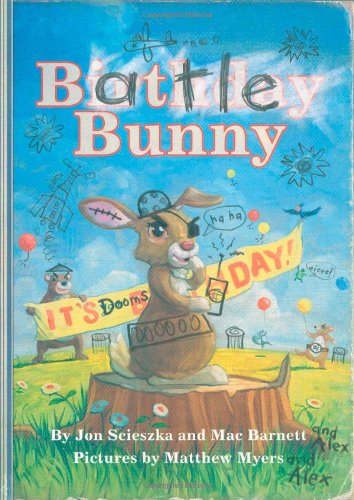
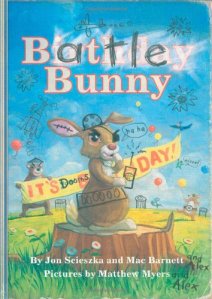
Battle Bunny by Jon Scieszka and Mae Barnett is a clever and witty piece that is sure to get students charged up about editing and revising.  How could it not?  This entire piece chronicles the the narrator’s (yes, the bunny) stylistic and creative writing journey.  The entire story is marked up, crossed out, reworded, and illustrated to show the power of the writing process.  It’s beautiful.

While I educate students ages 16-21, and this piece (I’m sure) was not intended for that audience, I believe this mentor text will be a lighthearted way to quell some of the fears that override their writers’ anxiety.  We know, many students are uncomfortable and afraid to revise, rework, or allow their time-intensive writing pieces to become ‘messy’.  Yet, that’s what produces the most profound writing.

battleI know this may be a risky move in my classroom.  Yet, I’m going to take a chance.  I anticipate shared laughter as we navigate this piece together.  I also plan to explore the bunny’s intentions and make it relevant for our work as writers:  Why did he feel the need to rewrite the story?  Do the illustrations add to the message he is portraying?  Do any of his original thoughts (verse his revisions) feel more powerful to you?  What intentional moves did he make in re-creating this story?  And on and on.

IMG_20140812_121342

Destined to Witness: Growing up Black in Nazi Germany by Hans J. Massaquoi is a piece I have not been without this entire summer.  And, although I’m finished reading it, I find myself flipping through the pictures over and over; it’s that profound. Massaquoi is a mentor of life, overcoming adversity, obtaining the (perceived) impossible, and what it truly means to be human.

Journalist by trade, Massaquoi takes such grace in his every word, sentence, and strategic ‘move’ that’s crafted.  This book encapsulates 443 pages of sheer brilliance and I want students to be exposed to this kind of writing because they too, have the ability to craft such beauty.

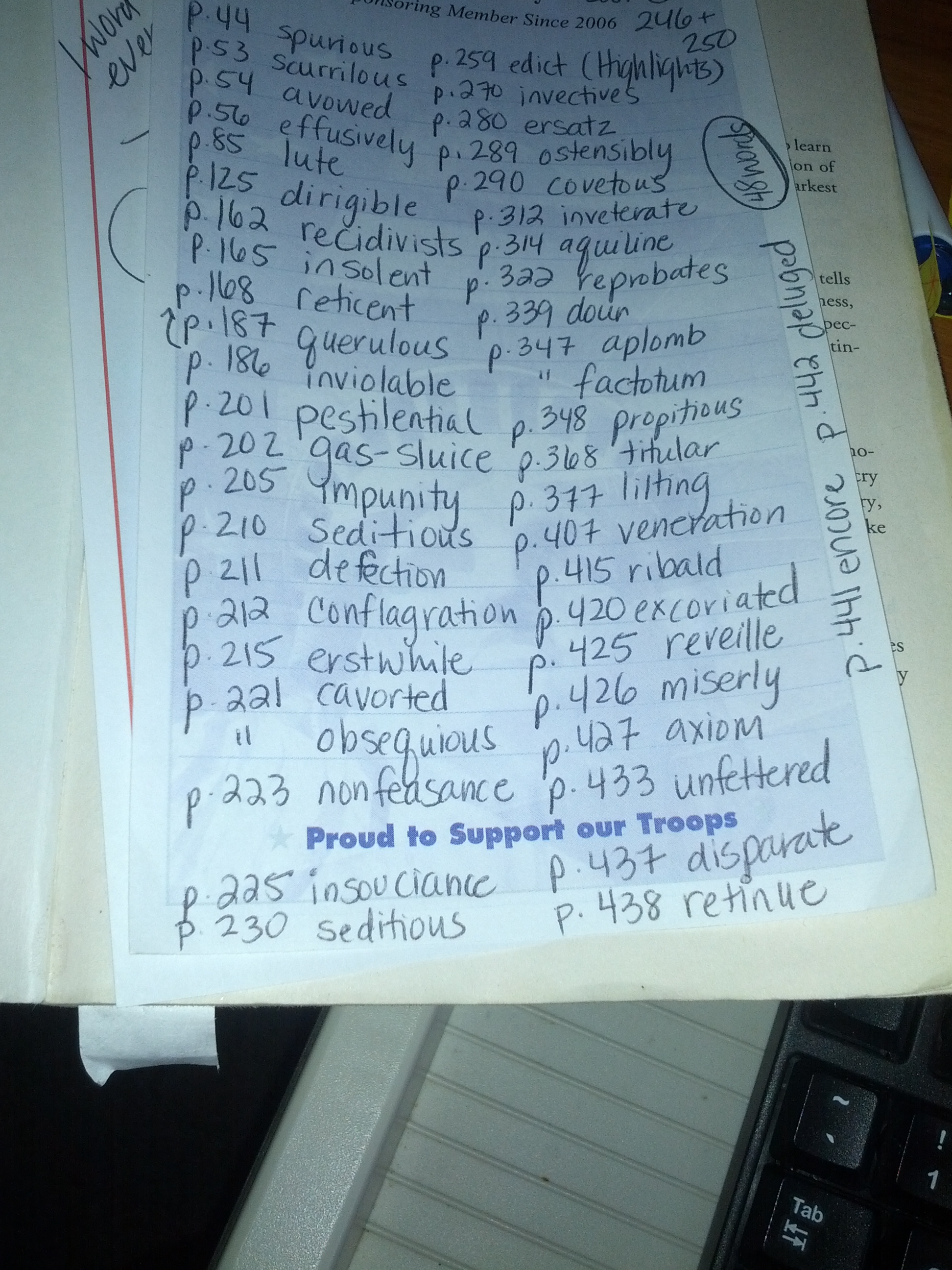
I also want them to catch a glimpse into my journey while reading this piece (note post-its) because I want to share what I found fascinating.  I want to explore some of the word choices (see my unknown word list) IMG_20140812_121513and talk strategy.  I want to use some of these words within my own vernacular and challenge students to do the same.  Most importantly, I want to show them that reading is a process; not one to shy away from.  And yes, sometimes it takes work, but overtime it becomes natural…and wildly fulfilling.
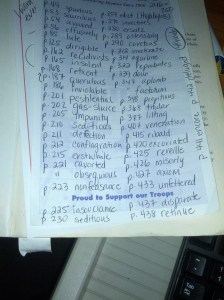
I can’t help but think, above and beyond the work I plan to do with this text, that the historical context won’t propel students in their study of history as well.  World War II and the Holocaust have rarely been depicted from the racial standpoint in which Massaquoi portrays.  This just may be a piece that peaks enough intrigue among students that they too will add it to their Next-To-Read list.  That’s my goal.
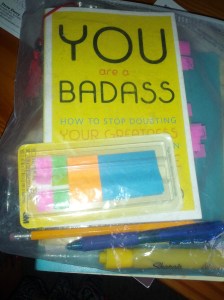


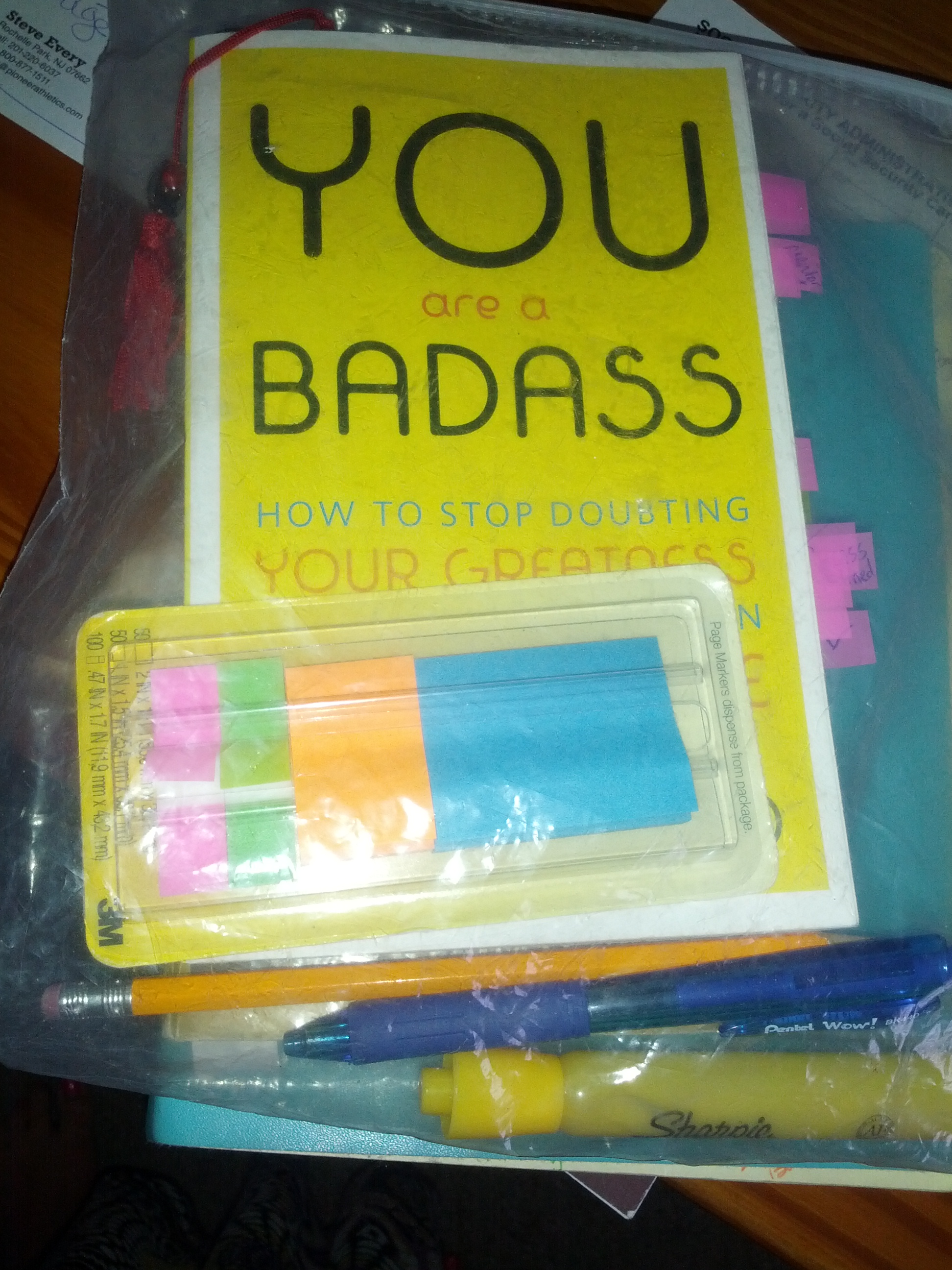
IMG_20140812_124058You are a Baddass: How to Stop Doubting Your Greatness and Start Living an Awesome Life by Jen Sincero has found its way into my Survival Book Kit and I love it!  I’m just past the first thirty pages, yet I have not stopped laughing.  Yes, out loud.

Sincero most definitely has a way with words.  She is edgy and a straight shooter for sure.  Yet, she is able to talk about really serious life-changing ideas in a way that feels ‘light’.  Not your typical self-improvement piece.

I want students to see how infusing humor among the serious can be oh-so-powerful.  Utilizing analogies to talk about the conscious and subconscious mind provides readers visuals…imagery.  A way to process this vitally important information that can shape their lives.  In only the most positive of ways.

I plan to choose the excerpts from this text skillfully.  I want students to have access to the content and the craft…as always.  I do foresee really rich one-on-one reading conferences with those that decide it’s time to make a change in their lives, or at the very least are up for a great laugh, and decide to take this piece on independently.

I hope my four have inspired you.  I really do.  I hope it will do the same for my students.  I encourage you to also share your favorites, here on this site.  As we all gear up for an incredible year to come, and we are swiftly shifting into our ‘going back to school’ mode, this is a wonderful time to start thinking about what we’re reading in a way that lends itself to the idea of being a mentor text.  Articles, books, poetry, graphic novels…all are welcome.


Workshop Report Card

The school year is over, and grades are due.  As we teachers focus on finishing up those last stacks of papers and giving our students final evaluations, it’s also very important for us to reflect on our own practice for the year.  Since this was my first year at a new school, and my first year using the reading and writing workshop model, I find that this year it’s especially essential for me to self-evaluate.  So, what follows is a frank and honest report card for my own teaching, with the hope that you, dear Reader, can learn from my successes and shortcomings.

DSC_0115

Nick B. with his “read” pile

One thing I feel great about this year is my success with independent reading.  My students were avid readers of the huge variety of books I booktalked (with an inordinate amount of energy), and they felt so proud of themselves for their reading achievements.  I do not have any Honors, AP, or advanced level students–I have only general kids who have never really felt “academic” before.  When they stacked up their piles of books in the last few days of class, their smiles were contagious when they realized just how many pages they’d read.  Although it was very successful this year, next year, I will change a few things about my IR program.  I will not conference during reading time–I’ll combine reading and writing conferences to streamline our talk time and not interrupt the sweet silence of reading.  I’m also going to strive to get kids booktalking earlier–this year they didn’t start until 3rd quarter.  Lastly, I’m going to try to get a bigger variety of books for my students to read.  One genre many kids requested was “redneck books,” which absolutely cracked me up at first until I realized just how rarely they saw characters like themselves in their reading.  I’ve got to find more along the lines of Where the Red Fern GrowsTo Kill a Mockingbird, and Rocket Boys.

DSC_0144

Hannah B. with her “read” pile

While I’m glad my students are reading tons independently, I’m less than pleased with how our whole-class reads went.  Last year, some of my favorite teaching moments were discussions about classics like Fahrenheit 451 and A Separate Peace.  My students connected with those books, but this year, they didn’t.  We did a whole-class play that they read silently, a whole-class novella, and then literature circles with a choice of four classics.  Each experience was painful.  The kids were not engaged, and in the unfortunate honesty of adolescence, very vocal about their displeasure.  Next year, I need to remove all of the things they said they hated–deadlines for reading, boring books with irrelevant themes, and reading groups that I picked.  I think I’ll relent and do the play as a read-aloud, allow them to choose reading groups for literature circles, and try to pair classics I think are important with contemporary texts to try to hook their interest.  I will keep the assessments I used, though, and allow them to paint ceiling tiles, make book trailers, and write songs about their books.

DSC_0185

MGPs

In terms of writing, I think our formal, higher-stakes writings were more successful than quickwrites and prompted writings.  Multigenre projects were AMAZING this year (just look at that stack Lizzie is investigating; have you ever seen a pile of papers to grade so colorful and filled with passion!?!?), as were extended narratives, scenes, and letters of argument.  I truly enjoyed reading, responding to, and evaluating every single typed, revised piece my students handed in.  However, writer’s notebooks were slightly more painful.  Toward the end of the year (after those 19 snow days), many students started to get that glazed look in their eyes after only about five minutes of journal writing.  I feel like this was a major failure on my part–last year my students absolutely adored free writes, creative writing prompts, and the like.  This year, I think I was less than cohesive with how my prompts aligned with whatever else we were doing in class.  Next year, I’ll plan them out more carefully and focus on getting them to contribute to an overall theme/minilesson/unit, and work on rebuilding my students’ stamina after interruptions like snow days and breaks to get them writing more fluently and comfortably.

IMG_3318

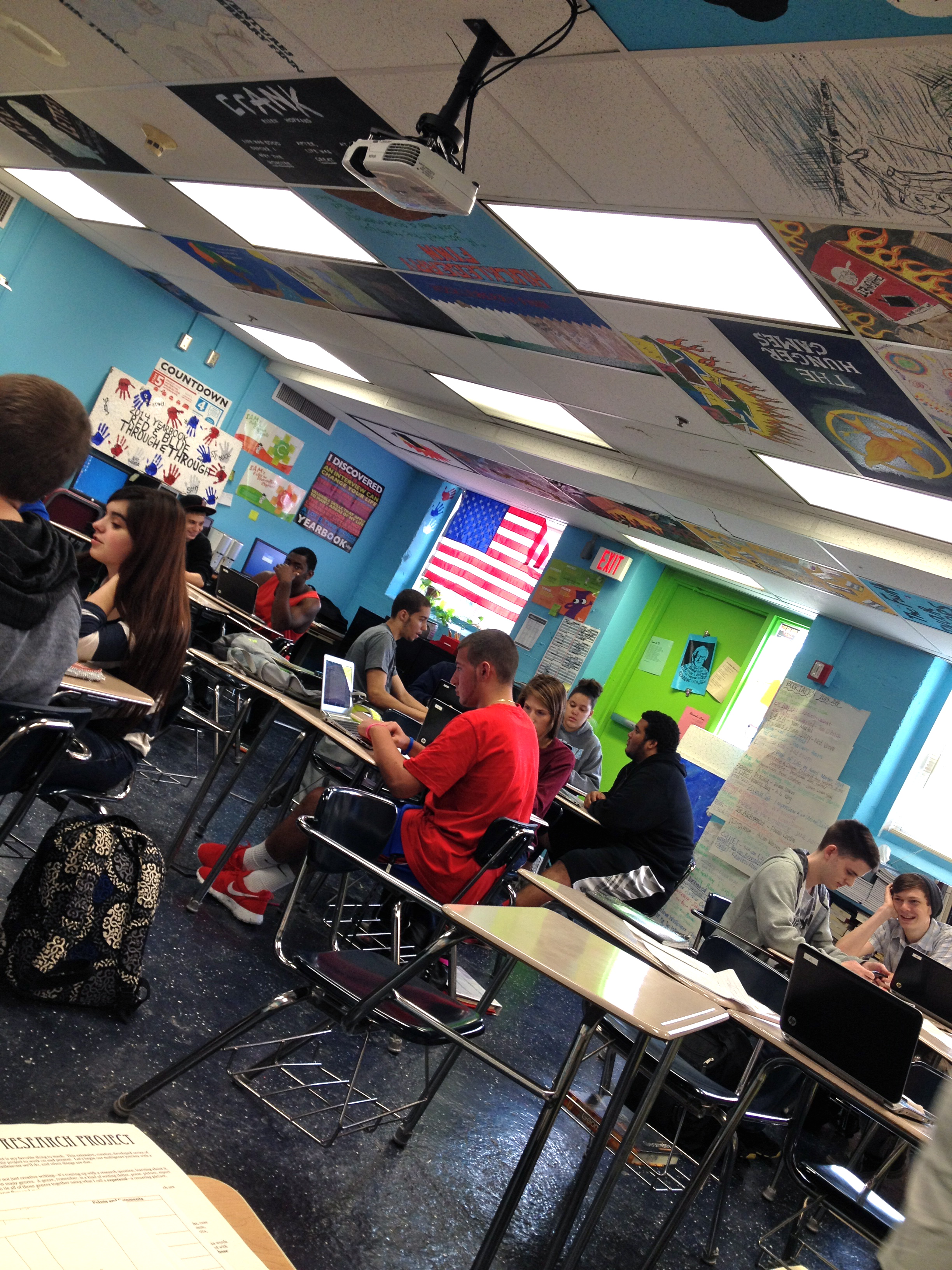
Students write beneath our book-painted ceiling

All of the business of workshop was tough for me–I’ll admit.  Conferring/note-taking during class and writing EVERY assignment beside my students cut out any and all time to take notes/attendance, grade/organize papers, or even run to the bathroom.  I think that without the luxury of a 90-minute plan period every day, I would not have been able to successfully execute this model and keep my sanity.  Because I had that much plan time, I was able to design really cool, research-based assessments, lessons, and activities.  I also had a lot of time to respond thoughtfully to student work, self-reflect, and, most importantly, write grants.  Without those grants, I would not have been able to build my library to its strong state, order the supplies necessary for the no-limits creativity of multigenre, or even provide my students with little necessities like writer’s notebooks or pens and pencils.  I’ll definitely continue to spend all of my free moments at school on grant writing, grading, and other housekeeping items so that I can devote my attention fully to my students during class time.

Overall, I think I would give myself a B as a teacher this year, but the workshop model itself gets an A+.  I feel amazing about how much my students have grown, and I know it’s because of doing the reading and writing workshop.  I am so fortunate to have met Penny Kittle, Amy Rasmussen, Emily Kim, Erika Bogdany, Jackie Catcher, and many others last summer–because they introduced me to this model, I know my students were immensely more successful than they would have been otherwise.  However, I know that there are huge improvements I can, and will, make for next year.  I can’t wait to spend the summer learning with and from those colleagues again, along with some new ones, about how to become a better teacher.  I know that I’ll use what I learn, as well as the free time I’ll use to reflect, to make next year even better.

DSC_0176

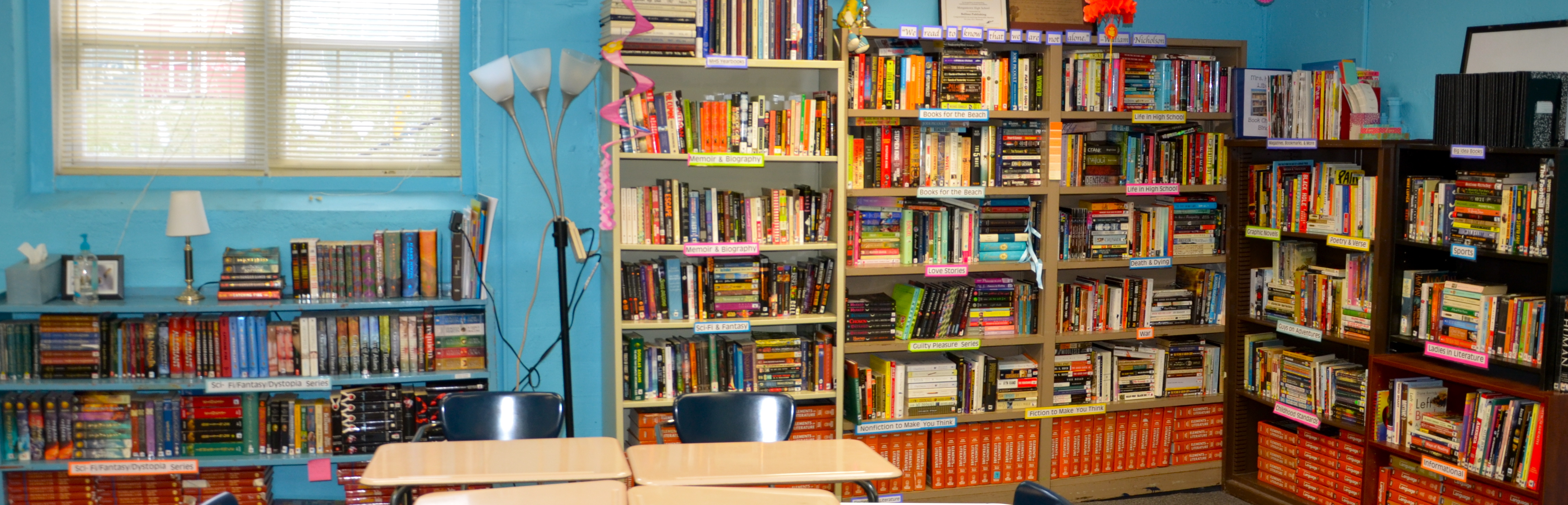
Classroom library at the end of the year

Reel Reading for Real Readers

ReelReading2For about two years now I’ve posted book trailers, author interviews, and a few other online resources (like the amazing Pinterest boards for The Goldfinch and Alice Bliss) as a way to help guide my students into the world of reading.

I’ve found there are two prime ways that students get interested in a book.

1. I have to love it. If I read a short passage and share my experience while reading a certain book, and students see how it made me think or made me feel, without question, at least one student asks immediately to check it out from my classroom library. Usually there’s a waiting list.

2. I have to help them “see” the book. If I show books trailers, even movie trailers, and help students visualize the story line or the characters or the action, even my struggling readers are more likely to at least give a book a try. Sometimes that’s all it takes.

I have had great success in developing readers this year, especially this year. Maybe I finally figured out how my personal passion for books can work to accelerate student interest in books. More likely it’s the time I allowed for my teens to explore the bookshelves, talk to each other about what they are reading, and the time I gave them to read. Every. Day.

My students will evaluate their reading lives next week as the last task I ask of them. They will interview each other and think about our growth as readers. I know that talking about books, showing book trailers, (and investing a lot of time and money in a phenomenal classroom library) is why I am going to smile all the while as I read their evaluations.

Reel Reading post will take a break this summer.

I’d love to hear of your successes with students and reading this year.