Category Archives: Community

Choose to Become a Classroom of Writers

Note:  I enjoy emails with questions about my teaching practice. They help me clarify my thinking, and they often lead to new posts here. This post is Part I of my response to this question:

How does your district handle classes that are very content specific? For example, I teach Honors/Pre-AP American Literature. This is a sophomore (with accelerated freshmen course) that has a pretty traditional literary movement focus, which includes several of the classics (The Scarlet Letter, Huck Finn, Of Mice and Men, The Great Gatsby, The Things They Carried). And while I feel I have made great strides over the years in terms of student driven lessons, focus on discussion and annotation, skill vs. content based assessment, the one area I continue to struggle with as I look to workshop is how to facilitate the choice. 

Do you have a similar class in your district? Are any of these texts still used as whole class works? As options within specific unit studies? Or is the year open to student choice throughout? 

First of all, while my district ELA coordinator would love for all teachers to move to readers/writers workshop, and he has introduced that idea through various means, many teachers are not there yet and some are determined not to budge. Like many other issues related to change in schools, they nod their heads and keep doing what they’ve always done. We know that sometimes this is best for kids (I’ve done the nodding and door closing, too), and sometimes it is not, which is the case when it comes to continuing to make all the choices in English classes at the expense of student readers.

My own department manager reminds me often that we have to take our movement one step at a time. This is my first year on this campus, and while most everyone is making positive and impacting change. It’s slow, and I get antsy. I’ve been doing readers/writers workshop with my students for seven years now, and I still work on refining plans, lessons, mentor text selections, mini-lessons, and more. Truly, workshop is constant motion, which I am sure, if you practice it, you already know.

Recently, I was asked, “What is the one step that will give us the most movement as we continue this transition?” I paused for a moment, and then the answer focused clearly:

Become classrooms of writers.

Many high school English classes are literature laden. All the lessons revolve around specific texts, mostly whole class novels, and sometimes teachers spend five, six or nine weeks reading and discussing that one text. Sure, they might include other instructional practices and activities, but the most common mode of writing taught is analytical (the least likely of all the modes of writing students will use in their lives after English class. Teachers, when was the last time you wrote an analytical essay for your job?).

When we move to becoming classrooms of writers, teachers realize that if we want to practice other modes, read mentor texts, model the writing process, lead revision workshops, publish our best work, and truly live the lives of writers, we simply do not have time to devote class after class time to the study of one particular book.

A mentor once told me:  “You choose to do this, which means you choose not to do that.”Faulkner on reading

Say I choose to create a unit where my students write narratives (I always start the year with narrative because it is builds community, and contributes so much weight to other modes of writing. See tom Newkirk’s book Minds Made for Stories.) I prepare by gathering a variety of narrative texts of various lengths. I can use passages from an assortment of books in my classroom library, or I can pull passages from popular short stories, or classic novels. [See note on this at the end.]

Some passages I will use to teach leads. Others I will use to teach how authors deal with time. I may pull out specific parts and teach effective use of dialogue or character development, setting, whatever. [Gathering a variety of texts in different genres around the same theme is another way to approach the same type of reading then writing task I describe here. I’ll write about this soon.]

First, we read like readers. We practice comprehension strategies and discuss the meaning of the text.

Next, we read like writers. We deconstruct the text and discuss how the author makes that meaning.

In my AP class, we almost always talk about these texts via a Harkness discussion. Students do the thinking and speaking after I’ve done mini-lessons and modeled answering focusing questions. I’ve learned to trust that students will discover the elements and devices that I hope they will. Sometimes I have to prod, but they rarely never get there.

The skill I need to teach determines the reading passages I select. That’s an opposite approach to how I used to plan when my teaching was driven by various pieces of literature.

And now, I have time to talk about books, allow students to select books they’d like to read, and confer with students about their reading. They read tons more than they ever did before, and they become much more effective writers. Win/Win.
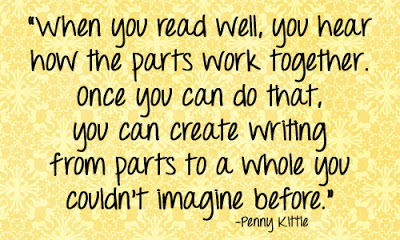
cool quote memes from our friends at http://www.TeachMentorTexts.com

Watch for Part II of my response soon.
 ©Amy Rasmussen, 2011 – 2015

Yes, You Can Get Teens Reading: One Senior High Campus Proves It

My department manager is wise, and I admire her leadership skills. She often asks, “What is your temperature?” to see how I am adjusting, coping, feeling, managing, dealing, doing with all that I must at my new school. Thankfully, although it’s my first year here, it rarely feels new anymore.

I like that Rhonda asks me questions about my readers and writers workshop classroom. She asks me to participate in discussions and professional development sessions. She validates me as an individual and as an teacher. I trust her, and I know she trusts me.

Trust is the greatest gift in the life of an educator.

We are an 11th and 12th grade campus. We are moving to a workshop pedagogy. Our district has changed the model of intervention by bringing in local National Writing Project consultants to write curriculum and train teachers. (I write about that in part in this post.) The ELA coordinator also hosted trainings with Penny Kittle and Donalyn Miller, two of the brightest minds in workshop, last summer. Every time we meet as an English team, we talk about some aspect of reading, writing, and workshop in our classrooms.

Suggesting that we might like The Color of Law by a homegrown TX author

Suggesting that we might like The Color of Law by a homegrown TX author

Teachers are trusted to get their students reading. At LHS in every English class, visitors see students reading during the first 15 minutes of the period. Teachers have had training on giving book talks and conducting reading conferences, and we’ve started building classroom libraries.

I got an email message today: “What’s the title of that book, Story of Angel, or something. My copy has gone missing.”

The Book of Life by Angel,” I replied. It’s a hot title in my classroom, too. I have to replace it every year.

Our students are reading, and behaviors are changing for the better.

I heard one teacher say to another, “I like how reading at the beginning of class helps my students calm down. We get started with ease because they know to come in and get their books out.”

To build a culture of readers, we must trust that students will read when we give them time to so. We must model what that looks like.

Sharing a love for the work of R. A. Salvatore

Sharing a love for the work of R. A. Salvatore

We must trust our teachers to be readers themselves. How can we talk about books to kids if we are not reading them? Children of all ages revere authenticity.

Each week when we meet in our department meeting, a teacher gives a book talk. They share a bit of the passion they have for an author or a book.

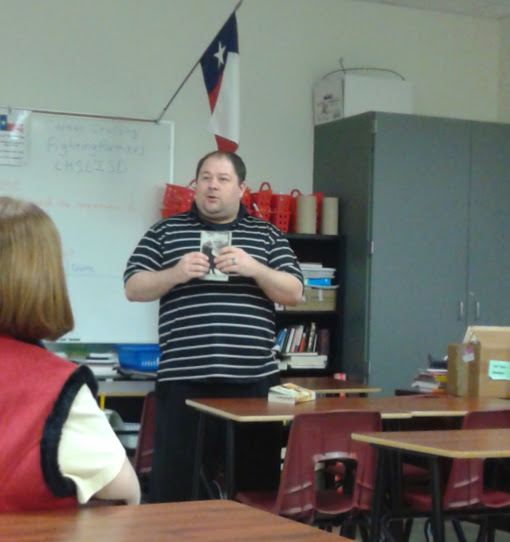
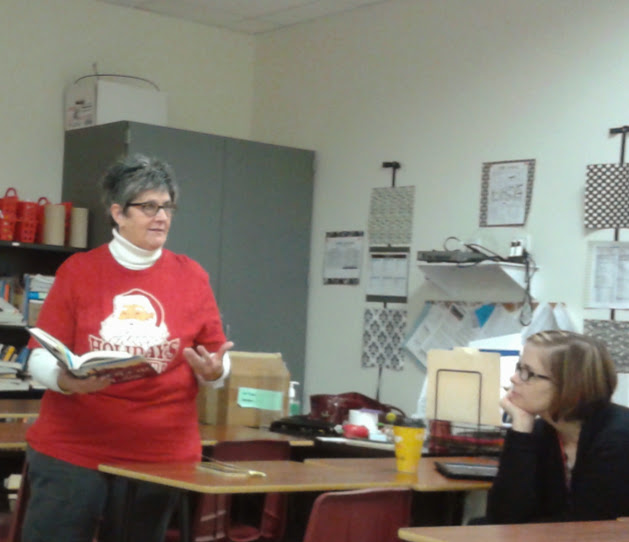
Jeremy shared his love of fantasy, and Jayne shared a bit of Dickens in her fun fake British accent then talked about a new book she enjoyed by a Texas author. Karen read from The Yellow Birds and The Things They Carried and talked about how they made a nice pairing, and, most recently, the baseball coach Mike talked about a book he loved. (I wish I could remember what it was, but I forgot to write it down.)

Administrators must trust that when visiting classrooms they will, and want, to see rooms of students silently reading. What better activity in a class designed to improve literacy skills than to see all students engaged in the practice of it?

Students come to trust that reading and books provide value to their lives because the adults in which they trust value it, talk about it, model it, and, if necessary, enforce it.

Too many teenagers claim to be non-readers. Ask them, if you haven’t. They will tell you truly.

They will also tell you when they experience a shift in that thinking. They are surprised — and grateful.

an excerpt from my student Joseph’s last independent-reading evaluation

©Amy Rasmussen, 2011 – 2015

Finding the Right Book for Growth in AP English

Several tiles similar to this one dot the ceiling in my classroom.

Sometimes I just want to say: “You are wrong.”

Of course, I try to be a little more diplomatic than that, but really, many critics of balanced literacy are that — wrong.

The argument I hear the most against allowing students to choose which books to read in AP English is that they will never choose to read anything other than Young Adult fiction and graphic novels. To that I want to say “So?” (For a great list of graphic novel titles, see Donalyn’ post Comic Book Girl.)

What I do tell those who assert this nonsensical claim is “I wish you could visit my classroom and talk with my students.”  Here’s what they would see:

Everyone in the class is reading. Everyone except Rebecca. She stands in front of the book shelf I’ve labeled “Literature at Its Finest.” Between bookends on the top are paperback classics; authors ranging from Ray Bradbury to H.G. Wells. The first shelf is stacked with anthologies from my university studies in literature: Homer, Sophocles, Chaucer, Milton –the Complete Works, and more texts from the canon: The A Tale of Two Cities, Adventures of Huckleberry Finn, The Awakening, To Kill a Mockingbird. And many I have never read: 1984, Lord of the Flies, Heart of Darkness, A Farewell to Arms, Brave New World.

I walk over and ask, “Whatcha looking for?”

“I want to read a romance,” she says.

“Why are you looking on this shelf?”

“I need a challenging book.”

“So you want a romance that’s a challenge?” I say.

“Yes, they make those, right?” she answers, and we both laugh.

I pull Pride and Prejudice, Jane Eyre, and Wuthering Heights. I hand Rebecca each book as I talk a bit about them. Why I love Jane Austen and a little about the Regency Era, a quick bio of the Bronte sisters, and a tad about Gothic literature.

She asks, “Which should I read?”

I answer, “You decide. Read the back covers and the first few pages of each. See which voice you like best, and go from there.”

A few minutes later, I see that she has the clipboard where students sign books out from our class library. Rebecca has decided to read Pride and Prejudice.

A week passes. I meet with Rebecca for a conference. She tells me that this book is hard. She has to re-read parts of it for it to make sense. We talk about her strategies for comprehension. She says she is not giving up.

Two weeks pass. I ask students to share out with the class what they are reading. Rebecca says P & P and smiles as she declares that she’s finally figured it out. “I get it now, and I am getting better at reading it.” When I get a chance, I walk over to her desk and ask her what she means.

“The characters, everything,” she says. “It was the language that was really throwing me, but I understand the story now. I like Jane — her attitudes and opinions.” I make a note to follow up on this conversation.

Critics may say: So, she’s reading Pride and Prejudice. She won’t understand the nuances, the humor, the satirical elements, or even the social commentary without guiding questions and class discussions to help her.

They are right. Rebecca probably won’t get all that. But she and I are fine with it.

We have learned how to look at language and deconstruct texts, analyzing as we go with short texts we read and study in class. If I asked Rebecca to select a page and analyze some aspect of Austen’s language, I know that she could do it. She is a a critical thinker and a competent writer.

And she has challenged herself into a beautifully written complex piece of literature. And she likes it.

We read, discuss, and work with other titles in book clubs to understand and be able to analyze the scope of a novel. (I facilitated #APLangchat on the topic of book clubs. Here’s the planning for that and the Storify. And I wrote about little about my class book clubs here and here.)

I want students to love literature. I want them to become readers. The best way I know how to accomplish both is to let them choose the books they read.

I surround my students with rich literature. I talk about books daily. They talk with one another about what they are reading regularly. We build a community where they know my expectations for them as readers, and they evaluate themselves — setting, reviewing, and adjusting expectations for their own reading lives often.

When we model the life of a reader, students will follow our lead. Like Chris who chose this National Book Award Finalist.

We are well into the school year, and more and more students have moved into more complex books, and they are thinking about their reading choices.

Chris:  Currently reading Station Eleven. Chris asked me recently to recommend a book. He said, “I’ve liked everything you suggested so far this year.” I asked him what he liked best, and he said The Curious Incident in the Nighttime, which was part of our first book club. Somehow the conversation turned to my book club with some colleagues at my last school. I showed him my copy of Station Eleven with the marked and dogeared pages. He asked to borrow it, and we’ve since talked about the multiple story lines and how the author eventually ties them all together. He gives me updates as he’s making sense of this story that is unlike anything he’s read in the past.

Jasmine:  Currently reading Let the Great World Spin. Jasmine asked me for recommendations for books with multiple story lines. She’d read Extremely Loud and Incredibly Close in our first book club and A Thousand Splendid Suns in our second. I mentioned Colum McCann’s Pulitzer Prize winner, and she noted the ceiling tile that decorates our classroom. Jasmine reads about 120 pages a week and told me in her last conference: “In the next two weeks, I plan to up that number to 200. I also want to find more books with intertwining story lines so I can be motivated to read each week.” Station Eleven is already on her To Be Read Next list.

When we talk about rich literature and use passages to teach skills, some students will choose to read the whole text.

Doreen: Currently reading The Goldfinch. Doreen is quiet, studious, sometimes even somber. I used a passage from The Goldfinch when I introduced rhetorical analysis. I wrote about it in the post Starting with the Ending. My copy sat in the front of the room under a potted plant until one day it was gone. Doreen had swiped it, and is currently about half way through. When we did a quick whip around the room to share out and rate our current reads today, she rated it a 9 out of 10. I’ll talk to her soon about why Donna Tartt doesn’t get a ten for her Pulitzer Prize winner.

Other students are reading just as complex and important books:  Nawoon/The Thirteenth Tale, Neydy/The Great Gatsby, Lillian/The Scarlet Letter, Pedro/Dracula.

Do I have other students reading YA fiction? Yes, and that is okay because they are reading.

Ivan finished Winger by Andrew Smith last week. He told me, holding out the book with tender care:  “This is the first time I have made a connection with a book. I get what you mean about literature now.” He is in an 11th grade AP English class!

Last summer at UNH Literacy Institute, I wrote a piece that references the reading theory of Louise Rosenblatt extensively. Below is an excerpt.

I believe this with all my heart:

What does it mean to experience literature? First, we must define “literature.” A text can only be considered such if the reader “responds to it in terms of sense and emotion and thought (106). If a book is “to be considered “literature” for any students, it must be experienced” by them (94), and it requires “a particular kind of reading process” (89).

All too often teachers of English and those who set the “critical theories dominating the college and university teaching of literature…” simply intensi[fy] the tendency to hurry the student away from any personal aesthetic experience” of it (102). We see this as teachers select the books students will read, usually in whole class settings, assigning reading homework with the expectation that students will read primarily complex literature outside of the classroom. These teachers often give reading quizzes as an assessment of their students’ reading lives, and make the only experience a non-reader has with the text punitive. This is detrimental to the growth of the individual. This is contrary to “our main responsibility” as the educator:  “to help the student to find the right book for growth” (67).

How are you, the expert in the room, helping students find the right book for growth?


©Amy Rasmussen, 2011 – 2015

Is Everyone Hanging Out Without Me? (And Other Concerns) by Mindy Kaling

10335308I work north of Boston in that pocket of New England that keeps getting blasted with snow this season. I know I shouldn’t complain—I live in New Hampshire after all—but the snow banks have far surpassed my height, making me even more stir crazy than usual. Even now as I write, snow is lightly falling outside my window. While I will readily admit that my state looks breathtaking blanketed in white, she is getting a bit narcissistic at this point. So for those of you who need a good laugh during these dark days of winter, I highly suggest Mindy Kaling’s Is Everyone Hanging Out Without Me? (And Other Concerns).

I rarely watched The Office and I’ve seen one episode of The Mindy Project, but for some reason I was drawn to this clever and quirky actress. She is relatable and down-to-earth, a self-made woman who details her rise to fame in this book. What I love most about her book though is her identification as a writer. In fact, one chapter called “How I Write,” which I share with students, is entirely devoted to her process. She writes:

I’ve found my productive-writing-to-screwing-around ratio to be one to seven. So, for every eight-hour day of writing, there is only one good productive hour of work being done. The other seven hours are preparing for writing: pacing around the house, collapsing cardboard boxes for recycling, reading the DVD extras pamphlet from the BBC Pride & Prejudice, getting snacks lined up for writing, and YouTubing toddlers who learned the “Single Ladies” dance. I know. Isn’t that horrible? (Kaling 143).

While that doesn’t mirror my own writing process exactly and it certainly isn’t a method to aspire to, I know there are days when I sit refreshing Pinterest for inspiration. I imagine our students can relate as well.

In the end, readers will have a good chuckle given Kaling’s eclectic chapters that bounce around to different topics. Her energy and humor are just enough to brighten even the snowiest of days.

Sitting on the Hogwarts Express

“You must be a first year,” he asked the girl sitting across from me. Her brown bangs framed her eyesphoto 3-7 as she looked up at him, holding her mother’s hand. Her mother chuckled in the seat beside her. “And you two must be fourth or fifth years?” he continued, miming in the direction of my sister and I. I blushed at the thought of this man implying we were around 15 years old, the same age as my actual students. But I let him indulge.

“We are alumni, friends of Dumbledore.” And for a moment, I could see it—his hands perched on the head of his cane as he motioned towards his wife who sat wedged into the corner seat beside him. She nodded in affirmation, giggling at her husband’s show. I was on the train to Hogwarts at Universal Studios, a mecca for Harry Potter nerds like myself who never grew tired of the magic, the story, the wonder.

This was the first time that I truly gave into the commercialism of my favorite book. I had grown up alongside Harry; I was the same age as him when the series began and each new release marked my own maturation as well. Yet I was a selfish reader. I wanted the world between the book covers for myself. While some children indulged in sharing books with their friends, I loved the escapism of reading. Books made me feel special, unique, like somehow the author’s imagination was for me alone. I so desperately loved these worlds that I had come to indulge in that I refused to believe others could feel or even revel in the same universe I had come to know and appreciate.

As I entered the Wizarding World of Harry Potter, I let go of the resentment and anger I had as a child—the feeling that somehow the world of magic had been poisoned. For the first time, the books my mind had lived in came alive around mphoto 1-11e. Throngs of readers surrounded me as I walked the streets of Diagon Alley, weaving my way through shops I had only dreamt of as a child. Flowing black robes enveloped children waving their wands and watching scenes awaken before their eyes as parents looked on sipping foamy pints of butterbeer. A stone dragon teetered atop Gringott’s bank, breathing fire towards patrons below.

Had I known when I was eleven that I would become an English teacher who presses students for their thoughts and opinions on what they’re reading, I would have to sought to share my relationship with books instead of internalizing it. Sitting on the Hogwarts Express that day with four generations of readers proved the unifying power of literature as I chatted with complete strangers from across the country about the intricacies of the series. We had each discovered these stories at different times in our lives and we had each read ourselves into the books, deriving different meanings from our separate readings.

I see this power every day in the turnover of my classroom library and the popularity of certain books. While the stories stay the same from year to year, my students do not. They ride the climaxes and lulls of common stories as groups, suggesting certain books to each other based on their own personal experiences. They laugh aloud in the middle of reading time and they cry quietly curled around their books in their bedrooms. They engage in the terror of The Maze Runner series then quietly lend the books to their friends only to excitedly discuss their individual experiences during down time. Books elicit reactions; they cause people to feel, and because of that, students pass on their suggestions to friends. The transformative power of common stories never ceases to amaze me—how such books can help define the path of one individual or bring together multiple. I spent years of my childhood believing that sharing my passion somehow devalued it, but I have learned that the uniqueness of reading lies in the fact that no two people ever read the same book. In the end, we can hold our individual experiences close, while still sharing the magic of common worlds.

6 Ways to Spend Your Snow Day

snow-day2So it’s your fifth snow day this winter…or your fifteenth.  Either way, you’ve done all of your spring cleaning, you can’t grade or lesson plan because you haven’t seen students for a week, and you’ve completely emptied your queues on Netflix and Hulu.  What’s a teacher to do?

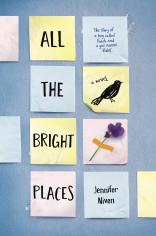
1. Read a good book.  If you’re anything like the hundreds of English teachers I know, you love reading.  Use the time you’ve been cooped up to read something you’ve been wanting to but just haven’t had the time to start.  I haven’t stopped hearing about Jennifer Niven’s All the Bright Places, Atul Gawande’s Being Mortal, and Anthony Doerr’s All the Light We Cannot SeeI’ll think I’ll try to tackle the last two this week.

2. Write around a poem.  Penny Kittle shared once that she likes to tape poems into her notebook and write around them–it’s one way to move toward doing your own beautiful writing, she advised.  So, I signed up to receive the Poetry Foundation‘s daily poem via email, and when I read one I love, I print it and tape it into my writer’s notebook.  I’m amazed at the nuggets of written wisdom I arrive at after responding freely to a poem in writing.

3. Read a teaching book.  I’ve been wanting to finish Tom Romano’s Zigzag and Donalyn Miller’s Reading in the Wild for quite some time now, but with the day-to-day craze of the school year, it seems like the only time I find to read teaching books is over the summer.  This is the time of year, though, that I often need a little lift in my teaching spirit, so it’s always rewarding to explore some new thoughts from some of my old favorites.  Since I’m in the middle of a nonfiction book club and writing unit right now, I think I’ll settle down today with Georgia Heard’s Finding the Heart of Nonfiction.

4. Check out that dreaded State Test.  Dana Murphy at Two Writing Teachers reminded me that when our students are accustomed to writing in a choice-based, unit-driven workshop, they are not accustomed to writing to a prompt, and that while standardized tests do leave a bitter taste in our mouths, they are a reality our students must face.  If we want them to feel confident as writers in all environments, we must prepare them for all writing situations–especially the two or three standardized writing tests they may face each year.  Here in West Virginia, we’ve elected to go with SmarterBalanced as our Common Core-aligned assessment.  Today I’d like to spend some time looking at the writing portion of that test and brainstorming some lessons to help my students feel confident writing to those prompts.

5. Catch up with your tweeps. Twitter is a bottomless pit (seriously; you can get lost in it) of resources, ideas, and inspiration for teachers.  I could spend hours perusing the archives of #engchat, #titletalk, and #litlead, just to name a few.  I’d also love to look at the archives of some chats I missed recently–#mindsmadeforstories, for one.

6. Read incredible teacher blogs. I could browse the virtual thoughts of my colleagues forever!  We have so many brilliant and inspirational people in our profession, from the genius team at Nerdy Book Club to the marvelous ladies at Moving Writers; the steady wisdom of What’s Not Wrong to the joyful inspiration of the dirigible plum.  I’ve also been loving the thoughts of Hunting EnglishThe Reading Zone, and countless more…really.  I could never list all the great teacher blogs I’ve stumbled upon.  I feel so grateful to the many, many teacher-writers who have helped me fill my writer’s notebook with thoughts and ideas on dreary snow days like these.

What are your favorite ways to relieve the restlessness of several snow days?  Share in the comments!

All the Bright Places by Jennifer Niven

All-the-Bright-Places-jkt“The thing great thing about this life of ours is that you can be somebody different to everybody.”

All the Bright Places has been all over my GoodReads feed, and once I finished it (in a day), I knew why.  This book has all the hallmarks of great YA fiction–quirky characters,  teenage struggles, forays into love–all while taking on tough issues like suicide, domestic violence, mental illness, sudden death, and bullying.

“Sometimes there’s beauty in the tough words–it’s all in how you read them.”

What I loved best about this book was the way it surprised me.  While many YA books conclude happily, Jennifer Niven didn’t shy away from the brutal truth that is reality.  Her writing sang with beautiful prose, while her characters were well developed and the plot remained suspenseful yet layered.  I knew as soon as I finished reading that this would become a student favorite immediately, and sure enough, four kids have read it this week.

“The thing I realize is, it’s not what you take, it’s what you give.”

There is much to learn from All the Bright Places, about empathy and understanding and especially the reality of mental illness, depression, and suicide in this country.  In addition to its plot, the writing acts as its own teacher of craft.  Add this book to your to-read shelf, your classroom library’s shelves, and your to-booktalk list, and get ready to weep.

Teach Readers, Not Books: A Case for Choice Reading in ALL Classes

Recently, in a pretty typical high school hallway, I overheard two very different conversations about books.

Conversation One:
“Hey, did you finish that book?”
“Oh my gosh, yes, I did, and I couldn’t believe the ending!!”
“I know! I cried so hard! I got makeup all over the pages!”
“Me too! But it was such a good ending, right?”
“Yeah. It had to end that way.”

Conversation Two:
“Hey, did you finish that book?”
“Yeah, I did.”
“What happened? I think we have a quiz today.”
“Well, the main character ended up…”

The first conversation was one between real readers. The second was a conversation between students just trying to pass their English class. It’s obvious that the kids who are already readers are the kids in the first conversation, while the kids who are being besieged by negative reading experiences are the kids in the second.

The day I heard those conversations, someone tweeted Natasha Vargas-Cooper’s “Why We Should Stop Teaching Novels to High School Students.”  She writes powerfully about how some story mediums gave her “large and instant rewards for spending time with them,” but that reading novels and completing “deadening take-home reading comprehension questions” assigned to her did not.  I recognized myself in this post, as I had much the same experience.  It wasn’t until much later in my life that I began to read the classics, which I’d merely SparkNoted in high school.  This is me we’re talking about, who snatched the Twitter handle @litreader in 2008.  I, the kid who decided in 6th grade to read the entire public library, starting with author A and ending at Z, didn’t read what was assigned to me…simply because it had been assigned.

And then came Amy’s courageous and oh-so-right post yesterday about choice in AP and Honors level English classes.  I wish she’d written that post 12 years ago, when I was being beaten over the head with The Scarlet Letter.  Or 7 years ago, when I somehow, despite my own negative experiences, first began teaching and jumped into whole-class novels with gusto.  Thankfully, I met Amy a few years after I’d realized that that wasn’t the best way to get kids to love reading, and she’s helped me strengthen my teaching exponentially since then.  I’ve realized that it’s not the books that make kids love reading…it’s the experiences kids have with books, and it’s up to us to create conditions that foster the most positive of reading experiences.

When we value choice and focus our curriculum on authenticity and our students’ voices, we cultivate practices of lifelong reading. When we assign whole-class novels and base most of our coursework around them, we show students that we value books, not the act of reading itself.  Further, this practice values the teacher way too much–while in Penny Kittle’s words the teacher should be the best reader in the room, the teacher certainly shouldn’t be the only reader in the room.  Our students have excellent minds capable of making choices that will challenge their reading and thinking abilities.  We shouldn’t make all of those choices for them.

While you may believe that it is important for every student to be able to recognize a quote by Shakespeare at a cocktail party, you also hopefully believe in the value and power of reading. The only way to get our students to read for the rest of their lives–and become informed citizens and thinkers as a result–is to look into our classrooms and see our students as readers hungry for knowledge and wisdom, and not students who just need to know about certain books. The second doesn’t matter, at all. It’s not why we got into this profession, I hope–or at least it’s not why I got into this profession. If we want to create readers who will think and hope and dream and change the world, we have to teach those readers, not books.

A student-centered classroom that places choice and authenticity at its center is the answer.  The reading-writing workshop is a really effective format for that kind of classroom, and having it in place these last three or four years has made a world of difference in how my students and I view our time together.  Teaching has become much less a job for me, and much more a pleasurable way to pass my time.  I love talking to students about books, using my own expertise to help scaffold them up a reading ladder of text complexity.  I love reading their amazingly diverse writing and getting wonderful, authentic ideas for activities from them in writing conferences.  I love the sense of pride a kid shines with at the end of the year when he has defied an IEP and finished 18 books…but it breaks my heart when he fails senior English after a year of multiple-choice tests over Shakespeare.

And so, in the words of Natasha Vargas-Cooper, “To hell with Gatsby’s green light!”  Let them ponder it on their own time (they will; I promise you…I did).  Let’s teach readers…not books.

The Classroom and The Cell

ClassroomCell-cover.jpg (320×512)

Yes, the title is as provocative as the text found inside the 177 pages crafted as a conversation between both activists; one serving a life sentence in Waynesburg, PA and the other an Ivy League professor sharing his knowledge with the educational elite.

If the title alone does not grab your attention, or at the very least, shed light on the dark realities of the school to prison pipeline; then find comfort in knowing that asha bandele’s fingerprints have touched this piece as well – as editor.

Abu-Jamal and Lamont Hill take on the discourse so many African Americans engage in, yet so few human beings have any insight unto – which instills a blindness to the indifference that still persists. Each chapter is dedicated to components of the African American experience that are real, raw, and in dire need of attention.

In bringing necessary awareness to the issues, concerns, and realities found within this piece, take a look at Marc Lamont Hill on the creation of The Classroom and The Cell.

Here’s an excerpt found within the first few pages: (Please note, due to the nature of the content, some chosen words are a bit colorful, yet essential.)

Mumia: When you talk about your lack of freedom, you’re talking about the golden chains that are on you.  They’re pretty as a [expletive], but they’re still chains.  I think it’s interesting that our people, of all the people in the world, chose chains as a fashion accessory.

Marc: Crazy right?  And we call our cars “whips!”

Mumia:  Damn! Whips and chains.  That ain’t a Freudian slip.  Ain’t no such thing!  We’re not even free in our language.  You dig what I’m saying?

This excerpt sets the tone for the entire piece; it’s no wonder that I have felt compelled and propelled to research both men in greater detail.  This is also the excerpt I read aloud to students when they ask what I’m reading.  And every time, without skipping a beat, students are viscerally moved by it.  They ask to sign it out; immediately.  Some students are so enamored by the text, craft, and connection that they find an urge to read other books also authored by these men.  Innately what happens next is stunning – author studies are being explored and students’ identities are being validated.

What titles do you and your students collectively enjoy that provide opportunities  for understanding cultural ideologies while fostering honest dialogue?

Beyond These Four Walls

Believe it or not, there is an actual term called ‘seat time’.  Yes – states, the national government, school boards, and the rest of ’em, refer to the amount of time a student needs to be learning as “the time they spend in their seats.”  So, we create spaces where students feel safe, comfortable, and willing to risk as we maneuver around this idea of ‘seat time’ because really, who wants to be in a seat for hours upon hours a day?

We move furniture around and engage in Sky Writing (writing on the windows), we use bright colors to liven the spot up and throw rugs on the floor, we use wind chimes and zen gardens to channel our collective inner peace.  I love all of this.  I do.  Because our classrooms are our homes away from home, we invest in them.  For students, sometimes it’s their only home.

Until now.

This year I’m taking the show on the road.  And by show, I obviously mean the Reading Writing Workshop…because I wouldn’t stay home or head out without it.

I’m not alone in this vein of thought.

Amy has gently drenched us with her new found love for teaching poetry; inclusive of strategies, techniques, and student buy-in that emerged for her this summer at Frost Place.  Shana (and her hubby) have taken us to England where we virtually toured historically majestic places where remarkable literaries once stepped foot.  And, Jackie has provided us the opportunity to be audience members through Poetry Out Loud as we envision the poetic brilliance eminating from our New England youth.

Thank you, ladies.  I’d like to return the favor.

IMG_20141219_131929

Welcome to the streets of NYC where students and I take on the challenge of reading throughout the entire day ‘outside of seat time’!

We know, educating our youth is a collective effort – always.  Therefore when my principal afforded our students the opportunity to purchase books of their choosing, he envisioned handing them their individual gift cards and letting them be on their way.  While this is lovely and most definitely appreciated, I needed to be part of the process with our emerging and evolving readers.

This journey needed to be a collective.

IMG_20141219_111942

Our ‘seat time’ for the day!

The goal was to ensure that the day was full of all things literature – from the moment we left the building.  So, as students and I bundled up to head out into the winter cold, we locked the door to Room 382 with metrocards in hand, Writer’s Notebooks in tow, and independent reading books tucked into our bags.  While enroute to the four-story Barnes and Noble located in the heart of Union Square, the NYC subway became our independent reading haven.  Students were aghast at first to know that I was serious about reading, not only on the train…but in public.  Yet, once reality set in, one-by-one books started to surface.  Students started to seep into their pieces and some decided to (unconsciously) ignore the fifteen minute benchmark; they found their time on the subway to be soothed by the lull of everyday noises that so typically distract them.  Today is different.

Today we are readers.  Public readers.

On the hunt for literature

On the hunt for literature

As we arrived at our destination, students were given a lay of the land and had the opportunity to go explore.  I learned a lot in that moment, and in the moments to follow.  I learned that while working with students for five months now, I still do not know all of their literary interests…or that some prefer to read graffitti art books because they are fueled by creativity…or that some have been intrigued by forensics since they started the course about a month ago – and so of course – they want to read up on it…or that graphic novels are still at the core of young men’s desire to read.  As students traveled up and down escalators to find what they were looking for I was proud of their willingness to take on an adventure that had the potential to be wildly overwhelming.

***

Weeks later, back in Room 382 and in true RWW form, we took to our Writer’s Notebooks and students were asked to chronicle a vivid moment in their lives.  What you are about to read took my breath away, literally.

A vivid moment comes to life...

A vivid moment comes to life…

Davon decided to chronicle this moment:

The first time I went to Barnes and Noble it shocked me a lot. I didn’t even know what Barnes and Noble was intill I got there with my teacher and classmates.  When we got there and I realized it was a book store, I was shocked.  I started feeling all types of bad feelings running threw my body.  I was nervous and had butterflys in my stomach.  Seeing all the people at different book shelf’s in there made me feel like I didn’t have no business being there.The fact that everyone looked like they knew what they were doing and looking for, made me just want to stay out of everyone way and get out of there.  

IMG_20141219_140616

Davon in deep thought


Davon’s honesty is brave.  And from the looks of it he managed just fine. Better than fine.  He found a piece that would keep him company over the holiday break, that would fuel his imagination, and that would support him in his literacy quest.  A piece he is calling his own.

Using our ‘seat time’ in the most unconventional ways proves that as educators, we know how to support the needs of our students. Sometimes we borrow strategies and ask for guidance, but innately we know what each new group of students needs.  Sometimes it takes a minute to figure it out or customize differentiated plans to make it work.  However, I propose that instead of always rearranging our seating chart or window decals or placement of colored pens…we need to bust out of the four walls in which we learn everyday and let the RWW guide us through the wonders just outside.

In what ways do you foster student learning through the RWW outside of your classroom walls?