Category Archives: Community

#FridayReads: 14 Titles My Students Always Re-Read

NCLast week, Dylan looked at me with utter dismay when I told him that I still didn’t have the third book in the Maze Runner series.  Then, he brightened.  “I was actually kind of confused about some things that happened in The Scorch Trials.  Can I re-read it while I’m waiting for the third book to get returned?”

“Of course,” I agreed.  Musing, I jotted down some titles in my notebook that I wanted to re-read–my usual favorites, of course, but also books I’d only read once and had just loved–The Night Circus, Station Eleven, Zeitoun.  It made me wonder about what other books students wanted to re-read, so this past week, I asked them about it during conferences.  Lots of titles emerged, and I soon saw a pattern emerge–there were four reasons why they wanted to read particular books again and again.

HPSeries.  It quickly became apparent that if a new book in a series was coming out, re-reads were necessary.  “I’ve read the whole Harry Potter series three or four times,” Ryan told me.  “I understood all the hidden references and more about the characters the second and third times.”  Olivia agreed: “Those books are so complex there’s no way to understand everything in them the first time you read them.”

Anna read the whole Percy Jackson series twice “because I was in middle school and the struggle was real in finding books I enjoyed.  So I just re-read ones I knew I enjoyed!”

Shailyn read the Twilight series twice, and is reading it again now for the third time since the 10th anniversary editions were just released.  “I just loved the story,” she said.

Books that were being made into movies.  Mylana was adamant about this category: “I had to re-read Paper Towns really quick before the movie came out so I could tear it apart with how it didn’t compare to the book.”

Kaylee laughed and agreed: “I re-read The Fault in Our Stars for the same reason!!”

EPReally gripping stories.  “American Sniper was tough to re-read, but I did, because the story was so powerful.  I just wanted to experience it again,” Ryan said.

Eleanor and Park was the most beautiful love story I’ve ever read,” Olivia said, “so I’ve read it three times!”

“I re-read All the Bright Places, because it was probably the best book I’ve ever read,” Shailyn said.

“I read The Giver and The Help twice because I wanted to pay more attention to the moral story line and internal struggle in all of us that was portrayed so candidly in those books,” Anna said.

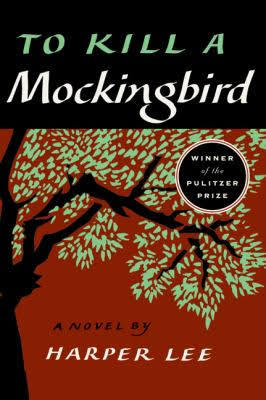
AFBooks they were assigned in school.  Mockingbird was popular in this category: “I’ve read To Kill a Mockingbird numerous times because it’s my favorite, it’s a classic, and because I discover new details about the trial and Boo and Atticus each time I re-read it,” Olivia said decisively.

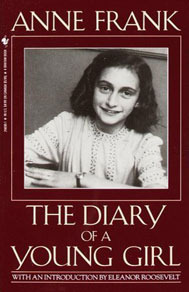
“I re-read The Diary of Anne Frank because I read it first as an assignment, but then re-read for fun because I wanted to think more about her time period vs. ours,” Mylana said.

“I had to re-read The Book Thief after it was assigned to me because I just wanted to focus on the storytelling the second time through,” Jonathan agreed.

What titles do your students (and you) love to re-read?  Share in the comments!

#FridayReads: Hot Non-fiction for High School Readers

I still have non-readers. We are ending the ninth week of school, and usually by this time each fall, my Hold Outs experience a shift. They start reading. I haven’t pinpointed exact reasons for the resistance this year — I think I’m doing as many book talks, conferring sessions, and cheerleading-moments-about-books that I have in the past, but something is up with a good number of my students.. They just do not want to read.

I asked Bryan about his reading yesterday. He said, “I only read when I have to.”

“What can I do to help you want to read?” I asked.

“I don’t know.”

This is where it gets tough. I get to be a magician and a mind reader.

Or, I just need to know books and keep talking about them. I just need to keep encouraging my students to read and surround them with books they will find interesting.

A few weeks ago, Jackie wrote Top Books for Reluctant High School Readers, and I remembered Ready Player One, Gone Girl, and Perks of Being a Wallflower. I need to book talk those!

About two months ago, I wrote about the novels-in-verse I got for my classroom. Many of my students who had never read a book have read two, three, and four of those titles now.

I know many boys will read non-fiction when they won’t read “make believe.” Seems it’s time for an infusion of hot non-fiction books that might add some intrigue to my classroom bookshelves. I need books that students like Bryan will want to read.teen_school_boys_reading

I posed this question to my writing partners:

What are the hottest non-fiction titles in your classroom library?

Here’s our master list:

Jackie’s List

Ghost Soldiers by Hampton Sides

I’m Staying with my Boys by Jim Proser

Jarhead by Anthony Swofford

The Glass Castle by Jeannette Walls

Half-Broke Horses by Jeannette Walls

Sickened: The True Story of a Lost Childhood by Julie Gregory

The Devil’s Highway by Luis Alberto Urrea

Hellhound on His Trail by Hampton Sides

Kick Me by Paul Feig

Shana’s List

Pretty Little Killers by Daleen Berry (two girls murdered their best friend at the other high school in our county…kids cannot put this book down)

Columbine by Dave Cullen

Zeitoun by Dave Eggers

Five Days at Memorial by Sheri Fink (about Katrina; pairs well with Zeitoun)

Missoula by Jon Krakauer

…anything by the great sportswriter John Feinstein (The Punch, Next Man Up, A Season on the Brink)

Stiff by Mary Roach

Smoke Gets in Your Eyes by Caitlin Doughty (similar to Stiff; about working in a crematory)

…my War shelf, featuring Lone Survivor, American Sniper, Redeployment, or any other autobiography of a soldier

Erika’s List

Lucky by Alice Sebold (account of her rape and healing)

The Prisoner’s Wife &  Something Like Beautiful: One Single Mother’s Story  both by asha bandele

No Choirboy: Murder, Violence, and Teenagers on Death Row by Susan Kuklin

Inside: Life Behind Bars in America by Michael G. Santos

Orange is the New Black: My Year in a Woman’s Prison by Piper Kerman

Yummy by G.Neri (graphic novel based on a true story)

Shaq Talks Back by Shaquille O’Neal

Raising My Rainbow by Lori Duron

I Am Malala by Malala Yousafzai (Adult and YA)

A Child Called It, The Lost Boy, The Privilege of Youth, A Man Named Dave by Dave Pelzer (four part series, but each piece can be read independently)

Enrique’s Journey: The Story of a Boy’s Dangerous Journey to Reunite with his Mother  by Sonia Nazario

The Pact: Three Young Men Make a Promise & The Bond by Sampson Davis and George Jenkins

Destined to Witness: Growing up Black in Nazi Germany by Hans J. Massaquoi

Girlbomb: A Halfway Homeless Memoir & Have You Found Her by Janice Erlbaum

Amy’s List

A Stolen Life by Jaycee Dugard

Little Princes by Conor Grennan

Letters to My Young Brother by Harper Hill

The Sociopath Next Door by Martha Stout

Heaven is For Real by Todd Burpo

American Sniper by Chris Kyle

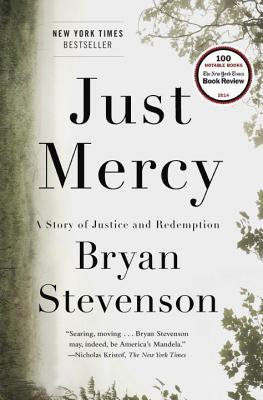
Just Mercy by Bryan Stevenson

The Glass Castle by Jeannette Walls

David and Goliath by Malcolm Gladwell

Exactly as I Am by Shaun Robinson

The Good Soldiers by David Finkel

Enrique’s Journey: The Story of a Boy’s Dangerous Journey to Reunite with his Mother  by Sonia Nazario

Life without Limits by Nick Vujicic

Do you know of any titles we left out?

©Amy Rasmussen, 2011 – 2015

#FridayReads: Learning to WRITE WHAT MATTERS with Tom Romano

IMG_9890With the release of his newest book, Write What Matters, this year marks the tenth year I’ve been reading and writing beside the words of Tom Romano.  If you’ve not discovered his wisdom on injecting writing voice into student work, his guidance about writing to discover, or his brilliance in coining multigenre…you’re missing out.

This summer, at the UNH Literacy Institutes, Tom Newkirk talked at length about the guts it took for Tom Romano to publish Clearing the Way in 1987–the first “teacher book” of its kind.  Guided by the research of Donald Graves and his contemporaries, Romano explains the text’s origins to his reader:

“This book is born out of my own struggles to write well and fourteen years of working hard with teenage writers.  Both the writing and the working have been worth it.  They are fine passions.

Thus began my pedagogical education–I read Clearing the Way in my very first English methods course in 2005.  Chapters like “The Crucial Role of Conferencing,” “A Creative Current,” and “Literary Warnings” showed me the possibilities if I created a classroom full of passion and verve and real writers.

IMG_9889Next I happened upon Crafting Authentic Voice, in Romano’s own writing methods class at Miami University in 2007.  A quote from page five of this book hangs prominently in my classroom to this day: “Voice is the writer’s presence on the page, the writer’s DNA.”  I point to those words when I endeavor to help students develop voice.  Chapters like “Enter Craft,” “The Five-Paragraph-You-Know-What,” and “Imitation” have guided my teaching of writing, and I see in those topics the work of Katie Wood Ray, Penny Kittle, and Georgia Heard.

Blending Genre, Altering Style I read in my Master’s level writing methods course, again with Romano himself.  This book helped me flesh out the nuts and bolts of teaching multigenre, which remains to this day both the most effective, enriching work I do with my students, and their very favorite thing.  Reading and writing about chapters like “The Many Ways of Poems,” “Genres Answered,” and the practical “Evaluation and Grading” led me to present with Romano on the many possibilities offered by multigenre at NCTE13.

I’d been teaching five years and was already living in West Virginia when I read Fearless Writing, seeking more guidance about teaching writing.  Practical chapters like “Easing into Poetry Through Imitation,” “Crafting Narrative,” and “Self-Assessment: Raising the Blinds” pushed me to take my teaching of many genres to new heights, with wonderful student results.

Last year, thrashing in the throes of a difficult PhD program, I sought wisdom from Romano in Zigzag, where his chapter “Meltdown” showed me empathy, peace, and guidance.  “I’d never been more at peace with a big decision,” Romano writes of leaving his own doctoral program.  I did the same, and I’m at peace too.

Now, as I prepare to welcome my first child into the world, I’m contemplating where my career will take me.  I’ve long known I don’t want to try to sustain my level of involvement with teaching high schoolers while trying to be a mom.  But I don’t want to leave the amazing, sustaining, nurturing community of teachers and writers and thinkers I engage with here at TTT, or at NCTE, or on Twitter.  I don’t want to leave my tribe, as Penny Kittle says.

Screen Shot 2015-10-23 at 5.34.59 AMAnd, again, Romano is here to guide me through my next steps–Write What Matters: For Yourself, For Others is lately ordered from Amazon and on its way to me.  I know that chapters like “Trust the Gush,” “Risk and All,” and “Who Are You to Presume to Write?” will guide me as I wonder about my future teacher-writer identity.  I know that this book is what I need right now:

Many want to write. But sometimes they lose heart. They are cowed in the face of so many fine writers of fiction, memoir, poetry, columns, and creative nonfiction. Their confidence wanes. If you want to write, but are hesitant, let Tom Romano lift your confidence. In Write What Matters you will find discussions of writing processes that make sense, demonstrations of effective strategies to try, advice about developing productive habits to get your writing done, and examples of illuminating writing from fearless writers, both professional and novice. Your voice, your vision, your way with words matter. They are tied to your identity. You know that you are more alive when you put words on paper. Accept that you not only want to write. You need to write. Write What Matters will help you learn to dwell in your written words and craft them into writing worth reading by others.

Pick up Write What Matters, or any of Tom’s many other works of wisdom and power.  Let Tom Romano lift your confidence–in your writing, your teaching, and your passion.  His words, and he, have been my single most reliable, important mentors as I seek to be a teacher of writing, a teacher-writer, and a plain old Saturday-morning-notebook-storyteller.

#FridayReads: Whole-Class Novels to Teach, and How to Frame Them

This past summer Shana and Jackie found that we’d both taken on a unique experiment within some of our classes–we had decided to strip them of whole class novels and instead focus on independent reading, book clubs, and smaller whole-class texts.  As workshop teachers confident in the power of choice reading, we each felt that this shift would be both empowering and inspiring within our classrooms.  After our year of experimentation, we both left our classrooms with unique perspectives on the power of whole-class novels as well as how we would incorporate them moving forward.

Today is the third and final installment of our week-long discussion using Google Docs.  Please, join the conversation in the comments!

41Cx8mY2UNL._SY344_BO1,204,203,200_Question 6: How is it different to be forced to teach a certain novel versus to be able to choose the ones you teach?

Jackie: I will readily admit that I am “forced” to teach To Kill A Mockingbird and Macbeth at the freshman level.  That being said, I love teaching both of them and am fortunate that my students respond well to both pieces.  The challenges are certainly different though.  I must create student buy-in or else my students will drag through the next four to six weeks of our unit.  I frame each lesson to fit their needs and I make sure to fit the book into a workshop structure the best I can to create consistency.

I do believe that teachers must have a choice in what they teach, though.  We must be allowed to tailor our lessons to fit the needs of our students.  Independent reading allows us to understand our students as readers and individuals, which in turn, allows us to further assess what books our students might connect with best.  Fortunately for me, the freshman team I work on is progressive and forward-thinking.  They’re always willing to try new things, which oftentimes involves integrating contemporary works.

Shana:  This summer in Tom Newkirk’s class, he innocently posed this question to our class:  “Why is the defining novel about race in our country written by a white woman?”  He was referring to To Kill a Mockingbird, of course, as many of us were discussing its lately-released sequel.  That question, so casually tossed into our midst, made me think about why the canonized novels taught in schools are often so heavily prescripted.  Why does Harper Lee have a voice of authority about being black in America?  Why do my rural students need to read a particular story about race?  I know why it’s important to read stories about people different than us–I would argue that it’s essential to building empathy and a broader worldview to read widely–but why does Harper Lee hold the monopoly on that topic, and not someone like Toni Morrison or Zora Neale Hurston?

As usual, I have raised more questions than I’ve even attempted to answer, but I’m still not sure of the correct solutions.  I think it’s preposterous to have a rote schedule of “books to teach” for all teachers in a school when it’s blatantly obvious that the community of every classroom is different, which means the culture of its students is always unique, which means that no child ever needs the same book at the same time.

Jackie: It’s funny that you bring up Tom Newkirk’s question.  As I was sitting next to you, I had one of those hide-your-face-moments when I thought, “Oh geez, I teach To Kill A Mockingbird!”  As I said earlier, I am required to teach this book, and while I love it, it does not meet the needs of all of my students.  Teaching in New Hampshire, I have a predominantly white population.  This means that their understanding of race relations and their exposure to diverse literature is rather whitewashed.  We desperately need new, diverse voices to help our students understand and empathize with a variety of individuals.  The precious few books we read together should be based on the needs and interests of our students instead of being dictated by a one-size-fits-all approach.

Question 4: What is the most effective way to frame a whole-class novel and create student buy-in?

Jackie: At the beginning of the school year I discuss the different types of reading we encounter as lifelong students.  I explain that, as a reader, I read for pleasure as well as for knowledge.  Oftentimes those two paths can and may cross, but typically my personal reading life looks drastically different from my professional reading life.  I love pouring through popular YA lit, but in the same breath, I can’t get enough of dissecting poetry with my AP Literature class.

This same pattern applies to my students’ reading within our classroom.  As a class we must learn to maintain a fruitful and engaging personal reading life that allows us to not only learn from our literature but to also explore our own interests and passions.  That being said, we mustn’t overlook the power of dissecting and discussing language and craft as a class.  Reading whole class novels reinforces the fact that no two people read a book the same way.

Shana:  If choice is the golden guide to teaching of reading, then I think the culture of a classroom must dictate the novel we read.  While A Raisin in the Sun was immensely popular in my inner-city Cincinnati classroom, it completely flopped here in West Virginia when I tried to teach it.  The inverse is true of Huck Finn; wildly successful in WV, but a total fail in Ohio.  Thus, I seek to hear the themes my students return to again and in again in their writing and conversations–this year, we are engaged in many discussions about political rhetoric, the origin of power, and the struggle that class/social/financial/ethnic differences create.  Thus, I’ll seek out novels that explore those themes to help us engage with them more fully.

In closing, we leave you with a list of the most successful whole class novels we have taught as well as a list of the books we would teach our current students if given the opportunity.

Most successful novels I taught, from Shana:28c4d1f2e8d048f702c3dbf0990aca8c

A Separate Peace by John Knowles

The Absolutely True Diary of a Part-Time Indian by Sherman Alexie

Macbeth by William Shakespeare

Fahrenheit 451 by Ray Bradbury

What I’d love to teach, based on my current students, from Shana:

Peace Like a River by Leif Enger

Boy21 by Matthew Quick

Poisonwood Bible by Barbara Kingsolver

Into the Wild by Jon Krakauer

Most successful novels I taught, from Jackie…(you’ll notice some repeats):51BWES5VL2L

Of Mice and Men by John Steinbeck (read aloud and performed as a play)

On Writing by Stephen King

The Absolutely True Diary of a Part-Time Indian by Sherman Alexie

The Glass Castle by Jeannette Walls

Macbeth by William Shakespeare

Fahrenheit 451 by Ray Bradbury

What I’d love to teach, based on my current students, from Jackie:

Sold by Patricia McCormick

Here, Bullet by Brian Turner

One Flew Over the Cuckoo’s Nest by Ken Kesey

All the Light We Cannot See by Anthony Doerr

Be sure to join the conversation today in the comments! We would love to hear your perspective on whole class novels and how you incorporate them into your classroom.

Click here to read day two of our conversation.

Click here to read day one of our conversation.

Whole-Class Novels: Why Do We Teach Them, Anyway?

This past summer Shana and Jackie found that we’d both taken on a unique experiment within some of our classes–we had decided to strip them of whole class novels and instead focus on independent reading, book clubs, and smaller whole-class texts.  As workshop teachers confident in the power of choice reading, we each felt that this shift would be both empowering and inspiring within our classrooms.  After our year of experimentation, we both left our classrooms with unique perspectives on the power of whole-class novels as well as how we would incorporate them moving forward.

Here is day two of our insights and discussion we’ve had over the past week using Google Docs (click here for day one).  Please, join the conversation in the comments!

Question 3: After a year without whole-class novels, how did you feel?MTI5MzY0OTk4NTM0MjQwNzM0

Jackie: At the beginning of the year, I felt like a rebel.  The thought of not only allowing but also empowering students through independent reading went against the entire curriculum within our department.  All of my colleagues taught whole class novels, which meant that none of my students had experienced the pure freedom of choice.  That being said, three-quarters of the way through the year, I missed whole class novels.  Despite having unique successes with the independent reading, my classes lacked the communal experiences of reading, discussing, and simply just enjoying (or sometimes hating) a novel together.  By the end of the year, I found that both my students and I missed some components of reading whole class novels.

Shana:  I reflected on my teaching after a year without whole-class novels (mind you, many novels were read through book clubs, literature circles, reading challenges, and independent reading), but I felt like the one thing that was lacking in all of my instruction was the idea of sustenance.  I wasn’t seeing my students sustain an idea for an extended period, or grapple with an issue over time, or try to live with a topic for more than two drafts and three weeks.  The case was the same in their reading and writing–I wanted them to have more length in their thought processes and I wanted us to engage in those long thought processes together.

Question 4: Why is teaching a whole-class novel valuable?  More specifically, why do we do it, and what skills are taught?

brave-new-world-bookShana:  I am not sure why I used to teach whole class novels, or, specifically, why I taught the novels I taught.  I know that there were valuable instructional methods behind the way I taught them (thematic units, Socratic circles, exploratory essays), but I don’t know if I had a sound rationale behind the obligation I felt to actually teach multiple novels to all of my students.

After a year without them, though, I find that the collective classroom experience of reading, interpreting, and discussing a novel produces a route for a unique connection to a text that cannot be achieved without reading as a group.  I missed the experience of coming to a new, shared understanding of a text as a whole class, and I felt that my students missed out on that experience as well.  I don’t believe that when I read plays independently in my undergraduate Shakespeare capstone that I would have comprehended, connected to, or engaged as passionately with those plays alone as much as I did through our frequent in-class discussions, activities, and writings.  I don’t want my students to miss out on that experience either.

Jackie: This year I am teaching AP Literature for the first time.  I took the challenge believing that this new course would be somewhat of a paradigm shift for me compared to my contemporary-lit based freshman English class.  The more I prepared, the more I yearned to discuss my thoughts, questions, and analyses of texts.  I went so far as to ask everyone around me to read these canonical classics and discuss them with me.  Preparing to teach AP Lit reinforced the social significance of reading literature.  At its base, dissecting stories as a group is interesting and engaging.  Beating the crap out of them is not.  I agree with you, Shana, in that the experience of sharing a text is one of the blessings of being in an English classroom.  Once students graduate from high school, they rarely have the opportunity to interact with texts in a classroom setting.

Shana: I love that the way you prepared to teach was to ask friends to read books with you, then discuss them.  You engaged in an authentic book club there, as I know you have your students do now.

More of our discussion will follow tomorrow.  Be sure to join the conversation today in the comments!

Whole-Class Novels: To Teach, Or Not to Teach?

This past summer Shana and Jackie found that we’d both taken on a unique experiment within some of our classes–we had decided to strip them of whole class novels and instead focus on independent reading, book clubs, and smaller whole-class texts.  As workshop teachers confident in the power of choice reading, we each felt that this shift would be both empowering and inspiring within our classrooms.  After our year of experimentation, we both left our classrooms with unique perspectives on the power of whole-class novels as well as how we would incorporate them moving forward.

Over the next three days, we will post our insights and discussion we’ve had over the past week using Google Docs.  Please, join the conversation in the comments!

imagesQuestion 1: How did you decide to get rid of of whole class novels?

Jackie: Last year I was faced with a unique opportunity: the English Department voted to end popular College Preparatory Advanced Composition course.  Despite the well established curriculum, I tossed aside the typical whole class novels in favor of independent reading. As a primarily freshman English teacher, I am required to teach one Shakespeare play and To Kill A Mockingbird.  Advanced Composition gave me the opportunity to focus on smaller whole class reads and mentor texts within daily writing workshops without devoting whole units to one book.

Shana:  After six years of teaching, I wasn’t really sure why I felt compelled to teach whole-class novels.  Every year, when I picked up Catcher in the Rye, I dreaded my job.  I hated that book, and I had no idea how to get my students to love it or connect with it.  It felt like a chore to drag my students through “reading” that text (mostly they were SparkNoting it, sometimes with the assistance of their football coaches–true story).  I knew that not every student loved every novel that I did (particularly Their Eyes Were Watching God), and I knew that I didn’t love every novel my students read on their own (particularly everything by Nicholas Sparks).  I started to wonder–what would my teaching be like if I didn’t feel compelled to teach a whole-class novel…merely because I should?

Jackie: The eye opening experience for me was definitely during my first year of teaching.  I began integrating independent reading into my curriculum and I suddenly found out how many voracious readers I had in class.  My teaching was getting in the way of these students’ education! I like how Shana puts it–I also knew that my students didn’t love the novels I did (Speak by Laurie Halse Anderson) and in the end, if I gave them freedom, I too would learn much more about literature, reading, and teenagers.

Shana:  I like that Jackie mentions the issue of devoting whole units to a book–I loved having the freedom to design units of study that weren’t anchored around a novel, but rather a different genre.

Rye_catcherQuestion 2: What were the positives of having no whole class novels and what were the negatives?

Jackie:  After a year, I have found both positives and negatives to removing whole class novels.  Getting rid of whole class novels allowed me more time to focus on the positive aspects of the workshop model.  Naturally student choice led to easier student buy-in, and I spent less time convincing students of the value of reading.  As a result, we spent more time cracking apart smaller whole class reads like essays, poems, and articles and truly contemplating the author’s choices and craft.  Additionally, I liked that I could assess students and discuss their growth based on their own reading goals and progress.  

I have yet to find a solution to the “be on this page by this day” debacle that comes with teaching whole class novels.  Too often whole class novels lead to less differentiation and more stress, which can lead to the “gotcha” feel that comes with discussing larger, longer texts.  

That being said, there was a lot that I missed about having whole class novels.  Losing a longer common text meant that students didn’t have the common classroom experience of connecting over both the successes and frustrations of working through a complex text together.  I was surprised by how much students want to discuss their reading with classmates.  While reading can at times feel solitary and maybe even isolating during the actual act, in reality, reading complex texts is a communal activity that unites groups through a variety of perspectives, opinions, and interpretations.

Shana:  The positives were that I felt like my curriculum map was much more relaxed and flexible, in contrast to the years where I felt like I had to teach a minimum number of novels and “fit them in.”  I also loved seeing my students’ love of reading skyrocket as they engaged in choice and challenges on only an independent or small-group basis.

The negatives were more nebulous–I just felt like something was missing.  Our learners crave a challenge, and navigating a difficult novel is a challenge all readers relish if they have autonomy in their reading of that novel.  Reading a novel together provides an opportunity for me to create instruction that scaffolds a student’s reading skills up to the level of that novel, allowing them to participate in a reading experience they may not have been able to enjoy otherwise.

I also really missed being able to ascertain the barometer of a class’s feelings on a certain theme or issue through discussions of a complex text.  Crime and Punishment explores issues of morality, regret, and psychology in a far more complex way than “The Tell-Tale Heart” ever could, and although both stories have very similar themes, the novel lends itself to the sustenance of thought, evolution of a character, and length of a reading experience that I so craved for my students.  I also think that some reading skills specific to stamina, fluency, and automaticity cannot be practiced or taught effectively without a lengthy text, so I felt that last year, my students missed out on practicing those skills.

Jackie: While we both feel similar in the value of whole class novels , I know that neither of us would return to a set list of novels.  Whole class novels allow us to engage in common discussions but independent reading lays the groundwork for students’ stamina and confidence.  I don’t start my first round of literature circles until the second quarter because of this.  As much as students need a communal reading experience, I believe they first need a taste of independence and success.
Shana:  I still haven’t figured out the whole reading schedule thing either, nor how to create buy-in for every single student so that they autonomously, independently want to read a novel.  I struggle with the this-page-by-this-day conundrum, too, mostly because I feel like that creates a certain accountability that kids get hung up on, because it relates to the dreaded word GRADES. 

More of our discussion will follow tomorrow.  Be sure to join the conversation today in the comments!

Click here to read day two of our discussion.

#FridayReads — Oh, Mercy! Have I got a plan for this mentor text

Usually I read about four books at a time. This makes for a mess on the bedside table, the coffee table, the kitchen table. I rarely use bookmarks, which is a shame because I have quite a lovely collection.

I end up leaving books split open and sound asleep right where I left them –sometimes just so I can remember the parts I know I want to use in class. I refuse to read on until I capture the sentence or passage that gives me pause. Such is the case with my new now bent-spine-copy of Just Mercy, a Story of Justice and Redemption by Bryan Stevenson. I’ve been stuck on page 18.

Here’s a portion of the passage I will use with my AP Lang students. You will, of course, find the rest of it when you buy the book, or here.

     When I first went to death row in December 1983, America was in the early stages of a radical transformation that would turn us into an unprecedentedly harsh and punitive nation and result in mass imprisonment that has no historical parallel. Today we have the highest rate of incarceration in the world. The prison population has increased from 300,000 people in the early 1970s to 2.3 million people today. There are nearly six million people on probation or on parole. One in every fifteen people born in the United States in 2001 is expected to go to jail or prison: one in every three black males babies born in this century is expected to be incarcerated.

     We have shot, hanged, gassed, electrocuted, and lethally injected hundreds of people to carry out legally sanctioned executions. Thousands more await their execution on death row. Some states have no minimum age for prosecuting children as adults; we’ve sent a quarter million kids to adult jails and prisons to serve long prison terms, some under the age of twelve. For years, we’ve been the only country in the world that condemns children to life imprisonment without parole; nearly three thousand juveniles have been sentenced to die in prison.

     We also make terrible mistakes. Scores of innocent people have been exonerated after being sentenced to death and nearly executed . Hundreds more have been released after being proved innocent of noncapital crimes through DNA testing. Presumptions of guild, poverty, racial bias, and a host of other social, structural, and political dynamics have created a system that is defined by error, a system in which thousands of innocent people now suffer in prison.

…..

     We are all implicated when we allow other people to be mistreated. An absence of compassion can corrupt the decency of a community, a state, a nation. Fear and anger can make us vindictive and abusive, unjust and unfair, until we all suffer from the absence of mercy and we condemn ourselves as much as we victimize others. The closer we get to mass incarceration and extreme levels of punishment, the more I believe it’s necessary to recognize that we all need mercy, we all need justice, and — perhaps — we all need some measure of unmerited grace. 


Before we ever read the text, and I did pull much more of it than I’ve posted here, we’ll spark our thinking with an image like this, posted at The Sentencing Project, and then write our initial responses in our writer’s notebooks:

Next, we will TALK. I know my students will want to share what they think about this graphic. Many will identify personally with it because they know a family member or a friend who’s served prison time.

When I introduce them to Stevenson’s text, I’ll give them a purpose for reading — besides just comprehending the message (identifying the purpose is a breeze since he tells us the reason he writes the book) — I want my students to notice the structure, the progression between ideas, the repetition and patterns they will see in the language. All the clues that build the tone.

I will ask them to mark the text, noting their thinking about these things. Without a purpose for reading, too many of my students struggle with the stamina they need to make it through even a page when I ask them to read critically.

Next, we will TALK. Talking will help some students understand what they read. It will help other students clarify their understanding. Some students will have noted what I asked them to notice as they read. I will rely on them to help the others — skill level is just one way my students are diverse.

I will also hand them a stack of questions that prepare them to write. They will read something like this:

What do you know about the writer based on what he writes?

What is the Stevenson’s purpose? Why does he come out and tell us so plainly?

What are the facts in this piece? What are opinions? How do you know?

What do you notice about the structure, any patterns, repetition? What do they do for the message?

How does Stevenson move between ideas?

And then we will write. Maybe I’ll give a prompt like this: Based on the text, and our discussion, is Stevenson’s opening argument effective, why or why not?  Maybe I’ll ask students to come up with their own analytical-style question to respond to. (I like this idea a lot.)  [see Talk Read Talk Write]

That’s probably enough for one class period, but my mind is still stirring:

  • What if I ask students to problematize the issue? Who are the stakeholders? Think all the way around the issue. Why do they care? Why do we care? What kinds of questions do we have about the claims Stevenson makes? What kinds of evidence do we need to convince us they are valid? How and when could anything regarding this issue change?
  • What if I ask students to identify just one of Stevenson’s claims and then research it? I assume the author provides support throughout the book. I’ll know when I keep reading. But what if students did a bit of research and then collaborated on substantiating Stevenson’s claims. Collaborative writing can be a powerful learning experience.
  • What if I ask students to brainstorm other issues Stevenson’s text suggests? We could probably create a pretty elaborate bubble map of ideas. These could lead to student choice in research topics.

What do you think? Any other ideas?

©Amy Rasmussen, 2011 – 2015

Weekly One-Pagers to Develop Writing Fluency

IMG_9425

Janelle, now in college, appreciates the one-pagers belatedly

This summer, Amy and I talked a lot about what we wanted for our students.  While there were lots of complex ideas tossed around, we knew that our goals boiled down to two simple ones:  for our students to become real writers and real readers.

We had lots of structures in place to help our students become authentic, fluent readers–weekly reading homework, daily booktalks, reading conferences, reading workshops, and more.  But writing was a bit different.  Daily quickwrites and longer compositions were already in place, but I wanted to add something more to get students writing more regularly outside of class on topics of their choice.  I wanted them to gain the same fluency with writing that they did through their weekly reading homework.

So, I was reminded of something I used to require my AP and Honors English students to do–a weekly one-pager.  Every Monday, a one page, single-spaced, typed paper was due.  I offered topic suggestions, but ultimately, students could choose what to write about.  I decided to revive this routine, inspired by Kelly Gallagher’s powerful claim that students should be writing four times as much as teachers could ever assess.  Why shouldn’t all students–not just the AP and Honors level students–write this much?

This year, I only have one Honors class, but all four of my English classes write weekly one-pagers.  We have a section in our notebooks called “Weekly Writing,” which is rapidly filling up with writing on a variety of topics.  During bi-weekly notebook collections, I check to see that these weekly one-pagers are being completed, but I don’t “grade” them–that’s not the point.  The point is to build writing fluency.

These one-pagers are low stakes–ten points apiece, so on a particularly busy week, if students just don’t have time to write, it’s no big deal.  But the frequent follow-up and sharing activities we do in class with these writings, combined with the autonomy students have in their topics, make the missed one-pager a rare occurrence.

I was initially inspired to create this routine by some of my greatest college professors, for whose classes a written response was due each day.  Alan Frager’s “study guides,” Tom Romano’s “one-pagers,” and Don Daiker’s “reading responses” were handed in at the start of each class period.  By writing a short paper every single day for most of my college years, I developed incredible writing fluency.  I knew I wanted my students to develop this written fluency as well, partially in preparation for their own college experiences, but also to bridge the gap between a writer’s thoughts and his words on the page.

As evidenced by Janelle’s testimony above, building this writing fluency pays off.  Already this year, students are remarking that it’s becoming much easier to write a full page, after only writing eight of them thus far.  I’m enthused by the growth I see in all my students’ writing fluency, and looking forward to seeing how much they can develop as writers by the end of this school year thanks to the weekly one-pager.

What routines are in place in your classes to help build students’ writing fluency?

Are you noticing what matters?

I learned a valuable lesson when my children were young. I do not remember the speaker who said it, nor do I remember much of anything else he said. I do know that two words changed me as a parent.

Notice them.

Notice your child when he enters a room. Acknowledge him with a hello, a question, a compliment. Non-threatening. Kind. Seems rather simple, doesn’t it? I remember thinking: “Sure, I can do that. no big deal.”

Oh, but it is — a very big deal. It’s a big deal to the child who grows in confidence, knowing we are intently aware of him as a person — an individual who matters when he walks in the room.

While i’ve been thinking and writing about conferring with students, I’ve done a lot of thinking about what it means to notice, really notice, the students in my charge. Do I take the time to speak to every student individually? What about my body language — am I open and approachable? How about eye contact — am I making it?

Last week I collected my students’ writer’s notebooks. Marked with a sticky note for me to read and scrawled on the back of one student’s writing territories was an entry that gave me pause and broke my heart. It said something like: “I remember asking my grandma about why my mother left. All she would say was that my mom said she could always have other children.”

Just that morning I’d been short with this student for not completing yet another assignment. I bit out a plea to get the work done without once considering why she’d not done it. I made it about the assignment instead of about my learner. Sadly, I do this often and have to continually remind myself of what matters.

Noticing the girl with the dark brooding eyes matters.

And once again I vow to be better than I’ve been.

from BrainPickings.org


[student writing used with permission]

©Amy Rasmussen, 2011 – 2015

Top Books for Reluctant High School Readers

IMG_2877“I’m not a reader.” I hear this multiple times during my first weeks of conferencing. The non-readers are easily identifiable; their body language alone speaks volumes of their disdain for books.

“You just haven’t found the right book,” I tell them, and they smirk, knowing they’ve heard that statement before.

The first week of school is a vital week of matching students with books, and while I itch to recommend titles, I hold back, giving my freshmen the independence and freedom they so desperately crave in high school. Too often students blindly accept recommendations without so much as a thought to the contents. They lack self-awareness when it comes to their reading interests or style, which is why those first two weeks are essential to not only organizing but also empowering them through choice.

Throughout the week, I book talk popular titles, engage in “speed dating” with books, and provide ample free time for students to explore our classroom library, but I also get out of their way. Instead of telling them what to read, I model ways to find a strong candidate, considering reviews, awards, contents, genres, and summaries.

While the majority of the class tends to quickly settle into their books, there are always stragglers who remain convinced they’ll never enjoy reading. These students sometimes grab the first book they see off the shelf, and oftentimes these books are too dense, difficult, or in some cases “boring.” That is okay! I settle into conferences with these students, getting to know their hobbies and eventually handing them two or three books that might pique their interest. In the end, they still choose what to read, but in the process they might require some initial guidance.

IMG_2870Regardless of who picks the book, the end result remains the same—to find a plot that envelops and consumes students, forcing them into the story. Here are some of my number one titles that tend to break down the shell of even the most reluctant readers.

Ready Player One by Ernest Cline

I’ve already had three students read this book, one of which is Leah, a gamer and self-identified non-reader. When I asked if she has ever had a favorite book, she thought for a second then said, “I think this one might be the only book I’ve ever really liked.”

The Compound by S.A. Bodeen

Adrian initially picked a sequel to a book he read last year. “You must have liked the first one then?” I asked.

“Not really,” he replied. “I just didn’t know what else to read.” The next day he picked up The Compound, which is full of the fast-paced suspense he craves.

Paper Towns and Looking for Alaskaand basically everything by John Green.

I chased Emily up the stairs for this recommendation. When I asked her which one sparked her interest in reading, she said she couldn’t remember which had sucked her in. She just knew that despite her protestations at the beginning of the year, by the end she “loved them both.”

The Eleventh Plague by Jeff Hirsch

Damion had only ever loved one book and he was bound and determined not to like any in my classroom; that is until he came across this futuristic, survival story. Upon sitting down beside him for a mini-conference last year, he looked away from his book briefly to say, “Ms. Catcher, I’m at a really good part and I can’t talk right now.”

Gone Girl by Gillian Flynn

“I’ve had people give me ‘dark’ books before, but they aren’t dark at all,” Sarah tells me. I hand her three options, one of which is Gone Girl. Three days later she tells me, “I’ve spent my whole life hating books, and you’re the first teacher who ever found one I actually liked.”

Unwind by Neal Shusterman

I book talked Unwind second this year. It’s a given crowd pleaser because of its twisted plot and graphic scenes. The fact that I only have one copy of my four originals is a testament to its popularity.

The Perks of Being a Wallflower by Stephen Chbosky

Carter claims he hasn’t read a book cover-to-cover since third grade, but he has fallen in love with Chbosky’s classic on teenage life. He said to me today, “Ms. Catcher, I love that this book talks about real things, things that are actually happening to us.”

“That book is only the beginning, Carter,” I said

What books do you recommend for reluctant readers?  Which titles are most popular in your classroom?