Category Archives: Community

Book Birthdays by Amy Estersohn

img_20161006_115756265Tuesdays are bar none the best day of the week.  Tuesdays are when most new books are released.  On Tuesdays, you can run to the bookstore, go to the library, or wait eagerly for a package to arrive.  If you love reading new books, Tuesdays are nothing short of wonderful.

I have a Book Birthdays list in my room to help my readers and I track upcoming and highly anticipated new releases.  I use chalk ink (more on how much I love chalk ink another time) and a section of my blackboard for this list.  Though I don’t spend much, if any, class time talking about books that are on the list, I sure get a lot of questions, requests, and (occasionally) demands from readers as to which birthdays we should be celebrating.  

I also update this list about twice a month.  For example, I booted off the second book in Rick Riordan’s Magnus Chase series after its October 4 release date in order to make more room for the social media thrillers of Sarah Darer Littman and Stuart Gibbs’s goofy mysteries.

Creating a customized list of upcoming releases can seem like a daunting task, but with the right tools it’s easy enough to build and maintain over time.

Step 0.  Gather a list of authors that your students already enjoy reading.  Sprinkle that list with authors you hope your readers will discover.    My readers come in knowing and loving Margaret Peterson Haddix, Rick Riordan, Raina Telgemeier, and Jeff Kinney.  By the end of the year I also want them to read Jason Reynolds, Gary Schmidt, Marie Lu, Renee Watson, Pam Munoz Ryan, Gordon Korman, and Jennifer Nielsen, among others.

Step 1.  Create a Goodreads.com account.

Step 2. Visit these authors’ pages on Goodreads to “follow” the author.

Step 3. Go to your “account settings” under your avatar and click on “e-mails.”  If you scroll to the bottom of the page, you’ll notice an opt-in settings for New Releases e-mails and e-mails from authors you follow.

Step 4. Wait for e-mail notifications to come to you.

Depending on the age and independence of your students, you may even consider opening up this task and invite students to help build a list of highly anticipated books.  

Amy Estersohn is a middle school English teacher in Westchester County, NY.   She also reviews comic books for http://www.noflyingnotights.com.   Follow her on Twitter at @HMX_MSE.

Workshop Routines and Some Leopard Print Pajamas

Amy and Shana posted earlier this week about our upcoming presentation with Jackie Catcher at the NCTE Annual Convention in Atlanta. ncte
Amy is going to discuss perspective and assessment, Shana will share insights on unit
planning
, Jackie is focusing on mini lessons, and I’m going to try not to pass out from sheer terror/excitement/nerves/exhaustion/adrenaline.

If I can meet Penny Kittle without
incoherently mumbling some nonsense (Oh my goodness. I love Book Love. I mean love. Did I say love already ?), I’ll consider that a win too.

Or, perhaps most importantly, I’ll be speaking about workshop routines.

Establishing routines to support the non-negotiable components of workshop was one of the first considerations of my district when the high school ELA team started our move to workshop last year. We run on an A/B block schedule with 86 minute classes, and structure
is key to make sure all workshop components get their due time.

I was thinking about it tonight when I was putting my three year old daughter Ellie to bed (which, by the way has been going on now for over an hour because she’s needed several “one more” hugs). Every night, without fail, my husband and I work Ellie through the process of pajamas, books, teeth brushing, more books, several kisses (for Ellie and all nearby stuffed animals), one last story, several more kisses, and a hug.

I’d be lying if I said it went perfectly each night.

Case in point, Ellie just came out and asked what I was doing. I seized the opportunity and asked if she had a message for you all.

She’d like you to know that she is wearing leopard pajamas.

So…how to segue past that one?
I give up. That kid’s good. Yes, I gave her another hug too. Anyway…

Workshop routine. What’s its purpose?

In my opinion, it’s to provide comfort, consistency, and (hopefully) somewhat predictable outcomes.

When Nick and I take Ellie through her bedtime routine each night, she knows what’s coming. She knows we’ll be there with her, whether she’s cooperative or…spirited. She knows that each component of the routine has a purpose, because we make them clear. She knows, or at least experiences, the consistency that leads to that predictable outcome which is a warm bed and sweet dreams.

Yes, she fights it sometimes. Yes, she enjoys some parts more than others. Yes, it’s occasionally exhausting. But we know the net benefit. Our darling daughter is sent to dreamland with a positive experience, consistent expectations, and security.

Workshop routines are established for and run with the same outcomes in mind.

Students need daily practices, without fail, that strive to build capacity for critical thinking, community with peers, and rapport with instructors. They need a classroom structure that promotes a gradual release of responsibility so they can study craft in order to emulate that craft. They need time to practice. Time to explore. Time to be in control of their own learning. Time to be readers and writers.

In our district, that’s a pretty structured 86 minute class period, per Penny Kittle’s suggested breakdown of daily activities:

  • 10 minutes silent reading/conferring
  • 5 minutes attendance/agenda/book talk
  • 15 minute quick write
  • 15 minute skills based mini lesson
  • 38 minutes workshop time
  • 3 minute wrap up/sharing/homework

In my opinion, it’s the components that matter. The timing, especially in an even shorter class period (See Amy’s post on workshop in a 45 minute class period or Shana’s post with her ideas for workshop in a short class– it CAN be done!), are necessarily brief to allow for work in all areas, provide time for students to put into practice what they are learning, and maintain momentum around specific skills by linking components in a class period. For IMG_0684example, have students look for specific craft moves in their independent reading, write about them in a quick write, see them reflected in the mini lesson, and work to incorporate them into their own writing during workshop time. I’m even organized enough sometimes to tie my book talk directly to the craft move we’re discussing. Sometimes.

My students know what to expect each day. They know they can count on time to read, make choices in their learning, have guided instruction on college and career readiness skills, and workshop time to put those skills into practice.

Well, I know they have those things. Their perception of the class structure is often described as “fast.” As in, “Wow. That class period really went fast.” And it does. There’s always a lot to do. There’s always a lot to talk about, write about, read about, think about.

There’s, of course, always room to grow too.

Routines to add around writing fluency (weekly one pagers), mini lesson variety (demonstration, explanation/example, guided practice, etc.), use of writer’s notebooks, conferring, providing formative feedback, and the list goes on.

Workshop aims to empower students, teachers, and entire learning communities through a shared love of reading and writing to promote literacy.

Leopard pajamas or no, the routine of workshop provides a consistent safe place for all stakeholders to learn and grow. Sweet dreams.

I’ll be sharing more about moving to the workshop model and workshop routines in more depth on Sunday afternoon, from 1:30-2:45, in room B211.

Will you be at NCTE?  Please let us know in the comments.  We would love to meet you!

If you can’t make it to Atlanta, you won’t be missing out–tune in to Twitter using the hashtag #NCTE16 during our session times to join the conversation.
photo2


Mini-lesson Monday: A Matter of Perspective

I am thinking about the importance of perspective. Mine and others.

To truly understand how the world works, why decisions are made, what issues matter to individuals, when things do not go our way, we have to be willing to peer into the thinking of those who think differently than we do.

Sometimes — no, most of the time, this is hard.

It is especially hard for the sixteen year olds I teach. They wear their bias like badges, and they often silence those who disagree with them with blatant disregard. I fight against this every day, but last Friday we took a few steps forward. I want us to keep moving.

Objective: Students will formulate ideas while writing from a perspective other than their own: Who? What? Where? When? Why?; draw conclusions based on observations and interactions with peers.

Lesson: First, we’ll write. Students will take out their phones and take a photo of the person sitting across from them. They will then write for ten minutes, trying to convey that person’s point of view about their future. What do they want to do after high school? Where do they see themselves in five years?

We will then share our writing and discuss how difficult it is to know another’s thinking without ever having a conversation. We will tie this thinking into the conversations we had last week about stereotypes and making judgements.

Next, we will do the Crossing the Line activity as outlined here by Vanderbilt University. Of course, I will have to change some of the questions:  Coke vs Pepsi? Pshaw. This is Texas! I will have to say Coke vs Dr. Pepper.

This activity will inspire discussions about our similarities and our differences, and the poem will allow for even more discussion, analysis, and critical thinking around a text.

Follow up:  As we move into choosing topics for our Poetic Rhetoric unit, I will remind students of the importance of investigating all sides of a topic and the importance of considering alternate points of view as they compose their poems. I did not do this last year, and this will add a critical element to their arguments. Too many of the spoken word poems I’ve listened to seem like rants against some issue instead of including a shift or two that lead toward solutions.

In times like these, we definitely need solutions.

NOTE:  Shana, Lisa, Jackie and I are presenting at #NCTE16 this week. If you will be with us in Atlanta, we’d love it if you attend our session on Sunday, Nov. 20 at 1:30 pm. Room B211 of the GA World Congress Center. I will start our presentation with more on the value of perspective and how it relates to Advancing All Students in Readers-Writers Workshop.

screen-shot-2016-11-13-at-8-48-43-pm

11 Nonfiction Titles to Use Across the Curriculum

We’ve been saying it for years–teaching reading isn’t just the job of English teachers.  In an ideal world, it is a nationwide cultural endeavor to produce a literate citizenry who is both able to decode words and passionate about responding to their meanings.

The Common Core, for all its flaws, attempts to get students there–the standards say that kids should be reading 50% nonfiction altogether (that’s not just in English class; it’s across the curriculum).  In that vein, here are 11 nonfiction titles that could be used across the curriculum–or booktalked by any teacher in an English class.

img_5198Science

The Double Helix, a fascinating biography by one of the discoverers of DNA, hooks me every time by bringing the textbook personas of Watson himself and his partner Francis Crick to life.  Many of my students interested in a career in the biological sciences were hooked by this text immediately.

Being Mortal forces the reader to ask some tough questions–should I really prolong my life as much as medicine enables me to, through decades of pain and suffering?  Or does that run counter to the human spirit?  Gawande uses all of his knowledge as a practicing surgeon to get the reader to question the industry that is medicine.

Into Thin Air, an oldie but a goodie, is Jon Krakauer’s harrowing first-person account of the deadliest season on Mt. Everest in history.  Its early promise that most of its characters would soon be dead grabs my students’ attention every time.

A Short History of Nearly Everything, aka the longest but most interesting book about science ever, explains everything I never understood about the subject from The Big Bang to the possibility of someday colonizing Mars.  Students are always wildly impressed when I flip through the list of Bryson’s references in the back.

Social Studies

Hiroshima is John Hersey’s unflinching masterwork, a journalistic symphony of six survivors’ stories of the dropping of the first atomic bomb.  It is powerful and devastating and horrifying and beautiful all at once, and just reading the first page aloud to students gets them wide-eyed and entranced right away.

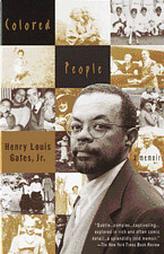
henrylouisgatesjr1Colored People, Henry Louis Gates Jr.’s biography of growing up black in rural West Virginia during the Civil Rights movement.  It’s a book that hooks my students because of its ties to our home state, but it’s universally appealing in that Gates creates a colorful cast of characters early on in the book, most of whom he defies in order to graduate summa cum laude from Yale University.
To Sell is Human is a favorite for students in Psychology class as it brings the social sciences to life in a very Malcolm Gladwell-esque way–short stories and then quick aphorisms make complex ideas simple to digest in this quick, fascinating read by Daniel Pink.

English

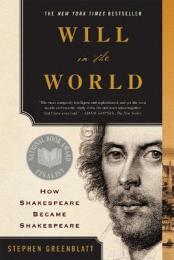
137717Will in the World, written by everyone’s favorite long-winded Shakespearean scholar Stephen Greenblatt, brings William Shakespeare to life in this detailed biography of both the playwright and his Elizabethan London.  I love reading this book as a shameless English nerd and London-lover, but my students love it because it’s a classic tale of an average guy succeeding against all odds.
The Mother Tongue, the second book by the excellent Bill Bryson on this list, is a glorious history of the English language.  My students especially adore the chapter on swear words.

Math

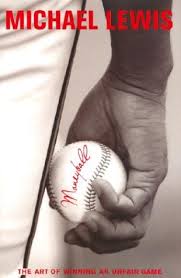
imgresMoneyball, one of Michael Lewis’ earliest books, hooks students often because it has a great movie adaptation to accompany it.  But when you sit down with the book itself, it blends both narrative and statistics, the least “mathy” part of math that I can understand.

The Hot Zone, a terrifying account of the origins of the Ebola virus, will give you actual nightmares if the ideas of biological warfare or global pandemics freak you out.  It’s a very detailed narrative of the virus’ structure, symptoms, and Hail Mary-type treatments that “proves that truth really is scarier than fiction.” (Tell that to Stephen King.)

What titles do you use to introduce your students to subjects across the curriculum? Please share in the comments!

Try it Tuesday: Taking a line

My AP Lang and Comp students have been writing. A lot.

We’ve analyzed arguments and written short analysis essays. We’ve read powerful OpEd pieces like this and this and this, and we’ve written responses and modeled these writers’ craft moves. We’ve written arguments on our blogs and had a bit of fun modeling Neil Pasricha’s Awesome writing as we practiced using figurative language and specific examples in our essays.  We’ve read about the importance of serious reading, and written one-pagers to defend, challenge, or qualify. Lately, we’ve studied the work of Bryan Stevenson in Just Mercy and watched his TED talk.

I sensed my students needed something a little different, but I needed to keep them writing. So with just one class last week, instead of using a full mentor text to inspire great writing, we used a sentence.

I pulled this quote from Stevenson’s talk:

screen-shot-2016-10-30-at-2-47-56-pm

And then I asked students to write anything they wanted: poems, essays, stories, whatever. The only requirement? Use that line somewhere in your own writing.

Then, on Friday, students moved to our “writer’s chair” and shared their writing. Our community responded with sticky note blessings.

Several students were reluctant to share. “Mine isn’t good,” more than one student said.

“We are a community of writers,” I encouraged. “This is a safe place, and we all want to know what you have to say. Truly, no pressure.”

After a few volunteers, Martina finally rose to share her response to Stevenson’s quote. Her voice was soft yet powerful:

It’s the sigh of relief and relaxed muscles from knowing you did the right thing. It’s liberating and lightweight–the world suddenly doesn’t seem to be positioned heavily on your shoulders. It can be the doubt and little knock of guilt on the back of your head knowing you did the wrong thing. It’s the tempting feeling of doing correct actions, but not being able to when you’re being held against a wall by your own conscious.

It’s difficult to see greener grass on the other side of the horizon when it’s fertilized with the negative aspects of your actions. Learning to realize and move on from what cages you in is the only form of developing into a healthier person–sometimes this ends up being all it takes for it to be “The right thing to do.”

“Always do the right thing even if the right thing is the hard thing”

As kids we grow up with love from family, the goodnight kisses from your parents after a bedtime story, the reassurances of  “It’s Okay” after a tumble on the playground, and the form of love that lingers in the atmosphere when you’re around the individuals that raised you. As we grow our love transforms into something deeper, something more emotional, something dangerous. It might have started with a crush on the new individual at work, the butterflies twisting and turning in your belly are a pure indicator that you’ve deeply fallen in a midst of hearts and dazy clouds of love.

Often times, things go wrong. Abusive relationships exist and they are common amongst the men and women in our society. Nearly half (43%) of dating college women report experiencing violent and abusive dating behaviors, Nearly 1.5 million high school students nationwide experience physical abuse from a dating partner in a single year, and one in seven men age 18+ in the U.S. has been the victim of severe physical violence by an intimate partner in his lifetime.

The right thing in this case is following your heart. Men and women trap themselves in abusive relationships because loving the one person that hurts you seems to be the right thing. Other times, allowing yourself to step away from the relationship/situation is not an option and it becomes a tough obstacle to get out of the arms that hold a restricting grasp on you. There’s always help, there’s always somebody there. Reach out for the right motives even if it’s the hard thing to do.

Never let a person of interest degrade your actions or make themselves superior to you. The most damaging thing to do–and often hardest–is staying in an abusive relationship. Love is a beautiful thing, don’t let anybody damage that for you. Instead, do the right thing for your health, mind, and body without the harm of anyone or anything. 

Two students shared poems, others shared why they think that quote is important, and others wrote arguments of a sort like Martina’s. All were important reminders to me to let students choose how they show they are learning.

Of course, the shared experience of reading their work was pretty fabulous, too.

One of the best things I can do as a teacher of writers is to offer opportunities for students to share their writing. I know the more we share with one another, the better our writing will become. If I remain the only audience (or even mostly their only audience — my students do write on their blogs and leave feedback for each other), some students may never make the connection between writing and truly conveying meaning. Too many just care about the grade.

By just taking a line last week and then asking students to write whatever they wanted, and then sharing… we built trust in our community and we celebrated that we really are on our way to becoming better writers.

What have you tried lately that improved some aspect of your classroom community? Join in the conversation and share in the comments.


ftc-guideline-%22affiliate-links%22

Thanks for the Great Read #FridayReads

I think it was a “thank you,” of sorts.

My associate principal, the ever-smiling, ever-supportive, Anita Sundstrom, had asked at the end of last school year to borrow some books to read over the summer.

I sent her home with Kristin Hannah’s The Nightingale (and I swear to the heavens and Nicholas Nickleby that Ms. Hannah isn’t paying me to write about her book. Though I may have mentioned how it made me weepy here, and how I broke the law to read it here,  and how the lovely Erin Doucette – who is so very lovely that she helped me with the title of this post at 7:31 a.m.- and I book talked it for the whole school here).

Only a few days later, I received a text from Anita. Something about reading until two in the morning and then not being able to fall asleep for fear of Nazis.

As I said…I think it was a thank you.

She couldn’t put the book down and immediately wanted another recommendation.

Translation: A book captured a reader and fueled a desire to keep reading.
Further Translation: The deepest desire of each and every English teacher fulfilled.

However, it wasn’t until I went to book talk The Nightingale for my current students a few weeks back, that I noticed the Post-it stuck to the inside cover of the book: “Thanks for the great read. – Anita” 

It made me smile. And want to pass on the book love.

So, when I did the book talk, I shared the brief reading story above and showed that Post-it to my students. I joked that Mrs. Sundstrom’s note added street cred to the book. After all, she’s a former science teacher.

Translation: The book has a wider appeal than just a tearful (though sincerely passionate) English teacher.
Further Translation: I now had an idea to help “sell” more books.

Next to the book return bin in my classroom, I placed a stack of Post-its and a few pens. I introduced the idea that we could all help each other better understand the books in our library and their appeal by leaving each other notes in the text. 

These quick little reviews could reach out to readers in search of a book. Those souls searching for a little connection to the readers that have gone before them. Swaying back and forth in front of the bookshelves. Staring. Now, they would have the recommendation of fellow readers right there in the book. The book that would already be in their hands.

Sometimes those Post-it notes can recommend a book I’ve not yet book talked. Sometimes those notes can recommend a book before I can get over to the shelves and help a student select a text. Sometimes those notes lend cred to book when a cover/title/description doesn’t do it justice.

img_6682img_6680

img_6683

So…
Read a book.
Love it.
Leave your name and your thoughts on a sticky note.img_6677

Simple, right?

Helpful too.

Now I tease kids that their old school Post-it note reviews might find their way to Mrs. Sundstrom’s office, which is better than finding themselves in Mrs. Sundstrom’s office.

My hope is that the inside covers of my books end up looking like our writer’s notebooks: colorful, messy, informative, creative, and full of inspirational, deep thoughts.

So, thank a peer, thank a friend, thank a reader, thank a book. #FridayReads and then pass it on.

How do you capture students’ thoughts on books they love? Please share your ideas in the comments below! 

Try it Tuesday: Revising a Goal…Card

Part of being relatively new to the workshop model is acceptance of personal limits on time, resources, and physical strength (I carry a lot of books around these days, but my twig arms persist). What workshop instructors can’t be short on is creativity, sales skills, or copies of  All the Light We Cannot See

So, as I start my second year exploring workshop, I find that some things need major overhaul (my capacity to read all of the books I want to read and share with kids) and some need tweaking (I’m going to try not to tear up while book talking The Kite Runner next year,..but no promises).

Last spring, I wrote about trying to motivate my readers with a visual reminder of the goals they were setting for their weekly reading. We created goal cards and placed them in our choice reading text at the point we wanted to read to (and beyond!) in the coming week. The card looked like this:

IMG_0172

Great. Except…not so great.

The goal card, meant to be inspirational, looked like a standings report at a track meet. Numbers, checkmarks, and most hideous of all, math. 

So, in the spirit of innovation, I went back through our former posts to find one I remembered from Shana about self-monitoring reading homework by calculating reading rates and then making bookmarks out of paint samples to inspire her readers. Beautiful shade progressions to symbolize change, quotes to inspire reading greatness, and reading rates, all tucked neatly in a text: IMG_9336

Great. Except…not so great.

Wisconsin hardware and paint stores now seem to only carry single color swatches or detailed color wheels in elaborate weekend warrior pamphlets, neither of which hold a place in a book in influential fashion.

Enter, my revised goal cards. A marriage of inspiration, functionality, and good old fashioned visual cues:

Students spent a few minutes finding quotes about books and reading that spoke to them. With my sample under the document camera as a guide, students created goal cards that reminded them of the importance and power of reading, and of not only setting goals, but keeping those goals visible in their daily reading.

Instead of using these cards as bookmarks, however, we calculated our reading rates (How many pages did you read during our ten minute reading? Multiply it by six and then double it for a two hour goal in your current text.), wrote them on the first page of our writer’s notebook under our text goals for the year, and then put the goal card in the book at the approximate place we’d reach in the text when we’d read for two hours.

Goal setting is important. As I tell the kids, it’s so important that we need to get our goals in print and on our minds to see them daily and make reading a habit.

Visual cues can help. In fact, sometimes they make the difference between passive participation (Sure, Mrs. Dennis. I’ll read for ten minutes in class…) and the active engagement we all seek.

What tweaks have you made to your workshop practice this year? Any major overhauls? Please share your ideas in the comments below. 

Using a “Traffic Light” System to Explore Readers’ Interests and Sensitivities by Amy Estersohn

9kThis summer my social media has been clamoring about content warnings and safe(r) spaces within an academic community.  To what extent do we as educators bear responsibility for how our students respond to the material we may present to them?

I’m sure some educators probably feel that such gestures are a product of an over-coddled generation at best or somehow reduce literature to mere plot points at its worst (spoiler alert: Johnny dies), but I decided that I wanted some way of understanding my students’ emotional lives and some understanding of what topics upset them or get them excited.

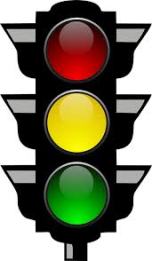
On the first day of school this year, I introduced and modeled a traffic light system in response to independent reading:

Green — topics I like to read about and topics that interest me.

Yellow — sometimes I like to read about these topics, and sometimes I don’t

Red — topics that upset me.  If I come across this topic in an independent reading book, I stop reading.

I modeled a response for my seventh graders, using touchy subjects that often come up in middle grade fiction.  I described divorce as a red topic for me, autism as a yellow topic, and illness as a green topic.  

Reader responses were fascinating.  Death and illness books were by far the most divisive, with some readers describing death as a green topic and others as a red topic.  Holocaust books were similarly divisive.  Many readers described enjoying books that were “sad, but not too sad.”  Some readers identified red topics that I would have never identified on my own as a potential tough topic (e.g. car accidents, physical disfigurement.)

imgresAlso interesting was that what I know about my readers’ personal lives didn’t always square with what they wrote about their reading topics.  Some of my readers seem to want to read books that mirror their real-life struggles.  Others want to veer far away from those topics.

Based on these responses, I adjusted some of my lesson plans slightly.  I had been planning to use parts of Lisa Graff’s phenomenal Lost in the Sun as a whole-class model for character, but based on these responses, I’m not sure all of my readers would appreciate reading about survivor’s guilt as much as I did.  Instead, I’ll use parts of Jason Reynolds’s As Brave As You to teach the same concepts.

I don’t see myself swooping in to warn a student before starting a book as lovely and potentially upsetting as Ms. Bixby’s Last Day by John David Anderson or The Seventh Wish by Kate Messner.  However, I want to continue the conversation about red, yellow, and green topics. As independent readers, we have a right to establish limits, and when we read a part of a book that approaches or goes over our limits, we have a right to put it down and talk to somebody about what’s upsetting us.


Amy Estersohn is a middle school English teacher in Westchester County, NY.   She also reviews comic books for http://www.noflyingnotights.com.   Follow her on Twitter at @HMX_MSE.

Using the Whole Book: A Nose-to-Tail #FridayReads

“Some books you read. Some books you enjoy. But some books just swallow you up, heart and soul.” 

I love this quote from Joanne Harris. I love her book, Chocolat, and truth be told, I really love the movie adaptation’s casting of Johnny Depp as Roux… for aesthetic reasons. Seems there’s a lot of love up in here.

Speaking of book love. It’s a rare and wonderful treat to see a student experience this type of consumption through reading, but it’s delicious when it happens in my own life as well.

My heart has been most recently consumed by Gloria Steinem’s new memoir My Life on the Road and this week it became a text I was sharing with everyone.
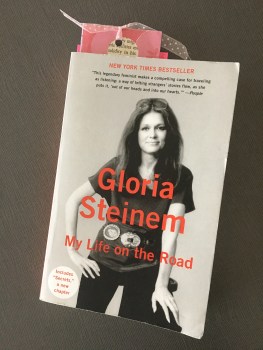
Now, don’t hurt me, but I’m a bit too young to have really appreciated Gloria Steinem’s political prowess, revolutionary movement for equality, and inspirational professional ascension to feminist icon firsthand. I had, however, heard the name and when I heard an interview with Steinem on NPR, I was immediately hooked by her candor.

Steinem was on All Things Considered, discussing the inspiration for her new book, and I caught the interview on my way home from work.

img_6045

Bookmark courtesy of one crafty Shana Karnes

Safety alert: I used the Amazon app on my phone to purchase the book while at a stoplight. Unwise, but enthusiastic. Book love makes you crazy.

Steinem’s explanation of her text as part analysis of family dynamics, part travel journal, part personal exploration of leadership, and honest look at how we all live, had me intrigued. The fluency of her voice had me convinced that her prose would float off the page as beautifully as her words were floating through my car radio. Her stories had me laughing and almost crying just in the course of a six or seven minute interview.

In short, I knew this would be a captivating book.

What I wasn’t prepared for was just how relatable, inspirational, and downright touching this memoir is.

And thus began my very public consumption of and by this text. In the course of a week, I have:

  • Book Talked this book to all my classes. I explained the above reading story to my kids and shared a passage with them where she talks about being a reader and writer. Perfect for my readers and writers! “Writing, which is solitary, is fine company for organizing, which is communal” (40). 
  • Shared several pages with my 9th grade colleagues working on character development in their classes. Steinem goes into rich detail about her father and the struggles her family endured at the whims of his wandering spirit. She then talks pointedly about how her own travel (detailed later in the book and familiar to those that know and devoured Eat, Pray, Love by Elizabeth Gilbert) was most likely inspired by her youth, even though she wanted nothing more as child then stability. Students could relate to those first few instances in life where we start to see our parents in our behaviors. (I’m personally turning into my father).
  • Used that same section on character as a mentor text with my sophomores to discuss narrative purpose. Steinem’s anecdotes about her father in this section are reminiscent of The Glass Castle by Jeannette Walls, but at the same time made several of my students laugh out loud when we were reading. The author’s voice here shows poignancy through her choice of heartwarming and heartbreaking stories about her youth. We analyzed each of the anecdotes that Steinem shares in this section by having students break up into groups and evaluate how the author might have intended to use that anecdote in her self-proclaimed purpose to show how she had long been embarrassed by her father.
  • Utilized a specific quote with my AP students for a quick write. We are currently studying education and focusing on an essential question of “To what extent do our schools serve the goals of a true education?” I projected Steinem’s quote of “When humans are ranked instead of linked, everyone loses”(44) on the board and asked students to quick write on their reactions to this in light of our unit essential question.

I have also raved about this book to my husband, colleagues, friends, and three-year-old daughter, to whom I’ve suggested that she must travel, embrace her power as a woman, and learn from everyone she can. She asked if we could play Candy Land. I may have a ways to go with that one.

But at the end of the day (and week, yay!), this is a book that tells the story of what it means to explore the world and find a home wherever you are and does so with a voice that will make you want to read, share, and repeat. As a bonus, it details the life of a budding writer. For students to read and digest the struggles, joys, and challenges involved speaks deeply to what we ask them to explore in our classrooms each day.

What texts have consumed you recently? How are you sharing them with your classes? Please comment below! 

Steinem, Gloria. My Life on the Road. Random House, 2015.

Booktalking Awards: Letting Students In On the Buzz by Amy Estersohn

downloadIf your readers have ever played fantasy sports or filled out a March Madness bracket, they’ve experienced the same feelings that book lovers do over awards announcements.   And just the way sports fans are making predictions about championship winners all season, readers spend all year making predictions about which books will win which awards.
The recently announced longlist for the National Book Awards’ Young People’s Literature category gives readers a lot to talk about.  When I introduced the list, I did a brief book talk on each title and added some color commentary as well.

Obvious picks: Pax by Sara Pennypacker, Raymie Nightingale by Kate DiCamillo, and Burn Baby Burn by Meg Medina are three of the best books I’ve read this year.  All three books have received heaps of critical praise from a variety of sources, including from Book Whisperer Donalyn Miller.   

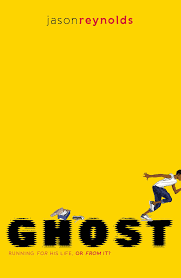
download-1Pleasant Surprises:  March: Volume 3 by John Lewis, Andrew Aydin, and Nate Powell, Booked by Kwame Alexander, and GHOST by Jason Reynolds.  These three books have tremendous teen reader appeal, and I was concerned that reviewers wouldn’t find them distinguished on their own merits.   

Unknown Quantities: When the Moon Was Ours by Anna-Marie McLemore, Sachiko: A Nagasaki Bomb Survivor’s Story by Caren Stelson, The Sun is Also A Star by Nicola Yoon, and When the Sea Turned to Silver by Grace Lin haven’t been released in bookstores and libraries yet, so it’s hard for me to weigh in right now.

Introducing these books to my readers was an effective way for books to gain exposure without my being the primary endorser.  I had five readers yelping for my two copies of Pax, I encouraged my graphic novel readers to check out March, and my World War II buffs are now deeply interested in reading about the United States’s aggressions in Japan.

I’ll continue to monitor the National Book Awards announcements for their finalist and winning books.  By then, I hope more readers will have a chance to read these books and chime in on how they feel about the results.

__

Amy Estersohn is a middle school English teacher in Westchester County, New York.  She  reviews comic books for http://www.noflyingnotights.com and is a judge for the CYBILS book awards this year.   Follow her on twitter at @HMX_MSE