Category Archives: Classroom Library

You Should Read the Book ______________________

Our Compass Shifts 2-1Like a lot of other people I know, I like books lists.

My friend Kelly posted a list on Facebook last week, challenging her closest friends to join her in a read-a-thon. I thought the list looked dull, the majority of the titles classics I had to read in middle and high school. I’d read 49 books on that list of 100, and the author had asserted “most people haven’t even read 6.” I was a lit major in college. I get it.

And I like to read. Most of my students do not.

I watch for interesting book lists because I am always adding titles to my classroom library. I watch for books that my students will read–like the books on this post: 21 YA Novels that Pack a Serious Genre Punch or this one:  15 YA Novels to Watch Out for This Spring.

See, these lists are more like temptation for bibliophiles like me than “These are the best books ever and you should read them” lists, which do little for the book addict in me. Huge difference.

I have a growing contention with anything “you must read.”  (Okay, not anything. I do require my students to read short works that we study for craft, and analyze and discuss together.) Too many students have told me it’s the force feeding of “boring” books that has made them hate reading.

I know that some might contend that it’s the way those books were taught, not the books themselves that turned kids off to reading. I get it. And I’m guilty of it, too. It’s not like I have never taught a whole class novel, but I doubt I ever will again.

I have a few colleagues who agree with me and many more teacher friends from across the nation who are more interested in developing readers than teaching books; my #UNHLit13 peeps Shana, Erika, Emily, and Penny for sure. Heather, too. She saw Kelly’s Facebook post, and I knew her ire was up when she commented: “I still have to ask. What makes these books more of a must read than any other book out there on the market?”

The topic must have lingered because she blogged about it here: Recommended Reading–Reading Lists. Heather’s question is a good one:

Who gets to decide what the BEST or the TOP or the MUST READ books are for

any given category of interest?

I recently read Janet Potter’s 28 Books You Should Read If You Want To and saved it to use as a mentor text at the end of the year when my students do their final personal reading evaluation. Potter asserts “What [book lists] miss is that one of the greatest rewards of a reading life is discovery,” and she produces a lovely list of ways we can decide which books we choose to read. That is what I want.

I want students to choose to read. 

“You should read the book that your favorite band references in their lyrics.

You should read the book you find in your grandparents’ house that’s inscribed “To Ray, all my love, Christmas 1949.

You should read the book whose main character has your first name.

You should read the book that you find on the library’s free cart whose cover makes you laugh.”

I am with Janet Potter.

Really.

You should read the book you choose to.

I hope that I can provide enough opportunity, enough time, enough titles that my students will have some kind of positive experience with books. I hope they will notice when people are reading, and they’ll peek at the cover and be curious enough to search out the title.

That’s what readers do.

We notice books. We notice others reading.


Dear Readers, how about we write our own list. Complete the sentence in the comments.

You should read the book ________________________________________.

Reel Reading for Real Readers: Girlchild by Tupelo Hassman

Oh, man. I love and hate this book. You have to read it. Then we need to talk about it. It’s that kind of story, a hauntingly beautiful coming of age story.

Here’s the book trailer:

And a NY Times review


I would love to hear what titles are keeping you up lately. Please share.

A Text Study with Paired Passages that will haunt your heart

This wasn’t my typical spring break. This year I spent most every waking hour either snuggling a tiny new grand baby or chasing her 17 month old sister. Grandmother heaven. Especially since my daughter and my only grandchildren live 1300 miles away from my home in Texas.

I spent my late evenings reading a handful of books from my towering TBR pile. Two have left scars on my heart. And as I look at my beautiful and innocent granddaughters, I pray: “Please protect these babies.”

The girls in these books were not so blessed. Both suffered abuse and heartache. I know it’s fiction. I get that it’s not real. But the haunting images so artfully crafted by these authors have shaped my thinking in ways that I’d never considered. My compassion swells for those trapped in darkness and fear.

And I hope I can serve as rescuer to anyone who needs a person to trust. I know many students come to school hurting, hungry, hopeless. If only we can offer solace and provide peace, comfort, safety. If only we can help them fight their way to light and love, and help them be the actors in their own inspiring stories instead of always being acted upon–

My students will want to read these books, so I will chat about them and share these passages.  They are rich enough for text study and I’m sure will inspire some insightful conversation.

from My Book of Life by Angel by Martine Leavitt p122

Skills Focus:  tone, symbolism, hyperbole, metaphor

The worst thing was

Serena ending up being stolen

by someone else’s story–

just a character in his story,

and the ending she wanted to have

got him instead,

just a part of his stupid story . . .

that was the worst thing of all.

I threw up again,

maybe with a chunk of heart,

and Call came in and I said,

do you see any bits of heart in there?

He said, you’re losing it,

said, this could all be over in a minute

if you take your candy,

and I forgot to answer because I was thinking,

he can’t have her anymore,

I’m writing a new end to her story,

I’m taking Serena’s story back.

Question:  Explain how the author uses the word story in this poem?

 from Girlchild by Tupelo Hassman p40

Skills Focus:  tone, details, euphemism, diction

Babysat

The metal flash of a pair of wire strippers, the unexpected shine on a Phillips head, these things cause the same fear in me, the same gut-tightening, ass-puckering panic as the midnight gleam of a switchblade. Chain locks have the same effect. And lightbulbs. You can find all of these at your local hardware store.

Sometimes Carol goes with Tony to Guido’s Pizza and leaves me at Ace. Tony is her boyfriend and he says having a six-year-old around all the time cramps their style, but I don’t like him anyway, be cue when I’m with them he either hogs the Close Encounters game or he hogs Carola and I never get a chance at either one.

Ace smells like orate hand cleaner and WD-40, and I pretend not to hear the adult talk that passes across the counter between the men of the town about certain women of the town as they pay the Hardware Man for their wood screws and drill bits. I also pretend like I never have to go potty. Because I don’t need help, but the Hardware Man will want to help me anyway. And when he helps me, the lights go out.

Question:  Explain how the author creates a tone of dread.

Paired passages question:  Explain how the passages are similar.

Learning Through Teaching

ocs

My student teacher’s last day was yesterday, and, frankly, I’m lost without her.  In eight short weeks together (less, when you count the 17 snow days), we have transformed each other as educators, brought our students to new heights, and had an exorbitant amount of fun.  I’m hoping she’ll take away a myriad of ideas as she goes on to a middle school placement, because I knew I’ve learned much from teaching her.

During the first semester of this year, I worked to implement the reading and writing workshop model successfully in my classroom. Things were going fine, but I felt that something was missing.  My students were producing excellent writing, and reading lots, but I wasn’t getting the magical results I wanted.  It wasn’t until I began mentoring Katie that I was able to truly understand the holes in my efforts.

After a few days of observation, Katie became familiar with the workshop model.  She knew that I used mentor texts as teachers, saw dialogue as an assessment measure, and read for craft and content in student writing.  She saw that workshop was collaborative–within it, my students and I responded to each other’s work as fellow readers and writers, not as teachers and students.  She took those foundational ideas and ran with them.

IMG_2373

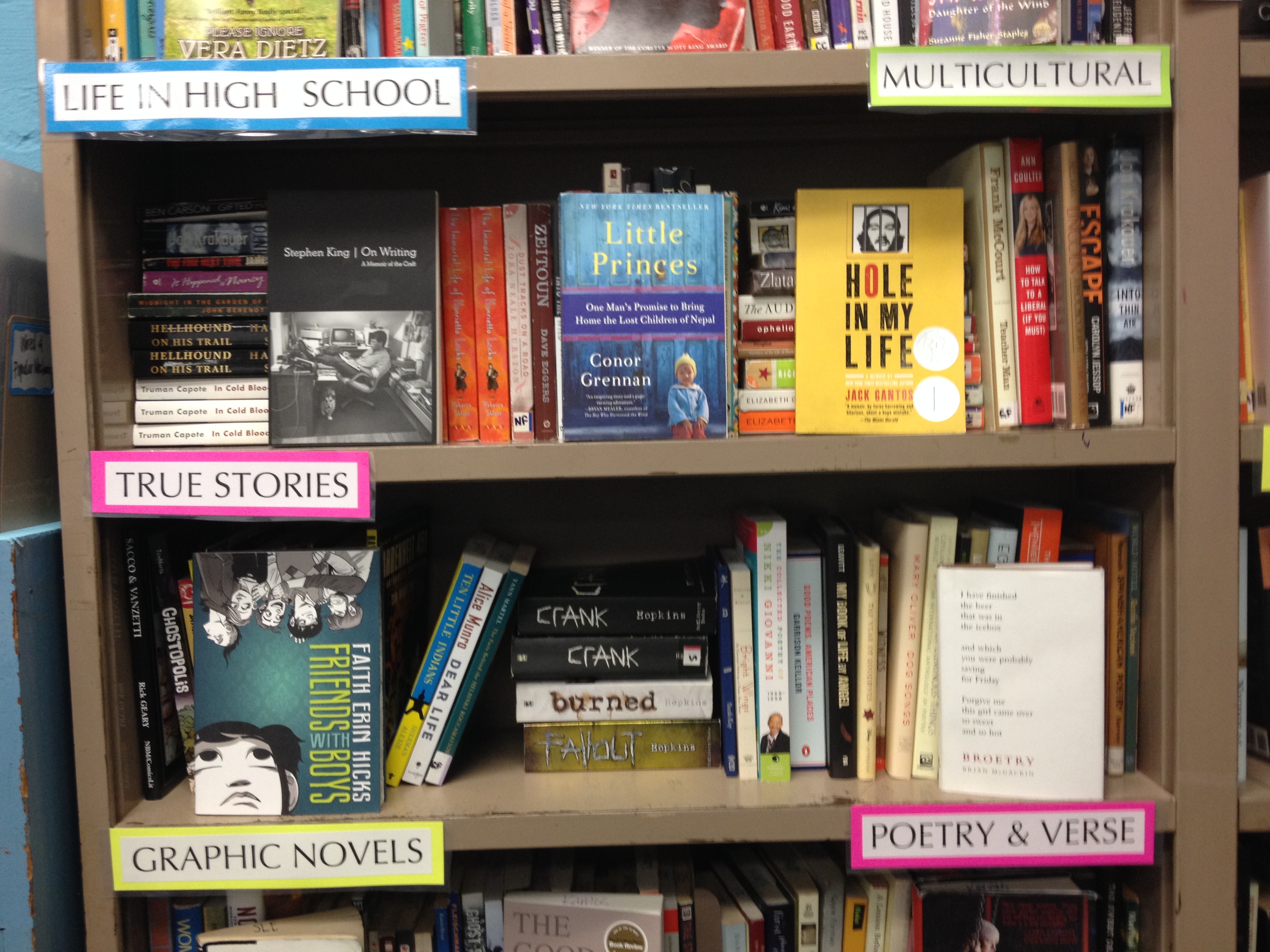
Newly-added graphic novel shelf

Katie taught students to write powerful, convincing letters of complaint to make claims they felt strongly about.  In her quickwrite prompts, she showed them how to break down visual texts, emphasizing analysis of pop culture.  Many of those videos she then used as mentor texts for public speaking skills, which helped her guide students through the writing of speeches and debates. She booktalked several graphic novels, a genre I had, before her arrival, been woefully uninformed about.  She blossomed into a confident leader of the reading and writing workshop.

As I watched Katie teach so passionately, with such new and exciting resources, I began to see a gaping flaw in my own first try at workshop:  I was relying too heavily on all of the texts, ideas, and strategies I knew and loved.  I’d worked hard to make them comprehensive–I’d sought them out from all genres, time periods, places, and people–but I was amazed by how many resources she used that I’d never heard of.  Katie Wood Ray says that our students should expect not only the best mentors of writing, but also teachers who will search for them.  Although I was constantly searching for good books, mentor texts, or strategies, I was not effective enough–where were these pop culture visual mentor texts?  My graphic novel shelf?  Oral, not written, speeches as products of the writing process?

As I reflected, I came to realize that I was relying only on my own cultural capital to create the best workshop environment for my students.  It was, by definition, impossible for me to extend my knowledge beyond what I knew, or knew how to obtain.  I needed more brains–brains with their own unique cultural capital–to help me bring diverse resources into the classroom.  Where could I find them?

IMG_2558

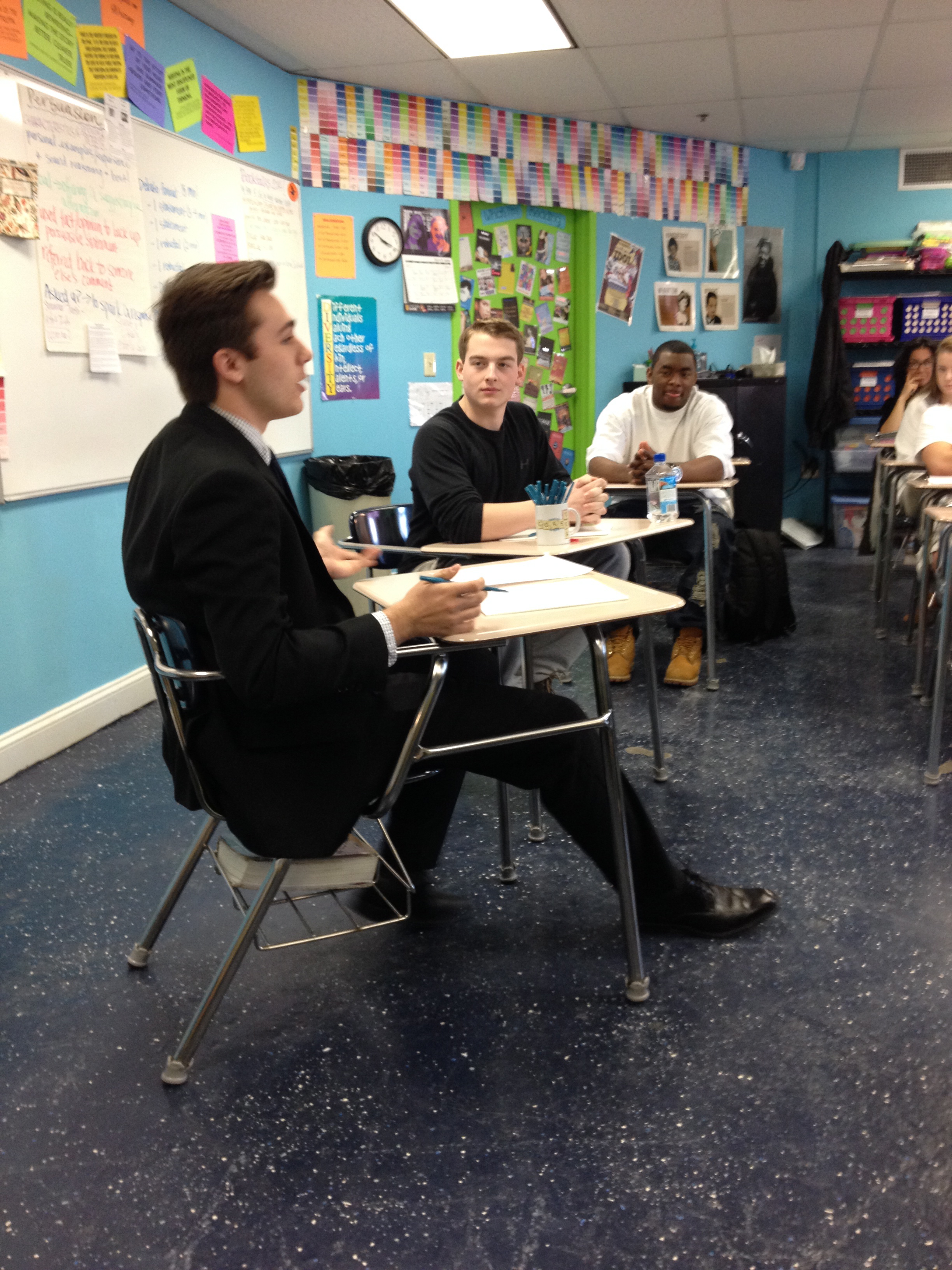
Zach and Brendan debate alternatives to the tardy policy

As I watched our students professionally, conscientiously debate each other, I saw from their products that they knew not just how to write and speak persuasively, but why that was important.  I watched thee audience, and saw students changing their minds about things they’d believed for years, slowly having their eyes opened not by the adults in the classroom, but by their peers.  They revised their scorn toward legalizing marijuana as Moshe spoke about his battle with leukemia, and the helpfulness of the medical marijuana he was prescribed.  They felt ashamed to write about why the drinking age should be lowered after Anderson spoke about seeing a neighbor killed in a drunk driving accident.  They questioned long-standing religious tenets after listening to Stephanie and Leanna debate the legality of abortion.  They were guiding each other to that which all teachers want their students to learn–critical thinking.

In struggling to be a mentor teacher for the first time, I realized that the power needed to be even less in my hands than it already is in the workshop–it needs to be in the learners’ hands.  In terms of Katie’s learning, she thrived when I let her just go crazy with her own wonderful ideas, instead of my giving her lots of suggestions.  In terms of my students, I saw that they benefited from being more regular leaders of the classroom.  I needed to do more than just give their writing importance by having them share it each day, or use their pieces as mentor texts, or listen to their suggestions about books, my writing, or my teaching.  I needed to let them take an active hand in designing the curriculum, so that they could teach and learn from one another.  Hence, a Eureka moment–the leadership in my classroom must by shifted to the students.

IMG_2599

Katie Bush, Super Teacher

This weekend, I’ll be sitting down to write my first lesson plans in two months.  Thanks to what I learned while teaching Katie, I’ll be designing structured leadership roles for my students–far more involved than the occasional student booktalk, or the daily quote sharing, or the class-by-class student mentor text.  I’ll arrange for every student to give a booktalk this quarter.  I’ll create a routine for all students to lead the class in a quickwrite with their own prompts.  I’ll ask them to suggest titles to their peers for literature circle texts.

I’ve learned much about the reading and writing workshop model by teaching it to someone else, and I hope I will continue to grow as I hand the reins over to my students.  Let this wild and wonderful workshop journey continue as the fourth quarter begins!

Reel Reading: Splintered and Unhinged

ReelReading2I had the book Splintered by A.G. Howard on my shelves for a long while, but with so many other books towering my TBR pile, I kept skipping over it — until I got Unhinged. Now, I am a fan of both. Take a look and see why:

You will never think of the Rabbit Hole or Wonderland in the same way again.

Tu Eres Mi Otro Yo

ocs While recently in the throws of February break rejuvenating away from the hubbub of the city in the quaint beach town of Montauk; Malcolm X and I were becoming intimate acquaintances.  We had been for quite some time, actually.  But it was here that I really started questioning him, his motives, and his overall sense of dedication to any cause he finds justified.  As I was making direct connections to my own beliefs and passions, my pen went haywire.  There was, by no means, enough blank space on the pages of this autobiography for my own thinking.  Out came the post-its.  The power button on the iPad came alive and my inquisition and deep thought went ablaze.  While X and I could not be more different human beings the ideal of commonality among passion elated me.

Later that very same day, I was introduced to Dr. Jeff Duncan-Andrade’s invigorating message that immediately added even more fuel to my already-burning fire.  From the moment I pressed play (thank you, Apple TV) I was captivated.  Jeff is an outstanding educator who believes there are three kinds of hope: material, critical and audacious.  He believes that our [urban] students are roses growing in concrete.  I mean, the city has always been referred to as the concrete jungle!  In order to really grasp the intensity and genuine love Jeff exudes with his message, you’ll have to watch for yourself.

There I was, hours away from the city and my students, yet never have I felt so connected.  X’s passion exudes from his autobiography; Jeff’s passion seeps through his pores as his care is so loudly presented; and my passion was turning up the waves in the ocean right outside my window.

On my drive back to work that first Monday morning after break, I made a promise to myself.  I promised to stay true to my passion and invite the new found passions I discovered to reside within me as well.  My focus was by no means on the road, it was zoomed in on Jeff’s mantra: Tu eres mi otro yo! (You are the other me!)  How could it not be?  How could I not be heading back to room 382 thinking, “Students, you are my reflection…you are what I see when I look in the mirror.  We are one.”?

As I headed into our building, my mind automatically trained itself on a female student that I have been working with for six months, but have yet to authentically connect with.  Today was the day that was going to happen.  The day had not begun, but I was sure of it.  I was sure of it because I was going to channel all of the passion, intensity, and love I gathered over the break and pour it all over this student.  I only hoped she wouldn’t mind!

As independent reading commenced I asked this student to join me with her new book, highlighter and pen.  It was a piece well below her reading level (as is typical of her reading selections), but the premise captured her attention immediately: females making decisions based on their desperate need for belonging among other female peers.  There’s no wonder.

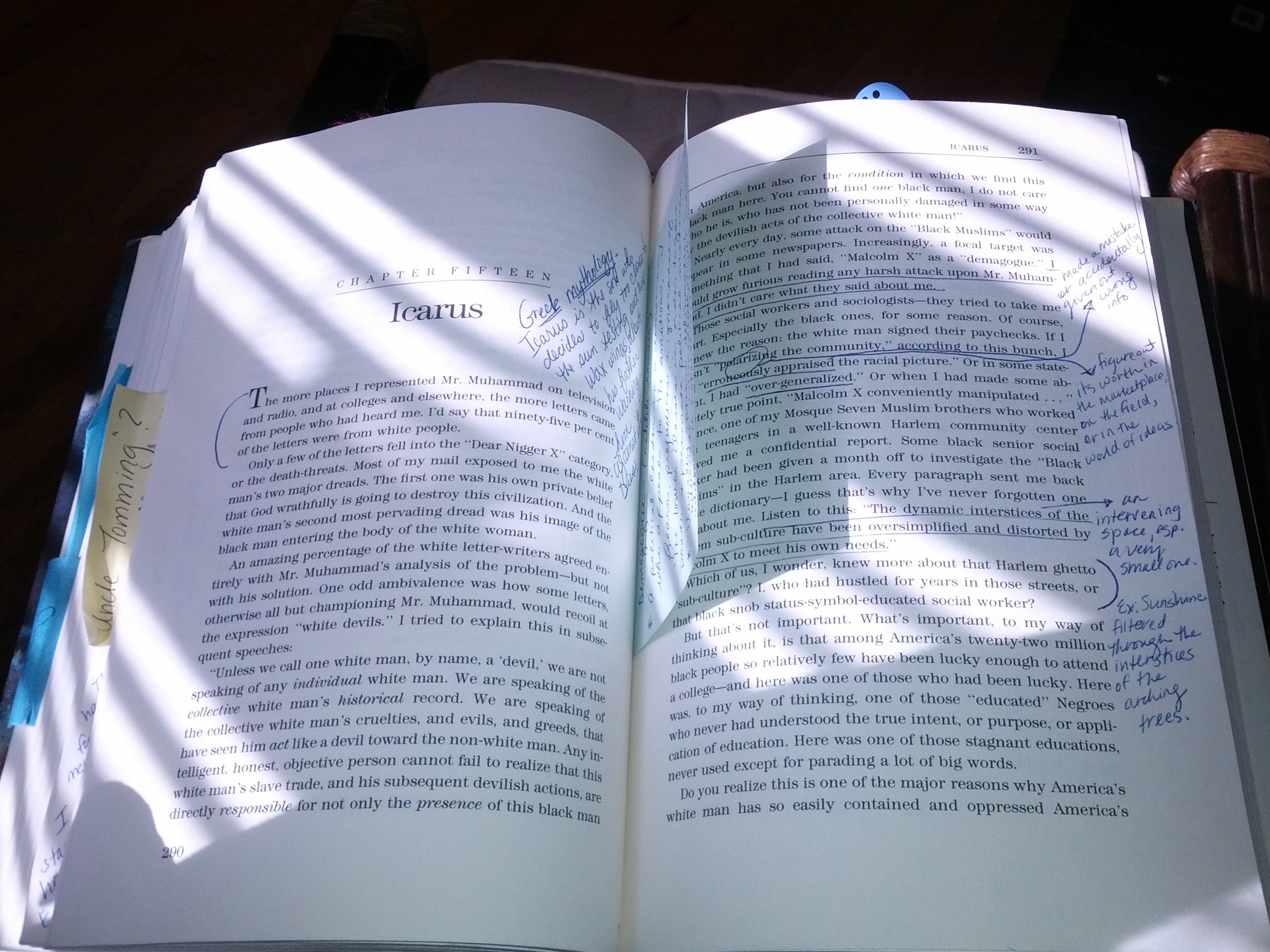
X followed me to class that day, in many regards.  As I put my chosen piece of literature on the table, a ‘huh’ surfaced from this female student.  I opened to the chapter titled Icarus.  IcarusI asked her if she knew what the title meant and the following is the dialogue that surfaced:

B: Nope.

Ms. B.: Neither did I.  I decided I wasn’t going to go any further into this chapter until I understood what this name resembled.

B:  Huh.

Ms. B.: So, I took to the internet and realized Icarus is the name of a Greek mythical figure whose father warned him of not flying too close to the sun with the wax wings in which he created for him.  But, he did.  And he fell straight out of the sky.  Can you imagine?

B: Wow.  Huh.  That’s interesting.

Ms. B.: Isn’t it?  Then, check this out…(I flipped to the last page of the chapter.)  Read this last sentence.  (B does.) Do you see it?

B:  Whoa.  It connects to the title.  It explains what you just did.  (Smile)

And it was at this moment, that the gathered passion, intensity and love I poured all over this student started to work its magic.  Because here’s what happened next:

B: Ms. Bogdany, how do you know what to highlight though?  I never know what to say — I mean annotate.

This may seem like a simple (and potentially expected response) but after working with this student since September, this was the very first time she was confident enough to be vocal with her inquiry.  From there we opened her book (with much fervor) and highlighted a portion that she noted.  I asked her what it meant, and she started to explain it…and, in her book, I wrote down her thoughts.  I then asked her about her own ideas regarding this concept, and (with the longest response to date) she explained her insights about the decisions the main character is making.  So, again…I scribed.  We discussed.  I annotated.  She smiled.

Ms. B.: Do you see it now?

B: Hahah.  I do.  It…it makes you understand more.  Thank you.

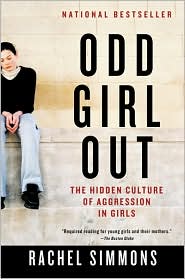
Before she left to resume this process solo, I pointed her in the direction of another female student who had just started reading:                                                                          Odd Girl Out

I explained the premise of this piece.  She raised an eyebrow.  I mentioned that when the other student was done, she may want to engage with it as it’s the same concept that envelopes her piece, yet it’s an informational, non-fiction piece.  This piece is more level appropriate for her.  Same concept, different genre, enhanced level.  We’ll see.

In the meantime, I noticed during the rest of our two hours together that day, B’s book kept finding it’s way back onto her desk; her highlighter was incredibly busy; and her pen was relaying her inner voice on those very pages that previously would have remained untouched.  And instead of refocusing her on the day’s lesson and activity; I whispered internally, “Tu eres mi otro yo.”

Reel Reading: All the Truth that’s in Me

ReelReading2This is cool. Author, Julie Berry, gives a book talk about her new book All the Truth That’s in Me.

While I like that Berry doesn’t come right out and reveal the setting of the book, and I like historical fiction myself, I have a difficult time getting my students to even give it a try — unless the book is set in the time of the holocaust.

I enjoyed reading this book though, and I believe it pairs well with early American literature. I’ll share this video of the author with my students, and maybe when I add my recommendation to her voice, I can get this intriguing and thought-provoking narrative into at least one student’s hands.

Reel Reading: Einstein’s Dreams

When Mrs. Mueggenborg recommends a book I always look into it. I don’t always like the same books Tess does, but more than anyone I know I trust her judgment when it comes to books. Tess was excited about this one and openly shared her intrigue.

Einstein’s Dreams by Alan Lightman, a thin little novel, with a whole lot of weight. Check out these clips and see for yourself:


And this interview with author Alan Lightman.

Reel Reading: Fangirl by Rainbow Rowell

ReelReading2I had hoped to save Eleanor and Park to read for myself, but I didn’t get to it before it jumped from my TBR pile beside my desk right into a student’s hands. This student is a voracious reader. I can hardly keep up with her. She read Rainbow Rowell’s first book in two days and loved it so, of course, I had to ask if she wanted to read Fangirl.

She did.

More students will, too.


Struggling for Structure

ocsHave you ever been out in public somewhere and automatically used your “teacher voice”?  You know the one I mean–the no-nonsense, I’m not kidding around, you had BETTER get with it this instant, voice of doom?  Well, that was definitely me, yelling at the TV, when I heard Punxsatawney Phil’s grim prediction for six more weeks of winter.

Punxsutawney-Phil-by-alemaxale

Here in West Virginia, our school district has had a record 13 snow days so far this year…and more bad weather is in the forecast.  I haven’t taught for a full week since December 2.  Don’t get me wrong–the first few days off were glorious.  I got all caught up on grading, read a few books (including the amazing Fearless Writing by Tom Romano–PLEASE check it out), and took some naps.  But after seven or eight of those days (stuck in the house, mind you), cabin fever set in and I was more than ready to be back at school…and judging by their chatter on Twitter, my students were, too.

To further complicate matters, I am hosting a student teacher for half of this semester.  Katie is wonderful.  Her openness, enthusiasm, and serenity amidst all of this upheaval has been incredibly refreshing.  We have wonderful curricular conversations and push each other to be the best teachers we can be.  She is only with me through the end of this month, and while my students and I will miss her, I know two things:  Katie will be an excellent teacher on her own, and I’ll be glad to be back at the helm.

As if that weren’t enough, testing season is upon us.  We’ll lose several days this month to a state online writing assessment, and more next month for the reading portion.  There’s nothing like a marathon of standardized testing to suck the joy right out of reading and writing.

What all of this mayhem has made me reflect deeply on is the importance of structure in the workshop model.  In many ways, structure–repetition, transfer, organization–is the heart of the reading and writing workshop.  One of the core tenets of this method is the goal to encourage our students to be lifelong readers and writers.  The vast majority of my general level students are still a long ways away from that.  We made great progress during the first half of the year, but with this extended interruption of our time together, things have changed.  Without structure, the gains my students experienced have been, in some cases, lost, for a few reasons…

IMG_2209One: my students do not have ready access to books, plentiful time to read, or constant encouragement from me to find both.  My kiddoes are coming to class at a complete loss as to what to read next, and some can’t even remember what they read last.  With no bookshelves at home and no way to get to a public library through the nasty weather, they need lots of help to find new, high-interest texts to draw them back into reading.

Two: my students have lost the reading and writing stamina they have built up.  It has been two full months since we’ve had a regular week of learning, so they are mentally sluggish–almost like they are on the first days of school.  The automaticity they’ve developed as learners has stalled, and they must work now to rebuild it.

IMG_1947Three: my students are struggling to see continuity in our work together.  As Katie and I have tried to work with them on crafting strong arguments that still bear the hallmarks of good writing, we have encountered obstacle after obstacle to the transitions, previews, and reviews that scaffolding consists of.  I am seeing the effects of this on their products.

Luckily, I’ve had a lot of time off to contemplate a solution to this unique problem.  I feel thankful that the community we have established in our classroom is intact, as it will be easier to dive right back into the work of reading and writing.  My students and I trust each other:  they know I trust them to be independent readers, writers, and thinkers, and I know they trust me to steer them in the right directions.

First, I will redouble my efforts to begin class with exciting, diverse booktalks.  Katie has introduced me to some new titles and reminded me of some tried-and-true home runs–Persepolis by Marjane Satrapi, Beloved by Toni Morrison, and Will Grayson, Will Grayson by John Green and David Levithan.  I will add these and other titles (or more copies of them) to my library, recommend them heartily to my readers, and then wait patiently for meaningful dialogue to emerge.  I’ll see it in reading conferences, Big Idea Books, and book blogs.  My hope is that this injection of freshness into the winter doldrums will awaken my students’ inner readers once again.

IMG_2245

Next, I will work to reacquaint my students with the visceral joy of writing through introspective quickwrites.  I want them focusing only on enjoyment with their informal writing…we will take a break from Kelly Gallagher’s marvelous articles of the week for now and will lean heavily on Linda Rief, Ralph Fletcher, Penny Kittle, and Georgia Heard for inspired notebook prompts.  I fully hope to see meaningful, serious writing in my students’ journals as they return to thinking of themselves as authors.

Lastly, I will use the energy from the long break I was given to fuel my passion as I teach.  I’ve heard people say that if students are truly independent learners, they can learn without a teacher…but I believe the leader at the head of the classroom is incredibly important.  I know for a fact that on days I have that extra cup of Starbucks Pike Place coffee, and I’m really on fire, my students get more out of my teaching.  I’ll recommit to my enthusiasm for, and teaching of, all things reading and writing.  I am hoping that this will carry both my students and I to the end of our now-extended school year.

So, 13 snow days, an amazing student teacher, a feisty groundhog, and two standardized tests later, here’s what I know: structure is important.  It is a NEED in the workshop, as well as in reading and writing.  Without it, growth and learning cannot occur.  In retrospect, perhaps a bit of lobbying for year-round school is in order…but I’ll save that blog post for another day.