Category Archives: Classroom Library

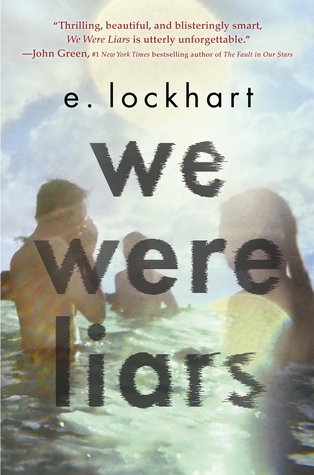
Sentence Imitation with We Were Liars

I listened to the audiobook, and liked the novel so much I had to go and buy it in hardback for my classroom library. The story still haunts me. (I read it soon after I read Jellicoe Road, and that story haunts me, too. These two books make an interesting pairing.)

The following is the beginning of chapter two in We Were Liars. It’s an compelling list of sentences that create the the basics of what we need to know about our protagonist. It will be an interesting passage to use for sentence imitation.

I wonder what my students will say about themselves.


We Were Liars by E. Lockhart P4

My full name is Cadence Sinclair Eastman

I live in Burlington, Vermont, with Mummy and three dogs.

I am nearly eighteen.

I own a well-used library card and not much else, though it is true I live in a grand house full of expensive, useless objects.

I used to be blond, but now my hair is black.

I used to be strong, but now I am weak.

I used to be pretty, but now I look sick.

It is true I suffer migraines since my accident.

It is true I do not suffer fools.

I like a twist of meaning. You see? Suffer migraines. Do not suffer fools. The word means almost the same as it did in the previous sentence, but not quite.

You could say it means endure, but that’s not exactly right.


Growing Readers

Autumn in my New Hampshire school district.

Autumn in my New Hampshire school district.

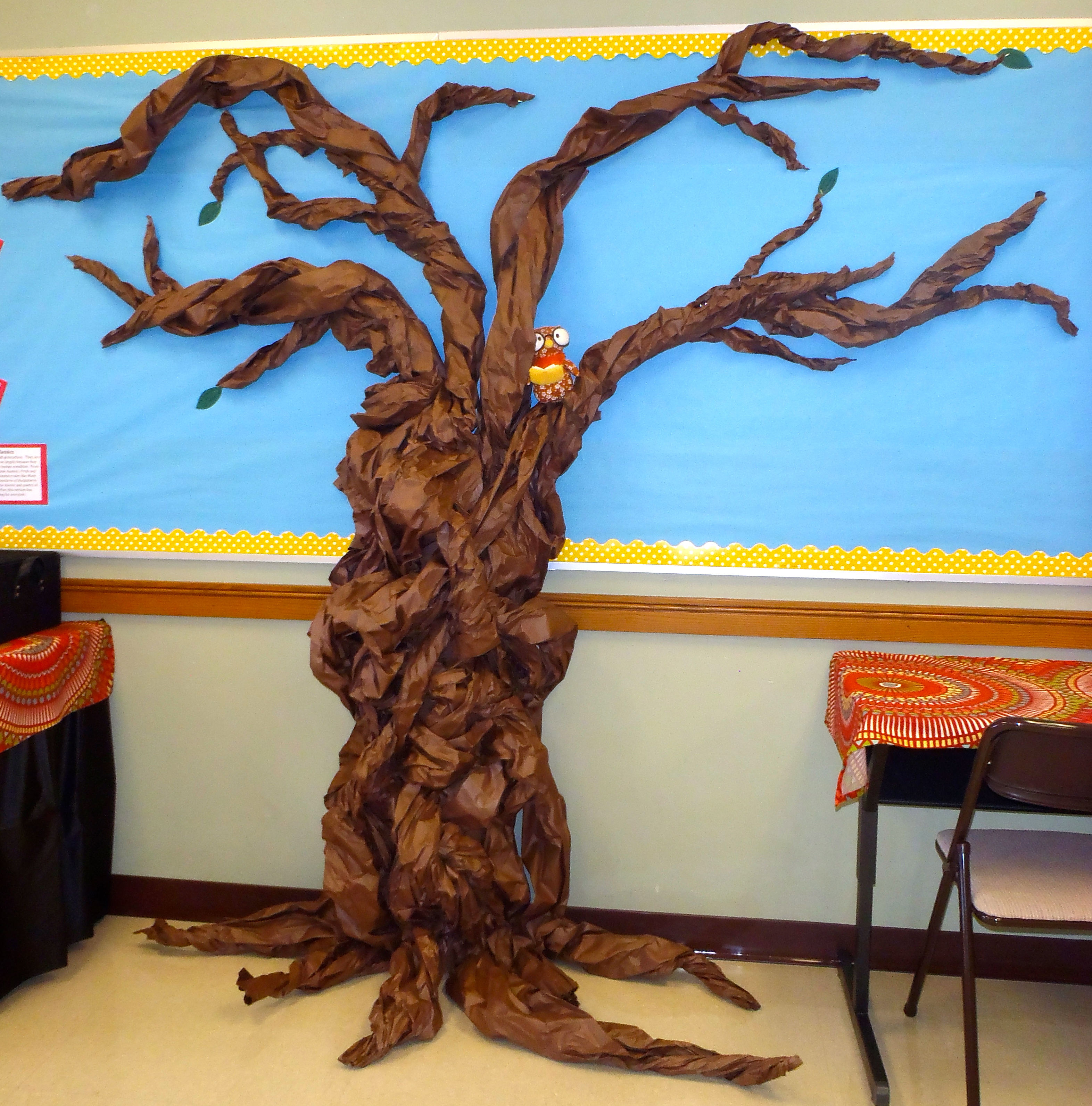
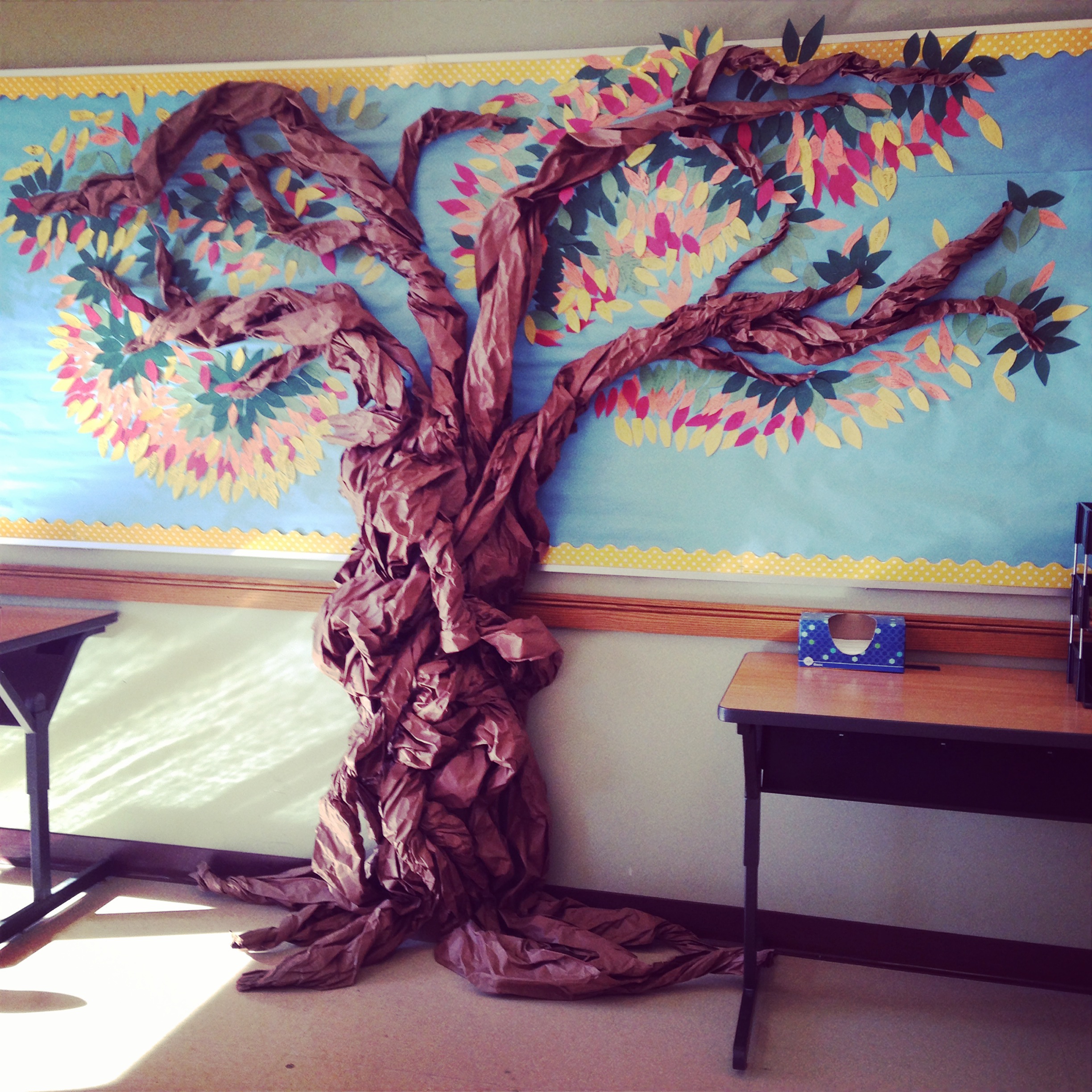
In New England, where I teach, time is measured by temperature. New Englanders cherish Indian summers (the bout of warmth before fall settles in); we sense the bite of autumn, and can smell an oncoming snow. We are a community of seasons, and ultimately these changes dictate the course and development of our year. In turn, to show the development of my classes’ reading progress throughout the year, I drew my inspiration from what New England is famous for—its foliage. To visually represent my classes reading progress within the reading workshop, I developed a reading tree.

The concept of the tree is simple: for every book read, students received a leaf. On the leaf they wrote their initials, the book they read, and the author. They would then staple the leaf to their class’ branch. In turn, students had a visual representation of their individual progress (because they put their initials on the leaves) as well as their class’ progress. They would look to the tree to see what books were the most popular/appeared on the tree most often.

The bare tree before students arrived.

The bare tree before students arrived.

The reading tree exhibits student work and promotes individual success. In addition, it also reinforces teamwork since students look to see how their class is doing as a whole. Furthermore, the tree inspires friendly competition between classes. When I first introduce the tree, I tell students that the class with the most books read wins an ice cream party at the end of the year. This year, due to increased federal health regulations on snacks during the school day, my rules have changed. Instead, students will be able to drop two of their lowest reading scores. Unlike last year, I will tally the total books per class every quarter instead of at the end of the year to determine each quarter’s winner.

Construction for the tree is relatively simple and can be used from year to year.

Materials:

  • One concrete form tube sawed in half. I purchased mine from Home Depot and they sawed it in half for me
  • Two cans of brown spray paint. I used a textured spray paint similar to Rust-oleum’s multicolored textured spray paint, but you can use any type
  • A ream of brown paper—the same type you use to cover bulletin boards
  • A staple gun and staples.
  • Four packs of different colored paper for the leaves.
  • Brown or black duct tape
  • Bulletin board

Process:

  1. Spray paint the concrete form tube with the two cans of brown spray paint. This will serve as your trunk.
  2. Pull large sections of the paper of the ream and begin twisting the paper. As you twist the paper, begin stapling it to the concrete tube using the staple gun. Continue ripping off multiple pieces of paper from the ream, twist and intertwine them as you go along. This will make your trunk look three-dimensional and more realistic. Leave long ends on the bottom. Twist these to a point to create the roots of the tree.
  3. Before you get to the top of the trunk, fashion what looks like a strap. I did this by taking a piece of the brown paper and folding it to make a 2’ X 6” rectangle to wrap around the top of the trunk and affix to the wall. I reinforced the back of the piece of paper with brown duct tape. I then put this strap around the front of the trunk where the bulletin board first meets the concrete tube. I stapled the strap to the tree then the excess ends of the strap to the bulletin board to ensure that the tree wouldn’t fall over once it was complete.
  4. Finally, I continued twisting individual brown pieces of paper and then layering them by twisting multiple pieces together to create a thicker branch. Make sure to create a branch for each of your classes that will be participating.
  5. As you create the larger branches, staple them to the bulletin board. Because the paper is pliable, it is easily to manipulate to look more like a tree. Add smaller branches by twisting additional paper scraps.
  6. Cut out small leaves and store them in a jar or bag to give out to students as they finish their books. I usually have a volunteer cut them out for me so that I have a bulk amount for each quarter.
  7. Get excited to watch your tree (and readers) blossom!
    The reading tree full of leaves at the end of last year.

    The reading tree full of leaves at the end of last year.

While the tree may look complex, it does not take an extraneous amount of time to complete or teach to students. Last year, I allowed my classes to pick which branch they would like to use. Furthermore, I color coded the leaves based on the quarter. Each quarter, I would let my students pick the new leaf color. Green was the first quarter, red was second, orange was third, and yellow was fourth. Just as fall foliage shows the change of seasons in New England, the changing leaves showed my students their development and growth as readers throughout the year.


What is the “soundtrack of your rebellion?”

I liked this book in a lot of ways, and I hated it in others. Maybe because my heart is too soft for all the heartache and suffering of these children. The mother in me couldn’t stand it. Maybe because my Christian heart couldn’t stand the hypocrisy of so many people calling themselves Christian, the parents included. My friend raved about how her students devour this book. It has left me unsettled, but I do think many students will like the emotion this book evokes. It’s just not my kind of emotion.

This is a passage that I think my students will be able to make a connection:

Jesusland by Julia Scheers P159

That day I realized I wasn’t immune to my father’s violence. For years, while my brothers were whipped and I was spared, I thought I had some kind of biological privilege — that my father wouldn’t harm his own genetic material. But in their absence, my father didn’t have anywhere to train the spotlight of his rage on but me.

So when my parents left for another missionary meeting in California and the nurse from my dad’s clinic who was staying with me caught Scott climbing out of my bedroom window one morning, I left home. If my father wanted to choke me over a forgotten milkshake, what would he do to me for losing my virginity?

I moved in with my brother Dan and his three roommates at Purdue and found a part-time job as a busgirl at the Howard Johnson’s Hotel on Highway 52. I biked to work, and to Harrison –an hour’s ride away–if I couldn’t find someone to drive me. I didn’t go to school if I wasn’t in the mood for it, and a couple of teachers threatened to flunk me before passing me with D’s.

Although I was dirt poor–I paid half of Dan’s rent, and frequently resorted to eating off the room service trays I was sent to collect from the hotel hallways–I was happy. I didn’t have to go to church, spent hours watching MTV, and didn’t need permission to do anything. I was free.

I listened to Van Halen’s “Running with the Devil” on my Walkman as I rode through the streets of Lafayette on my bike, rewinding the cassette tape again and again.

It was the soundtrack of my rebellion. That was me, running with the devil. Doing bad things and liking it.


I wonder how students would respond to this question:  What is “the soundtrack of [your] rebellion”?

Mentor Texts Are Everywhere!

This time last year I was amidst a mad dash – a mad dash in seeking out, organizing, asking about, researching, contemplating, and gathering the ‘best of the best’ of mentor texts.  I had just learned what a mentor text was (text that, well, mentors!) and wanted to make sure I had a plethora to kick off the school year.  And, I did.  I had gathered so many I wasn’t even sure when, and in what context, I would be using them.  But, they were ready and I felt confident that I was too.

This year, it’s a bit of a different story.  After implementing the Reading Writing Workshop model in my urban oasis for the first time this past school year, I realized there is no longer a need to be dashing about.  Mentor texts are everywhere!  Literally.  They are in the morning’s newspaper.  They reside in the autobiographies I always find myself engaging in (and of course, loving).  Articles promulgating the Twitter circuit for the purposes of dissecting content and craft.  Classics, more modern, and everything in between became focal points of inquiry and investigation.  Students’ independent reading books shed light on crafty moves authors strategically choose to utilize.  On occasion, an excerpt from professional development texts deserved a public viewing (sometimes with scrutiny, sometimes not).  Nothing is off limits.

So, it is no wonder that as I have been reading a vast array of literature this summer; I have new mentor texts lined up for this coming school year that I am thrilled to explore with my students.  So, grab your Writer’s Notebook and flip to your Next-To-Read list.   I hope you not only fall in love with these pieces, just as I have, but they inspire you to think about what you’re reading and how you’d like to share them with the brilliant and inquisitive minds occupying your learning community.

Making Meaning with Texts: Selected Essays by Louise Rosenblatt was first introduced to me in this summer’s UNH Literacy Institute via Penny Kittle’s Book Love course.  This piece sent a buzz all throughout the campus as we were asked to read it for homework and come prepared to discuss it the next day.  Before the night was through, classmates were chronicling their amazement and joy with Twitter posts such as:  “Reading Louise Rosenblatt for homework and keep saying “Amen, sistah!” in my head. #unhlit14″.  So, you can only imagine how this Reading Theorist evoked an awakening in us all.

IMG_20140630_221534

It was when I came to this paragraph that I realized I had just stumbled upon an incredible mentor text; not only for myself as an educator, but for students as well.  What better way to expose students to the questioning and thinking behind our reading and writing than by sharing the source with them?  These questions are going to guide us through our reading (and writing) journeys this year.  We are going to study these questions, make sense of them, put them into practice; but, we are also going to really delve into why Rosenblatt has chosen these questions to guide us.  See, that’s where exploring craft and an author’s intention becomes our focal point.


battle 1

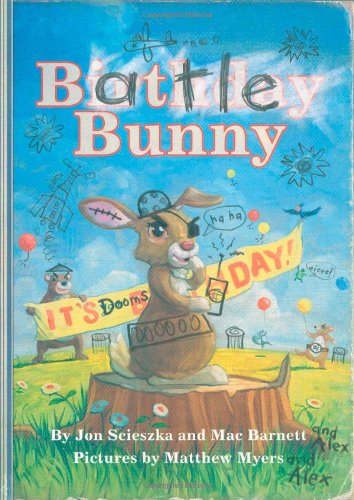
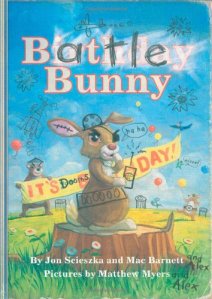
Battle Bunny by Jon Scieszka and Mae Barnett is a clever and witty piece that is sure to get students charged up about editing and revising.  How could it not?  This entire piece chronicles the the narrator’s (yes, the bunny) stylistic and creative writing journey.  The entire story is marked up, crossed out, reworded, and illustrated to show the power of the writing process.  It’s beautiful.

While I educate students ages 16-21, and this piece (I’m sure) was not intended for that audience, I believe this mentor text will be a lighthearted way to quell some of the fears that override their writers’ anxiety.  We know, many students are uncomfortable and afraid to revise, rework, or allow their time-intensive writing pieces to become ‘messy’.  Yet, that’s what produces the most profound writing.

battleI know this may be a risky move in my classroom.  Yet, I’m going to take a chance.  I anticipate shared laughter as we navigate this piece together.  I also plan to explore the bunny’s intentions and make it relevant for our work as writers:  Why did he feel the need to rewrite the story?  Do the illustrations add to the message he is portraying?  Do any of his original thoughts (verse his revisions) feel more powerful to you?  What intentional moves did he make in re-creating this story?  And on and on.

IMG_20140812_121342

Destined to Witness: Growing up Black in Nazi Germany by Hans J. Massaquoi is a piece I have not been without this entire summer.  And, although I’m finished reading it, I find myself flipping through the pictures over and over; it’s that profound. Massaquoi is a mentor of life, overcoming adversity, obtaining the (perceived) impossible, and what it truly means to be human.

Journalist by trade, Massaquoi takes such grace in his every word, sentence, and strategic ‘move’ that’s crafted.  This book encapsulates 443 pages of sheer brilliance and I want students to be exposed to this kind of writing because they too, have the ability to craft such beauty.

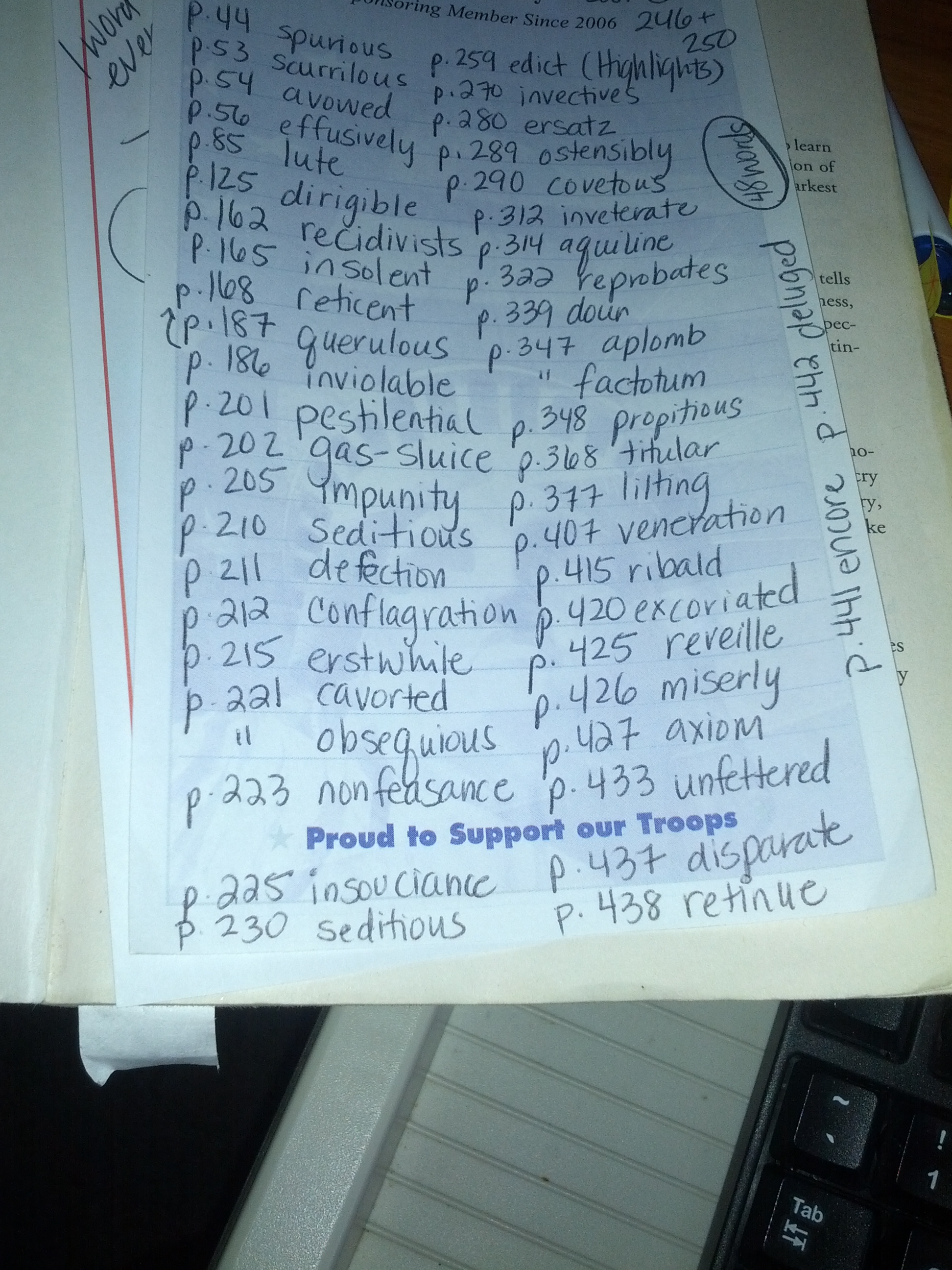
I also want them to catch a glimpse into my journey while reading this piece (note post-its) because I want to share what I found fascinating.  I want to explore some of the word choices (see my unknown word list) IMG_20140812_121513and talk strategy.  I want to use some of these words within my own vernacular and challenge students to do the same.  Most importantly, I want to show them that reading is a process; not one to shy away from.  And yes, sometimes it takes work, but overtime it becomes natural…and wildly fulfilling.
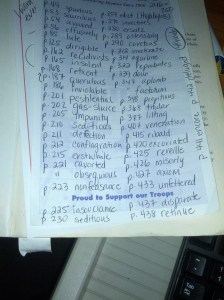
I can’t help but think, above and beyond the work I plan to do with this text, that the historical context won’t propel students in their study of history as well.  World War II and the Holocaust have rarely been depicted from the racial standpoint in which Massaquoi portrays.  This just may be a piece that peaks enough intrigue among students that they too will add it to their Next-To-Read list.  That’s my goal.
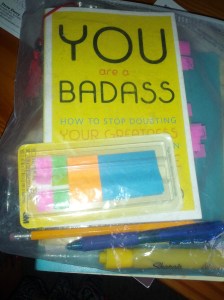


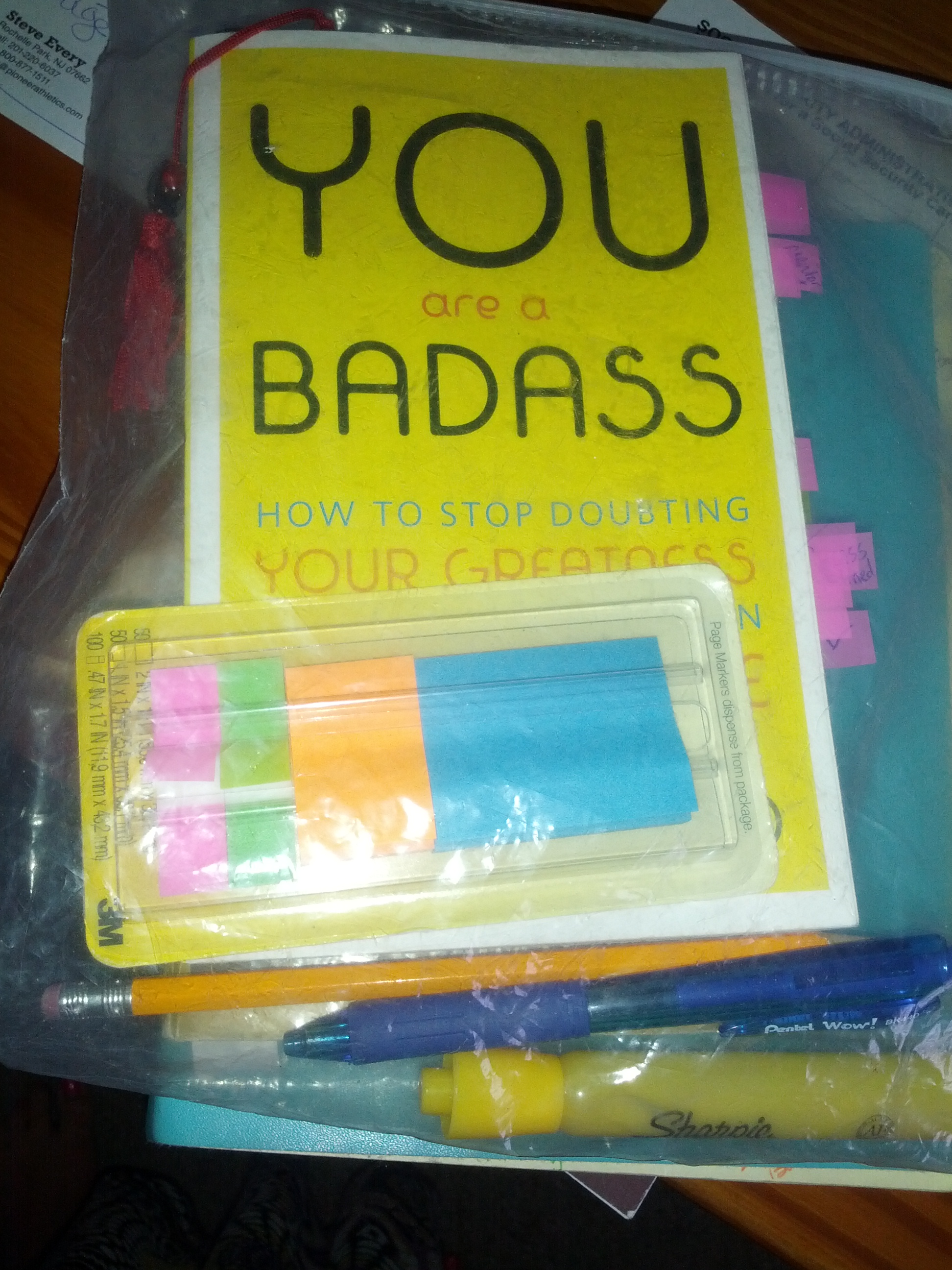
IMG_20140812_124058You are a Baddass: How to Stop Doubting Your Greatness and Start Living an Awesome Life by Jen Sincero has found its way into my Survival Book Kit and I love it!  I’m just past the first thirty pages, yet I have not stopped laughing.  Yes, out loud.

Sincero most definitely has a way with words.  She is edgy and a straight shooter for sure.  Yet, she is able to talk about really serious life-changing ideas in a way that feels ‘light’.  Not your typical self-improvement piece.

I want students to see how infusing humor among the serious can be oh-so-powerful.  Utilizing analogies to talk about the conscious and subconscious mind provides readers visuals…imagery.  A way to process this vitally important information that can shape their lives.  In only the most positive of ways.

I plan to choose the excerpts from this text skillfully.  I want students to have access to the content and the craft…as always.  I do foresee really rich one-on-one reading conferences with those that decide it’s time to make a change in their lives, or at the very least are up for a great laugh, and decide to take this piece on independently.

I hope my four have inspired you.  I really do.  I hope it will do the same for my students.  I encourage you to also share your favorites, here on this site.  As we all gear up for an incredible year to come, and we are swiftly shifting into our ‘going back to school’ mode, this is a wonderful time to start thinking about what we’re reading in a way that lends itself to the idea of being a mentor text.  Articles, books, poetry, graphic novels…all are welcome.


Workshop Report Card

The school year is over, and grades are due.  As we teachers focus on finishing up those last stacks of papers and giving our students final evaluations, it’s also very important for us to reflect on our own practice for the year.  Since this was my first year at a new school, and my first year using the reading and writing workshop model, I find that this year it’s especially essential for me to self-evaluate.  So, what follows is a frank and honest report card for my own teaching, with the hope that you, dear Reader, can learn from my successes and shortcomings.

DSC_0115

Nick B. with his “read” pile

One thing I feel great about this year is my success with independent reading.  My students were avid readers of the huge variety of books I booktalked (with an inordinate amount of energy), and they felt so proud of themselves for their reading achievements.  I do not have any Honors, AP, or advanced level students–I have only general kids who have never really felt “academic” before.  When they stacked up their piles of books in the last few days of class, their smiles were contagious when they realized just how many pages they’d read.  Although it was very successful this year, next year, I will change a few things about my IR program.  I will not conference during reading time–I’ll combine reading and writing conferences to streamline our talk time and not interrupt the sweet silence of reading.  I’m also going to strive to get kids booktalking earlier–this year they didn’t start until 3rd quarter.  Lastly, I’m going to try to get a bigger variety of books for my students to read.  One genre many kids requested was “redneck books,” which absolutely cracked me up at first until I realized just how rarely they saw characters like themselves in their reading.  I’ve got to find more along the lines of Where the Red Fern GrowsTo Kill a Mockingbird, and Rocket Boys.

DSC_0144

Hannah B. with her “read” pile

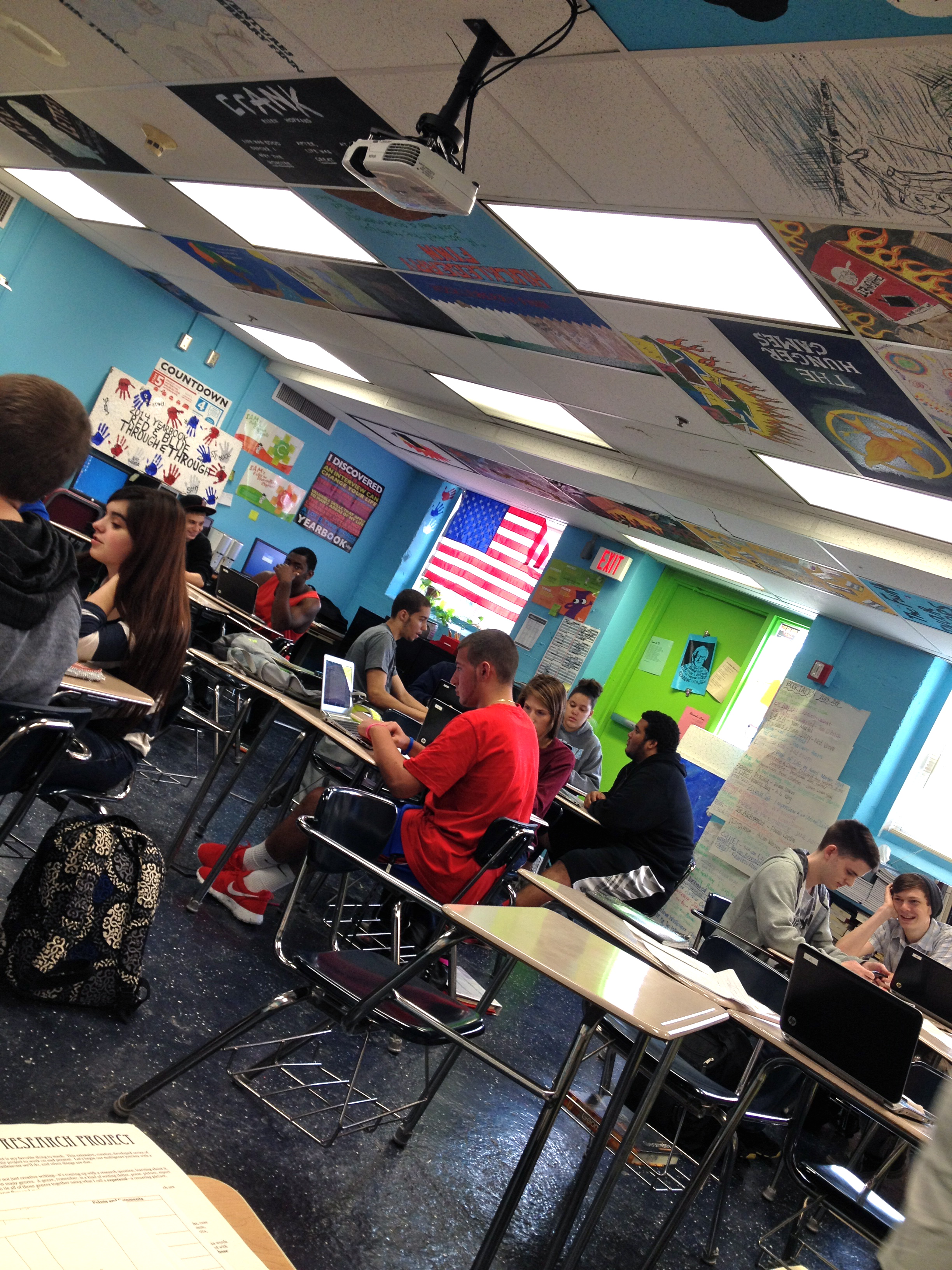
While I’m glad my students are reading tons independently, I’m less than pleased with how our whole-class reads went.  Last year, some of my favorite teaching moments were discussions about classics like Fahrenheit 451 and A Separate Peace.  My students connected with those books, but this year, they didn’t.  We did a whole-class play that they read silently, a whole-class novella, and then literature circles with a choice of four classics.  Each experience was painful.  The kids were not engaged, and in the unfortunate honesty of adolescence, very vocal about their displeasure.  Next year, I need to remove all of the things they said they hated–deadlines for reading, boring books with irrelevant themes, and reading groups that I picked.  I think I’ll relent and do the play as a read-aloud, allow them to choose reading groups for literature circles, and try to pair classics I think are important with contemporary texts to try to hook their interest.  I will keep the assessments I used, though, and allow them to paint ceiling tiles, make book trailers, and write songs about their books.

DSC_0185

MGPs

In terms of writing, I think our formal, higher-stakes writings were more successful than quickwrites and prompted writings.  Multigenre projects were AMAZING this year (just look at that stack Lizzie is investigating; have you ever seen a pile of papers to grade so colorful and filled with passion!?!?), as were extended narratives, scenes, and letters of argument.  I truly enjoyed reading, responding to, and evaluating every single typed, revised piece my students handed in.  However, writer’s notebooks were slightly more painful.  Toward the end of the year (after those 19 snow days), many students started to get that glazed look in their eyes after only about five minutes of journal writing.  I feel like this was a major failure on my part–last year my students absolutely adored free writes, creative writing prompts, and the like.  This year, I think I was less than cohesive with how my prompts aligned with whatever else we were doing in class.  Next year, I’ll plan them out more carefully and focus on getting them to contribute to an overall theme/minilesson/unit, and work on rebuilding my students’ stamina after interruptions like snow days and breaks to get them writing more fluently and comfortably.

IMG_3318

Students write beneath our book-painted ceiling

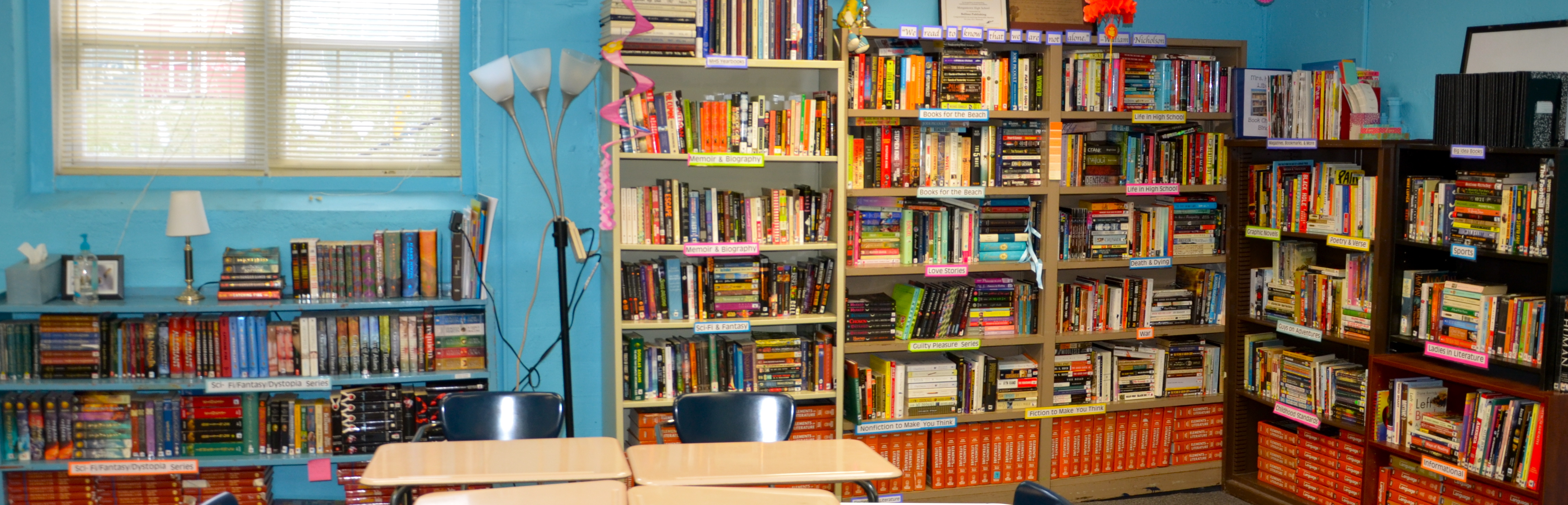
All of the business of workshop was tough for me–I’ll admit.  Conferring/note-taking during class and writing EVERY assignment beside my students cut out any and all time to take notes/attendance, grade/organize papers, or even run to the bathroom.  I think that without the luxury of a 90-minute plan period every day, I would not have been able to successfully execute this model and keep my sanity.  Because I had that much plan time, I was able to design really cool, research-based assessments, lessons, and activities.  I also had a lot of time to respond thoughtfully to student work, self-reflect, and, most importantly, write grants.  Without those grants, I would not have been able to build my library to its strong state, order the supplies necessary for the no-limits creativity of multigenre, or even provide my students with little necessities like writer’s notebooks or pens and pencils.  I’ll definitely continue to spend all of my free moments at school on grant writing, grading, and other housekeeping items so that I can devote my attention fully to my students during class time.

Overall, I think I would give myself a B as a teacher this year, but the workshop model itself gets an A+.  I feel amazing about how much my students have grown, and I know it’s because of doing the reading and writing workshop.  I am so fortunate to have met Penny Kittle, Amy Rasmussen, Emily Kim, Erika Bogdany, Jackie Catcher, and many others last summer–because they introduced me to this model, I know my students were immensely more successful than they would have been otherwise.  However, I know that there are huge improvements I can, and will, make for next year.  I can’t wait to spend the summer learning with and from those colleagues again, along with some new ones, about how to become a better teacher.  I know that I’ll use what I learn, as well as the free time I’ll use to reflect, to make next year even better.

DSC_0176

Classroom library at the end of the year

Reel Reading for Real Readers

ReelReading2For about two years now I’ve posted book trailers, author interviews, and a few other online resources (like the amazing Pinterest boards for The Goldfinch and Alice Bliss) as a way to help guide my students into the world of reading.

I’ve found there are two prime ways that students get interested in a book.

1. I have to love it. If I read a short passage and share my experience while reading a certain book, and students see how it made me think or made me feel, without question, at least one student asks immediately to check it out from my classroom library. Usually there’s a waiting list.

2. I have to help them “see” the book. If I show books trailers, even movie trailers, and help students visualize the story line or the characters or the action, even my struggling readers are more likely to at least give a book a try. Sometimes that’s all it takes.

I have had great success in developing readers this year, especially this year. Maybe I finally figured out how my personal passion for books can work to accelerate student interest in books. More likely it’s the time I allowed for my teens to explore the bookshelves, talk to each other about what they are reading, and the time I gave them to read. Every. Day.

My students will evaluate their reading lives next week as the last task I ask of them. They will interview each other and think about our growth as readers. I know that talking about books, showing book trailers, (and investing a lot of time and money in a phenomenal classroom library) is why I am going to smile all the while as I read their evaluations.

Reel Reading post will take a break this summer.

I’d love to hear of your successes with students and reading this year.

Reel Reading for Real Readers: Going Bovine

ReelReading2There’s something about the cover that bothers me. Maybe I just don’t get it.

But as I pulled this book from the box of new ones, a student reached for it eagerly.

“Please read that book and tell me what all the fuss is about,” I said.

And off she went.

Here’s a cool trailer for Libba Bray’s Going Bovine.

Have you read it? What’s the deal with the cover?

Reel Reading for Real Readers: The Goldfinch

ReelReading2This is by far the coolest thing I’ve seen in a long time. Check out this Pinterest board with all the art mentioned in the new Pulitzer Prize winning book The Goldfinch by Donna Tartt.

Oh, my lovely!

Art in the Goldfinch

I tried an audio book for the first time, and I am kicking myself for waiting so long to “read” this way. Maybe it’s this book. I don’t know, but the descriptions fascinate me. Maybe that’s why the artwork posted on this Pinterest board fascinates me so.

I love this novel, and I cannot wait to share it with students. At one point the narrator even refers to his AP English class. I have some students who will love this book as much as I do.

I cannot wait for us to talk about it — oh, and all this art!

Marvelous Multigenre

For the duration of my teaching career, May has always meant multigenre.  The multigenre project, or MGP, is the perfect way to finish the year–it showcases students’ abilities to read, research, write, present, collaborate, revise, and create in a way that is enjoyable for all parties involved.  All of those skills (Common Core, anyone?) are the things we want our students to know how to do by the time they leave us, so what better way to determine whether they can than with the MGP?

This Tom Romano-created concept has always been one of my favorite things to teach, and one of my students’ favorite products to produce.  I suppose I assumed that because I would teach it similarly to how I have in past years, the process and products would also be similar.  Boy, was I wrong!  Thanks to employing the workshop model, this school year has been so radically different from previous years that I don’t know why I didn’t expect a huge difference in the way I watched multigenre explode.

IMG_3056

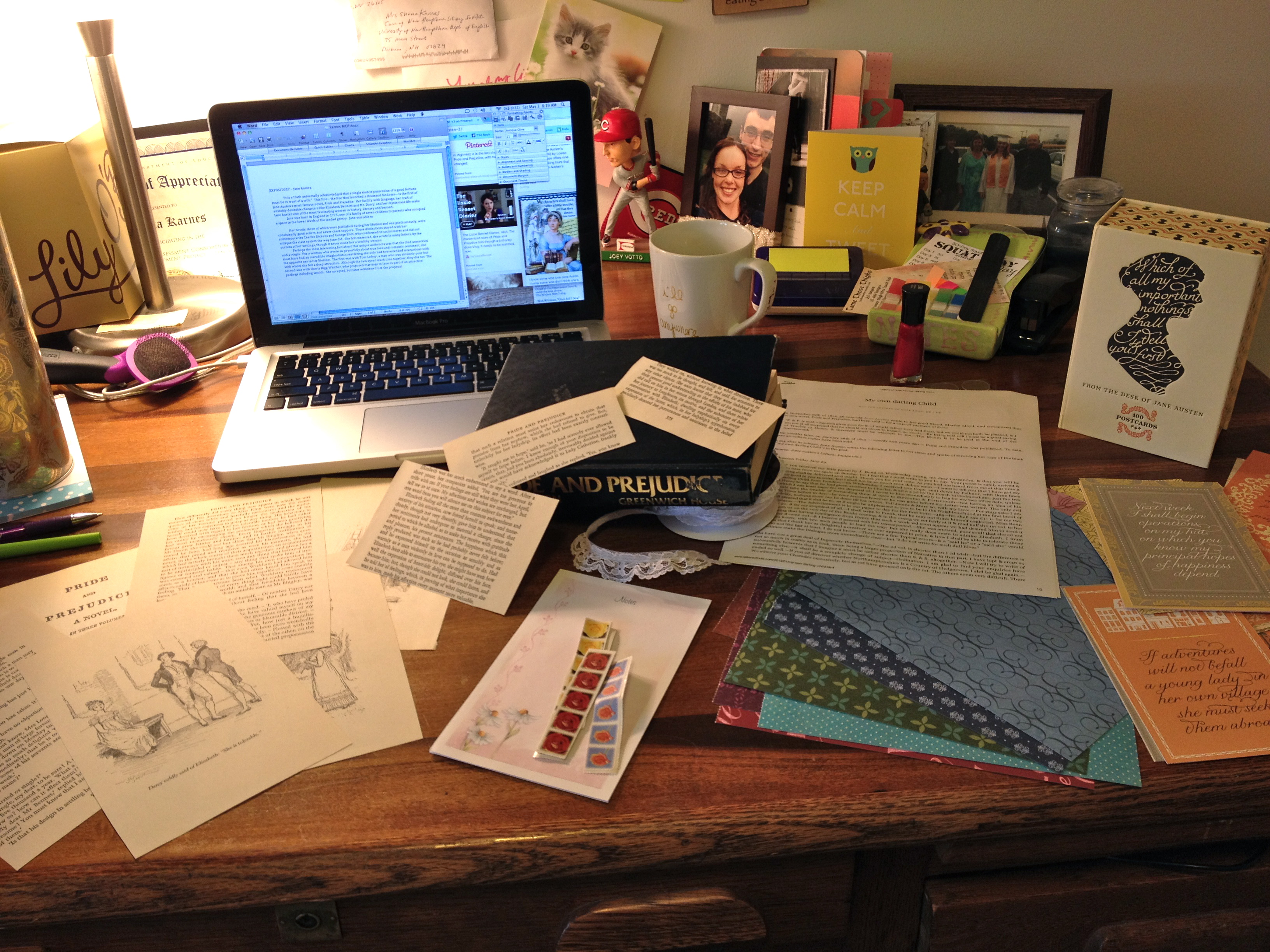
Multigenre explosion

As I work beside my students on my own Jane Austen multigenre piece, what I am struck most powerfully by is their confidence and independence as they make writing decisions.  Last year, I answered countless questions from students about what was allowed, what requirements needed to be fulfilled, and what was off limits.  My open-minded, the-sky’s-the-limit replies only seemed to induce stress.  This year, they have induced elation.

While my mentor text, modeling, and peer collaboration-heavy method of teaching the MGP has not changed, it’s clear that what has changed this year is how my students see themselves by the time we begin the project.  They don’t see themselves as students at the mercy of a grade or a rubric or a teacher.  They simply see themselves as writers.  They feel comfortable with individualized, meaningful, rigorous reading and writing demands, all thanks to the workshop model.  I have watched with surprise as my students quickly decide on topics for their MGPs–Harry Potter, classic cars, piercings, divorce, ALS, Star Wars, Blake Shelton, the allure of travel, Great Danes, and more.  Many of those topics are things that they have already written about several times this year–something that was once taboo for them in English classes.  My students have come to understand that without putting themselves into their writing, it is meaningless.  They also know, thanks to the design of workshop, that the point of writing, similarly to reading, is to make meaning.

I cannot wait to see what my students produce with the MGP.  I am so proud to have spent an entire year writing beside them, and I am looking forward to our last day of class when they open their writing portfolios and see the thick stacks they’ve produced, submit their final reading ladders and take pictures with towering stacks of finished books, and complete a journal harvest in which they revisit and evaluate their writer’s notebook one last time.  I know with certainty that they will feel accomplished, proud, and confident.  My hope is that those feelings will propel them to keep up their habits of reading and writing for life.  In the end, that’s all I hope to achieve as an English teacher–to make my students lifelong readers and writers like me.

What’d You Say?

ocsAs the year is rolling (rapidly) to an end, I have taken time to reflect and really analyze how this year’s movement and progress has been different then years past.   Besides following the footsteps of the amazing Penny Kittle; borrowing sky writing from the vivacious Shana Karnes; bouncing ideas off of the astounding Amy Rasmussen; and being inspired by the wall-to-wall library of the ever-evolving Emily Kim…I realized that this year, I am talking differently.

In posts pasts, I’ve mentioned a full on effort of instilling calm in my teaching, but most importantly within myself.  I’ve talked about strategies and tactics to support our lovely readers and writers.  I’ve discussed the power of revision.   I’ve done a lot of talking.  Yet, I haven’t reflected as much on how I’m talking.  And, just the other day, as I was standing in the middle of my classroom admiring the soft buzz surrounding me, I realized what was happening.   Students no longer depend on me.  They are depending on themselves and their peers.  They are listening intently, supporting one another, and using language that I (at that moment) realized reflected what I’ve been saying all year.

I’ve always made a conscious effort to refer to the individuals I educate as students or young adults; both in speaking with them and with others about them.  Kids?  Children?  Never.  To me it’s important to afford them that respect.  Yes, they are and always will be their parents’ and guardians’ children, but to me, they are the evolving, growing, and inspiring young adults who show up (as often as they can) serious about their education.

Interestingly, this year one student decided that he is no longer a student, but a scholar.  Well, aren’t I the lucky educator exploring and learning among scholars?  Yes, this is now the norm.  They are sitting up straighter, not because I am that educator who demands upright students, but more simply because they are feeling important as they use this term to describe one another.  They own their importance.  And how beautiful and distinguished they look doing so.

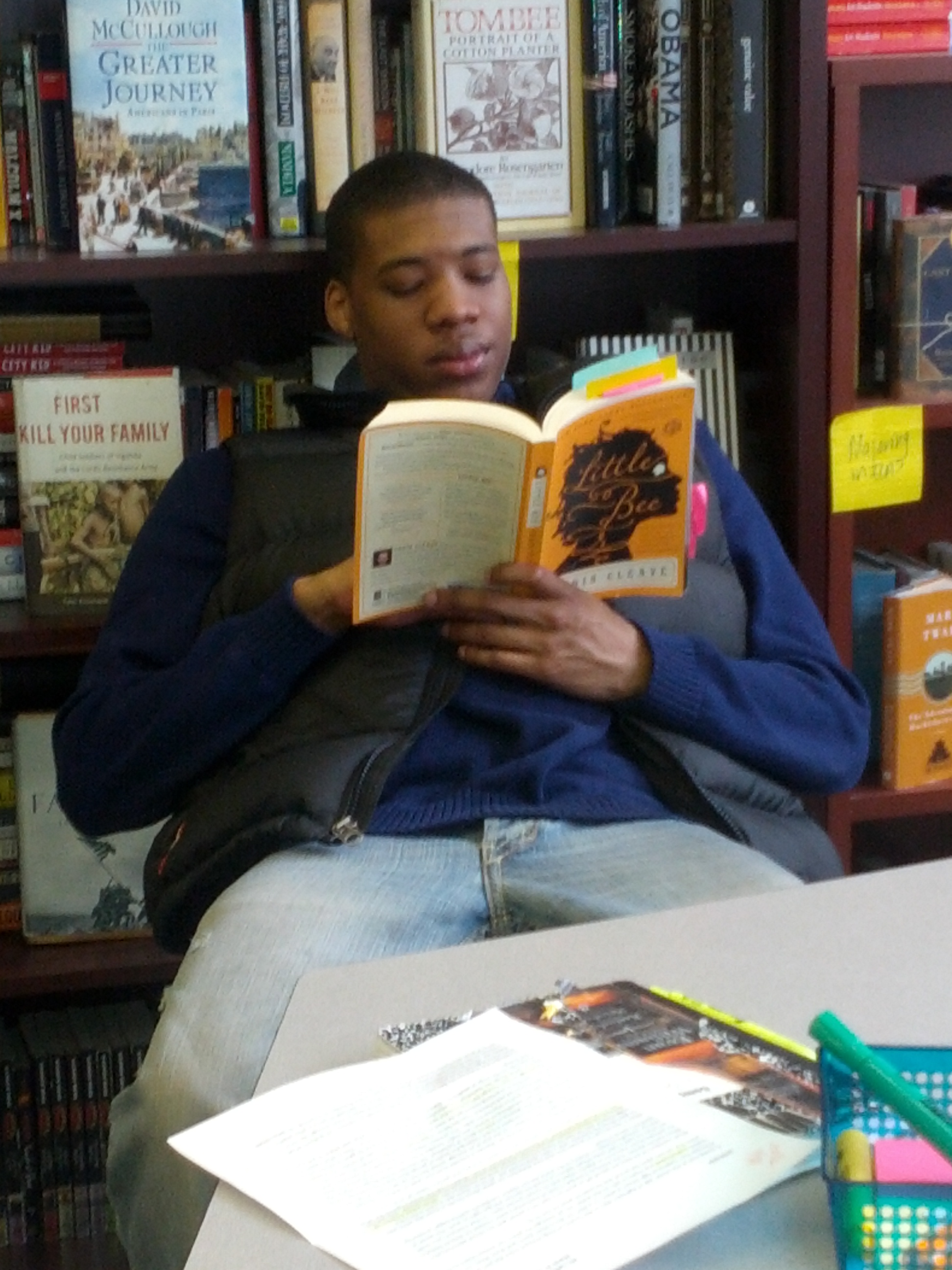
Now that I’m among scholarly greatness, when it comes to literature, “What book are you reading?” has pretty much become extinct in our learning community.  We talk about books as pieces or literature.  It’s amazing how synonyms prompt different levels of affluence.  There’s an air of ownership and pride when students are discussing literature.  Whether it be a review of E.B. White’s Charlotte’s Web, the graphic novel of Anne Frank, Hill Harper’s Letters to an Incarcerated Brother, Chris Cleave’s Little Bee, Alex Haley’s Autobiography of Malcolm X, John Steinback’s Of Mice and Men, Dr. John Gray’s Men are from Mars, Women are from Venus, and so many others…students are examining them with wonder, inquisition, and esteem.

Chris Cleave in the hands of a scholar.

Chris Cleave in the hands of a scholar.

While reading these pieces, we are no longer just looking up words in the dictionary.  We are researching.  We are finding what we need in order to fully understand what is before us.  We are using our resources to enhance that understanding.  We are not only completely comfortable with the extra step of flipping through Webster to explore our options, but we are embracing it because it’s now just part of who we are as learners.  Yes, we are researchers.

Multitasking: writing and research.

Multitasking: Writing and Researching

And, we are not flawless.  We find definitions that don’t always make sense.  So, we find partners who can help us grasp the concept of this idea in the context of our individual reading.  We are active.  We support each other.  Students and I have made a pact; when they do not know a word they take to research.  However, when they do not know how to pronounce that word, I become their resource.  See, there’s a huge difference between the two.  Students are no longer relying on me for a definition, just the initial step of knowing what the word sounds like so they can productively use it on their own, and in context, once they are comfortable with its meaning.


Collaborating on a project.

Collaboration

Above and beyond all of the communal support we provide for each other, there are those times that we are just plain “stuck”.  When students approach me with this, I no longer ask, “Why?”  Instead, I ask, “What is the reason?”  or “Let’s identify what’s happening here.”  Even in those moments when we’re not sure we even know why we are stuck, I’m asking students to own, articulate, and start problem solving their moment of frustration to alleviate the feeling of intensity.  Once I started probing, students realize there’s a reason they are at a standstill.  As we move through the recognition and pinpoint the issue, we are off and running (again).

Hearing students playing with language, context, and dialogue is magical.  A lot has shifted this year.  Students are continually showing me what they need from me to support them in their growth.  Whether it’s asking a scholar what piece of literature he will be embarking on next or setting dictionaries on every group of desks for easy access to research; students are asking me to support them in their launch.  As we continue to progress together, I am looking forward to recognizing what else needs to be said differently because, wow, what a difference a word makes!

What language do you use that propels your students?  What shifts have you made to support higher levels of learning and engagement?