Category Archives: Classroom Library

Thanks for the Great Read #FridayReads

I think it was a “thank you,” of sorts.

My associate principal, the ever-smiling, ever-supportive, Anita Sundstrom, had asked at the end of last school year to borrow some books to read over the summer.

I sent her home with Kristin Hannah’s The Nightingale (and I swear to the heavens and Nicholas Nickleby that Ms. Hannah isn’t paying me to write about her book. Though I may have mentioned how it made me weepy here, and how I broke the law to read it here,  and how the lovely Erin Doucette – who is so very lovely that she helped me with the title of this post at 7:31 a.m.- and I book talked it for the whole school here).

Only a few days later, I received a text from Anita. Something about reading until two in the morning and then not being able to fall asleep for fear of Nazis.

As I said…I think it was a thank you.

She couldn’t put the book down and immediately wanted another recommendation.

Translation: A book captured a reader and fueled a desire to keep reading.
Further Translation: The deepest desire of each and every English teacher fulfilled.

However, it wasn’t until I went to book talk The Nightingale for my current students a few weeks back, that I noticed the Post-it stuck to the inside cover of the book: “Thanks for the great read. – Anita” 

It made me smile. And want to pass on the book love.

So, when I did the book talk, I shared the brief reading story above and showed that Post-it to my students. I joked that Mrs. Sundstrom’s note added street cred to the book. After all, she’s a former science teacher.

Translation: The book has a wider appeal than just a tearful (though sincerely passionate) English teacher.
Further Translation: I now had an idea to help “sell” more books.

Next to the book return bin in my classroom, I placed a stack of Post-its and a few pens. I introduced the idea that we could all help each other better understand the books in our library and their appeal by leaving each other notes in the text. 

These quick little reviews could reach out to readers in search of a book. Those souls searching for a little connection to the readers that have gone before them. Swaying back and forth in front of the bookshelves. Staring. Now, they would have the recommendation of fellow readers right there in the book. The book that would already be in their hands.

Sometimes those Post-it notes can recommend a book I’ve not yet book talked. Sometimes those notes can recommend a book before I can get over to the shelves and help a student select a text. Sometimes those notes lend cred to book when a cover/title/description doesn’t do it justice.

img_6682img_6680

img_6683

So…
Read a book.
Love it.
Leave your name and your thoughts on a sticky note.img_6677
Simple, right?

Helpful too.

Now I tease kids that their old school Post-it note reviews might find their way to Mrs. Sundstrom’s office, which is better than finding themselves in Mrs. Sundstrom’s office.

My hope is that the inside covers of my books end up looking like our writer’s notebooks: colorful, messy, informative, creative, and full of inspirational, deep thoughts.

So, thank a peer, thank a friend, thank a reader, thank a book. #FridayReads and then pass it on.

How do you capture students’ thoughts on books they love? Please share your ideas in the comments below! 

Using a “Traffic Light” System to Explore Readers’ Interests and Sensitivities by Amy Estersohn

9kThis summer my social media has been clamoring about content warnings and safe(r) spaces within an academic community.  To what extent do we as educators bear responsibility for how our students respond to the material we may present to them?

I’m sure some educators probably feel that such gestures are a product of an over-coddled generation at best or somehow reduce literature to mere plot points at its worst (spoiler alert: Johnny dies), but I decided that I wanted some way of understanding my students’ emotional lives and some understanding of what topics upset them or get them excited.

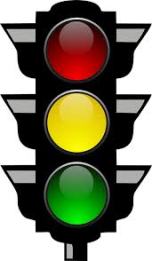
On the first day of school this year, I introduced and modeled a traffic light system in response to independent reading:

Green — topics I like to read about and topics that interest me.

Yellow — sometimes I like to read about these topics, and sometimes I don’t

Red — topics that upset me.  If I come across this topic in an independent reading book, I stop reading.

I modeled a response for my seventh graders, using touchy subjects that often come up in middle grade fiction.  I described divorce as a red topic for me, autism as a yellow topic, and illness as a green topic.  

Reader responses were fascinating.  Death and illness books were by far the most divisive, with some readers describing death as a green topic and others as a red topic.  Holocaust books were similarly divisive.  Many readers described enjoying books that were “sad, but not too sad.”  Some readers identified red topics that I would have never identified on my own as a potential tough topic (e.g. car accidents, physical disfigurement.)

imgresAlso interesting was that what I know about my readers’ personal lives didn’t always square with what they wrote about their reading topics.  Some of my readers seem to want to read books that mirror their real-life struggles.  Others want to veer far away from those topics.

Based on these responses, I adjusted some of my lesson plans slightly.  I had been planning to use parts of Lisa Graff’s phenomenal Lost in the Sun as a whole-class model for character, but based on these responses, I’m not sure all of my readers would appreciate reading about survivor’s guilt as much as I did.  Instead, I’ll use parts of Jason Reynolds’s As Brave As You to teach the same concepts.

I don’t see myself swooping in to warn a student before starting a book as lovely and potentially upsetting as Ms. Bixby’s Last Day by John David Anderson or The Seventh Wish by Kate Messner.  However, I want to continue the conversation about red, yellow, and green topics. As independent readers, we have a right to establish limits, and when we read a part of a book that approaches or goes over our limits, we have a right to put it down and talk to somebody about what’s upsetting us.


Amy Estersohn is a middle school English teacher in Westchester County, NY.   She also reviews comic books for http://www.noflyingnotights.com.   Follow her on Twitter at @HMX_MSE.

Using the Whole Book: A Nose-to-Tail #FridayReads

“Some books you read. Some books you enjoy. But some books just swallow you up, heart and soul.” 

I love this quote from Joanne Harris. I love her book, Chocolat, and truth be told, I really love the movie adaptation’s casting of Johnny Depp as Roux… for aesthetic reasons. Seems there’s a lot of love up in here.

Speaking of book love. It’s a rare and wonderful treat to see a student experience this type of consumption through reading, but it’s delicious when it happens in my own life as well.

My heart has been most recently consumed by Gloria Steinem’s new memoir My Life on the Road and this week it became a text I was sharing with everyone.
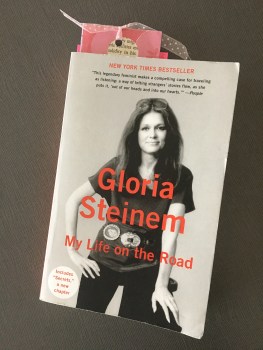
Now, don’t hurt me, but I’m a bit too young to have really appreciated Gloria Steinem’s political prowess, revolutionary movement for equality, and inspirational professional ascension to feminist icon firsthand. I had, however, heard the name and when I heard an interview with Steinem on NPR, I was immediately hooked by her candor.

Steinem was on All Things Considered, discussing the inspiration for her new book, and I caught the interview on my way home from work.

img_6045

Bookmark courtesy of one crafty Shana Karnes

Safety alert: I used the Amazon app on my phone to purchase the book while at a stoplight. Unwise, but enthusiastic. Book love makes you crazy.

Steinem’s explanation of her text as part analysis of family dynamics, part travel journal, part personal exploration of leadership, and honest look at how we all live, had me intrigued. The fluency of her voice had me convinced that her prose would float off the page as beautifully as her words were floating through my car radio. Her stories had me laughing and almost crying just in the course of a six or seven minute interview.

In short, I knew this would be a captivating book.

What I wasn’t prepared for was just how relatable, inspirational, and downright touching this memoir is.

And thus began my very public consumption of and by this text. In the course of a week, I have:

  • Book Talked this book to all my classes. I explained the above reading story to my kids and shared a passage with them where she talks about being a reader and writer. Perfect for my readers and writers! “Writing, which is solitary, is fine company for organizing, which is communal” (40). 
  • Shared several pages with my 9th grade colleagues working on character development in their classes. Steinem goes into rich detail about her father and the struggles her family endured at the whims of his wandering spirit. She then talks pointedly about how her own travel (detailed later in the book and familiar to those that know and devoured Eat, Pray, Love by Elizabeth Gilbert) was most likely inspired by her youth, even though she wanted nothing more as child then stability. Students could relate to those first few instances in life where we start to see our parents in our behaviors. (I’m personally turning into my father).
  • Used that same section on character as a mentor text with my sophomores to discuss narrative purpose. Steinem’s anecdotes about her father in this section are reminiscent of The Glass Castle by Jeannette Walls, but at the same time made several of my students laugh out loud when we were reading. The author’s voice here shows poignancy through her choice of heartwarming and heartbreaking stories about her youth. We analyzed each of the anecdotes that Steinem shares in this section by having students break up into groups and evaluate how the author might have intended to use that anecdote in her self-proclaimed purpose to show how she had long been embarrassed by her father.
  • Utilized a specific quote with my AP students for a quick write. We are currently studying education and focusing on an essential question of “To what extent do our schools serve the goals of a true education?” I projected Steinem’s quote of “When humans are ranked instead of linked, everyone loses”(44) on the board and asked students to quick write on their reactions to this in light of our unit essential question.

I have also raved about this book to my husband, colleagues, friends, and three-year-old daughter, to whom I’ve suggested that she must travel, embrace her power as a woman, and learn from everyone she can. She asked if we could play Candy Land. I may have a ways to go with that one.

But at the end of the day (and week, yay!), this is a book that tells the story of what it means to explore the world and find a home wherever you are and does so with a voice that will make you want to read, share, and repeat. As a bonus, it details the life of a budding writer. For students to read and digest the struggles, joys, and challenges involved speaks deeply to what we ask them to explore in our classrooms each day.

What texts have consumed you recently? How are you sharing them with your classes? Please comment below! 

Steinem, Gloria. My Life on the Road. Random House, 2015.

Booktalking Awards: Letting Students In On the Buzz by Amy Estersohn

downloadIf your readers have ever played fantasy sports or filled out a March Madness bracket, they’ve experienced the same feelings that book lovers do over awards announcements.   And just the way sports fans are making predictions about championship winners all season, readers spend all year making predictions about which books will win which awards.
The recently announced longlist for the National Book Awards’ Young People’s Literature category gives readers a lot to talk about.  When I introduced the list, I did a brief book talk on each title and added some color commentary as well.

Obvious picks: Pax by Sara Pennypacker, Raymie Nightingale by Kate DiCamillo, and Burn Baby Burn by Meg Medina are three of the best books I’ve read this year.  All three books have received heaps of critical praise from a variety of sources, including from Book Whisperer Donalyn Miller.   

download-1Pleasant Surprises:  March: Volume 3 by John Lewis, Andrew Aydin, and Nate Powell, Booked by Kwame Alexander, and GHOST by Jason Reynolds.  These three books have tremendous teen reader appeal, and I was concerned that reviewers wouldn’t find them distinguished on their own merits.   

Unknown Quantities: When the Moon Was Ours by Anna-Marie McLemore, Sachiko: A Nagasaki Bomb Survivor’s Story by Caren Stelson, The Sun is Also A Star by Nicola Yoon, and When the Sea Turned to Silver by Grace Lin haven’t been released in bookstores and libraries yet, so it’s hard for me to weigh in right now.

Introducing these books to my readers was an effective way for books to gain exposure without my being the primary endorser.  I had five readers yelping for my two copies of Pax, I encouraged my graphic novel readers to check out March, and my World War II buffs are now deeply interested in reading about the United States’s aggressions in Japan.

I’ll continue to monitor the National Book Awards announcements for their finalist and winning books.  By then, I hope more readers will have a chance to read these books and chime in on how they feel about the results.

__

Amy Estersohn is a middle school English teacher in Westchester County, New York.  She  reviews comic books for http://www.noflyingnotights.com and is a judge for the CYBILS book awards this year.   Follow her on twitter at @HMX_MSE

Try It Tuesday: Book Pass

While writing about ways to hook readers a few weeks ago, I realized that while we’ve mentioned book passes several times on this blog, we’ve never actually written a post dedicated to how to do them.  So, here that post is!

Book passes are beautiful in their simplicity. Their purpose is to expose potential readers to a wide variety of books in just a few minutes. All you need are a number of books greater than or equal to your students, their writer’s notebooks, and the power of social capital.

img_5005

Victoria browses through Peter Johnston’s Choice Words, while Brianna tries to decide between a few choices herself.

When students enter the classroom the day of the book pass, I always have piles of books ready to go on their table groupings. They can’t help but pick them up right away (really, they can’t–sometimes it drives me nuts when they paw through materials we’re not ready to get to, but in this case, I LOVE watching them be drawn to a book), so the book’s contagion begins to spread immediately.

When we begin, I ask students to turn to their TBR pages in their notebooks. “Go ahead and grab a book that’s on the desk in front of you,” I invite, and wham, books are in the hands of readers. “Spend about one minute with this book–look at the front cover, the back cover, the inside flaps, the first page. Decide if you think it might be a good fit for you.” With my preservice teachers of all content areas, I ask them how they might use this book, or excerpts from it, in their future teaching.

img_5011

Habbiba gets excited about Will in the World, and nerds out with Alexis.

I set my timer on my phone for 60 seconds as kids flip through pages. Of course, book love is contagious, so some kids share with others what they find–the power of social capital is at work once again here.

When the timer dings, I ask kids to pass their book to the left. “But first,” I remind them, “write down that title on your TBR list if you think it’s something you might want to read.”

Now the students have new books in their hands, made more powerful if they’ve already watched their neighbor write that title down. I love to watch, after multiple passes, when one title gets written down by nearly everyone, and the students who’ve yet to get that book in their hands begin to practically salivate.

img_5010-1

Nick and Ryan thumb through The Double Helix and Moneyball, respectively

The book pass can go on for as many passes as you have time for–enough for every kid to see every title, or just five minutes’ worth, if you prefer. I do this activity multiple times at the beginning of the year, and then again sprinkled throughout the year when I get lots of new books in. It’s a wonderful way to expose students to several titles in a day as an alternative to the traditional booktalk. It’s also a great way to shake up the typical routine in the classroom with a hands-on activity that gets kids excited about books.

I often conduct book passes in this open-ended way–“see if this book is a good fit for you”–but sometimes I do them as a way to expose students to a “new” genre in particular (novels in verse, or graphic novels); a way to introduce the theme of a unit (by finding books all about that theme); or to introduce a reading challenge (read an award winner, or a book of nonfiction). Just passing books around and getting them in the hands of readers does wonders to grow students’ universes of what’s possible when we read.

How might you use a book pass in your classroom? Please share in the comments!

9 Books to Hook Your Holdouts

This fall is my first out of a high school classroom, and I miss this season of watching teens fall in love with books. I relished the task of matching every kid with the right book, armed with the energy that a crisp autumn morning and a pumpkin spice latte afforded me. By this time in September, I’d usually managed to hook most of my readers, but I had also identified my holdouts–those few skeptics who just didn’t think there was a book for them, who I couldn’t entice with a booktalk, or bribe with a “just try it,” or persuade through a conference.

So, I always turn at this time to the power of social capital, harnessing tools like speed dating with books, book passes, or writings in Red Thread Notebooks, to get my students recommending books to one another.  If I couldn’t hook my holdouts, well, their friends were my last hope.

So, to recommend some titles to hook your holdouts, I decided to ask my former students for their recommendations: what’s the last book you read that really hooked you?  Their responses, via Snapchat, are as follows:

img_4790-1

Anna recommended Men Explain Things To Me by Rebecca Solnit, a collection of essays that are both scathingly funny and weightily serious about communication between men and women. It’s a great pick for your holdout who doesn’t want something long–he or she can devour one of these essays in no time.

img_4794-1

Connor recommends the National Book Award winner Between the World and Me by Ta-Nehisi Coates.  This beautiful text, a commentary on race in modern America written in the form of a letter from father to son, “was intriguing because it touched on social justice issues in a way that I could relate to even though I had never had to deal with those issues,” according to Connor. It’s a fantastic, fast read whose subject matter will really draw you in.

img_4793-1

Gabi’s recommendation is Just Mercy by Bryan Stevenson, a story of twisted justice told by a young, new lawyer. Stevenson’s idealism wars with the machinations of politics and injustice and biases, and is written in a voice that has made many compare the narrator to Atticus Finch. If that doesn’t make your holdouts fall in love, I don’t know what will!

img_4792-1

Jocelyn recommends Leslye Walton’s award-winning The Strange and Beautiful Sorrows of Ava Lavender, a prose book of fiction that reads more like beautiful poetry. Ava is born with wings, and writes in a voice direct and melancholy–she reminded me of Madeleine from Everything, Everything. And, as Jocelyn notes, the cover is gorgeous, which is sure to help hook your holdouts.

img_4791-1

Claire recommends Donna Tartt’s layered novel of accidentally-murderous friends, The Secret History.  Tartt, the Pultizer-winning author of The Goldfinch, introduces us to a group of college students who, through their readings and conversations, begin to fancy themselves above the law–both legal and moral. As Claire says, it’s a brow-wrinkler that’d be great to recommend to a reader you just can’t challenge enough–and its writing is amazing.

img_4807-1

Olivia recommends John Green’s Paper Towns, of course!  Recently adapted into a film, it’s the story of a misfit boy who loves a supercool girl from afar, and then is inexorably sucked into her world of adventure in the tale that ensues. John Green is a YA favorite for a reason, and you’re sure to hook some holdouts with the knowledge that the book was big-screen worthy.

img_4806-1

Caleb recommends Ashlee Vance’s exceedingly well-written biography, Elon Musk: Inventing the Future. Musk, described as a “real-life Tony Stark,” founded PayPal, Tesla, SpaceX, and other billion-dollar companies throughout a life filled with both struggle and success. While telling Musk’s tale, Vance compares his work to inventors from Thomas Edison to Steve Jobs, and entices the reader to wonder whether anyone can compete with geniuses such as Musk in a technology industry as competitive as today’s.

img_4797-1

Garrett recommends Hank Haney’s The Big Miss, an inside look at Tiger Woods’ golf game through the eyes of his coach. While Tiger was always a gifted athlete, his mental game made him constantly fear a “big miss”–a wild shot that could ruin an entire round. Haney gives insight into Tiger as an athlete as well as a man, who ultimately committed a big miss in his personal life that derailed his golf game far more than he ever saw coming. This is a great pick for any athlete who’s holding out on reading.

img_4802-1

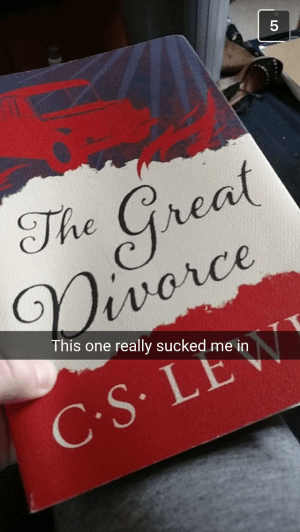
Allison recommends C.S. Lewis’ The Great Divorce, a book I equate to a modern version of Dante’s Inferno. The story begins with the narrator boarding a bus, which takes him on a long journey of discovery about himself, great truths, and the nature of good and evil via a trip through Heaven and Hell. Described by many as their “favorite book by C.S. Lewis” (a real feat, since The Lion, the Witch, and the Wardrobe is so colossal in our culture), this allegory will be sure to hook any holdout into some irresistibly deep thinking.


Now that I’ve had my proud-teacher moment of so many of my former students continuing to be lifelong readers (and look at all their actual BOOKS lying around!!!), and significantly expanded my own TBR list, I hope you’ll ask your students to recommend some engrossing titles to help hook your holdouts.

What books are your students recommending to one another? Please share in the comments!

Ugly Cry Round Two – #FridayReads

Hi. My name is Lisa, and I’m a book hugger. “Hi, Lisa…” 

I feel like I can tell you this. Like you’ll understand and still let me sit near, if not at, the cool kids’ table. See, last week I was a dork. This week I’m a book hugger. Is that super dork? Literate dork? Biliophilic dork?

Either way, I’ll own it. That’s totally fine. In fact, if I know myself at all, as I hugged my copy of Kristin Hannah’s The Nightingale this morning,  my eyes were probably a bit wild too, breath bated, satisfied smile projecting my hope that pens would fly across the pages of our “I want Read” lists. Basically, when I book talk, I feel like the author is standing next to me. “Get them interested, Lisa.  Get them thinking. Sell it. Put my book in their hands, and hearts, and minds.”

So obviously…no pressure.

One of my AP Language students, Zach, smiled as I stood hugging my book today.img_5539 “Mrs.Dennis,” he said with a coy smile, “you’re super emotional.”

Who? Me?

Well…ok. Maybe. I do love a good cry. The “cathartic, wring you out, snot on the back of your hand, tell everyone to read the book” cries are my favorite (Please see my unraveling at the hands of A Monster Calls by Patrick Ness). But I know that you know; you’ve been there. Whether the tears actually fall or not (and they should, trust me, it feels great), a book that captures you can feel like a conversation with a good friend, an exploration of pure emotion, and a learning experience that leaves you a better person. Talk about a worthwhile human endeavor.

So, I quickly reflected and responded to Zach’s observation. “True, true. Hallmark commercials make me cry, but with books, that shows a pretty deep connection, doesn’t it? When the characters in a book are so real that you feel their struggle. When their stories remind you of your own, even if their life experiences are completely different from yours. That’s what I want for you. That’s why I’m up here hugging this book. Human connection.”

With further reflection, it’s how I have chosen each of the books I’ve book talked so far this year. No, they haven’t all made me cry, or I know for a fact that I’d be missing a significant portion of my audience; however, they have all been books that have touched me in different ways, to different degrees, and in different parts of my life.


So far this year, I’ve book talked:

Mudbound by Hilary Jordan – This text started my summer reading and while it’s justly won acclaim for it’s themes surrounding racial tension in the south, betrayal, and the secrets that can bury a family, I spoke to my classes about the rich voice Jordan is able to give a wide variety of characters. With a new narrator each chapter, you see this story from all angles and each is more personable and heartbreaking than the next.

The Handmaid’s Tale by Margaret Atwood – I finished this book right before summer break and I book talked it then too. It has quickly become one of my favorites as a cautionary tale and an all too real examination of how gradually, but how drastically people can become complacent to the loss of personal freedom. I took students down a “let’s imagine” path by asking them which events in their daily lives they inadvertently take for granted, but would certainly miss if they were denied the privilege. What if it was the right to have your own money that was denied? Or the right to travel? Or learn?

The Nightingale by Kristin Hannah – The characters became family to me. I realized that the terrible trials of World War II were occurring when my grandmothers were the same age as the main characters. Just because the pictures of the time period are in black and white, doesn’t mean the stories to come out of that time period are any less real. Or relatable. Or powerful (I hug what I love. I loved this book. It may be my current favorite piece of fiction). My three copies of this book disappeared today. I was tickled.

The Absolutely True Diary of a Part-Time Indian by Sherman Alexie – This is the first book I read this school year. I took it down in three days and could not stop laughing. I told my students that my connection to this book surprised me, and I think that’s part of the endearing quality of protagonist Junior’s voice. He hooked me with fart jokes. Certainly not my usual forte, but Junior’s search for hope is so real. And as I said to students, we all search for hope in different capacities. Junior searches off the reservation. I search the room during reading time. Just as Shana suggested, reading outside your comfort zone can offer some big rewards.
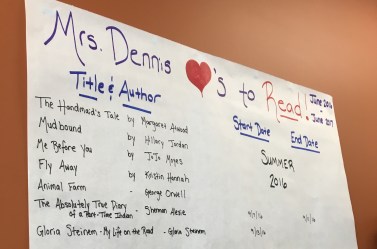
A Monster Calls by Patrick Ness – We’ve been well over this one. Ugly. Cry.
Though an additional sell, at the moment, is the forthcoming movie based on the book. My students want to take a field trip, but I’ve only committed to investigating the release date, if they get on reading the book. All six of my copies are currently gone from the library shelves. Win.


So, as I wrote last week when I was working to get to know my students, I feel it’s important to share who you are as a person, as much as you share who you are as a teacher, and illustrating you are a reader and writer is a part of that
img_5537-1opportunity/responsibility. With that in mind, showing you are a passionate reader is even more impactful. I feel like my students are getting to know the real me (dork and all). It’s the very best way to start building honest relationships. The kind that build trust, and thereby, community.
I’ve carefully chosen some of my favorite texts to book talk, followed my colleague Catherine’s lead in making my reading life visible, and jumped into this year with the goal of spreading my enthusiasm about books to another set of students through an honest look at what moves me, in a sincere effort to move them.  So far, so good. I just need some extra Kleenex boxes in room.

How Conferring and a Book Solved the Tissue Issue, and Hopefully, Much More #FridayReads

You know the boys who cannot sit still? I’ve got a gaggle of them in my second period. Now, I’m not talking about elementary school kids, nor middle school. I’m talking about the juniors I teach in high school.

No sooner do I blink, and at least one of them is up walking to the tissue box. He’ll slowly take a tissue. Saunter on back to his seat (for about three minutes — I’ve timed it) and then waltz on over to the trash can to throw the tissue away and then mosey on back to his seat.

With eight of these guys, it’s constant motion. And I need Dramamine.

One class period. Five days. Two boxes of tissues. Gone.

At the end of that first very long week, I realized the reality. All kinds of memories flooded back from Tom Newkirk’s class “Boys, Literacy, and Popular Culture”at UNH Lit Institute the summer of 2015.  (If you haven’t read Tom’s book Misreading Masculinity:  Boys, Literacy, and Popular Culture, it’s insightful.)

My tissue-loving boys were posturing all over the place, and somehow I needed to stop the Tissue Issue.

It’s been easier than I thought. Really, it’s all about getting them into books they want to read.

On the first day of school, I’d prepped my room with stacks of colorful engaging books on every table. We did a book pass and wrote down titles we thought we’d like to read. I showed my passion for books and reading, and my students rolled their eyes at my request they read for three hours a week.

“No way,” I heard one young man mutter, “I ain’t reading.”

This attitude doesn’t deter me.

Even if they were faking it, after just a few days and lots of one-on-one mini-conferences, every kid in a class of 30 at least looked like they were reading. Except two.

I invited these two separately into the hall for private chats about their social PATT (party all the time) moves in the classroom.

“You know, they all follow your lead, right? I need you working with me to make this class work.”

Both agreed, and I asked them to shake my hand on it.

But old habits die hard.

Then, today — 13 days into the school year — gold.

Book gold.

“Hey, Mrs. Ras, can I talk to you in the hall?

“Do you think you could help me find a different book to read — one with music. You already know I like music.” I remembered his free verse rap at the end of class last Friday.

“So give me some ideas –”

“Well, something like that book JaBo’s reading…the long way one.”

A Long Way Gone?” (I’m trying to remember if there’s any music in this memoir about a child soldier.)

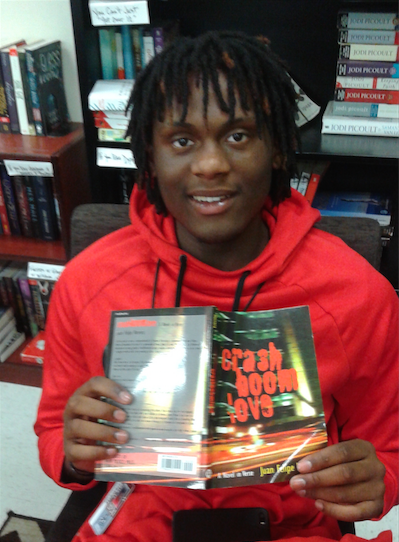
Both of my copies were checked out. I had to think fast. Crash Boom Love, a novel in verse by Juan Felipe Herrera, National Poet Laureate, flashed in the corner of my eye. (Thank you, poetry shelf just inside the door.)

We flipped through the pages, and I explained that it’s a book written in verse — all poems that make a complete story.

“You mean like one long poem?”

“Yep. Do you want to trade me this book for that one?” I said nodding at My Friend Dahmer, the graphic novel in his hand he’d been fake reading for 12 days. (I know he chose it for the pictures. “It’s weird” is all he could tell me in our first conference.)

Not six seconds after we’d entered the room, I saw Kameron flipping through the pages and showing his new book to JaBo.

That’s when you know you’ve got them — or at least got a chance at getting them to read — when they do a book talk to their friend before they’ve even read a page.

screen-shot-2016-09-08-at-11-05-01-pm

Meet Kameron. He may be a famous rapper one day.

I love this work with adolescent readers. I know we can change lives as we help young people grow in literacy skills, as we help them recognize themselves in books, and help them see others so different from themselves in the books they read.

It might be the only hope we have as a nation. Empathy, compassion, tolerance, justice, mercy, and love all wait for discovery like healing treasure and hope in the pages of the books we share with our students.

And when that book gold finally glistens — well, that’s when I have to cross the room for a tissue.


ftc-guideline-%22affiliate-links%22

Reading Outside Your Comfort Zone (And Booktalking Beyond It, Too)

img_4352

Ruthie the Riveted Reader

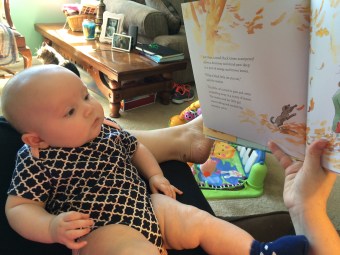
This summer, I was so overwhelmed by new motherhood that I barely found any time to read.  Instead of my usual 40+ books devoured by the beach, perused over afternoon coffee, or listened to while driving to a summer class, I finished maybe four or five books.  I found myself reading Corduroy, Go Dog Go, and The Very Hungry Caterpillar nearly every night…but I missed the solitude of my own reading life.

When I finally got Ruthie to start sleeping, I was ready (and able) to read again, but I wasn’t sure where to start.  Books that used to hold my attention just didn’t anymore.  So, my husband and I started a little game–I asked him to go pick me any book off our fairly full bookshelves.

After a few weeks of reading, I realized something: he was choosing only what he knew.

img_4376

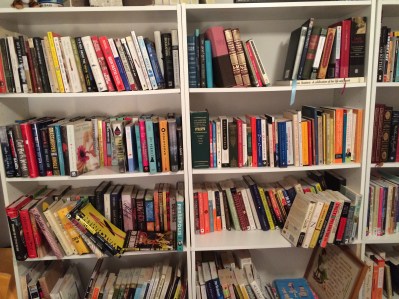
Just a snippet of our bookshelves, arranged by genre (Jon always goes for the top left)

He selected for me In Cold Blood by Truman Capote; The Big Short by Michael Lewis; On The Road by Jack Kerouac; The Bourne Identity by Robert Ludlum; Zen and the Art of Motorcycle Maintenance by Robert Pirsig; The King of Torts by John Grisham; The Tipping Point by Malcolm Gladwell…are you noticing a pattern?  Jon reads nonfiction, with just a few legal or spy thrillers sprinkled in.  He suggested what he knew.

As I quickly got sick of reading nonfiction (which I faithfully attempted), I started to think about my own booktalks to students last year.  I kept a record of those booktalks on posters that hung on the back wall of our classroom, and I know if I looked at them for genre, I’d find some variety:  poetry, award winners, nonfiction, war stories, thrillers, sports fiction, classics, multicultural literature, and lots of YA.

But you know what I wouldn’t find?

Graphic novels (I only know a few).  Science fiction (beyond the popular dystopian series).  Fantasy (I just can’t keep all the weirdly-named characters straight).  Historical fiction (snooze, good sir).  Horror (I like to sleep at night, thank you very much).

Those just aren’t books I’d pick up on my own.  That means I’m less likely to put them in my classroom library…so I’m less likely to booktalk them…and I’m less likely to reach every student in the room.

Teachers must read beyond our comfort zones.  It’s important that we’re the best readers in the room, as well as the most prolific.  Our students’ reading success depends on our wide knowledge of books.  Conferring–the cornerstone of workshop–does no good if once we know our students we don’t know enough titles to match them to a book.

So, I made it my goal to branch out.  I attempted City of Bones, the first in The Mortal Instruments series, by Cassandra Clare–and I loved it!  Yes, there was talk of daemons and faeries and vampyres and a lot of other stuff with which I was unfamiliar, but I really liked the story.  Next, I tried A Murder in Time by Julie Mcelwain, a historical fiction account of murders in 19th-century England.  Again, I was surprised–I loved it!

Now that I’ve accepted the challenge of reading outside my comfort zone, my next step is to figure out how to learn about good books within genres about which I’m clueless.  I’ll ask students who say they like those genres to fill me in (I remember last year a student was horrified that I’d never heard of Dune by Frank Herbert–“What! It’s like the original science fiction!!”).  I’ll lurk on Goodreads to see what my teacher friends are reading, and I’ll pose the question on Twitter.

I know that if I don’t read outside my comfort zone, I can’t booktalk outside it either–and in that case, I’m disadvantaging students who don’t share my reading tastes.  That’s enough of an impetus to spur me to read something different, but beyond that…a little change is never a bad thing.

What genres are you unfamiliar with?  Share in the comments, and let’s help one another find some great new titles to booktalk this year.

#FridayReads — Picture Books in AP English

Sometimes speakers make you want to write. Last week when I listened to Lester Laminack was one of those times.

The North TX Council of Teachers of English Language Arts one-day conference was one week ago today. As president I had the honor of calling the meeting to order, and looking out at the audience of almost 600 ELA teachers, grades K-12, I could not help but think how fortunate the children in Texas are to have such dedicated teachers, teachers who want to help kids write, teachers who practice writing themselves.

Listening to Lester’s keynote as he talked about his writing process made my memories swirl, and my fingers get itchy.

I was not the only one.

Screen Shot 2016-06-17 at 3.29.59 PM

I left wondering:  What if more teachers stirred that kind of memory moment in the students we want to move as writers?

Picture books have that power. Elementary teachers know this. They read books aloud to little writers. They talk about meaning around moments their students can relate to.

Sometimes I think we secondary teachers forget the power in stories. We forget that seemingly simple things can spark big thinking. I want to remember.

Here’s a list of 15 of the books I will read with my not-so-little writers in the coming year: Screen Shot 2016-06-17 at 4.45.37 PM

Saturdays and Teacakes by Lester Laminack

All the Places to Love by Patricia MacLachlan

The Other Side by Jacqueline Woodson

The Hundred Penny Box by Sharon Bell Mathis

Is There Really a Human Race? by Jamie Lee Curtis

Harold and the Purple Crayon by Crockett Johnson

The Dot by Peter H. Reynolds

Chrysanthemum by Kevin Henkes

Henry’s Freedom Box by Ellen Levine

The Wretched Stone by Chris Van Allsburg

I Want my Hat Back by Jon Klassen

It’s a Book by Lane Smith

The Dark by Lemony Snicket

The Secret Olivia Told Me by N. Joy

Beautiful Oops by Barney Saltzburg

And I’ll probably use several of these:  wordless picture books

Please share your suggested titles for picture books you use in your secondary classroom.