We all know–and perhaps fear–the Disrespectfully Disengaged Learner. You know the one I mean: rolling his eyes, muttering under his breath. Asking to recharge her phone so she can keep playing games instead of listening. Sometimes, that learner is even you or me.

Materials for our workshop are ready!
They say teachers are the worst students, so maybe that’s why I’m so nervous about the workshop I’m helping to lead today. My colleague and I will present to 20 of our fellow teachers, and we have worked incredibly hard, for many hours, on our presentation and materials. Even if 19 leave our classroom with smiles on their faces and a new spring in their steps, there will almost certainly be one person we can’t reach. Sadly, that one person is the one I’ll obsess over for weeks to come.
The phrase “professional development” has somehow become synonymous with “eyeball gouging”, at least in all the schools I’ve taught. But professional development doesn’t have to be painful. Its purpose (like so many other well-intentioned ideas) is a positive one–to advance a person’s career or personal development through learning.
That doesn’t sound so bad, right?
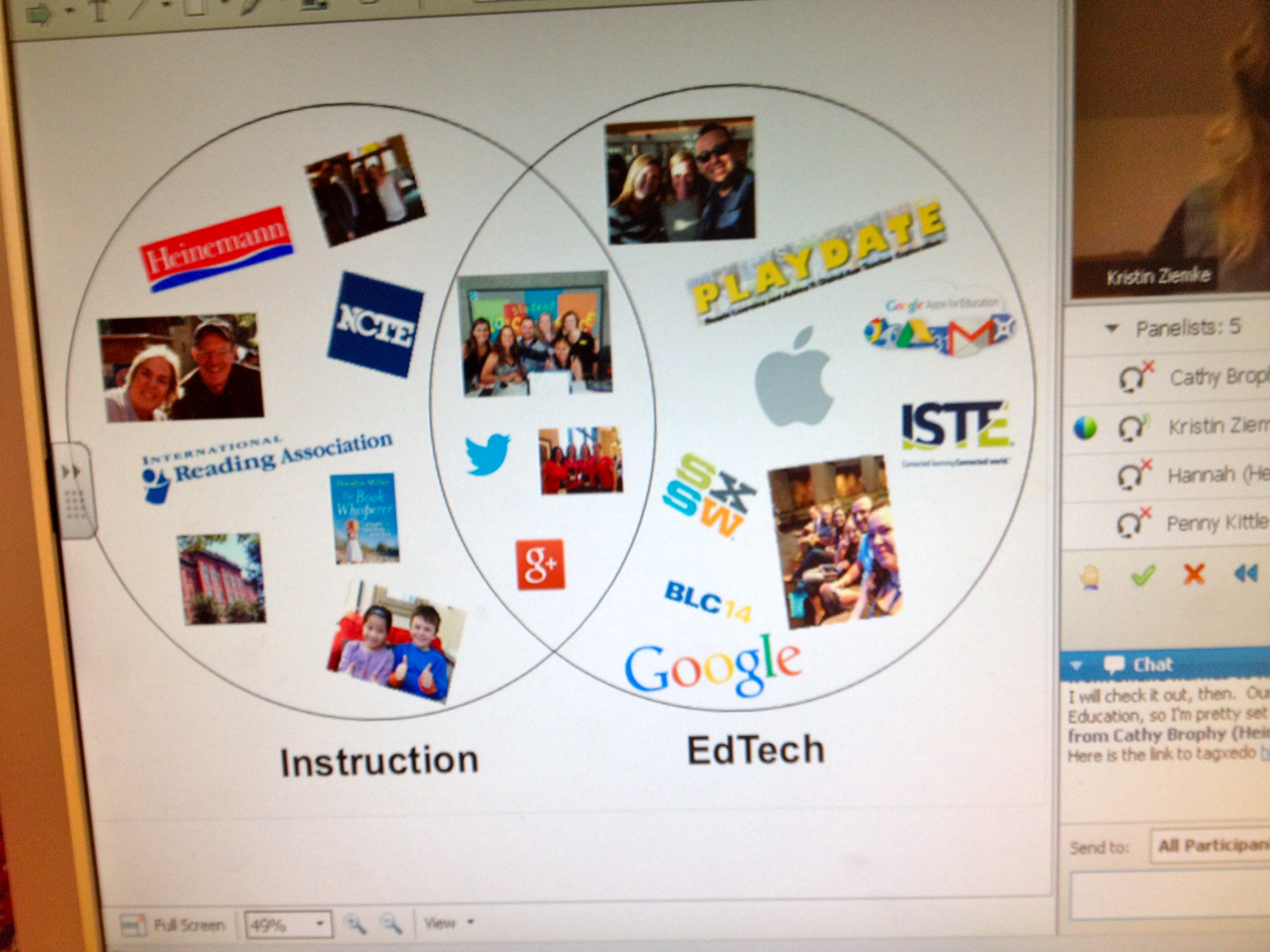
Kristin Ziemke presents during “Notebooks, Pens, and Pixels”
Don’t get me wrong: horror stories abound. I recently sat through eight straight hours of lecture at a “training”, zero hours of which were relevant to my classroom, and ended up lying in the hallway of a hotel conference center with a very pregnant colleague, who simply couldn’t sit in her chair any longer.
But, even more recently, I sat on the edge of my seat as I listened to Penny Kittle, Troy Hicks, and Kristin Ziemke present on using technology in language arts education. This free Heinemann webinar lasted a little over an hour, but it felt like only a moment had passed as I listened to those teacher-leaders share their mind’s inner workings. That amazing webinar, which also granted me insight into Kelly Gallagher and Tom Romano’s thinking-through-writing processes, falls under the same umbrella that torturous eight-hour lecture did.
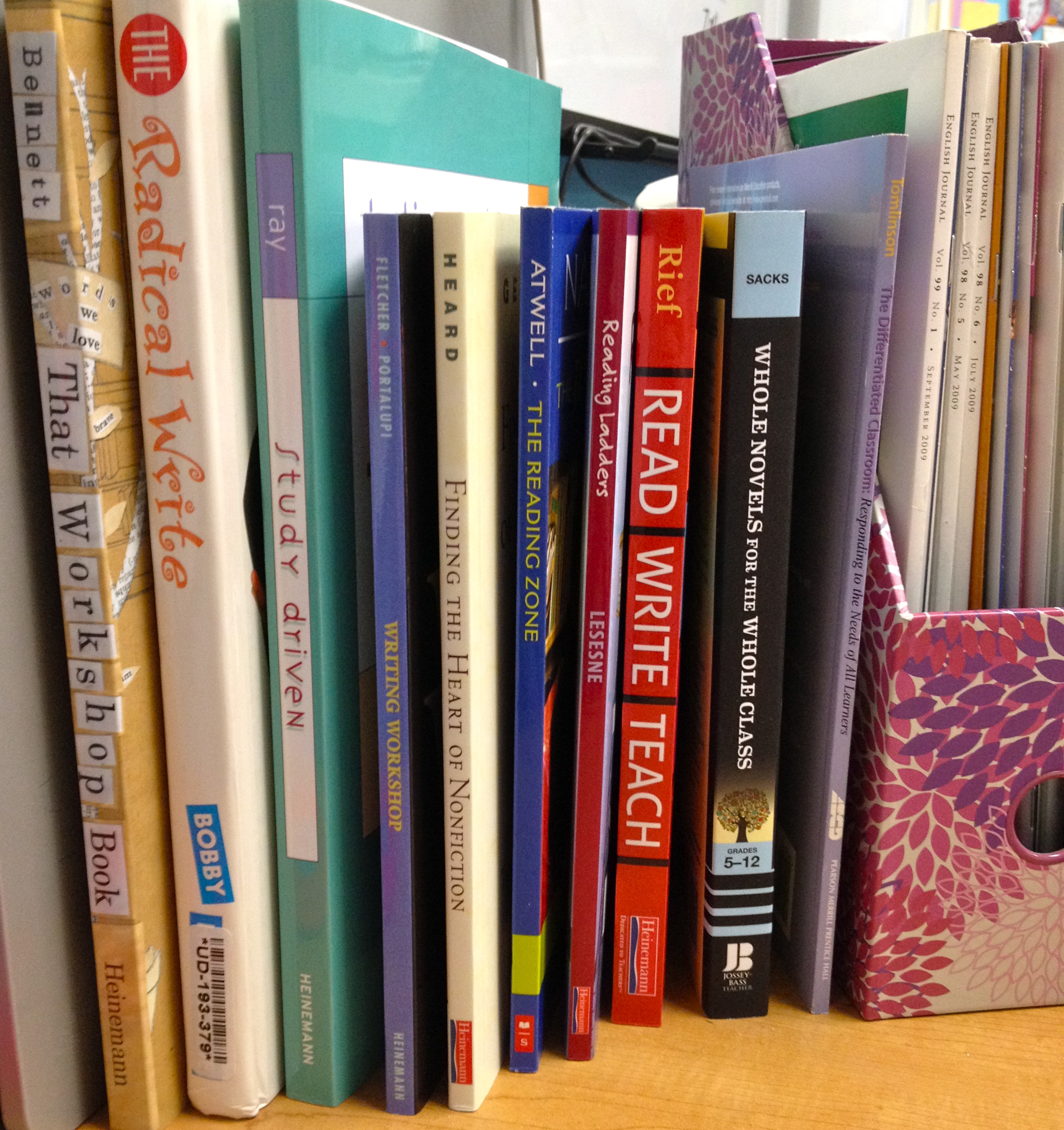
My professional to-be-read (and re-read) shelf
Presentations and lectures aren’t all there is to professional development. Simply reading the latest research is PD–sharing ideas over lunch with a colleague is PD–sitting down to write and reflect in the mornings is PD, too.
I’d argue that professional development is a teacher’s duty. Teachers really shouldn’t be the worst students–we should be the best. As professors of knowledge, shouldn’t we crave knowledge? Hunger for new ideas? Salivate over scholarship? If we seek to inspire a thirst for learning in our students, we must have it in ourselves. There are too many ways to grow in our profession–Twitter, online journals, NCTE, the National Writing Project–for us to not take advantage of the many opportunities for growth that come our way.
Professional development is something to aspire to, not to dread. Seek it out. Savor it. Lead it. It will make you a better teacher, and a more richly knowledgeable professional–and there’s nothing painful about that.










 Three Teachers Talk