Author Archives: Jessica Paxson

How to Confer Like a Ninja

NinjaConferring.

We all know it is the true Special Sauce in the workshop classroom.  Without conferring, it’s just Silent Sustained Reading, which ironically does little-to-nothing to actually SUSTAIN READERS.

However, we also all know #teacherlife.  When we get into the thick of things, it’s easy to lose our groove when it comes to consistently and effectively conferring with students about their reading lives. (Writing lives matter, too, but that’s another post.)

So, enter my new tutorial, How to Confer Like a Ninja.  I know many of you are imagining me in something resembling an all-black suit and stealthily skulking around whispering, “What are you reading? Why’d you abandon that book?”  I hate to disappoint you, but my students know I’m anything but graceful.  I regularly trip over Chad’s backpack with his tennis racket sticking out the top.  That thing is a weapon of mass destruction.

Instead of the stealthiness of a ninja in terms of moving about the room, I’m going to teach you how to ask questions that students would NEVER even know are conferring questions!!

For all other ninja-moves, please see Coach Moore, or maybe Lisa, or Shana’s daughter Ruthie.  They seem–stealthy.

Anyway.

Here are my four favorite questions for conferring like a ninja:

  1. How’s it Going?  I could write an entire book on this question alone.  Lucky for me–and you–Carl Andersen already did.  This is a completely low-stakes question that leaves room for the student understanding that you respect them as a reader–even if they are a struggling one–rather than feeling like they’re in the middle of a spotlight and interrogation room situation.  Ninjas are nice.  Ninjas are welcoming.  Ninjas just want students to become readers.  (Okay, so my analogy is breaking down a bit, but stay with me.)
  2. What’d you think?  This one I usually pull out in the hallway when a student runs to me in between classes to tell me they finished a book.  I usually get one of three responses: 1) “I’ll have to tell you later, I don’t have enough time!” 2) “Eh, it was okay.” 3) “Ugh!  Mrs. Paxson, I’m so mad!!” All three of these are great because it gives you an entrance–like a ninja–into a larger conversation.  Yes, even the “eh” response is perfect ground for finding them their next great read.
  3. Would you recommend this to a friend?  The answer to this question tells a lot about the journey of a reader.  If they would recommend it to a friend, that means they really do like it and they would risk being ridiculed by said friend if they thought it was boring, weird, etc.  Students don’t often risk that for just anything.  Also, if you can get a student to recommend a great book to one of your holdouts, they are scientifically about 83% more likely to actually read that book.  Yep.  That’s right.  I said SCIENTIFICALLY.
  4. Would you read it again?  Okay, be careful with this one.  I can feel you getting a little eager over there, and you can’t just pull it out of nowhere.  This is the perfect question to test the true level of a book in a reader’s mind.  But, THAT’S the ticket.  This question is for readers.  I would not pull this question out at the beginning of the year, or with one of my reading holdouts.  If I asked one of those students this question, they would stare at me, appalled that I would suggest such a thing.  However, real readers re-read.  It’s a true test of love for a book.  So use this one sparingly, but it will allow you to examine if a reader liked a book, or truly developed an undying love and will miss the characters long after the fact.  Our biggest nemesis in workshop teaching is time, and everything else that is competing for it in our students’ lives.  If they volunteer the information that they would be willing to spend MORE time reading something they’ve ALREADY READ, that means we’ve got ’em.  Take that, cat videos on YouTube.

All of these questions are part of my favorite aspect of a workshop classroom–the in-between.  Its difficult to quantify the leaps and bounds made within any given reading and writing workshop, but don’t let that distract you from the magic of the inconspicuous–or some people call it “normal”–conversation.  Getting to know our students, their reading tendencies, and their journey is part of what shows them that we are different.  We care about teaching them how to learn instead of just what to learn, and we are willing to support them on that journey as often as we can.  Even in the hallways, in transition time, and everywhere in between.

Happy teaching!


Jessica Paxson teaches English IV, AP Lang, and Creative Writing in Arlington, TX.  She runs on coffee and exaggeration, a deadly combination at 7 in the morning. Her students frequently describe her as “an annoyingly cheerful person who thinks all her students can change the world.”  Yep, pretty much. 

Promoting Community in the Workshop Classroom–and Out!

IMG_6878-COLLAGEThere were about two weeks of school when we came back that I wondered if I was doing something wrong.  It seemed like I had WAY too much time on my hands, and I wasn’t quite sure if I was just forgetting about responsibilities, and therefore shirking them in some way, or if I actually was managing my time better.

(Scoffs) Of course, it wasn’t the latter.  I simply FORGOT that I was in grad school.  This past week, as grad school classes started up again, I thought, “Ohhhh yeahhhh, that’s what was missing.”

I have questioned my life choices many times throughout this graduate student plus full-time (and then some) teacher season.  However, it is increasingly amazing to me the fact that teaching is more a study in behavioral psychology than it really is in any content.  The questions we ask ourselves are never just, What should I teach next?  Rather, they are loaded questions like, What can I teach next that will engage students, help them reach their potential, and provide a learning experience that will last beyond my classroom?

For this reason, my current class–focusing on social and emotional components of learning–is rocking my world.  The ore I read, the more I realize that it is my job not only to encourage healthy social and emotional characteristics in individual students, but also with each other.

So as my students are gain their reading strides this year, I’m pushing them to talk to each other about it more than ever before.  Here are some way I’m promoting community in my classroom, even among different class periods.

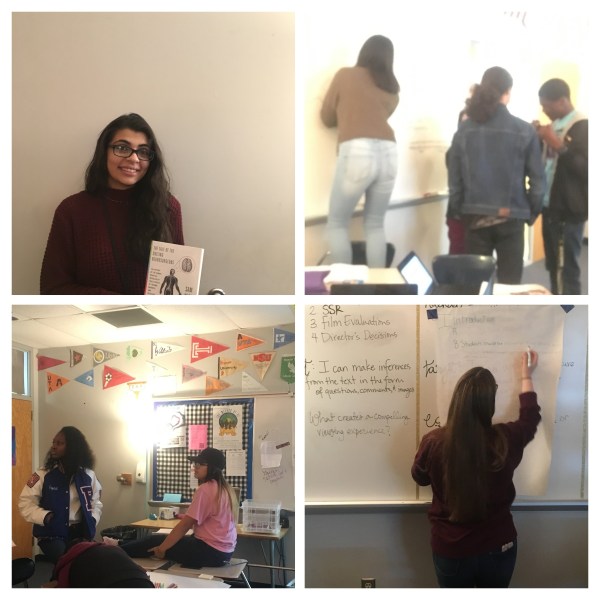
The Reader Hall of Fame:  This was my colleague’s idea, so I cannot take credit at all.  She started taking pictures of her students with their first finished book, and then she adds a small strip of paper with each new title they finish.  It looks AWESOME, and it really allows a constant brag-on-the-students feel to the classroom.  Students love coming in and seeing the new developments of their friends, the titles they’re reading, and the PAGE COUNT.  Yes.  They compare page counts like nobody’s business.

Book Clubs: This semester I am doing my first round of book clubs with my AP group.  Last semester, the students begged for book clubs.  They wanted to be able to read with their friends, which I think is a totally worthy desire that I do not mind milking for all it’s worth.  My goal is to come up with discussion questions along with the students that will promote discussion about life and the world, as well as education (our thematic topic for this unit).

Whole Class Reading Challenge:  Daniel Pink is haunting me in my sleep for this one–re: extrinsic motivation is not sustainable.  I know. However, when it comes to high school seniors, you sometimes have to pull out all the stops.  I follow Brian Kelley on Twitter (@briank) and he so graciously shared this reading challenge bingo with me.  I told my seniors each time they complete seven squares as a class–each square completed by a new student–they could bring to class.  When we complete three cycles, they can have a movie day.  I’m a sucker.  Feel free to troll me on Twitter.

Red Thread Notebooks, Technology Style:  This semester, my colleague and I are trying to get our seniors communicating across class periods, and even between our two classes.  In order to do this, we are going to take Shana’s Red Thread Notebooks, and take them to FlipGrid and possible Canvas discussion boards.  I hope to have different boards for big topics like LOVE, DEATH, FAITH, FREEDOM, on FlipGrid and allow time in class for students to respond to those boards and each other, referencing their current reading.

#bookstagram:  I love this hashtag on Instagram, and it provides a great way to connect to students in their own world.  I want to show a few photos from the hashtag to students in support of my book talks, and then offer an opportunity for students to #bookstagram their own book, or search the hashtag for their next read.

“Why I Read” Wall:  I’m a sentimental freak when it comes to second semester seniors.  They roll their eyes constantly as I say, “Do you REMEMBER when you said you would never read?!  Look at you now!”  Last week, tears streamed down my face–single ones, thank you–as I told them I believed in them and I’m so glad they’re here.  Beyond the sentimentality simply being my personality, it is also a teaching tactic that requires teenagers to reflect.  This is a skill I never thought would be so difficult to teach, but it is!  I want students to think of reasons why they read, and create a little notecard to hang in the hallway.  We could even steal their pictures from the Reader Hall of Fame and put them out there.  This would provide an amazing message for all the students who come into my classroom’s corner of the world that reading is more than just assignment.

And that’s the dream right there, folks.

So how do you promote community across classrooms through reading?


Jessica Paxson teaches English IV, AP Lang, and Creative Writing in Arlington, TX.  She runs on coffee and exaggeration, a deadly combination at 7 in the morning. Her students frequently describe her as “an annoyingly cheerful person who thinks all her students can change the world.”  Yep, pretty much. 
Who Are They When You’re Not Around?

Former SsFormer Ss 2

“Integrity is who you are when no one is watching.”

I tell my students this until they gripe and groan at the sound of the first word, because they know the rest by heart.  I value integrity and honesty with such fervor, likely because I’ve seen the cancer dishonesty can become, spreading to affect many more lives than just the withholder or fabricator of information.  My students know this very early on, but I haven’t been entirely sure that the lesson was sticking with them.

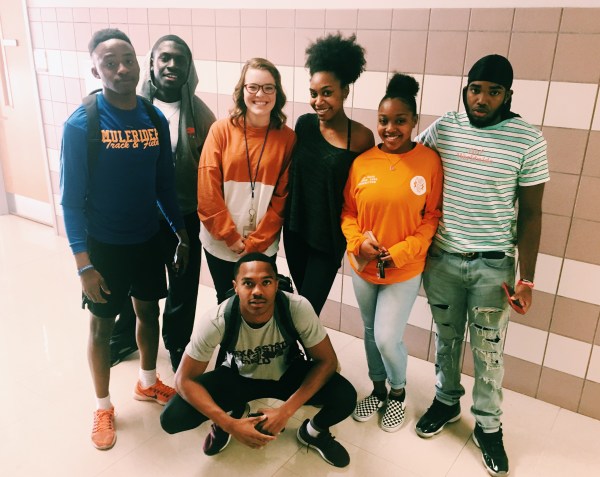
Last Friday, I had a gaggle of former students come visit me.  They were on Christmas break from their various universities, and decided they had to come pay me a visit.  Honored and surprised, they quickly reverted back to laughing at me–never with me–as I jumped and squealed at the sight of them at my door.  I’m so glad my current students were occupied with food and reviews so I could grill these young men about their new lives.

I asked them questions about their classes, the various sports they played, and of course nosier questions like, What about a girlfriend?  Wait, what happened to your old girlfriend?  Are you happy with your life?  What do you eat?  Are you eating?  I’m going to send you some food.

After a series of questions, Carl said, “Mrs. Paxson, you know, you were right.”  I replied, “Of course I was!  About what?”

He explained, “You see, I thought I knew what it was to focus–that you’re on task when someone comes over to check on you.  But in college, nobody does that.  So it’s like focus is what you do when no one is around, just like integrity.”

They proceeded to laugh AT me, again, as tears welled up in my eyes.  I wish I were kidding.

As a teacher, this question often plagues my mind: Who are you when I’m not around?  

And the natural questions that follow:

How can I strengthen THAT person, and not just the one you present to me?

How can I provide a space where you can be the person you are when I’m not around, when I’m actually around?

Or, like Amy’s–Have I really taught you anything?

Just as integrity is what you do when no one is watching, I would argue that true growth and commitment to learning can be judged by the same criteria.

With this in mind, I’ve presented my students with some reading challenge ideas, to keep them engrossed in words over the break.  Here are a few ideas from my colleagues.  We ran out of time to make our own reading challenges this semester, but we will in the Spring.

I’ve also written down Carl, Enrique, Kobe and Tomi’s words in my notebook to look back when I’m feeling ineffective and voiceless.  What we do matters, and it matters everyday–even the days that they’re no longer in our presence.


Jessica Paxson teaches English IV, AP Lang, and Creative Writing in Arlington, TX.  She runs on coffee and exaggeration, and is a victim of OCD–Obsessive Christmas Disorder. You can probably find her humming Christmas tunes over the sounds of her students’ pained groans, and sporting a gift bow in her hair for the last week of school.  Her students frequently describe her as “an annoyingly cheerful person who thinks all her students can change the world.”  Yep, pretty much.  

Letting Go: An Experiment

CW

Please ignore my sad, disorganized bookcase.  Trust me.  I KNOW.

So, I guess I went gradeless this semester, but it was an accident.

I’m the luckiest teacher in our school because I get to be Yoda to the young-jedi-creative-writers of James Bowie High School.

Wait, let me re-write that, The luckiest teacher I am because Yoda I get to be… okay, I tried.

We have one section of Creative Writing at our school, and it’s my baby.  Don’t worry.  It’s not weird.

This semester was my third semester teaching this class, and I decided to go full-choice as an experiment.  You see, in prior semesters, my units were centered around modes of writing.  We worked on character development and dove into short stories, we focused on powerful connotation and tone and dove into spoken word poetry, we wrote personal stories that exposed our souls, shared them and became a family.  I watched as they supported each other, got to know each other, and tried to hide my excitement and shock when we could go from laughing to crying to intense work and focus.

However, the only thing missing was buy-in for every single mode of writing.  Even with choice of topic within the mode, it was inevitable that some students gravitated more intensely toward poetry, fiction, real-life writing, humor, etc.

At the beginning of the semester as I got to know my students, I asked them if they would rather our sections of writing be organized by mode or thematic topic.  Unanimously, they voted for topical organization.

Then, we brainstormed broad topics that would allow for a myriad of interpretations and modes of writing.  They came up with the following list:

  • Power
  • Turmoil
  • Control
  • Kindness
  • Grudges
  • Beauty
  • Music
  • Addiction
  • Open-mindedness
  • Fear

Within these topics, we found stimuli and mentor texts along the lines of the idea, talked, wrote, wrote, and talked.  I put together mini-lessons quite similar to those from my modes of writing approach.  What I found can be described in one sentence.

Free students result in free writing, and free writing is what will change our world.

This is along the lines of what Cornelius Minor said in the Heinemann Fellows session at NCTE: In order to have free students, we must have free teachers.

At first glance, freedom seems easy.  Of course we want to be free, who wouldn’t want to be free?!  But what I’ve learned is that freedom doesn’t mean the work, stress, and weight of it all goes away.  Actually, quite the opposite.  As a free teacher, I find myself still up at night because of the weight of it all.  If free writing will change our world, what’s the next step for me in supporting my writers in their freedom?

Here are a few of the amazing writings that resulted from this experience:

  • Students wrote about addiction, and surprised me at their jarring use of sensory imagery that described addiction from every angle.  They wrote about addiction to a substance, addiction to a person, addiction to a feeling or a conception of oneself, but they were all rooted in that visceral, physical experience of being tied to something with such fervor.  They also decided that for read-arounds, we all needed to speak in a British accent.
  • Alexis wrote about a blind person’s experience with beauty.  Here is a line from her piece:
  • Maddie has written about 20,000 words over the course of our class, and is in the process of world-building for a future novel.
  • Jerrell wrote a mega-creepy horror piece describing the relationship between a stalker and his victim through the mode of letters, social media, and other correspondence.
  • Mecca draws with everything she writes.
  • Terrianna finally worked up the courage to write her brother’s story, but more on that later.

I realized last week that my class was essentially gradeless.  Ironically, it was not a conscious decision, but simply a natural result of being so entrenched in the writing process that I forgot to grade!  There was also really no need.  This semester I’ve been in constant writing conferences, teaming up partners with strengths to match weaknesses, asking students to help me with my own writing struggles, etc.  To me, this is what an entirely engaged classroom looks like, and it also resulted in better writing.

Now, as I mentioned in my last post, all of my classes do not look like this, completely.

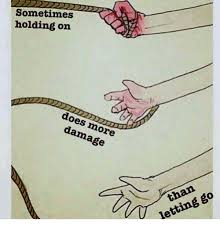
Here’s why letting go sometimes sounds easier than it actually is:

  • Sometimes you don’t have all the answers.
  • Sometimes things fail. (But shouldn’t we be showing our kids HOW to fail?)
  • Sometimes students have not been conditioned to invest in learning as a process rather than a way to check boxes.  (But, I mean, that HAS to change, right?!)

Sometimes images are better than words:

letting go

Creative Writing gives me grounds and hope for experimentation, and helps me to be brave and think outside the box in my other preps as well.  I hope that more time, talk, and investment in the real work of allowing students to be seen translates more intensely to my other classes in the Spring!

Have you ever happened upon a Happy Accident in your classroom?  Tell us about it in the comments!

P.S. For more about going gradeless, talk to Amy, or visit The Paper Graders’ blog!  I will be visiting in the next few days, and would love to chat about it with anyone!


Jessica Paxson teaches English IV, AP Lang, and Creative Writing in Arlington, TX.  She runs on coffee and exaggeration, and is overjoyed to be in a graduate program because that means she has access to a better library. Also, you can probably find her humming Christmas tunes over the sounds of her students’ pained groans.  They frequently describe her as “an annoyingly cheerful person who thinks all her students can change the world.”  Yep, pretty much.  

NCTE: A First-Timer’s Reflection

file3-1

I feel like I overuse the word “mind-blown” in my everyday life, and people who know me well are unphased when I hand gesture and raise the volume of my voice to describe whatever happened that elicited such a response.

But trust me when I say, this time IT IS NOT A DRILL.

My first-ever experience with NCTE can only be described in one–though overused by me–word.  You guessed it.

MIND.  BLOWN.  Okay, wait.  Two words, with necessary periodic addition for dramatic effect.

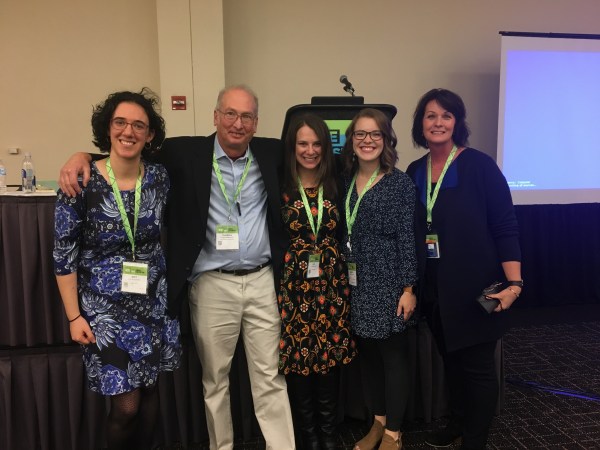
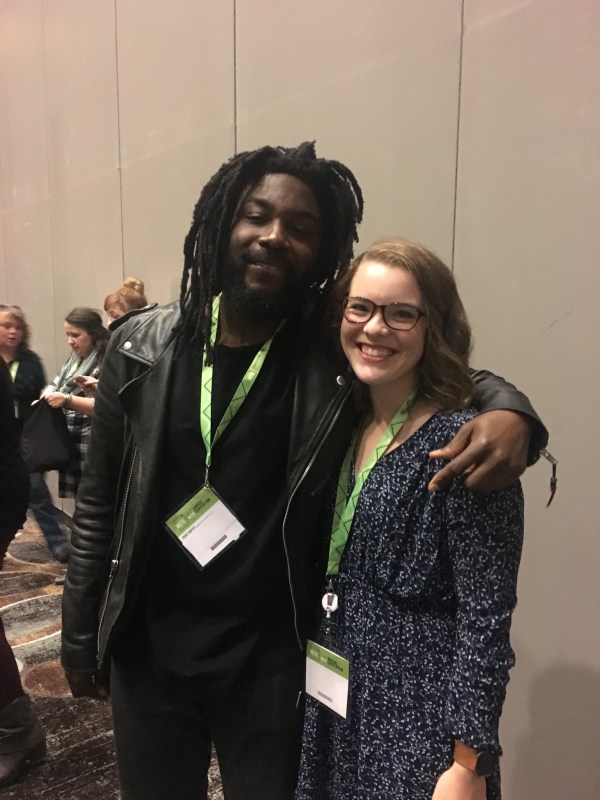
In order to fully communicate this mind-blown state, I should tell you that my NCTE experience began with sitting in the airport and seeing Jason Reynolds walk right in front of me as I froze like a teenage girl.

file-1

Then, I redeemed myself by attending a panel with Jason Reynolds and getting a picture.  I also awkwardly told him, “Hey, I saw you yesterday, but I tripped on my way over to you and got embarrassed and then sat down.” Good story, Jess.  He said, “Oh, you should’ve said something!” He’s probably used to crazies.

Anyway, aside from my intense awkwardness and wondering whether or not I should walk up to people I know from Twitter and say “hello”–like the friends I feel we are–, attending NCTE for the first time was an invaluable experience for a few reasons.

First, it helped validate that I’m–we’re–fighting the good fight.  To be honest, our profession is so steeped in what Carol Jago calls “literacy activities,” I sometimes wonder if I’m the only teacher just letting her kids read and providing space for them to write.  Anyone else?  Feeling like The Lone Ranger can also cause me to question: If this is different than the way almost everyone is doing it, is there a chance I’m wrong?  That insecurity causes many issues, one of which results in the frequent depletion of my chocolate stash.  However, NCTE took all that wondering away, and reaffirmed the Workshop Crusade during every session:

Kelly Gallagher said, “I am a teacher of literaCY, not literaTURE.”

Jimmy Santiago Baca, “In working with students who hate education, we need to make it look a lot less like education.”

He also said, “Make your classroom as individual as you can to affirm your own spirit.”  And I would argue, we need to do so in order to affirm the spirits of our kids, as well.

Second, as a result of an amazing session led by Tricia Ebarvia (who is my bestie, but doesn’t know it yet), Anna Osborn (who I want to be when I grow up), and Kate Flowers (who is not afraid to tell the truth of data), I obtained a litmus test that will challenge me for the rest of my teaching career.

Kate Flowers’ Rule of Assessment: Do no harm.

As I really let this three-word, doozy of a sentence sink in, I started running a list of what I would deem “assessments” from the past three months.  I teach three very different classes: On-level Seniors, AP Lang Juniors, and All-level Creative Writing.  I can honestly say the only class I can say I’ve “done no harm” in terms of assessment is Creative Writing.  Do I know where they are?  Absolutely.  Do I know their strengths?  Interests?  What they had for breakfast this morning?  What they dream about for their futures?  Absolutely.  Do they love and support each other as classmates?  To a fault.

So, the tough question is, why do I run my other classes any differently?  Truth: Because of assessments.  Because of administrative checkpoints.  Because I feel as though I have to justify community-building and students being seen to align with state and district standards.  Finally, because I have not completely let go of control.

Kate asked, “Is this about your need to control?  Or are you serving your students’ need to grow?”

This question also made me think: How many times do our educational practices do more to breed liars than learners?

Those questions should keep me busy for awhile.

Do no harm.

Finally, NCTE made me even more angry at the conversations that permeate the teacher work rooms, the hallways, the classrooms with doors closed and hands thrown up in the air.

I constantly hear, “My kids can’t do this, and they can’t do that.  Why have they not been taught this before?”

file1-1

Cornelius Minor said, “Your lack of understanding is not a symptom of something wrong.  It just means you’re in the right place.”

I am a teacher.  I’m not an assigner.  I’m not an assessor.  I don’t throw something against a wall, hope it sticks, and then blame the wall for not having been told to grab onto it because it will be useful in the future.

As I said in my portion of our Three Teachers’ talk, maybe kids have been told, but they haven’t been taught.

Overwhelm

So, my current plight is trudging through the constant overwhelm of asking people to be open to change, trying something new, doing things differently.  My volleyball coach ALWAYS reminded us of the definition of insanity–but he called it “stupid,” instead.  Insanity is doing the same thing over and over and expecting different results.  So I will continue to toss up the idea that we should let students show us who they are, and then plan a learning experience around that.  We might even set some learning in place that might help them discover a piece of themselves they didn’t know existed, or a person they were blind to before they knew their struggles were the same.

I remember what Tom Newkirk said, “Story is compelled by trouble.”  So maybe this is part of my story, maybe this is my trouble.  Maybe I was meant to push through the difficulty and the seemingly impossible–at least without a steady stream of caffeine and sarcasm–to get to what truly might save our world, beautiful words and the connections they fuse when we encounter them.


Jessica Paxson teaches English IV, AP Lang, and Creative Writing in Arlington, TX.  She runs on coffee and exaggeration, and is overjoyed to be in a graduate program because that means she has access to a better library.  She is currently twiddling her thumbs as she waits for the next books from Sabaa Tahir, Sandhya Menon, and Jason Reynolds.  Also, you can probably find her humming Christmas tunes over the sounds of her students’ pained groans.

Learning Matters When Students Matter

Reclaiming Narrative and Amplifying Our Voices_ Using Story to Invite Fearless Inquiry and Intellectual Challenge for Our Students and Ourselves

It’s 8 months later, and I still think about Amy’s post regarding mirrors, windows, and doors.  In fact, it permeates most of my conversations about education with colleagues, in graduate school, at the coffee shop–okay, kind of kidding on that last one.

But it’s the question at the end of her post that gets me:

How are we making learning matter to our students?

Learning doesn’t matter until students see themselves in the process.  The process of learning is transactional, much like the process of making meaning in general, according to Jerome Bruner.  This concept of transaction means that students need to be involved.  They have to act, rather than simply absorb.

Oscar Wilde

Students must have choice.  They must see themselves in other people’s stories.  They must tell their own stories, not only for the sake of the “personal narrative,” but because good story is woven through all great writing.

We are heading to NCTE tomorrow.  What?!  Tomorrow?!  While it seems like it’s been the quickest semester on the face of the planet, I’m so glad our presentation regarding narrative has been in the back of my mind.  It has made me a better teacher, and caused me to consider how I’m allowing students to tell their stories, or craft a new one, in just about everything we do.

People often say, “For it is in giving that we receive.”  I find this to be increasingly true in writing for Three Teachers Talk.  It challenges my practice and encourages me to think of my classroom in a way that the progress we make can be transferred to other teachers’ classrooms and communities.

My story for this week includes a whole lot of writing, crossing out, scribbling, Googling, then writing again.  In my third year of teaching, I thought I would have fewer firsts.  But, alas, in this month alone, it is my first time speaking in front of non-teenagers, first time meeting my literacy idols, first time going to a conference that will hopefully change my life and my practice–or at least bolster the ideals I already hold.  I am beyond excited to learn alongside the community of literacy advocates whom I have grown to love over the past year.  Will we see you there?!

Three Teachers Talk at #NCTE17, session C.26, Friday at 12:30, room 274.

I’ll be wearing a blue dress, and probably a flushed face accompanied by some armpit stains.  Don’t worry, I’ll cover them up with a blazer.


Jessica Paxson teaches English IV, AP Lang, and Creative Writing in Arlington, TX.  She runs on coffee and exaggeration.  Her husband keeps her sane with his good looks and even-keeled  nature.  She is currently coming off the high that is the Ember in the Ashes series, writing about real life and all it’s messiness (Jessica Jordana), and attempting to inspire students to be the best version of themselves.  You can find her on Twitter and Instagram at @jessjordana to follow along with her many adventures!

Rewriting the Narrative with Friendly Competition

Book Comp 3

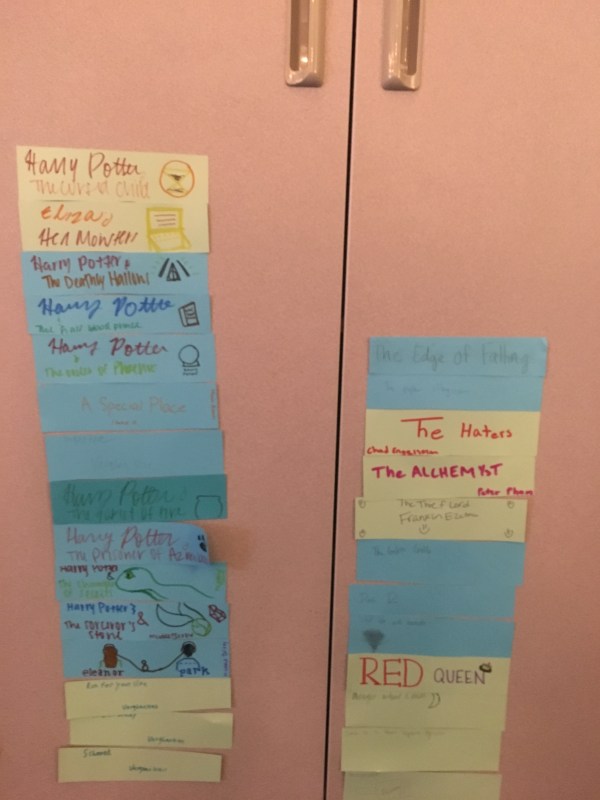
Left, 10th Period; Right, Mrs. Paxson’s tally for the semester!

Book Comp 2

Left, Creative Writing; Right, 7th Period

November is a weird month for educators.  We’re nearing the end, but also barely in the middle of the fall semester.  The dreams we devised for our classrooms in the summer have been shattered with reality, and we are just beginning to get our feet back under us from that October slump.  Just as we feel we’ve picked up our stride, we reach Thanksgiving break–thank you, baby Jesus–and begin the mad-dash to Christmas break.  I always leave school for Christmas break with wind-blown hair and a what-just-happened feeling.  This is largely contrasted to the sentiments of Spring semester such as, Am I starring in the remake of Groundhog Day, and nobody told me?

As I thought about what I wanted to share this week, I thought, Okay, Jess.  Keep it simple.  What are you doing in your classroom that is tiny, promotes engagement, and reinforces the values of workshop?

Enter the Friendly Book Competition.

This year, as students finish books, they get to create a book spine with the title of the book and their name written on a strip of paper. Then, they tape the book spine to the cabinet door for their class period.  Each class period is competing against one another for who reads the most books.

While this seems like a simple activity, I’ve been really surprised at how this is helping my students to rewrite their own experience with reading.  These are the conversations I hear when students check the status of the competition:

What?!  They read Harry Potter.  Does that even count?!

How does one student read so much?!  There’s no way they’re only reading in class.

Oh, that title sounds interesting.  Who is this student?  Can I ask them about it?

The overwhelming feeling of my students at the beginning of the year is that reading is simply a task that is assigned.  As we traverse through the year, my goal is for them to see themselves as readers and writers.  That means realizing that, YES, Harry always counts.  Reading for fun is the best kind of reading.  Tracking your reading doesn’t always mean writing down minutes or pages.  You don’t become a reader by only reading for 10 minutes in class.

Competition is not the end goal, in this case, but it’s what I’m using to disguise a conversation about reading life and growth between class periods.  They probably will be very surprised when the winners are presented with a “ticket to success in life” at the end of the semester.

How do your students converse about reading?  What visual representations of reading growth do you have in your classroom?


Jessica Paxson teaches English IV, AP Lang, and Creative Writing in Arlington, TX.  She is currently obsessing over Ember in the Ashes and Torch Against the Night and pondering ways to help her students write themselves out of their circumstances, trials, and personal villains, and attempts to do the same through her own writing (Jessica Jordana). Her kryptonite is when the coffee runs out before ordering more on Amazon, and her secret weapon is her writer’s notebook.  You can find her on Twitter and Instagram at @jessjordana–especially if would like to awkwardly meet in person at #NCTE17!

Let’s Pick a Fight

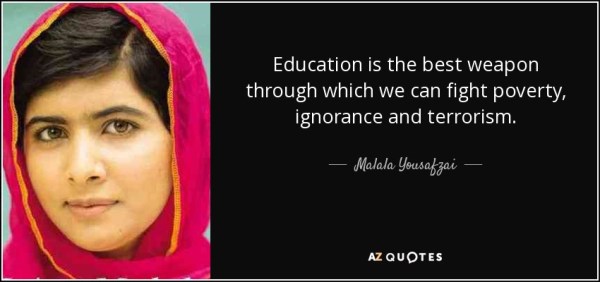
MalalaWorkshop teaching ruined my life.

I mean that in the best way possible.  A few months ago, I talked about how going sane feels a lot like going crazy.  Part of that venture into a new version of sanity is that the wider world starts to bend and bow into a shape that looks a whole lot like a lesson you can use in the classroom.  ALL. THE. TIME.

Chipotle bags look like artful argument.  The newest best seller list looks like a lesson on what people in our society are craving at the moment.  The tweets of the President, and everyone’s tweets about him, look like an examination of how people spend their time, and whether or not that helps them accomplish their purpose.

I listen to podcasts on the weekend.  I have a rule that they CANNOT be podcasts about teaching.  One MUST separate the weekend from all things planning and brain-spaghetti-nonsense, right?  Well, as I’ve taken to listening to every single back-episode of Donald Miller’s Building a Storybrand Podcast, once again, I cannot help but pull fodder for teaching practice from his marketing framework.

Donald Miller is the author of Blue Like Jazz and A Million Miles in a Thousand Years (I can hear you all saying, Ohhh! That’s why that sounds familiar).  His company, podcast, and newly released book focus on the fact that our brains are wired for story (hello, Newkirk, anyone?) and utilizing the general framework of a story in your marketing plan will help you grow your business.

Makes sense, right?

The specific focus of the episode I listened to this weekend was THE VILLAIN.

Miller argued that you are doing your business a disservice if you have not chosen a villain.  Every good story has a struggle, so why not intentionally choose what you are fighting against?

It made me think of our classrooms.  Sometimes I think unintentional villains sneak in between the four walls we call home many more hours than we’d like to admit.

The unspoken villain in my classroom–I hate to admit–often seems to be the hard work associated with the learning.  Students claim they want to learn and grow, but they forget that the learning and growing process is somewhat painful, if we’re doing it right.

It made me think of our students.  The students I teach have many villains they never seemed to ask for, and have no idea how to overcome on their own.  Many students don’t feel like the hero in their own story, but rather an innocent bystander flattened in the crossfire.

It made me think of my own villains.  Rather than utilizing my super powers to fight off the evil demons of a future world full of uninformed citizens, I often spend all my power fighting against time, against what I wish my students knew when they got to me, against the fact that I only get 32 minutes for lunch that I typically have to trudge through working anyway.

So, in the true 3TT fashion, I’m writing a blog post not to offer solutions but rather to ask all of you–my wonderful, smarter-than-me colleagues–a question.

How can we make sure that we’re choosing a villain for our classrooms rather than letting the default win out?  How can we assist our students in identifying their own villains to slay so that they can eventually decide their own fight as well?  How can we shift our focus from the villains that overtake us as teachers in a broken system, and focus our powers on the things that need saving–or at least the empowerment to save themselves?

We would love to hear your wonderful thoughts in the comments, so please feel free to share!  I’m going to be talking with my colleagues in my own school, and if you do the same, let us know what they say!


Jessica Paxson teaches English IV, AP Lang, and Creative Writing in Arlington, TX.  She is an unexpected Marvel Comics fan, thanks to her older brother always hogging the remote when they were kids.  She is currently picking a fight against the curse of perfection, and attempting to embrace real life and all it’s messiness (Jessica Jordana). Her kryptonite is when the coffee runs out before ordering more on Amazon, and her secret weapon is her writer’s notebook.  You can find her on Twitter and Instagram at @jessjordana to follow along with her many villain-battling antics!

How to Read the Room between Conferences

Constructive FeedbackReader’s and Writer’s Workshop hinges on providing choice.  However, as I am guiding my level this year in dipping their toes into the framework–I’m more of a full-immersion woman, myself–, some things have been made increasingly more clear to me.
Choice is a nice idea, but when it lacks support, it’s like using a map without a destination in mind.  It’s looking at something that holds value in direction and helping you see the world, and only noticing the colors and squiggles.

For this reason, I’ve really been stressing the value of conferring (conferencing?), and I’ve ventured back to the 3TT archives to guide me in this soapbox.  As I focus more on conferring in my own classroom, a question frequently pops into my mind.

Amy has discussed why conferring matters, and how we shouldn’t make reading conferences into an official assessment, for fear of losing readers altogether.  Our goal is to foster the growth of real readers and writers.

Seems simple, right?

Yet, we all know that our goals often get muddied with the business of everything ELSE we need to do as teachers.  Before we know it, a month or so may pass between individual conferences with a student.  What happens if they lose interest in a book, but are afraid to say so?  How do we deal with the in-between, cover the cracks, and all that cliche, but completely necessary work?

How can I read a whole room of readers, so that nobody falls off the rails in between our conferences?

When we first checked out books this year, I checked in with students after each silent reading episode.

I stated, “Okay, I need everybody to stand!”

Cue the groans

“Now, I need everyone who is enjoying their current book to stay standing.”

I immediately had a temperature gauge of students who sat down, and clearly were not happy with their book.  After that visual representation, I asked students who loved their books to go talk to someone who was not happy with their book.  I instructed them to sell that book to their classmate so that they could put some more titles on their list.

This worked really well in the first few weeks of school, and I’m attempting to gather more in-between checks of this nature.  Of course, I turned to my 3TT ladies, first.

Amy likes to use sticky note conferences in writer’s notebooks.

She also has students talk at their tables about their books at least once a week.

What are some ways you all keep up with students’ reading journeys in between one-on-one conferring?


Jessica Paxson is an English teacher English IV, AP Lang, and Creative Writing in Arlington, TX.  She runs on coffee and exaggeration.  Her husband keeps her sane with his good looks and even-keeled  nature.  She spends her time reading everything she can, writing about real life and all it’s messiness (Jessica Jordana), and attempting to inspire students to be the best version of themselves.  You can find her on Twitter and Instagram at @jessjordana to follow along with her many adventures!

You’re Not Doing It Wrong

Image

“I’m kinda dumb sometimes, so just bear with me.”

“I’m a really slow learner.”

“I suck at reading and I’m even worse at writing.”

“I don’t like to read because I don’t ever figure out the right things.”

These were all real responses I received from students during the first week of school.  I prompted them to tell me a few things about themselves on an index card.  At the end of their writing, they had free reign to tell me anything about how they learn.

While not all the responses were like this, enough of them were to strike a chord with me.  I teach Juniors and Seniors, and the extent of their negative self-talk makes me wonder, With so little experience with learning, someone must have said these words to them at some point, right?

We all have a tape of negativity that runs through our minds.  Even though it seems like the words appear from nowhere, the truth is that we’ve plucked things from what people have told us over the years, and we’ve formed them into all the reasons why we can’t do something, be someone, achieve the impossible–or even the possible, for that matter.

The first few weeks of workshop tend to be a whole lot of un-teaching.  As teachers of older students, we often have to deconstruct students’ conceptualizations of reading and writing before we can ever hope to hook them.

As Scholastic indicates, a few of the reasons kids develop less than a love for reading is because they fear the quizzes, are ashamed of being too slow, are disinterested in required reading, etc.  This fear and shame begins at a very young age, but it also begins to shape students’ ideas of the point of reading in general.

The Seniors I have this year see reading as a “gotcha,” yet another boring requirement followed by a test that does not make sense in helping with their future.

The AP Juniors I have this year see school reading as a distraction from what they actually want to read or are passionate about.

Many of these students have been slapped on the wrist for missing a three-pointer before they’ve ever even stepped out on the court!

We started reading in class almost immediately.  I demonstrated one way that is NOT okay to read, and that’s when you’re actually sleeping.  The students asked:

“So we can lay our heads down sideways on our desks to read?”

“Can we sit on the floor?”

“Can I move to the corner?”

One student walked in from the long weekend and APOLOGIZED for finishing her book.

“Mrs. Paxson, it was just so good.  I can keep it if we are going to do some lessons with it, while I read another one.”

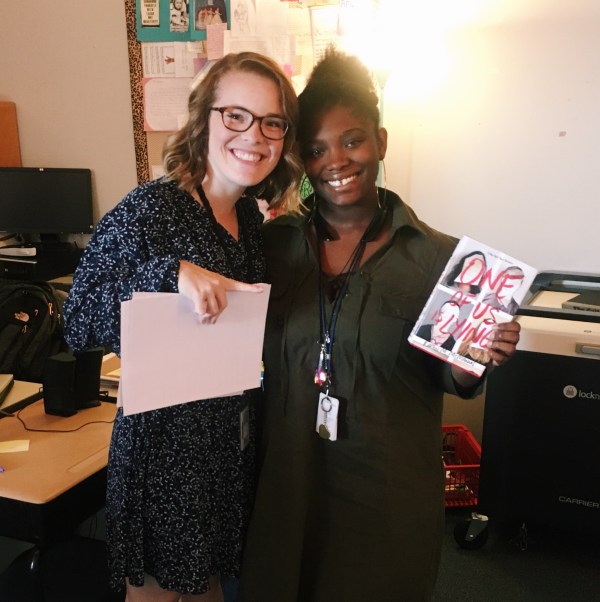
After picking my jaw up from the floor, I explained to her that she was the FIRST to finish a book this year, and that is never something to apologize for!  I walked her to the bookshelf to choose another book–always the best kind of conferring–and she smiled as I asked to take a picture with her before she left today.

The main thing I’m teaching at the beginning of this year–more than thesis statements, characterization, rhetorical analysis, or comprehension–is that there is not a wrong way to read.

You are not doing it wrong, my dear ones.  Now let’s keep reading.

Do you find that you have to break your students of anything at the beginning of the year, specifically in workshop?


Jessica Paxson is an English teacher English IV, AP Lang, and Creative Writing in Arlington, TX.  She runs on coffee and exaggeration.  Her husband keeps her sane with his good looks and even-keeled  nature.  She spends her time reading everything she can, writing about real life and all it’s messiness (Jessica Jordana), and attempting to inspire students to be the best version of themselves.  You can find her on Twitter and Instagram at @jessjordana to follow along with her many adventures!