Author Archives: Amy Rasmussen

Reel Reading – The Fault in Our Stars

ReelReading2


What?! You chose The Fault in our Stars to kick off our Reel Reading for Real Readers meme? Heather, my friend, you read my mind once again. Now, let’s share our thinking with other like-minded book-loving teachers and invite them to share along.
 _____________________________________________________________________
What:  Weekly posts of book trailers of our favorite and most student-engaging YA books.
Why:   Visual images can intrigue the most reluctant and even hostile readers.
When: Thursdays so you can find the book in preparation for showing the trailer on Fridays. (We might get some traction with weekend readers here.)
How:  We’ll post ours. You post yours, using the meme Reel Reading for Real Readers. Leave us a comment with your blog link, so others can add to their book trailer libraries.
_____________________________________________________________________


Have you read this book? Leave us a reflection on it and a suggestion as to what we should read next.

Can’t Get Students to Write? Try These Mentor Texts for More Engagement


I had a dream the other night where I was in a conversation with my principal about student engagement. Of course, I’d just spent the day in Internal Rounds at one of the other high schools, specifically looking for and analyzing data that was supposed to show if students were engaged in their learning– not compliant, maybe committed,  and hopefully, taking ownership. In my dream I felt exasperated. I struggled, and I probably hit my husband in the head. I finally threw up my hands and said, “I can’t do it! You’ll have my resignation tomorrow!” and I huffed out the door.

What the heck?

Yes, student engagement. Those seem to be the buzz words I keep hearing lately. Well, those or student apathy, the ugly step-sister. I’d rather at least try to stay positive.

I teach 9th grade English. I try to teach students how to write. Sometimes I want to beat my head against the wall because I have so many kids who just don’t get into what I try to get them to do. I imagine this sounds familiar to some of you–at least I hope I’m not alone here.

In my search for ways to get students engaged, I’ve discovered a few texts that serve as friendly mentors to help me get my students to care about what they have to say and how they say it. These mentors have interesting text structures or themes–or, hey, they are short, which goes over well with my kids.

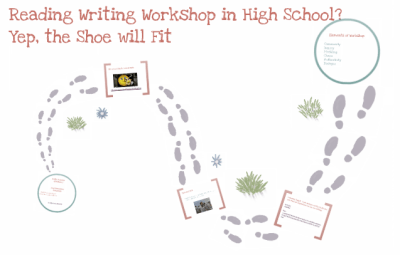
I shared a few of these during my presentation at TCTELA in Dallas last week. The Prezi posted two weeks ago called “Reading Writing Workshop in High School? Yep, the Shoe Will Fit” has images of the book covers, and the handouts have some excerpts and ideas from some of my favorite mentors: The Book of Awesome by Neil Pasricha, The Dictionary of High School B.S. by Lois Beckwith, Six Word Memoirs from SMITH Magazine, and  The Encyclopedia of an Ordinary Life by Amy Krause Rosenthal. I’ve used excerpts from all of these and have had great success in getting students to take interest and ownership of their writing. We read the mentor, analyze the author’s craft–specifically looking for the moves he makes, and then we write our own version or addition to that text. Sometimes I require certain devices like metaphors or alliteration or parallel structure or whatever; sometimes not. Always I allow for student choice in the subject matter. I get the best student writing this way.

At the end of that presentation at TCTELA, I asked the audience to contribute ideas for mentor texts that they’ve had success with in getting students to write. Take a look at these fun books; you’ll see the value in how these can work to give students choice in what they write, while you give them say in how they write it.

(Thanks, Goodreads.com, for the synopsis and book cover images.)

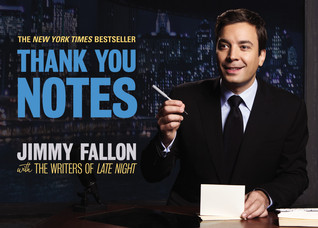
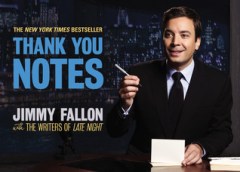
Thank you Notes by Jimmy Fallon
10505349
Thank you, slow walking family walking in front of me on the sidewalk. No, please, take your time. And definitely spread out, too, so you create a barricade of idiots. I am so thankful that you forced me to walk on the street and risk getting hit by a car in order to pass you so I could resume walking at a normal human pace.Jimmy Fallon has a few people and a few things to thank. In this brand-new book, the very first to come from his show, he addresses some 200 subjects in need of his undying “gratitude.” Each page will feature one note and a photograph of its recipient.
_____________________________________________________________________
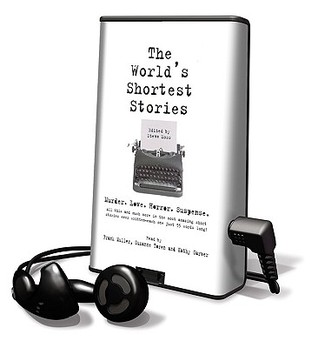
World’s Shortest Stories by Steve Moss
8791206
Murder. Love. Horror. Suspense. All this and much more in the most amazing short stories ever written each one just 55 words long! Consider for a moment 55 words. It’s an absurdly tiny number. No, it’s an impossible tiny number. It’s what O. Henry might have conjured up if he’d only had the back of a business card to write upon. You’ll find murder and suspense, horror and intrigue, love and betrayal, plus distant worlds and inner demons.
All in a measly 55 words.
_______________________________________________
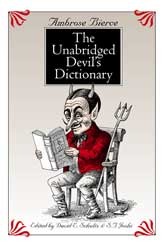
Devil’s Dictionary by Ambrose Bierce
49256
A virtual onslaught of acerbic, confrontational wordplay, The Unabridged Devil’s Dictionary offers some 1,600 wickedly clever definitions to the vocabulary of everyday life. Little is sacred and few are safe, for Bierce targets just about any pursuit, from matrimony to immortality, that allows our willful failings and excesses to shine forth.

________________________________________________
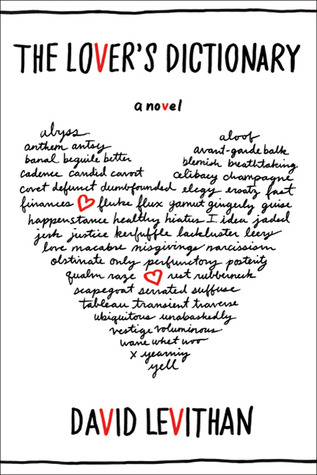
Lover’s Dictionary by David Levithan  [This one fits the list appropriately after the last one. I read this book in one sitting. It’s tender and sweet, and the cover is AWESOME!]
9279177
How does one talk about love? Do we even have the right words to describe something that can be both utterly mundane and completely transcendent, pulling us out of our everyday lives and making us feel a part of something greater than ourselves? Taking a unique approach to this problem, the nameless narrator of David Levithan’s The Lover’s Dictionary has constructed the story of his relationship as a dictionary.

_________________________________________________
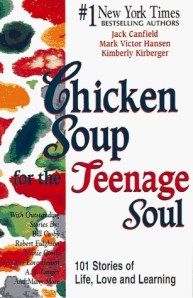
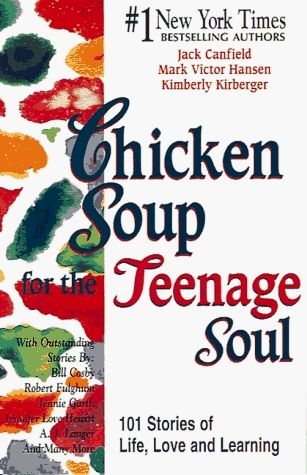
Chicken Soup for the Teenage Soul by Jack Canfield, Mark Victor Hansen427920
This first batch of Chicken Soup for Teens consists of 101 stories every teenager can relate to and learn from–without feeling criticized or judged. This edition contains important lessons on the nature of friendship and love, the importance of belief in the future, and the value of respect for oneself and others, and much more.
_____________________________________________
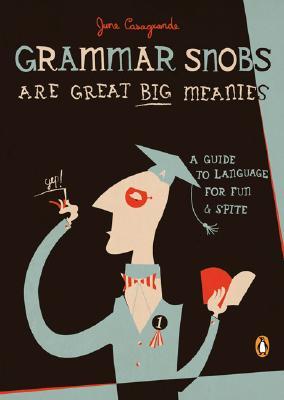
Grammar Snobs are Great Big Meanies: A Guide to Language for Fun and Spite by June Casagrand
14106
What do suicidal pandas, doped-up rock stars, and a naked Pamela Anderson have in common? They’re all a heck of a lot more interesting than reading about predicate nominatives and hyphens. June Casagrande knows this and has invented a whole new twist on the grammar book–a laugh-out-loud funny collection of anecdotes and essays on grammar and punctuation, as well as hilarious critiques of the self-appointed language experts.

Do you know of any more fun texts to use as writing mentor texts? Please leave your suggestions in the comments.

It’s Monday. What are You Reading? – Closet Confessions

Mon Reading Button PB to YA

Books I read:

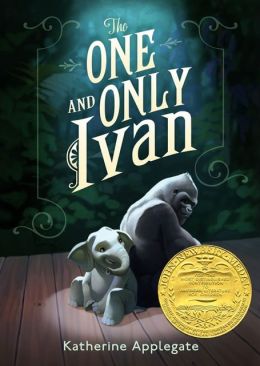
one and onlyThe One and Only Ivan
Shhh! Please don’t tell all of my Ivan fanatic fans that I hadn’t read the book until just this week. To be fair, it has been in my TBR (to be read) pile practically since it first came out, but as the stack continues to grow and topple over sometimes even a classic gets lost among the wreckage.

When I finally did rescue the book from the seemingly forgotten and certainly neglected TBR pile, I felt a twinge of regret that I hadn’t gotten to it sooner.

Turn by turn words glide off the page as they string together a heart-warming story that vibrantly comes to life in the reader’s heart. As I read, I found sentence after sentence I would like to analyze with students, as well as have them imitate, so they in turn might feel the power of language through a carefully constructed thought.

Shared experiences with stories are what bind us together. If I still had my class of sixth graders, The One and Only Ivan is one that I would be sharing with my class.

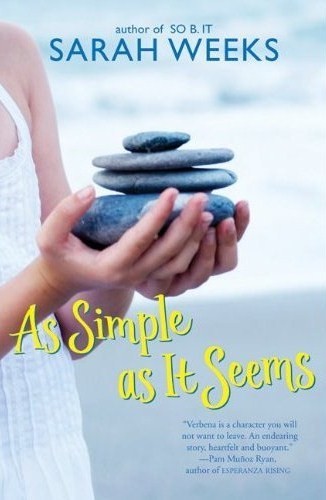
simple as it seemsAs Simple as it Seems
There are some books that you don’t really know much about, but as soon as you see the name of the author who wrote it you are compelled to read it simply because you love the author. Sarah Weeks, who also wrote So B. It and Pie crafts fairly simple stories that captivate readers though complex characters that are dealing with complex problems. In As Simple as it Seems, Verbena has enough problems to deal with as she is trying to navigate through the tween years, but when she finds out that she has been adopted she doesn’t quite know how to take it. Although she is easily irritable and often moody, Verbena’s story will remind readers that discovering who we are is something we all must do.

Books I’m reading this week:

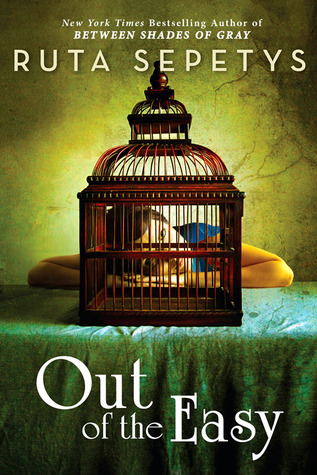
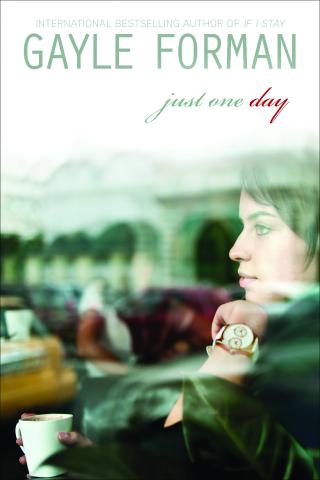
out of the easyjust one day

NSTWP Saturday Session

How might the use of technology be redefined and better utilized in the classroom?

It’s Monday. What are You Reading?

Mon Reading Button PB to YAI just want you to know that I love love stories. I especially like to read about love as we get closer to my Favorite Holiday– Valentine’s Day! So, with that in mind, I asked my sweet school librarians to find me David Levithan’s book The Lover’s Dictionary. I found it on my desk this morning. I know nothing about this book except:

1) It has an awesome cover.

2) It is written with page headings like dictionary entries.

3) It has me hooked with this on page 3:

abyss, n.

There are times when I doubt everything. When I regret everything you’ve taken from me, everything I’ve given you, and the waste of all the time I’ve spent on us.

9279177

Writing Instruction that Follows the North Star

writing notebookCan you remember when you learned to write? I can’t. Not really. I remember the lined paper and the fat pencils. I remember trying to have the very best penmanship because I wanted my name listed on the chart that covered the side of my teacher’s desk. I remember that writing came pretty easily. I was one of those students. My teachers loved me because I was well-behaved, listened, learned, and made all A’s.

I do not teach those students. Well, maybe a few, but most of them would be my antonym if my student-self were a word.

When I began teaching, I had no idea that my students would not be like me. I know, funny, right? I thought I could teach them comma rules, show them where the commas went, and I would see beautifully crafted commas in all the right places. (Don’t even get me started on the period.)

I had to learn to be a writing teacher.

Thank God for the North Star of Texas Writing Project. Fortunately, for me and the hundreds of students I’ve instructed since, I’ve learned how to create a community that fosters a love (or at least some days, a tolerance) of the written word.

A couple of weeks ago, the leadership team of NSTWP met and crafted the tenets of our site. We decided that community encompasses and interweaves itself throughout our work, and authenticity, inquiry, modeling, dialogue, and re-visioning make it shine.

A few of us jumped on a Google doc yesterday to craft our proposal for NCTE 2013 where we defined our points and described how we would share them at the conference. This got me thinking about my own practice:  do I walk the walk as well as I talk the talk?

Here’s a glimpse into our thinking, plus a little of my own:

Community— Trust, communication, sharing, feedback, and transparency all lead to a safe place for learning. Community is the core of a workshop classroom, so it must be a constant focus. (National Writing Project, Gomez, 2010) Read-alouds, and classroom and school-wide book clubs, among other relationship-building activities, can all help build community.

Authenticity— How do we make learning real? By allowing for real life connections and experiences. When we expose students to real-life situations and allow them choice in topics, we can engage them more effectively, stimulate more critical thinking, and get them to read more abundantly. At the end of 2011 only three young people in ten now read daily in their own time, down from five out of ten in 2005 (Secondary Annual Literacy Survey, 2011). How do we change lives? We allow students choice. Just as in reading, students must have choice in writing; teachers must allow students to choose topics that interest and intrigue them, and they must allow students to publish in mediums and to audiences that students believe matter, i.e., student created blogs, ebooks, and portfolios.

Inquiry— An inquiry stance goes beyond the use of essential questioning and places the creative thought process into the hands of students, inviting them to questions in every aspect of literacy from responding to texts, engaging in research, to broadening their horizons as writers.  An effective response protocol that fosters inquiry can be adapted and applied to a myriad of literacy experiences.

Dialogue— Authentic conversation transforms classroom community. Learners take ownership of their craft and develop a sense of agency in a student-centered approach to dialogue.  In Choice Words (2004), Peter H. Johnston explains that language “creates realities and invites identities.” Thus, dialogue in our classroom becomes an essential part of student growth.

Modeling— An integral part of literacy instruction, modeling as reader and writer is essential to an effective workshop classroom. Mentor texts that engage students and provide for in-depth study of craft allow for authentic reading and writing experiences.

Re-visioning– NSTWP invented this word to describe the complexity involved in revising our instruction and engaging students in revision of their work. Adaptive Action, “the iterative process we use to leverage unpredictable change for individuals” is crucial to making workshop work. (Adaptive Action, 2013). Conferences, written feedback, and portfolios can all be managed and used to revise our classrooms.

For more information about North Star of Texas Writing Project LIKE us on Facebook.

It’s Monday What Are You Reading? 1-21

Mon Reading Button PB to YA

LAST WEEK: 

ReachedI really hate books in series! Sure, kids love the familiar characters and stories lines, and I guess they are helpful for kids who don’t know what to read. If they find a series they can just hop from book to book through the series making safe moves from book to book. But seriously, come on, they none the less are so annoying! Reached, the third book in the series was released November of 2012, while the first book, Matched was released November of 2010, so for the last two years I have been agonizing over these characters – worried about their safety, their families, their society. I think what is most annoying about a series is that most of the time they suck you in unsuspectingly. When I sat down to start reading Matched I was instantly drawn to the characters and the fascinating story of a society in the future where everything is seemingly perfect. As I read, I committed to Cassia, Ky, and Xander and their quest for truth when – BAM! – as if from out of no where, the final page of the book turned with still so many questions left hanging in the balance! I vividly remember thinking, “WHAT! This book is going to be part of a series?!?!” So one can imagine my delight when the third and final book was released in November. I could hardly wait to dive right back into where the story left off with Crossed, the second book. I think for me it isn’t so much the hatred of books in a series, but more an impatience with having to wait for closure. Thankfully, Ally Condie does a wonderful job of tying up all the loose ends as she confronts head on some very tough questions about a society that strives for perfection. Not sure how I thought this series would come to a close, I was beyond amazed with the twists and revelations. A must read, the most poignant theme for me from this series is that no mater who you are or where you are from, a basic necessity for all human-kind is to understood.

THIS WEEK: 

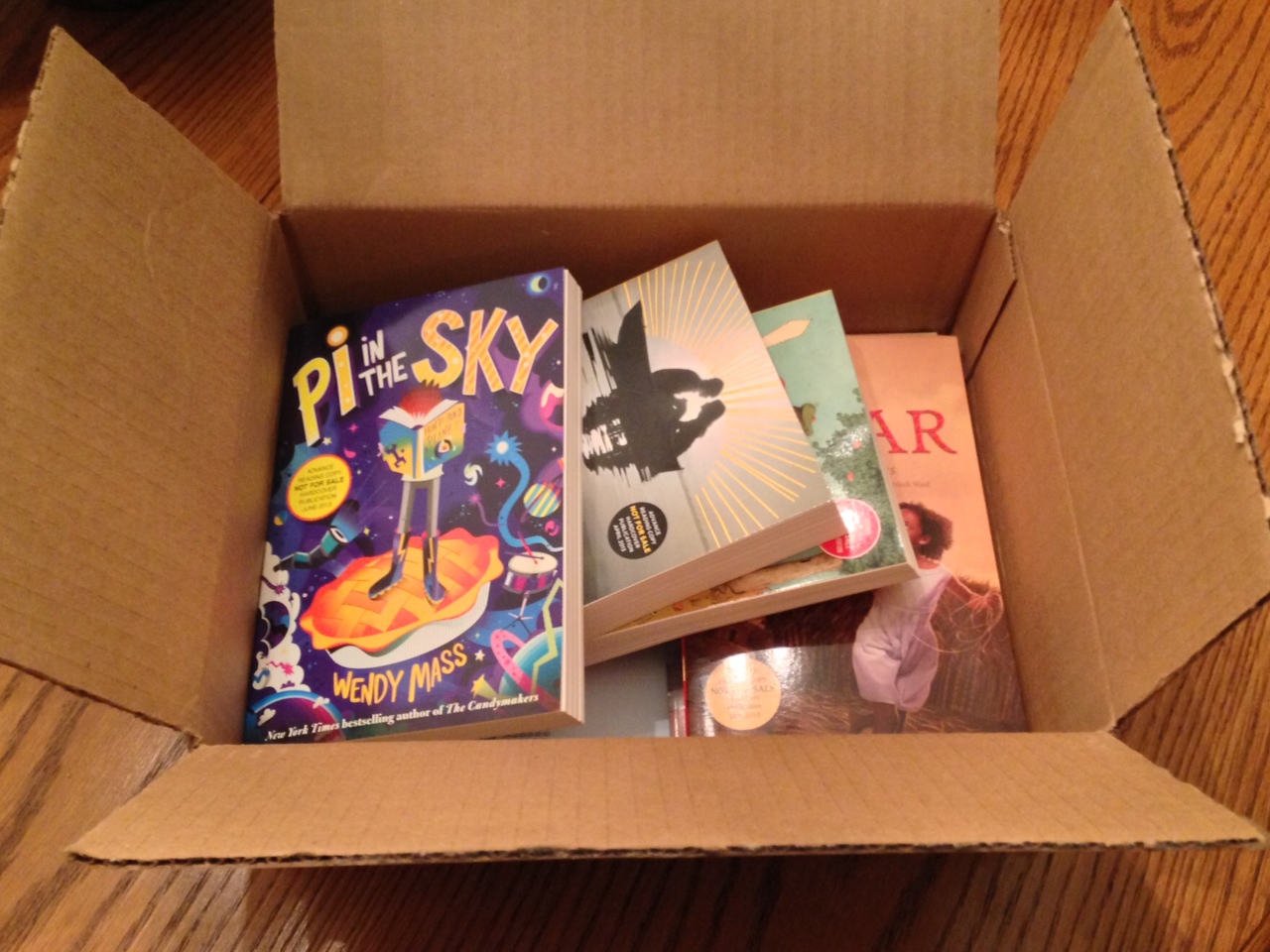
photo-4What  is more exciting than getting a package in the mail? Getting a box of books in the mail that’s what! Friday, I was surprised to see a package on the door step. When I opened it I was so excited to see several new books that I was strongly tempted to cancel my weekend plans just so I could stay home and read. This week my reading plan is pretty much set out for me as I intend to start working through this box of goodness! Of course, I will start with Pi in the Sky authored by one of my all time favorites, Wendy Mass and then move on to the others. Unfortunately, the rest of my to be read pile will just have to wait.

Thank to Jen and Kellee for hosting this meme!  To see what others are reading, or even to participate, be sure to check out their blog Teach Mentor Texts 

Reading Writing Workshop in High School? Yep, the Shoe Will Fit

TCTELA 2013

Handouts from the session: Reading Writing Workshop in High School

Click image below for the presentation

Screen Shot 2013-01-19 at 6.40.49 PM

We All Make Mistaks

How does this relate to the learning taking place in your class?

Or, does it?

20130115-203213.jpg

A Twist on Getting Students to Write

I will do just about anything to get my students to write, so when I happened upon this Project365 app, I quickly made the connection between photos and writing. I am going to try to do this myself:  take one picture for each day of the year. And, I am going to try to get my students to do it.
I’ve heard of teachers telling their kids to get out their phones, search through their pictures, and choose one to write about– it’s a cool idea.
Creating a

daily photo journal

just takes it to a new and higher level.

Just like so many of my New Year’s resolutions, I don’t know if I’ll be able to keep up with it (I’m already 14 days behind), but I want to try.
So, do you want to join me?
Get the app, and let’s do this!