Tag Archives: Readers Writers Workshop

The Practicalities of Reading Workshop

ocs

Incorporating reading workshop into your curriculum is easy once you have access to lots of great books for your students.  Some of you might be lucky enough to have a wonderful librarian at your school who cultivates a diverse collection of books (like I was last year), but others may be without that (like I am now).  After running into dead ends with our school and public libraries, I thought the best solution was to focus on building my own.
DSC03271

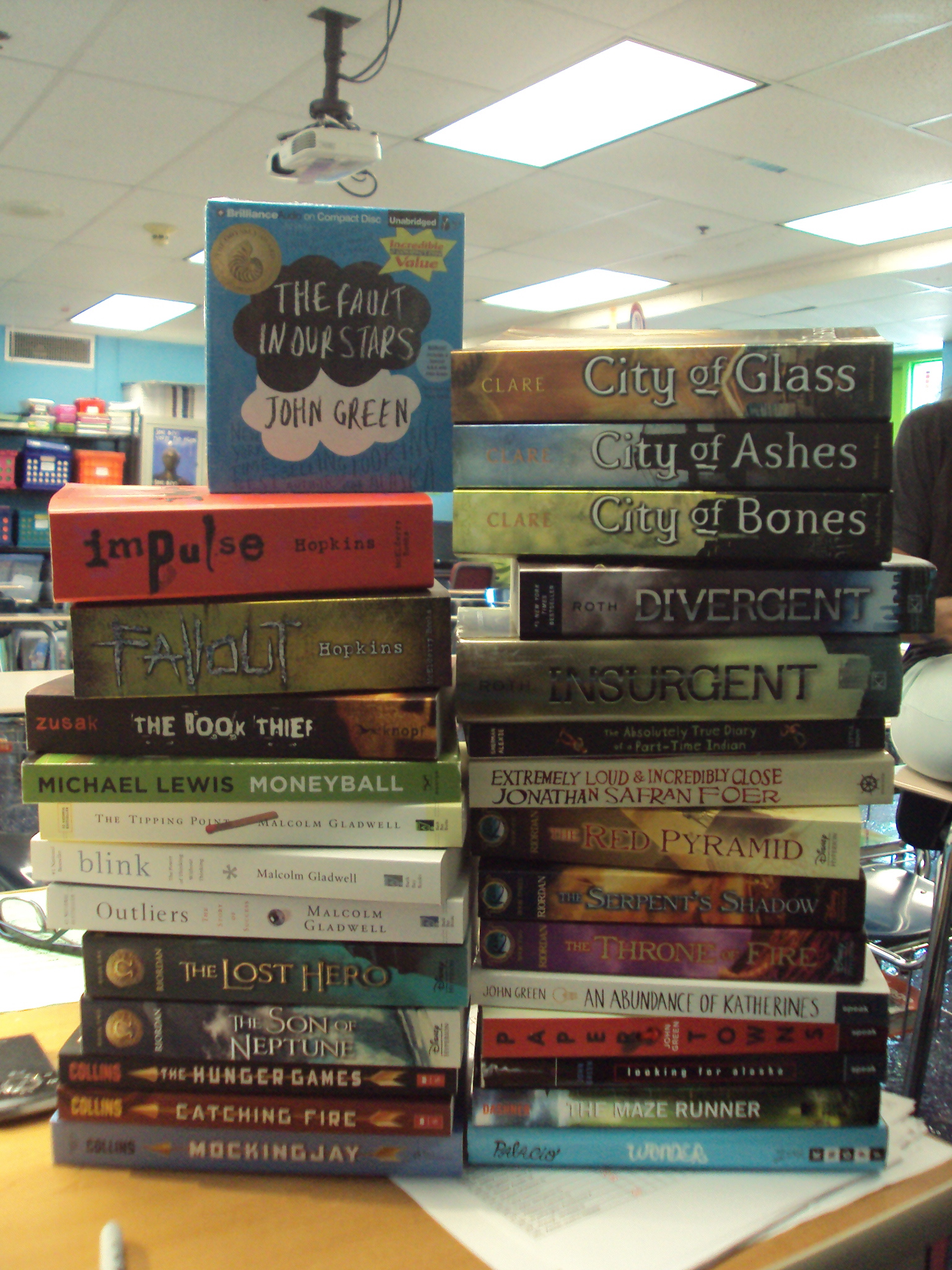
Books donated from a Donors Choose project

Anyone who is a reading fiend like me knows that books are expensive.  Because I haven’t won the lottery yet, I had to seek alternative means for funding my future fabulous library.  Great suggestions from Amy and Erika led me to Donors Choose, an amazing charity website that funds classroom projects for teachers.  Writing grants on this website has netted me over $1,500 worth of books of my choice!  I also had great success with Half Price Books, who donated hundreds of young adult and teen novels to my classroom.  Lastly, I’ve tapped an unusual resource–local businesses.  Large companies like Target, Sam’s Club, and Kroger have a budget they can only use for donations, and anything they give is tax deductible.  I wrote letters to these businesses explaining my needs, and they have donated gift cards each month, netting me a total of $450 in books.  All of this grant/letter/request-writing has paid off, and I’ve been able to build a large, dynamic library.
IMG_0129

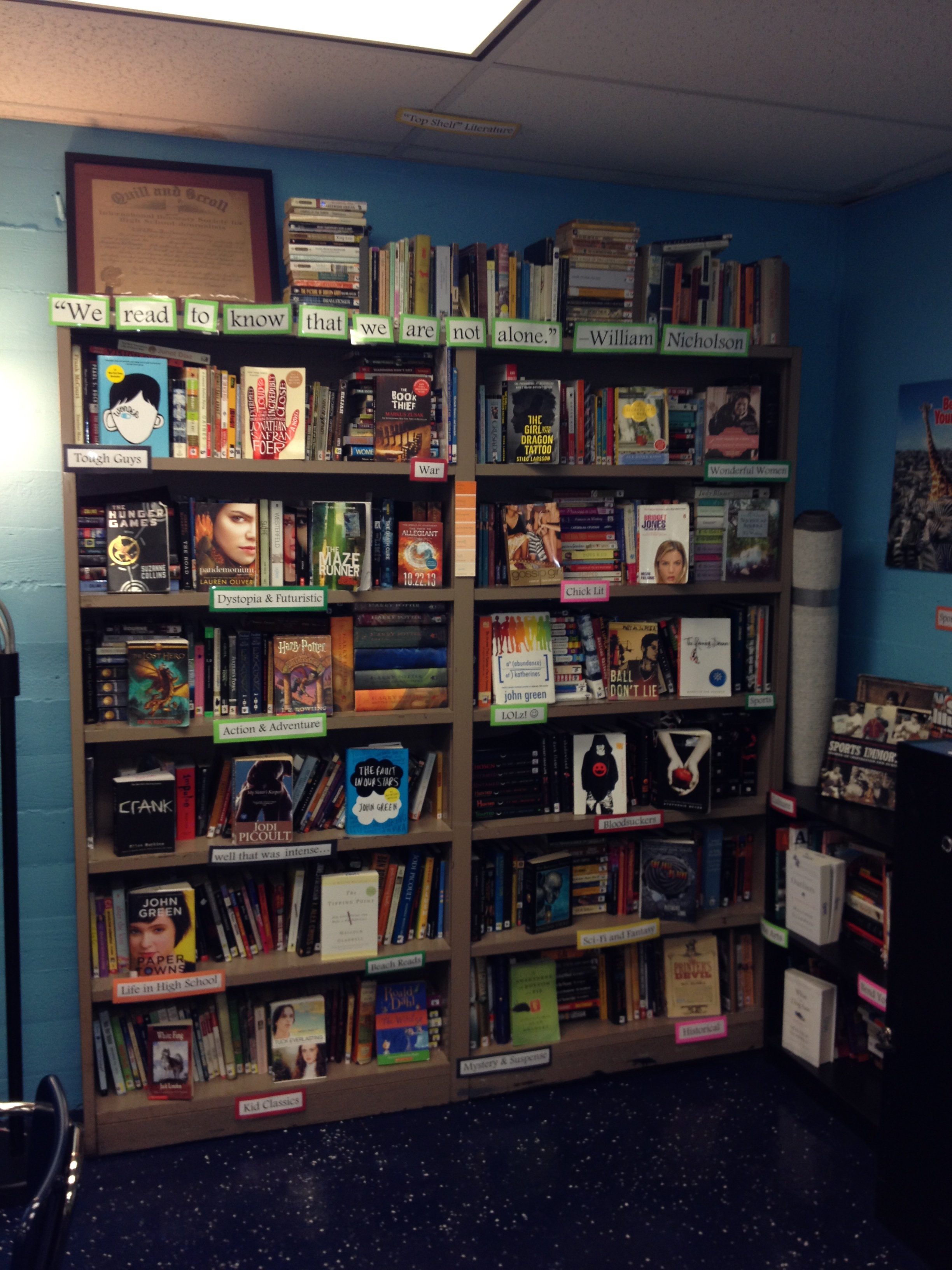
Once I had my books, I knew I wanted to organize them in a fun way that spoke to my teaching style.  My students and I came up with some inventive categories–“Top Shelf Lit” (classics, which are actually on the top shelf), “Bloodsuckers” (vampire novels), “LOLz” (humor), and “well that was intense” (books about death/powerful issues that will make you cry).  A wonderful problem I’ll need to tackle soon is where to find another bookshelf!
IMG_0138

I’ve already written about fangirling in such a way that gets students excited and informed about books.  Once a student knows what he or she wants to read, the only problem is tracking that book down.  I took an idea from Emily and started a “reading wait list” whiteboard, where students can leave a public request for something they’ve been clamoring for.  In terms of determining who’s got what, I have a binder that lies on the cabinet near the bookshelf where kids check books in and out.  Because I show them my grants and letters, and I rip open the boxes of freshly-delivered books in front of them, they can see the hard work being done to build the library.  I think that’s what makes them so conscientious about returning books, because they’ve been great about that so far.

IMG_0140

Once you’ve built your library, and once your students are reading the books they’ve been dying for, you have to somehow keep track of all that they’re doing.  I’ve modified Penny Kittle’s excellent reading log sheets just a bit to make tracking my students’ reading easier.  These logs get passed around every bell, and students write down what page they’re on of their independent reading book.  I’ve added a “Last Friday page #” column, in which they copy down their latest page number from the previous week.  This makes giving them credit for weekend reading much simpler.  At the end of the week, my student Teacher Assistants count up the pages read and write them in the column on the far right.  It’s a simple matter to compare this number to the students’ reading rates and give them a quick grade based on how much they’re reading (two hours per week is the requirement).

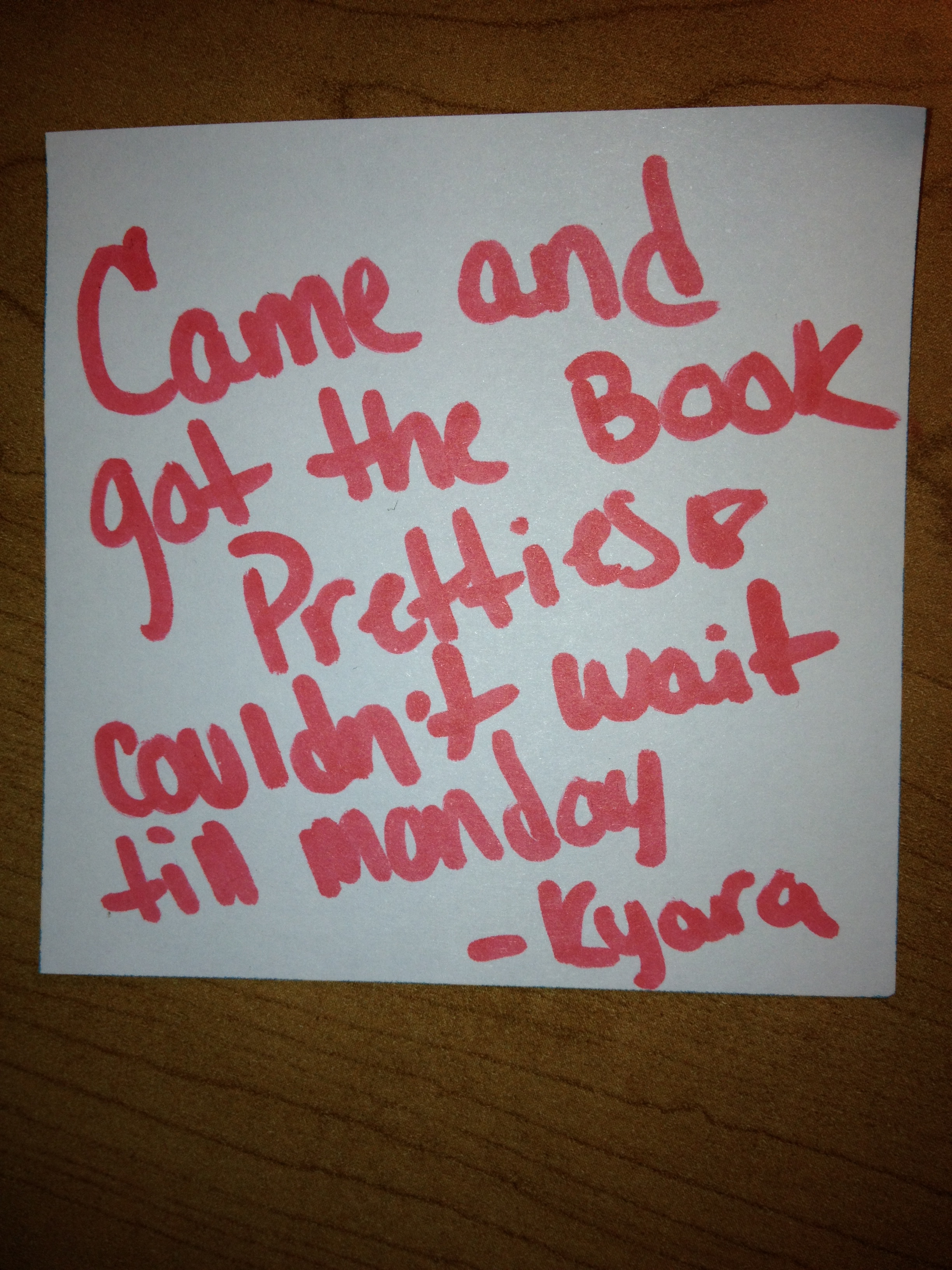
So, there you have it…all of my tips and tricks for building, organizing, keeping track of, and assessing the reading of books in a classroom library.  I’m still working hard to keep improving mine, and I’m sure things will continue to change.  However, it seems like my current system is doing its job, since I found this note on my desk yesterday after school…
IMG_0128

…and there’s no more rewarding way to end your week than that.


Authenticity: Making it Real with Student Blogs

North Star of Texas Writing Project (NSTWP), in which I am a teacher consultant, asserts that authenticity is connecting student learning with significant audiences, tasks, and purposes.

image

Blogging with my students is one way in which I make that connection happen. Writing posts and commenting on the work of our peers has become an integral part of my readers/writers workshop classroom.

photo: Petras Kudaras

During the second week of school, once schedule changes calm down a bit, I introduced the idea of blogging to my students. This year I wrote a post on my class blog and imbedded an article that made them see that blogging can have value to their futures. You can see that here.

I’ve had students use Edublogs as their blog platform in the past, and I know some teachers have their students use Kidblogs. I decided to go with WordPress this year. I thought using the “real world” blog platform would be a good idea. You know, just in case some students loved the idea and kept writing long after they leave my classroom. Finally, eight weeks into the school year, I am glad I went this route, but the set-up, especially with my 9th graders took a lot longer than I’ve had to spend in the past. (Most of my students are not as tech savvy as many technology advocates would like to believe. For more on that read this post:  Digital Novices vs Digital Natives.)

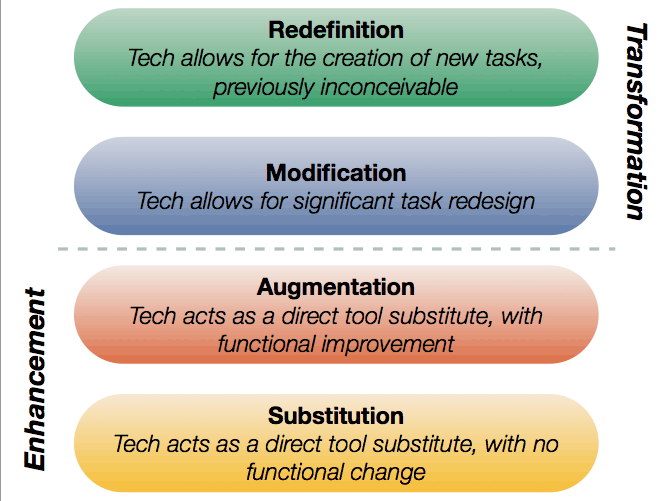
These are some ways I’m transforming my teaching by using student blogs this year (See this SAMR model for ideas on instructional transformation):

Timed Writing. I need students to be able to think quickly about a topic, organize their thoughts, and write effectively in a short period of time. Years ago I had students complete timed writings on paper with a pen, and I’d take the stack of essays home and laboriously grade them. By having students post to blogs, my classroom is getting close to being green. We do very little writing on paper anymore. I can read student posts with the swipe on my finger on my iPad, and I try to leave comments that inspire improvement in their writing. Sometimes I put the score from a rubric. Most times I say something I like about what students have written. They like that kind of feedback best, and it usually prompts some kind of improvement in their next post–something that rarely happened with the marks of my red pen.

For our first timed writing, students wrote about their reading lives. We spend 10 minutes at the beginning of each class period reading our self-selected books. I conference with each student, brief one-on-one chats. I learned more while reading student posts about their reading habits than I did in the prior eight weeks of school. I posted a reflection of my own reading life on my class blog with the actual assignment, and then students wrote on theirs. The response to our wide reading warmed my teacher heart. Read a few of these students’ posts, and you will see why: Helen–A Path Led by Wise Words; Gina–Lay Down the Bridges; Mian–A Passion for Books; Emilio–Reading Life

Our second timed writing, students wrote an argument in response to our in-class study of Ralph Waldo Emerson’s “The American Scholar.” Some student posts were thoughtful and wise; most were ineffective and needed major revisions. All students wrote and showed what they’d learned from their reading and our class discussions.

Persuasive Practice. The AP Lang exam and the 10th grade STAAR test both require students to be effective persuasive writers. I like this blogger’s post:  Blogging is the New Persuasive Essay. As I teach my students how to use persuasive techniques, I also want them learning about their world. They have to know “stuff” to build their credibility after all. So every Monday my students write a post that they base upon something they read in the news. They scan headlines until they find a topic that interests them. Then they pull an idea from the article, and then they write an argument based on that idea. So far, we haven’t delved too deeply in the art of persuasion; we’ve talked mostly about form and structure and a few rhetorical devices, but some of my students have taken ownership of this weekly recurring assignment. Here’s a few to give you an idea:  Kathryn–Words Hurt; Ashley–Recycled Look or Recycled Lives; Jason–Smoking is Safer? Impossible; Adrian–Chemical Mistakes

Published Polished Pieces. As we move through different genres of writing, I need my students to fully immerse themselves in the process of creating effective and moving texts. We started the year with a focus on narrative. I know, it’s not on the AP exam or the STAAR test anymore. But story is so important. It’s what connects us as humans, and it’s story that has helped create a classroom community where students are not afraid to take risks and throw their hearts out on the page. While a few student narratives are not as polished as I would have liked prior to publication (grades being due always seems to interfere with authenticity), if you read just these three, you’ll see why story is important. I can be a better teacher to these PreAP students because of what I know from these posts. Esmeralda–Memories; Mercedes–What Do You Think About Moving? Bryanna–Why Batman?

I remember learning from Kelly Gallagher that students should write more than I can ever grade. Well, of all things in my teaching life, I’ve finally figured that one out the best. I cannot read every post my students write, but I can read a lot, and I can give a lot of feedback in a way that is meaningful so that students respond. We just started reading and leaving feedback for one another. I can already tell that this will be more valuable than just me giving feedback. After we spent two class days reading one another’s narrative posts, I had students tell me on their own narrative evaluations:  “I knew I could do better after I read other people’s.” For an example of our student feedback, read the comments on this one: Amy–Forever a Bye. The instruction I gave students was 1) Be polite but honest, 2) Bless something you think the writer did well, 3) Press a moment that needs more detail or description, 3) Address an issue of concern in regard to style, grammar, etc. For our first time, I’m proud of these students for the feedback they gave their friend.

Engaging student writers is often more than half the battle. So many times they have the attitutde “What’s in it for me?” By allowing students to choose their topics, and allowing them to express their true and authentic voices, I get better participation, and I get better writing, and I get to know the hearts and minds of my students.

That is all I ever really want.

photo: Dee Bamford

#NCTE13  Writing Teachers (Re)Inventing Literacy Instruction by Following the North Star

My Workshop is Kind of Like Goldilocks and the Three Bears

ocsWhen I first got my teaching assignment for this year, I was a little overwhelmed, although I probably shouldn’t have been:  I chose to have three preps. Yes, I chose three preps. Crazy, right?

I’ve never had the exact same assignment two years in a row, which definitely has its pros and cons. (I was recently diagnosed with ADHD–at 48–I know, right?–so the changes have worked pretty well for me.) I don’t mind the planning. I don’t mind the difference in student maturity. I do mind not feeling like I’ve ever done anything really really well.

It’s not like you can get everything perfect in every lesson in every class throughout a whole year. So I keep notes of what worked and what didn’t, and I make plans to bend and stretch, tweak and toss things the following year. I am rarely satisfied and always looking for improvement  I’ve just never had the chance to practice my new and improved plans.

Until now.

But it’s not what you are thinking.

It’s a bit daring, and I appreciate my administrators for trusting that it will work, but I am teaching all three of my preps the same lessons in the same way–almost every day. My Pre-AP English I class gets the same instruction and the same assignments as my Pre-AP English 2 classes and my AP Language and Comp classes. See, I have my own built in vertical alignment, and I can teach the same skills–sometimes a little slower, and usually with a different expected outcome–to all of my students at all three levels.

“What about the differences in the standards?” you might say.

Well, look at them. They really aren’t that different. The real differences are in the depth and the complexity of how our students show us mastery of a skill. Reading and writing is still reading and writing at any level, advanced or otherwise.

Mine is a readers/writers workshop, and students lead with choice. They choose what they want to read, and they choose what they want to write about in their assignments. I facilitate discussions around mentor texts, and they model the professionals in their writing. I talk about books that beg to be read, and they open the pages and read them.

Take for example their first major writing assignment. We’ve been studying narrative. (Please do not say, “But there is no longer a literary essay on the STAAR test.” Yes, I know.) Think about the power of story. It’s the thread that wraps us all together, the binding that prevents our civility from turning to chaos. And, oh, the relationship builder our stories become as we share our souls in our learning community! We learn to relate and empathize with people who might be vastly different than we are. We grow as individuals and as peers. Not to mention the feelings of accomplishment students have when they produce a piece from the heart and are successful at it at the beginning of the year. Every literary device we want students to know, understand, and use can be modeled in narrative mentors. Every literary device we want students to be able to produce and analyze for AP English exams can be taught in a narrative unit. Why would we jump right into rhetorical or literary analysis, when we can get so much growth from passionate personal essays?

I know it’s early in the year, and I haven’t been trying this approach out for too long. I get that my high hopes might deflate and plop right on my desktop. But right now, my students are engaged. They are reaching to meet my expectations. They are thinking. And that’s what I really want.

If I can get my students to think–well, that is my personal definition of rigor. And isn’t that what an advanced class is supposed to be?

So about practicing and improving my plans? This year I get to do that every single day while the learning is happening instead of my reflection afterward. It’s kind of like Goldilocks and the Three Bears, except better. My students get to taste a rich and authentic approach to learning, and I get to differentiate depending on their individual needs: too hot or too cold until I get it just right.

Websofsubstance.com by Harry Webb

I spoke to a good friend this morning. She, too, has three preps, and she’s trying to streamline. She and I share the same perfectionist tendencies, and planning and planning and planning to come up with the “just right” instruction for all three levels is exhausting. There has to be a better way.

I’m pretty sure I’ve found it.

What do you think of using the readers/writers workshop model to teach all levels the same skills in the same way at pretty much the same pace?

A Book Talk and A Writing Lesson in One Easy Go

Since I try super hard to not work on the weekends, I wasn’t sure how I was going to be completely prepared for my lesson on Monday. I locked my classroom door on Friday, knowing I was short a mentor text.

Then, while sitting by the lake, enjoying the breeze and this novel a friend recommended, the text blurred my eyes, and I did the unthinkable: I crimped down the corner. Then I did it again and again and again.

I love it when the stars align, and the tools I need to teach writing appear in my own independent reading. I notice things and want to share them with students. And I know that they will see what I want them to see and understand why it matters because they see my passion in the discovery of something I want to show them. Studying author’s craft becomes easy when I share from the books I am currently reading.

Here’s a slice from Night Film by Marisha Pessl, a hauntingly beautiful book that’s written in multi-genre. (You want to check it out. I promise.)

The sagging green couch along the far wall was covered with an old blue comforter where someone had recently crashed–maybe literally. In a plate on the coffee table there was an outbreak of cigarette butts; next to that, rolling papers, a packet of Golden Virginia tobacco, an open package of Chips Ahoy!, a mangled copy of Interview, some emaciated starlet on the floor along with a white sweatshirt and some other clothes. (As if to expressly avoid this pile, a woman’s pair of black pantyhose clung for dear life to the back of the other beach chair.) A girl had kissed one wall while wearing black lipstick. An acoustic guitar was propped in the corner beside an old hiker’s backpack, the faded red nylon covered with handwriting.

I stepped over to read some of it: If this gets lost return it with all contents to Hopper C. Cole, 90 Todd Street, Mission, South Dakota 57555.

Hopper Cole from South Dakota. He was a hell of a long way from home.

Scribbled above that, beside a woman named Jade’s 310 phone number and hand-drawn Egyptian eye, were the words: “But now I smell the rain, and with it pain, and it’s heading my way. Sometimes I grow so tired. But I know I’ve got one thing I got to do. Ramble on.”

So he was a Led Zeppelin fan.

Oh, the details, the description, the diction, the syntax. You can see it, too, right?

If I want my students to become effective writers, I have to show them effective models. It’s as simple as that. It’s even simpler when I can show them models from books I’m reading. Then they get a book talk and a writing lesson in one easy go.

I love it when that happens.

Fangirling About Books

Image

Never has my complete and total geekdom served me so well as it has in these past few weeks.  While I’ve just started to appreciate my nerdiness fully, it has been long in the making.  For example, when I was in middle school, our family’s answering machine message included the phrase “May the Force be with you.”  In case you’re imagining that I was mortified by this fact, let me add this–I was the one playing the Star Wars theme on my violin in the background.

So, as you can see, I have a history as a nerd, dork, geek…whatever you want to call us.  What sets we citizens of a fandom apart from those who live outside of one is our unabashed love and adoration of whatever beautiful world we choose to immerse ourselves in.  The beautiful world I happen to geek out about is the world of books.

A few weeks ago, as I munched on junky appetizers with fellow teachers during a happy hour, one of them asked me, “But seriously. How are you getting them to read?”  She told me about students she’d been talking to who had already read two or three books this school year in my class, and expressed her shock that they were even doing “anything” for me.

Her question, while simply phrased, was a valid one–what exactly was I doing that was getting kids who “hated” books to pick one up–and finish it?  And then actually tell people about it?!?  I thought of what I was doing differently this year, and that’s when I realized–it’s the geeking.

Image

There are only two really big differences as to how I structured my independent reading program this year vs. last year.  One is a daily booktalk, and the other is illustrating my reading life beyond school.  In previous years, I’d always allowed time for independent reading, provided easy access to a beautiful library of desirable books, and modeled my thinking as a reader in class.  This year, though, I start every class with two booktalks.  These are not staid speeches in which I summarize the plot and then move on, no–these are performances during which I share my own experiences with these books.  I excitedly describe the scenario in which I (or a friend) read this book, and how it impacted me, and what I thought of it.  Then I give a bit of the backstory and introduce them to the narrator’s voice by reading a carefully selected passage of the text.  It’s amazing how quickly students will begin asking for the book–even kids who don’t love reading like I do (yet).

Image

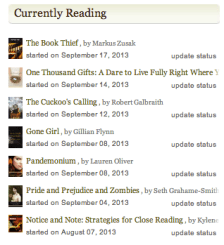
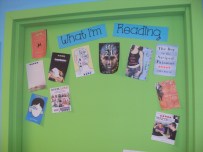
The second thing I’m doing differently is showing them my life as a reader.  I tell them about bookclubs I’m in, friend them on GoodReads so they can see my extensive “currently reading” list, and put colorful book covers on my colorful door.  I show them the wide variety of books I read–from teaching books to YA lit to general fiction–and I model the need for not just different genres, but different levels of difficulty in my reading.  Columbine, I tell them, had to be followed up by the light, speedy 13 Little Blue Envelopes.  It is incredibly impactful to them to hear that I spent my Monday night with their soccer coach, math teacher, and assistant principal talking about The Book Thief and eating German-themed food.  When I talk about my reading life with my students, they become more comfortable talking about theirs in our reading conferences, and they slowly, miraculously begin to see themselves as readers too.

Image

So, as summer slowly fades into fall here in wild and wonderful West Virginia, you can picture what I’ll be doing–reading amongst the autumn splendor…and then going to school to fangirl about it.  It may sound simple, but it works.  Geeking out about books is getting my students to enter the fandom of literacy, and I imagine my fellow teacher-reader-writer-fangirls–Amy in Texas, Erika in New York, and Emily in California–are seeing this as well.  Their students are transforming too, a perfect mirror of the seasons, in all the corners of our compass.

“Going There”…and Hopefully Bringing Others Along With Me!

Our Compass Shifts 2-1

I thought for sure my first post would be about my classroom library and books.  My library, which takes up my entire classroom, is my pride and joy.  I’ve worked hard to make it my place of zen (to borrow from Amy).  But it is also my comfort zone; helping students find books they can connect to is one of the few things I know I do well.

In the first two weeks of school, I’ve experienced the familiar joy and success of matching students with books. I’ve connected with students who are devouring books at breakneck speed. I’ve also gladly and eagerly taken on the challenge to find that perfect book for the stubborn “I don’t read” holdouts.  This challenge energizes me like no other!  But I have taken on another challenge, and that is what I want to share about today.

Given I am part of the “Our Compass Shifts” project, you all know that this summer I took a class with Penny Kittle at #UNHLit13. [I will save my fangirl post for another time!] That class totally CML* (Changed My Life). I received affirmation, direction, and practical ideas on how to shift my class to a reading and writing workshop model. But the most important experience from the class was becoming reacquainted with the struggle and vulnerability involved in authentic writing.

Our final project was a non-fiction narrative piece incorporating information or research. I chose to write about my grandfather’s suicide five years ago. I knew it was the story I needed to get out, but as my friends can testify, my writing process was mildly torturous, fraught with resistance, paralysis, and self-doubt. In the end, I “went there” (in the words of Erika, aka “Brooklyn”). I poured much of my own self into the piece, and crying through the read-aloud to my newfound friends and Professional Learning Community took a lot out of me emotionally. It was cathartic, to be sure, and in some ways the beginning of needed processing and healing, but I realized that if I want my students to write the stories they need to get out, I am going to have to commit to “going there” with them all year through writing beside them. I wasn’t sure if I was ready for it!

DaringGreatly_coverRight before school started, I began reading a book called Daring Greatly: How the Courage to be Vulnerable Transforms the Way We Live, Love, Parent and Lead by Brene Brown. [Aside: If you haven’t seen her amazing TED Talk: “The Power of Vulnerability“, you simply must!] Right away, I knew this was a book I needed to read. I started highlighting like crazy, typing out quote after quote.

Brown defines vulnerability as “uncertainty, risk, and emotional exposure” (34). What’s more vulnerable than “going there” in my writing, and then sharing it with others? This summer I learned that I need to model process, not product. That means tons of vulnerability before my students.

My first opportunity came the fifth day of school, as we were writing in response to the poem “Days” by Billy Collins. I chose a particularly happy day from my junior year of high school. As I talked through my own writing process, I showed my students that as I wrote, I remembered more details. My goal was to show my students how you can start out writing one thing, but find kernels of other stories during the process of revision. Through the process of rereading, I noticed a particular detail was much more significant than I had thought initially. In fact it was ominous foreshadowing of the tragic loss of my dearest friend to suicide a year later. But as I explained this, I ended up choking up and crying in not just one, but all five of my classes that day.

Initially I felt embarrassed and really…vulnerable.  I was most definitely emotionally exposed before 150+ young people I had basically just met.  People I had been entrusted with the responsibility of teaching this year.

But later that day I came across a particularly timely gem in Daring Greatly.  Brene Brown’s vulnerability prayer is “Give me the courage to show up and let myself be seen” (42).  I was able to push out the feeling of embarrassment and worry that my students perceived my display of emotion as weakness, and instead recognize it took courage to let myself be seen by them that day.  I didn’t only model for them my writing process, but I took the risk to be the first one to “go there,” and modeled placing trust in the safe space of the community we were beginning to build together.

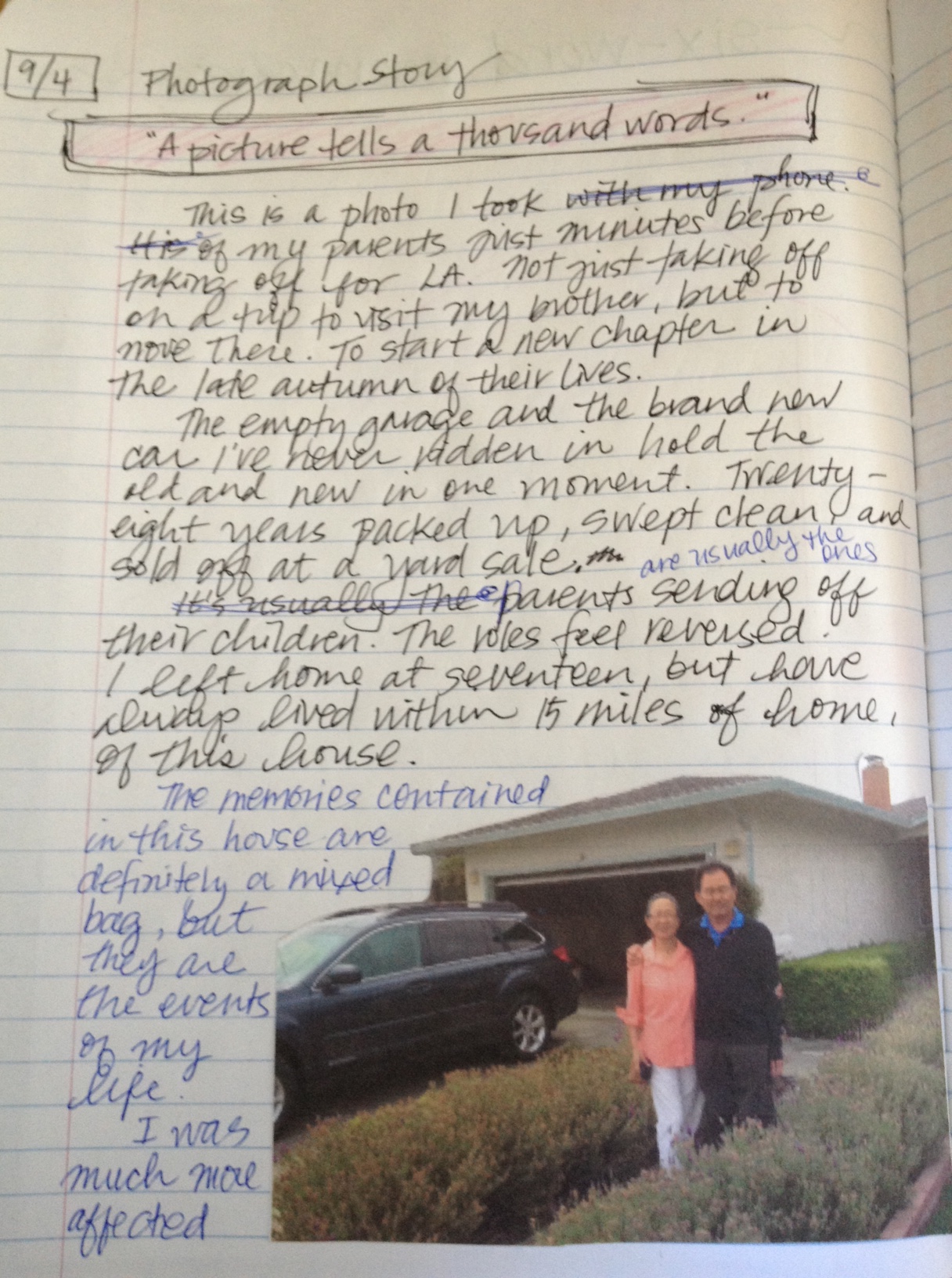
photo-1Taking that first step has made it easier for me to continue writing authentically with my students. This summer, I circled around the topic of my parents moving away, the difficulty of my relationship with my father, and the “grief” of saying goodbye to my childhood home. I wasn’t ready to write about it then, but I began to today. I’ve experienced personally how courage begets courage, increasing connection and building community. Accepting the challenge to write through my vulnerability, rather than resist it, has signaled to my students that it is safe for them to go there as well. And though I haven’t won over everyone yet, there are definitely some who are beginning to take the risks to tell the stories that matter to them.  The stories only they can tell.

*You will get used to some of my go-to initialisms! 

Students Want Simple Things from Teachers

"Love all, trust a few, do wrong to none." ~William Shakespeare

Our Compass Shifts 2-1Start slowly. Ease into it. Take the time to let them trust you. Breathe. Relax. Make sure they know that more than anything they matter. I’ve told myself these things every August as the new school year starts, but I don’t listen. Ever. I am always in a rush. Jump in. Get them working. Show them who’s in control.

No wonder the past few years have been rough:  I took too long to build relationships.

This week I’ve done it differently, and I can already tell a difference.

I have not done the get-to-know you bingo games, the list-your-favorite-things cards, the 2 true/1 lie, or the numerous other “relationship building” activities that rise in the back-to-school Google searches.

I have asked students to write. And I’ve written with them. And we’ve shared.

The first day of school I showed the beautiful video of Shane Koyczan’s poem “To This Day.” We didn’t talk; I simply asked students to respond. They wrote on note cards for five minutes and told me what they thought about name calling, bullying, loving the inner person. I then asked them to flip the card over and on the back tell me why they think I chose that poem, of all the millions of poems available, for the first day of school. They thought and wrote, and I set the expectation that we are a community of writers on the very first day.

I read their responses that evening, and I learned a few things, and a few things made me cry:  the death of a father this summer, the loss of a brother, and the abuse experienced by not one but two of my girls when they were younger. The hurt is still raw. I felt it in their words, and I am honored. They trusted me with their hearts the very first day.

Every day this week I’ve read a poem or a quote or a story, and I’ve asked students to write their thoughts in their notebooks. I wrote along with them. I modeled re-reading and revision. I shared my thinking, and I shared my words on the page. Then I asked if students felt comfortable sharing. Many did.

Yesterday we read the poem “Days” by Billy Collins. I did a quick mini-lesson on imagery and personification, and then I asked students to think about a day in their lives that, if they could, they would live over. Sad day. Happy day. Any day. Just choose one and write. We wrote for five minutes.

I shared first. Or, I tried to. I wrote about my mother, and I got so choked up in first period I could not speak. My students saw me vulnerable. They saw my hurt, and they poured out their sympathy. If there’s anything magical about my mother’s illness, this was it. The bond of our relationship cemented with my tears.My notebook Days

During 5th period, one of my girls volunteered to read her response. She began with something like “It was the day I saw my mother for the first time in three years. We hugged and laughed and cried.” Then she began to sob. The class stilled. Silence. Silence. And then soft snickers. I know students were uncomfortable; they are freshmen after all. I cautioned them about respect, and reminded them of the safe place we are developing as readers and writers–the place where we take risks and trust others to understand. I spoke gently but sternly as I made my way to my sobbing young woman and rested my hand upon her back. “Be kind,” I said, “and please be patient. Let me tell you about my experience in first period. I cried . . . because I miss my mother.” My tears spilled over, and this group of 14-year-olds saw my hurt, too, and we all grew as a community.

It’s Friday afternoon, the end of the first week of school. My feet ache, but I am happy.

Students want simple things from teachers:  kindness, patience, a listening ear. They want to share their hurts, fears, hopes, and dreams. They need to know we care enough to let them.

And, guess what? Students will WRITE when we give them the opportunity to write what they feel. I can do a lot of teaching with what they’ve started in their notebooks this week.

Best blessings all my teacher friends. I hope your school year looks to be as bright as mine.

If you have other ideas for relationship building, please share. I’d love to know what works for you.

Tech Tips #306

Image

Regardless of who initially coined the phrase, “A picture is worth a thousand words,” the fact still remains that a single photo can uniquely capture the essence of a single moment in a way unlike any other medium. The Guardian Eywitness App, also a website, is a tool I loved using with students. Taken from all over the world, the photography shared in this app is simply breathtaking.


Image

Here are a few ideas of how to utilize this resource in your classroom:

  • Writing Prompts – Often students are stuck, or scared of the blank page. Have students describe what they see, explain how a photo symbolizes them, or make up a story for what is going on in the photo.
  • Narrowed Focus – Students struggle with wanting to write stories some call, “bed to bed stories” because the story includes too many surface level details and not enough time is spent on the meat of the story. Having students write only about what they see in the photograph forces them to focus and expand on a specific detail of an event.
  • Discussions of tone and mood – or any literary element for that matter. It is quite helpful to students if they can connect visually to an idea and then take that concept back and apply it to what they are reading or writing.

What are some ways you have used photography in your classroom?

What’s in Your Teaching Soul?

Our Compass Shifts 2-1I am an idea machine. Really, it’s like Boom! This might be cool–or this–or this. How about this? It relates to that and that and that. Sounds like a pretty great machine, right?

Not even. It’s a problem.

I get so many ideas spinning that I get dizzy with possibilities, and inevitably, I get frustrated. You know what happens next. Do you hear that crashing?

So, as the days of summer disappear, and I start thinking about school starting up again and what I want to do differently with my students this year, the idea machine hums at high speed. And there is just no room on the planning calendar to do every idea that I think is a cool one. And really, why would I want to?

I do this to myself every year:  I try to do too much, so my students rarely get the chance to do some things really well. We’re in too much of a hurry to move on to the next great thing. No wonder I am a stressed out, headache prone, insomniac from August until June.

At the University of New Hampshire Literacy Institute learning from Penny Kittle, she asked us at the beginning of the course and then again at the end:  What is your teaching soul?

The first day of class my answer went something like this:

I’ve lost it. That’s a lot of the reason I am here. My passion for teaching has taken a beating–a lot of it influences from outside of school, (It’s been a hard year personally)– a lot of it the choices I made within the classroom.  I’m here to get my passion back.

The last day of class, and it’s really no surprise, since, you know, I was learning from Penny Kittle, my response was something entirely different. The discussions about writing, the experiences with reading–mostly analyzing author’s craft, and my own writing practice all helped redefine who I am as an educator and as an individual.

And that is what I want for my students. I want them to know who they are and what they have to offer.

So, what is my teaching soul? What are the non-negotiables that matter, the things that will help me keep the passion and help my students define themselves as readers and writers and individuals of tremendous worth? I know in my soul the following things matter:

Community Matters. My students must trust me to establish and maintain a classroom community that allows for risk and creativity. I must encourage conversations that allow students to be their authentic selves so they can find their authentic voices in their writing. Every discussion and every activity can help us feel at ease as we grow to know and appreciate one another as developing readers and writers. Keeping writer’s notebooks, talking about books, sharing our writing–every single day–will help my students feel safe so they are willing to speak up and let me see glimpses into their lives and how they think.

Reading, Writing, and Thinking Matter–a lot. If it’s true that to develop fluency in reading and in writing, students must read and write, then it only makes sense that to develop fluency of thought, students must think. Asking students to analyze, synthesize, revise, create, etc  on a daily basis is the only way to build this fluency. I can start with asking good questions, but more importantly, I want students asking good questions. A student-centered, student-driven inquiry cycle will lead to thinking that involves and engages every learner.

Modeling and Mentoring Matter. I’ve learned the difference between showing students something I’ve written and writing something in front of them. In front of them–so they see the thinking and the struggle–works so much better. If they see me as a writer, and I talk to them as writers, our writing community helps us all grow in our craft and experience. The same holds true for reading. Students have to see me as a reader. Mentor texts that we study for craft act as professional coaches to show us the moves and stylistic devices published authors use to create meaning. My job is to ‘hire’ good coaches and make sure my students know that we can learn from them.

Authenticity matters. I’ve thought about this a lot:  How can students be their authentic selves if we never let them make choices? I read something once that compared high school to a dystopian society: wear a certain thing, eat at a certain time, respond to the bells throughout the day, come and go when they tell you, talk when they let you. All that control. I get that schools must function a certain way, but can’t we give students some control? Allowing them to choose the books they read and allowing them to select topics that interest them to write about gives students a little freedom. The more freedom we give students, the more interest they’ll have in their learning. The more interest they have, the more commitment they will have. Isn’t that what we want–students committed to their own learning? This is where blogging comes in for me, too. By encouraging students to create and post on their blogs, I learn who they are as individuals. I read about the topics that matter to them, and they find their authentic voices as they publish to a world of potential readers far beyond me as their teacher.

Dialogue matters. In a training last spring, Kylene Beers reminded me that “the smartest person in the room is the room.” I needed this reminder because I often shut down conversation when I could explode it. Rich classroom discussion can lead to intense learning. I must trust that when students engage in conversation surrounding a topic, they may learn more from one another than from me. They can learn from me in the dialogue we share during our one-on-one conferences. Talking to students about their reading lives and their writing processes is the best teaching tool I have as an educator–and the best use of my teacher voice.

As I use the last of my summer days to plan the best learning I can for the students I will serve this fall, I pledge to remember how my heart healed in July. I know the power of a student-centered workshop classroom, and I will remember to allow my students the opportunities to learn the way Penny allowed me to learn at #UNHLit13.

I met some awesome educators who will help me remember, and they will help you, too. We bonded over books, breakfasts, love for PK, and zen. In an effort to focus our teaching this year around the things we learned in NH, we devised a plan to 20130713_193936keep us connected and accountable. Once a week we’ll write about our experiences, practicing in our classrooms the things we learned this summer.

We’re calling our reflections Our Compass Shifts because it has and it does, depending on the needs of our students. From Texas to West Virginia to California to New York, we are four high school teachers with different backgrounds, teaching experience, and student demographics, who believe in the genius of our students.

Please meet my new colleagues:  Shana Karnes (WV), Emily Kim (CA), and Erika Bogdany (NY). You’ll find their bios on our About page, but I’ll let them introduce themselves and their students as they take turns posting each week. They’ve got teaching soul that makes me shiver. Oh, and see? They are walking talking FUN.

Think about what swells in the heart of your teaching. I hope you’ll share the answer: What is in your teaching soul?

Math in the Real World

Today we want to share a story from a math teacher, yes a math teacher! Embracing transformational teaching practices, Elizabeth Pauley, 8th grade math teacher at Cross Timbers Middle school, brought math to life for her students by creating an authentic experience where students could see first hand math in the real world.

This slideshow requires JavaScript.

As we began our second semester of 8th grade math, I found myself already thinking past our state assessment into May. What was I going to do with my 8th graders who think they are already in high school?  How can I keep their interest peaked as summer quickly approached?

Sitting in the kitchen one evening, participating in our district tweet chat, I found myself thinking about how I could incorporate 21st century skills into our classroom.  My students had the confidence to apply their knowledge of proportionality: however, they still encountered obstacles when it came to applying formulas for surface area, area, and volume.  How was I going to foster my student’s thinking so they would be able to see the connection?  I wanted them to have ownership in their learning!

How could I create a lesson that was student-centered, utilized technology and collaboration, all the while building a bridge between the abstract mathematical concepts and a real life scenario?

Utilizing my district instructional coaches, we began the adventure of creating my students’ first PBL.  Meeting during my conference period, Heather and Aubrey helped guide my thinking as I narrowed down the standards that I wanted to cover.  The chart paper was pulled off the tablet, while the markers etched across the page.  I found that not only did I want this PBL to cover measurement standards, but I wanted it to incorporate the majority of what my students had learned this school year.  I wanted them to experience the connections that are found in the world outside the classroom walls.

Dissecting the standards and focusing on the verbiage focused me as the educator and helped to create the driving question for our PBL:  “Based on the cuts in school finance, how can your design team create a middle school athletic facility to increase revenue?”

The week between creating our driving question and meeting with our instructional coaches was challenging.  Challenging because I had to think; think about what my students’ prior experiences were and what our long term learning goal was.  The question kept echoing: How was I going to create a bridge to yield success in our classroom?  Then the answer:  Innerput.

Innerput are workshops that lead to eliminating misconceptions, while creating connections between experiences.  By creating these workshops for my students, on concepts I felt they may struggle with, I had more confidence about embarking on our PBL adventure.

The thinking started naturally. After our state assessment on a Tuesday, I told my students I was sorry to miss their track meet.  Many looked around the room with confusion.  Come to find out it was not our school’s meet but another in the district.  My students loved explaining to me how we had to give up “our” field for others.  Questions soon arose as to what happens with the money that is collected at athletic events.  Students were thinking!

To spark conversation and more thinking, I gave students various articles about athletics and school funding; why athletics were vital to our educational system and why athletics were being cut from budgets.  Holding a Socratic seminar yielded ownership in students learning, as each held a role in our conversations.   Having to defend different viewpoints, allowed students to begin seeing both sides to our current problem.  What role do athletics play in a school district?

Based on classroom discussions, we looked at the budgets of our school district and campus.  Much to students’ amazement not much money was given to our athletic program.  Thinking was occurring and discussions were happening all because my students were part of the problem and soon to be part of the solution.  As we dissected our budgets, students began to email district officials about the choices behind why certain campuses received more money.

Because our high school is being renovated, both the project manager from Pogue Construction and head architect from Huckabee Inc., spoke with my students about their roles on the design team and what role their company serves in the design process.

Students quickly realized they needed to collect data that was reflective of our student body.  Based on student needs, the facilities were being researched.  Students began researching:  How much space would we need?  Could fields be multipurpose?  How expensive is equipment?

Students quickly realized how expensive construction is.  They asked how our district could afford so many renovations.  I invited our chief financial officer to speak with my classes.  She shared about our district budget and how we give money to other schools.  Students had already discovered the state had cut funding, and now they were learning how much money actually stays within our district.  Hearing that only $0.65 stays in GCISD, students began to get fired up.  They were determined to find solutions on how to increase our district’s revenue.  It was time money stay in GCISD for GCISD students!

Knowing an authentic audience is vital to the success of a PBL, we began to discuss who had a vested interest in our school district.  Students determined that their parents, educators, district administrators and community members, as well as themselves had an interest in the success of GCISD. These conversations resulted in invitations being sent to our district administrators, school board members, educators and parents to come evaluate our final presentations and determine which bond election would pass.

We’ve had our obstacles and arguments over which ideas are the best and how much money to spend and which sports venues to include.  However, each group has learned to problem-solve and justify their thinking.  With various roles in our design teams, students are able to contribute in a meaningful way through their personal strength.

Unlike most educators, I am not counting down the days until summer vacation; I am looking forward to learning about my students’ creative solutions to a real-life problem.  We are learning right until the end. Students have realized numerous factors go into building an athletic facility:  cost of materials, location, architectural design, fees/permits,  but most importantly, they’ve learned that communication and collaboration are vital to the ability to solve a problem!