
Tag Archives: Readers Writers Workshop

My Life Is My Message

ocs

Mahatma Gandhi once said, “My life…”  

Nope.  Run-of-the-mill.  Try again.

“My life is my message” is a phrase many hear…

Oh absolutely not!

The pacifist we have come to know as Mahatma Gandhi has eloquently proclaimed, “My life is my message.”

Hmm…getting there…


Welcome to the most recent Writing Workshop’s task taking shape in room 382.  As we gear up to wind down as the end of the year approaches, we have taken hold of a striking quote and are playing with it with fervor and inquiry.  Students know, in under a month’s time, they will inevitably be greeted by the New York State ELA Regents.  Yet, we’re operating as though it’s not about to happen; you know…it’s going to happen to everyone else, and of course we wish them all well, but us testing?  Nope.  Not going to happen.

We are exempt.

We are not preparing for an exam.  We are not losing sleep over this literary element or that grammatical rule.  We are not counting the supposed seven sentences assigned to every paragraph or where to locate the anxiety-ridden answer to #23. We don’t care if our pencils aren’t sharpened to perfection or how 33.7 seconds should be allotted for each multiple choice question.

Instead.  We are writing.

We are researching, connecting, analyzing, and sharing our insights.  We are using Gandhi’s autobiography and other written works that were created solely for us; for us to explore Gandhi’s magnificent brilliance.  We are using other pieces of literature that connect to this sentiment that yes, “My life is my message”.  We are using literature that we’ve highlighted and annotated (to the point where the next reader is going to have to try to find space on these pages to do the same – good luck!).

A student said this looks like a 'piano of ideas'.  I couldn't agree more.

A student said this looks like piano keys full with ideas. A tune we enjoy playing.

We are not allowing ourselves to get caught up in the ardency of the testing hoopla.  Instead we are reworking introductions, continuing to fill our door of completed literature, laughing a lot about students renaming book titles we’re enjoying (gone is The Freedom Writer’s Diary, to stay is The Freedom Writer’s Craft)…  I am sure, at this point, those who have fully emerged in test prep have started biting their nails, twisting and tugging at their hair, and maybe even pacing as they continue to read this piece through the slant of a squinted eye.  I understand.

I do.  Really.

It wasn’t until this year that I shifted a vast majority of everything I do in my classroom…with my students…in my own head as I reflect.  I was the educator who believed in preparing students, even if it meant solely for an exam because it’s always been rooted in support and wanting students to be successful.  I am still that educator that believes students deserve success on exams.  Yet, this year I want them feeling success on their exams because they feel creative freedom while still being locked into the three-hour time constraint.  I want them to smirk while exploring their craft as they connect literary elements to the exam’s text; and not feel as though they need to lose a sense of who they have become as beautiful readers and writers.  Mostly, I want them feeling confident that this year’s dedication to enhanced reading and writing is shaping how they look at the world; exam days not exempt.

Naturally, students’ anxiety about testing still surfaces, but this year, it remains there – on the surface.  Students still have test specific questions, ones I acknowledge briefly and then move on…(deciding between four topic sentences is way more fun!)  We still game plan so students know what sections they are going to attempt first…or last.  We talk timing.  We do all of that.  We just don’t let it consume us.

And because we don’t, I have thrown away all structured writing graphic organizers that I used to believe supported students in elevated writing.  Students are approaching their writing in ways that provide us all moments of pulchritudinous pause.
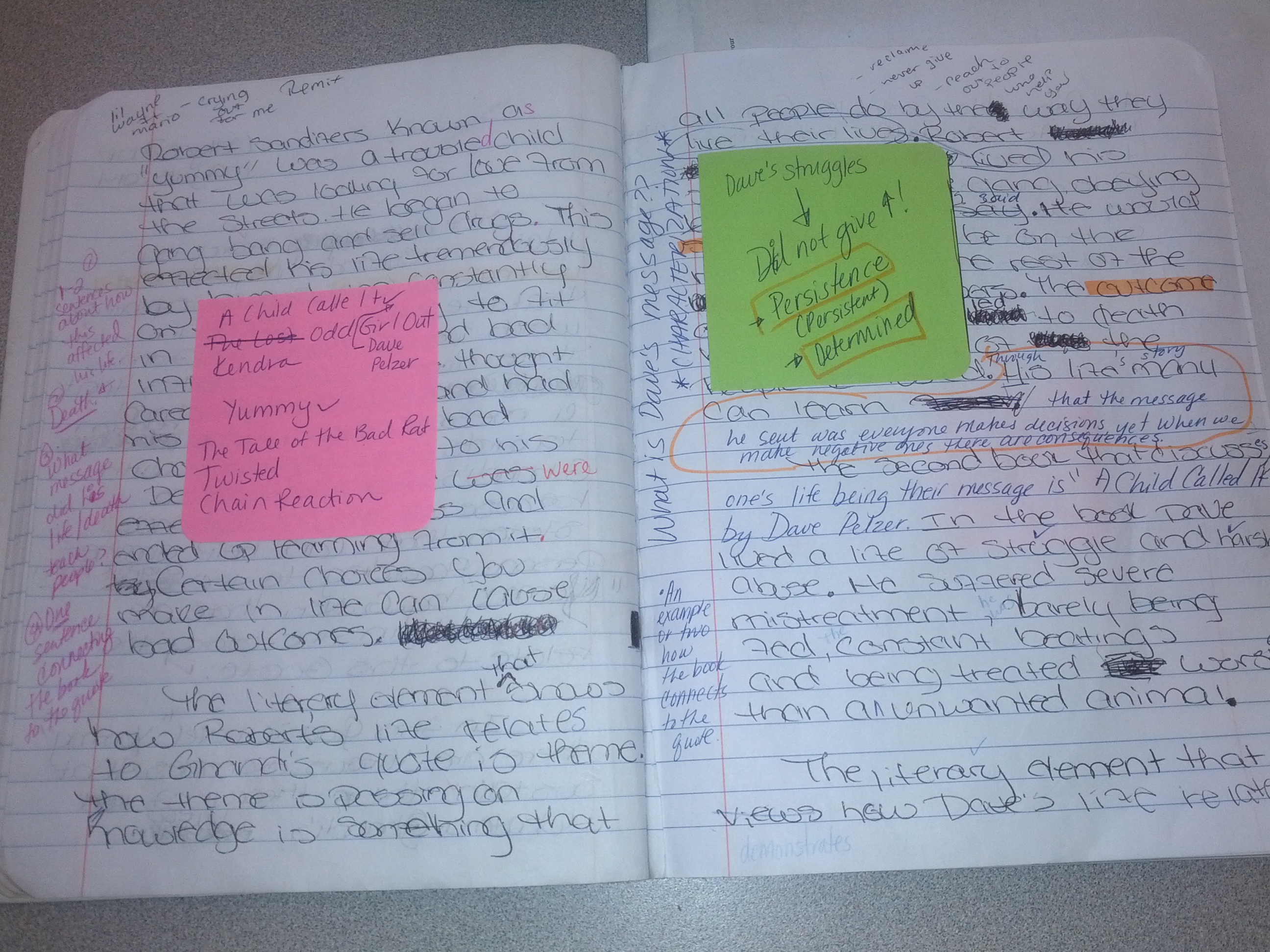
Every inch utilized with ideas..thoughts...movement.

Every inch utilized with ideas..thoughts…movement.

Students use varying angles in which to deliver a quote’s message and are demonstrating alternate ways on how to enter into that analysis with a fresh perspective.  It is through this exploration that students have challenged me to educate with new insight.  Our commitment to the process; pushing ourselves beyond boundaries; and most importantly, our collective energy still provides each new day with an exhilirating thrill.

From our classroom to yours, we wish everyone the best as the end of the year exams approach.  We wish you continued laughter, reading, and much writing.  And don’t forget to have a tremendous amount of fun along the way.  We are.

What ways are you fostering the joy of reading and writing with your students during this stress-inducing time of year?



Marvelous Multigenre

For the duration of my teaching career, May has always meant multigenre.  The multigenre project, or MGP, is the perfect way to finish the year–it showcases students’ abilities to read, research, write, present, collaborate, revise, and create in a way that is enjoyable for all parties involved.  All of those skills (Common Core, anyone?) are the things we want our students to know how to do by the time they leave us, so what better way to determine whether they can than with the MGP?

This Tom Romano-created concept has always been one of my favorite things to teach, and one of my students’ favorite products to produce.  I suppose I assumed that because I would teach it similarly to how I have in past years, the process and products would also be similar.  Boy, was I wrong!  Thanks to employing the workshop model, this school year has been so radically different from previous years that I don’t know why I didn’t expect a huge difference in the way I watched multigenre explode.

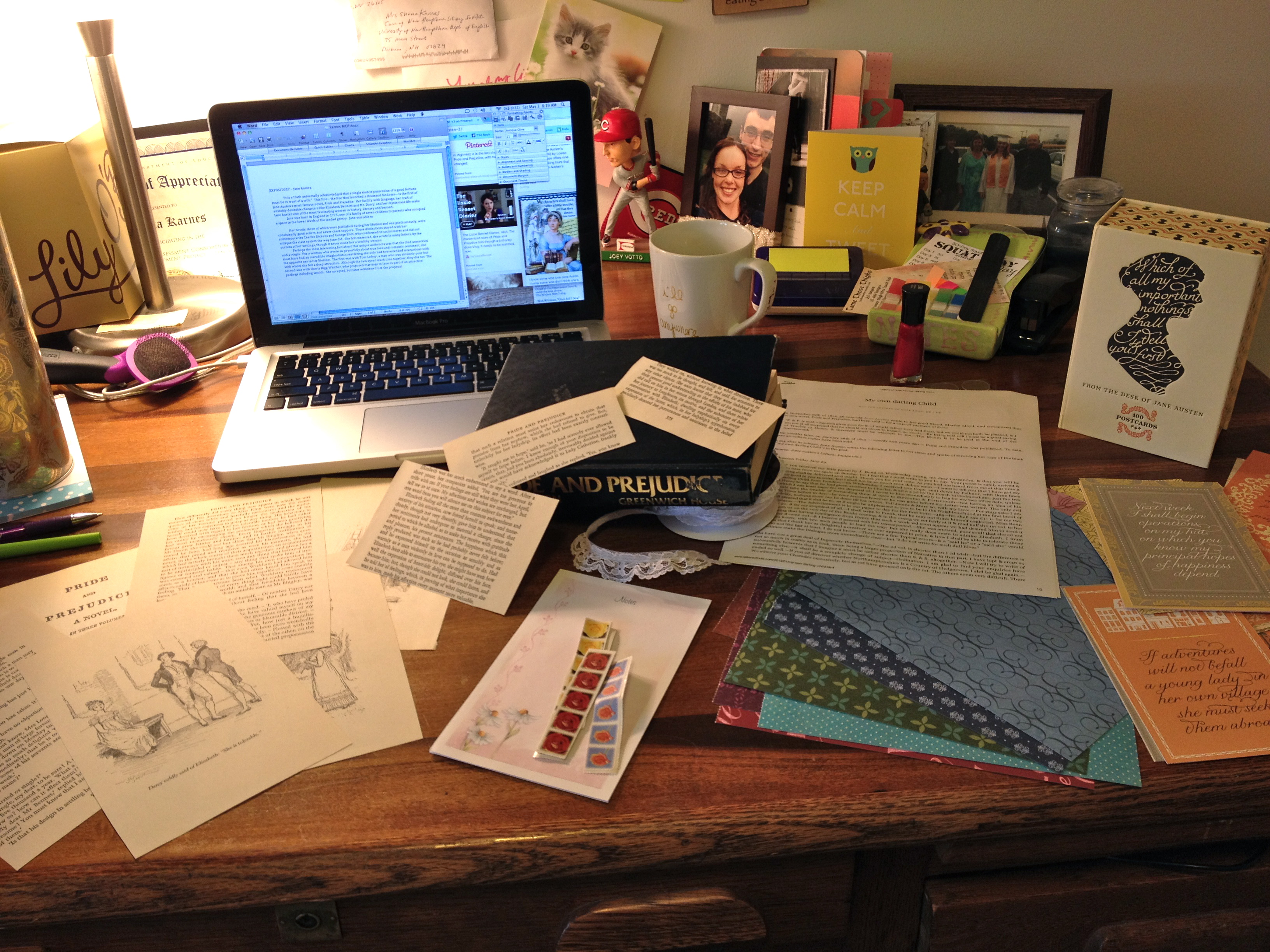
IMG_3056

Multigenre explosion

As I work beside my students on my own Jane Austen multigenre piece, what I am struck most powerfully by is their confidence and independence as they make writing decisions.  Last year, I answered countless questions from students about what was allowed, what requirements needed to be fulfilled, and what was off limits.  My open-minded, the-sky’s-the-limit replies only seemed to induce stress.  This year, they have induced elation.

While my mentor text, modeling, and peer collaboration-heavy method of teaching the MGP has not changed, it’s clear that what has changed this year is how my students see themselves by the time we begin the project.  They don’t see themselves as students at the mercy of a grade or a rubric or a teacher.  They simply see themselves as writers.  They feel comfortable with individualized, meaningful, rigorous reading and writing demands, all thanks to the workshop model.  I have watched with surprise as my students quickly decide on topics for their MGPs–Harry Potter, classic cars, piercings, divorce, ALS, Star Wars, Blake Shelton, the allure of travel, Great Danes, and more.  Many of those topics are things that they have already written about several times this year–something that was once taboo for them in English classes.  My students have come to understand that without putting themselves into their writing, it is meaningless.  They also know, thanks to the design of workshop, that the point of writing, similarly to reading, is to make meaning.

I cannot wait to see what my students produce with the MGP.  I am so proud to have spent an entire year writing beside them, and I am looking forward to our last day of class when they open their writing portfolios and see the thick stacks they’ve produced, submit their final reading ladders and take pictures with towering stacks of finished books, and complete a journal harvest in which they revisit and evaluate their writer’s notebook one last time.  I know with certainty that they will feel accomplished, proud, and confident.  My hope is that those feelings will propel them to keep up their habits of reading and writing for life.  In the end, that’s all I hope to achieve as an English teacher–to make my students lifelong readers and writers like me.

Reel Reading for Real Readers: Me, Earl, and the Dying Girl

ReelReading2My students and I got to participate in World Book Night April 23. The book we gave away was Me, Earl and the Dying Girl by Jesse Andrews. (I will write about that soon.)

This trailer gives a pretty good idea of why this book is so great:

I have several students reading it now. There’s not much better than students clamoring for the books you talk about at the beginning of class.

I am Not Assigning Books

Our Compass Shifts 2-1I love @professornana, the Goddess of YA Literature, and I learn a lot from reading her posts. This one got me thinking, and I opened and read every link she embedded in it.

This whole exile thing is crazy. Like Teri suggests, go take this little lexile quiz yourself. Then read the article she references, Teachers are Supposed to Assign Harder Books, but They Aren’t Doing it Yet. You’ll see what I mean.

CRAZY.

The article got me (and not in a good way) at the title with the word “assign.”

My students are reading more than they ever have before because I am talking books, and suggesting books, and showing off books more than I ever have before.

I am not assigning them.

Choice works. Allowing students to read what they want, high or low lexile, works.

Do I sometimes steer students into genres, or most recently into Prize winners? Do I meet with kids and challenge them into more difficult books? Yes, but I’ve learned to always include some element of choice.

The past several days I’ve spent conferring with students during the first 10 minutes of class. Ten minutes that we devote to independent reading. I’ve met with 2/3 of my 145 students so far. Every student but two has read more this year than they did last. Most have exceeded the goal they set during our first reading conferences at the beginning of the year.

That kind of data speaks louder than any kind of lexile level. (I need to just say that my auto-correct changes lexile to exile every single time. Do you think that’s telling?)

Recently, a colleague visited my classroom. He watched my students engage with literature while I sat at a back table and listened. Later he asked how I conduct my readers/writers workshops. I told him “You saw it.”

My task is to get students reading and to teach them to talk about a texts:  books, stories, articles, passages, poems. Once I do that, students can do most everything else when it comes to reading on their own.

There’s freedom here. Freedom for me and freedom for them.

Funny how my students learn more from each other than they do from me anyway. I wonder why it took me so long to realize that.

I’m reminded of a post Donalyn Miller wrote almost a year ago, and I echo her title:

Let My People Read.


P.S. Are you thinking about Summer Reading yet? It’s about to be a hot topic on my campus. To allow kids to choose or not to choose, that is the question.

P.S.S. I have to figure out how to allow student choice in AP Literature, which I am most likely teaching next year. Every experienced AP Lit teacher I’ve talked to “assigns” specific books. Still trying to think through this. Any suggestions?

Writing Well is What Changes the World

Recently, I read Penny Kittle’s article “What We Learn When We Free Writers,” and I learned as much about myself as a writer as I did about my students. I needed to rethink some things.

See, I am trying to write a book. Most days I’m lying when I say so. I haven’t written well enough or consistently enough or passionately enough to say so.

But I am trying to.

I started reading Writing Down the Bones–Freeing the Writer Within by Natalie Goldberg, and I’m marking lines that resonate. So far, this is my favorite:

Write when you write (26).

I wrote it out and stuck it to my computer monitor, and during my lunch 20140407_114704break I open up my document in Drive and throw my thinking on the page. This is hard–I am so easily distracted. And the perfectionist in me nags until I go back and make revisions. I’m trying to quiet that voice.

The #100words100days challenge is helping. This started as a simple idea during #engchat a few weeks ago. I’m not consistent in posting my word count or links to what I’ve written, but I am writing. That’s what matters.

Back to the article:  Penny refers to the advice of Don Murray regarding authentic writing instruction. It includes just three things:

  1. Teach process, not product.
  2. Write yourself.
  3. Listen to your students.

I do all of these things. But sometimes, I do not do them well.

A few students and I had a big disconnect last week. They pushed back at what I was trying to get them to do. They didn’t understand. A lot.

I had failed at a few things:

A. I failed at making sure students knew that I do every writing assignment I ask them to do.

B. I failed at sharing (in a way that they understood) the enduring understandings and essential questions that directed my planning.

C. I failed at helping students see how process writing will help them with the timed writings that they will have to do on the AP exam, and it will help them with the writing they will have to do in college and beyond. (I still don’t get how they missed that.)

I assumed way too much. I guess I forgot these students are 16, and English class would be low on their list of priorities, if they kept a list.

So this morning, we slowed down. We thought about our writing and our writing habits. We wrote self-reflections, we evaluated our writing processes, and we talked.

First, I projected the stages of the continuum that Penny shared. Like her, I can see my students’ writing practices somewhere between “I won’t write” and “I freely write.”

Interestingly, when students placed their own writing practices on the continuum, with the exception of just two outliers, they all said they sat in “Stage three:  I will write, but I’m not deeply engaged with my own thinking. I want you to tell me what to write, so I can do it the way you say so and move on.”

This makes me sad, but I think I get it.

I am trying to break the writing habits students have practiced for years. Years of teachers giving prompts and writing assignments that students did not choose. Years of students writing only what they had to for a grade. No play in notebooks. No writing just for the pleasure of writing. No writing without penalty for poor grammar or mechanics.

Now we are in the fourth quarter, and I have roughly two months to turn the tide. Two months to help students get what I so desperately want them to get:  Writing well is what changes the world.

It is, you know. Just think about it.

Final Days, Final Products: End-of-Year Assessments

This week, the first of the fourth quarter, has flown by for me–has it for you all?  Perhaps I’m feeling the passage of time because of making end-of-year lesson plans.  Maybe it’s because of the spring sunshine and storms.  Or, it could be because I’m looking into summer course offerings at UNH, the NWP, and our nearest university, WVU.  Whatever the case may be, I am acutely aware that I don’t have much time left with my fabulous students this school year.

Since that is the case, I want to give them opportunities to showcase what they have learned and how they have grown.  Of course, I want a unique, rigorous way for them to show me this, so I’ve been designing some workshop-appropriate final assessments for my students.  The abilities I am curious about are their independent reading, their informal writing, their reading of difficult literature critically and deeply, and their crafting of excellent, time-intensive writing.

My goal at the end of the year is that students can read a variety of texts independently, can think and speak critically about those texts, and can choose and recommend a variety of books for themselves and others.  To see whether they can do this, students will complete an independent reading project that includes a craft analysis of the writing itself, a creative portion in which students show their comprehension of deep layers of the text, and a presentation of the project overall in which other students and I ask questions about the book.  Additionally, students will do their own booktalks, in which they recommend a text to the class, perform a fluent read of a short bit of the book, and discuss their own reading experience with it.

IMG_2769In terms of quickwrites, or the informal, fluency-building writing we do at the beginning of every class, I want students to be able to understand and show their own growth with this type of writing over the course of the year.  I do this by having them do a final “Journal Harvest,” an excellent idea I got from NWP mentor Sally Lundgren, which we’ve also done once or twice a quarter thus far.  In this harvest, they read over all of their writing from the year and write a formal reflection about its growth, content, and style.  Additionally, they choose three pieces to revise and draft into formal, typed pieces.  Lastly, they share their notebooks, reflections, and revised final pieces with their writing groups in order to give and get feedback.

mikeyburton-bookcoversWe’ve read two class novels so far this year, and for the final part of the year, students have chosen from a variety of books to read in literature circles.  Being American Literature, I booktalked the standards Fahrenheit 451, Huck Finn, The Scarlet Letter, and A Separate Peace.  Students chose which of those they wanted to read and have been collaboratively discussing, interpreting, and completing tasks related to their reading in groups.  To share their understanding with the class and me, they will complete creative projects in groups, as well as write a formal book review they’ll publish on the wonderful GoodReads.

IMG_0799Finally, the Multigenre Project will show off my students’ abilities to write, revise, and refine formal, coherent writing.  I have already discussed the way I teach the MGP extensively elsewhere, so I’ll be brief here.  The MGP allows for student choice, curiosity- and question-driven research, frequent talk in writing groups and through final presentations, and rigor.  To my mind, it’s a perfect culmination to a year of workshop, and I can’t wait to see what my students produce with it.

In true teacher-participant form, I will be doing all of this beside my students, and I am quite looking forward to the reflection time this quarter’s modeling will allow.  I’ve already begun the process we all go through at the end of the year, in which we start to wonder what we’ll change in the future and what worked wonderfully that we’ll hang onto.  In reflecting, I find my thoughts and writing returning again and again to the power of talk.  Its deliberate addition into my curriculum this year has been the biggest change from previous years, in which student talk used to be in a space reserved for group work, presentations, etc.  This year, though, student talk is at the center of my teaching, and I think it’s made an incredible difference in my students’ ability and willingness to learn.  I’ve consciously included it in all of my final assessments as a result, as it’s been where I’ve learned the most from my students.

As you can see, there is a lot of grading, planning, and facilitating in my future, but I think it will be well worth the effort…and enjoyable to boot!  Here’s hoping that my students will learn as much from each other in these final weeks as I’ve learned from them all year.  Cheers to the fourth quarter, all!


It’s about the Process. C’mon Guys!

There’s this thing about students with attitudes. Sometimes I just do not deal well.

Last week while meeting with students one-on-one to discuss their improvement in class and their current writing piece, I felt a little beat up.

How is it that two students can ruin the euphoria I felt after conferring with everyone else?

First, N tells me that narrative will not fit anywhere in his piece.

“Why not?”

“Because of the topic,” he told me.

“And your topic is?” I said.

“Governor Perry,” he told me.

“You’re writing something like a bio of the governor. Why won’t narrative work anywhere?”

I do not remember the actual words, but what he meant was “ I do not want to spend anymore time on this writing.”

Later, A tells me that no matter what she writes I tell her it’s not good enough.

“What do you mean by that?”

“Because you always ask a question about what I wrote,” she told me.

“And why do you think by asking questions I’m telling you your writing isn’t good enough?”

“I’m just giving up,” she told me, completely avoiding my question.

I do not remember the actual words she said next, but what she meant was “I do not want to work any harder.”

Tough luck, kiddos.

Writing is hard. And writing well is even harder. Hemmingway quote

Too often my students just want to draft something roughly and turn it in for a grade. I’ve stopped even putting grades on papers, unless we are at the end of a grading period and the policy says I have to. So many students stop their process once that score sits on their page.

Here we are just starting our final nine weeks, and I must figure out how to do more with teaching writing process over writing product.

It’s an uphill stretch.

Students come to me with specific writing habits, and many are stalled on the hill, resisting the charge to be better. Since many of my kids have been in gifted and talented classes for years, they often think that learning comes easily. Maybe in some classes it does. But in my experience with English, too many teachers have not demanded growth through process and have been satisfied with students just turning in papers that will score an A. Mind you, not ALL teachers, but I can tell which teachers at the sophomore level value process over product and which do not, based on the attitudes and practices of the student when they come to my room their junior year. Or, maybe those sophomore teachers haven’t been able to change those bad habits either. I get that, too. Some of these students are stubborn in their know-it-all-ness.

I struggle with this every year:  You know the student who walks in the door at the beginning of the year and could make a 5 on the AP exam if she took it that week. Do you grade her on the struggle of the writing process and her improvement as a writer, or do you grade her on the writing she is capable of at the beginning of the year, even if it’s already an A?

I tend to want to see improvement in all my writers– even the ones who are already pretty good at it when they come to me.

But this year, maybe I haven’t emphasized that enough. I’ve written in front of them, shown them my struggle, used mentor texts, conferred with them individually, begged, prayed.

I pulled out Writing Down the Bones by Natalie Goldberg a while ago and read a few pages in the front of the book. I got my center back. I also got a few thoughts I may write on sticky notes and hand to N and A as they come to class tomorrow.

“You practice whether you want to or not.” p11

“You have to give yourself the space to write a lot without a destination.” p11

“It’s the process of writing and life that matters.” p12

“We must continue to open and trust in our own voice and process.” p13

“Writing is so simple, basic, and austere.” There are no fancy gadgets to make it more attractive.” p26

No doubt when I keep reading I will find more and more advice from Goldberg that will help me help my students. I love that about good writers who want to help others become good writers, too.

Where do you go to find your center? Who are your personal writing coaches?


You Should Read the Book ______________________

Our Compass Shifts 2-1Like a lot of other people I know, I like books lists.

My friend Kelly posted a list on Facebook last week, challenging her closest friends to join her in a read-a-thon. I thought the list looked dull, the majority of the titles classics I had to read in middle and high school. I’d read 49 books on that list of 100, and the author had asserted “most people haven’t even read 6.” I was a lit major in college. I get it.

And I like to read. Most of my students do not.

I watch for interesting book lists because I am always adding titles to my classroom library. I watch for books that my students will read–like the books on this post: 21 YA Novels that Pack a Serious Genre Punch or this one:  15 YA Novels to Watch Out for This Spring.

See, these lists are more like temptation for bibliophiles like me than “These are the best books ever and you should read them” lists, which do little for the book addict in me. Huge difference.

I have a growing contention with anything “you must read.”  (Okay, not anything. I do require my students to read short works that we study for craft, and analyze and discuss together.) Too many students have told me it’s the force feeding of “boring” books that has made them hate reading.

I know that some might contend that it’s the way those books were taught, not the books themselves that turned kids off to reading. I get it. And I’m guilty of it, too. It’s not like I have never taught a whole class novel, but I doubt I ever will again.

I have a few colleagues who agree with me and many more teacher friends from across the nation who are more interested in developing readers than teaching books; my #UNHLit13 peeps Shana, Erika, Emily, and Penny for sure. Heather, too. She saw Kelly’s Facebook post, and I knew her ire was up when she commented: “I still have to ask. What makes these books more of a must read than any other book out there on the market?”

The topic must have lingered because she blogged about it here: Recommended Reading–Reading Lists. Heather’s question is a good one:

Who gets to decide what the BEST or the TOP or the MUST READ books are for

any given category of interest?

I recently read Janet Potter’s 28 Books You Should Read If You Want To and saved it to use as a mentor text at the end of the year when my students do their final personal reading evaluation. Potter asserts “What [book lists] miss is that one of the greatest rewards of a reading life is discovery,” and she produces a lovely list of ways we can decide which books we choose to read. That is what I want.

I want students to choose to read. 

“You should read the book that your favorite band references in their lyrics.

You should read the book you find in your grandparents’ house that’s inscribed “To Ray, all my love, Christmas 1949.

You should read the book whose main character has your first name.

You should read the book that you find on the library’s free cart whose cover makes you laugh.”

I am with Janet Potter.

Really.

You should read the book you choose to.

I hope that I can provide enough opportunity, enough time, enough titles that my students will have some kind of positive experience with books. I hope they will notice when people are reading, and they’ll peek at the cover and be curious enough to search out the title.

That’s what readers do.

We notice books. We notice others reading.


Dear Readers, how about we write our own list. Complete the sentence in the comments.

You should read the book ________________________________________.

Reel Reading for Real Readers: Girlchild by Tupelo Hassman

Oh, man. I love and hate this book. You have to read it. Then we need to talk about it. It’s that kind of story, a hauntingly beautiful coming of age story.

Here’s the book trailer:

And a NY Times review


I would love to hear what titles are keeping you up lately. Please share.

Recommended Reading – Books Lists

stacking-up-and-defying-time-1_l

Take a minute and look over this list:

http://www.listchallenges.com/kaunismina-bbc-6-books-challenge?ref=share

How does it make you feel? Like a victor because you have read most of them? Or like a failure, because although most of them were probably assigned to you in high school, you have read less than a respectable amount of them?

I’m not sure who created this list or why, but the idea of a must read list is not unique. In fact, the website this list came from is actually a website of lists:

Best Loved Titles of All Time

Top 25 Fantasy Books

The 50 Best Books for Kids

I could continue, but I have to ask a question:

Who gets to decide what the BEST or the TOP or the MUST READ books are for any given category of interest?

Honestly, to me these lists are a bit ridiculous. Take the specific list I shared with you. Arguably, most of the books listed are adult novels that are major literary classics, but then you have seemingly random ones like Lovely Bones, Charlotte’s Web, or Charlie and the Chocolate Factory. Really, I love Charlie and the Chocolate factory, but how can you honestly compare it to The Holy Bible, or A Brave New World? Then, what about other classics like Invisible Man or The Scarlet Letter? Those didn’t make the list, but The Little Prince did?

Being one that reads a lot, people are always asking me for lists of books that I would recommend for reading and generally I say, “I don’t know what kinds of books do you like to read?” How can I honestly recommend books to someone whom I don’t know what they like to read? I could easily suggest Divergent or Maze Runner, but if you hate dystopian you won’t like those. I could suggest anything by Sarah Dessen or John Green, but if you don’t like reading about the growing pains of young adults you will find their books a snooze. To me, the books I choose to read go well beyond merely a list. There has to be some connection or interest before I will agree to go on a journey with that author.

So please, for all of you book lists creators out there, I beg you, if you insist on making random lists, please at least give an explanation as to why your list includes what it does. You’ll really be doing the rest of us a favor.

Photo credit: susivinh / Foter / CC BY-ND