We made it! We’ve come to the end of October, one of the longest (feeling) months of the school year. And I’ll tell you, I need to do some celebrating of the good stuff, because October was a doozy, especially with my sophomores. We made it through All Quiet on the Western Front, which I personally find to be a beautifully written, truly evocative war novel. My sophomores, however, had a hard time getting into the book, and many of them never really did. I struggled with feeling like a hypocrite, because here I was emphasizing choice and pushing my students to (re)discover the pleasure of reading, and I had effectively halted the train we just got moving. Some of my students had read more in the first month of school than they had in years, and I felt guilty about derailing the progress they had made.
The compromise I came up with was that we would go read the book as fast as possible, slow down for close readings in particularly meaningful passages, and I would book talk war books every day. Still the students withered during the past two weeks, their GoodReads updates full of longing for their “real books.” When we finished the book yesterday, some students tried to turn them in to me on the way out of class. They were horrified when I told them we weren’t done with the novel yet.
Needless to say I haven’t figured out how to strike the balance between the independent reading and whole-class texts. Our department has determined a certain of novels to be “core texts” that every teacher will teach. I agree that the novels on the lists are amazing works of literature. But I know that many of my students have not been sold on reading to begin with, so it’s laughable to think that somehow I’m going to get them to be engaged with books that were written on average of over 125 years ago (thanks to Shakespeare at every grade level). One student protested, “My mom read these exact same books when she went here.”
As I write this post, I have no answers. I know what is in my heart of hearts. And, by the way, my students can tell too. One girl asked suspiciously but tentatively, “Um…Ms. Kim, did you choose this book for us to read?” I was diplomatic in my response, using the Socratic method to ask a question of her. But the fact remains that come Monday, I need to have some essay options for my students. That is a whole ‘nother beast, since trying to engage my sophomores in their writing is even more challenging for me.
So rather than try to present some amazing answers to this question (since I have none), I am going to show off some pictures of my happy place – aka The Serenity Zone. How’s that for a completely abrupt subject change?
I don’t brag often, but I am definitely proud of my classroom space, and especially my library. I have worked hard to make it a space that I want to be in, and a place where I can experience serenity (my version of Amy’s “zen”). That means tons of (organized) books, thriving plants, natural light (no fluorescents!), and good music. I know a lot of colleagues who lock their rooms for lunch and escape for needed time away from the “crazy kids,” but I actually love the fact that I have a space students want to come and have their lunch, read their books (during lunch?!), catch up on homework, and chat with friends. It’s the little things, but it tickles me when former students, or students I don’t even know, come and ask if they can look at the books and even borrow one. Don’t even get me started on how books have forged community and relationships and trust with students – that’s for a whole other post! To leave you, here are some pictures of my serenity zone. (I wish you could hear some of my music – one student looked up from her book while rocking in the rocking chair declaring my room her “chill zone.” That’s props you can’t buy!) Next time I’ll include pictorial proof of students in my room. 🙂
*Thanks for reading this all-over-the-place post!
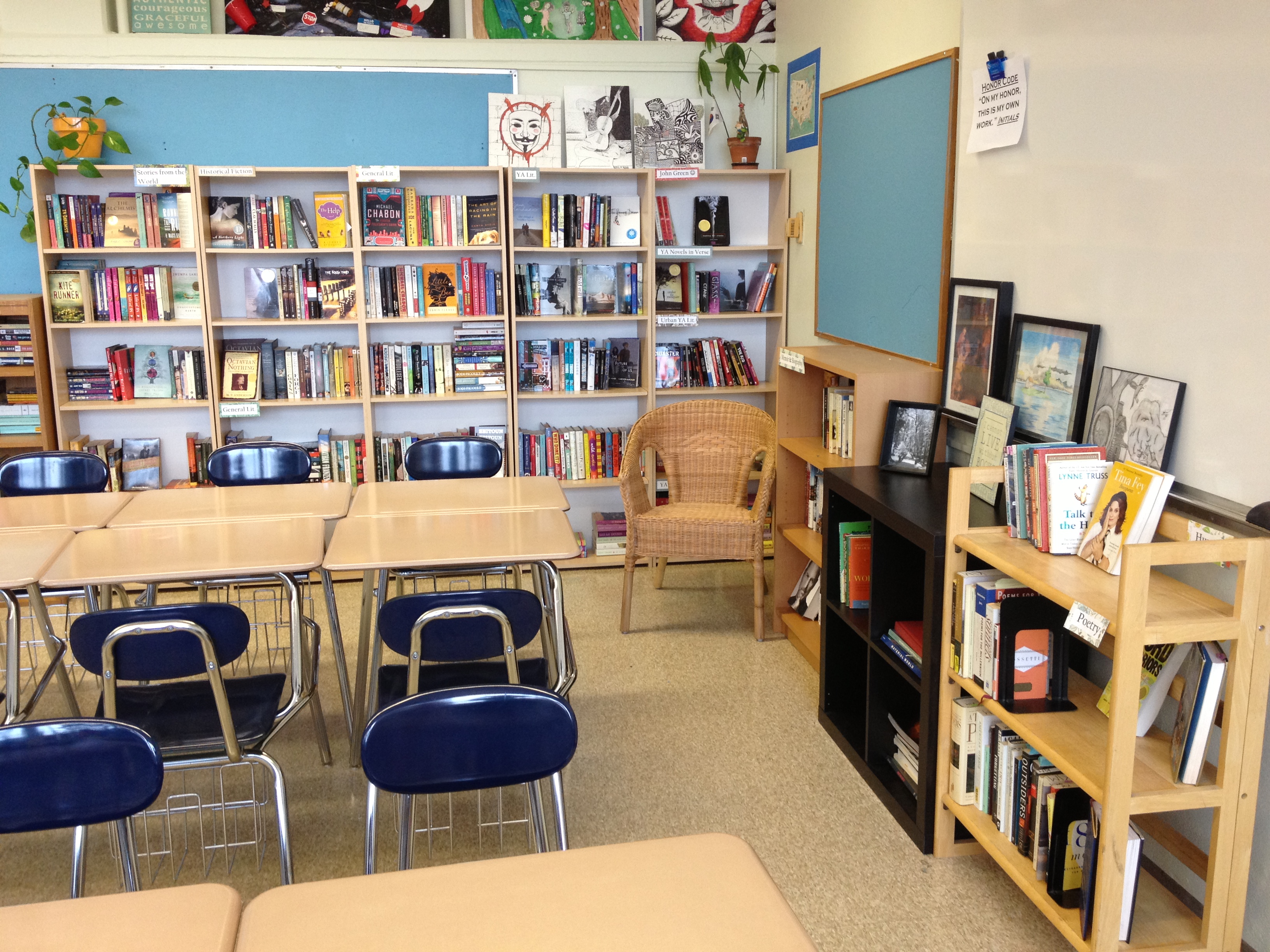
half of my library
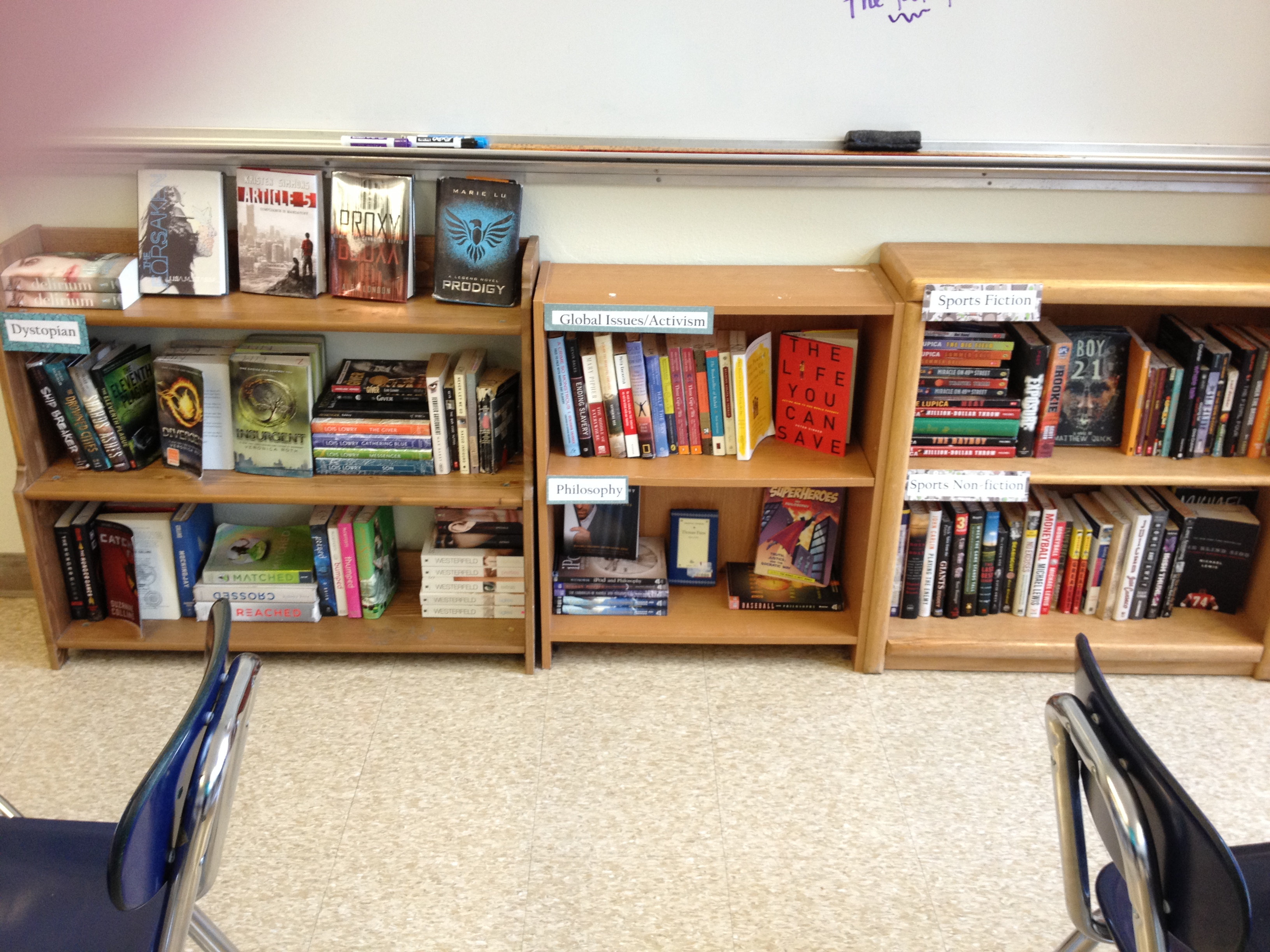
’twas unwise to have the dystopians and sports sections in such small shelves…

we need a better “book wait list” system. (notice my nerdfighter posters? DFTBA, y’all!)

the ever-growing list of books i’ve book talked this year!
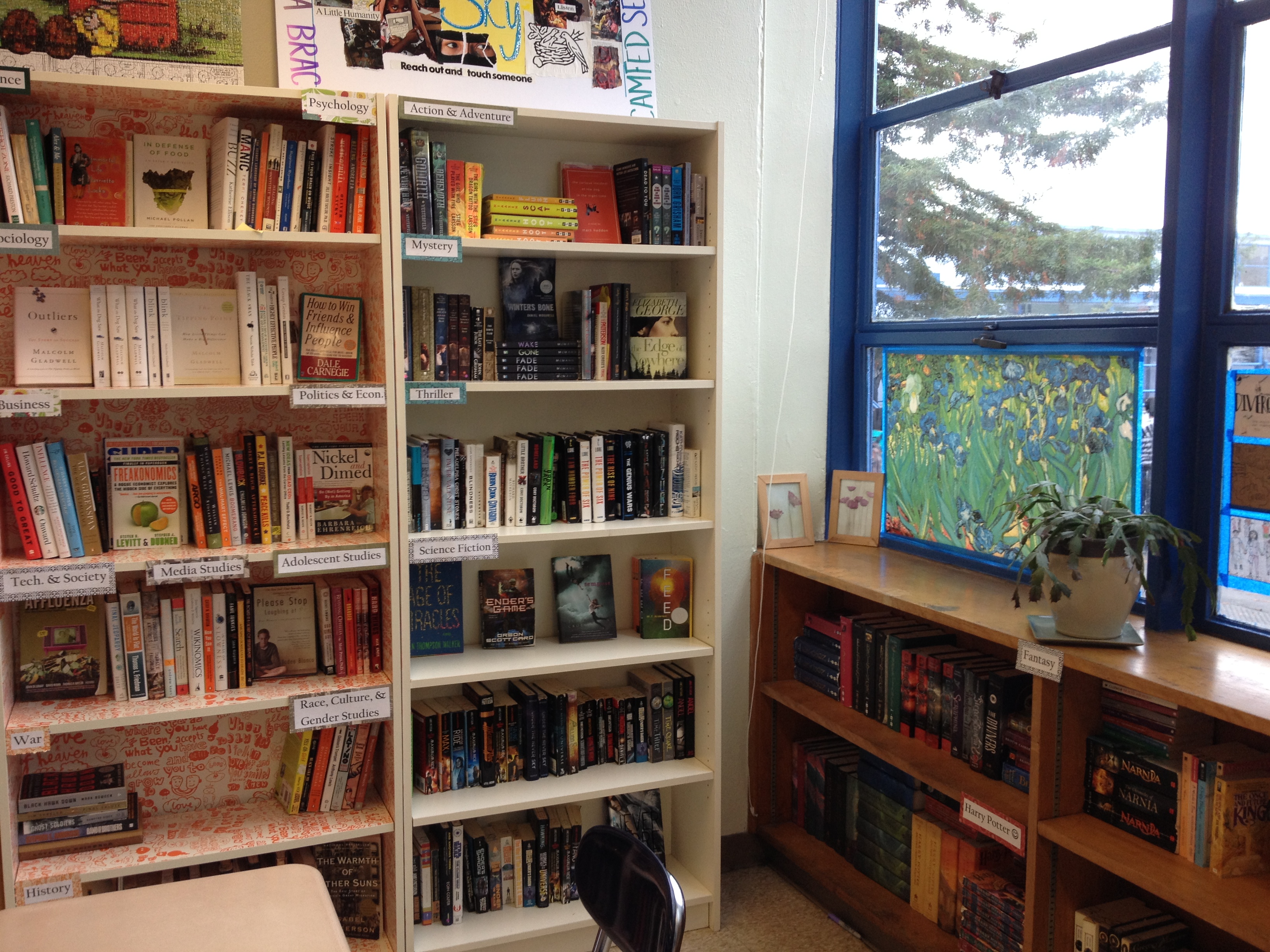
who would have thought i’d run out of shelf space?!

 Three Teachers Talk