Tag Archives: Mentor Texts

Can’t Get Students to Write? Try These Mentor Texts for More Engagement


I had a dream the other night where I was in a conversation with my principal about student engagement. Of course, I’d just spent the day in Internal Rounds at one of the other high schools, specifically looking for and analyzing data that was supposed to show if students were engaged in their learning– not compliant, maybe committed,  and hopefully, taking ownership. In my dream I felt exasperated. I struggled, and I probably hit my husband in the head. I finally threw up my hands and said, “I can’t do it! You’ll have my resignation tomorrow!” and I huffed out the door.

What the heck?

Yes, student engagement. Those seem to be the buzz words I keep hearing lately. Well, those or student apathy, the ugly step-sister. I’d rather at least try to stay positive.

I teach 9th grade English. I try to teach students how to write. Sometimes I want to beat my head against the wall because I have so many kids who just don’t get into what I try to get them to do. I imagine this sounds familiar to some of you–at least I hope I’m not alone here.

In my search for ways to get students engaged, I’ve discovered a few texts that serve as friendly mentors to help me get my students to care about what they have to say and how they say it. These mentors have interesting text structures or themes–or, hey, they are short, which goes over well with my kids.

I shared a few of these during my presentation at TCTELA in Dallas last week. The Prezi posted two weeks ago called “Reading Writing Workshop in High School? Yep, the Shoe Will Fit” has images of the book covers, and the handouts have some excerpts and ideas from some of my favorite mentors: The Book of Awesome by Neil Pasricha, The Dictionary of High School B.S. by Lois Beckwith, Six Word Memoirs from SMITH Magazine, and  The Encyclopedia of an Ordinary Life by Amy Krause Rosenthal. I’ve used excerpts from all of these and have had great success in getting students to take interest and ownership of their writing. We read the mentor, analyze the author’s craft–specifically looking for the moves he makes, and then we write our own version or addition to that text. Sometimes I require certain devices like metaphors or alliteration or parallel structure or whatever; sometimes not. Always I allow for student choice in the subject matter. I get the best student writing this way.

At the end of that presentation at TCTELA, I asked the audience to contribute ideas for mentor texts that they’ve had success with in getting students to write. Take a look at these fun books; you’ll see the value in how these can work to give students choice in what they write, while you give them say in how they write it.

(Thanks, Goodreads.com, for the synopsis and book cover images.)

Thank you Notes by Jimmy Fallon
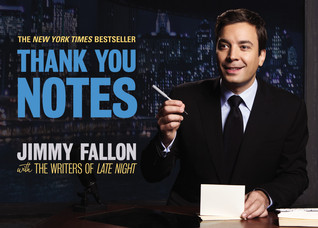
10505349
Thank you, slow walking family walking in front of me on the sidewalk. No, please, take your time. And definitely spread out, too, so you create a barricade of idiots. I am so thankful that you forced me to walk on the street and risk getting hit by a car in order to pass you so I could resume walking at a normal human pace.Jimmy Fallon has a few people and a few things to thank. In this brand-new book, the very first to come from his show, he addresses some 200 subjects in need of his undying “gratitude.” Each page will feature one note and a photograph of its recipient.
_____________________________________________________________________
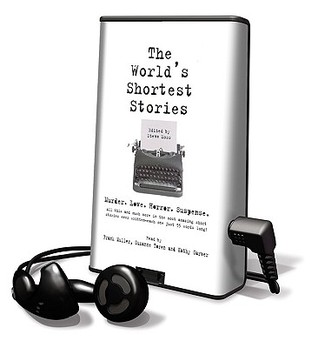
World’s Shortest Stories by Steve Moss
8791206
Murder. Love. Horror. Suspense. All this and much more in the most amazing short stories ever written each one just 55 words long! Consider for a moment 55 words. It’s an absurdly tiny number. No, it’s an impossible tiny number. It’s what O. Henry might have conjured up if he’d only had the back of a business card to write upon. You’ll find murder and suspense, horror and intrigue, love and betrayal, plus distant worlds and inner demons.
All in a measly 55 words.
_______________________________________________
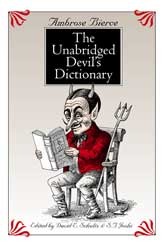
Devil’s Dictionary by Ambrose Bierce
49256
A virtual onslaught of acerbic, confrontational wordplay, The Unabridged Devil’s Dictionary offers some 1,600 wickedly clever definitions to the vocabulary of everyday life. Little is sacred and few are safe, for Bierce targets just about any pursuit, from matrimony to immortality, that allows our willful failings and excesses to shine forth.

________________________________________________
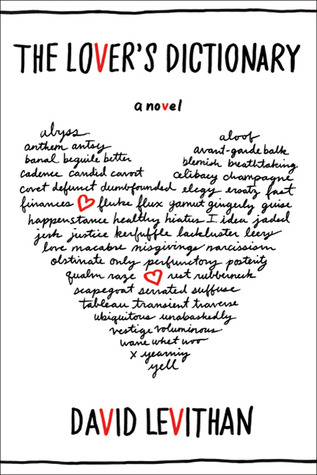
Lover’s Dictionary by David Levithan  [This one fits the list appropriately after the last one. I read this book in one sitting. It’s tender and sweet, and the cover is AWESOME!]
9279177
How does one talk about love? Do we even have the right words to describe something that can be both utterly mundane and completely transcendent, pulling us out of our everyday lives and making us feel a part of something greater than ourselves? Taking a unique approach to this problem, the nameless narrator of David Levithan’s The Lover’s Dictionary has constructed the story of his relationship as a dictionary.

_________________________________________________
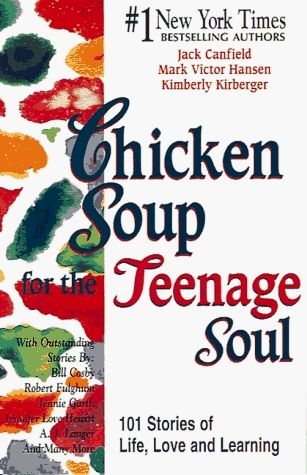
Chicken Soup for the Teenage Soul by Jack Canfield, Mark Victor Hansen427920
This first batch of Chicken Soup for Teens consists of 101 stories every teenager can relate to and learn from–without feeling criticized or judged. This edition contains important lessons on the nature of friendship and love, the importance of belief in the future, and the value of respect for oneself and others, and much more.
_____________________________________________
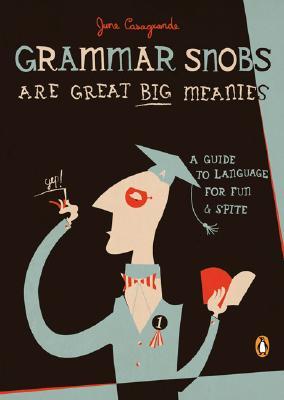
Grammar Snobs are Great Big Meanies: A Guide to Language for Fun and Spite by June Casagrand
14106
What do suicidal pandas, doped-up rock stars, and a naked Pamela Anderson have in common? They’re all a heck of a lot more interesting than reading about predicate nominatives and hyphens. June Casagrande knows this and has invented a whole new twist on the grammar book–a laugh-out-loud funny collection of anecdotes and essays on grammar and punctuation, as well as hilarious critiques of the self-appointed language experts.

Do you know of any more fun texts to use as writing mentor texts? Please leave your suggestions in the comments.

Scaffolding or Struggling, Sinking vs Thinking

So, when the school year started, I was all about scaffolding. I would do this, and my students would do that. I’d provide, build, prop, support until my students were writing their souls onto the paper. Good idea, right? Yeah, it worked about two weeks.

Then, I realized my students were bored. No matter how much I tried to get them interested in doing the learning my way, they were all about doing the learning their way:  they wanted me to “get them started” and then let them GO.

Since I am a control freak, this presented a problem. What if they did the work wrong? What if they didn’t learn the skill I needed them to learn? What if I couldn’t stay on the carefully crafted schedule I’d created?

Yep. That last question—see? There’s the problem. I wanted the learning to be about me. My schedule. My way or the highway. I had to learn to let go and let them.

My approach to writing instruction changed. Instead of pounding my students sweet heads with pre-writing strategies, although colorful additions to their writing notebooks, I started more carefully following the advice I’d learned from great coaches like Jeff Anderson, Penny Kittle and Cris Tovani.

One thing I changed:  I started using better mentor texts. I found pieces of writing that included the skill I wanted students to learn, pieces that were inflammatory or insulting—you know, writing that made students crazy with the need to respond? Pieces that made students think. We’d read these pieces together, and then I’d ask the students questions that helped them discover the writing skill in the piece. Inevitably, students will find what I hope they’ll find—if the mentor text is a good one.

For example, I just read this piece by Stephen King entitled “Tax Me, for F@%&’s Sake” that I plan on using in class one day soon. The title alone will make my students want to read it. (Careful–obviously, there is some salty language.) Take a peek:

What charitable 1 percenters can’t do is assume responsibility—America’s national responsibilities: the care of its sick and its poor, the education of its young, the repair of its failing infrastructure, the repayment of its staggering war debts. Charity from the rich can’t fix global warming or lower the price of gasoline by one single red penny. That kind of salvation does not come from Mark Zuckerberg or Steve Ballmer saying, “OK, I’ll write a $2 million bonus check to the IRS.” That annoying responsibility stuff comes from three words that are anathema to the Tea Partiers: United American citizenry.

And hey, why don’t we get real about this? Most rich folks paying 28 percent taxes do not give out another 28 percent of their income to charity. Most rich folks like to keep their dough. They don’t strip their bank accounts and investment portfolios. They keep them and then pass them on to their children, their children’s children. And what they do give away is—like the monies my wife and I donate—totally at their own discretion. That’s the rich-guy philosophy in a nutshell: don’t tell us how to use our money; we’ll tell you.

The writing devices in this excerpt scream to be discussed:  Hello? Tone, Dash–baby, Word Choice Wonders, Asyndeton’s a-list, Repetition-Repetition, and more!

If I trust my students to search, find, think, and discuss what makes this writing effective—they will. Then, not only can I encourage my kids to use devices like this in their own writing, I can craft questions that get them thinking about topics to write about. Voile! My mentor text is now an ideas generator.  

Questions like:  What kind of story might be titled “One Single Red Penny”? What topics emerge from these paragraphs? Why should you care about United American citizenry? What are some things you’d like people to “get real” about? What are some things you consider “annoying responsibility stuff”? What are some treasures your family passes down from children to “their children’s children”?

My students will get into these questions, and look at all the different types of writing they can produce just by thinking about these topics? Literary, expository, persuasive.

Thinking. Maybe that’s the deal here. When I provide too much scaffolding, my students do not have to think near as much as when I let them struggle through.

In the rear of my classroom, I have a wall painted with chalkboard  paint that says in colorful fancy letters: It’s TIME to think. Maybe it’s just me, but thinking equates to struggle, and I am pretty sure that’s where the learning is.