For about two years now I’ve posted book trailers, author interviews, and a few other online resources (like the amazing Pinterest boards for The Goldfinch and Alice Bliss) as a way to help guide my students into the world of reading.
I’ve found there are two prime ways that students get interested in a book.
1. I have to love it. If I read a short passage and share my experience while reading a certain book, and students see how it made me think or made me feel, without question, at least one student asks immediately to check it out from my classroom library. Usually there’s a waiting list.
2. I have to help them “see” the book. If I show books trailers, even movie trailers, and help students visualize the story line or the characters or the action, even my struggling readers are more likely to at least give a book a try. Sometimes that’s all it takes.
I have had great success in developing readers this year, especially this year. Maybe I finally figured out how my personal passion for books can work to accelerate student interest in books. More likely it’s the time I allowed for my teens to explore the bookshelves, talk to each other about what they are reading, and the time I gave them to read. Every. Day.
My students will evaluate their reading lives next week as the last task I ask of them. They will interview each other and think about our growth as readers. I know that talking about books, showing book trailers, (and investing a lot of time and money in a phenomenal classroom library) is why I am going to smile all the while as I read their evaluations.
Reel Reading post will take a break this summer.
I’d love to hear of your successes with students and reading this year.
While recently in the throws of February break rejuvenating away from the hubbub of the city in the quaint beach town of Montauk; Malcolm X and I were becoming intimate acquaintances. We had been for quite some time, actually. But it was here that I really started questioning him, his motives, and his overall sense of dedication to any cause he finds justified. As I was making direct connections to my own beliefs and passions, my pen went haywire. There was, by no means, enough blank space on the pages of this autobiography for my own thinking. Out came the post-its. The power button on the iPad came alive and my inquisition and deep thought went ablaze. While X and I could not be more different human beings the ideal of commonality among passion elated me.
Later that very same day, I was introduced to Dr. Jeff Duncan-Andrade’s invigorating message that immediately added even more fuel to my already-burning fire. From the moment I pressed play (thank you, Apple TV) I was captivated. Jeff is an outstanding educator who believes there are three kinds of hope: material, critical and audacious. He believes that our [urban] students are roses growing in concrete. I mean, the city has always been referred to as the concrete jungle! In order to really grasp the intensity and genuine love Jeff exudes with his message, you’ll have to watch for yourself.
There I was, hours away from the city and my students, yet never have I felt so connected. X’s passion exudes from his autobiography; Jeff’s passion seeps through his pores as his care is so loudly presented; and my passion was turning up the waves in the ocean right outside my window.
On my drive back to work that first Monday morning after break, I made a promise to myself. I promised to stay true to my passion and invite the new found passions I discovered to reside within me as well. My focus was by no means on the road, it was zoomed in on Jeff’s mantra: Tu eres mi otro yo! (You are the other me!) How could it not be? How could I not be heading back to room 382 thinking, “Students, you are my reflection…you are what I see when I look in the mirror. We are one.”?
As I headed into our building, my mind automatically trained itself on a female student that I have been working with for six months, but have yet to authentically connect with. Today was the day that was going to happen. The day had not begun, but I was sure of it. I was sure of it because I was going to channel all of the passion, intensity, and love I gathered over the break and pour it all over this student. I only hoped she wouldn’t mind!
As independent reading commenced I asked this student to join me with her new book, highlighter and pen. It was a piece well below her reading level (as is typical of her reading selections), but the premise captured her attention immediately: females making decisions based on their desperate need for belonging among other female peers. There’s no wonder.
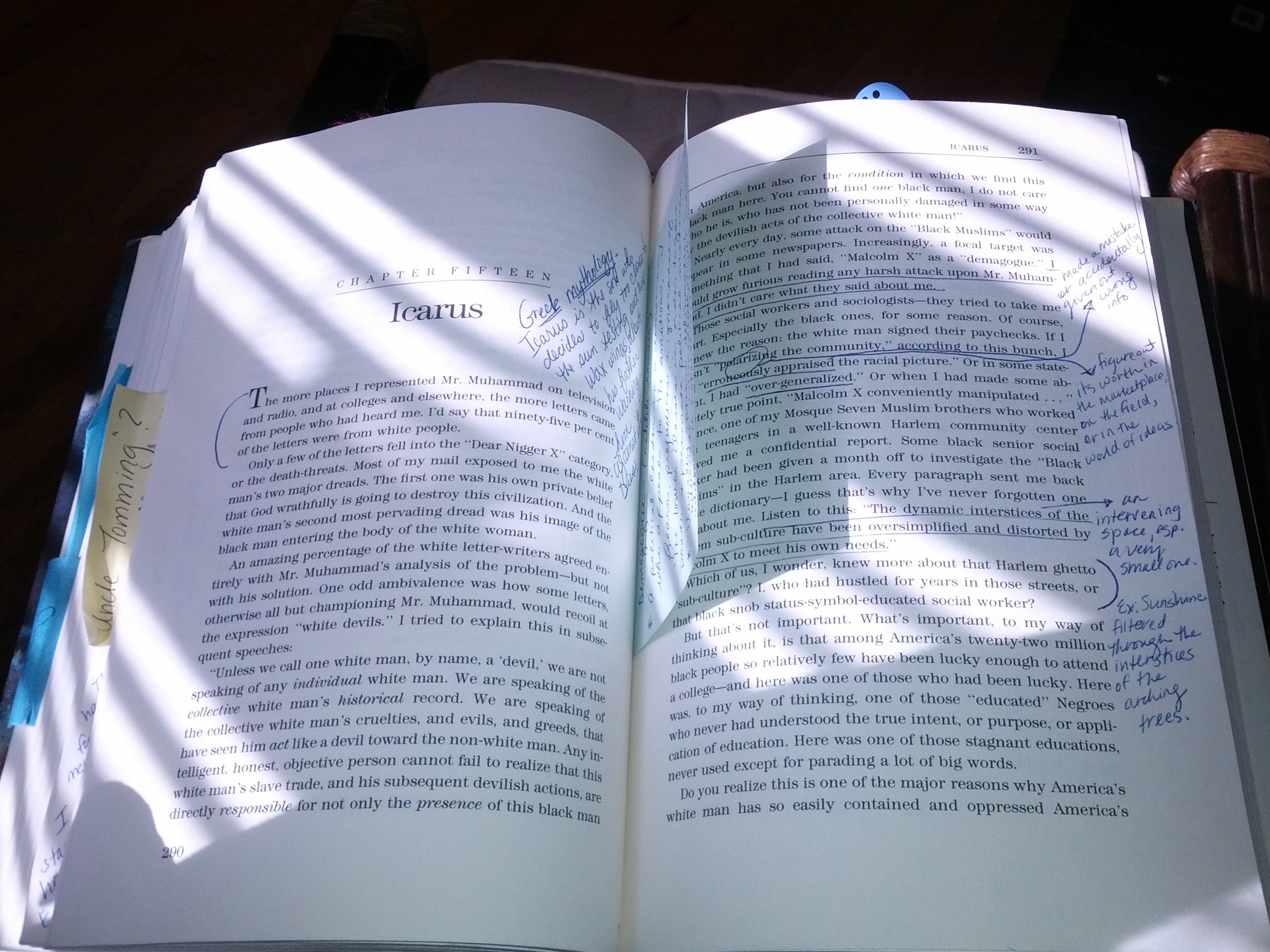
X followed me to class that day, in many regards. As I put my chosen piece of literature on the table, a ‘huh’ surfaced from this female student. I opened to the chapter titled Icarus. I asked her if she knew what the title meant and the following is the dialogue that surfaced:
B: Nope.
Ms. B.: Neither did I. I decided I wasn’t going to go any further into this chapter until I understood what this name resembled.
B: Huh.
Ms. B.: So, I took to the internet and realized Icarus is the name of a Greek mythical figure whose father warned him of not flying too close to the sun with the wax wings in which he created for him. But, he did. And he fell straight out of the sky. Can you imagine?
B: Wow. Huh. That’s interesting.
Ms. B.: Isn’t it? Then, check this out…(I flipped to the last page of the chapter.) Read this last sentence. (B does.) Do you see it?
B: Whoa. It connects to the title. It explains what you just did. (Smile)
And it was at this moment, that the gathered passion, intensity and love I poured all over this student started to work its magic. Because here’s what happened next:
B: Ms. Bogdany, how do you know what to highlight though? I never know what to say — I mean annotate.
This may seem like a simple (and potentially expected response) but after working with this student since September, this was the very first time she was confident enough to be vocal with her inquiry. From there we opened her book (with much fervor) and highlighted a portion that she noted. I asked her what it meant, and she started to explain it…and, in her book, I wrote down her thoughts. I then asked her about her own ideas regarding this concept, and (with the longest response to date) she explained her insights about the decisions the main character is making. So, again…I scribed. We discussed. I annotated. She smiled.
Ms. B.: Do you see it now?
B: Hahah. I do. It…it makes you understand more. Thank you.
Before she left to resume this process solo, I pointed her in the direction of another female student who had just started reading:
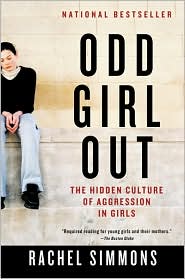
I explained the premise of this piece. She raised an eyebrow. I mentioned that when the other student was done, she may want to engage with it as it’s the same concept that envelopes her piece, yet it’s an informational, non-fiction piece. This piece is more level appropriate for her. Same concept, different genre, enhanced level. We’ll see.
In the meantime, I noticed during the rest of our two hours together that day, B’s book kept finding it’s way back onto her desk; her highlighter was incredibly busy; and her pen was relaying her inner voice on those very pages that previously would have remained untouched. And instead of refocusing her on the day’s lesson and activity; I whispered internally, “Tu eres mi otro yo.”
I had hoped to save Eleanor and Park to read for myself, but I didn’t get to it before it jumped from my TBR pile beside my desk right into a student’s hands. This student is a voracious reader. I can hardly keep up with her. She read Rainbow Rowell’s first book in two days and loved it so, of course, I had to ask if she wanted to read Fangirl.
“Inferno?” I asked. I looked up at Sean*, a skinny freshman with small gages in his ears and a bleached blonde buzz cut. His punk skater image matched the rebellious reputation of the book he had recently finished: The Perks of Being a Wallflower. This was the first time he had come to me with a book request for his independent reading.
“Yeah, you know that book about hell.” I couldn’t help but chuckle—when Sean came into my classroom he associated books with being in hell, now he wanted a book on hell.
“Um, yeah, let me find it. Dante’s Inferno?” I repeated again. I tried to mask my surprise but could hear my voice crack with the title.
“Yeah, that one,” he said straight-faced. The image of my tired college English professor popped into my head; the threadbare sports jacket he wore as he droned on about Inferno; I remember feeling like he single-handedly had pulled me through all nine circles of hell.
Sean owned the video game adaptation of the book, which had sparked his interest. I handed him a copy, warning, “This is a hard read. Even if you get through part of it, that will be impressive! I read this in college.” I felt the need to somehow soothe his frustrations even before he started.
“Ok.” He brushed off my warnings.
Every day I watched Sean crack open Inferno and slowly make his way through the convoluted English translation. And every day I expected Sean to walk into my classroom and abandon the book. But he didn’t.
“How much does he really understand though?” asked another teacher after I brought up Sean’s accomplishments. She made a good point. Not only was Sean in my academic class, the lowest level in my tracked high school, he had also scored partially proficient in reading on the New Hampshire state standardized tests over the past two years. Even if Sean didn’t understand the book in its entirety, I believe he gained just as much as any freshman English major dissecting the poem.
Sean might not have delved into the intricacies of the epic poem, but he took away a sense of confidence and pride that can only accompany struggle. Many students lack the reading stamina Sean exhibited, an essential skill for success in post-secondary schooling. Students can be quick to abandon books, and I have found that it isn’t until students become more developed, advanced readers that they understand the value of pushing beyond the first ten or even one hundred pages of a book to get to the “good stuff.” Despite Sean’s distaste for reading prior to this year, his hunger for a challenge paired with the independent reading initiative allowed Sean to build his stamina and prove himself as a reader. As Sean said, “I kept telling myself it’s just a book. You can keep reading.” Reading Inferno stemmed from his curiosity and transformed into an undertaking of pride.
Sean’s experience with Inferno didn’t include deep literary analysis and his takeaway would most likely make my stuffy college professor cringe, but I’d argue that Sean learned the lesson Dante intended: perseverance and hard work lead to significant achievements.
*The name has been changed to protect the identity of the student
Jacqueline Catcher is a first year teacher at Exeter High School in Exeter, New Hampshire. She teaches Academic and College Preparatory Freshman English and an upper level elective writing course using the workshop model. She can be reached atjcatcher@sau16.org.
My students have asked for this one, but I didn’t have it on my shelves. Thankfully, Bruiser is a book I got in my box at the ALAN conference. this book jumped to the top of my TBR pile, and I read it the day I got home from Boston.
I love it when a book makes me want to be a better person. Bruiser did that for me. I am not sure this book trailer does the book justice, but I especially like how the students who made it made the opening look like a real movie trailer.
This is a book that’s going to have a waiting list.
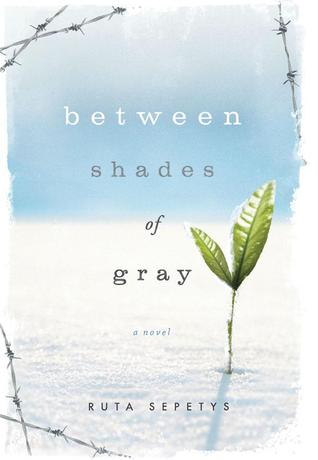
I’ve wanted to read this book for some time now, but it wasn’t until I was searching the shelves at my favorite Salvation Army that I got my hands on it. (That’s a post for another day: Building a Killer Classroom Library by Hanging out at Charity Shops) I have a students who is passionately interested in WWII literature. He’s already read two books a
bout it this grading period. I will put Between Shades of Gray in his hands as soon as I am finished with it.
I’m doing a good job this year of talking about a lot of books. Of my 140 students, I’m down to just threefake readers. Many students are reading slowly, but they are reading. I’ve decided I need to do a bit more than just talk about books. I need to step up my use of videos and book trailers to get them interested. The only problem? Every time I use visual images like this, I have more than one student who wants the book. I want to believe that this is a good problem, but it’s pretty sad when not everyone gets a copy of a book when they are excited about it.
Here’s a clip of Ruta Sepetys talking about the story behind the story. I just know I’m going to need more than one copy.
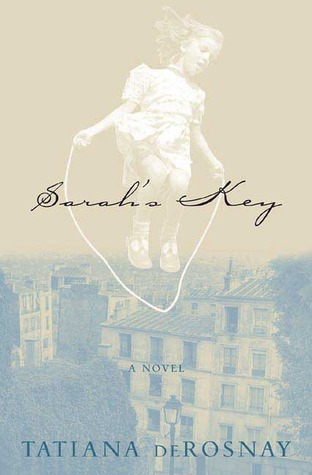
When my friend Tess got all her world literature novels, one of the hot student favorites proved to be Sarah’s Key by Tatiana de Rosnay. Tess called my room to see if I had another copy. Sadly, I did not– then.
I remembered how much I loved the movie, and while I know that books and movies are often very different, I could see why students were clamoring for this book.
My copy of Sarah’s Key should be here by the time this post runs. I’m sure when I show the movie trailer I’ll have a waiting list of students eager to read it. I already have one young man and another young woman who are passionate about Holocaust literature. My collection of this genre grows year after year because I love it, too. So many tragic yet heartwarming stories that teach and remind us to love.
For the past several years I’ve taken students to the Holocaust Museum in Dallas. We’ve listened to survivors speak to us on several occasions. Sadly, they are all getting so old. In a very few years, these great warriors of a terrible time will be gone. It will only be through great literature that we keep their stories alive.
I’m trying something new this year: my students are reading every day. Last year I reserved Friday for independent reading. Students did okay with that, but few read as much as I had hoped they would. This year I dedicate the first 10 minutes of every class to silent reading. We’ve been in school a month, and I have many students who have finished a book–some have finished three and four.
The first week of school I set the expectation, and I talked about books a lot. Every day I introduced a book and its characters to my students. I read passages and book covers. I testified to the importance of a book in my life. I read reviews and showed book trailers. I worked at getting a book in every single student’s hand. And it’s paying off.
Even for Ever.
Ever is that one student. You know the one. He grabs the first book off the shelf and pretends to read it. He does this every day for a week. You know he’s a Fake Reader. You’re just waiting for the right time to talk with him about it. Then one day he leaves The Invisible Man by H. G. Wells in the classroom–you know he’s not reading this book anyway. What normal sophomore would? So you hide it just to see what book he’ll choose to Fake Read next. He doesn’t. He sits. And does nothing.
Finally, you make your way to talk with Ever. “What’s up with this Fake Reading?” you ask.
He mumbles something that you don’t understand.
“If you tell me what you’re interested in, I can help you find a book,” you offer.
He shrugs but walks to the bookshelves, soon returning to his seat with a bright non-fiction paperback. You don’t see the title, but you watch to see if Ever’s reading.
Nope. He’s an Advanced Fake Reader.
Then he surprises you. He asks for help finding something real and historical, so you offer a stack of memoirs with authors from Cambodia, Iran, and South Africa. He doesn’t even bother to pick them up, but he’s drawn to the shelf they came from. You can see it in his eyes.
You’re pushing but not too hard. You barely know this child, and you know the first three weeks can make or break the relationship with a student for the whole year. Then you see him. He’s got a thin book–historical fiction. And he’s reading. He’s really reading Once by Morris Gleitzman.
The next day Ever is one of the first students in class. You glance over, and Ever is reading, and the bell hasn’t even sounded yet. You walk over to offer a bit of praise.
“Hey, Miss, I’ve read 120 pages since yesterday!” he tells you. And inside you’re grinning so widely your cheeks hurt.
Ever finishes that book the next day and reaches for Then.
Then You know you’ve got him when he turns the pages in Now.
And maybe, just maybe you’ve converted the Fake Reader.
How do you get your Fake Readers to give a book a try?
 For about two years now I’ve posted book trailers, author interviews, and a few other online resources (like the amazing Pinterest boards for The Goldfinch and Alice Bliss) as a way to help guide my students into the world of reading.




 Sarah’s Key by Tatiana de Rosnay. Tess called my room to see if I had another copy. Sadly, I did not– then.
 make or break the relationship with a student for the whole year. Then you see him. He’s got a thin book–historical fiction. And he’s reading. He’s really reading Once by Morris Gleitzman.
 Three Teachers Talk