Tag Archives: independent reading

Everywhere You Turn

Over the last three years, our Francis Gittens Memorial Lending Library has grown literally by thousands of books.  And, it’s a beautiful sight.  One in which provides comfort, challenge, and dialogue among students and educators.  It propels interest in reading and provides options and choice; students sometimes pull up a chair and use the edge of any given shelf to rest their Writer’s Notebook while they write and find inspiration.  It’s our staple here in room 382.

But, as more and more donations come through the door, I panic: Where will they all go?!  We are currently wall-to-wall with bookshelves (many that tower over us) and the remaining space is either wall-to-wall windows or full of technology.  So, I started to utilize every open surface: our computer cart, window sills, filing cabinets, my own desk.  Now, literally everywhere you turn, your gaze lands upon books…stacks and stacks of books.

Initially I felt overwhelmed by having books everywhere; I thought it felt chaotic.  But, the perceived chaos actually provides students even more choice and an innate awareness of their surroundings. Students have started to become even more in-tune with their reading journeys and have been feeling more compelled to explore.  For more reluctant readers they have access to books without it feeling as though there is the need for any sort of grandiose gesture; trekking across the room to the wildly overwhelming library.  It’s subtle yet powerful beyond measure.  Everything is within their reach.

IMG_20150421_093753

Books resting on technology…

Everything.  Even our mobile technology cart full of laptops. The books on top are stacked in four piles; they are our newest additions.  Because the cart find its way across the room, near different seats, and at various different spots depending on the day; it’s equivalent to an ice cream truck making its rounds – no one is to be missed.  These piles change as the new additions continue to stream through the door.  Many students, as they are accessing the cart for a computer, find themselves pausing for a moment because a book title…or cover…or piece they realized was on their next-to-read list…has caught their attention.  I love the irony that’s often captured here when a student is simply going to return their computer, hears the bell ring, and runs to their Writer’s Notebook to jot the title down; yet forgets to put the computer back!

IMG_20150421_094028

Here is one of three window sills adorned with literature – and some added nature.  During the winter months in room 382 the heat tends to be unbearable (hence the cactus) which is quite unfortunate.  Yet fortunately, students like to get a breath of fresh air.  So, while doing so they find themselves multi-tasking – breathing in the fresh city air while perusing through the new titles that greet them at the window.  Many times, a lesson or writing workshop will be interrupted with, “Miss Bogdany, I found another book about XXX!”

Books decorating ugly steel surfaces...

Books decorating ugly steel surfaces…

Many students have just recently begun to proudly embrace their love for graphic novels. Typically,they believe that they’re for ‘young kids’ because of ‘all the pictures and stuff’.  I whole-heartedly disagree.  So, in the vein of supporting students’ interest in visual literacy, many are found atop an industrial filing cabinet adding color, texture, and accessibility.  Because this surface is also used for additional supplies, students access it often.  Every time they are wanting to find their zen (see butterfly book box on the top left) they happen upon literature that excites them.  Many times, the zen garden and a new book escorts them back to their seat.     

IMG_20150421_093914

Exhibiting my literary interests. The left stack is comprised of pieces I want to read. The ones on the right are my absolute favorites. And, the ones in the middle are a fantastic mix of professional resources, gifts, and tools.

I know students will not produce work if they are not comfortable; both physically and in feeling safe within a community.  I create a visually stimulating space at my desk because it’s what fuels my passion for all things literacy. I also know, when a student needs their own unique space, they tend to gravitate toward wherever it is that I’ve set up shop.  It has been labeled ‘their corner office’ – and yes, they get right down to business!

There are other times when I conduct 1:1 conferences and ask a student to engage in dialogue in our bright back corner.  I watch their eyes drift from their writing to the options resting atop my wooden workspace.  Students will reach across the desk to pick up a piece they have never seen there before and while I try to get their attention refocused on our conference, sometimes the book they’ve chosen is much more convincing than whatever it is I’m trying to do.  I also think some of the intrigue is that students know that what they find there are pieces I can really talk about because I’m passionate about them.

So, as the year starts coming to an end and we start thinking strategically about how we are going to start minimizing our inventory and organizing it for our summer packing; please don’t!  Keep moving things around and keeping it fresh.  Put books in places you haven’t before – students will find them trust me.  Play around with what you have displayed in your area and invite students to engage in conversation wrapped around them.  But, most importantly, enjoy these remaining few months with our inquisitive and dedicated readers as they continue to look around our learning environments and find exactly what they didn’t even know they were looking for.

Where do you keep literature aside from your library shelves?  What successes have students found when they happen upon a book in the most unlikely of places?


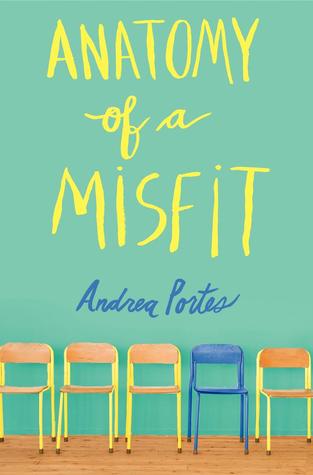
Anatomy of a Misfit by Andrea Portes

18340210This young adult novel was recommended to me by a fellow teacher of reading workshop who said it was immensely popular in her room. I downloaded it on my Nook and began to read it late one night before bed, and stayed up all night to finish.  I laughed on one page, clenched the covers in tension on the next, then cried, then laughed again, thanks to Portes’ masterful narrative skill.

The narrator, Annika, was a unique take on the typical YA protagonist, describing herself as the “third most popular girl in school,” whose Romanian father she calls “Count Chocula.”  Still, Annika finds herself in a number of classic YA conflicts–torn between two boys (Logan, who is unique and thoughtful, but social suicide, and Jared, who is magnetically attractive and popular) and torn between two friend groups (Becky Vilhauer and her evil “mean girls”-esque clique and the victims of that clique’s hurtful gossip).  Annika authentically struggles with these choices in a way I think most teenagers would, so this felt much more real than a John Green book, for example, to me.

As Annika’s unique voice kept me laughing and intrigued, the story grew darker, spiraling into a series of painful climaxes, as the book progressed.  While reflecting on one of these situations, Annika writes:

We tried to be less self-involved.  We tried to look up from our dumb obsessions and notice other people.  We tried to be open, for once.  We tried not to be just another vaguely racist family.  We tried to be enlightened.  We tried to be good.  We tried to be all of the things…we are not.

This beautiful excerpt reflects not just on Portes’ cut-to-the-quick analyses of common situations, but also her writing skill.  My students and I looked at that passage for craft and they created beautiful imitations filled with similar repetitive phrasings.

Portes’ beautiful language made me love this book, but I loved it even more when I read the afterword, which explained the inspiration for the book–Portes’ own high school experience.  Once you read the heart-wrenching conclusion, you’ll understand why I so vastly admire Portes’ blend of autobiography and gorgeous writing skill.


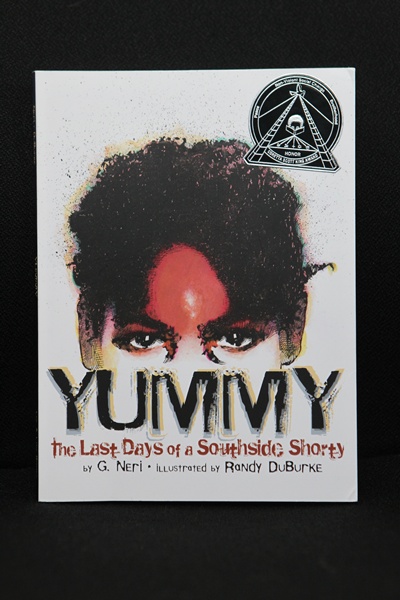
G. Neri’s Yummy


yummy

Synopsis

In this award-winning graphic novel, Robert “Yummy” Sandifer’s life becomes interwoven with other true events from a period in time where Chicago’s south side was running rampant with gang activity and violence. The year: 1994. Yet, its relevance still holds weight today in urban communities throughout our country. Unfortunately.

Narration and Writer’s Craft

Through third person narration, eleven year old Roger, guides us through the ongoings, thoughts, chaos, family ties, brotherhood, fears, ponderings, love, realities and insecurities most young adolescent males experience.

Roger lives on Normal Street.  He addresses what many readers are already thinking:  But I guess “normal” is different to different folks.

In studying craft, this one liner opens up dialogue, the use of language and repetition, and the importance of quotation marks in varying situations.  Throughout the entire story, you are greeted with on-point vernacular, literary devices, and a storyline that pulls at the heart strings.  (Just ask my students.)

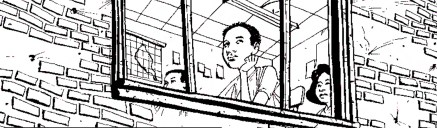
Additionally, the incredible illustrations allow us the luxury of experiencing Yummy’s journey through his eyes, Roger’s eyes, and the eyes of all of those that take part in the journey.

It’s pretty loaded.

 Essential Ideas and ThemesYummy: The Last Days of a Southside Short

This gritty exploration of Yummy’s life forces readers (of all ages) to question their own understandings of good and bad, right or wrong, yes vs. no.

It searches for truth.

It provides us with the inner-workings of [the downfall of] self-worth and naturally asks us to question it.

Ultimately, we are challenged to think on a macro level about society; why are so many of our youth feeling forced into a life where statistics are alarmingly glaring?


Yummy is a piece that everyone needs to read.  It’s important.  It’s relevant.  It affords us a window into the lives of so many of our youth.  No wonder it has won just under 30 honors and awards.  This is one piece of literature you cannot afford to miss.

For more books by G. Neri feel free to visit his website: http://www.gregneri.com

——-

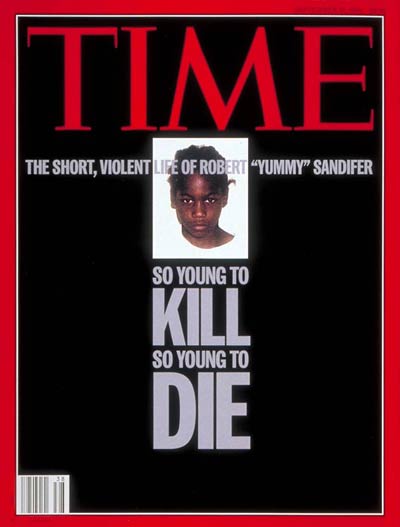
Yummy Time

Here is the cover of TIME Magazine’s issue detailing the story of Robert “Yummy” Sandifer.  Tragic and important.

Why I Applaud The Student Who Reads Only Two Books

imageedit_5_2583117499Author, teacher, and reading-writing workshop guru Nancie Atwell recently won the $1 million Global Teacher Prize. I have been a fan of Atwell’s work since I read her book In the Middle during my first year of graduate school. In fact, I was star struck two years ago when Atwell sat on the floor next to me during an NCTE workshop (note my shoulder proudly photo bombing Shana’s picture of the goddess herself). While I have subscribed to Atwell’s philosophy since I began my career in education, I was shocked to read in the media coverage that her students on average read 40 books per year.

My students do not.

Don’t get me wrong; the majority of my students read a large amount, yet while I could calculate the average, it would grossly misrepresent the true value of their accomplishments. I have some students who breathe books and complete them at breakneck speed. They add leaves to our book tree at an astonishing rate, yet admittedly not all my students are like that. By the end of the year, some have only completed two or three independent books in total. As a first year teacher (last year), I felt like I had failed these students. As far as I was concerned, the good teachers didn’t run into this problem. They only spoke about the record-breaking kids, not the ones that kept me wracking my brain for a solution. It felt like I was the only teacher who had the two-book-reader.

Last year, mine was TJ. TJ couldn’t seem to make it through a book. Many of my hesitant readers have learning disabilities or attention deficit disorders; in past classes, they have felt little success in reading whole class novels. When they arrive in my classroom they are resistant to choosing their own independent reading books. TJ was no exception; he had ADHD and struggled to focus on his reading both in and out of class. I’d watch him stare at a page for five minutes straight without being able to settle his mind and read a line. During conferences TJ discussed his book and claimed he was interested in it, yet he moved at a snail’s pace. By the end of his foray with Jarhead, I couldn’t imagine him undergoing the same tedious process with another book. I thought he’d quit. But he didn’t. Through reading conferences, daily reading time, and check-ins with his parents, I was able to help TJ develop a routine and gradually become a reader. Yet the greatest influence was TJ’s friends. Seeing so many of his peers reading on a daily basis motivated TJ to continue working towards his goals.

By the end of the year, TJ had read two independent reading books and three whole class reads, “more books than [he] had ever read before.” This was a feat arguably equal to if not mightier than some of my students who read 80 or more books. TJ developed persistence and stamina even if he couldn’t keep up with many of his peers. He was proud of his accomplishments and determined to become a better reader the following year. As a teacher, that’s what I want for my students—to push them to succeed and accomplish more than they thought they were capable of.

We all have those students (or maybe it’s still just me) but we must praise and hold these students in high esteem. We must brag about their successes and triumphs just as much as we praise the work of our highly motivated readers. After all, every book is a learning experience and an accomplishment.

Do you have a “two-book reader”? What is your story, and how did you work to motivate that student?

Beyond These Four Walls

Believe it or not, there is an actual term called ‘seat time’.  Yes – states, the national government, school boards, and the rest of ’em, refer to the amount of time a student needs to be learning as “the time they spend in their seats.”  So, we create spaces where students feel safe, comfortable, and willing to risk as we maneuver around this idea of ‘seat time’ because really, who wants to be in a seat for hours upon hours a day?

We move furniture around and engage in Sky Writing (writing on the windows), we use bright colors to liven the spot up and throw rugs on the floor, we use wind chimes and zen gardens to channel our collective inner peace.  I love all of this.  I do.  Because our classrooms are our homes away from home, we invest in them.  For students, sometimes it’s their only home.

Until now.

This year I’m taking the show on the road.  And by show, I obviously mean the Reading Writing Workshop…because I wouldn’t stay home or head out without it.

I’m not alone in this vein of thought.

Amy has gently drenched us with her new found love for teaching poetry; inclusive of strategies, techniques, and student buy-in that emerged for her this summer at Frost Place.  Shana (and her hubby) have taken us to England where we virtually toured historically majestic places where remarkable literaries once stepped foot.  And, Jackie has provided us the opportunity to be audience members through Poetry Out Loud as we envision the poetic brilliance eminating from our New England youth.

Thank you, ladies.  I’d like to return the favor.

IMG_20141219_131929

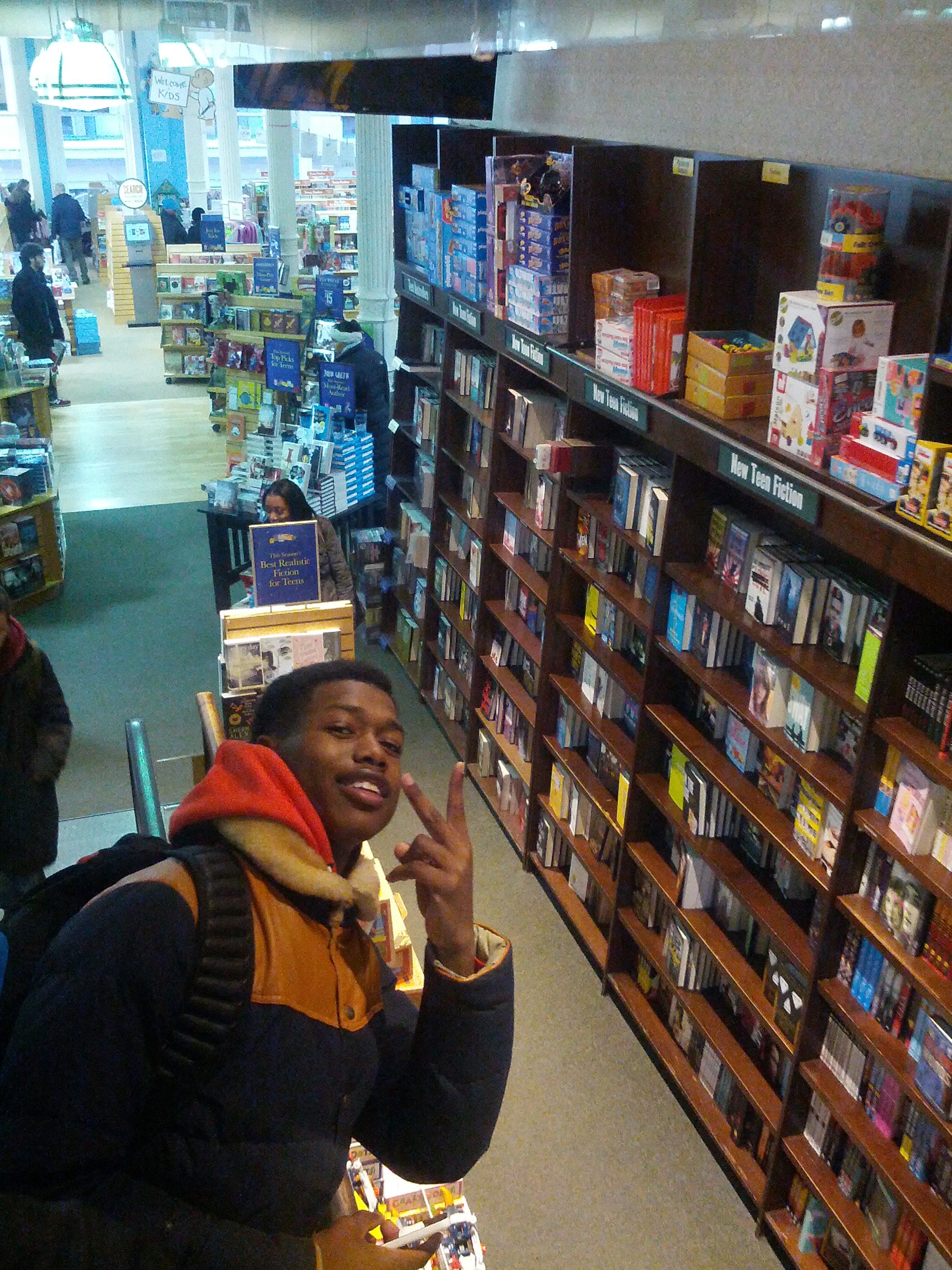
Welcome to the streets of NYC where students and I take on the challenge of reading throughout the entire day ‘outside of seat time’!

We know, educating our youth is a collective effort – always.  Therefore when my principal afforded our students the opportunity to purchase books of their choosing, he envisioned handing them their individual gift cards and letting them be on their way.  While this is lovely and most definitely appreciated, I needed to be part of the process with our emerging and evolving readers.

This journey needed to be a collective.

IMG_20141219_111942

Our ‘seat time’ for the day!

The goal was to ensure that the day was full of all things literature – from the moment we left the building.  So, as students and I bundled up to head out into the winter cold, we locked the door to Room 382 with metrocards in hand, Writer’s Notebooks in tow, and independent reading books tucked into our bags.  While enroute to the four-story Barnes and Noble located in the heart of Union Square, the NYC subway became our independent reading haven.  Students were aghast at first to know that I was serious about reading, not only on the train…but in public.  Yet, once reality set in, one-by-one books started to surface.  Students started to seep into their pieces and some decided to (unconsciously) ignore the fifteen minute benchmark; they found their time on the subway to be soothed by the lull of everyday noises that so typically distract them.  Today is different.

Today we are readers.  Public readers.

On the hunt for literature

On the hunt for literature

As we arrived at our destination, students were given a lay of the land and had the opportunity to go explore.  I learned a lot in that moment, and in the moments to follow.  I learned that while working with students for five months now, I still do not know all of their literary interests…or that some prefer to read graffitti art books because they are fueled by creativity…or that some have been intrigued by forensics since they started the course about a month ago – and so of course – they want to read up on it…or that graphic novels are still at the core of young men’s desire to read.  As students traveled up and down escalators to find what they were looking for I was proud of their willingness to take on an adventure that had the potential to be wildly overwhelming.

***

Weeks later, back in Room 382 and in true RWW form, we took to our Writer’s Notebooks and students were asked to chronicle a vivid moment in their lives.  What you are about to read took my breath away, literally.

A vivid moment comes to life...

A vivid moment comes to life…

Davon decided to chronicle this moment:

The first time I went to Barnes and Noble it shocked me a lot. I didn’t even know what Barnes and Noble was intill I got there with my teacher and classmates.  When we got there and I realized it was a book store, I was shocked.  I started feeling all types of bad feelings running threw my body.  I was nervous and had butterflys in my stomach.  Seeing all the people at different book shelf’s in there made me feel like I didn’t have no business being there.The fact that everyone looked like they knew what they were doing and looking for, made me just want to stay out of everyone way and get out of there.  

IMG_20141219_140616

Davon in deep thought


Davon’s honesty is brave.  And from the looks of it he managed just fine. Better than fine.  He found a piece that would keep him company over the holiday break, that would fuel his imagination, and that would support him in his literacy quest.  A piece he is calling his own.

Using our ‘seat time’ in the most unconventional ways proves that as educators, we know how to support the needs of our students. Sometimes we borrow strategies and ask for guidance, but innately we know what each new group of students needs.  Sometimes it takes a minute to figure it out or customize differentiated plans to make it work.  However, I propose that instead of always rearranging our seating chart or window decals or placement of colored pens…we need to bust out of the four walls in which we learn everyday and let the RWW guide us through the wonders just outside.

In what ways do you foster student learning through the RWW outside of your classroom walls?

Cliché No More

Yes, I’m going there.  I’m making it wildly obvious and apparent that we have made it to the end of yet another year.  Cliché, I know.

cli·ché – klēˈSHā/ noun –a phrase or opinion that is overused and betrays a lack of original thought.

As if we haven’t been counting down the days for sometime now or looking forward to a fresh start as 2015 rolls around in less than 24 hours; this is a time when we allow ourselves the luxury to think about everything we’d like to leave in the past (and slip into the belief that we actually can leave whatever it is we don’t want anymore in 2014 – simply because the clock strikes twelve).  We’ve been detailing and tweaking our New Year’s resolutions to complete and utter perfection (because in these euphoric (some would argue – desperate) moments we believe perfection actually exists).  We’re ready for a change.

But, should we be?

I’ll be the first to admit that my 2014 was as tumultuous as tumultuous can be.  No, really.  Room 382 has been turned up, shifted around, marked, bruised, taken advantage of, and sadly (at moments) not utilized to its fullest potential.  Yet, every morning with the heat blasting (awaiting student complaint) there’s an essence that is viscerally undeniable.  I walk into a space, a quiet and waiting space, that invites risk, mistakes, setbacks, and quite frankly – the undeniable ugly.  Yet, there is no judgement, discerning undertone, nor slight anticipation that today there will be no progress.

Why would I want to leave all of that in 2014?!

I want these feelings, these realities, these quiet moments of hope to stay tightly tucked in my pocket as I make the invisible leap into 2015.  I don’t want to leave the struggle, nor the beauty, behind – it has become a part of who I am (as an educator, woman, thinker, problem solver, learner…).

can’t forget those moments when students found their way through pieces of literature that sparked their love for reading.  And I’m talking: “we’re-so-thirsty-we-can’t-get-enough”esque love of reading!

won’t allow myself to pretend none of this happened – because it did.  I know it.  Students know it.  It’s been what we’ve all held onto when it seemed there wasn’t anything else to keep us grounded, or stable, or…moving forward.

But, we have moved forward, right into the New Year.IMG_20141223_083315

And, while we are half way through our 2014-2015 winter break, I hold tightly to this: Our Reading Plan for Winter Break.

Students have committed, willingly, to really think through which books they want to explore during our hiatus.  Every student’s list is vastly different than the next, yet their pride in taking on this challenge (an hour of reading per day) is evident.  They are playing with genres; being honest about time constraints and the length of specific books; some wildly ambitious, others playing it safe.  Regardless, this is the tangible that will be welcoming us all into the New Year.

This will be the first thing we talk about upon re-entering room 382 and our time together on January 5, 2015.  We will be exploring all we learned about reading in 2014 and see how we all (myself included) challenged ourselves independently.  How did we fly?  When did we feel our wings getting clipped? What did we learn?  What do we want to share?  And so on and so on.

So, as the New Year always brings new promise and a sense of intrigue, I challenge us all to not lose sight of the beauty of the year past.  Bring with you the moments that challenged you the most. Capture, in vivid detail, the time you (and students) felt alive and connected.  Take a moment to massage the inner strength you know has become dormant sitting right below the surface and embrace it.

We owe it to ourselves and our students to relish in the relaxation, adventure, and exploration that this break offers, yet continue to embrace the challenges of late and invite the unforeseen new ones in.  This year, I am shouting loudly and proudly,”Cliché No More!” because with every year comes a newness balanced with a familiarity of knowing.

Here’s to a happy and healthy to you and yours!

A Book About Food?

IMG_20141216_210906You better believe that when Steven Spielberg and Oprah Winfrey collide (behind the big screen) an emulsion of magic erupts.  The One Hundred Foot Journey written by Richard C. Morais turned film was two hours and four minutes of robust richness, immaculate vastness, and intense human connection.  So, no…this book is not solely about food.  Although food, most of the time, tends to be the main character.  I love when authors and film makers do that!

Immediately following my trip to the theatre, was (obviously!) a trip to the bookstore.  Yes, at 9 p.m.  I wasn’t worried about the bookstore not being open but I hadn’t even thought to think that they would be out of the book.  I should have!

An immediate login to Amazon.com and my book was on its way — to be delivered a quick two days later (Thank you, Amazon Prime).  And it wasn’t long into the book when I came across this:

But this you must know:  the violent murder of a mother – when a boy is at that tender age, when he isIMG_20141216_205952 just discovering girls – it is a terrible thing.  Confusingly mixed up with all things feminine, it leaves a charred residue on the soul, like the black marks found at the bottom of a burned pot.  No matter how much you scrub and scrub the pot bottom with steel wool and cleansers, the scars, they remain permanent.

Did anyone else just witness the intense power of Morais’s carefully chosen craft?  Imagery, word
choice, symbolism…shall I continue?  When students ask me what I’m reading or why I’m even reading it; I turn to this page and let them read it for themselves…it’s already tagged.  Most times students’ responses start with a sigh followed by a “Wow” or “Whoa”.  Then the conversation begins.  And, just like what Spielberg and Winfrey have created, our conversations chronicle the richness of this sentiment, immaculate precision and craft of Morais, and the intensity of this reality.

What books have you stumbled upon that have hidden gems in them that you love to share with your students?

An Important Invitation


“WHAT THE [insert expletive]?!”

I do not move.

“NO WAY!  I can’t believe it!  How the [insert expletive #2]?!  Miss Bogdany, come here!”

I’ve been invited.

As I slowly walk toward Christian, both legs extended and perched atop his desk; he need not move. His eyes are bulging.  Is his look one of momentary panic?  Complete disbelief?  A moment of sadness? Regardless, the look on his face is all the body language needed to understand; this young man has just experienced the beauty of literature.  (Although I bet he would beg to differ that ‘beauty’ may not be the appropriate word choice.)

————

This year has been remarkably challenging in ways that I have had yet to experience.

All gritty yet beautiful.

After three and a half months of trying to persuade…breathing (deeply!) through rejected book recommendations…buckling up for the daily roller coaster ride of never really knowing what opinion will be formed about reading that particular day; this invitation could not have come packaged anymore suiting.

While there have been constant shifts, differentiated activities, mentor texts, book talks (on countless genres), writing topics, unsuccessful attempts at captivating student interest…(we all know how long the list gets); one thing has remained constant.  I committed, at the very beginning of the year, that no matter how many changes are made to our learning community, the Reading Writing Workshop goes nowhere!  Student choice has remained constant…and thank goodness it has because the expletives, the lounging student…this is exactly how today’s position on reading needs to be explored; gritty yet beautiful.

 ————

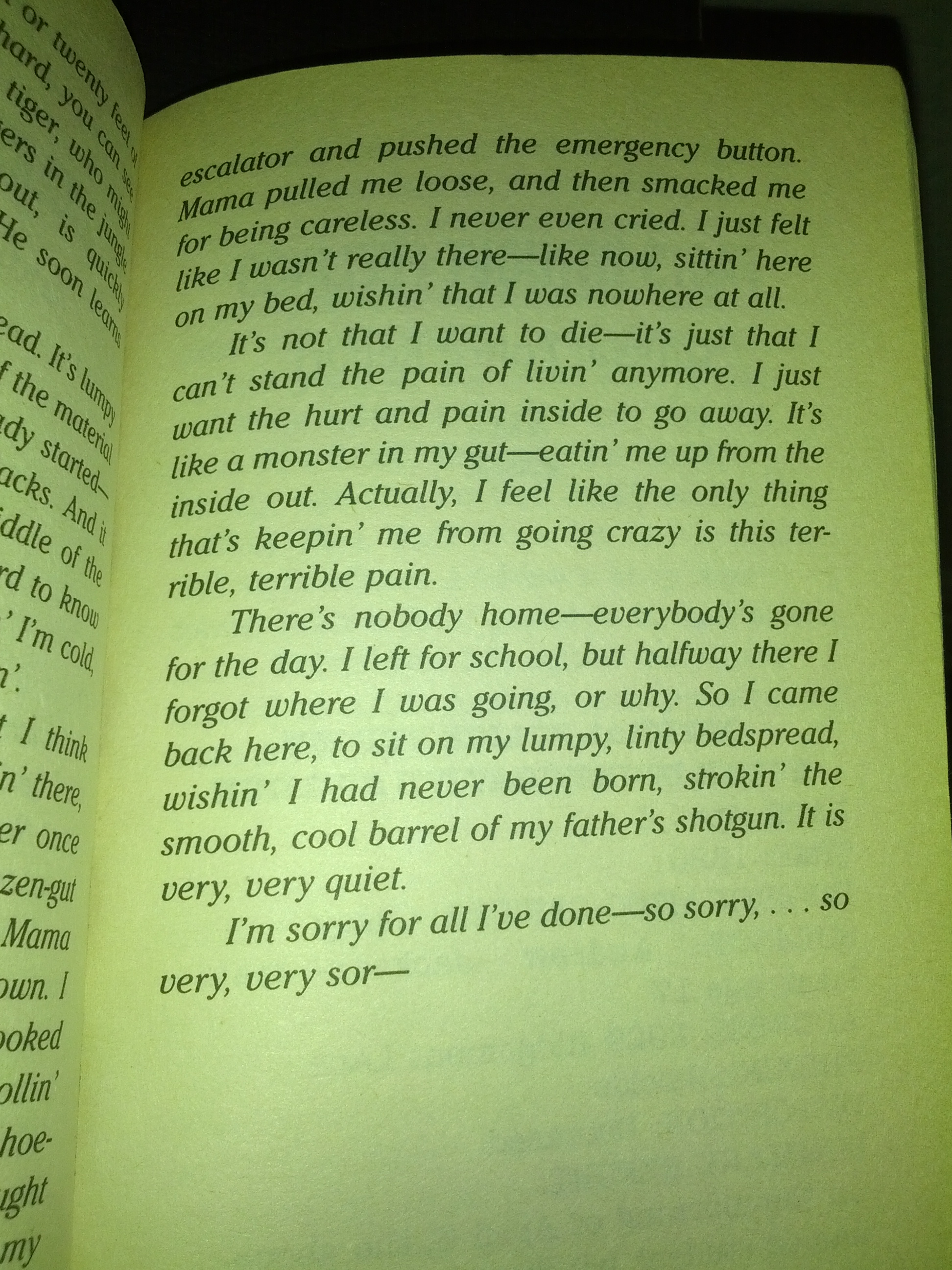
As ChrisIMG_20141215_175627tian holds tight to Tears of a Tiger by Sharon M. Draper (a popular read among students and the first book in the Hazelwood High trilogy), he points to this passage and invisibly underlines each word as he flies through the paragraph that starts “There’s nobody home – 

He then pauses.   His finger moves to the last line, lingers there as he looks up at me, and continues…”I’m sorry for all I’ve done – so sorry, …so very, very sor-

“Ms. Bogdany, did you SEE that?!  He kills himself!  He doesn’t even finish his sentence!”

I am most definitely taken aback.  First by Christian’s intense grasp on the craft of the writer and secondly by the wild intensity of a young man taking his own life.  My eyes bulge too.

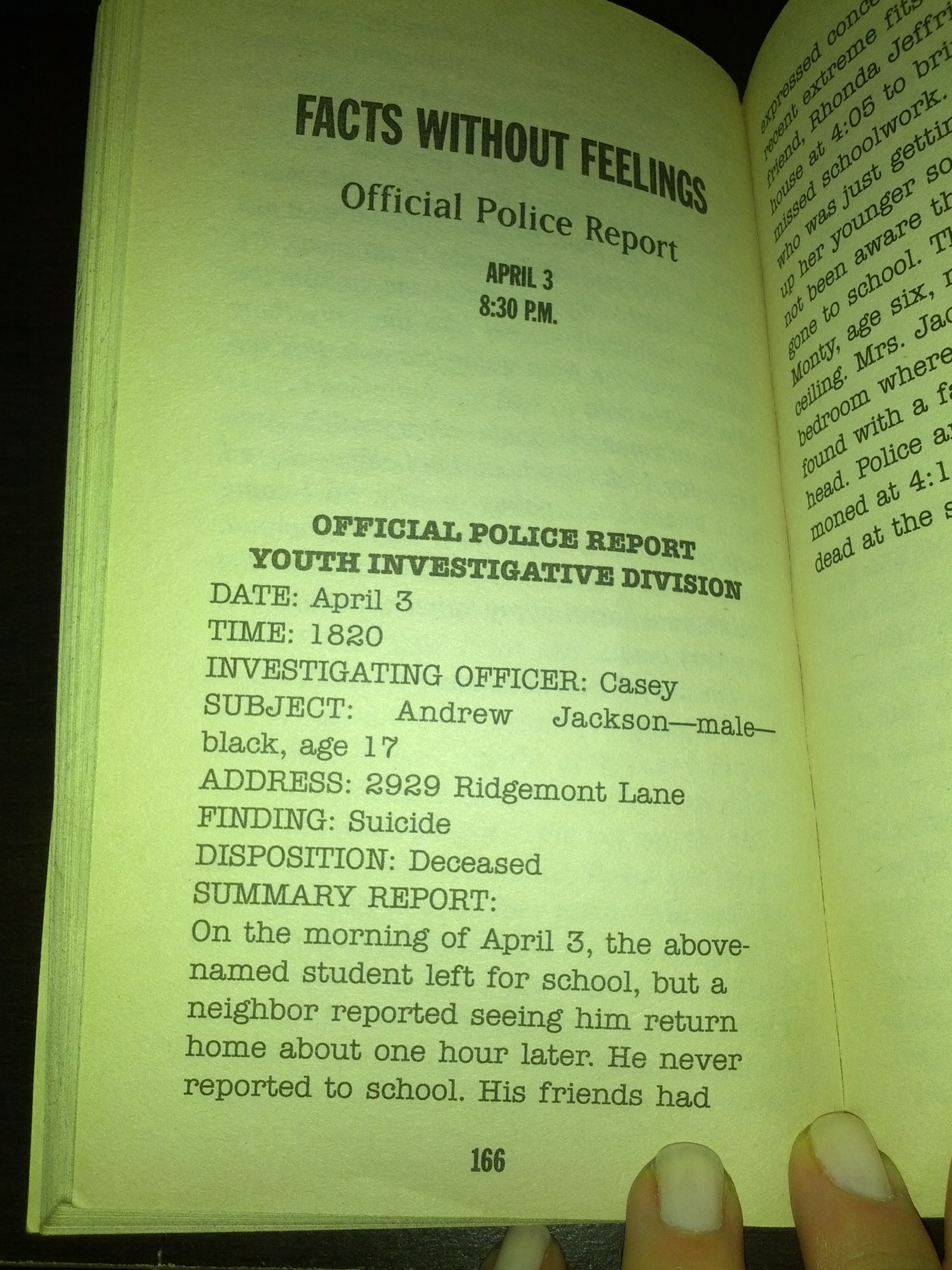
Then Christian continues.  Again, his finger leading the way…

IMG_20141215_175604

“Suicide!  This is the police report.  He killed himself.”

We both pause.  The weight of the word.  We both feel it.

“Ms. Bogdany, I just can’t believe it.  I knew it on the page before, but here it’s confirmed.  I had no idea this would happen.”

————

Christian has chosen many-a-piece that deals with Post Traumatic Stress Disorder (PTSD) and this piece is no different.  Here you have the main character who deals with survivor’s guilt after accidentally killing his best friend in a car accident.  You can only imagine how difficult life, for Andy Jackson, must be.  While attempting to ask for help throughout the piece, Andy feels as though he is alone.  Very alone.

This piece chronicle’s Andy’s journey and the fatality in which it brings.  Please note that students may want (and actually need) to talk about their feelings regarding this heavy issue.  Christian did, albeit the way in which he initially hinted.  Through the expletives I realized that Christian couldn’t be silent about the tragedy he just witnessed.  He needed to voice (in whatever way that surfaced) his knee-jerk reaction to the shock of Andy’s decision.

This piece has connected Christian and I.  It has given us the opportunity to chronicle his study on PTSD…and the real consequences that are associated with it.  He was able to walk me  through the craft of Sharon M. Draper.  This book will remain important for Christian for very specific reasons as it may very well be the piece that is forever etched in his mind.  This piece will also remain incredibly important for me, but for very different reasons.  Regardless of the reason, we are both grateful to Ms. Draper for her dedication to addressing real issues that touch the lives of our youth.

Growing Readers

Autumn in my New Hampshire school district.

Autumn in my New Hampshire school district.

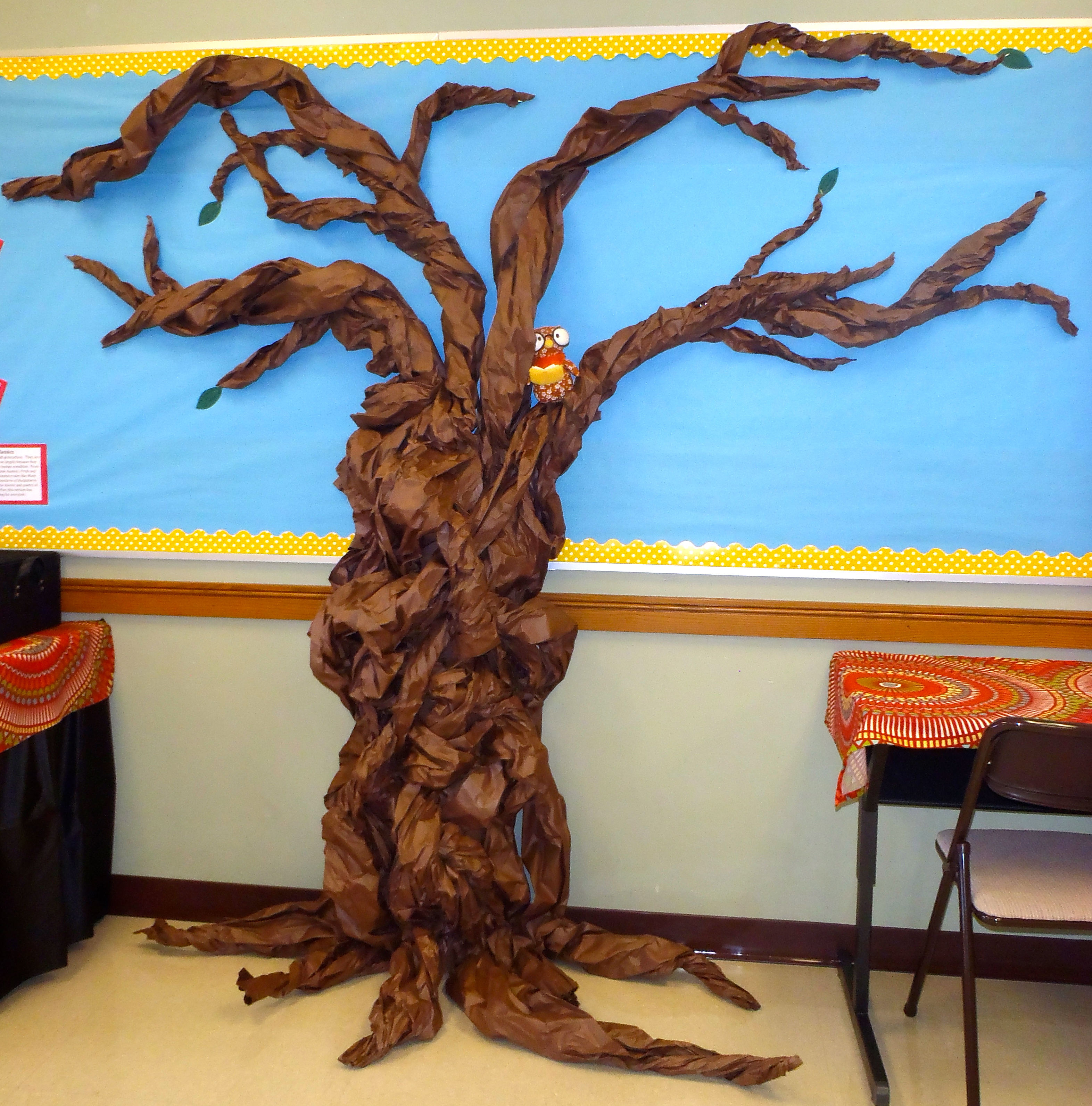
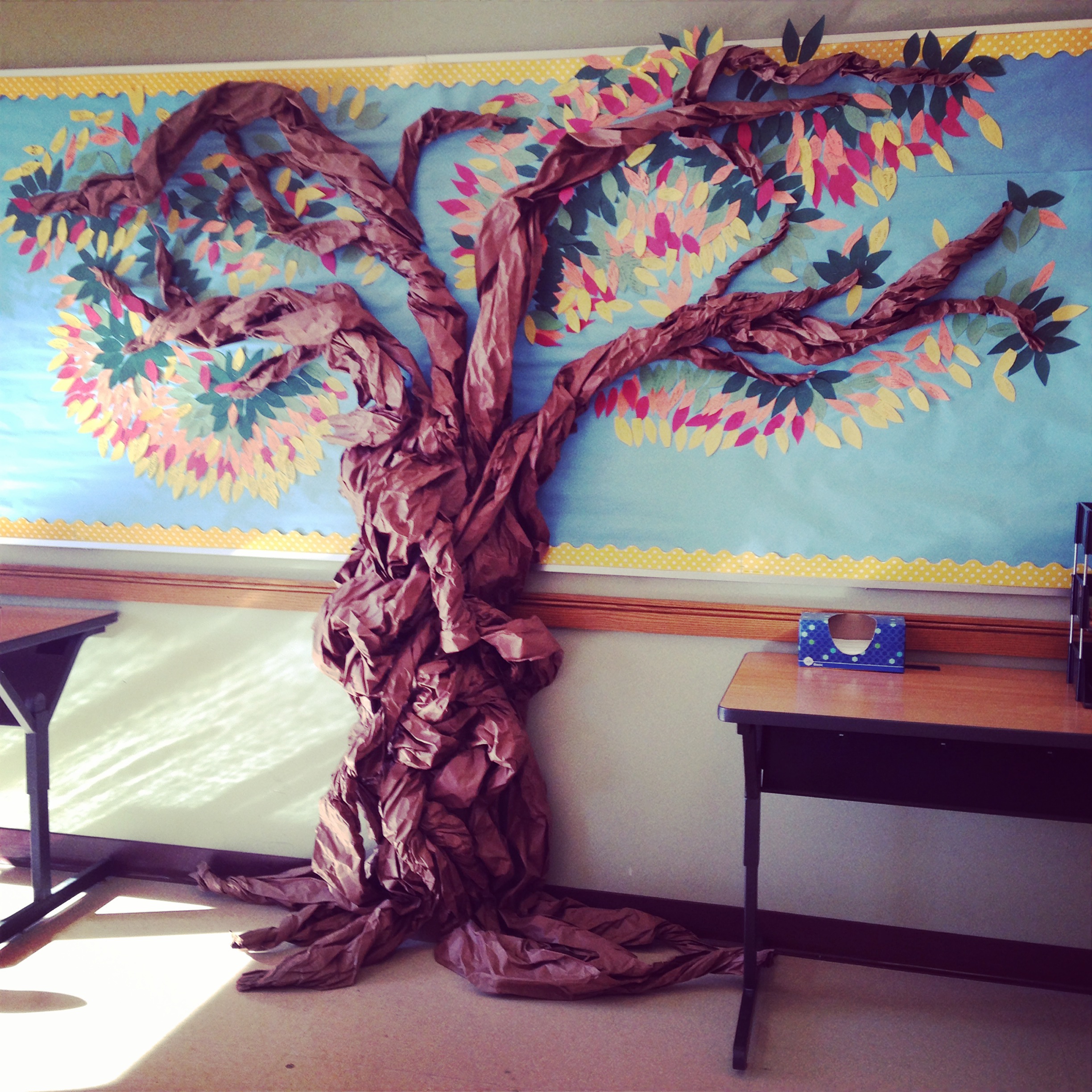
In New England, where I teach, time is measured by temperature. New Englanders cherish Indian summers (the bout of warmth before fall settles in); we sense the bite of autumn, and can smell an oncoming snow. We are a community of seasons, and ultimately these changes dictate the course and development of our year. In turn, to show the development of my classes’ reading progress throughout the year, I drew my inspiration from what New England is famous for—its foliage. To visually represent my classes reading progress within the reading workshop, I developed a reading tree.

The concept of the tree is simple: for every book read, students received a leaf. On the leaf they wrote their initials, the book they read, and the author. They would then staple the leaf to their class’ branch. In turn, students had a visual representation of their individual progress (because they put their initials on the leaves) as well as their class’ progress. They would look to the tree to see what books were the most popular/appeared on the tree most often.

The bare tree before students arrived.

The bare tree before students arrived.

The reading tree exhibits student work and promotes individual success. In addition, it also reinforces teamwork since students look to see how their class is doing as a whole. Furthermore, the tree inspires friendly competition between classes. When I first introduce the tree, I tell students that the class with the most books read wins an ice cream party at the end of the year. This year, due to increased federal health regulations on snacks during the school day, my rules have changed. Instead, students will be able to drop two of their lowest reading scores. Unlike last year, I will tally the total books per class every quarter instead of at the end of the year to determine each quarter’s winner.

Construction for the tree is relatively simple and can be used from year to year.

Materials:

  • One concrete form tube sawed in half. I purchased mine from Home Depot and they sawed it in half for me
  • Two cans of brown spray paint. I used a textured spray paint similar to Rust-oleum’s multicolored textured spray paint, but you can use any type
  • A ream of brown paper—the same type you use to cover bulletin boards
  • A staple gun and staples.
  • Four packs of different colored paper for the leaves.
  • Brown or black duct tape
  • Bulletin board

Process:

  1. Spray paint the concrete form tube with the two cans of brown spray paint. This will serve as your trunk.
  2. Pull large sections of the paper of the ream and begin twisting the paper. As you twist the paper, begin stapling it to the concrete tube using the staple gun. Continue ripping off multiple pieces of paper from the ream, twist and intertwine them as you go along. This will make your trunk look three-dimensional and more realistic. Leave long ends on the bottom. Twist these to a point to create the roots of the tree.
  3. Before you get to the top of the trunk, fashion what looks like a strap. I did this by taking a piece of the brown paper and folding it to make a 2’ X 6” rectangle to wrap around the top of the trunk and affix to the wall. I reinforced the back of the piece of paper with brown duct tape. I then put this strap around the front of the trunk where the bulletin board first meets the concrete tube. I stapled the strap to the tree then the excess ends of the strap to the bulletin board to ensure that the tree wouldn’t fall over once it was complete.
  4. Finally, I continued twisting individual brown pieces of paper and then layering them by twisting multiple pieces together to create a thicker branch. Make sure to create a branch for each of your classes that will be participating.
  5. As you create the larger branches, staple them to the bulletin board. Because the paper is pliable, it is easily to manipulate to look more like a tree. Add smaller branches by twisting additional paper scraps.
  6. Cut out small leaves and store them in a jar or bag to give out to students as they finish their books. I usually have a volunteer cut them out for me so that I have a bulk amount for each quarter.
  7. Get excited to watch your tree (and readers) blossom!
    The reading tree full of leaves at the end of last year.

    The reading tree full of leaves at the end of last year.

While the tree may look complex, it does not take an extraneous amount of time to complete or teach to students. Last year, I allowed my classes to pick which branch they would like to use. Furthermore, I color coded the leaves based on the quarter. Each quarter, I would let my students pick the new leaf color. Green was the first quarter, red was second, orange was third, and yellow was fourth. Just as fall foliage shows the change of seasons in New England, the changing leaves showed my students their development and growth as readers throughout the year.


Mentor Texts Are Everywhere!

This time last year I was amidst a mad dash – a mad dash in seeking out, organizing, asking about, researching, contemplating, and gathering the ‘best of the best’ of mentor texts.  I had just learned what a mentor text was (text that, well, mentors!) and wanted to make sure I had a plethora to kick off the school year.  And, I did.  I had gathered so many I wasn’t even sure when, and in what context, I would be using them.  But, they were ready and I felt confident that I was too.

This year, it’s a bit of a different story.  After implementing the Reading Writing Workshop model in my urban oasis for the first time this past school year, I realized there is no longer a need to be dashing about.  Mentor texts are everywhere!  Literally.  They are in the morning’s newspaper.  They reside in the autobiographies I always find myself engaging in (and of course, loving).  Articles promulgating the Twitter circuit for the purposes of dissecting content and craft.  Classics, more modern, and everything in between became focal points of inquiry and investigation.  Students’ independent reading books shed light on crafty moves authors strategically choose to utilize.  On occasion, an excerpt from professional development texts deserved a public viewing (sometimes with scrutiny, sometimes not).  Nothing is off limits.

So, it is no wonder that as I have been reading a vast array of literature this summer; I have new mentor texts lined up for this coming school year that I am thrilled to explore with my students.  So, grab your Writer’s Notebook and flip to your Next-To-Read list.   I hope you not only fall in love with these pieces, just as I have, but they inspire you to think about what you’re reading and how you’d like to share them with the brilliant and inquisitive minds occupying your learning community.

Making Meaning with Texts: Selected Essays by Louise Rosenblatt was first introduced to me in this summer’s UNH Literacy Institute via Penny Kittle’s Book Love course.  This piece sent a buzz all throughout the campus as we were asked to read it for homework and come prepared to discuss it the next day.  Before the night was through, classmates were chronicling their amazement and joy with Twitter posts such as:  “Reading Louise Rosenblatt for homework and keep saying “Amen, sistah!” in my head. #unhlit14″.  So, you can only imagine how this Reading Theorist evoked an awakening in us all.

IMG_20140630_221534

It was when I came to this paragraph that I realized I had just stumbled upon an incredible mentor text; not only for myself as an educator, but for students as well.  What better way to expose students to the questioning and thinking behind our reading and writing than by sharing the source with them?  These questions are going to guide us through our reading (and writing) journeys this year.  We are going to study these questions, make sense of them, put them into practice; but, we are also going to really delve into why Rosenblatt has chosen these questions to guide us.  See, that’s where exploring craft and an author’s intention becomes our focal point.


battle 1

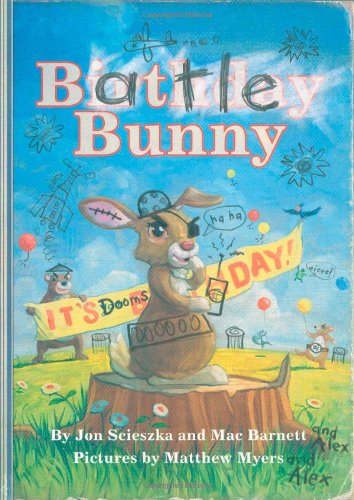
Battle Bunny by Jon Scieszka and Mae Barnett is a clever and witty piece that is sure to get students charged up about editing and revising.  How could it not?  This entire piece chronicles the the narrator’s (yes, the bunny) stylistic and creative writing journey.  The entire story is marked up, crossed out, reworded, and illustrated to show the power of the writing process.  It’s beautiful.

While I educate students ages 16-21, and this piece (I’m sure) was not intended for that audience, I believe this mentor text will be a lighthearted way to quell some of the fears that override their writers’ anxiety.  We know, many students are uncomfortable and afraid to revise, rework, or allow their time-intensive writing pieces to become ‘messy’.  Yet, that’s what produces the most profound writing.

battleI know this may be a risky move in my classroom.  Yet, I’m going to take a chance.  I anticipate shared laughter as we navigate this piece together.  I also plan to explore the bunny’s intentions and make it relevant for our work as writers:  Why did he feel the need to rewrite the story?  Do the illustrations add to the message he is portraying?  Do any of his original thoughts (verse his revisions) feel more powerful to you?  What intentional moves did he make in re-creating this story?  And on and on.

IMG_20140812_121342

Destined to Witness: Growing up Black in Nazi Germany by Hans J. Massaquoi is a piece I have not been without this entire summer.  And, although I’m finished reading it, I find myself flipping through the pictures over and over; it’s that profound. Massaquoi is a mentor of life, overcoming adversity, obtaining the (perceived) impossible, and what it truly means to be human.

Journalist by trade, Massaquoi takes such grace in his every word, sentence, and strategic ‘move’ that’s crafted.  This book encapsulates 443 pages of sheer brilliance and I want students to be exposed to this kind of writing because they too, have the ability to craft such beauty.

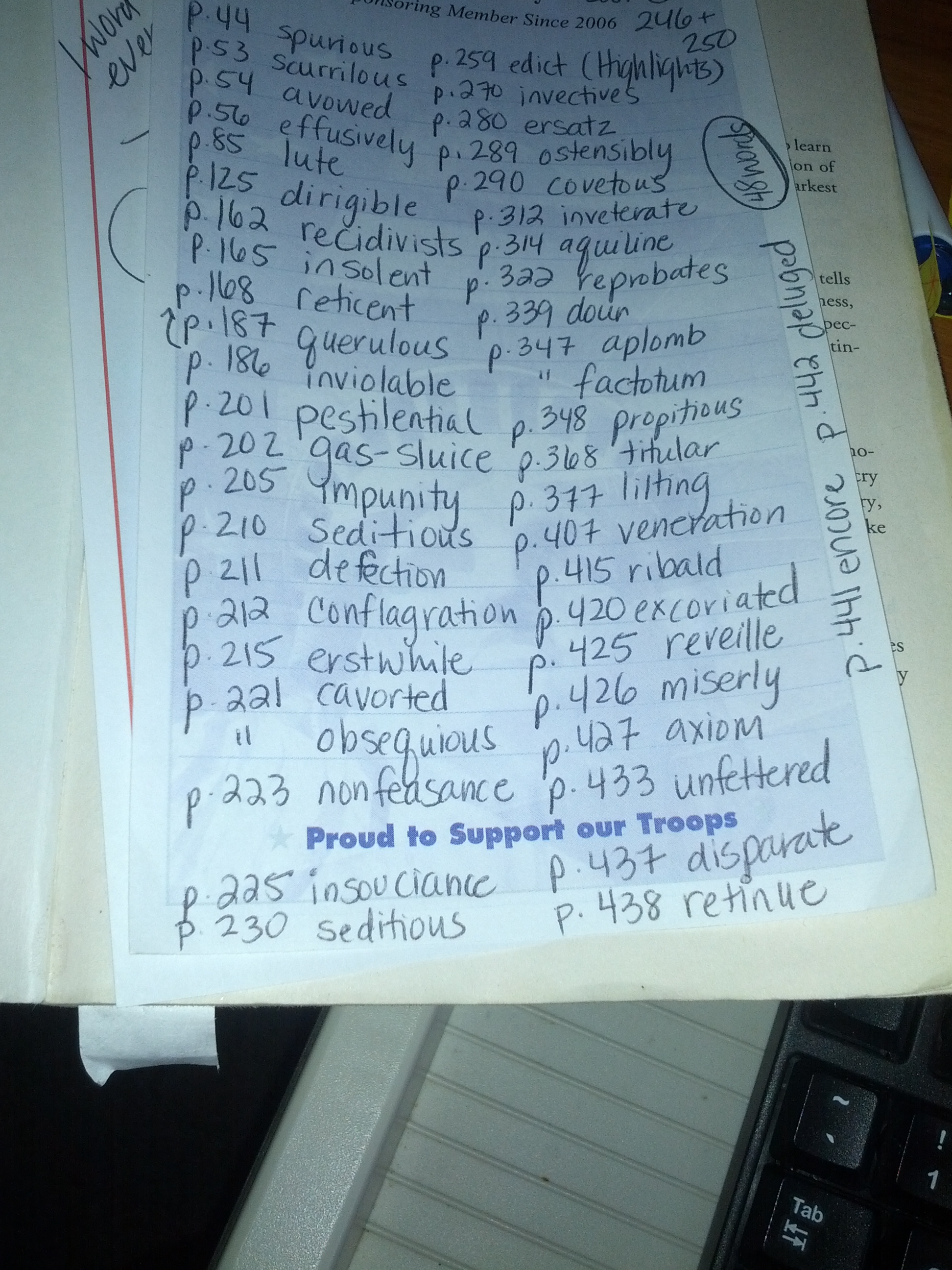
I also want them to catch a glimpse into my journey while reading this piece (note post-its) because I want to share what I found fascinating.  I want to explore some of the word choices (see my unknown word list) IMG_20140812_121513and talk strategy.  I want to use some of these words within my own vernacular and challenge students to do the same.  Most importantly, I want to show them that reading is a process; not one to shy away from.  And yes, sometimes it takes work, but overtime it becomes natural…and wildly fulfilling.

I can’t help but think, above and beyond the work I plan to do with this text, that the historical context won’t propel students in their study of history as well.  World War II and the Holocaust have rarely been depicted from the racial standpoint in which Massaquoi portrays.  This just may be a piece that peaks enough intrigue among students that they too will add it to their Next-To-Read list.  That’s my goal.


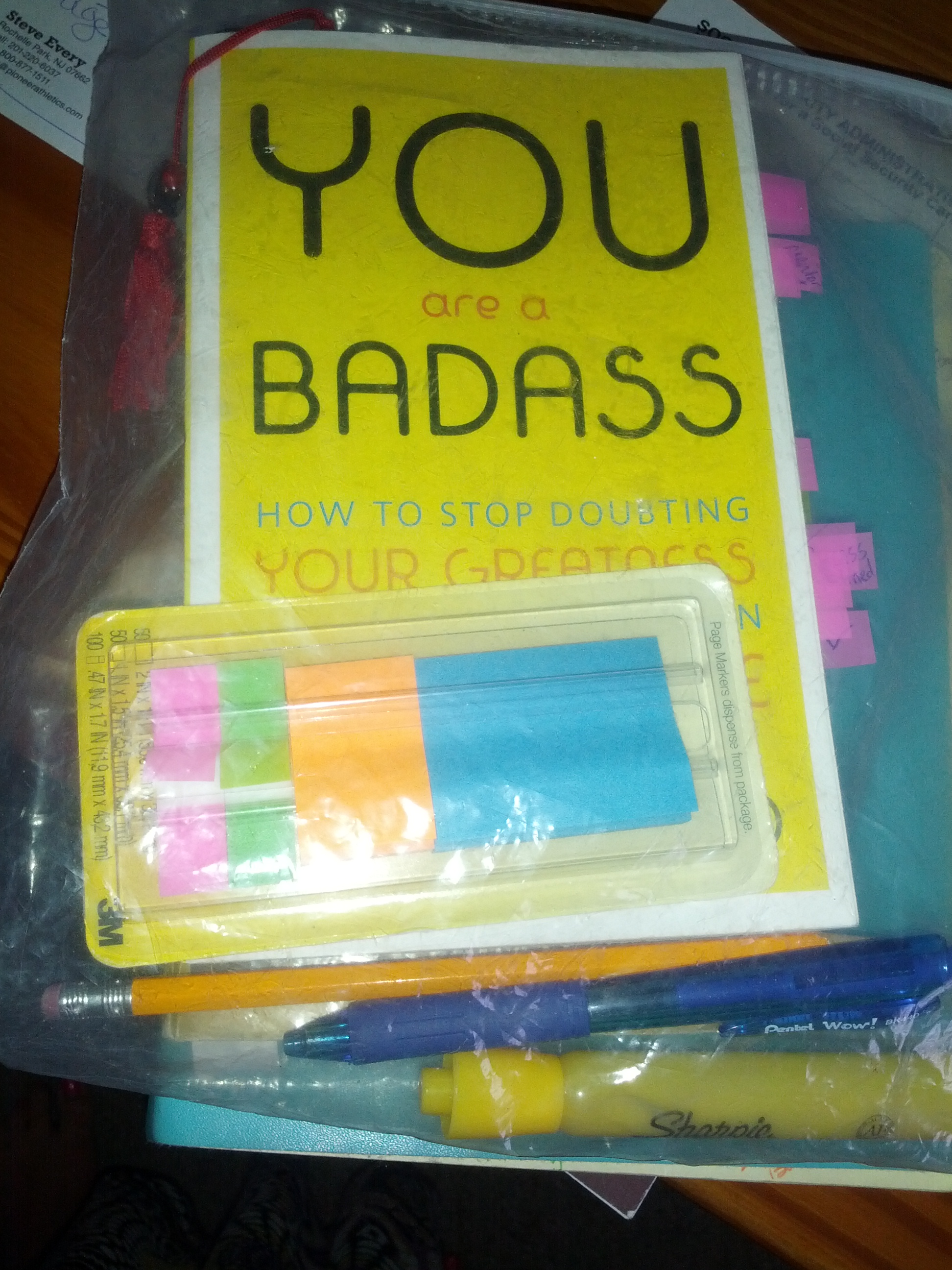
IMG_20140812_124058You are a Baddass: How to Stop Doubting Your Greatness and Start Living an Awesome Life by Jen Sincero has found its way into my Survival Book Kit and I love it!  I’m just past the first thirty pages, yet I have not stopped laughing.  Yes, out loud.

Sincero most definitely has a way with words.  She is edgy and a straight shooter for sure.  Yet, she is able to talk about really serious life-changing ideas in a way that feels ‘light’.  Not your typical self-improvement piece.

I want students to see how infusing humor among the serious can be oh-so-powerful.  Utilizing analogies to talk about the conscious and subconscious mind provides readers visuals…imagery.  A way to process this vitally important information that can shape their lives.  In only the most positive of ways.

I plan to choose the excerpts from this text skillfully.  I want students to have access to the content and the craft…as always.  I do foresee really rich one-on-one reading conferences with those that decide it’s time to make a change in their lives, or at the very least are up for a great laugh, and decide to take this piece on independently.

I hope my four have inspired you.  I really do.  I hope it will do the same for my students.  I encourage you to also share your favorites, here on this site.  As we all gear up for an incredible year to come, and we are swiftly shifting into our ‘going back to school’ mode, this is a wonderful time to start thinking about what we’re reading in a way that lends itself to the idea of being a mentor text.  Articles, books, poetry, graphic novels…all are welcome.