The Power of (very short) Stories

As soon as I created my own very short story, modeled after VISA’s Go World videos, I knew I would have my students create their own.

For our introductions at the Book Love class I attended with Penny Kittle this summer, she had us watch a few of the Go World videos, and then imitate one of the structures. This is harder than it seems.

Here’s a few of the ones I watched and transcribed. They all represent moments that matter in the person’s life, and they are only in 35 to 60 words.

Lopez Lomong started running when he was six. And he didn’t stop for three days and three nights as he escaped life as a child soldier. Twenty years later he was still running; he just had a different thing driving him every step of the way.

Hours before his race in ’88, Dan Jansen’s sister Jane passed away. He’d promised her he’d win gold. He didn’t — until six years later. Then he skated a victory lap with his daughter — Jane.

Derek Redmond didn’t finish in first place in the 1992 400 meter. He didn’t finish in second or third or fourth. He, and his father, finish dead last. But he and his father finished.

People had been leaping over the high jump bar the same way since the sport began until one day when Dick Fosbury came along and moved the whole sport forward by going over the bar backwards.

You should watch a few of you own. Then write down the words and look at the structure of these very short stories. Then, I challenge you to write your own.

Think about your writing process as you write. Revise in your notebook. Pay attention, so you can share your process with your students. I’ve learned that the best thing I can do as a writing teacher is let them see me struggle as I try to make meaning.

I ended up writing four different versions with four different structures before I wrote a version that pleased me.

Here’s mine:

I am introducing this writing activity to students next week. I thought about having them write a full-blown narrative first and then having them cut their stories down to their own Go World stories. That would be an interesting exercise in word choice. I decided instead to have students write and create their own videos first — then we will tackle descriptive writing and work on exploding our very short stories into ones with a little more substance.

I opted for the fast-track to build community.

Story does that, you know.

Any ideas on how you might use this type of mentor text with your students? or any others you’ve had success with?

Beautiful Sentences

Sometimes we just enjoy the beauty of the language. I don’t usually write in my novels, but I did mark “I love this sentence” in the margins when I read this book.

I do not know how many of my students will read this novel, although it is a Pulitzer Prize winner, I am not sure many students will be interested in the musings of a dying Calvinist minister as he writes letters to his young son. They might.

I will show them the lovely language.

Like this sentence on page 71 of Gilead by Marilynne Robinson:

“As you read this, I hope you will understand that when I speak of the long night that preceded these days of my happiness, I do not remember grief and loneliness so much as I do peace and comfort — grief, but never without comfort; loneliness, but never without peace. Almost never.”

Teacher friends, do you have favorite beautiful sentences that you share with students?

Mentor Texts Are Everywhere!

This time last year I was amidst a mad dash – a mad dash in seeking out, organizing, asking about, researching, contemplating, and gathering the ‘best of the best’ of mentor texts.  I had just learned what a mentor text was (text that, well, mentors!) and wanted to make sure I had a plethora to kick off the school year.  And, I did.  I had gathered so many I wasn’t even sure when, and in what context, I would be using them.  But, they were ready and I felt confident that I was too.

This year, it’s a bit of a different story.  After implementing the Reading Writing Workshop model in my urban oasis for the first time this past school year, I realized there is no longer a need to be dashing about.  Mentor texts are everywhere!  Literally.  They are in the morning’s newspaper.  They reside in the autobiographies I always find myself engaging in (and of course, loving).  Articles promulgating the Twitter circuit for the purposes of dissecting content and craft.  Classics, more modern, and everything in between became focal points of inquiry and investigation.  Students’ independent reading books shed light on crafty moves authors strategically choose to utilize.  On occasion, an excerpt from professional development texts deserved a public viewing (sometimes with scrutiny, sometimes not).  Nothing is off limits.

So, it is no wonder that as I have been reading a vast array of literature this summer; I have new mentor texts lined up for this coming school year that I am thrilled to explore with my students.  So, grab your Writer’s Notebook and flip to your Next-To-Read list.   I hope you not only fall in love with these pieces, just as I have, but they inspire you to think about what you’re reading and how you’d like to share them with the brilliant and inquisitive minds occupying your learning community.

Making Meaning with Texts: Selected Essays by Louise Rosenblatt was first introduced to me in this summer’s UNH Literacy Institute via Penny Kittle’s Book Love course.  This piece sent a buzz all throughout the campus as we were asked to read it for homework and come prepared to discuss it the next day.  Before the night was through, classmates were chronicling their amazement and joy with Twitter posts such as:  “Reading Louise Rosenblatt for homework and keep saying “Amen, sistah!” in my head. #unhlit14″.  So, you can only imagine how this Reading Theorist evoked an awakening in us all.

IMG_20140630_221534

It was when I came to this paragraph that I realized I had just stumbled upon an incredible mentor text; not only for myself as an educator, but for students as well.  What better way to expose students to the questioning and thinking behind our reading and writing than by sharing the source with them?  These questions are going to guide us through our reading (and writing) journeys this year.  We are going to study these questions, make sense of them, put them into practice; but, we are also going to really delve into why Rosenblatt has chosen these questions to guide us.  See, that’s where exploring craft and an author’s intention becomes our focal point.


battle 1

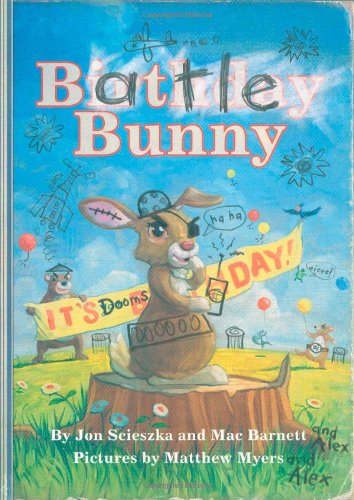
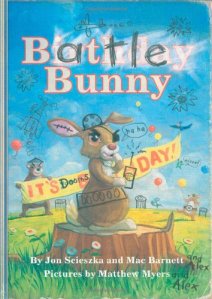
Battle Bunny by Jon Scieszka and Mae Barnett is a clever and witty piece that is sure to get students charged up about editing and revising.  How could it not?  This entire piece chronicles the the narrator’s (yes, the bunny) stylistic and creative writing journey.  The entire story is marked up, crossed out, reworded, and illustrated to show the power of the writing process.  It’s beautiful.

While I educate students ages 16-21, and this piece (I’m sure) was not intended for that audience, I believe this mentor text will be a lighthearted way to quell some of the fears that override their writers’ anxiety.  We know, many students are uncomfortable and afraid to revise, rework, or allow their time-intensive writing pieces to become ‘messy’.  Yet, that’s what produces the most profound writing.

battleI know this may be a risky move in my classroom.  Yet, I’m going to take a chance.  I anticipate shared laughter as we navigate this piece together.  I also plan to explore the bunny’s intentions and make it relevant for our work as writers:  Why did he feel the need to rewrite the story?  Do the illustrations add to the message he is portraying?  Do any of his original thoughts (verse his revisions) feel more powerful to you?  What intentional moves did he make in re-creating this story?  And on and on.

IMG_20140812_121342

Destined to Witness: Growing up Black in Nazi Germany by Hans J. Massaquoi is a piece I have not been without this entire summer.  And, although I’m finished reading it, I find myself flipping through the pictures over and over; it’s that profound. Massaquoi is a mentor of life, overcoming adversity, obtaining the (perceived) impossible, and what it truly means to be human.

Journalist by trade, Massaquoi takes such grace in his every word, sentence, and strategic ‘move’ that’s crafted.  This book encapsulates 443 pages of sheer brilliance and I want students to be exposed to this kind of writing because they too, have the ability to craft such beauty.

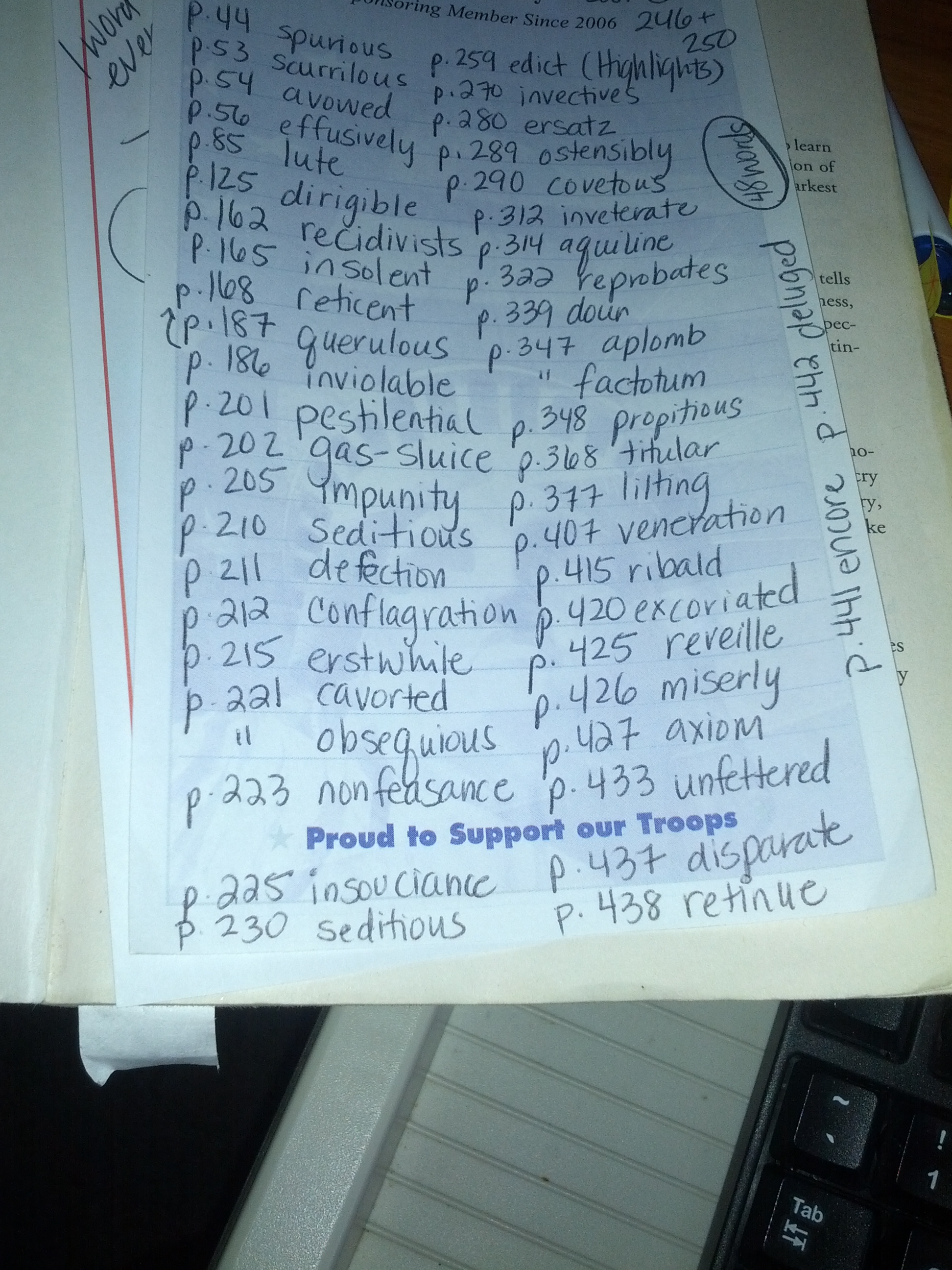
I also want them to catch a glimpse into my journey while reading this piece (note post-its) because I want to share what I found fascinating.  I want to explore some of the word choices (see my unknown word list) IMG_20140812_121513and talk strategy.  I want to use some of these words within my own vernacular and challenge students to do the same.  Most importantly, I want to show them that reading is a process; not one to shy away from.  And yes, sometimes it takes work, but overtime it becomes natural…and wildly fulfilling.
I can’t help but think, above and beyond the work I plan to do with this text, that the historical context won’t propel students in their study of history as well.  World War II and the Holocaust have rarely been depicted from the racial standpoint in which Massaquoi portrays.  This just may be a piece that peaks enough intrigue among students that they too will add it to their Next-To-Read list.  That’s my goal.
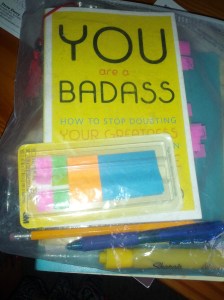


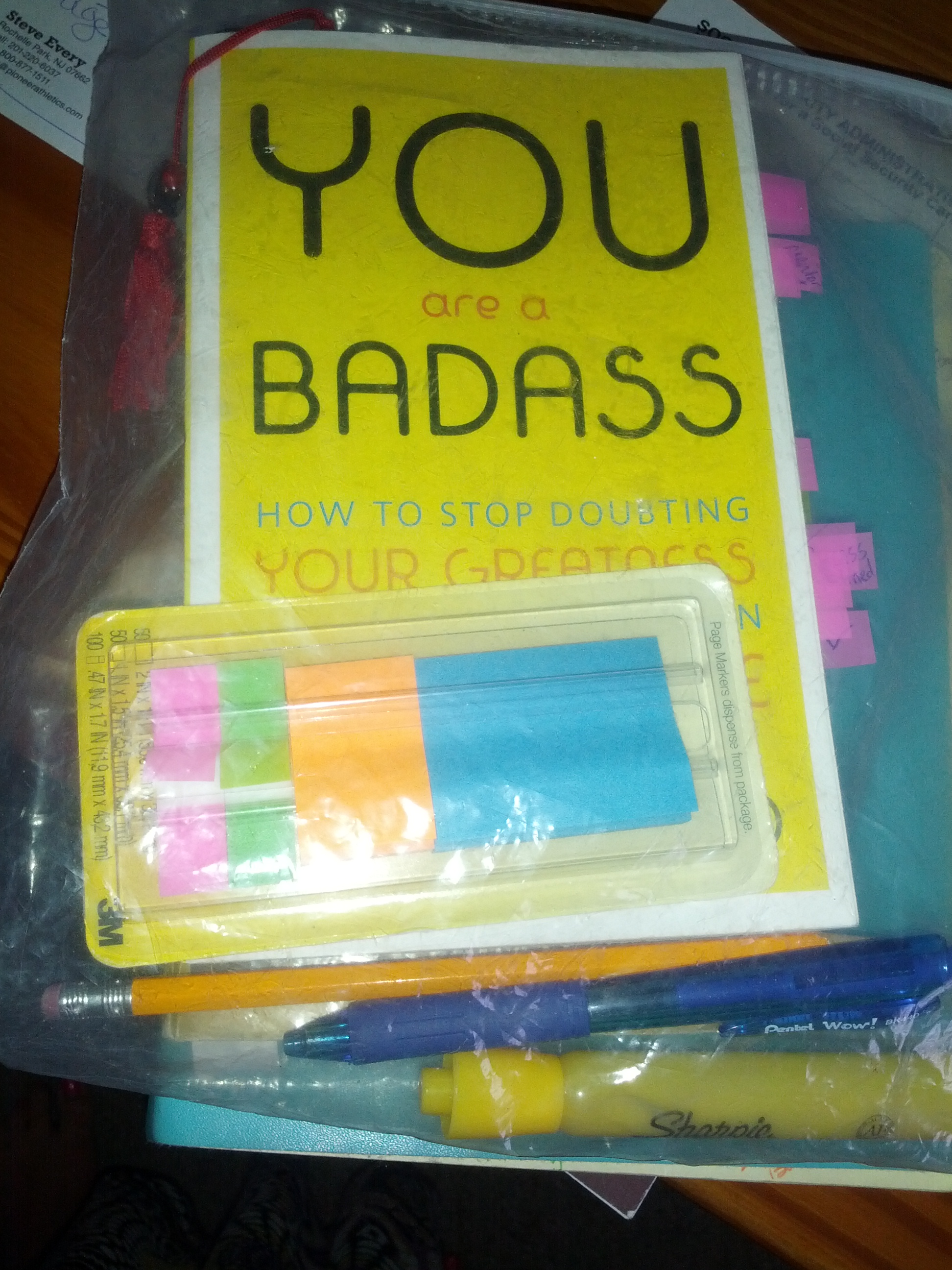
IMG_20140812_124058You are a Baddass: How to Stop Doubting Your Greatness and Start Living an Awesome Life by Jen Sincero has found its way into my Survival Book Kit and I love it!  I’m just past the first thirty pages, yet I have not stopped laughing.  Yes, out loud.

Sincero most definitely has a way with words.  She is edgy and a straight shooter for sure.  Yet, she is able to talk about really serious life-changing ideas in a way that feels ‘light’.  Not your typical self-improvement piece.

I want students to see how infusing humor among the serious can be oh-so-powerful.  Utilizing analogies to talk about the conscious and subconscious mind provides readers visuals…imagery.  A way to process this vitally important information that can shape their lives.  In only the most positive of ways.

I plan to choose the excerpts from this text skillfully.  I want students to have access to the content and the craft…as always.  I do foresee really rich one-on-one reading conferences with those that decide it’s time to make a change in their lives, or at the very least are up for a great laugh, and decide to take this piece on independently.

I hope my four have inspired you.  I really do.  I hope it will do the same for my students.  I encourage you to also share your favorites, here on this site.  As we all gear up for an incredible year to come, and we are swiftly shifting into our ‘going back to school’ mode, this is a wonderful time to start thinking about what we’re reading in a way that lends itself to the idea of being a mentor text.  Articles, books, poetry, graphic novels…all are welcome.


Confession: I’m dating a “non-reader”

“I don’t like to read.”

These words slipped off the tongue of my date as he sat across from me digging into a burger. I could’ve excused myself to the bathroom then slipped out the restaurant’s back door. Instead, I sat, paralyzed by his open admission.

Does he not realize I teach English? My quaint dreams of cozy dates at used book shops and Sunday mornings curled around novels dissipated. I couldn’t possibly share my life with a non-reader. I spent months fostering a love for literature in my students. I handpicked books for my teens, stocked my shelves with the latest releases, and inhaled literature in my free time. Dating a non-reader was like sleeping with the enemy.

The date was dead.

Or so I thought.

Two years later, we are still together, and Eric has proven to be one of my most valuable assets in understanding self-identified non-readers. Just as I had pigeon-holed Eric into an archetype of resistant male readers, he had categorized me into the antiquated outline of his high school English teachers—the ones who made him hate reading in the first place.

Eric’s teachers were staunch traditionalists. They assigned classics then tested, quizzed, and sucked any joy or personal exploration out of the books, leaving a pulpy mess of literary repulsion. Eric didn’t identify as a reader because his teachers had given him every reason to not identify as one: he struggled with literary analysis and didn’t enjoy fiction. Like many of my students, he skated through English relying on online cheat sheets to get around reading the required books.

This same resistance to identify as a reader plagues many students who step into my classroom. They have fixed perceptions of what a reader is or should be— a person who reads fast, favors classics and fiction, and enjoys literary analysis. Self-identified non-readers see no room in reading for personal growth, gratification, interest, exploration, and pleasure. Ultimately, they see no room for who they are as a person when they recognize that the only celebrated books within English classrooms are those that fit a set standard of literary merit.

Eric's "to read" shelf

Eric is drawn to informational books. Here are some of the books on his “to read” shelf.

Eric was a self-identified non-reader simply because he did not favor traditional literary classics that his teachers drilled in high school. Yet when I first met him, he voraciously read online articles. Gradually he found his niche in books that dealt with scientific theories and particle physics. Recently, Eric completed The Quantum Story: A History in 40 Moments by Jim Baggott, a 410 page book, and he is halfway through A Short History of Nearly Everything by Bill Bryson, which is 478 pages. Furthermore, he listens to audiobooks on his commute to and from work and our bookshelves are packed with volumes on his to-read list, including On the Origin of Species by Charles Darwin and Discoveries and Opinions of Galileo.

If Eric is a “non-reader,” he is exactly the type of student I want in my classroom—the type who has a personal, vested interest in his or her reading and seeks to learn from the material. Gradually, I

Trevor's Reading

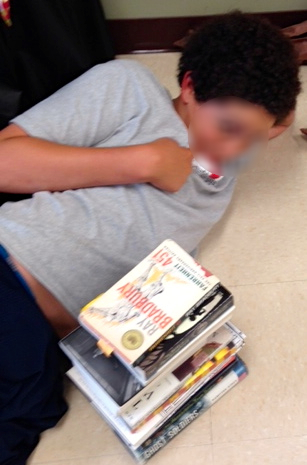
Trevor poses with his stack of books read throughout the year.

have come to find Eric’s reading patterns in my own students. Trevor who hated reading found his niche amongst non-fiction books like Ghost Soldiers by Hampton Sides and Into the Wild by Jon Krakauer while Ben, who was rarely interested in whole class reads, challenged himself with diverse genres ranging from science (Stiff by Mary Roach and The Double Helix by James D. Watson) to historical fiction (The Book Thief by Markus Zusak). These students need the time and space to not only figure out how to define themselves as readers but to also establish a sustainable reading pattern.

By definition, readers are individuals who “look at and understand the meaning of letters, words, symbols, etc.” (Merriam-Webster Dictionary). Thus, as long as a student can read, they are readers—classics, fiction, and stereotypes aside. But as English teachers, we must not only show them that this is the case, but also we must help them to foster reading lives that reach beyond the classroom. A generation

of apathetic teen readers doesn’t have to lead to a generation of

Ben's reading

Ben with this stack of twelve books.

apathetic adult readers.

This past weekend while winding the back roads of a coastal Maine town, Eric and I spotted a library book sale. I would usually be the one to erratically swerve to the side of the road and park on a sidewalk if it meant gathering additional books for my classroom library, but this time, it was Eric. As I sorted through the stacks of books, I looked up to find Eric with a stack equal to my own. This was exactly the type of person I could spend my life with.

Read Like a Writer

Katie Wood Ray quoteI didn’t know what it meant to read like a writer until I stumbled upon Teaching That Makes Sense. I love that site, and I printed out every pdf doc available, reading everything as I punched three holes and secured them in a big fat binder. Honestly, I do not remember half of all those helpful things, but I am grateful that the light finally dawned, and I realized that reading like a reader and reader, and reading like a writer, are not the same.

How did I make it through my higher education and not know that? OR maybe I did, and I just didn’t flip the switch that made me realize the need to ‘pay attention’ and explicitly teach it to my students.

I am sure the simplicity of TTMS helped. I thank Steve Peha for that.

Reading like writers is the basis for analysis. I’d learned the importance of teaching students to analyze at the numerous Pre-AP workshops and AP Summer Institutes I’d attended. I’d never learned about how to teach students how to teach themselves how to analyze — quite simply by paying attention to how the author constructs meaning.

I’d been pulling passages from the classic texts we were (not) reading. I’d given released prompts and

asked students to complete timed writings. I’d done all kinds of cruel and unusual assignments because I didn’t get that to read like a writer is the crux of good writing instruction. (It’s also the crux of good reading instruction.)

Now, I teach my students to pay attention. As we read our self-selected books, we watch for the ways the author crafts meaning. We notice imagery and what it does for the author’s message. We notice figurative language that helps create this imagery. We might underline sentences that speak to us boldly or whisper to our souls. And we talk about how these elements create tone and theme. But more importantly, we talk about why these sentences speak to us as people.

In my class at UNH this summer, a classmate asked Penny Kittle if there was a list of examples from books to use for this study that Penny calls “play.” Penny shook her head and said:

“No list of books will ever teach this for you. You must change the way you read.”

I agree. Now, when I read, I look for gold. I read because I love the story, but I also read to find beautiful language that I can share with my students. I project passages on the board that we read together. Sometimes we just read and enjoy the language. Sometimes we write a response to the meaning of the text. Sometimes we analyze the elements, talking about why the author used the device and how that device affects the meaning.

Sometimes students model this language in their own writing. Most learn to pay attention as they read. Because once they get it, they are the ones projecting the passages they find, and sharing their own golden language.

Every other Monday on this blog I will post examples of the types of texts I use in my class for craft studies. If you have your own favorite passages, some kind of gold you’ve found in your reading, please share in the comments.

Making the Most of Summer

If you’re anything like me, based on the fact that August is just around the corner, your computer screen probably looks something like this:

Screen shot 2014-07-30 at 6.38.24 AM

Those 10 or so tabs contain articles, blogs, book recommendations, and more for me to mine for ideas.  Once I’m done perusing those, I’ll return to my very full writer’s notebook to sift through the myriad of quotes, lessons, and resources I’ve jotted down while attending various classes this summer.  After that, it all comes down to remembering what I learned and actually applying it in my freshly-waxed classroom.

Honestly, that’s always been somewhat of a struggle for me–managing to sift through those summer lessons and remember all of them well enough to apply them.  So, in order to make the most of this summer, I’ve decided to boil down the biggest takeaways of my three workshops here.

Takeaway from UNH Literacy Institute – “I am the sum of my mentors.”

For two years now, I’ve learned most of my daily classroom practices from Penny Kittle.  However, what I’ve really begun to pay attention to is that by reading Penny’s writings and taking her classes, I’m not just learning from her.  I’m learning from Don Murray, Don Graves, Kelly Gallagher, Louise Rosenblatt, Katie Wood Ray, Tom Romano, Teri Lesesne, Donalyn Miller, Alfie Kohn, Nancie Atwell, and many more.  Penny has expertly absorbed the ideas of all of those other teacher-writers, and seamlessly integrated them into her own philosophy and craft.  That is my goal–not to mimic Penny or any of those other teaching geniuses, but to meld all of their research findings into my own practice; to become the sum of my mentors, as Meenoo Rami says.  Of course, that’s easier said than done, but definitely worth the attempt–and the hefty credit card bill that comes after a Heinemann ordering spree.

IMG_3657

With that being said, there is one idea of Penny’s I’d really like to integrate into my classes this year–storyboarding.  This visual way to process a story’s plot is a gateway into analysis and evaluation.  If talk is rehearsal for writing, then to Penny, so is storyboarding–sketching out little comic-strip squares of events.  This was something that I couldn’t really wrap my mind around how to execute after just reading Book Love, but now that I’ve seen Penny do it, it makes perfect sense, and I can’t wait to try it out.

Another lesson for me came from the fact that I couldn’t grasp the concept of storyboarding without seeing it modeled.  That was another weighty reminder of the importance of my serving as a writing mentor, modeling process for my students.  If I am the sum of my mentors, so are my students–and I am perhaps their only mentor when it comes to being a good reader and writer.  This big responsibility reinforces the importance of staying informed on current research–without great mentors, I can never be a great teacher.  I need those teacher-writers to help me help my students.

Takeaway from Balfour Yearbook Advisers Workshop – “There are two kinds of writers–good writers and quitters.”

In addition to teaching English, I also teach Journalism and Yearbook.  I traveled to Dallas this summer for what I thought would be a boring jaunt through yearbook software and technology, but I was pleasantly surprised by being surrounded by amazing teacher mentors to learn from.  Lori Oglesbee, a Texas teacher and our keynote speaker, spoke about the fact that great journalism comes from strong writing.  She preached that all students, no matter what, can be great writers if we lead them to it.  Lori then proceeded to show us many examples of award-winning yearbook writing, and I grinned–here were mentor texts again!  I really saw the relevance of mentor texts across all disciplines.

Takeaway from ASNE-Reynolds Journalism Institute – “Good writing comes by studying good writing–period.”

IMG_3997

This lesson came in the form of an irreverent lecture by the delightful journalist and author of Radical WriteBobby Hawthorne.  An advocate of “writing for the reader, not the rubric,” Bobby spoke to us about the general lack of quality in student journalism writing.  School newspapers across the land are plagued with crappy writing, he preached!  (I learned that journalism, until very recently, was still laboring under pre-Graves and pre-Murray delusions about writing–no I, no emotion, no personality, no rule-breaking.)  Bobby advocated for throwing out all of our old notions about how to teach journalistic writing and just getting our students to find a story hidden in an event and tell it.  He felt strongly about the power of the narrative form, reminding me of more of Penny’s ideas from Write Beside Them.  And in fact, she agreed with him:

Screen shot 2014-07-30 at 7.52.11 AM

Bobby wasn’t the only speaker at the two-week Institute to urge we teachers of journalism to simply teach our students to find and tell stories.  I heard that message over and over again, from photographers to journalists to writers to teachers.  The power is in the story, they urged.  Find it, and good writing will come naturally.

So, I’ll approach this year with those takeaways in mind.  I’m excited to try the workshop model out on my journalism students, who will be starting a newspaper this year.  I’m curious about how my teaching of the reading and writing workshop will change in its second year.  And, I’m optimistic about having so many new mentors to act as the sum of my teaching.  I hope I’ll make the most of my summer and transform my teaching, as I do every year, by putting my writing and reflecting to work.

Cultural Literacy on the Front Porch

Screen Shot 2014-07-29 at 12.12.57 PM

So this weekend we hosted a block party on our street. While it was great fun, I’d be remiss if I didn’t take the event and apply it in some way to education. 😉

Here we are sitting in front of my house chowing down hotdogs, wishing away the summer heat when I thought to myself, “Well, this certainly doesn’t compare to one of Gatsby’s parties, but we sure are having a nice time!” WAIT – no I actually thought, “If Bradbury could just see us now! All these people hanging out together and not one of them mindlessly on a technological device! We sure are showing him!” WAIT – no, as I looked upon the diverse ethnicities of those represented in my yard I thought, “Man tolerance like this certainly didn’t exist for Atticus and even Scout growing up. What a shame.” And what is more embarrassing is that I know that had I verbalized my thoughts not one of my party goers would have known what I was talking about. – Such a shame!

GET REAL!

Not one of those things even remotely crossed my mind for a second! And even if they had would it seriously have mattered if no one knew what I was talking about because they themselves hadn’t read The Great Gatsby?

For over the last year much of my time has been spent in conversation around trying to get a real handle on cultural literacy. One sticking point teacher proponents of teaching the classics keep coming back to is that they want to equip their learners with key literary references so that as adults, they can be “in the know” when such references organically come up in social situations.

Let me just say, for over three hours we laughed, talked, told stories at the party and not once was a book quoted or referenced – directly or indirectly. In this case, not one hour that I had spent reading all those books of Cliffs Notes  about the classics in high school paid off.

But now, let me tell you what would have come in handy:

1. More geographic, economic, and cultural awareness of other countries. 

One lady and her husband had recently moved from the Dominican Republic. I hardly known where that is much less anything worthy to contribute to the conversation. I wish I had more context about her culture in order to find out from her what it was like growing up there.

2. The current state of American currency. 

One gentleman is a passionate coin collector and the only thing I could think to contribute to the conversation was some shallow joke about collecting the 50 stated quarters when I was a kid.

3. Anything about cats. 

I can’t say that I like cats, but learned that one of my neighbors is the crazy cat lady on the block. She has 10 cats! And while she wanted to talk to me about the importance of getting your animals spaded and neutered, I honestly had nothing of substance to contribute. The only thing I could think about was no wonder there are so many cats loitering around my house!

In all of these situations I was the one that felt uncultured and uneducated and I just couldn’t help but think that there is so much more to life than a classic piece of literature. Don’t get me wrong, there is a lot to learn from a classic text or any text for that matter, but if your only real reason for picking a classic text to teach is so that your students will have that experience in their back pocket for a “just in case opportunity,” you might want to have them read something else.

Sharing What We Know and Do

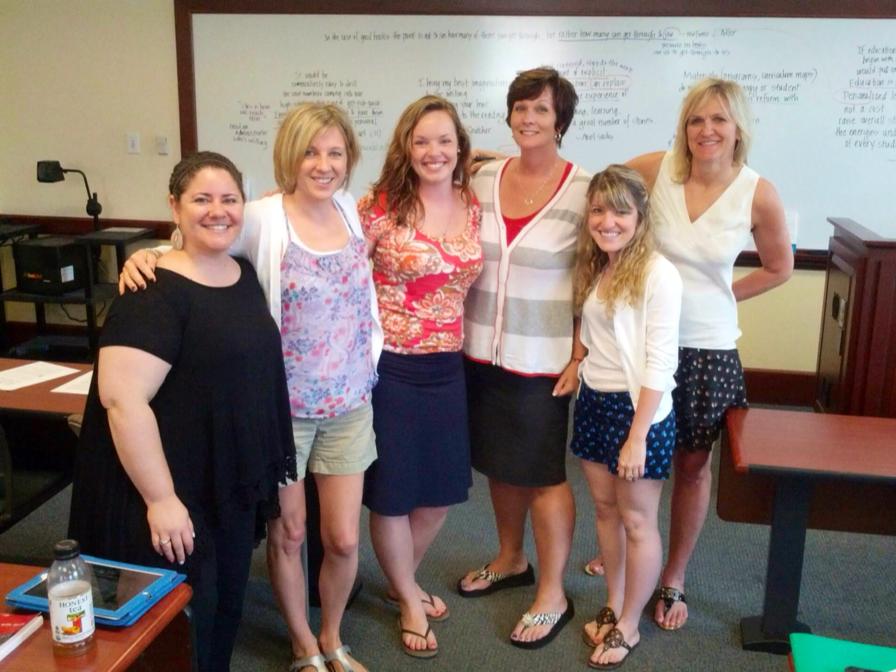
I’d like to introduce you to my friends who have validated my thinking and taught me how to think more clearly. They are my zen when I need support or encouragement or recommendations for books. They are classmates from the past two courses I’ve taken from Penny Kittle at the University of New Hampshire Literacy Institute. We bonded again this year over Book Love.

How often do we feel like we are an island? Not just on an island but the island itself? We understand what it means to be a workshop teacher, to allow and encourage students to choose what they read and what they write about, to build classroom libraries that rival the ones down the hall, to spent our own money on books because “It might be the right one for (boy/girl name) this time.”

Often we are alone. Alone on our campus, in our grade-level teams, during our planning time. Alone because while we admire many of our colleagues, they just don’t get it.

#UNHLIT14 Book Love

Erika, Samantha, Shana, Amy, Jackie, Penny

Shana Karnes, Erika Bogdany, and Jackie Catcher get it, and Heather and I invite them to be regular contributors to our blog. They each have unique stories of how they run their workshop classrooms and how this pedagogy works with their students. While Shana and Erika contributed last year, like me, they know that the learning to ‘get it right’ never ends.

Workshop takes practice, and it take patience. Having friends to share with, and blogging about what we learn, is a way we’ve found to be the reflective, thoughtful, writers we hope to inspire our students to be. (See the About page for more on our bios.)

Thanks for reading.

Oh, and if you’ve been following along for a while and would like to be a guest blogger, send me a message. We’d like to read about how workshop works for you and your students.

Writing as Imitation

Before you go judging me for referencing Weird Al in a sophisticated professional blog, please stick with me till the end – then you can judge me.

So, I’m sure most of you have seen the latest parody of Robin Thicke’s Blurred Lines by Weird Al. If not here it is for your viewing pleasure.

WORD CRIMES


Clearly, it is nerdy English teacher humor (as my husband would call it). And although it was funny, what actually intrigued me was a video of Weird Al that I stumbled upon after viewing his latest parody. The video was an interview that centered around his motivation as an artist and how he goes about composing his work. As I watched the video there was a brief part that struck me. See if you hear the same thing I noticed. (hint fast forward to 53 seconds into the clip)


See if you heard the same things I heard:

  • “It is sort of an exercise”
  • “I pretend like I’m them (the musicians) and I study their body of work.”
  • I pick it (the music) a part musically and figure out what are the little idiosyncrasies that make them tick stylistically.”

I know for many students the fear of the blank page is paralyzing. Just a thought, but what if we had learners imitate the writing of other great writers – even just as, “sort of an exercise.” I know I sure would be elated if I had learners carefully picking a part piece of writing in order to study stylistic elements and then turn around and try to use those same elements in their own writing. There is no question that Weird Al had to put a lot of work and thought into making the lyrics of his song parody work together just like the actual song and I’m confident that we would be pretty impressed with what our learners came up with if given the opportunity.

Not sure where to start? Don Killgallon has a great resource for any grade level that just might be what you need to try it out!


Sentence Composing for Elementary School

Sentence Composing for Middle School

Sentence Composing for High School


Why Workshop? It’s All Very Simple

Attending the University of New Hampshire Literacy Institute for the past two summers has been one of the best blessings in my teaching career. I’ve remembered what it means to be a student, replete with pages and pages of reading assignments, almost nightly research papers, and the expectation that I will participate in class.

Sure, I earned graduate credit, but more importantly, I sat as a student. I remembered what it feels like to have a teacher present a task, encourage a discussion, require I read something. I remembered what it means to be the pupil. And I wanted to learn.

I think all students want to learn. I also think that many of them do not know how.

Last week I met with my new friend Holly. We shared ideas about our plans for August and how we will more fully implement readers/writers workshop in our classrooms. We discussed what it means to struggle as a student in an English class where English is not our first language, and reading books is a new idea, and the lack of food in our home is just one component of the lack of security we feel every single day. We talked about what it must feel like to these children to fail state tests year after year. Because they do. Holly will be teaching 10th grade for the first time, and her ESL background will benefit her students immensely. I will be teaching AP English Language, and all my students will be in the AVID program. I am convinced the AVID philosophy is one every teacher should embrace:

Hold students accountable to the highest standards,
    provide academic and social support,
 and they will rise to the challenge.

It’s a philosophy every good teacher I know applies in his classroom. It’s also why so many of us choose the pedagogy of Readers and Writers Workshop. Our high standards might be the same for all students, but the support we must give them to help them rise to the various challenges with reading and writing must be individualized. Their needs are different; therefore, we must differentiate. One-on-one reading and writing conferences become daily events. We encourage, and nudge, and teach the skills that a student needs at that moment, during that task. This is authentic instruction. And it invites authentic learning.

As I think about this new school year on a new campus in a new district with new colleagues, new administrators, and new schedules (block days versus the traditional eight period days), I want to remember what it feels like from the student perspective.

“I need you to notice me, support me, show me how to learn.”

I had a colleague ask me recently, “Which is harder to plan:  teaching the traditional way with teachers making choices, or your way with students making the choices?” I should have said, “Is that really the right question?” which would have been a better response than the one I gave him.

It is hard work being a teacher in a workshop classroom. I have to know my students. I have to talk with them and know what they do with their time outside of school, who their friends are, what their dreams are for after high school. I have to be a reader, and I often have to read books I’d never read except to try to match the right book with a student who hates reading. I have to allow choice in topics, and get used to feeling uncomfortable. I have to give up control, and let teens be real in an environment that invites their opinions, and sometimes their scorn. I have to write in front of them and show my vulnerability. They have to see me struggle because all writers do. I have to love moving students as readers and writers because ultimately, if I am their English teacher, and I am not moving readers and writers, I am not doing my job.

Is it hard? Absolutely.

But here’s the thing: It’s really not a have to as much as it’s a get to.

“Simple can be harder than complex: You have to work hard to get your thinking clean to make it simple. But it’s worth it in the end because once you get there, you can move mountains.”  ~Steve Jobs

“It’s all very simple. But maybe because it’s so simple, it’s also hard.” ~Natuski Takay