Category Archives: Shana Karnes

6 Ways to Spend Your Snow Day

snow-day2So it’s your fifth snow day this winter…or your fifteenth.  Either way, you’ve done all of your spring cleaning, you can’t grade or lesson plan because you haven’t seen students for a week, and you’ve completely emptied your queues on Netflix and Hulu.  What’s a teacher to do?

1. Read a good book.  If you’re anything like the hundreds of English teachers I know, you love reading.  Use the time you’ve been cooped up to read something you’ve been wanting to but just haven’t had the time to start.  I haven’t stopped hearing about Jennifer Niven’s All the Bright Places, Atul Gawande’s Being Mortal, and Anthony Doerr’s All the Light We Cannot SeeI’ll think I’ll try to tackle the last two this week.

2. Write around a poem.  Penny Kittle shared once that she likes to tape poems into her notebook and write around them–it’s one way to move toward doing your own beautiful writing, she advised.  So, I signed up to receive the Poetry Foundation‘s daily poem via email, and when I read one I love, I print it and tape it into my writer’s notebook.  I’m amazed at the nuggets of written wisdom I arrive at after responding freely to a poem in writing.

3. Read a teaching book.  I’ve been wanting to finish Tom Romano’s Zigzag and Donalyn Miller’s Reading in the Wild for quite some time now, but with the day-to-day craze of the school year, it seems like the only time I find to read teaching books is over the summer.  This is the time of year, though, that I often need a little lift in my teaching spirit, so it’s always rewarding to explore some new thoughts from some of my old favorites.  Since I’m in the middle of a nonfiction book club and writing unit right now, I think I’ll settle down today with Georgia Heard’s Finding the Heart of Nonfiction.

4. Check out that dreaded State Test.  Dana Murphy at Two Writing Teachers reminded me that when our students are accustomed to writing in a choice-based, unit-driven workshop, they are not accustomed to writing to a prompt, and that while standardized tests do leave a bitter taste in our mouths, they are a reality our students must face.  If we want them to feel confident as writers in all environments, we must prepare them for all writing situations–especially the two or three standardized writing tests they may face each year.  Here in West Virginia, we’ve elected to go with SmarterBalanced as our Common Core-aligned assessment.  Today I’d like to spend some time looking at the writing portion of that test and brainstorming some lessons to help my students feel confident writing to those prompts.

5. Catch up with your tweeps. Twitter is a bottomless pit (seriously; you can get lost in it) of resources, ideas, and inspiration for teachers.  I could spend hours perusing the archives of #engchat, #titletalk, and #litlead, just to name a few.  I’d also love to look at the archives of some chats I missed recently–#mindsmadeforstories, for one.

6. Read incredible teacher blogs. I could browse the virtual thoughts of my colleagues forever!  We have so many brilliant and inspirational people in our profession, from the genius team at Nerdy Book Club to the marvelous ladies at Moving Writers; the steady wisdom of What’s Not Wrong to the joyful inspiration of the dirigible plum.  I’ve also been loving the thoughts of Hunting EnglishThe Reading Zone, and countless more…really.  I could never list all the great teacher blogs I’ve stumbled upon.  I feel so grateful to the many, many teacher-writers who have helped me fill my writer’s notebook with thoughts and ideas on dreary snow days like these.

What are your favorite ways to relieve the restlessness of several snow days?  Share in the comments!

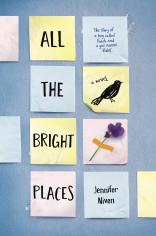
All the Bright Places by Jennifer Niven

All-the-Bright-Places-jkt“The thing great thing about this life of ours is that you can be somebody different to everybody.”

All the Bright Places has been all over my GoodReads feed, and once I finished it (in a day), I knew why.  This book has all the hallmarks of great YA fiction–quirky characters,  teenage struggles, forays into love–all while taking on tough issues like suicide, domestic violence, mental illness, sudden death, and bullying.

“Sometimes there’s beauty in the tough words–it’s all in how you read them.”

What I loved best about this book was the way it surprised me.  While many YA books conclude happily, Jennifer Niven didn’t shy away from the brutal truth that is reality.  Her writing sang with beautiful prose, while her characters were well developed and the plot remained suspenseful yet layered.  I knew as soon as I finished reading that this would become a student favorite immediately, and sure enough, four kids have read it this week.

“The thing I realize is, it’s not what you take, it’s what you give.”

There is much to learn from All the Bright Places, about empathy and understanding and especially the reality of mental illness, depression, and suicide in this country.  In addition to its plot, the writing acts as its own teacher of craft.  Add this book to your to-read shelf, your classroom library’s shelves, and your to-booktalk list, and get ready to weep.

Teach Readers, Not Books: A Case for Choice Reading in ALL Classes

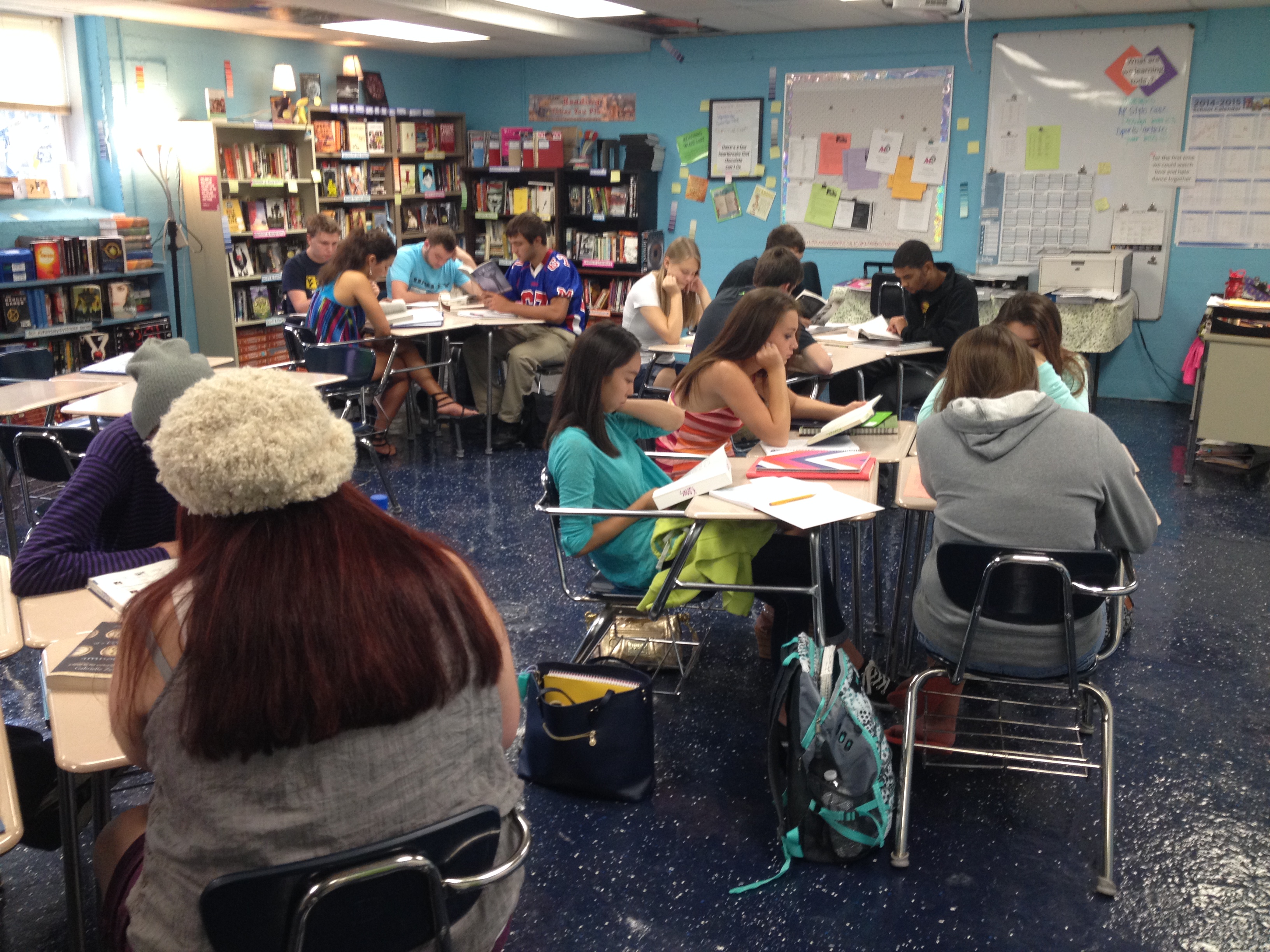
Recently, in a pretty typical high school hallway, I overheard two very different conversations about books.

Conversation One:
“Hey, did you finish that book?”
“Oh my gosh, yes, I did, and I couldn’t believe the ending!!”
“I know! I cried so hard! I got makeup all over the pages!”
“Me too! But it was such a good ending, right?”
“Yeah. It had to end that way.”

Conversation Two:
“Hey, did you finish that book?”
“Yeah, I did.”
“What happened? I think we have a quiz today.”
“Well, the main character ended up…”

The first conversation was one between real readers. The second was a conversation between students just trying to pass their English class. It’s obvious that the kids who are already readers are the kids in the first conversation, while the kids who are being besieged by negative reading experiences are the kids in the second.

The day I heard those conversations, someone tweeted Natasha Vargas-Cooper’s “Why We Should Stop Teaching Novels to High School Students.”  She writes powerfully about how some story mediums gave her “large and instant rewards for spending time with them,” but that reading novels and completing “deadening take-home reading comprehension questions” assigned to her did not.  I recognized myself in this post, as I had much the same experience.  It wasn’t until much later in my life that I began to read the classics, which I’d merely SparkNoted in high school.  This is me we’re talking about, who snatched the Twitter handle @litreader in 2008.  I, the kid who decided in 6th grade to read the entire public library, starting with author A and ending at Z, didn’t read what was assigned to me…simply because it had been assigned.

And then came Amy’s courageous and oh-so-right post yesterday about choice in AP and Honors level English classes.  I wish she’d written that post 12 years ago, when I was being beaten over the head with The Scarlet Letter.  Or 7 years ago, when I somehow, despite my own negative experiences, first began teaching and jumped into whole-class novels with gusto.  Thankfully, I met Amy a few years after I’d realized that that wasn’t the best way to get kids to love reading, and she’s helped me strengthen my teaching exponentially since then.  I’ve realized that it’s not the books that make kids love reading…it’s the experiences kids have with books, and it’s up to us to create conditions that foster the most positive of reading experiences.

When we value choice and focus our curriculum on authenticity and our students’ voices, we cultivate practices of lifelong reading. When we assign whole-class novels and base most of our coursework around them, we show students that we value books, not the act of reading itself.  Further, this practice values the teacher way too much–while in Penny Kittle’s words the teacher should be the best reader in the room, the teacher certainly shouldn’t be the only reader in the room.  Our students have excellent minds capable of making choices that will challenge their reading and thinking abilities.  We shouldn’t make all of those choices for them.

While you may believe that it is important for every student to be able to recognize a quote by Shakespeare at a cocktail party, you also hopefully believe in the value and power of reading. The only way to get our students to read for the rest of their lives–and become informed citizens and thinkers as a result–is to look into our classrooms and see our students as readers hungry for knowledge and wisdom, and not students who just need to know about certain books. The second doesn’t matter, at all. It’s not why we got into this profession, I hope–or at least it’s not why I got into this profession. If we want to create readers who will think and hope and dream and change the world, we have to teach those readers, not books.

A student-centered classroom that places choice and authenticity at its center is the answer.  The reading-writing workshop is a really effective format for that kind of classroom, and having it in place these last three or four years has made a world of difference in how my students and I view our time together.  Teaching has become much less a job for me, and much more a pleasurable way to pass my time.  I love talking to students about books, using my own expertise to help scaffold them up a reading ladder of text complexity.  I love reading their amazingly diverse writing and getting wonderful, authentic ideas for activities from them in writing conferences.  I love the sense of pride a kid shines with at the end of the year when he has defied an IEP and finished 18 books…but it breaks my heart when he fails senior English after a year of multiple-choice tests over Shakespeare.

And so, in the words of Natasha Vargas-Cooper, “To hell with Gatsby’s green light!”  Let them ponder it on their own time (they will; I promise you…I did).  Let’s teach readers…not books.

Reading Resolutions

For the past few years, all of my reading has been for the purpose of research.  I read pedagogical teaching texts or young adult lit almost exclusively, and when I branched out from that, it was to read complex books that I thought I might use to challenge my students to use for craft examples in class.  I read only as a teacher, and not as a reader.  In 2015, I’m determined not to do that.

pc

Poet’s Corner

Ten days ago, I was in London, England.  Pretty much every moment of every day since then has been spent either reliving a magical moment there, or frantically trying to catch up with everything I fell behind on here in real life.

Much of that trip of a lifetime was spent flitting around different literary sights in London.  My husband and I had a beer at The Plough, the famed pub of Dickens, Woolf, and Darwin.  We visited Poet’s Corner in Westminster Abbey and saw graves of and memorials to my heroes Jane Austen, William Shakespeare, C.S. Lewis, and more.  We enjoyed a visit to the home of the most famous fictional character in England, Sherlock Holmes.  The Globe Theatre, The British Library, Southbank Book Market…we saw it all.  Awash in the history of English literature, my trip made me desperately want to revisit much of it.  I can’t think of the last time I read a classic for pleasure.  So, I made my first reading resolution for 2015: read my roots.  My degree is in literature, but I’ve missed out on a lot of its classics–probably because they were assigned as boring whole-class novels and I knew about SparkNotes, but I digress.

NYT-list---11---Cropped-761259So, I knew I wanted to read some classics for fun.  But I also wanted to make sure I read lighter, easier things too, for a different kind of escapist fun.  I got curious about bestsellers I’d never bothered exploring…Janet Evanovich. James Patterson. Sue Grafton.  I’ve never read any of their books, but millions of others have. So, that’s another resolution–read my age.  I’m a 27-year-old female lover of mysteries, and I’ve never cracked the spine of an Agatha Christie! So much of my reading life is focused on the 11th graders in my classroom, but I need to read my age, too.  I want to read what everyone is reading and talking about–all of the New York Times bestsellers, not just the Young Adult list.

FullSizeRender

Heaven in Outer Banks

My last resolution is to relax and read.  I recently read an article about a woman deciding not to participate in the GoodReads Reading Challenge because she felt like it stressed her out and diminished her intrinsic love of reading.  The comments were overwhelmingly negative and unsympathetic, but I found myself in complete agreement with her!  I was always “behind schedule” on the challenge, always feeling like I couldn’t take the time to read anything massive like The Goldfinch or pondering like The Poisonwood Bible or immersive like Will in the World.  Those books would take me way too long to read, and how was I supposed to find new things to booktalk for my students then?!  Well, I’m done with that.  I want to return to the days of my vacation in North Carolina last summer, where it rained for seven days straight and all I did was read.   It was the perfect beach vacation.

FullSizeRender (1)

My selfish to-read list

2015 is my year to stop feeling guilt, obligation, or stress about books.  Yes, reading saves lives, changes the world, and creates empowered, literate citizens, but that’s not why people read.  And that’s not why I try to get kids to become readers.  Reading is an exercise in imagination, in escape, in adventure.  It’s joy and pleasure and heartbreak.  It’s empathy and knowledge and understanding.  I’ve been so busy trying to teach that that I’ve forgotten it myself.  This year, my resolution is to remember that.  What’s yours?

Share your #readingresolutions and see others’ on Twitter.

Craft Study – Brown Girl Dreaming

20821284Jacqueline Woodson is a native first of Columbus Ohio, then of Greenville, South Carolina, and finally, Brooklyn, New York.  Her nomadic childhood during the tumultuous 1960s and 70s inspired this incredible memoir in verse, which is surely the only autobiography I’ve ever read in poetry.  Layered with tales of tragedy, uprooting, defeat, dreams, and hope, Woodson conjures a nostalgia for her unique upbringing with ease.  She explores themes of family, race, poverty, education, and our life’s callings in this beautiful text.

I can’t wait to share Brown Girl Dreaming with my students. There are so many amazing poems that make up the text as a whole–from the spot-on “stevie and me” (If someone had taken/ that book out of my hand/ said, You’re too old for this/ maybe/ I’d never have believed/ that someone who looked like me/ could be in the pages of the book/ that someone who looked like me/ had a story) to the haunting “what’s left behind” (Sometimes, I don’t know the words for things,/ how to write down the feeling of knowing/ that every dying person leaves something behind.).  But the one we’ll imitate for craft is “what i believe,” which brilliantly combines repetition, deliberate contrast, and an elegant articulation of Woodson’s beliefs.  I hope it will lead my students toward a “This I Believe” essay, and toward wanting to read this book in full.

From Brown Girl Dreaming, p. 317-318

I believe in God and evolution
I believe in the Bible and the Qur’an.
I believe in Christmas and the New World.
I believe that there is good in each of us
no matter who we are or what we believe in.
I believe in the words of my grandfather.
I believe in the city and the South
the past and the present.
I believe in Black people and White people coming together.
I believe in nonviolence and “Power to the People.”
I believe in my little brother’s pale skin and my own dark brown.
I believe in my sister’s brilliance and the too-easy books I love to read.
I believe in my mother on a bus and Black people refusing to ride.
I believe in good friends and good food.
 
I believe in johnny pumps and jump ropes,
Malcolm and Martin, Buckeyes and Birmingham, 
writing and listening, bad words and good words–
I believe in Brooklyn!
 
I believe in one day and someday and this perfect moment called Now.

We Learn Facts from Fiction

NCTE is always so magical, isn’t it?  It’s a five-day frenzy of learning and teaching and connecting and wondering and writing, which should be exhausting.  But it’s not.  Somehow, I come back to school every year with so much energy, revitalized by the conference and its plethora of ideas and inspiration.

This year at NCTE, as the words and wisdom of my teacher heroes washed over me, I was drawn in by one theme that kept recurring–the role of narrative in informational text.  Given that the theme of the conference was “Story as the Landscape of Knowing,” this wasn’t surprising.  What did surprise me, though, was that almost everyone I heard speak discussed how narrative helped learners in the context of nonfiction.  I began to wonder–what about narrative in its most accepted place–fiction?  What information do readers learn from reading fiction?

ptiIn addition to hearing from many teacher-researchers, I also got to hear from many authors.  David Levithan, e. lockhart, Libba Bray, Lester Laminack, Paul Janeczko, Georgia Heard, and more spoke about their writing processes.  Every one of them mentioned research at length, and I jotted a note–“research processes are as multigenre as its products.”  All of those writers had a unique research process, but they were all strong.  These authors put work into making their fiction as fact-based as possible.  Others discussed putting their own lives into their fictional works–Sherman Alexie has too many parallels with the narrator of Part-Time Indian for it to be a coincidence.  What’s more authentic and research-based than a lived experience?

bsogMy brain was whirling.  How many fictional novels have helped me fill gaps in my understanding?  Between Shades of Gray enlightened me to the fact that there was a Baltic genocide.  The Absolutely True Diary of a Part-Time Indian taught me about culture on a reservation.  Extremely Loud and Incredibly Close brought 9/11 to life for me.  Peak showed me the world of Mt. Everest in a new light.

Fiction transports us to other worlds…it lets us know we’re not alone…and it saves our lives.  But it also teaches us a great many facts.  We don’t ask our students to read in order to just make them better readers.  We ask them to read because we know it will improve their lives…help them attack the “idea poverty” they suffer from, in Kelly Gallagher’s words.  Fiction, especially the YA fiction that is so popular in my classroom, is educational at an informational level.  Readers acquire knowledge of topics they had limited prior knowledge about by reading fiction.  They also gain understandings of universal themes and grand ideas, but they also learn facts.

Forgetting this is a grave oversight, and perhaps is at the root of why YA lit isn’t always considered “serious” literature.  Kelly Gallagher also said that “there is wisdom in Hamlet that is not found in Gone Girl,” and he’s right.  But there’s also factual information in Elizabeth Peters’ Amelia Peabody series about Egypt and archaeology that I did not get out of Antony and Cleopatra.  We do a disservice to authors when we discount their research processes just because they write in a genre called fiction.

All that we learn, and that our students learn, may best be processed in narrative form…but information doesn’t just have to come from nonfiction.  This is an important lesson–it’s why reading needs to be a schoolwide, nationwide, worldwide focus–not just the job of English teachers.  Reading EVERYTHING helps us acquire knowledge, expand our schema, make sense of the world, and become productive, intelligent, informed, democratic citizens.  And it also makes us pretty damn happy.

What fiction are you and your students reading that helps you acquire knowledge?

#NCTE14 J.44 Nonnegotiables Across the Landscape of Workshop

Jackie, Erika, Amy and I are excited to present at NCTE in Washington, D.C. on Saturday at 2:45 pm. Penny Kittle is our Chair. We are session J.44. Join us!

“I am the sum of my mentors,” writes Meenoo Rami in Thrive.  As a student at Miami University in 2005, I had no idea how fortunate I was to have Tom Romano as one of my mentors.  As a leader in educational writing, a teacher with his thumb on the pulse of research, and the giant who first introduced me to NCTE, Romano has always been my single biggest mentor.

As I thought for months about what I wanted to share with teachers regarding the readers-writers workshop at NCTE, I was reminded of an assignment I’d done in Romano’s class–to find the “red thread” of my teaching…my nonnegotiables regarding our profession.  I dug for it in the depths of my hard drive.

Re-reading it, I laughed as I always do at my older writing, but then I smiled.  Many of my nonnegotiables remain unchanged: sustained silent reading.  Craft informed by research.  Authenticity.  Engagement is central.  Model, model, model.

Tom Romano obviously did a damn good job as a mentor.

IMG_5031Those simple principles–plus my genuine passion for reading, and writing, and the joy I believe they can bring everyone–inform my practice day in and day out.  They are supported by the research of Penny Kittle, Katie Wood Ray, Tom Newkirk, Kelly Gallagher, Donalyn Miller, Linda Rief, and more.  I am the sum of those mentors, and in this season of giving thanks, I’m so grateful that I am.  My students have found incredible success because I stand on the shoulders of those giants, and I can’t wait to share their stories at our session in Washington, D.C.

Professional Development Doesn’t Have to Be Painful

We all know–and perhaps fear–the Disrespectfully Disengaged Learner.  You know the one I mean:  rolling his eyes, muttering under his breath.  Asking to recharge her phone so she can keep playing games instead of listening.  Sometimes, that learner is even you or me.

IMG_5737

Materials for our workshop are ready!

They say teachers are the worst students, so maybe that’s why I’m so nervous about the workshop I’m helping to lead today.  My colleague and I will present to 20 of our fellow teachers, and we have worked incredibly hard, for many hours, on our presentation and materials.  Even if 19 leave our classroom with smiles on their faces and a new spring in their steps, there will almost certainly be one person we can’t reach.  Sadly, that one person is the one I’ll obsess over for weeks to come.

The phrase “professional development” has somehow become synonymous with “eyeball gouging”, at least in all the schools I’ve taught.  But professional development doesn’t have to be painful.  Its purpose (like so many other well-intentioned ideas) is a positive one–to advance a person’s career or personal development through learning.

That doesn’t sound so bad, right?

IMG_5610

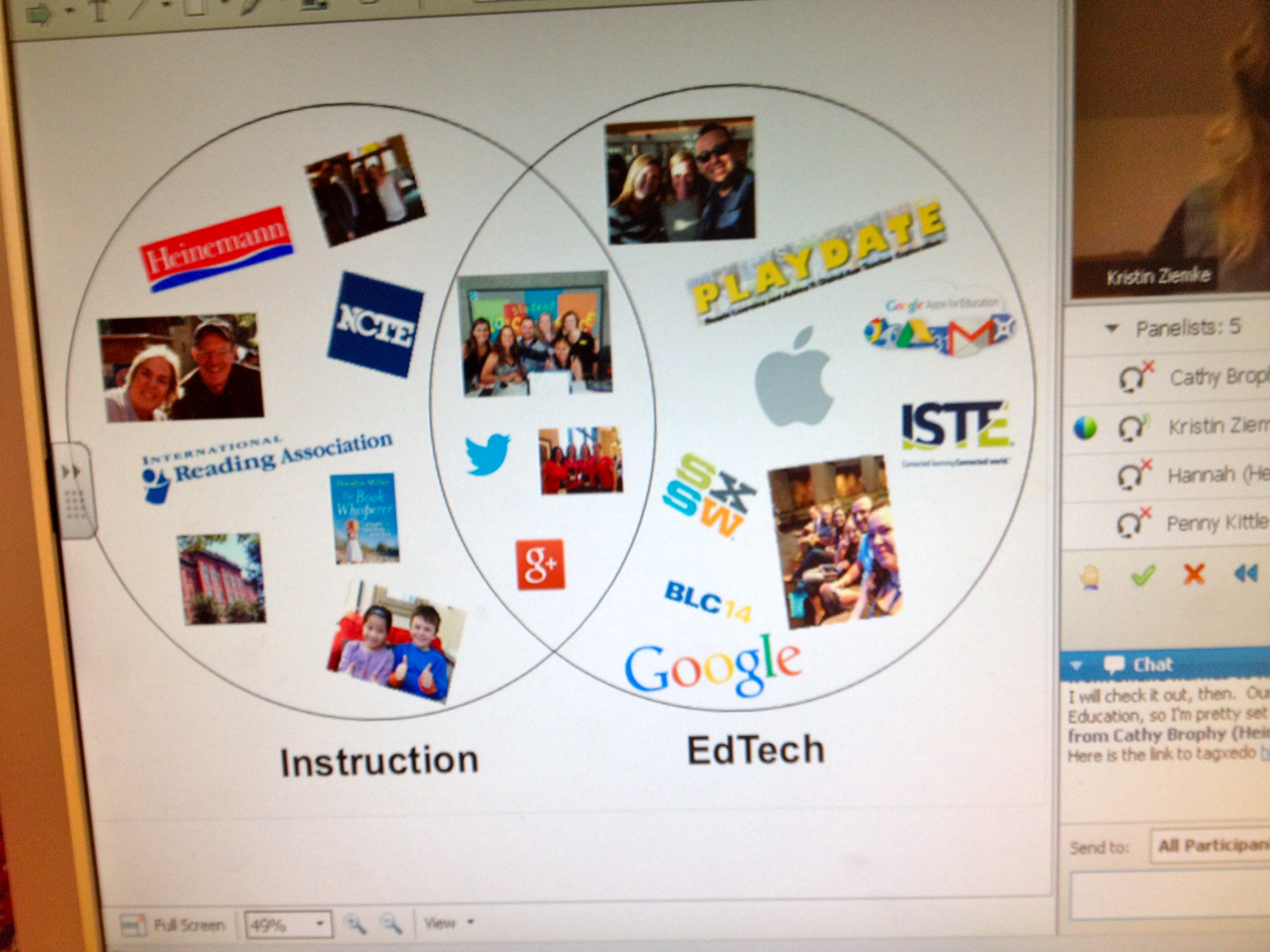
Kristin Ziemke presents during “Notebooks, Pens, and Pixels”

Don’t get me wrong:  horror stories abound.  I recently sat through eight straight hours of lecture at a “training”, zero hours of which were relevant to my classroom, and ended up lying in the hallway of a hotel conference center with a very pregnant colleague, who simply couldn’t sit in her chair any longer.

But, even more recently, I sat on the edge of my seat as I listened to Penny Kittle, Troy Hicks, and Kristin Ziemke present on using technology in language arts education.  This free Heinemann webinar lasted a little over an hour, but it felt like only a moment had passed as I listened to those teacher-leaders share their mind’s inner workings.  That amazing webinar, which also granted me insight into Kelly Gallagher and Tom Romano’s thinking-through-writing processes, falls under the same umbrella that torturous eight-hour lecture did.

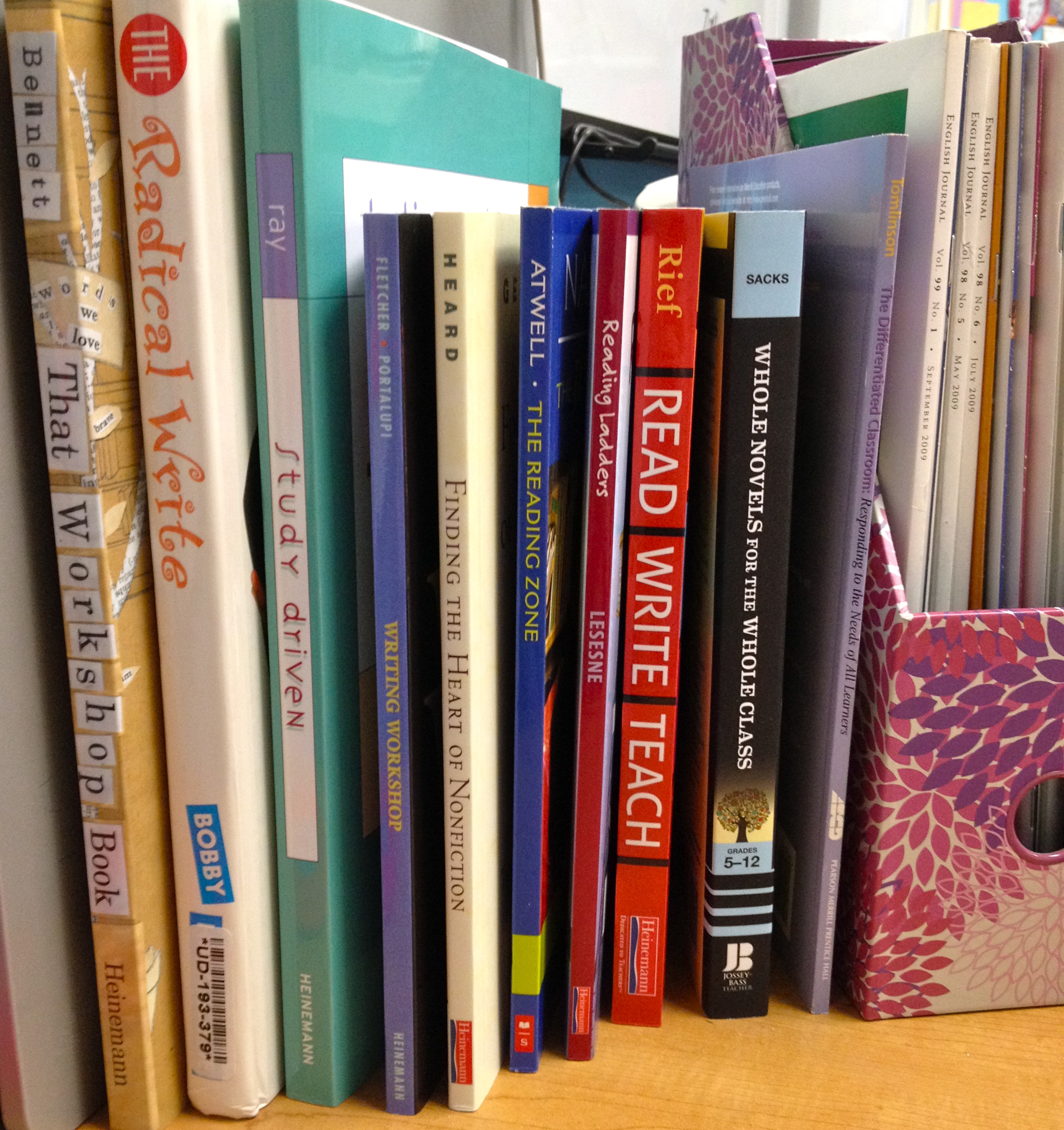
My professional to-be-read shelf

My professional to-be-read (and re-read) shelf

Presentations and lectures aren’t all there is to professional development.  Simply reading the latest research is PD–sharing ideas over lunch with a colleague is PD–sitting down to write and reflect in the mornings is PD, too.

I’d argue that professional development is a teacher’s duty.  Teachers really shouldn’t be the worst students–we should be the best.  As professors of knowledge, shouldn’t we crave knowledge?  Hunger for new ideas?  Salivate over scholarship?  If we seek to inspire a thirst for learning in our students, we must have it in ourselves.  There are too many ways to grow in our profession–Twitter, online journals, NCTE, the National Writing Project–for us to not take advantage of the many opportunities for growth that come our way.

Professional development is something to aspire to, not to dread.  Seek it out.  Savor it.  Lead it.  It will make you a better teacher, and a more richly knowledgeable professional–and there’s nothing painful about that.

Viral Titles

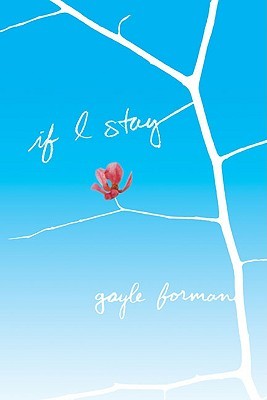
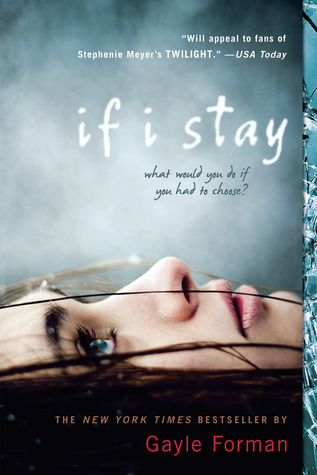
ifistay1Every year, one or two books go viral. The Fault in Our Stars by John Green, Lone Survivor by Marcus Luttrell, and Hate List by Jennifer Brown have all held the Viral Title award in the past.  I couldn’t keep those books on my shelves, and students couldn’t read them fast enough.

This year, If I Stay by Gayle Forman is everywhere I look.  All of my students want this book–AP, on level, male, female, black, white, readers, non-readers.  I have six copies and all are checked out.

I got into bed Tuesday night with my Nook, where I’d recently downloaded If I Stay.  It’s been about a month since I’ve read a book for pleasure, so I intended to just read a chapter or two and then go to sleep after my 14-hour day.

I stayed up ’til midnight and finished the book.

Silent tears dripped down my face around page 15, when Mia’s family is destroyed in a car accident.  Forman’s writing shoves me into the moment and I am right there with Mia, feeling her anguish as she sees her parents strewn across the road.  I agonize with her over the whereabouts of her younger brother, Teddy, and I hear the eerie quiet of a post-collision highway.

I was captivated from that moment onward, terrified for Mia as she watches her own injured, unresponsive body be flown to the hospital.  Watches her now-daughterless grandparents in the waiting room.  Watches the surgeons and nurses frantically try to save her.  She vacillates between wanting to stay in this world, and wanting to leave it behind.

NPR calls this story “achingly beautiful,” and I would agree.  Its language, its structure, haunts me, days later, and I know my students and I will study Forman’s craft soon…the way she brings us into a moment, frozen in time, and suspends our disbelief as we stay beside Mia’s spirit, watching all of this unfold.  Please read this book, and get it into the hands of your students, too.

ifistay2

If I Stay, Gayle Forman, pp. 15-16

You wouldn’t expect the radio to work afterward.  But it does.

The car is eviscerated. The impact of a four-ton pickup truck going sixty miles an hour had the force of an atom bomb.  It tore off the doors, sent the front-side passenger seat through the driver’s side window.  It flipped the chassis, bouncing it across the road and ripped the engine apart as if it were no stronger than a spiderweb.  It tossed wheels and hubcaps deep into the forest.  It ignited bits of the gas tank, so that now tiny flames lap at the wet road.

And there was so much noise.  A symphony of grinding, a chorus of popping, an aria of exploding, and finally, the sad clapping of hard metal cutting into soft trees.  Then it went quiet, except for this:  Beethoven’s Cello Sonata no. 3, still playing.

Getting Students Hooked on Poetry

“Poetry is boring.”

“What does poetry have to do with anything?”

“What does poetry even mean!?”

“I hate poetry.”

Poetry is a timeless form of writing, yet students struggle to see its relevance to their lives.  Further, they struggle to understand the themes and messages poetry attempts to communicate.  After weeks of asking them to read like writers, my students did begin to find some value in poetry, but they still didn’t like it.

Thus began my endeavor to present poetry as exciting, interesting, and most of all–fun.  What follows are three poetry activities my students were engaged and challenged by.

IMG_5382Spine Poetry

Creating book spine poetry is not a new concept–it can be found all over the internet.  I first got the idea to do this activity in last year’s UNH Literacy class with Penny Kittle.  Not only does creating spine poetry get students playing with language, it also exposes them to a wide variety of titles.

I modeled the creation of a spine poem for my students, stacking and re-stacking titles by John Green, Max Brooks, Jon Krakauer, Malcolm Gladwell, and more.  I modeled, with their input, until we had a poem that satisfied us.  I also showed examples of a variety of spine poems on the projector.  Then, students worked in groups to create their own spine poems, eventually writing their finished products in their writer’s notebooks after adding punctuation and a creative title.  I noticed many of them adding new titles to their what-to-read lists, too.

IMG_5332Cemetery Poetry

Edgar Lee Masters’ Spoon River Anthology is a wonderful collection of poems inspired by graveyard epitaphs.  Lives and legacies are explored in Masters’ work in a variety of styles.

I wanted to have students practice imitating this poet’s craft, as he is a master (pun intended!) of showing, not telling.  We have a beautiful old cemetery quite close to our school, and it was a gorgeous September day for a walk.  My students toted their writer’s notebooks to the graveyard and we read three of Masters’ poems together.  I asked students to wander the cemetery and find a gravestone that appealed to them, then imitate one of the poems we’d read, using that headstone as a subject.  My boy students especially loved this assignment–they were drawn in by the quiet atmosphere of the cemetery and its prevalence of Civil War graves.

IMG_5125Spoken Word Poetry

Shane Koyczan, Taylor Mali, and Saul Williams have soared to YouTube fame with their spoken word and slam poetry performances.  They are forceful presences on stage, and their-in-your-face styles often hook my students.

Sarah Kay provides a lovely contrast with her soft-spoken performances, her clear voice spinning tales of love, motherhood, and femininity.  We read “Point B”, pulled out its richest lines, and hung them around the room.  There were eight in total, and students responded freely to these beautiful words on post-it notes in a silent discussion.  They wandered the room, sticking their responses onto their favorite lines, and then responded to one another.  Their close readings gave way to analysis as they challenged each other, left questions, and cheered classmates on.  Weeks later, a student quoted a line from “Point B” in a discussion–this activity had seared “this life will hit you hard in the face” into her memory.

Stacking books into spine poetry, imitating poems about gravestones in a cemetery, and silently discussing spoken word poems transformed my students’ perceptions of poetry.  Words that were once lifeless on the page came alive.  This week, they reshape their own identities and wear new hats as poets and writers–hats that, thanks to our poetry fun, are not as unappealing as they once seemed.