Category Archives: Amy Rasmussen

Reflecting on Connections

ocsI’ve been thinking about connections. With Connected Educator Month coming to a close, many of you might be thinking about it, too. I’ve read chats and tweets about what it means to be connected, and I’ve thought a lot about what being connected has meant to me in learning how to be a better teacher.

My husband had me take the Six Human Needs test designed by Cloe Madanes a few years ago. According to Cloe’s research, we all have two needs that drive us and influence our decisions, behaviors, and actions. Of Significance, Certainty, Uncertainty, Contribution, Connection, Growth, my driving needs are growth and contribution. Learning this was not surprising, and it explains in part why I became an educator, and why I love to help other teachers grow in their practices.

While connection didn’t rise as one of my primary needs. It’s impossible to contribute and grow as a teacher with out connections. I have many.

photo @2003 Anselm Hook Flicker

photo @2003 Anselm Hook Flicker

I connect with my peers in the English department as we talk about the needs of our students, design lesson plans, and try to help students succeed. I connect with my colleagues in other content areas as we meet in faculty meetings, school activities, and crowded hallways.

Then I have my North Star of Texas Writing Project connections, the amazing educators that make up our Teacher Consultants. It’s because of them I am a confident presenter, researcher, writer, and workshop teacher.

Much of my confidence comes from the connections I’ve made on Twitter. Joining chats with my teacher heroes, receiving responses to questions, discussing issues with other professionals with similar challenges, all these connections help me improve the instruction in my room and the relationships with my students.

The relationships I made this past summer at the University of New Hampshire Literacy Institute changed my teacher soul forever. The connections made there gave me hope on more than one occasion. Emily, Erika, and Shana allow me to contribute and grow on a regular basis, and I am grateful for their insights and encouragement in my life. It can be difficult being the only teacher on my campus who believes in the power of a readers/writers workshop classroom. Support from these friends, even as far away as CA, WV, and Brooklyn, NY, comes at the most opportune and significant times. (Of course, the Words with Friends games help our camaraderie, too. What English teacher doesn’t want to beat another one at a word game? BK, join us!)

So today as I reflect on my week of blog posts, comments, and shared goals for students, I am thankful. Thankful for new connections, new friends, and even new challenges as I keep writing, keep sharing, keep trying to change the way I reach the students in my care.

Thanks to all of you, my connected educators.

Part II. In an AP Class, Shouldn’t It Be about the Reading?

Angels sang to me again today. This doesn’t really happen too often, but when it comes to awesome adventures with students and books, the choir starts belting out in fff.

Based on the feedback to my post on Wednesday, I know many of my peers feel the same way as I do about AP students and reading–or not reading–as the case may be. I appreciate the comments and the emails and the encouragement. (I gave a student the Pulitzer Prize Winner Tinkers today, and another one asked for a copy of The Great Gatsby with no prompting from me whatsoever. I know I am doing something right here.)

I’m pretty much the advocate for independent reading on my campus. I talk about it every chance I get: slip it into a conversation here, there, and everywhere. Sometimes the words work their way into another teacher’s thinking, and Hallelujah! the angels bust out in song.

Read this email I got from my friend, Tess Mueggenborg. She teaches our gifted and talented Globesophomores in a special humanities course, which combines AP World History and Honors English II, and AP Literature. She and I share a lot–some things curriculum related, other things not. When we first worked together six years ago, it was as a team teaching the G/T course: me English/her history. I can tell you this:  Tess loves classic literature–some of which I’d never heard of. Gilgamesh, Horus the Hawk. Sigh.

For the past few years Tess’s heart’s been changing (I say that tongue in cheek because her heart is shiny gold), and she’s allowed for much more student choice in all her English classes. This fall she asked for funds to create a World Literature library of contemporary and complex books for her advanced students. Our ELA coordinator granted the request, and. . .

Read this. You’ll hear the choir.

_____________________________________________________________________________________

Thought you might like to hear (and read) what’s going on with the new novels in World Experience … Last Friday, we had a day of “book speed dating.”  The students had about 60 seconds with each novel, and if the book interested them, they put a sticky note with their name on the back cover.  Then we divvied up the books, which proved to be arduous but entertaining.  Some of these kids were REALLY passionate about which book they ended up with! Today, they had their first assignment (other than “start reading!”) – a blog post.  Here are the questions I posed:

By now, you should be 1/4 to 1/3 through your novel (if not more!).  Based on what you’ve read thus far, answer the following questions on your blog.

1. How many pages are in your novel?  How many have you read?

2. Who is the protagonist (main character) of your novel?  What is the main conflict this person faces?  What are some possible outcomes that you foresee for this person?  (In other words: guess the ending.)

3. In a well-developed paragraph (with text evidence), respond: so far, what do you like about your novel?  What do you not like about your novel?  Why? Explain.

4. Based on what you’ve read thus far, would you recommend this book to someone else?  Why?  Explain.

5. Pick ONE quote that has stood out to you from the novel.  Give the quote, then explain: what made this quote stand out to you?  How does this quote relate to the whole novel?

And here are the links to several of their blogs:

Chris is reading Transatlantic: http://keyboardandseafood.wordpress.com/2013/10/24/transatlantic-novels-assignment-part-1/

Neha is reading The Namesake: http://neha614.wordpress.com/2013/10/24/assignment-for-1024-the-namesake-part-1/

Nico is reading All the Names: http://nicolasrequena28.wordpress.com/2013/10/24/novels-response-1024/

Rafael is reading Enrique’s Journey: http://parrarafael872.wordpress.com/2013/10/24/enriques-journey-part-1/

Angelica is reading Girl in Translationhttp://perezangelica477.wordpress.com/2013/10/24/novels-part-1/

Aaliyah is reading The Secret Life of Bees: http://aaliyahgonzalez.wordpress.com/2013/10/24/novels-part-1/

Overall, I’m really pleased with the results I’m seeing thus far!  Many of the students aren’t as far into their books as I had hoped they would be, but they all seem genuinely interested to keep reading.  I’m definitely getting more traction with these novels than I have with the literature I’ve done in the past for this unit (“Sir Gawain and the Green Knight,” plus Islamic and Chinese poetry).  Next week, I’ll start having them tie the cultural content of their novel to the things they’ve learned about World History thus far.  I’m VERY curious to see how that goes!

_____________________________________________________________________________________

I ran down to Tess’ room the first chance I got. I was too excited to respond in an email. The books Tess filled her shelves with are rich and diverse. Here’s her list: World Literature Library

As I left her room, one comment made me smile:  “I’d still be using the classic lit, if the students would read them.”

And that’s my point: In an AP Class, Shouldn’t It Be about the Reading?

In an AP English Class, Shouldn’t It Be about the Reading?

This is my fifth year to teach AP English Language and Composition. Every year I can pretty much predict during the first grading period which students will pass the AP exam with a qualifying score. See, my campus practices true open enrollment: any student that wants to challenge herself with PreAP or AP classes may. We have no prerequisites. Any student that demonstrates a strong work ethic, attends tutorials, and tries hard can pass my class, but she may not pass the AP exam in the spring– if she is not already a reader.

Photo by Seasonal Wanderer

It’s a lack of reading skills that gets students every time. The multiple choice portion of the test is a killer with four to five passages and usually 55 questions, which must be answered in 1 hour. I can teach test-taking skills that will help my students do better on this part of the exam, but if a teen is not already a reader when he comes to me, I can rarely help him learn the vocabulary and critical reading skills needed to score at least 50% of the questions correctly (the minimum goal for the mc portion of the test). I’m a pretty good teacher, but the AP exam is difficult, and my magic wand only has so much power.

Many of my students do not come from homes with reading role models. Their parents are hard working immigrants who do not have funds to invest in books. Quite simply, most do not identify themselves as readers. Of course, there’s the few. The students who had an older sibling or a teacher or a librarian (or sometimes a parent) push books into eager hands. These are the students I predict will find success on the AP test come May.

For four years I’ve tried to figure this out:  If it’s the readers who can pass the exam, how can I get more students to be readers? It should be simple.

I tried the classic route. It simple didn’t work. I used to assigned six novels, all the best-loved American literature; and just this summer in a brief Facebook exchange, a former student confirmed what I already knew. She said, “I loved the class, but I didn’t read one book.”

She was not the only one, and my feeble attempts year after year to get students to read, and their feeble attempts year after year to pass my assessments, proved that the classic route was not taking my students on the road they needed to go. They still weren’t readers.

I assert that most high school students do not read the assigned texts, especially classic novels that they can read about online–learning just enough to join a class discussion, write an essay, or pass a test. They might learn the gist of the novel, maybe even get the jokes alluded to in pop culture, but they are not reading.

And that is what I want:  I want to foster readers.

Yesterday I sent out a tweet:

I’m spending grant $. Please, what are the hottest reads in your HS English class library? Thanks for sharing titles. #engchat

Many people responded with several titles i didn’t know, and my shopping list got longer. But I also got this response:

XXXXXXXXXXXX 21 Oct (I deleted the name to protect the not so innocent.)

@AmyRass My Juniors are reading: Huck Finn, Moby Dick, Scarlet Letter, The Road, Gatsby, Things They Carried, Other Wes Moore, Catcher

I responded with this:

@xxxxxx Thanks for sharing. Great books. Are they reading those titles as free choice? If so—impressive.

And the answer was this:

@AmyRass They are chosen from a list we gave them. I also am fortunate to teach some very bright students.

Hmmm. I wish I could poll those students. I’d bet my farm, if I had one, that very few are actually reading those books. To roughly quote Don Graves: “Choice without [a kind selection] is no choice at all.”

I do things differently. I’ve abandoned the whole class novel like I allow my students to abandon books, (although I know there are some cases when reading the same text can lead to useful instruction. Don’t hate.) My students read during the first 10 minutes of every class. I talk about books as often as I can. I add new books to my shelves that I know students will read. (I bought three copies of Allegiant this afternoon because I know Ashley, Kathryn, Sierra, Adrian, and Diego are waiting. There will be a clamor in the morning.)

Is it hard to devote 10 minutes of a 50 minute class period to reading? Yeah, at first–when the traditionalists tried to drag me back to the dark side. Then I had my students blog about their reading lives over the last seven weeks. So many of them wrote about how they’ve read more books in seven weeks than they read the whole of their sophomore year. Three, four, five books. Already.

I am glad they are reading YA literature. I know it doesn’t have higher-level vocabulary. I know that it doesn’t have sophisticated syntax. I also know that my students like it; they are reading after all.

This quarter I will push students into harder texts. Just yesterday, I put a stack of memoir, historical fiction, non-fiction, and classics on every table, and I talked books. I challenged students to add to their What To Read Next list, and I gave descriptions of characters and hints at plots. I’d like students to read a sampling of different genres–try a graphic novel or a NY Times Bestseller–because so many teens don’t know what they like–yet.  If they don’t meet the challenge? It’ll be okay, as long as students keep reading.

Today Yulissa asked for Cut. Luis asked for Unwholly. Esmeralda read A Child Called ‘It’ in 24 hours and went straight to A Man Called Dave when she walked in the door. Anthony started reading The Lord of the Flies, and Stephany asked for an award winner, so I gave her a stack of six to sort through–all had Printz or National Award or Pulitzer emblems. Tomorrow will be similar. We’re nine weeks into the year, and reading’s become routine.

I may not be able to give all my students the skills they need to master the AP Lang exam, but I am giving them the time they need to plant the seeds of those skills. They’ll sprout and take root and begin to grow, and maybe, just maybe, my students will have the stamina they need to succeed in college, and, maybe that stamina will help them succeed in life.

That’s more important than an AP exam anyway.

I’d love to know the reading habits of the AP English students on your campus. Are they (fake) reading? or really reading?

The Practicalities of Reading Workshop

ocs

Incorporating reading workshop into your curriculum is easy once you have access to lots of great books for your students.  Some of you might be lucky enough to have a wonderful librarian at your school who cultivates a diverse collection of books (like I was last year), but others may be without that (like I am now).  After running into dead ends with our school and public libraries, I thought the best solution was to focus on building my own.

DSC03271

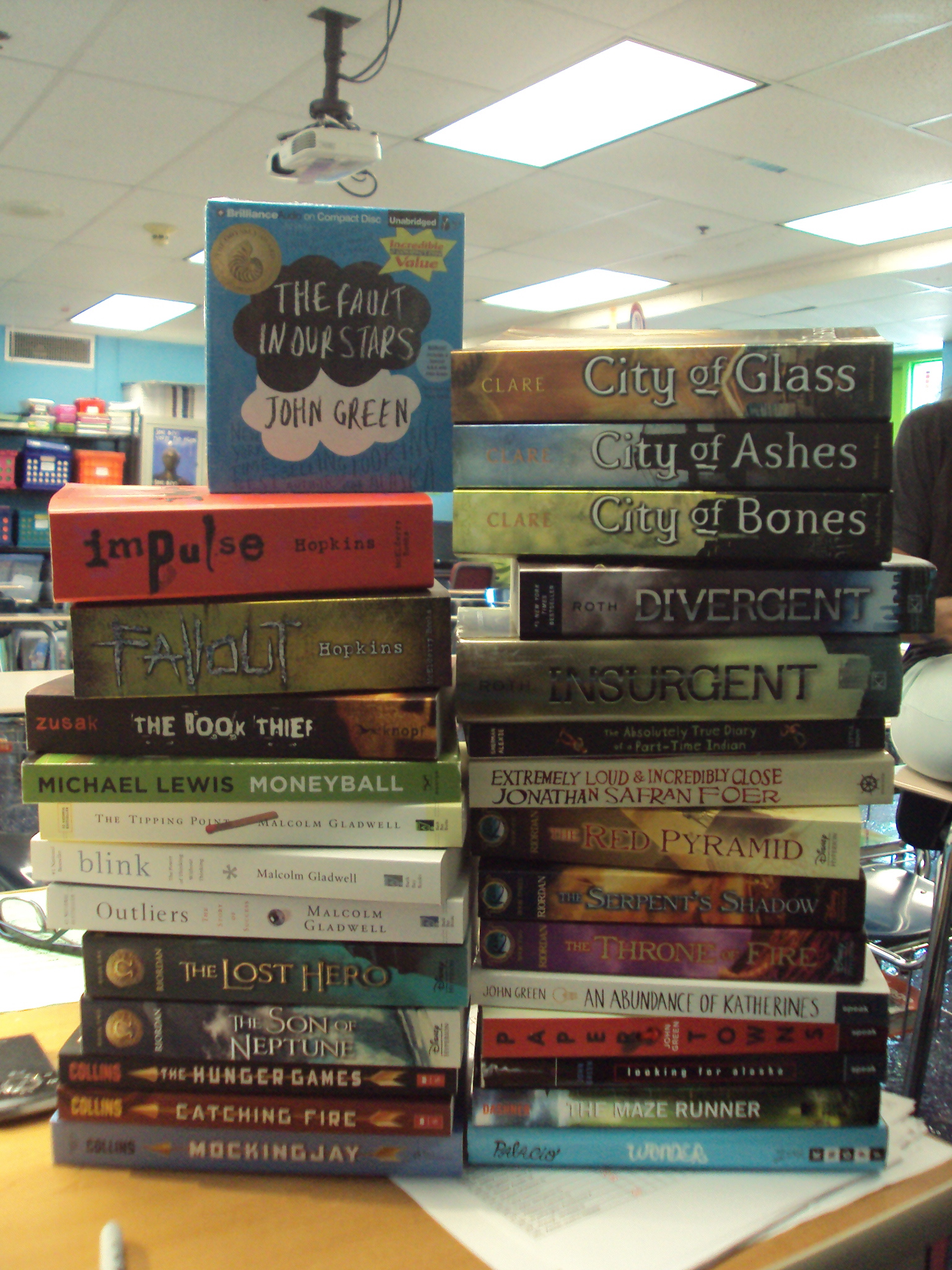
Books donated from a Donors Choose project

Anyone who is a reading fiend like me knows that books are expensive.  Because I haven’t won the lottery yet, I had to seek alternative means for funding my future fabulous library.  Great suggestions from Amy and Erika led me to Donors Choose, an amazing charity website that funds classroom projects for teachers.  Writing grants on this website has netted me over $1,500 worth of books of my choice!  I also had great success with Half Price Books, who donated hundreds of young adult and teen novels to my classroom.  Lastly, I’ve tapped an unusual resource–local businesses.  Large companies like Target, Sam’s Club, and Kroger have a budget they can only use for donations, and anything they give is tax deductible.  I wrote letters to these businesses explaining my needs, and they have donated gift cards each month, netting me a total of $450 in books.  All of this grant/letter/request-writing has paid off, and I’ve been able to build a large, dynamic library.

IMG_0129

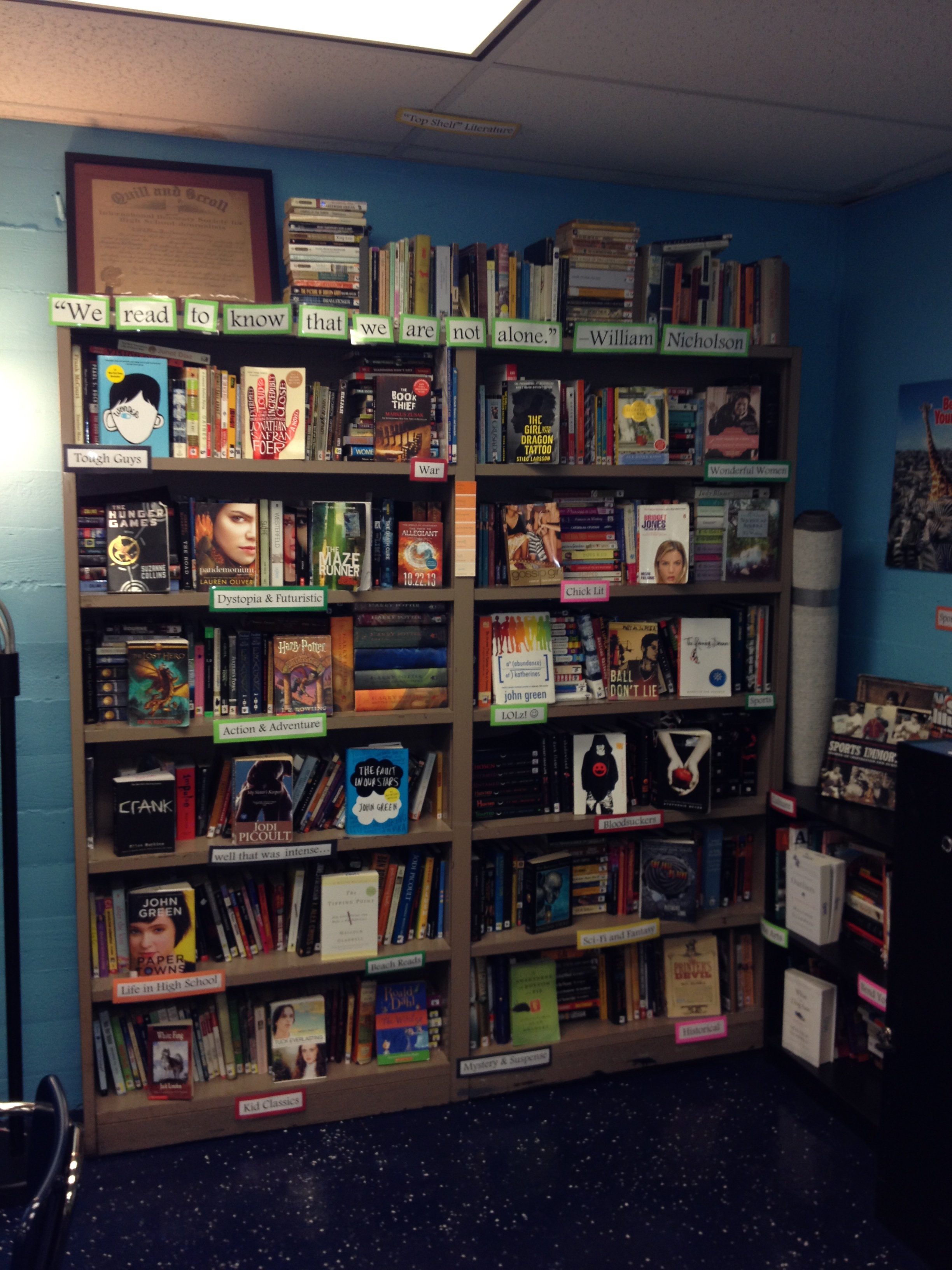
Once I had my books, I knew I wanted to organize them in a fun way that spoke to my teaching style.  My students and I came up with some inventive categories–“Top Shelf Lit” (classics, which are actually on the top shelf), “Bloodsuckers” (vampire novels), “LOLz” (humor), and “well that was intense” (books about death/powerful issues that will make you cry).  A wonderful problem I’ll need to tackle soon is where to find another bookshelf!

IMG_0138

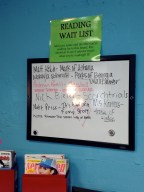
I’ve already written about fangirling in such a way that gets students excited and informed about books.  Once a student knows what he or she wants to read, the only problem is tracking that book down.  I took an idea from Emily and started a “reading wait list” whiteboard, where students can leave a public request for something they’ve been clamoring for.  In terms of determining who’s got what, I have a binder that lies on the cabinet near the bookshelf where kids check books in and out.  Because I show them my grants and letters, and I rip open the boxes of freshly-delivered books in front of them, they can see the hard work being done to build the library.  I think that’s what makes them so conscientious about returning books, because they’ve been great about that so far.

IMG_0140

Once you’ve built your library, and once your students are reading the books they’ve been dying for, you have to somehow keep track of all that they’re doing.  I’ve modified Penny Kittle’s excellent reading log sheets just a bit to make tracking my students’ reading easier.  These logs get passed around every bell, and students write down what page they’re on of their independent reading book.  I’ve added a “Last Friday page #” column, in which they copy down their latest page number from the previous week.  This makes giving them credit for weekend reading much simpler.  At the end of the week, my student Teacher Assistants count up the pages read and write them in the column on the far right.  It’s a simple matter to compare this number to the students’ reading rates and give them a quick grade based on how much they’re reading (two hours per week is the requirement).

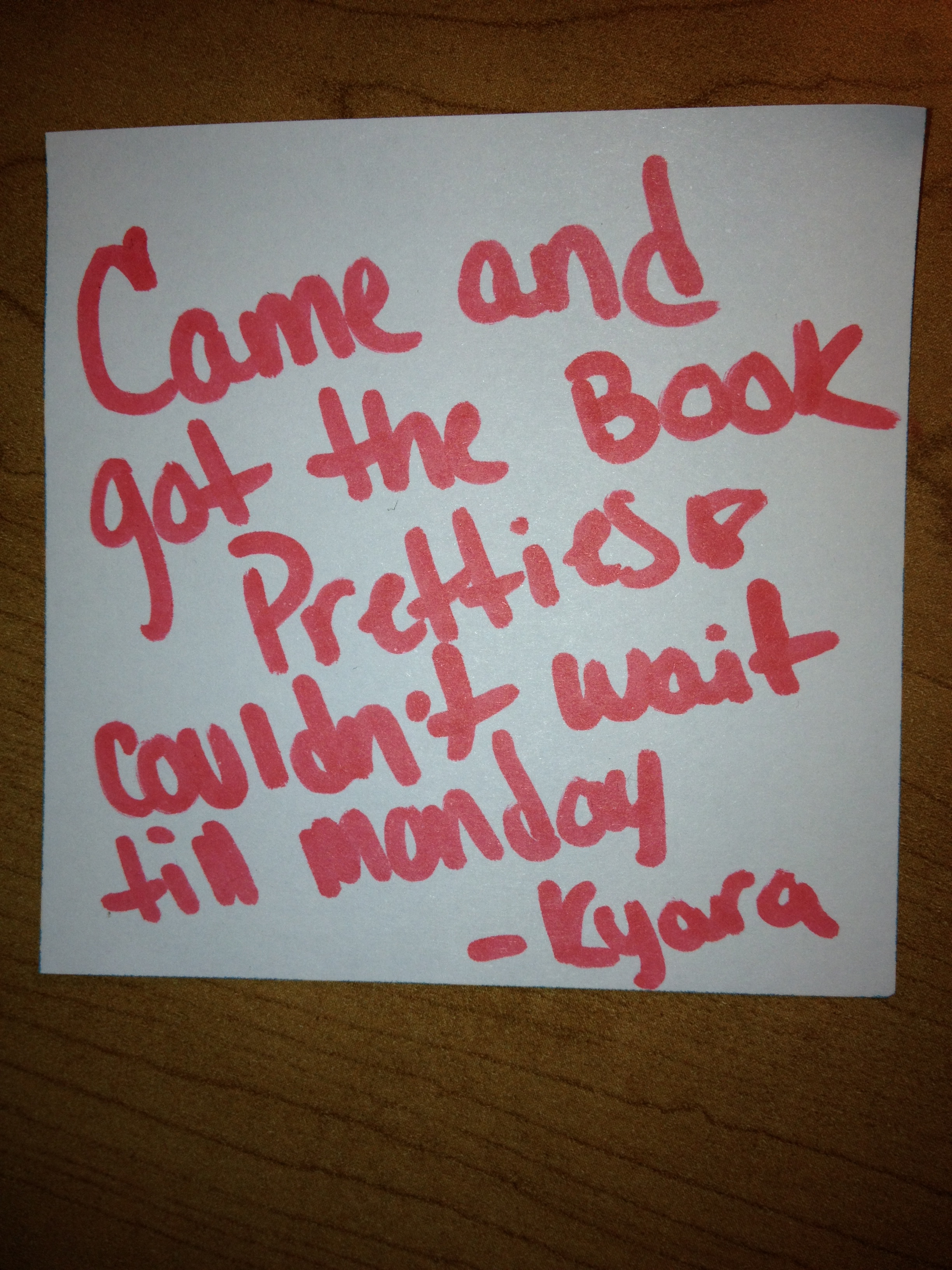
So, there you have it…all of my tips and tricks for building, organizing, keeping track of, and assessing the reading of books in a classroom library.  I’m still working hard to keep improving mine, and I’m sure things will continue to change.  However, it seems like my current system is doing its job, since I found this note on my desk yesterday after school…

IMG_0128

…and there’s no more rewarding way to end your week than that.


Authenticity: Making it Real with Student Blogs

North Star of Texas Writing Project (NSTWP), in which I am a teacher consultant, asserts that authenticity is connecting student learning with significant audiences, tasks, and purposes.

image

Blogging with my students is one way in which I make that connection happen. Writing posts and commenting on the work of our peers has become an integral part of my readers/writers workshop classroom.

photo: Petras Kudaras

During the second week of school, once schedule changes calm down a bit, I introduced the idea of blogging to my students. This year I wrote a post on my class blog and imbedded an article that made them see that blogging can have value to their futures. You can see that here.

I’ve had students use Edublogs as their blog platform in the past, and I know some teachers have their students use Kidblogs. I decided to go with WordPress this year. I thought using the “real world” blog platform would be a good idea. You know, just in case some students loved the idea and kept writing long after they leave my classroom. Finally, eight weeks into the school year, I am glad I went this route, but the set-up, especially with my 9th graders took a lot longer than I’ve had to spend in the past. (Most of my students are not as tech savvy as many technology advocates would like to believe. For more on that read this post:  Digital Novices vs Digital Natives.)

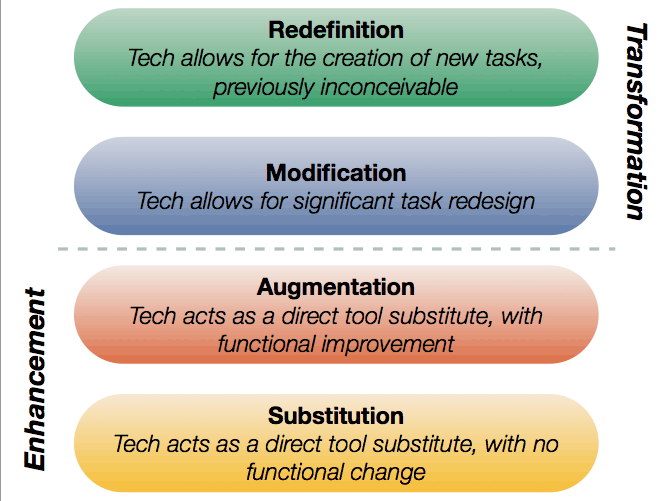
These are some ways I’m transforming my teaching by using student blogs this year (See this SAMR model for ideas on instructional transformation):

Timed Writing. I need students to be able to think quickly about a topic, organize their thoughts, and write effectively in a short period of time. Years ago I had students complete timed writings on paper with a pen, and I’d take the stack of essays home and laboriously grade them. By having students post to blogs, my classroom is getting close to being green. We do very little writing on paper anymore. I can read student posts with the swipe on my finger on my iPad, and I try to leave comments that inspire improvement in their writing. Sometimes I put the score from a rubric. Most times I say something I like about what students have written. They like that kind of feedback best, and it usually prompts some kind of improvement in their next post–something that rarely happened with the marks of my red pen.

For our first timed writing, students wrote about their reading lives. We spend 10 minutes at the beginning of each class period reading our self-selected books. I conference with each student, brief one-on-one chats. I learned more while reading student posts about their reading habits than I did in the prior eight weeks of school. I posted a reflection of my own reading life on my class blog with the actual assignment, and then students wrote on theirs. The response to our wide reading warmed my teacher heart. Read a few of these students’ posts, and you will see why: Helen–A Path Led by Wise Words; Gina–Lay Down the Bridges; Mian–A Passion for Books; Emilio–Reading Life

Our second timed writing, students wrote an argument in response to our in-class study of Ralph Waldo Emerson’s “The American Scholar.” Some student posts were thoughtful and wise; most were ineffective and needed major revisions. All students wrote and showed what they’d learned from their reading and our class discussions.

Persuasive Practice. The AP Lang exam and the 10th grade STAAR test both require students to be effective persuasive writers. I like this blogger’s post:  Blogging is the New Persuasive Essay. As I teach my students how to use persuasive techniques, I also want them learning about their world. They have to know “stuff” to build their credibility after all. So every Monday my students write a post that they base upon something they read in the news. They scan headlines until they find a topic that interests them. Then they pull an idea from the article, and then they write an argument based on that idea. So far, we haven’t delved too deeply in the art of persuasion; we’ve talked mostly about form and structure and a few rhetorical devices, but some of my students have taken ownership of this weekly recurring assignment. Here’s a few to give you an idea:  Kathryn–Words Hurt; Ashley–Recycled Look or Recycled Lives; Jason–Smoking is Safer? Impossible; Adrian–Chemical Mistakes

Published Polished Pieces. As we move through different genres of writing, I need my students to fully immerse themselves in the process of creating effective and moving texts. We started the year with a focus on narrative. I know, it’s not on the AP exam or the STAAR test anymore. But story is so important. It’s what connects us as humans, and it’s story that has helped create a classroom community where students are not afraid to take risks and throw their hearts out on the page. While a few student narratives are not as polished as I would have liked prior to publication (grades being due always seems to interfere with authenticity), if you read just these three, you’ll see why story is important. I can be a better teacher to these PreAP students because of what I know from these posts. Esmeralda–Memories; Mercedes–What Do You Think About Moving? Bryanna–Why Batman?

I remember learning from Kelly Gallagher that students should write more than I can ever grade. Well, of all things in my teaching life, I’ve finally figured that one out the best. I cannot read every post my students write, but I can read a lot, and I can give a lot of feedback in a way that is meaningful so that students respond. We just started reading and leaving feedback for one another. I can already tell that this will be more valuable than just me giving feedback. After we spent two class days reading one another’s narrative posts, I had students tell me on their own narrative evaluations:  “I knew I could do better after I read other people’s.” For an example of our student feedback, read the comments on this one: Amy–Forever a Bye. The instruction I gave students was 1) Be polite but honest, 2) Bless something you think the writer did well, 3) Press a moment that needs more detail or description, 3) Address an issue of concern in regard to style, grammar, etc. For our first time, I’m proud of these students for the feedback they gave their friend.

Engaging student writers is often more than half the battle. So many times they have the attitutde “What’s in it for me?” By allowing students to choose their topics, and allowing them to express their true and authentic voices, I get better participation, and I get better writing, and I get to know the hearts and minds of my students.

That is all I ever really want.

photo: Dee Bamford

#NCTE13  Writing Teachers (Re)Inventing Literacy Instruction by Following the North Star

Reel Reading for Real Readers: The Lowland by Jhumpa Lahiri

20130207-190708I’m starting an Award-Winning Books Only shelf. (Okay, maybe award winning authors, too.)

Since I am teaching only advanced classes, and since I am allowing students choice in pretty much anything of length they read, I want to be able to challenge students to take a step up the ladder to more complex texts than the YA literature they so readily pick up. Not than any student, advanced or otherwise, shouldn’t be challenged; not that YA is not great reading for all students. But, you know, I am supposed to provide the rigor for an AP class as required by the College Board.

I want Pulitzer Prize Winners and National Book Award Finalists and Man Book Prize Winners.

I want students to take on the challenge and the feeling of accomplishment of reading a Prize Winner.

My list of award winners is long, and it will take me even longer to purchase all the books I want. But I’ve started, and The Lowland by Jhumpa Lahiri, a Pulitzer Prize Winning author, is the fifth on my shelf.

See the author talk about this Man Booker shortlisted title here: 

Reel Reading for Real Readers: Fahrenheit 451

ReelReading2Today a student asked me, “What would you do if there were no books?”

I responded, “You mean if someone burned them?”

Another student chimed in, “You mean like in Fahrenheit 451?”

“Exactly,” I said, turning to the first student, “Do you know that book?”

“No, I was just wondering.”

“In the book Fahrenheit 451, the firemen burn books. Sound interesting?”

And then that little sparkle in the eye that says yes louder than any words could.

Much to my surprise while scrolling through my Twitter feed this afternoon, I saw this headline from Glen Beck’s show:  A warning to the world’: Glen shares an excerpt from Fahrenheit 451. Of course, I stopped, and clicked the link.

Check this out–it doesn’t matter if you are a Glen Beck fan, it’s a great way to introduce students to this great little classic. I think our students will “get” it.

‘A Warning to the World’

Could We Just Get Students to Read and Write in All Content Areas?

So one of the problems on my campus is the fact that students don’t read. Oh, I know some do, but by and large, the majority of our students are not readers. As a school we are struggling with this new problem of practice, trying to define “complex language.” We’ve spent hours with this already, and have yet to come to a consensus. In frustration last week, after discussing this for two and a half hours, my colleague wrote on the bottom of our PD group’s thinking sheet:  “Could we just get students to read and write in all content areas?”

Really. It could be that simple.

A few years ago, our campus began whole-school reading. Built into our daily schedule is a 30 minute Advisory time, where a good number of minutes could be used for independent reading– if only teachers would enforce it. Most students like to read when they are given their choice of the right books. But if teachers are not reader themselves, it’s no wonder they don’t care if their students read.

Mine do, but that’s not surprising. The students in my English classes read for 10 minutes at the beginning of every class. So, if their advisory teachers are mandating reading, my students should be reading at least 25 minutes during every school day. That’s not a lot, but it is something.

Of course, independent reading will not solve all our problems. Students need to think deeply about texts, not just increase their fluency, and non-readers will abandon a book rather than struggle through it. That’s why if we really want to get our students to develop complex language skills, we must get them to practice complex reading. This is the kind of reading teachers must do with their students. You know, modeling close reading, modeling thinking about a text? And I think English teachers who know how to do this need to be given the opportunity to teach math and science and choir and business teachers how to read closely with all students.

We can talk about complex language all day as a staff. We can define it and put the definition on the walls of our classrooms, but that won’t do a thing until all teachers in all content areas start reading complex texts with their students. (And maybe it’s too much to ask, but imagine the growth if every student wrote in every class every day, too.) Hey, friends in other content areas, I’m glad to show you how.


Does your school have a wide reading program or other reading initiatives that include reading and writing in all content areas?


Valuing Teachers’ Time

I spent six hours at an AP English conference last Friday. Six long hours. We scored essays: rhetorical analysis. For six hours. It’s not that I don’t like scoring essays. I do. I love it (well, kind of), especially when the essays belong to my own students,  and especially when my students show me evidence of some skill we’ve focused on in class. These essays did neither. They were random essays pulled by the College Board to serve as the sample anchor essays. I get that AP English teachers need to learn how to score essays. I get that the anchors are a good starting place. I didn’t get why the conference sponsors didn’t gauge the room: First time AP teachers here? What about experienced over here?

I fear I rant. But here’s the thing:  so much time is wasted when those in charge don’t consider their audience.

Like at the beginning of last week for campus PD. We learned about Accountable Talk–something the campus has focused on explicitly for the past three years. Admin might have polled the room, asking questions about our levels of comfort with the talk moves, instead of continuing with a presentation that only a few new teachers in the room had never heard. No wonder there is grumbling.

I keep hearing about valuing teachers. But I rarely hear about valuing teachers’ time.

I was out of my classroom three days last week. Fortunately, I have a competent sub who will deliver the lessons and hold my students accountable. But still, I haven’t been there. I’ve given an AP mock exam; I’ve scored 120 essays; I’ve attended a conference where I grabbed and clung to just one good idea. i have 40 AP English students who will benefit from my last three days. I have 105 other students, freshmen and sophomores, who will not. So, I wonder has my time been well spent?

And I’ll think about this when I present to teachers. I’ll think about this when I commit to attend trainings.

I know the best use of my time is in my classroom with my students.


Reel Reading for Real Readers: Alice Bliss

Alice Bliss coverI asked my colleague if she’d read anything good lately, and she recommended Alice Bliss by Laura Harrington. “You know me, I rarely show emotion, but this one…maybe I liked it so much because of the close relationship I have with my dad. It got to me.”

I liked this book, too, but for different reasons. My son wants to join the Army. I couldn’t help but get emotional. If you’ve read the book, you know why.

I don’t know if many of my students will relate to Alice Bliss. I don’t know if they have the kind of relationships with their dads that Alice has with hers, but I know they probably want one. And it’s not too late it their lives to try and make it happen.

You know, my dad used to garden–a big deal in the hot Texas sun, but I rarely spent time with him out digging around in his grow boxes. I was impatient, and he didn’t say much. He also worked on cars in our garage and built fly rods in his workshop. I had no interest, and he didn’t push. Now, I wonder at the missed opportunities, and I’m sad that it’s too late.

I will share this sweet book with my students and remind them that it is not too late for them.

For an idea of the beauty in this book, check out this beautiful collection of images on Laura Harrington’s Pinterest board. Showing students the images might be enough to spark some interest, along with a passage or two that shows Alice’s voice.

Oh, and this Pinterest board idea– imagine if students create one for their favorite book? That might be a nice way for them to show me they understand imagery, allusion, symbolism. Hmm. Now, I got myself thinking. What do you think?