Category Archives: Strategies to Add Some Zip

Stealing Second Base

Guest Post by Melanie Gonzales

navy-baseball_l

“Progress always involves risk; you can’t steal second base and keep your foot on first,” said Frederick Wilcox.  This quote spoke to me this week as I reflected on my role as Liaison, our Professional Development conversations, and the new season for the Rangers.

Taking the job as liaison was a risk. The role of the liaison is to support the work of the principal in improving instruction in every classroom, through coaching, consulting, collaborating, and co-teaching with teachers as well as to align professional learning with district and school goals. In order to take on this role, I had to leave my comfortable team, my comfort zone in teaching a grade level that I had been teaching for a long period of time, and a school that I have been at for more than a decade.  Has it been challenging? Yes! Has it been rewarding? Yes!  I was comforted at our last get together that we went over the research on change.  William Bridges’ “transitions of change” and Michael Fullan’s “implementation dip” assured me that it is normal to grieve an ending and maybe feel some discomfort as I move toward the new beginning.  It is normal to feel some disillusionment before finding rejuvenation.

I am also asking teachers to take risks.  This might involve letting go of a much-loved unit because it no longer matches the learners of today.  This might be trying new technology.  This might mean teaching in a new way.

If I want my teachers to take risks, I must model risk taking myself.  Recently, I used Nearpod in addition to a PowerPoint presentation that I had planned for my staff.  Of course I was a little nervous because I had never used it before.  I learned about Nearpod at the last “Appy Hour” hosted by GCISD digital coach, Sarra Smith.  What I loved was how the app allows participants or students to have their very own interactive presentation on their own iPad screen. It was very effective.  For my presentation, We used the app to view images, and to gain clarity about the design of our work.  We also used it to interact by taking a quiz to formatively assess how we plan and to poll the staff about the most important elements of PBL they wanted to discuss in our faculty discussion session at the end of the morning.  Yes, there were a few tense moments when loading took longer than anticipated and the transition between two of the slides did not work at first, but I feel that when the staff saw me taking risks and having my own uncomfortable moments, I became more “real” in their eyes.  I am not the “one who knows all”, or the expert, or the evaluator, but someone is who learning and taking risks right along side each of them.  I might just steal third base next.

I don’t know where the Rangers are heading this season, but it looks hopeful.  I am also optimistic about the new risks my teachers will take as I continue to create an environment where it is OK to steal second base.

What makes risk taking so difficult?  How can we support each other to take more risks?

Photo credit: U.S. Navy photo by Mass Communication Specialist 1st Class John Collins / Foter.com / Public Domain Mark 1.0

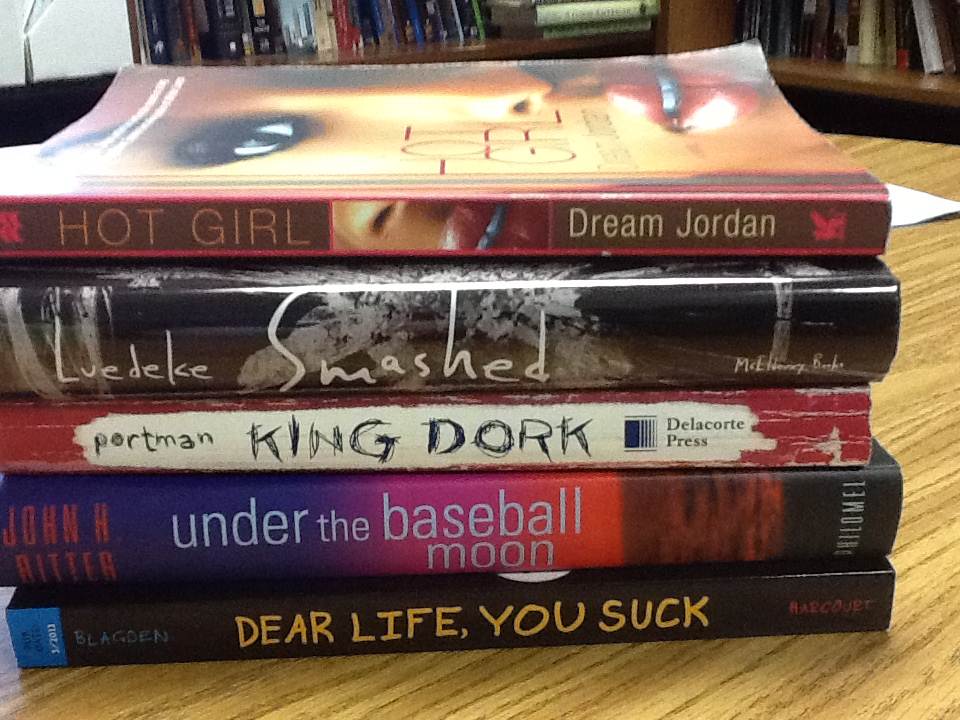
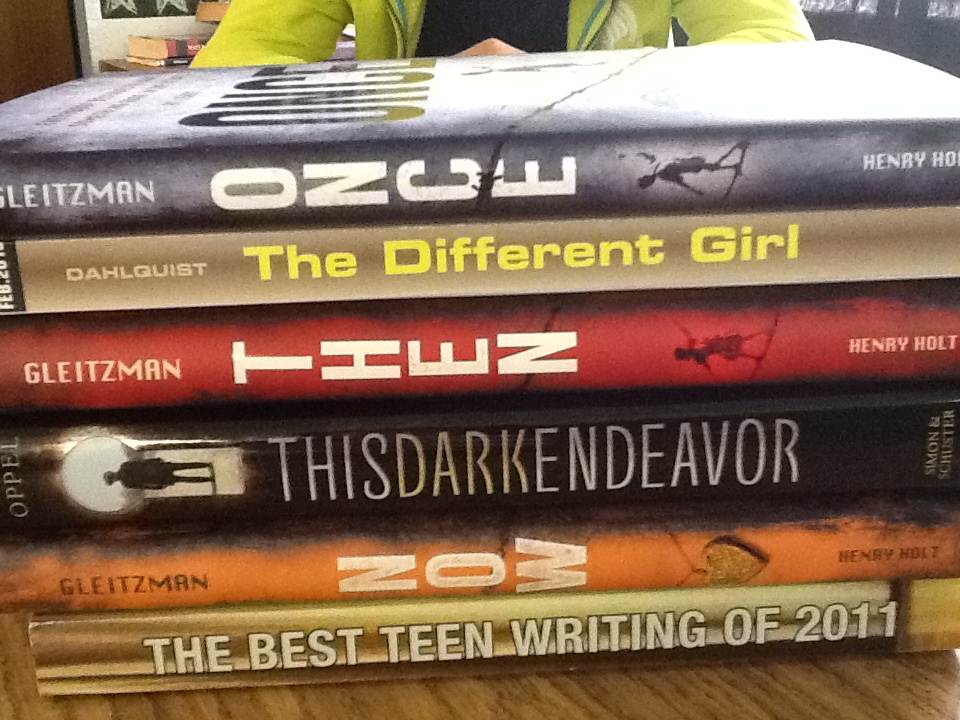
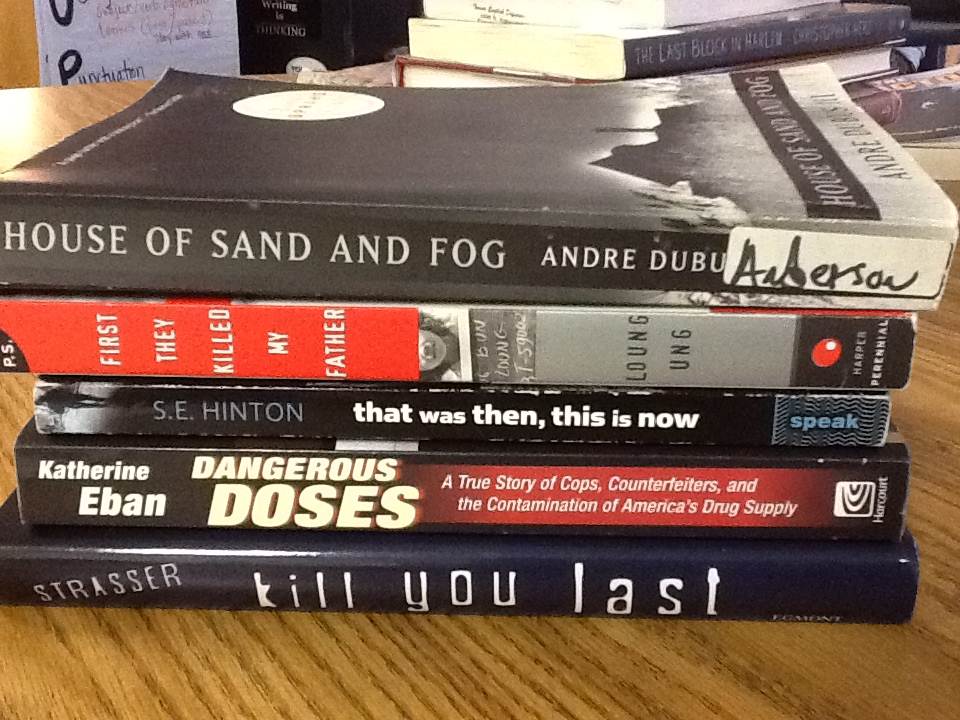
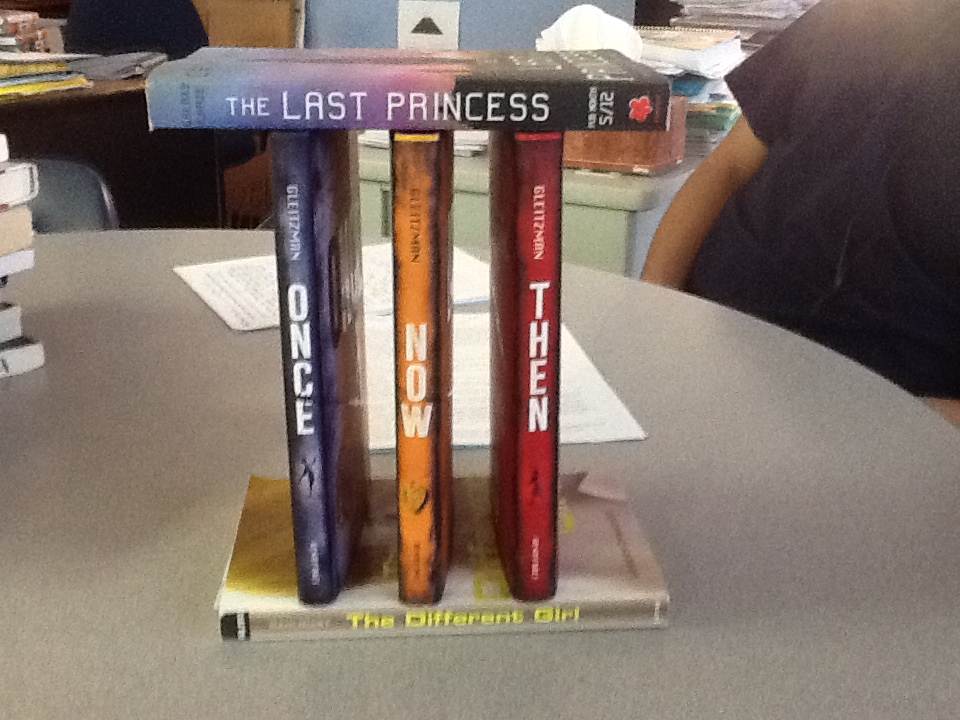
Spine Poetry: A Hit and a Bonus

I didn’t carefully read this post Wanted: Any and All Book Spine Poems, but I took the idea and ran with it. Now, I need to let 100 Scope Notes know about our fun as we kick off National Poetry Month.

The Friday before spring break I needed something engaging to do with students whose hearts, minds, and souls were already on vacation. Classes were short, and we only had 35 minutes.

Creating spine poetry did a few key things:

1. Students had to read book covers–and, BONUS, some kids even checked books out from me after class.

2. Students had to think about words that would create topics and themes in order for their poems to make sense.

3. Students had to read their poems aloud, making sure that even without punctuation, their poems could be read with some kind of rhythm.

4. Students got a little introduction to the much more rigorous study of poetry we will do this month.

The Process:  I have eight round tables in my room. I took a big stack of random books from my classroom library shelves and stacked them on each table. I showed the one model in the link above, and told students to get to work.

  • Create a poem, using only the words on the spine of the books.
  • Your poem must make sense–if it has a theme, even better!
  • You must use at least five books.
  • Someone in your group must read your poem aloud to the class.
  • Let me know when you are finished creating, so I can take a picture of your stack of books to show the class.

Here’s what my 9th graders created. Some make me proud.

Picture1

Picture2Picture3Picture4Picture5Picture6Picture7Picture8

The Beast That Was the Socratic Seminar

Guest Post by Tess Mueggenborg

The first time I heard of a Socratic Seminar, I was in early high school.  My history teacher gave us a copy of Plato’s “Allegory of the Cave,” arranged the desks in a circle, and instructed us to start talking.  It didn’t go well.  Perhaps if we’d had time to read the text before class, or if the teacher had explained what an “allegory” is, or explained the rearrangement of the room, or provided any instructions or expectations, we might have had a chance.  But none of those things happened–so the class flustered, floundered, and flopped.  Not a positive first exposure.

Fast-forward two years, and I’m in AP Literature.  In the midst of studying poetry, muddling through Donne’s sonnets and Keats’s odes (anyone else ever have a nightmare about “Batter My Heart Into A Grecian Urn”?), I walked in on a Wednesday to find an ominous circle of desks.  The instructions were vague and only marginally more helpful than the first go-around:  just talk about the poems, there will be no “moderator” so just jump into the conversation. . .and this is for a grade.

Strike two for the Socratic Seminar.

One more jump forward:  I’m in college, taking a class on Plato.  If you’ve read anything by Plato, you know that to read Plato is to read Socrates. . .and I finally made the connections between Socrates, this thing called the “Socratic Method,” and the beast that was the “Socratic Seminar.”

I figured it out:  the purpose of a Socratic Seminar is to ask questions.

Questions and discuss lead to learning.  If you ever get any answers out of a Socratic Seminar, great; but answers are not the goal, and not the signs of a “successful” seminar.  It’s not about demonstrating what you know:  it’s about declaring what you don’t know and traipsing through the tall grass together.  In that first Socratic Seminar, I should have broken the deafening silence by asking a simple question:  anybody know what “allegory” means?

In the next few guest posts, I’ll explain more about the Socratic Method and the Socratic Seminar, including:

  • the basics – what a Socratic Seminar is, and what it isn’t
  • the Socratic Seminar in the classroom (and not just an AP English classroom!) – including set-up and assessment
  • tips and tricks for managing the Seminar with real students (ie – how to find balance with the verbose students and the reluctant speakers)

Have any specific questions you want answered about Socratic Seminars?  Email me: mueggenborgt@cfbisd.edu.

“Professor” Tess Mueggenborg teaches English (and anything else with which her students need help) at RL Turner High School.  Her academic passions lie in comparative language and literature.  The Professor lives in Dallas with her husband, Jeff. Tess’ on Twitter @profmueggenborg

Can’t Get Students to Write? Try These Mentor Texts for More Engagement


I had a dream the other night where I was in a conversation with my principal about student engagement. Of course, I’d just spent the day in Internal Rounds at one of the other high schools, specifically looking for and analyzing data that was supposed to show if students were engaged in their learning– not compliant, maybe committed,  and hopefully, taking ownership. In my dream I felt exasperated. I struggled, and I probably hit my husband in the head. I finally threw up my hands and said, “I can’t do it! You’ll have my resignation tomorrow!” and I huffed out the door.

What the heck?

Yes, student engagement. Those seem to be the buzz words I keep hearing lately. Well, those or student apathy, the ugly step-sister. I’d rather at least try to stay positive.

I teach 9th grade English. I try to teach students how to write. Sometimes I want to beat my head against the wall because I have so many kids who just don’t get into what I try to get them to do. I imagine this sounds familiar to some of you–at least I hope I’m not alone here.

In my search for ways to get students engaged, I’ve discovered a few texts that serve as friendly mentors to help me get my students to care about what they have to say and how they say it. These mentors have interesting text structures or themes–or, hey, they are short, which goes over well with my kids.

I shared a few of these during my presentation at TCTELA in Dallas last week. The Prezi posted two weeks ago called “Reading Writing Workshop in High School? Yep, the Shoe Will Fit” has images of the book covers, and the handouts have some excerpts and ideas from some of my favorite mentors: The Book of Awesome by Neil Pasricha, The Dictionary of High School B.S. by Lois Beckwith, Six Word Memoirs from SMITH Magazine, and  The Encyclopedia of an Ordinary Life by Amy Krause Rosenthal. I’ve used excerpts from all of these and have had great success in getting students to take interest and ownership of their writing. We read the mentor, analyze the author’s craft–specifically looking for the moves he makes, and then we write our own version or addition to that text. Sometimes I require certain devices like metaphors or alliteration or parallel structure or whatever; sometimes not. Always I allow for student choice in the subject matter. I get the best student writing this way.

At the end of that presentation at TCTELA, I asked the audience to contribute ideas for mentor texts that they’ve had success with in getting students to write. Take a look at these fun books; you’ll see the value in how these can work to give students choice in what they write, while you give them say in how they write it.

(Thanks, Goodreads.com, for the synopsis and book cover images.)

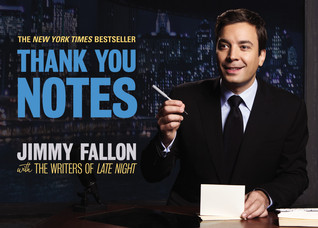
Thank you Notes by Jimmy Fallon

10505349
Thank you, slow walking family walking in front of me on the sidewalk. No, please, take your time. And definitely spread out, too, so you create a barricade of idiots. I am so thankful that you forced me to walk on the street and risk getting hit by a car in order to pass you so I could resume walking at a normal human pace.Jimmy Fallon has a few people and a few things to thank. In this brand-new book, the very first to come from his show, he addresses some 200 subjects in need of his undying “gratitude.” Each page will feature one note and a photograph of its recipient.
_____________________________________________________________________
World’s Shortest Stories by Steve Moss
8791206
Murder. Love. Horror. Suspense. All this and much more in the most amazing short stories ever written each one just 55 words long! Consider for a moment 55 words. It’s an absurdly tiny number. No, it’s an impossible tiny number. It’s what O. Henry might have conjured up if he’d only had the back of a business card to write upon. You’ll find murder and suspense, horror and intrigue, love and betrayal, plus distant worlds and inner demons.
All in a measly 55 words.
_______________________________________________
Devil’s Dictionary by Ambrose Bierce
49256
A virtual onslaught of acerbic, confrontational wordplay, The Unabridged Devil’s Dictionary offers some 1,600 wickedly clever definitions to the vocabulary of everyday life. Little is sacred and few are safe, for Bierce targets just about any pursuit, from matrimony to immortality, that allows our willful failings and excesses to shine forth.

________________________________________________
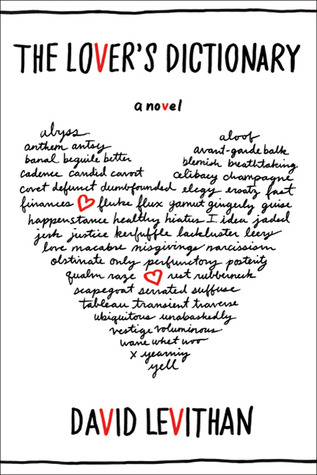
Lover’s Dictionary by David Levithan  [This one fits the list appropriately after the last one. I read this book in one sitting. It’s tender and sweet, and the cover is AWESOME!]
9279177
How does one talk about love? Do we even have the right words to describe something that can be both utterly mundane and completely transcendent, pulling us out of our everyday lives and making us feel a part of something greater than ourselves? Taking a unique approach to this problem, the nameless narrator of David Levithan’s The Lover’s Dictionary has constructed the story of his relationship as a dictionary.

_________________________________________________
Chicken Soup for the Teenage Soul by Jack Canfield, Mark Victor Hansen427920
This first batch of Chicken Soup for Teens consists of 101 stories every teenager can relate to and learn from–without feeling criticized or judged. This edition contains important lessons on the nature of friendship and love, the importance of belief in the future, and the value of respect for oneself and others, and much more.
_____________________________________________
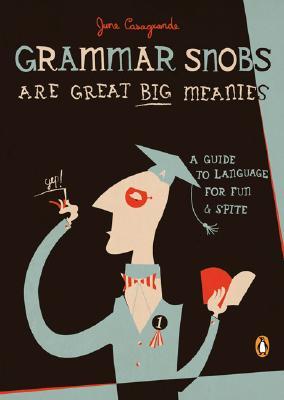
Grammar Snobs are Great Big Meanies: A Guide to Language for Fun and Spite by June Casagrand
14106
What do suicidal pandas, doped-up rock stars, and a naked Pamela Anderson have in common? They’re all a heck of a lot more interesting than reading about predicate nominatives and hyphens. June Casagrande knows this and has invented a whole new twist on the grammar book–a laugh-out-loud funny collection of anecdotes and essays on grammar and punctuation, as well as hilarious critiques of the self-appointed language experts.

Do you know of any more fun texts to use as writing mentor texts? Please leave your suggestions in the comments.

Writing Workshop: Assessment and Hope

Students should write more than teachers can ever grade. I heard this first from Kelly Gallagher, author of the book Readicide, a book, among others, that helped me frame my curriculum around Workshop. If I remember correctly, he said that his students write four times more than he grades. Really?

I pondered this for a long while, and I still struggle, but I think I have some of it figured out. I thought for a long time that my students would not write unless I graded what they wrote. Every assignment:  “Is this for a grade?” Every answer: “Yes, everything is for a grade.” The refrain got old.

Then I tried something new: I began writing with my students on the first day of school, and I had some kind of writing activity every single day. I don’t remember where I read it, but when I was researching the work of the reading writing workshop gurus a couple of years ago, I know I read:  if you struggle with time and have to choose between reading or writing, choose writing.

It’s the complete opposite of what I thought:  My students are struggling readers. How do I give up reading when I know they need it? I thought about it more and realized: If I teach writing well, students will be reading. And they will be reading a lot.

So let me explain how this works for me. Remember, I teach AP English Language and Composition (that’s the top 11th graders) and English I (that’s on-level freshmen)–two extremes.

Writing Every Day

There are many ways to get students to write every day. Of course, some ways will get them to take their writing more seriously than others. I find that when I give them an audience, students will put a lot more effort into what comes out their pens. Audience matters!

Topic Journals. Following the advice of Penny Kittle, author of Write Beside Them, I created “topic journals” that students write in once a week the first semester. I bought composition notebooks and printed labels, using various fonts, of the topics: love, conflict, man vs. man, man vs. self, man vs. nature, war, death, gender, hope, redemption, family, romance, hate, promise, temptation, evil, compromise, self-reliance, education, friendship, guilt, doubt, expectation, admiration, ambition, courage, power, patience, fate, temperance, desire, etc. I created 36 notebooks; one for each student in my largest class.

I introduced the topic journals to my AP students first. I set up the scenario:  “I will be teaching 9th grade. I need your help. Do you remember what it was like to be new to high school? nervous, anxious, a little bit obnoxious? I created these notebooks so you could write and give advice to my younger, less advanced students.”

The first task was to turn to the first page in the journal and define the topic. Many looked up the terms in the dictionary or online. They wrote a quickwrite explaining what the topic meant. Then on the next page they wrote about anything they liked as long as their writing fit the topic. I had them sign their posts with their initials and the class period. I told them that they could choose their form (a letter, a narrative, an advice column) as long as they remembered that their audience was 9th graders, and whatever they wrote had to be school appropriate. “If you write about bombs or offing yourself or anyone else, you’re off to see the counselor or the police.” These are good kids, most of them in National Honor Society. They took my charge to help my younger students seriously. This exercise often worked as a lead into our critical reading or class discussion that day, and sometimes students chose a piece they’d started in a topic journal to continue exploring for a process piece.

You can imagine how I introduced the journals to my freshmen. I began by saying, “You know I teach AP English, right? That’s the college-level English class. Well, those students would like to offer you advice about high school, life, and whatever else you might have to deal with the next few years. They are going to write to you in these topic journals. Your job when you see these notebooks on the tables is to choose the one that “calls” to you. First, you will read the messages the older students wrote for you, and then you will respond. Remember to use your best writing.” I then set the timer and had students read and write for 10-15 minutes, depending on the lesson I planned that day. Sometimes I had students share out what they wrote; most often we tucked the notebooks away for another week.

Students constantly fought over a couple of the topics:  love, death, and evil were their favorites. I am certain that is telling (and it did help me when selecting titles for book talks.)

While students wrote in topic journals, I read what students had previously written in the notebooks kids did not select. I’d write a quick line or two in response to something in that notebook. I always used a bright orange or green pen, so students could tell I’d had my eyes in that journal. They knew I was reading them, but they never knew when or what entry. This helped hold them accountable for not only the content of what they were writing but also the mechanics of how they were writing it.

Assessment? Formative. Students have to think quickly and write about a topic on a timed test for the AP exam (11th grade) and STAAR (9th grade).

Blogs

At first I only set up a class blog, and I had students write in response to posts I put on the front page and in response to an article I put on an article of the week page (another Gallagher idea). It didn’t take me long to realize that students would write more and take more ownership of their craft if they created their own blogs. The first year I had students set up blogs I taught gifted and talented sophomores, and I was nervous. Nervous that something would happen:  they’d post inappropriate things, they’d do something to get themselves and me in trouble, they’d be accosted by trolls out to hurt children through internet contact. I chose Edublogs.org as the platform because I could be an administrator on the student blogs, and I had my kids use pseudonyms. This was overkill. Yes, I did have to change two things that year:  one student called his blog Mrs. Rasmussen. I told him my husband didn’t appreciate that much. Another kid used a picture of a bomb as his avatar. Not funny. All-in-all my students did great, and they wrote a lot more (and better) than they ever did for me on paper. I was a stickler for errors and created this cruel scoring guide that said something like: A=only one minor error, B=two minor error, C=three minor errors, F=four or more errors. Students that had never gotten a C in their lives were freaking out over F’s. “Sorry, kiddo, that’s a comma splice. That’s a run-on.” I had more opportunities to teach grammar mini-lessons than I ever had in my career. But see, these kids cared about their grades.

My 9th graders now–not so much. They care about a lot of things, but if I punish them for comma errors or the like, they shut down and stop writing. I learned to be much more careful. Now, I work on building relationships so they trust me to teach them how to fix the errors themselves. It takes a lot more time, but in the end, student writing improves, and students feel more confident in their abilities. I am still working on getting my 9th graders to be effective writers. So far, I have not accomplished that too well, as is evidence of their EOC scores this year.

This past year my AP English students posted on their blogs once a week. I told them that I would read as many of their posts as I could, but I would only grade about every three. I wouldn’t tell them which ones I’d be grading. I let students choose their topics, but since I had to teach them specific skills to master for the AP exam, I instilled parameters. They had to choose a news article that they found interesting, and then they had to formulate an argument that stemmed from that article. The deadline was 10 pm on Monday–every week. This assignment accomplished two of my objectives:  students will become familiar with the world around them, and students will create pieces that incorporate the skills that we learn in class. When I turned to social media to promote student blogs, I got even more ownership from my students.

Assessment? Formative or Summative. Students apply the skills they learned in class regarding grammar, structure, style, devices, etc. Scored using the AP Writing Rubric for the persuasive open-ended question.

Twitter in the Classroom

One of these days I will write a post about the many ways I used Twitter in class this year. For now, let me just tell you:  Twitter was the BEST thing I added to my arsenal of student engagement tools. Ever.

When I began asking students to tweet their blog url’s after they wrote on Mondays, I started leaving quick and easy feedback via Twitter. It was so easy! Kids would tweet their posts; I’d read them; re-tweet with a pithy comment. Within minutes of the first couple of tweet exchanges, students were posting and tweeting more. They were getting feedback from me, and they were giving feedback to one another. They began building a readership, and that’s what matters if students blog. Just because they are posting to the world wide web does not mean anyone is reading what they write. But, a readership, especially one that will leave comments, that’s a whole new story.

Assessment? Formative. Students share their writing and make comments about their peers’ writing. Critical thinking is involved because students only have 140 characters to express their views.

Student Choice. Sometimes.

In a perfect writing class, I am sure students get to choose what they write about every time. This does not work in an AP English class where I am trying to prepare students for that difficult exam. Once a week my students complete a timed writing where they respond to an AP prompt. The guidelines for AP clearly state that the essays are scored as drafts; minor errors are expected. My students must practice on-demand writing. There is no time for conferencing or for taking these essays through the writing process. Unless–we revisit. And sometimes we do. Students are allowed to re-assess per our district grading policy if they score below an 85. 85 is difficult for many of my students, so lots of them re-assess. To do so, students must come in and conference with me about their timed writing. I am usually able to pick out the trouble spots quite easily, and it’s through these brief conversations that I get the most improvement from student writing. Often, instead of conferencing with me, students will evaluate their essays with one another.

I show several student models of higher scoring essays and teach students how to read the AP Writing Rubric. Then, in round robin style, students assess their own essays and at least three of their peers. I remind students not to be “nice” to their friends and give a score that’s undeserved. This will not help anyone master the skills necessary for the AP exam. Rarely do students give themselves or their peers scores higher than I would.

My students also write process papers. For AP reading workshop students choose a book from my short list. After reading and discussing the books with their Book Clubs, students have to write an essay that argues some topic from the book. I model how to structure an essay. I model how to write an engaging introduction. I model how to imbed quotes and how to write direct and indirect citations. I model everything I want to see in this type of writing.

I allow several weeks in my agenda to take these papers through the writing process, and students do most of the work outside of class (not so with my 9th graders).

  • Day one students generate thesis statements, and we critique, re-write, and re-critique.
  • Day two students bring drafts that we read and evaluate in small groups. (I have to teach them that a draft is a finished piece that they are ready to get feedback on–not a quickwrite. So many students type up their rough draft and call in good. This makes me crazy! And I tell them that I will not read their first draft unless they come before or after school or during lunch. They must work on their craft before I will spend my time reading it.)
  • Day three students bring another draft that we read and evaluate again. Sometimes, depending on where my kids are in terms of producing a good piece, I will take these up and provide editing on the first page. Never more than the first page!
  • Day four students turn in their polished papers. I score them holistically on a rubric that aligns with the AP Writing one, or if it’s my 9th graders, I score them on the appropriate STAAR writing rubric.

My freshmen students need a much more hand holding, and we do a lot of writing on lined yellow paper. Most often, especially at the first of the year, they get to choose their own topics. However, I have to give them a lot more structure because on the new Texas state test. 9th graders have to write two essays (about 300 words each): a literary essay, which is an engaging story, and an expository essay, which explains their thinking about a given prompt. Students use the yellow paper to draft during class. I wander the room, answering questions and keeping kids on task. I also try to write an essay every time I ask students to do so. I use these essays as mentor texts in addition to mentor texts I find by professional authors.

Usually I begin class with some kind of mini-lesson if students are in the middle of drafting. I might show students a paragraph with a description that uses sensory imagery and instruct them to add some description in their own writing. Or, I might teach introductory clauses and have students revise a sentence to include one or two or three. This way I am able to get authentic instruction that my students need right there in the middle of their writing time. When I score these student papers, I specifically look for the skills I’ve explicitly taught. If I do it right, I will have read my students papers one or two times during their writing process, prior to them ever turning in their final draft.

Notice I said “if I do it right.” I rarely do it right. I am still learning to budget my time and get to every kid. I am still learning to get every kid to write. I am writing English I curriculum this summer, which I will use in the fall. I hope to get some of my challenges with my struggling students worked out as I focus more purposefully on the standards. I realized this year that while I am teaching writing as a process all the time, I am not necessarily targeting the standards that fit into the process. I am thinking about this a lot lately.

This is still my burning question:  how can I get kids who hate to read and write to participate in writing workshop so their writing improves and their voices are heard?

I am turning to the gurus as I research and think this summer. Jeff Anderson’s book 10 Things Every Writer Should Know has been an excellent start.

Scaffolding or Struggling, Sinking vs Thinking

So, when the school year started, I was all about scaffolding. I would do this, and my students would do that. I’d provide, build, prop, support until my students were writing their souls onto the paper. Good idea, right? Yeah, it worked about two weeks.

Then, I realized my students were bored. No matter how much I tried to get them interested in doing the learning my way, they were all about doing the learning their way:  they wanted me to “get them started” and then let them GO.

Since I am a control freak, this presented a problem. What if they did the work wrong? What if they didn’t learn the skill I needed them to learn? What if I couldn’t stay on the carefully crafted schedule I’d created?

Yep. That last question—see? There’s the problem. I wanted the learning to be about me. My schedule. My way or the highway. I had to learn to let go and let them.

My approach to writing instruction changed. Instead of pounding my students sweet heads with pre-writing strategies, although colorful additions to their writing notebooks, I started more carefully following the advice I’d learned from great coaches like Jeff Anderson, Penny Kittle and Cris Tovani.

One thing I changed:  I started using better mentor texts. I found pieces of writing that included the skill I wanted students to learn, pieces that were inflammatory or insulting—you know, writing that made students crazy with the need to respond? Pieces that made students think. We’d read these pieces together, and then I’d ask the students questions that helped them discover the writing skill in the piece. Inevitably, students will find what I hope they’ll find—if the mentor text is a good one.

For example, I just read this piece by Stephen King entitled “Tax Me, for F@%&’s Sake” that I plan on using in class one day soon. The title alone will make my students want to read it. (Careful–obviously, there is some salty language.) Take a peek:

What charitable 1 percenters can’t do is assume responsibility—America’s national responsibilities: the care of its sick and its poor, the education of its young, the repair of its failing infrastructure, the repayment of its staggering war debts. Charity from the rich can’t fix global warming or lower the price of gasoline by one single red penny. That kind of salvation does not come from Mark Zuckerberg or Steve Ballmer saying, “OK, I’ll write a $2 million bonus check to the IRS.” That annoying responsibility stuff comes from three words that are anathema to the Tea Partiers: United American citizenry.

And hey, why don’t we get real about this? Most rich folks paying 28 percent taxes do not give out another 28 percent of their income to charity. Most rich folks like to keep their dough. They don’t strip their bank accounts and investment portfolios. They keep them and then pass them on to their children, their children’s children. And what they do give away is—like the monies my wife and I donate—totally at their own discretion. That’s the rich-guy philosophy in a nutshell: don’t tell us how to use our money; we’ll tell you.

The writing devices in this excerpt scream to be discussed:  Hello? Tone, Dash–baby, Word Choice Wonders, Asyndeton’s a-list, Repetition-Repetition, and more!

If I trust my students to search, find, think, and discuss what makes this writing effective—they will. Then, not only can I encourage my kids to use devices like this in their own writing, I can craft questions that get them thinking about topics to write about. Voile! My mentor text is now an ideas generator.  

Questions like:  What kind of story might be titled “One Single Red Penny”? What topics emerge from these paragraphs? Why should you care about United American citizenry? What are some things you’d like people to “get real” about? What are some things you consider “annoying responsibility stuff”? What are some treasures your family passes down from children to “their children’s children”?

My students will get into these questions, and look at all the different types of writing they can produce just by thinking about these topics? Literary, expository, persuasive.

Thinking. Maybe that’s the deal here. When I provide too much scaffolding, my students do not have to think near as much as when I let them struggle through.

In the rear of my classroom, I have a wall painted with chalkboard  paint that says in colorful fancy letters: It’s TIME to think. Maybe it’s just me, but thinking equates to struggle, and I am pretty sure that’s where the learning is.

Speed Dating in AP English

It’s getting close to AP exam time, and it’s also a time when my students are worn out. They come to class with glazed looks, and the bags under their eyes are often bigger than the sagging of their pants. I try to put on the neon hat and shock them into waking up and staying with me for another month, so any new strategy that tweets my way, I am willing to try.

Flashback to why this strategy matters:

One of the questions on the AP English Language and Composition exam requires students to respond to a prompt and compose an argument in which they use evidence from their own knowledge and experiences to build their credibility and prove their assertion. I tell my kids: You need a big knowledge cloud that you can pluck from during the test. What do you know about _________? Because the more you build your credibility and show that you are thinking on paper, the better argument you will write.

To help build that knowledge cloud, I have to push knowledge, specifically knowledge of a student’s world. If students read or listened to the news, this would be easy—but, most don’t.

My burning question? How do I create a topic dump with current events?

First, I came up with the idea to give students a topic, i.e., freedom, conformity, sustainability. As homework they have to research the topic enough so they can bring a news article to class that reflects that topic in some way. We got this far, and I wasn’t sure what I was going to have my students do with the articles once they found them. Then, I listened in to @dontworryteach, @dlaufenberg, and @mssandersths discussing “speed dating” on Twitter, and I took their ideas and made them my own. Thanks PLN!

Speed Talking with Current Events

Inner Circle faces outward. Each student has read and knows his/ her news article.

Outer Circle faces inward, across from a person in the inner circle.

The students in the inner circle explain their news article to the person facing them. What happened? Why does this matter? How does it relate to the topic of the week? They speak for 2-3 minutes—only about the news article—while the outer circle person listens.

When time is called, the outer circle students think of topics that might be in the prompts given on the AP exam, and they try to figure out how they might use that news article to support an argument that relates to that topic. They speak for 1-2 minutes.

When time is called, students on the outer circle move one seat to the right.

Repeat the process of talking, listening, talking, listening.

Switch places from inner to outer circle about midway into the class period, and repeat the process.

Students repeat their news article several times, which will help them remember it. And, all students are flooded with ideas that they may find helpful in building their arguments for the AP English Language exam.

————————————————————————————————————————————

I asked my students at the end of class today to rate this strategy on a scale of 1 to 10 with one being “It’s horrible. Never make us do this again.” And 10 being “Please let us learn like this more often.” The average rating was a nine. I’ll take that.

Variations: reviews of concepts, terms, pretty much anything you want students to talk about and remember.

I’d love to hear your ideas.