How does this relate to the learning taking place in your class?
Or, does it?

Teacher-Mentors with Insights, Ideas, and Resources for Secondary Readers & Writers Workshop
How does this relate to the learning taking place in your class?
Or, does it?

just takes it to a new and higher level.

Guest Post by Tess Mueggenborg
In a world plastered with poor writing, it is a struggle to convince students that learning to write well is a task worthy of time and energy. Yet I persist, in this tedious and possibly futile pursuit, because I believe it is best for my students, and crucial to the intellectual sustenance of humanity.
 My students are, supposedly, the best and brightest of their generation. Contrary to what some other teachers think, this doesn’t mean they’re easy to teach. My classroom battles begin in much the same way as every other teacher: convincing my students that what I’m teaching them is worth learning. But I have an added challenge: worse than just being apathetic, my students are often combative, and they have the brain cells to back up their resistance to my proffered educational nuggets. In their daily life, my students are inundated with crappy writing…written by people who are getting along just fine in life. By and large, their parents don’t know what a comma is…much less how to use it correctly. Their peer-to-peer dialogue is a mashed-up mixture of text-speak, generation-specific slang, and Spanglish. And with this hybrid cut-and-paste short-cut of a “language,” they feel that they are able to communicate quite effectively. So why should they have to pay attention to my lessons on commas and dangling modifiers, homophones and varied syntax, and the difference between a semi-colon and a dash? (I shudder to think of their protests if I tried to differentiate between an em-dash and an en-dash…oh, the horror! the horror!) With a nod to pragmatism, I’m forced to concede: to a large extent, they’re right.
Many of my fellow teachers don’t know comma rules (or don’t take the time to employ them), and they certainly struggle with homophones (attention: IT’S means IT IS – it’s NOT a possessive pronoun. Oh, sorry, you don’t know what a possessive pronoun means, so that tidbit doesn’t mean anything to you). But they’re certainly not in any danger of losing their jobs for this, or being dinged on their annual reviews for imprecise use of language…since the administrator will probably comment to them: “You’re communication is excellent – your a great teacher!”. When I see such errors committed, a little part of my soul cries in pain: not for the stupidity and ignorance of my coworkers, but because of the example they set for my students. My students are right to question me and push back against my lessons on grammar and usage: if everyone else is living happily in the land of grammar ignorance, and are none the worse for it, why should they bother with the mundane nuances of the English language?
My answer to my students’ queries of “why” is simple: because you can. Because you have the brain cells to notice and understand what are, to many people, subtle or irrelevant differences. Because you should try to be the best person you can be, and that includes communicating. And if that means you have to learn some new things and you’re irritated every time you see grocery store sign advertising “Banana’s for sale,” so be it. 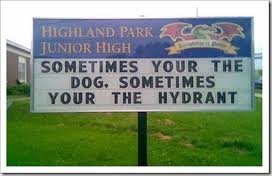
In spite of ever-mounting evidence that I have litttle chance for success, my job is to convince my students that they must learn to write well, and that writing well is a worthwhile pursuit…and I will continue in this likely futile endeavor, because it is what my pained word-nerd, grammar-geek soul demands of me.
“Professor” Tess Mueggenborg teaches English (and anything else with which her students need help) at RL Turner High School. Her academic passions lie in comparative language and literature. The Professor lives in Dallas with her husband, Jeff. Tess’ on Twitter @profmueggenborg

Want to create successful writers? Want to raise them from seedlings, make them strong and resilient and capable of writing oak trees of essays, not saplings of deadwood? The key has nothing to do with writing. If a teacher wants to help their students to become successful writers, they must make their students into successful readers. If a student isn’t a reader, they’ll never be a writer – no way, no how. The reading should be both academic and for pleasure: students need to bask in the glow of words for fun, and struggle with a snarling sentence when needed. They should delight in diction and syntax, but never be quite satisfied with them as-is – every student should always ask, “why this way?” and “why not like this?”. And no, they probably don’t need to know what “diction” and “syntax” mean: we don’t need to understand the nuclear reactions of the sun or the tidal effects of the moon to enjoy a sunny day at the beach, and they don’t need to know anadiplosis or synecdoche to appreciate a well-written paragraph. If we don’t put words in their hands and in front of their eyes, we’ll never get the words into their heads … and if we can’t get the words into their heads, they’ll never put those words onto paper. So … want to teach a kid to write?

Teach her to read.
~Tess Mueggenborg, Professor


;
With the implementation of a new statewide standardized test, teachers are anxious to figure out what they can do to get kids where they need to be. While I continue to read up on information about the test, I am more convicted than ever that the following statements must happen in order for us to see continued improvement in our students’ scores.
;
1. Reading and writing MUST be integrated seamlessly into all content areas. It simply isn’t enough for students to be intentionally reading and writing in their language arts classroom.
2. You must now consider that all of your students are in your AP or advanced class. Everyone has to experience the rigor. It is not okay to just “get kids to pass.” That idea simply won’t cut it any more.
3. In order for students to do well, they must READ like a WRITERS and WRITE like READERS. You can’t have one without the other, and teachers need to be explicitly interlocking the two together as they teach.
4. It is not about the test. We can want to see more released questions/examples and have more data from the state, or whatever, but that really isn’t going to get our kids to score any better. The only thing that will improve our scores is improved instruction that utilizes sound teaching strategies.
5. All kids have to read and write more! Practice makes perfect, or so they say…. Regardless, our kids that struggle with reading and writing simply haven’t logged enough flight hours. —Ok, that’s a generalization, I get there could be other reasons for kids struggling, but generally speaking, students who struggle need more authentic practice.


American writer, editor, and teacher William Zinsser taught that “writing, and learning, and thinking are the same process.” If this is true, then the not-so-easy task of the teacher is to get students to effectively put their thoughts into words on a page. One relatively simple way to get students engaged in the process is to help them take ownership of online writing; specifically, get students to create and maintain a blog, which will allow for what Zinsser calls the four basic premises of writing: “clarity, brevity, simplicity, and humanity.”
Allowing students to choose topics that have personal and meaningful applications to their lives provides opportunities for better writing. Still, some students will be stumped and say, “I can’t think of anything to write about.” Consider encouraging them to scan the front page of Yahoo, Google, or any other online news source. Read some headlines, which might lead to reading some articles. Respond to news they find interesting, shocking, or outrageous. (Look, you may have students reading AND writing!)
Posting links on a teacher or class blog and asking students to read and then respond on their own blogs allows teachers more control over the selection of topics that students write about than complete self-selection. Consider linking news articles like Kelly Gallagher’s “Article of the Week” and asking students to post their reflections, or post YouTube videos that have thematic ties to the literature being discussed in class. Students can write commentary or reflections as a way to show they are learning about life outside the classroom.
Asking questions that make students think and/or justify their thinking about the books they are reading creates instant “prompts” for student blogging. Open-ended questions like “How does this story relate to _____?” or “How would you deal with _______?” or “Describe another story that deals with the same conflict” lead students to make connections with the text that may help with their reading comprehension. Of course, by adding the “use text evidence to support your answer” component, students learn how to justify their responses and maybe embed quotes and all that good stuff.
Encouraging students to add links, tags, images, etc. in their posts ensures that they are exploring what it means to embrace 21C writing skills. When students model authors’ blogs that effectively lead readers to more information, they show that they understand how knowledge is linked and perhaps they will come to understand that seeking knowledge takes effort.
Requiring students to interact with their peers’ online writing promotes a spirit of collaboration and community beyond the classroom. Teach respect in terms of language, but also allow for disagreement, as debate is what often makes for deeper learning.

I sat listening to Donalyn Miller the author of The Book Whisperer talk about how she gets her students to read an average of 60 books a year. She talked about student choice in selecting books. She talked about reading herself in order to match books with kids. She talked about creating readers and not just teaching reading. I thought: “Cool, but how do I do that with MY students?”
I’d just been assigned to teach AP English Language and Composition the next fall, and I was trying to get my thoughts aligned with the expectations from the College Board. At the same time I was in the middle of my three weeks National Writing Project summer institute, and I kept hearing that I must give students time, and more time, to read and write. My head swam.
At one point, I asked Donalyn: “This is all great, but how does student choice and all this reading work in an AP English class when the focus is on students passing the exam?” Honestly, I was put off by her response: “It’s not all about the test. Is it?” Yes. Yes it is.
Or so I thought at the time.
It took me three years to figure out how to use Workshop in my AP English class, but I have. Mostly.
My Definition of Reading Writing Workshop: Students do more work than me!
Weekly Schedule
| Monday | Tuesday | Wednesday | Thursday | Friday |
| Flex Instruction/ Writing Workshop: Timed Writing Debrief
HW: blog post due |
Reading Workshop:
Multiple Choice/Critical Reading |
Direct Instruction/ Reading or Writing Workshop as needed | Writing Workshop: Timed Writing
HW: blog comment due |
Alternate Weeks:
Topic & Theme Flood/Vocab & Current Events |
The table shows a typical week in my AP workshop classroom. Of course, there are always interruptions to my well-planned schedule.
Blogs: Student Own and Class
One of the best instructional practices I have is mandating that my students create and post to blogs. Some kids truly take ownership and write more than I assign; some do the absolute minimum. Some refuse to blog at all. Those are the kids who miss out on the practice it takes to become an effective writer, and most of those do not get qualifying scores on the AP exam. My class blog is Citizen Scholars. You can see how I post prompts that students respond to either in the comments or on their own blogs. To see student sample blogs scroll down my blogroll and click on a few. Some are better than others: Joseph, Sarosh, and Simina’s are quite good. When I give students choice about what they write on their own blogs, I consistently get better writing.
In the fall of this past year, I had students find and read current events of their choice. On their blogs they had to write a response to something within the article they read. I scored their writing based on whatever skill we worked on in class that week, using a generic version of the AP writing rubric. Spring semester I tried something new: students were to move through the modes of writing. They got to choose their topics; one week they were to write a description, another week a compare/contrast, etc.
My students write more than I can ever grade. I might grade one in three blog posts, but the more feedback I give, the better the writing. Using Google Reader and the Flipboard app on my iPad is a simple way to read student blogs. I give feedback on sticky notes. Or, if you get your students using Twitter, they can tweet their blog urls every time they post. Again, using my iPad, I can read their blogs and leave feedback quickly via my own tweets and re-tweets of student blog posts.
Multiple Choice Practice/ Critical Reading
Historically, the part of the AP exam that my students do the worst is on the multiple choice section. As a result, I’ve tried to include more targeted practice with critical reading. My goal is for students to complete 30 multiple choice practices per year. This is difficult (I think I got through 24 last year) but is proving to be worth it as students’ scores improve. Some variations on multiple choice practice (all can be done in small groups or with partners) include:
When students engage in the “work” of reading, they are absorbed in what I called Workshop. The challenge for me was learning to trust that my students would find everything important within a passage. They surprise me every single time!
Direct Instruction/ Reading or Writing Workshop
I learned from Penny Kittle the value of using professional authors like Leonard Pitts, Jr. and Rick Reilly as mentors. Craig Wilson, USA Today columnist, and Mitch Albom are also favorites. These authors write about high interest, contemporary topics, and their writing is chalk full of the rhetorical devices I want my students to include in their own writing. Some weeks we read like readers–reading articles as we focus on content and comprehension. Some weeks we read like writers–analyzing articles as we identify and discuss the effects of the language the authors use to create their messages. Like Kittle, with students I create anchor charts that hang in the room, which detail the different techniques authors use in the majority of their pieces. In years past I’ve had students write process papers on topics of their choice, modeling the writing of one of our mentors. These are often students’ favorite pieces of writing.
Since time is so limited, students write their drafts outside of class. (Of course, I have to teach them the difference between a draft that they are ready to get feedback on from peers and their pre-writing that they quickly sketch during the period prior to mine. Drives me crazy.) In class, students read, evaluate, and give feedback on one another’s writing as I wander the room and conference with as many students as possible.
Conferencing is the key to creating better writers.
During my larger classes, it is difficult to conference with each student. I often post a sign up sheet with time slots for before or after school. Students may choose to meet with me for a more in-depth discussion about their writing. Depending on the student’s needs, I might make this additional conference time mandatory.
Book Clubs
Since I want my students to become lifelong readers, I try to introduce them to books that they will be compelled to read. The AP English Language exam, unlike the Literature exam, does not require students to be well-versed in any specific pieces of literature. It would be easy to delete full-length books from my syllabus, but in my heart I am still a literature teacher, so I want my students to read good books. I also agree with Penny Kittle: students must be prepared for the rigorous reading they will have to do in college. If I can get students to spend time reading books they enjoy, perhaps they will be better prepared for the time demand of college reading.
I got the idea of student book clubs from a colleague in a neighboring district. She introduced me to the novel Extremely Loud and Incredibly Close by Jonathan Safron Foer (before the movie) and told me that once I read that book and felt the need to talk about it–because I would, I would understand how Book Clubs could work with my students. She was right. When students read something that is interesting and requires discussion, they will read (instead of Spark Note), and they will be more likely to read more.
My students read a minimum of four books outside of class (not enough, I know.) They choose titles from my short list. While this does not allow for complete student choice, it does allow for a little. I try to select books that have complex themes or subject matter yet are engaging enough that teenagers will find them interesting. Students meet in Book Clubs during class once a week for about three weeks to discuss their books. Then, our focus changes from reading to writing. Students continue to meet with their Book Clubs, but now the clubs become writing groups. Once the books are read, students must write process papers in which they address some aspect of the book they read and write an argument about it, using evidence from the books as their support. Many students find these essays difficult; they are very college-like in that students must “read the book and write a paper about it.”
I conduct many mini-lessons while students are writing these essays, i.e., structure of an essay, semi-colon and/or colon use, periodic sentences, embedding quotes, etc. Students know if I teach a mini-lesson, I expect to see evidence of mastery of that skill within their essays.
Topic & Theme Flood/ Vocab & Current Events
The topic & theme flood is something my team is going to try this year. We got the idea from a trainer from AP Strategies we’ve been working with for the past year. She suggested that since most students know so little about the world in which they live, we need to bring the world inside our classrooms more. Every other Friday students will engage in a discussion about a specific topic, e.g., integrity, belief, power, success. They will read a short passage that focuses on the topic, identify the theme, and then have to “hunt” via the web for current events that relate to that topic and/or theme. Then they will engage in some kind of activity wherein they share the articles that they find. We hope this will help build student background knowledge for the variety of passages that might appear on the exam, and build their knowledge of the events happening in the world around them. We plan to include vocabulary instruction that corresponds to our topics, but that is still a work in progress. Most recently we used a vocabulary list of SAT words, but we feel that focusing on words that would describe tone might be more beneficial–not sure how that will look yet.
_________________________________________________________________________________________________
While I do not have Workshop at an AP level all figured out yet, I love the challenge of trying. I know that students like to think, and they like to be busy in class in a way that forces them to figure things out. Workshop is the best avenue I have found for getting there. The best comment I heard all year came from Daniel, a genius of a kid with a knack for cutting up and getting under my skin. He said, “Mrs. Rasmussen, this is so hard. You make us think so much.”

Yep. Something is working.

Students should write more than teachers can ever grade. I heard this first from Kelly Gallagher, author of the book Readicide, a book, among others, that helped me frame my curriculum around Workshop. If I remember correctly, he said that his students write four times more than he grades. Really?
I pondered this for a long while, and I still struggle, but I think I have some of it figured out. I thought for a long time that my students would not write unless I graded what they wrote. Every assignment: “Is this for a grade?” Every answer: “Yes, everything is for a grade.” The refrain got old.
Then I tried something new: I began writing with my students on the first day of school, and I had some kind of writing activity every single day. I don’t remember where I read it, but when I was researching the work of the reading writing workshop gurus a couple of years ago, I know I read: if you struggle with time and have to choose between reading or writing, choose writing.
It’s the complete opposite of what I thought: My students are struggling readers. How do I give up reading when I know they need it? I thought about it more and realized: If I teach writing well, students will be reading. And they will be reading a lot.
So let me explain how this works for me. Remember, I teach AP English Language and Composition (that’s the top 11th graders) and English I (that’s on-level freshmen)–two extremes.
Writing Every Day
There are many ways to get students to write every day. Of course, some ways will get them to take their writing more seriously than others. I find that when I give them an audience, students will put a lot more effort into what comes out their pens. Audience matters!
Topic Journals. Following the advice of Penny Kittle, author of Write Beside Them, I created “topic journals” that students write in once a week the first semester. I bought composition notebooks and printed labels, using various fonts, of the topics: love, conflict, man vs. man, man vs. self, man vs. nature, war, death, gender, hope, redemption, family, romance, hate, promise, temptation, evil, compromise, self-reliance, education, friendship, guilt, doubt, expectation, admiration, ambition, courage, power, patience, fate, temperance, desire, etc. I created 36 notebooks; one for each student in my largest class.
I introduced the topic journals to my AP students first. I set up the scenario: “I will be teaching 9th grade. I need your help. Do you remember what it was like to be new to high school? nervous, anxious, a little bit obnoxious? I created these notebooks so you could write and give advice to my younger, less advanced students.”
The first task was to turn to the first page in the journal and define the topic. Many looked up the terms in the dictionary or online. They wrote a quickwrite explaining what the topic meant. Then on the next page they wrote about anything they liked as long as their writing fit the topic. I had them sign their posts with their initials and the class period. I told them that they could choose their form (a letter, a narrative, an advice column) as long as they remembered that their audience was 9th graders, and whatever they wrote had to be school appropriate. “If you write about bombs or offing yourself or anyone else, you’re off to see the counselor or the police.” These are good kids, most of them in National Honor Society. They took my charge to help my younger students seriously. This exercise often worked as a lead into our critical reading or class discussion that day, and sometimes students chose a piece they’d started in a topic journal to continue exploring for a process piece.
You can imagine how I introduced the journals to my freshmen. I began by saying, “You know I teach AP English, right? That’s the college-level English class. Well, those students would like to offer you advice about high school, life, and whatever else you might have to deal with the next few years. They are going to write to you in these topic journals. Your job when you see these notebooks on the tables is to choose the one that “calls” to you. First, you will read the messages the older students wrote for you, and then you will respond. Remember to use your best writing.” I then set the timer and had students read and write for 10-15 minutes, depending on the lesson I planned that day. Sometimes I had students share out what they wrote; most often we tucked the notebooks away for another week.
Students constantly fought over a couple of the topics: love, death, and evil were their favorites. I am certain that is telling (and it did help me when selecting titles for book talks.)
While students wrote in topic journals, I read what students had previously written in the notebooks kids did not select. I’d write a quick line or two in response to something in that notebook. I always used a bright orange or green pen, so students could tell I’d had my eyes in that journal. They knew I was reading them, but they never knew when or what entry. This helped hold them accountable for not only the content of what they were writing but also the mechanics of how they were writing it.
Assessment? Formative. Students have to think quickly and write about a topic on a timed test for the AP exam (11th grade) and STAAR (9th grade).
Blogs
At first I only set up a class blog, and I had students write in response to posts I put on the front page and in response to an article I put on an article of the week page (another Gallagher idea). It didn’t take me long to realize that students would write more and take more ownership of their craft if they created their own blogs. The first year I had students set up blogs I taught gifted and talented sophomores, and I was nervous. Nervous that something would happen: they’d post inappropriate things, they’d do something to get themselves and me in trouble, they’d be accosted by trolls out to hurt children through internet contact. I chose Edublogs.org as the platform because I could be an administrator on the student blogs, and I had my kids use pseudonyms. This was overkill. Yes, I did have to change two things that year: one student called his blog Mrs. Rasmussen. I told him my husband didn’t appreciate that much. Another kid used a picture of a bomb as his avatar. Not funny. All-in-all my students did great, and they wrote a lot more (and better) than they ever did for me on paper. I was a stickler for errors and created this cruel scoring guide that said something like: A=only one minor error, B=two minor error, C=three minor errors, F=four or more errors. Students that had never gotten a C in their lives were freaking out over F’s. “Sorry, kiddo, that’s a comma splice. That’s a run-on.” I had more opportunities to teach grammar mini-lessons than I ever had in my career. But see, these kids cared about their grades.
My 9th graders now–not so much. They care about a lot of things, but if I punish them for comma errors or the like, they shut down and stop writing. I learned to be much more careful. Now, I work on building relationships so they trust me to teach them how to fix the errors themselves. It takes a lot more time, but in the end, student writing improves, and students feel more confident in their abilities. I am still working on getting my 9th graders to be effective writers. So far, I have not accomplished that too well, as is evidence of their EOC scores this year.
This past year my AP English students posted on their blogs once a week. I told them that I would read as many of their posts as I could, but I would only grade about every three. I wouldn’t tell them which ones I’d be grading. I let students choose their topics, but since I had to teach them specific skills to master for the AP exam, I instilled parameters. They had to choose a news article that they found interesting, and then they had to formulate an argument that stemmed from that article. The deadline was 10 pm on Monday–every week. This assignment accomplished two of my objectives: students will become familiar with the world around them, and students will create pieces that incorporate the skills that we learn in class. When I turned to social media to promote student blogs, I got even more ownership from my students.
Assessment? Formative or Summative. Students apply the skills they learned in class regarding grammar, structure, style, devices, etc. Scored using the AP Writing Rubric for the persuasive open-ended question.
Twitter in the Classroom
One of these days I will write a post about the many ways I used Twitter in class this year. For now, let me just tell you: Twitter was the BEST thing I added to my arsenal of student engagement tools. Ever.
When I began asking students to tweet their blog url’s after they wrote on Mondays, I started leaving quick and easy feedback via Twitter. It was so easy! Kids would tweet their posts; I’d read them; re-tweet with a pithy comment. Within minutes of the first couple of tweet exchanges, students were posting and tweeting more. They were getting feedback from me, and they were giving feedback to one another. They began building a readership, and that’s what matters if students blog. Just because they are posting to the world wide web does not mean anyone is reading what they write. But, a readership, especially one that will leave comments, that’s a whole new story.
Assessment? Formative. Students share their writing and make comments about their peers’ writing. Critical thinking is involved because students only have 140 characters to express their views.
Student Choice. Sometimes.
In a perfect writing class, I am sure students get to choose what they write about every time. This does not work in an AP English class where I am trying to prepare students for that difficult exam. Once a week my students complete a timed writing where they respond to an AP prompt. The guidelines for AP clearly state that the essays are scored as drafts; minor errors are expected. My students must practice on-demand writing. There is no time for conferencing or for taking these essays through the writing process. Unless–we revisit. And sometimes we do. Students are allowed to re-assess per our district grading policy if they score below an 85. 85 is difficult for many of my students, so lots of them re-assess. To do so, students must come in and conference with me about their timed writing. I am usually able to pick out the trouble spots quite easily, and it’s through these brief conversations that I get the most improvement from student writing. Often, instead of conferencing with me, students will evaluate their essays with one another.
I show several student models of higher scoring essays and teach students how to read the AP Writing Rubric. Then, in round robin style, students assess their own essays and at least three of their peers. I remind students not to be “nice” to their friends and give a score that’s undeserved. This will not help anyone master the skills necessary for the AP exam. Rarely do students give themselves or their peers scores higher than I would.
My students also write process papers. For AP reading workshop students choose a book from my short list. After reading and discussing the books with their Book Clubs, students have to write an essay that argues some topic from the book. I model how to structure an essay. I model how to write an engaging introduction. I model how to imbed quotes and how to write direct and indirect citations. I model everything I want to see in this type of writing.
I allow several weeks in my agenda to take these papers through the writing process, and students do most of the work outside of class (not so with my 9th graders).
My freshmen students need a much more hand holding, and we do a lot of writing on lined yellow paper. Most often, especially at the first of the year, they get to choose their own topics. However, I have to give them a lot more structure because on the new Texas state test. 9th graders have to write two essays (about 300 words each): a literary essay, which is an engaging story, and an expository essay, which explains their thinking about a given prompt. Students use the yellow paper to draft during class. I wander the room, answering questions and keeping kids on task. I also try to write an essay every time I ask students to do so. I use these essays as mentor texts in addition to mentor texts I find by professional authors.
Usually I begin class with some kind of mini-lesson if students are in the middle of drafting. I might show students a paragraph with a description that uses sensory imagery and instruct them to add some description in their own writing. Or, I might teach introductory clauses and have students revise a sentence to include one or two or three. This way I am able to get authentic instruction that my students need right there in the middle of their writing time. When I score these student papers, I specifically look for the skills I’ve explicitly taught. If I do it right, I will have read my students papers one or two times during their writing process, prior to them ever turning in their final draft.
Notice I said “if I do it right.” I rarely do it right. I am still learning to budget my time and get to every kid. I am still learning to get every kid to write. I am writing English I curriculum this summer, which I will use in the fall. I hope to get some of my challenges with my struggling students worked out as I focus more purposefully on the standards. I realized this year that while I am teaching writing as a process all the time, I am not necessarily targeting the standards that fit into the process. I am thinking about this a lot lately.
This is still my burning question: how can I get kids who hate to read and write to participate in writing workshop so their writing improves and their voices are heard?
I am turning to the gurus as I research and think this summer. Jeff Anderson’s book 10 Things Every Writer Should Know has been an excellent start.


So, when the school year started, I was all about scaffolding. I would do this, and my students would do that. I’d provide, build, prop, support until my students were writing their souls onto the paper. Good idea, right? Yeah, it worked about two weeks.
Then, I realized my students were bored. No matter how much I tried to get them interested in doing the learning my way, they were all about doing the learning their way: they wanted me to “get them started” and then let them GO.
Since I am a control freak, this presented a problem. What if they did the work wrong? What if they didn’t learn the skill I needed them to learn? What if I couldn’t stay on the carefully crafted schedule I’d created?
Yep. That last question—see? There’s the problem. I wanted the learning to be about me. My schedule. My way or the highway. I had to learn to let go and let them.
My approach to writing instruction changed. Instead of pounding my students sweet heads with pre-writing strategies, although colorful additions to their writing notebooks, I started more carefully following the advice I’d learned from great coaches like Jeff Anderson, Penny Kittle and Cris Tovani.
One thing I changed: I started using better mentor texts. I found pieces of writing that included the skill I wanted students to learn, pieces that were inflammatory or insulting—you know, writing that made students crazy with the need to respond? Pieces that made students think. We’d read these pieces together, and then I’d ask the students questions that helped them discover the writing skill in the piece. Inevitably, students will find what I hope they’ll find—if the mentor text is a good one.
For example, I just read this piece by Stephen King entitled “Tax Me, for F@%&’s Sake” that I plan on using in class one day soon. The title alone will make my students want to read it. (Careful–obviously, there is some salty language.) Take a peek:
What charitable 1 percenters can’t do is assume responsibility—America’s national responsibilities: the care of its sick and its poor, the education of its young, the repair of its failing infrastructure, the repayment of its staggering war debts. Charity from the rich can’t fix global warming or lower the price of gasoline by one single red penny. That kind of salvation does not come from Mark Zuckerberg or Steve Ballmer saying, “OK, I’ll write a $2 million bonus check to the IRS.” That annoying responsibility stuff comes from three words that are anathema to the Tea Partiers: United American citizenry.
And hey, why don’t we get real about this? Most rich folks paying 28 percent taxes do not give out another 28 percent of their income to charity. Most rich folks like to keep their dough. They don’t strip their bank accounts and investment portfolios. They keep them and then pass them on to their children, their children’s children. And what they do give away is—like the monies my wife and I donate—totally at their own discretion. That’s the rich-guy philosophy in a nutshell: don’t tell us how to use our money; we’ll tell you.
The writing devices in this excerpt scream to be discussed: Hello? Tone, Dash–baby, Word Choice Wonders, Asyndeton’s a-list, Repetition-Repetition, and more!
If I trust my students to search, find, think, and discuss what makes this writing effective—they will. Then, not only can I encourage my kids to use devices like this in their own writing, I can craft questions that get them thinking about topics to write about. Voile! My mentor text is now an ideas generator.
Questions like: What kind of story might be titled “One Single Red Penny”? What topics emerge from these paragraphs? Why should you care about United American citizenry? What are some things you’d like people to “get real” about? What are some things you consider “annoying responsibility stuff”? What are some treasures your family passes down from children to “their children’s children”?
My students will get into these questions, and look at all the different types of writing they can produce just by thinking about these topics? Literary, expository, persuasive.
Thinking. Maybe that’s the deal here. When I provide too much scaffolding, my students do not have to think near as much as when I let them struggle through.
In the rear of my classroom, I have a wall painted with chalkboard paint that says in colorful fancy letters: It’s TIME to think. Maybe it’s just me, but thinking equates to struggle, and I am pretty sure that’s where the learning is.


 Three Teachers Talk