Category Archives: Writers Workshop

A Book Talk and A Writing Lesson in One Easy Go

Since I try super hard to not work on the weekends, I wasn’t sure how I was going to be completely prepared for my lesson on Monday. I locked my classroom door on Friday, knowing I was short a mentor text.

Then, while sitting by the lake, enjoying the breeze and this novel a friend recommended, the text blurred my eyes, and I did the unthinkable: I crimped down the corner. Then I did it again and again and again.

I love it when the stars align, and the tools I need to teach writing appear in my own independent reading. I notice things and want to share them with students. And I know that they will see what I want them to see and understand why it matters because they see my passion in the discovery of something I want to show them. Studying author’s craft becomes easy when I share from the books I am currently reading.

Here’s a slice from Night Film by Marisha Pessl, a hauntingly beautiful book that’s written in multi-genre. (You want to check it out. I promise.)

The sagging green couch along the far wall was covered with an old blue comforter where someone had recently crashed–maybe literally. In a plate on the coffee table there was an outbreak of cigarette butts; next to that, rolling papers, a packet of Golden Virginia tobacco, an open package of Chips Ahoy!, a mangled copy of Interview, some emaciated starlet on the floor along with a white sweatshirt and some other clothes. (As if to expressly avoid this pile, a woman’s pair of black pantyhose clung for dear life to the back of the other beach chair.) A girl had kissed one wall while wearing black lipstick. An acoustic guitar was propped in the corner beside an old hiker’s backpack, the faded red nylon covered with handwriting.

I stepped over to read some of it: If this gets lost return it with all contents to Hopper C. Cole, 90 Todd Street, Mission, South Dakota 57555.

Hopper Cole from South Dakota. He was a hell of a long way from home.

Scribbled above that, beside a woman named Jade’s 310 phone number and hand-drawn Egyptian eye, were the words: “But now I smell the rain, and with it pain, and it’s heading my way. Sometimes I grow so tired. But I know I’ve got one thing I got to do. Ramble on.”

So he was a Led Zeppelin fan.

Oh, the details, the description, the diction, the syntax. You can see it, too, right?

If I want my students to become effective writers, I have to show them effective models. It’s as simple as that. It’s even simpler when I can show them models from books I’m reading. Then they get a book talk and a writing lesson in one easy go.

I love it when that happens.

Day One Disaster?

Our Compass Shifts 2-1  Fact has it that my wonderful Personal Learning Network (PLN) was back in the swing of things well before the 2013-2014 school year started in the boroughs of New York City.  So, for the entire last week of August and into the beginning of September, I was watching magic take place all over the country through my computer!

I was with Amy @amyrass, in Texas, as she embarked on her first day of Writer’s Notebooks which brought tears to those who were starting their writing journey together; as honest writing so often does.  Shana’s @litreader themed library, standing tall against newly painted bright blue and green walls, inspired her students to embrace literature from the moment they walked into their West Virginia oasis.  Out in California, Emily’s @booknerdkim community of learners were so enthralled to be engaging in the Writing Workshop, that decorating their individual notebooks became a source of (very!) friendly competition.  I was taking note.  I was excited.  I was ready.

Or, so I thought.

Day One has arrived.  I am channeling the beauty of the work being done throughout the country and greeting my students with smiles and complete calm.  Yes, calm.  And yes, I myself am a bit in awe that “I” and “calm” have been partnered to describe the beginning of this journey.

Day One comes and goes in the blink of an eye, as it so often does, and I find myself sitting alone in my classroom with a wild mix of emotions.  I’ve taught my classes; students have left the building and are transitioning into their evening lives; and as I look around I notice…there are no traces left behind that any learning has taken place.  Chairs are pushed in, supplies are neatly organized in each table’s bin, and the floors are still glossy from this summer’s wax.  Did anything happen in here?

As I journeyed home that night, uncomfortable and uncertain, I was unsettled with how calm I remained.  As I reflected on the day I was consumed by the flat energy, the lack of bubbling conversation, the quiet minds, the mechanical smiles…  I couldn’t help but wonder that if I was the most prepared and ready to educate than ever before, how could Day One be so disappointing?  And, if I was this disappointed, I couldn’t imagine what students must be feeling.  Sigh.

Day Two comes, as it always does.   As I’m getting situated to begin the day, there is a knock on the door.  I look at the clock and it is 8:33a.m. – not time for class.  Surprised to see this student with a huge smile on his face peering through the tiny window separating us, I open the door.  There are no words, only actions.  He passes me, what seems to be a blank composition notebook.  I look at him with a puzzled look.  His smile grows.

“I wrote.  Here.”

As I walk back into the classroom alone, I open this Writer’s Notebook.  I happen upon pages of text…full pages, with words scratched out, abbreviations, acronyms, exclamation points, (unintentional) disregard for punctuation, grammar and spelling.   Yesterday, when asked, he thought he was being honest about not being a writer.  So, as I carefully maneuver through and reach the end, I am moved by how brave this student is.  He is courageous to explore his stream of consciousness – in writing- for the first time.  He is an evolving man full of character.  He is willing.  He is hungry.  He is fighting for more.  He shared this all with me. 

Mid-week students’ energy starts surfacing; hands are finding their way into the air in hopes of answering a question; the buzz (I so desperately missed) is starting to fill our community with a new excitement; and while this year is going to be unique (as all others are) we seem to be starting to find our groove.  This groove is calm yet exciting; quiet yet intellectually stimulating, and most importantly…it’s all ours to explore and share as a collective.

Day Five greets me (again!) before the start of the school day.  A student comes rushing toward me with an urgency that stops me in my tracks (hands full of bags, books, and dangling keys) as I’m just about to unlock the door to unload.

“Ms. Bogdany, I LOVE my book!  I was reading last night and shut off the TV so I could concentrate more.  My mom asked me why I was doing that.  She said, “You never shut the TV off to read.  What are you doing?!” I explained that I wanted to focus on my book because I’m really starting to like it.  I still want to read Jesus Land, but I’m going to finish this one first!”

Without interruption, and as we move over the threshold from the hallway to our shared learning space (where I finally put down everything I am carrying), this wonderful young woman continues.

“Yesterday, when I was on the bus, I was reading.  You know my boyfriend he’s in your other class.  When we got to his house he said, “You know we have to read for fifteen minutes.”  I told him of course I knew!  I took out my book, he took out his and we read.  It was awesome!”

I’m smiling, and in my head thinking “Forty-five minutes…forty-five minutes of reading, but we can start with fifteen!”  And just as the bell begins to sing, there is one last message this student wants to leave me with before she rushes to her class.

“You know, Ms. Bogdany, my twin siblings; they’re not good at reading.  I wasn’t either when I was young.  Actually, people told me my mom should pull me from school because I was never going to learn.”

Yes, people actually told her that.

“So, I know what they’re going through and I want to help them be better.  Tonight (Friday) we are going to sit as a family and read; I’m going to help them with their books from school.   I want to do this every week with them.”

My heart starts to swell.

“I’m scared though.  Next year I want to go away to college so who will help them get better?”

While I’m not sure I have the answer to this, and so many other questions, I do know that what seemed to be a disastrous Day One was really an illusion.  I recently heard someone say, “My mind shuts off and my soul takes over.” I made the mistake of allowing my mind to interpret quiet and calm for an educational atrocity.  Students are listening.  They are engaged.  They are passionate.  I am now taking solace in knowing I don’t always have to be swinging from rafters and tap dancing on tables to educate.  My soul truly believes in the power of calm.


“Going There”…and Hopefully Bringing Others Along With Me!

Our Compass Shifts 2-1

I thought for sure my first post would be about my classroom library and books.  My library, which takes up my entire classroom, is my pride and joy.  I’ve worked hard to make it my place of zen (to borrow from Amy).  But it is also my comfort zone; helping students find books they can connect to is one of the few things I know I do well.

In the first two weeks of school, I’ve experienced the familiar joy and success of matching students with books. I’ve connected with students who are devouring books at breakneck speed. I’ve also gladly and eagerly taken on the challenge to find that perfect book for the stubborn “I don’t read” holdouts.  This challenge energizes me like no other!  But I have taken on another challenge, and that is what I want to share about today.

Given I am part of the “Our Compass Shifts” project, you all know that this summer I took a class with Penny Kittle at #UNHLit13. [I will save my fangirl post for another time!] That class totally CML* (Changed My Life). I received affirmation, direction, and practical ideas on how to shift my class to a reading and writing workshop model. But the most important experience from the class was becoming reacquainted with the struggle and vulnerability involved in authentic writing.

Our final project was a non-fiction narrative piece incorporating information or research. I chose to write about my grandfather’s suicide five years ago. I knew it was the story I needed to get out, but as my friends can testify, my writing process was mildly torturous, fraught with resistance, paralysis, and self-doubt. In the end, I “went there” (in the words of Erika, aka “Brooklyn”). I poured much of my own self into the piece, and crying through the read-aloud to my newfound friends and Professional Learning Community took a lot out of me emotionally. It was cathartic, to be sure, and in some ways the beginning of needed processing and healing, but I realized that if I want my students to write the stories they need to get out, I am going to have to commit to “going there” with them all year through writing beside them. I wasn’t sure if I was ready for it!

DaringGreatly_coverRight before school started, I began reading a book called Daring Greatly: How the Courage to be Vulnerable Transforms the Way We Live, Love, Parent and Lead by Brene Brown. [Aside: If you haven’t seen her amazing TED Talk: “The Power of Vulnerability“, you simply must!] Right away, I knew this was a book I needed to read. I started highlighting like crazy, typing out quote after quote.

Brown defines vulnerability as “uncertainty, risk, and emotional exposure” (34). What’s more vulnerable than “going there” in my writing, and then sharing it with others? This summer I learned that I need to model process, not product. That means tons of vulnerability before my students.

My first opportunity came the fifth day of school, as we were writing in response to the poem “Days” by Billy Collins. I chose a particularly happy day from my junior year of high school. As I talked through my own writing process, I showed my students that as I wrote, I remembered more details. My goal was to show my students how you can start out writing one thing, but find kernels of other stories during the process of revision. Through the process of rereading, I noticed a particular detail was much more significant than I had thought initially. In fact it was ominous foreshadowing of the tragic loss of my dearest friend to suicide a year later. But as I explained this, I ended up choking up and crying in not just one, but all five of my classes that day.

Initially I felt embarrassed and really…vulnerable.  I was most definitely emotionally exposed before 150+ young people I had basically just met.  People I had been entrusted with the responsibility of teaching this year.

But later that day I came across a particularly timely gem in Daring Greatly.  Brene Brown’s vulnerability prayer is “Give me the courage to show up and let myself be seen” (42).  I was able to push out the feeling of embarrassment and worry that my students perceived my display of emotion as weakness, and instead recognize it took courage to let myself be seen by them that day.  I didn’t only model for them my writing process, but I took the risk to be the first one to “go there,” and modeled placing trust in the safe space of the community we were beginning to build together.

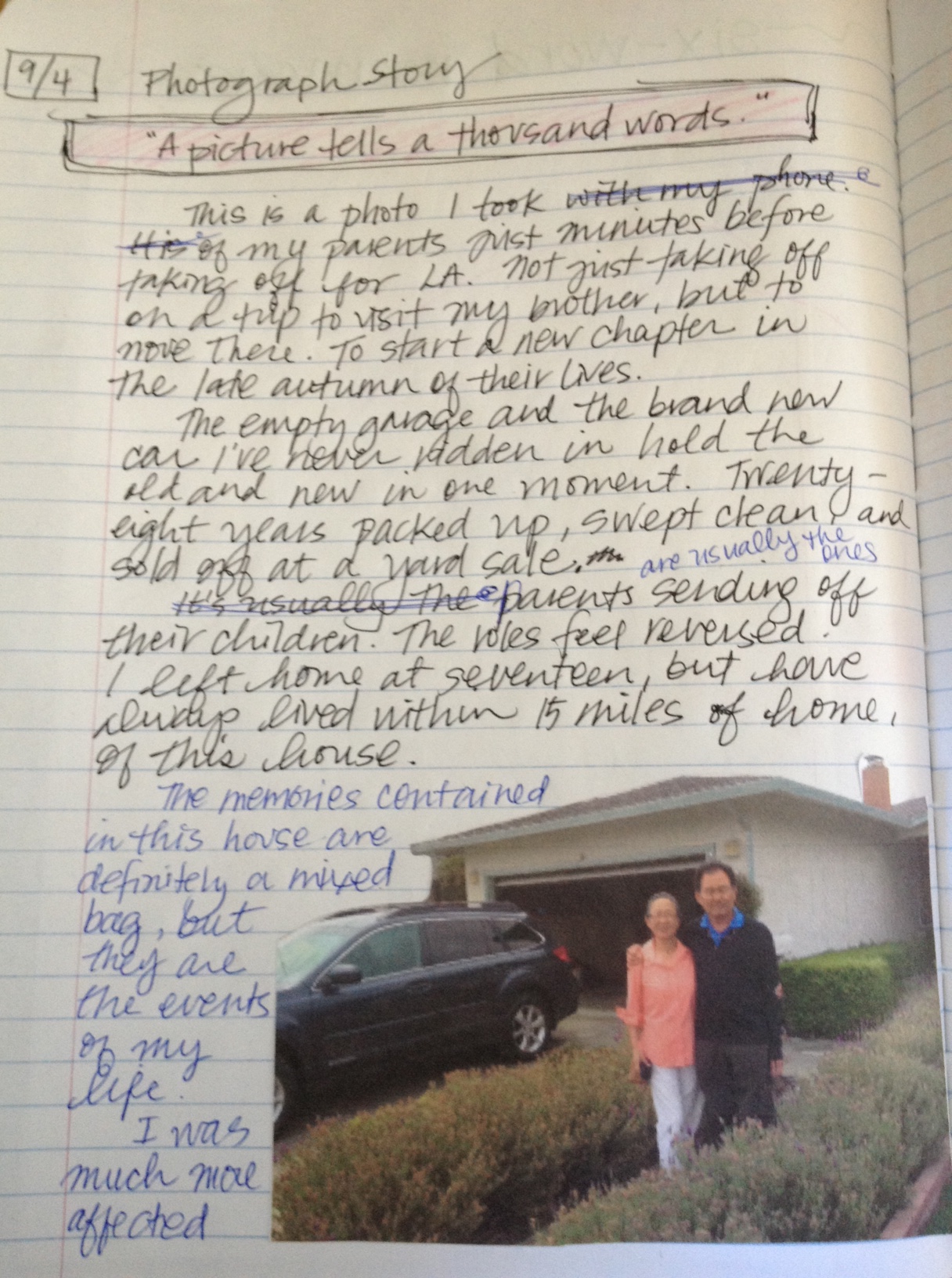
photo-1Taking that first step has made it easier for me to continue writing authentically with my students. This summer, I circled around the topic of my parents moving away, the difficulty of my relationship with my father, and the “grief” of saying goodbye to my childhood home. I wasn’t ready to write about it then, but I began to today. I’ve experienced personally how courage begets courage, increasing connection and building community. Accepting the challenge to write through my vulnerability, rather than resist it, has signaled to my students that it is safe for them to go there as well. And though I haven’t won over everyone yet, there are definitely some who are beginning to take the risks to tell the stories that matter to them.  The stories only they can tell.

*You will get used to some of my go-to initialisms! 

Students Want Simple Things from Teachers

"Love all, trust a few, do wrong to none." ~William Shakespeare

Our Compass Shifts 2-1Start slowly. Ease into it. Take the time to let them trust you. Breathe. Relax. Make sure they know that more than anything they matter. I’ve told myself these things every August as the new school year starts, but I don’t listen. Ever. I am always in a rush. Jump in. Get them working. Show them who’s in control.

No wonder the past few years have been rough:  I took too long to build relationships.

This week I’ve done it differently, and I can already tell a difference.

I have not done the get-to-know you bingo games, the list-your-favorite-things cards, the 2 true/1 lie, or the numerous other “relationship building” activities that rise in the back-to-school Google searches.

I have asked students to write. And I’ve written with them. And we’ve shared.

The first day of school I showed the beautiful video of Shane Koyczan’s poem “To This Day.” We didn’t talk; I simply asked students to respond. They wrote on note cards for five minutes and told me what they thought about name calling, bullying, loving the inner person. I then asked them to flip the card over and on the back tell me why they think I chose that poem, of all the millions of poems available, for the first day of school. They thought and wrote, and I set the expectation that we are a community of writers on the very first day.

I read their responses that evening, and I learned a few things, and a few things made me cry:  the death of a father this summer, the loss of a brother, and the abuse experienced by not one but two of my girls when they were younger. The hurt is still raw. I felt it in their words, and I am honored. They trusted me with their hearts the very first day.

Every day this week I’ve read a poem or a quote or a story, and I’ve asked students to write their thoughts in their notebooks. I wrote along with them. I modeled re-reading and revision. I shared my thinking, and I shared my words on the page. Then I asked if students felt comfortable sharing. Many did.

Yesterday we read the poem “Days” by Billy Collins. I did a quick mini-lesson on imagery and personification, and then I asked students to think about a day in their lives that, if they could, they would live over. Sad day. Happy day. Any day. Just choose one and write. We wrote for five minutes.

I shared first. Or, I tried to. I wrote about my mother, and I got so choked up in first period I could not speak. My students saw me vulnerable. They saw my hurt, and they poured out their sympathy. If there’s anything magical about my mother’s illness, this was it. The bond of our relationship cemented with my tears.My notebook Days

During 5th period, one of my girls volunteered to read her response. She began with something like “It was the day I saw my mother for the first time in three years. We hugged and laughed and cried.” Then she began to sob. The class stilled. Silence. Silence. And then soft snickers. I know students were uncomfortable; they are freshmen after all. I cautioned them about respect, and reminded them of the safe place we are developing as readers and writers–the place where we take risks and trust others to understand. I spoke gently but sternly as I made my way to my sobbing young woman and rested my hand upon her back. “Be kind,” I said, “and please be patient. Let me tell you about my experience in first period. I cried . . . because I miss my mother.” My tears spilled over, and this group of 14-year-olds saw my hurt, too, and we all grew as a community.

It’s Friday afternoon, the end of the first week of school. My feet ache, but I am happy.

Students want simple things from teachers:  kindness, patience, a listening ear. They want to share their hurts, fears, hopes, and dreams. They need to know we care enough to let them.

And, guess what? Students will WRITE when we give them the opportunity to write what they feel. I can do a lot of teaching with what they’ve started in their notebooks this week.

Best blessings all my teacher friends. I hope your school year looks to be as bright as mine.

If you have other ideas for relationship building, please share. I’d love to know what works for you.

What’s in Your Teaching Soul?

Our Compass Shifts 2-1I am an idea machine. Really, it’s like Boom! This might be cool–or this–or this. How about this? It relates to that and that and that. Sounds like a pretty great machine, right?

Not even. It’s a problem.

I get so many ideas spinning that I get dizzy with possibilities, and inevitably, I get frustrated. You know what happens next. Do you hear that crashing?

So, as the days of summer disappear, and I start thinking about school starting up again and what I want to do differently with my students this year, the idea machine hums at high speed. And there is just no room on the planning calendar to do every idea that I think is a cool one. And really, why would I want to?

I do this to myself every year:  I try to do too much, so my students rarely get the chance to do some things really well. We’re in too much of a hurry to move on to the next great thing. No wonder I am a stressed out, headache prone, insomniac from August until June.

At the University of New Hampshire Literacy Institute learning from Penny Kittle, she asked us at the beginning of the course and then again at the end:  What is your teaching soul?

The first day of class my answer went something like this:

I’ve lost it. That’s a lot of the reason I am here. My passion for teaching has taken a beating–a lot of it influences from outside of school, (It’s been a hard year personally)– a lot of it the choices I made within the classroom.  I’m here to get my passion back.

The last day of class, and it’s really no surprise, since, you know, I was learning from Penny Kittle, my response was something entirely different. The discussions about writing, the experiences with reading–mostly analyzing author’s craft, and my own writing practice all helped redefine who I am as an educator and as an individual.

And that is what I want for my students. I want them to know who they are and what they have to offer.

So, what is my teaching soul? What are the non-negotiables that matter, the things that will help me keep the passion and help my students define themselves as readers and writers and individuals of tremendous worth? I know in my soul the following things matter:

Community Matters. My students must trust me to establish and maintain a classroom community that allows for risk and creativity. I must encourage conversations that allow students to be their authentic selves so they can find their authentic voices in their writing. Every discussion and every activity can help us feel at ease as we grow to know and appreciate one another as developing readers and writers. Keeping writer’s notebooks, talking about books, sharing our writing–every single day–will help my students feel safe so they are willing to speak up and let me see glimpses into their lives and how they think.

Reading, Writing, and Thinking Matter–a lot. If it’s true that to develop fluency in reading and in writing, students must read and write, then it only makes sense that to develop fluency of thought, students must think. Asking students to analyze, synthesize, revise, create, etc  on a daily basis is the only way to build this fluency. I can start with asking good questions, but more importantly, I want students asking good questions. A student-centered, student-driven inquiry cycle will lead to thinking that involves and engages every learner.

Modeling and Mentoring Matter. I’ve learned the difference between showing students something I’ve written and writing something in front of them. In front of them–so they see the thinking and the struggle–works so much better. If they see me as a writer, and I talk to them as writers, our writing community helps us all grow in our craft and experience. The same holds true for reading. Students have to see me as a reader. Mentor texts that we study for craft act as professional coaches to show us the moves and stylistic devices published authors use to create meaning. My job is to ‘hire’ good coaches and make sure my students know that we can learn from them.

Authenticity matters. I’ve thought about this a lot:  How can students be their authentic selves if we never let them make choices? I read something once that compared high school to a dystopian society: wear a certain thing, eat at a certain time, respond to the bells throughout the day, come and go when they tell you, talk when they let you. All that control. I get that schools must function a certain way, but can’t we give students some control? Allowing them to choose the books they read and allowing them to select topics that interest them to write about gives students a little freedom. The more freedom we give students, the more interest they’ll have in their learning. The more interest they have, the more commitment they will have. Isn’t that what we want–students committed to their own learning? This is where blogging comes in for me, too. By encouraging students to create and post on their blogs, I learn who they are as individuals. I read about the topics that matter to them, and they find their authentic voices as they publish to a world of potential readers far beyond me as their teacher.

Dialogue matters. In a training last spring, Kylene Beers reminded me that “the smartest person in the room is the room.” I needed this reminder because I often shut down conversation when I could explode it. Rich classroom discussion can lead to intense learning. I must trust that when students engage in conversation surrounding a topic, they may learn more from one another than from me. They can learn from me in the dialogue we share during our one-on-one conferences. Talking to students about their reading lives and their writing processes is the best teaching tool I have as an educator–and the best use of my teacher voice.

As I use the last of my summer days to plan the best learning I can for the students I will serve this fall, I pledge to remember how my heart healed in July. I know the power of a student-centered workshop classroom, and I will remember to allow my students the opportunities to learn the way Penny allowed me to learn at #UNHLit13.

I met some awesome educators who will help me remember, and they will help you, too. We bonded over books, breakfasts, love for PK, and zen. In an effort to focus our teaching this year around the things we learned in NH, we devised a plan to 20130713_193936keep us connected and accountable. Once a week we’ll write about our experiences, practicing in our classrooms the things we learned this summer.
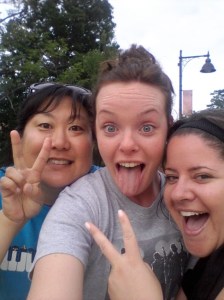
We’re calling our reflections Our Compass Shifts because it has and it does, depending on the needs of our students. From Texas to West Virginia to California to New York, we are four high school teachers with different backgrounds, teaching experience, and student demographics, who believe in the genius of our students.

Please meet my new colleagues:  Shana Karnes (WV), Emily Kim (CA), and Erika Bogdany (NY). You’ll find their bios on our About page, but I’ll let them introduce themselves and their students as they take turns posting each week. They’ve got teaching soul that makes me shiver. Oh, and see? They are walking talking FUN.

Think about what swells in the heart of your teaching. I hope you’ll share the answer: What is in your teaching soul?

Dream Come True: Conferring with Penny Kittle

imageFor a teacher like me, this moment was a pretty big deal. I attended the University of New Hampshire Literacy Institute and learned from Penny Kittle for two weeks. Her class was called Writing in the World, and I have to tell you, I learned more than I could have hoped for when I set off with my new green notebook for New England, a place I’d never been.

I’d heard Penny present before, first at Region X here in DFW, and then again when my district brought her in for a couple of days–both turning points in my classroom instruction as I changed my thinking about teaching readers and writers and not just reading and writing. Then, of course, I was a fangirl at NCTE last fall in Las Vegas, tracing my hand in my notebook like she does in hers.

But sitting in her class every day, listening to her read poetry, share videos of her students, and explain that all students will write–and write well–when they are given the opportunity to explore their hearts, reshaped me as an educator, and thankfully, I got my passion back.

Everyone who knows me well knows I had a tough year. Lots of reasons, and none of them pretty. At one point I thought about throwing in the pubic education towel, even applied to Pearson in a moment of desperation. See? I was quite low.

When Penny meets with students in a conference, she focuses on the writer and not the writing. She let me ask questions, and she alleviated my fears. She prodded and questioned, and I found answers to questions I didn’t even think to ask. I saw myself as the student, and I saw my students in me. And I realized when it comes to meeting with my students to help them improve as writers:

I can do better. I must do better.

Of the huge stack of books I lugged home from UNH [I am Amy, and I am a (book) addict], Tom Newkirk’s Holding on to Good Ideas in a Time of Bad Ones resonates in my teaching soul. Even this one little thought speaks to me: “excellent instruction rarely feels rushed.” I know that, really I do, but why do I always feel like I’m in a hurry?

When it comes to teaching writing effectively, helping students to see themselves as writers, allowing students to feel accomplished communicators, I must slow down.

I need to do what Penny did for me in New Hampshire: relax into chair, look into my face, smile her warm smile, and speak to me like she already knew I was writer.

[Special thanks to Emily Kim for capturing this special photo. I owe you.]

On Writing: It’s the Process That Creates the Craft

I try all kind of things to get my students to write. Sometimes they work, other times not so well. Awhile ago it seemed like the entire class was sitting behind the same concrete wall. Glassy eyes, pale faces, limp hands. Not one kid could think of a thing to write on the page. The clocks kept ticking, and the hands stayed still. I was at a loss. I’d had a couple of kid refuse to write, but never the whole class.

Then it dawned on me: I’d set it up wrong. I began the year allowing my students to think that writing was easy. Big mistake.

I paused, allowing myself a moment to re-frame my thinking. I knew I needed to take some time to rewind a bit, slow the pace, and let students grapple more with the thoughts they put on the page.

This was difficult because here’s how my students work:

Me: Write.
Them (5 seconds later): I’m done.
Me (leaning over a shoulder): Where’s your punctuation?
Them: Oh, I guess I forgot that.
Me: Yeah, and while you’re at it, where are the capital letters?
Them: Oh, I guess I forgot those.
Me: What’d you mean by this sentence (pointing at whatever on the page)?
Them: Umm, yeah, I guess it doesn’t make sense.
Me: How about you take some time and think about what you’re writing?
Them: But, Miss, I’m DONE. I did it! You can see I did it!

<Sigh.>

I wish I were joking. I have a whole room full of 9th graders that think their first shot is their best shot. Every year it’s a challenge to change that thinking.

So, the day we’re facing the blank page blues? I knew I needed to change their thinking about what writers do. They needed to know that writing is work. It takes time and effort. It takes practice and more practice, and even then, real writers often think what they’ve done is not good enough.

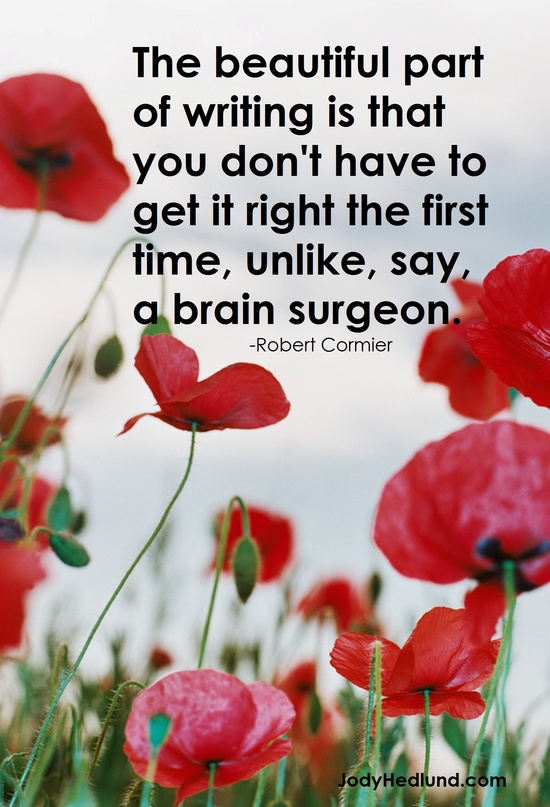
I needed to call in the experts. I didn’t have much time, so no Skyping or personal connections. I did, however, have time to turn to Google images. I found some quotes that creative people made into lovely inspirational messages. I quickly pulled up a few and led my kids through a discussion about what these writers think about writing.Poppy field --- Image by © Royalty-Free/Corbis

EL doctorow32ca3db628eef9e0e61f91a85cba3235
time concept, selective focus point, special toned photo f/xLord Byron images

The next day I put them in teams and gave each group a quote about writing. They had to discuss and analyze what the writer meant and present the message in some form to the class. Most groups did a great job, and students began to see that even authors who make their living writing words on a page struggle. It’s the struggle that makes the writing worthwhile.

It’s a simple lesson, I know. But I got big returns for the time investment. The next time I asked my kids to write, not only did they think about their topics more, they thought about the process more. That’s what I wanted all along. It’s the process that creates the craft. I just needed them to realize that.
Note to Self: Do this lesson FIRST next year.

Writers on Writing: Thanks, I Needed This

Wow. Just wow. Maybe this won’t be new news to you, but I just found this awesome site:

Writers on Writing  –A complete archive of the Writers on Writing Column from the NY Times.

I decide to read a few of the opening paragraphs. The first link I open is Geraldine Brooks from July 2, 20o1:

My writing desk is a tankard-scoured tavern table that once saw service in an 18th-century inn. When I look up, the waved and bubbled window panes of my study offer a view that has changed very little in the 200 years since the glass was set in place. A small paddock rises gently to an apple orchard, the trees laced with white blossoms. An elderly stallion flicks at flies with a long, supple tail.

At this time of year boughs of unfurling oak leaves hide the black slash of electric wires. And that’s helpful; for every morning, after I turn off the urgent chatter of news radio — its breathless headlines and daunting traffic reports — I make my way up to this little room and attempt to leave my own time behind.

Tell me that’s not a tiny literary treat?

And this one from Jamaica Kincaid, June 7, 1999. It’s hard to stop at just two paragraphs:

How do I write? Why do I write? What do I write? This is what I am writing: I am writing “Mr. Potter.” It begins in this way; this is its first sentence: “Mr. Potter was my father, my father’s name was Mr. Potter.” So much went into that one sentence; much happened before I settled on those 11 words.

Walking up and down in the little room in which I write, sitting down and then getting up out of the chair that is in the little room in which I write, I wanted to go to the bathroom. In the bathroom Mr. Potter vanished from my mind; I examined the tiles on the floor in front of me and found them ugly, worn out.

 I open more, Annie Proulx, Amy Tan, Scott Turow, Kurt Vonnegut, and they all have elements of story. Interesting. I was just part of a Twitter chat where the question rose:  Can non-fiction help us make life-long readers? Some responded yes, most responded no. Me? I think yes. Good non-fiction dwells in story. It sucks you in and spins you around and opens your eyes to thoughts, emotions, facts that you’d never considered before the telling. These short texts are evidence of that. And these short texts are about to become mentors in my writing class. Thank you, Literary God, I needed this!
images-2

Can’t Get Students to Write? Try These Mentor Texts for More Engagement


I had a dream the other night where I was in a conversation with my principal about student engagement. Of course, I’d just spent the day in Internal Rounds at one of the other high schools, specifically looking for and analyzing data that was supposed to show if students were engaged in their learning– not compliant, maybe committed,  and hopefully, taking ownership. In my dream I felt exasperated. I struggled, and I probably hit my husband in the head. I finally threw up my hands and said, “I can’t do it! You’ll have my resignation tomorrow!” and I huffed out the door.

What the heck?

Yes, student engagement. Those seem to be the buzz words I keep hearing lately. Well, those or student apathy, the ugly step-sister. I’d rather at least try to stay positive.

I teach 9th grade English. I try to teach students how to write. Sometimes I want to beat my head against the wall because I have so many kids who just don’t get into what I try to get them to do. I imagine this sounds familiar to some of you–at least I hope I’m not alone here.

In my search for ways to get students engaged, I’ve discovered a few texts that serve as friendly mentors to help me get my students to care about what they have to say and how they say it. These mentors have interesting text structures or themes–or, hey, they are short, which goes over well with my kids.

I shared a few of these during my presentation at TCTELA in Dallas last week. The Prezi posted two weeks ago called “Reading Writing Workshop in High School? Yep, the Shoe Will Fit” has images of the book covers, and the handouts have some excerpts and ideas from some of my favorite mentors: The Book of Awesome by Neil Pasricha, The Dictionary of High School B.S. by Lois Beckwith, Six Word Memoirs from SMITH Magazine, and  The Encyclopedia of an Ordinary Life by Amy Krause Rosenthal. I’ve used excerpts from all of these and have had great success in getting students to take interest and ownership of their writing. We read the mentor, analyze the author’s craft–specifically looking for the moves he makes, and then we write our own version or addition to that text. Sometimes I require certain devices like metaphors or alliteration or parallel structure or whatever; sometimes not. Always I allow for student choice in the subject matter. I get the best student writing this way.

At the end of that presentation at TCTELA, I asked the audience to contribute ideas for mentor texts that they’ve had success with in getting students to write. Take a look at these fun books; you’ll see the value in how these can work to give students choice in what they write, while you give them say in how they write it.

(Thanks, Goodreads.com, for the synopsis and book cover images.)

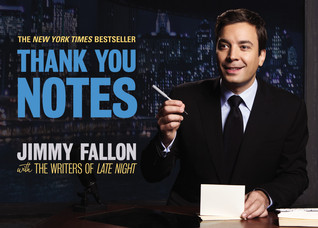
Thank you Notes by Jimmy Fallon

10505349
Thank you, slow walking family walking in front of me on the sidewalk. No, please, take your time. And definitely spread out, too, so you create a barricade of idiots. I am so thankful that you forced me to walk on the street and risk getting hit by a car in order to pass you so I could resume walking at a normal human pace.Jimmy Fallon has a few people and a few things to thank. In this brand-new book, the very first to come from his show, he addresses some 200 subjects in need of his undying “gratitude.” Each page will feature one note and a photograph of its recipient.
_____________________________________________________________________
World’s Shortest Stories by Steve Moss
8791206
Murder. Love. Horror. Suspense. All this and much more in the most amazing short stories ever written each one just 55 words long! Consider for a moment 55 words. It’s an absurdly tiny number. No, it’s an impossible tiny number. It’s what O. Henry might have conjured up if he’d only had the back of a business card to write upon. You’ll find murder and suspense, horror and intrigue, love and betrayal, plus distant worlds and inner demons.
All in a measly 55 words.
_______________________________________________
Devil’s Dictionary by Ambrose Bierce
49256
A virtual onslaught of acerbic, confrontational wordplay, The Unabridged Devil’s Dictionary offers some 1,600 wickedly clever definitions to the vocabulary of everyday life. Little is sacred and few are safe, for Bierce targets just about any pursuit, from matrimony to immortality, that allows our willful failings and excesses to shine forth.

________________________________________________
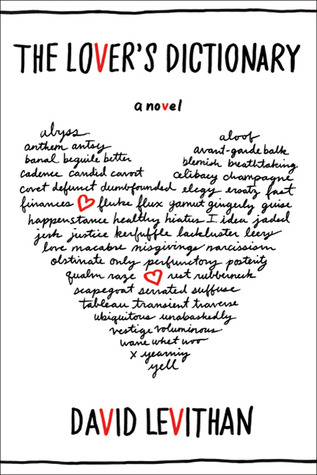
Lover’s Dictionary by David Levithan  [This one fits the list appropriately after the last one. I read this book in one sitting. It’s tender and sweet, and the cover is AWESOME!]
9279177
How does one talk about love? Do we even have the right words to describe something that can be both utterly mundane and completely transcendent, pulling us out of our everyday lives and making us feel a part of something greater than ourselves? Taking a unique approach to this problem, the nameless narrator of David Levithan’s The Lover’s Dictionary has constructed the story of his relationship as a dictionary.

_________________________________________________
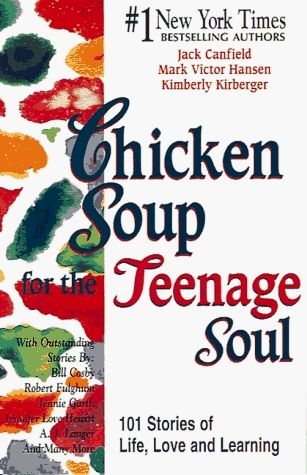
Chicken Soup for the Teenage Soul by Jack Canfield, Mark Victor Hansen427920
This first batch of Chicken Soup for Teens consists of 101 stories every teenager can relate to and learn from–without feeling criticized or judged. This edition contains important lessons on the nature of friendship and love, the importance of belief in the future, and the value of respect for oneself and others, and much more.
_____________________________________________
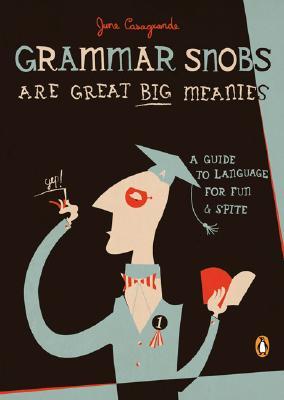
Grammar Snobs are Great Big Meanies: A Guide to Language for Fun and Spite by June Casagrand
14106
What do suicidal pandas, doped-up rock stars, and a naked Pamela Anderson have in common? They’re all a heck of a lot more interesting than reading about predicate nominatives and hyphens. June Casagrande knows this and has invented a whole new twist on the grammar book–a laugh-out-loud funny collection of anecdotes and essays on grammar and punctuation, as well as hilarious critiques of the self-appointed language experts.

Do you know of any more fun texts to use as writing mentor texts? Please leave your suggestions in the comments.

Writing Instruction that Follows the North Star

writing notebookCan you remember when you learned to write? I can’t. Not really. I remember the lined paper and the fat pencils. I remember trying to have the very best penmanship because I wanted my name listed on the chart that covered the side of my teacher’s desk. I remember that writing came pretty easily. I was one of those students. My teachers loved me because I was well-behaved, listened, learned, and made all A’s.

I do not teach those students. Well, maybe a few, but most of them would be my antonym if my student-self were a word.

When I began teaching, I had no idea that my students would not be like me. I know, funny, right? I thought I could teach them comma rules, show them where the commas went, and I would see beautifully crafted commas in all the right places. (Don’t even get me started on the period.)

I had to learn to be a writing teacher.

Thank God for the North Star of Texas Writing Project. Fortunately, for me and the hundreds of students I’ve instructed since, I’ve learned how to create a community that fosters a love (or at least some days, a tolerance) of the written word.

A couple of weeks ago, the leadership team of NSTWP met and crafted the tenets of our site. We decided that community encompasses and interweaves itself throughout our work, and authenticity, inquiry, modeling, dialogue, and re-visioning make it shine.

A few of us jumped on a Google doc yesterday to craft our proposal for NCTE 2013 where we defined our points and described how we would share them at the conference. This got me thinking about my own practice:  do I walk the walk as well as I talk the talk?

Here’s a glimpse into our thinking, plus a little of my own:

Community— Trust, communication, sharing, feedback, and transparency all lead to a safe place for learning. Community is the core of a workshop classroom, so it must be a constant focus. (National Writing Project, Gomez, 2010) Read-alouds, and classroom and school-wide book clubs, among other relationship-building activities, can all help build community.

Authenticity— How do we make learning real? By allowing for real life connections and experiences. When we expose students to real-life situations and allow them choice in topics, we can engage them more effectively, stimulate more critical thinking, and get them to read more abundantly. At the end of 2011 only three young people in ten now read daily in their own time, down from five out of ten in 2005 (Secondary Annual Literacy Survey, 2011). How do we change lives? We allow students choice. Just as in reading, students must have choice in writing; teachers must allow students to choose topics that interest and intrigue them, and they must allow students to publish in mediums and to audiences that students believe matter, i.e., student created blogs, ebooks, and portfolios.

Inquiry— An inquiry stance goes beyond the use of essential questioning and places the creative thought process into the hands of students, inviting them to questions in every aspect of literacy from responding to texts, engaging in research, to broadening their horizons as writers.  An effective response protocol that fosters inquiry can be adapted and applied to a myriad of literacy experiences.

Dialogue— Authentic conversation transforms classroom community. Learners take ownership of their craft and develop a sense of agency in a student-centered approach to dialogue.  In Choice Words (2004), Peter H. Johnston explains that language “creates realities and invites identities.” Thus, dialogue in our classroom becomes an essential part of student growth.

Modeling— An integral part of literacy instruction, modeling as reader and writer is essential to an effective workshop classroom. Mentor texts that engage students and provide for in-depth study of craft allow for authentic reading and writing experiences.

Re-visioning– NSTWP invented this word to describe the complexity involved in revising our instruction and engaging students in revision of their work. Adaptive Action, “the iterative process we use to leverage unpredictable change for individuals” is crucial to making workshop work. (Adaptive Action, 2013). Conferences, written feedback, and portfolios can all be managed and used to revise our classrooms.

For more information about North Star of Texas Writing Project LIKE us on Facebook.