Category Archives: Community

Reel Reading: All the Truth that’s in Me

ReelReading2This is cool. Author, Julie Berry, gives a book talk about her new book All the Truth That’s in Me.

While I like that Berry doesn’t come right out and reveal the setting of the book, and I like historical fiction myself, I have a difficult time getting my students to even give it a try — unless the book is set in the time of the holocaust.

I enjoyed reading this book though, and I believe it pairs well with early American literature. I’ll share this video of the author with my students, and maybe when I add my recommendation to her voice, I can get this intriguing and thought-provoking narrative into at least one student’s hands.

Reel Reading: Einstein’s Dreams

When Mrs. Mueggenborg recommends a book I always look into it. I don’t always like the same books Tess does, but more than anyone I know I trust her judgment when it comes to books. Tess was excited about this one and openly shared her intrigue.

Einstein’s Dreams by Alan Lightman, a thin little novel, with a whole lot of weight. Check out these clips and see for yourself:


And this interview with author Alan Lightman.

Reel Reading: Fangirl by Rainbow Rowell

ReelReading2I had hoped to save Eleanor and Park to read for myself, but I didn’t get to it before it jumped from my TBR pile beside my desk right into a student’s hands. This student is a voracious reader. I can hardly keep up with her. She read Rainbow Rowell’s first book in two days and loved it so, of course, I had to ask if she wanted to read Fangirl.

She did.

More students will, too.


Struggling for Structure

ocsHave you ever been out in public somewhere and automatically used your “teacher voice”?  You know the one I mean–the no-nonsense, I’m not kidding around, you had BETTER get with it this instant, voice of doom?  Well, that was definitely me, yelling at the TV, when I heard Punxsatawney Phil’s grim prediction for six more weeks of winter.

Punxsutawney-Phil-by-alemaxale

Here in West Virginia, our school district has had a record 13 snow days so far this year…and more bad weather is in the forecast.  I haven’t taught for a full week since December 2.  Don’t get me wrong–the first few days off were glorious.  I got all caught up on grading, read a few books (including the amazing Fearless Writing by Tom Romano–PLEASE check it out), and took some naps.  But after seven or eight of those days (stuck in the house, mind you), cabin fever set in and I was more than ready to be back at school…and judging by their chatter on Twitter, my students were, too.

To further complicate matters, I am hosting a student teacher for half of this semester.  Katie is wonderful.  Her openness, enthusiasm, and serenity amidst all of this upheaval has been incredibly refreshing.  We have wonderful curricular conversations and push each other to be the best teachers we can be.  She is only with me through the end of this month, and while my students and I will miss her, I know two things:  Katie will be an excellent teacher on her own, and I’ll be glad to be back at the helm.

As if that weren’t enough, testing season is upon us.  We’ll lose several days this month to a state online writing assessment, and more next month for the reading portion.  There’s nothing like a marathon of standardized testing to suck the joy right out of reading and writing.

What all of this mayhem has made me reflect deeply on is the importance of structure in the workshop model.  In many ways, structure–repetition, transfer, organization–is the heart of the reading and writing workshop.  One of the core tenets of this method is the goal to encourage our students to be lifelong readers and writers.  The vast majority of my general level students are still a long ways away from that.  We made great progress during the first half of the year, but with this extended interruption of our time together, things have changed.  Without structure, the gains my students experienced have been, in some cases, lost, for a few reasons…

IMG_2209One: my students do not have ready access to books, plentiful time to read, or constant encouragement from me to find both.  My kiddoes are coming to class at a complete loss as to what to read next, and some can’t even remember what they read last.  With no bookshelves at home and no way to get to a public library through the nasty weather, they need lots of help to find new, high-interest texts to draw them back into reading.

Two: my students have lost the reading and writing stamina they have built up.  It has been two full months since we’ve had a regular week of learning, so they are mentally sluggish–almost like they are on the first days of school.  The automaticity they’ve developed as learners has stalled, and they must work now to rebuild it.

IMG_1947Three: my students are struggling to see continuity in our work together.  As Katie and I have tried to work with them on crafting strong arguments that still bear the hallmarks of good writing, we have encountered obstacle after obstacle to the transitions, previews, and reviews that scaffolding consists of.  I am seeing the effects of this on their products.

Luckily, I’ve had a lot of time off to contemplate a solution to this unique problem.  I feel thankful that the community we have established in our classroom is intact, as it will be easier to dive right back into the work of reading and writing.  My students and I trust each other:  they know I trust them to be independent readers, writers, and thinkers, and I know they trust me to steer them in the right directions.

First, I will redouble my efforts to begin class with exciting, diverse booktalks.  Katie has introduced me to some new titles and reminded me of some tried-and-true home runs–Persepolis by Marjane Satrapi, Beloved by Toni Morrison, and Will Grayson, Will Grayson by John Green and David Levithan.  I will add these and other titles (or more copies of them) to my library, recommend them heartily to my readers, and then wait patiently for meaningful dialogue to emerge.  I’ll see it in reading conferences, Big Idea Books, and book blogs.  My hope is that this injection of freshness into the winter doldrums will awaken my students’ inner readers once again.

IMG_2245

Next, I will work to reacquaint my students with the visceral joy of writing through introspective quickwrites.  I want them focusing only on enjoyment with their informal writing…we will take a break from Kelly Gallagher’s marvelous articles of the week for now and will lean heavily on Linda Rief, Ralph Fletcher, Penny Kittle, and Georgia Heard for inspired notebook prompts.  I fully hope to see meaningful, serious writing in my students’ journals as they return to thinking of themselves as authors.

Lastly, I will use the energy from the long break I was given to fuel my passion as I teach.  I’ve heard people say that if students are truly independent learners, they can learn without a teacher…but I believe the leader at the head of the classroom is incredibly important.  I know for a fact that on days I have that extra cup of Starbucks Pike Place coffee, and I’m really on fire, my students get more out of my teaching.  I’ll recommit to my enthusiasm for, and teaching of, all things reading and writing.  I am hoping that this will carry both my students and I to the end of our now-extended school year.

So, 13 snow days, an amazing student teacher, a feisty groundhog, and two standardized tests later, here’s what I know: structure is important.  It is a NEED in the workshop, as well as in reading and writing.  Without it, growth and learning cannot occur.  In retrospect, perhaps a bit of lobbying for year-round school is in order…but I’ll save that blog post for another day.

Reel Reading: The Emperor of all Maladies

ReelReading2I read the first part of the prologue to my classes and asked them to respond in their writer’s notebooks. We’r writing the introductions to our feature articles. I hoped that students would understand that the most engaging articles have elements of story. The story of Carla at the beginning of The Emperor of All Maladies by Siddartha Mukhergee grabs with an emotional pull. Many students wrote poignant descriptive responses. I love it when that happens.

A documentary with the same title as the book is in the works. It’s coming to PBS in the spring of 2015. Check out the website and the great trailer here:  CANCER: The Emperor of ALL Maladies.

Text Study: All the Pretty Horses

I have a hard time with Cormac McCarthy books. I tried to read Blood Meridan, and I made it through about 120 pages before I couldn’t stick with it any longer. I had never tried another one until last week when I picked up All the Pretty Horses. I haven’t read very far yet, but I get it now. I get why so many people love this author.

A passage I will read with my students is this one:

The house was build in eighteen seventy-two. Seventy-seven years later his grandfather was still the first man to die in it. What others had lain in state in the that hallway had been carried there on a gate or wrapped in a wagonsheet or delivered crated up in a raw pineboard box with a teamster standing at the door with a bill of lading. The ones that came at all.  For the most part they were dead by rumor. A yellowed scrap of newsprint. A letter. A telegram. The original ranch was twenty-three hundred acres out of the old Meusebach survey of the Fisher-Miller grant, the original house a one room hovel of sticks and wattle, were driven through what was still Bexar County and across the north end of the ranch and on to Fort Sumner and Denver. Five years later his great-grandfather sent six hundred steers over that same trail and with the money he built the house and by then the ranch was already eighteen thousand acres. In eighteen eighty-three they ran the first barbed wire. By eighty-six the buffalo were gone. That same winter a bad die-up. In eighty-nine Fort Concho was disbanded.

His grandfather was the oldest of eight boys and the only one to live past the age of twenty-five. They were drowned, shot, kicked by horses. They perished in fires. They seemed to fear only dying in bed. The last two were killed in Puerto Rico in eighteen ninety-eight and in that year he married and brought his bride home to the ranch and he must have walked out and stood looking at his holdings and reflected long upon the ways of God and the laws of primogeniture. Twelve years later when his wife was carried off in the influenza epidemic they still had no children. A year later he married his dead wife’s older sister and a year after this the boy’s mother was born and that was all the borning that there was. The Grady name was buried with that old man the day the norther blew the lawnchairs over the dead cemetery grass. The boy’s name was Cole. John Grady Cole.


I think of my grandparents’ farm when I read it. If I knew the right dates I could move through the years, portraying lived and significant events just as poignantly –okay, maybe not just as, but I could try.

I know my grandpa was born in the farmhouse in 1899. He farmed the land after his father did. My great-grandfather grew up there from the time he was about two when he was left by his father who emigrated from Scotland. That foster family owned it first. My uncle worked the farm with Grandpa and then took over at grandpa’s passing. My mother grew up there– on the foothills of Ben Lomond Mountain in Pleasant View, UT. It was my favorite place to visit. An adventure for this city girl from Texas.

I bet my students could write about the history of a place. Might be kind of cool.

Reel Reading: Wonder is Still Wonderful

ReelReading2My students have been reading pretty hefty titles lately. Books like Wonder by R.J. Polacio might do their souls a bit of good. I think they deserve something special. I’ll give them a glimpse into August Pullman’s story with this, and then I’ll show them the comments, mostly by students much younger than mine. They are heartwarming.


Reel Reading for Real Readers: Winger

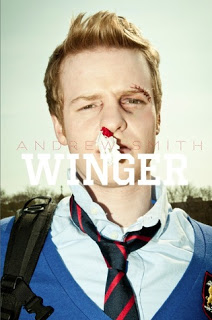
ReelReading2Winger by Andrew Smith is another book I kept hearing about. (I’m a little jealous that so many of my teacher friends seem to be way ahead of me in their TBR piles.) I knew I needed to keep this one — like I did Eleanor and Park— and read it before I let my students get their hands on it.

I did not have my own copy, but at #ALAN13 in Boston, after I had the pleasant task of helping Donalyn Miller with her jacket, she gave me a copy from her book stacks. She gave me a copy! 

Surprisingly, I found no book trailers promoting it. However, I did find and read an interesting piece in The New Yorker called “The Awkward Art of Book Trailers,” which made me rethink the value of them at all. Rachel Arons says, quoting Jonathan Franzen, author of Freedom:  “Franzen explains—in a tone that is polite but characteristically aggrieved—his “profound discomfort” with having to use moving images to promote the printed word. “To me, the point of a novel is to take you to a still place,” he says. “You can multitask with a lot of things, but you can’t really multitask reading a book … To me, the world of books is the quiet alternative—an ever more desperately needed alternative.”

Hmmm. I might agree with that.

So instead of a trailer today, let’s read a book review. I love this one at TLT: Teen Librarian’s Toolbox, and I’m thinking that a next step in my students’ literary journey is to write their own “professional” reviews. This one will make a good mentor text.

Any thoughts on book trailers? good idea or not?

G/T Teens and Reading — Persuading Awesome

Guest Post by Tess Mueggenborg

This transition has not been easy for me.  It’s taken me several years to get comfortable with the idea of giving students more choice – even free choice – in what they read. Part of it is that I’m a bit of a ‘control freak.’  Part of it is that, as I freely admit, I’m a classical canon sort of gal – and I want to share my passion for classical literature.  But I know that my job is to help my students, not to spread my own personal gospel of literature.  So I’m changing – and the results have been surprisingly, rewardingly positive.

I started this transition last fall, allowing my GT sophomores to choose their books (from a long list … though I also allowed them to bring in other books and convince me that their book was worth reading), and giving them time every week to blog about their reading.  I’ll admit: not every student finished their book.  But not a single student complained – not once – that they didn’t like their book or that I was ‘making’ them read something boring.  So that was a nice change of pace.  And, truly, most students DID read.  And they ALL blogged.  Even if they didn’t read, they still wrote.  And every English teacher knows that just getting them to start writing can be a challenge – even with GT students.

So here are a few excerpts from their blogs, in response to this prompt: ‘Persuade me, Professor Mueggenborg, whether or not I should read your novel.’  Some are funny, some are poignant, some obviously leave much to be desired.  I have not edited the responses, so all mistakes are the students’ own.  It’s a work in progress.

Dillon read Life and Death Are Wearing Me Out by Mo Yan

If you have not yet had the absolute pleasure of reading this book you should stop what you are doing right now and go get a copy of it; if you have had that pleasure you should do it anyways. I’ll tell you what I am going to do. I will tell you something so irresistible that you will have to read this novel.There is a dance routine with an ox and ghost children. I refuse to tell you the page it is on so that you must read until you find it. At this point if you haven’t rushed to a library of bookstore to at least find that in the book there is nothing more I can say except that this work of art shows genius in contemporary literature the likes of which I have never witnessed and I am truly grateful for having gotten the opportunity to experience it.


Freddie read Transatlantic by Colum McCann

If anyone else is considering reading this book, I strongly recommend it. I loved this book from start to end. I advise, however, not to get discouraged if the first three chapters seem completely incoherent (which they pretty much are). The imagery and similes such as “A chandelier of snot from his nose. The blood backing off his body, his fingers, his brain.” (pg. 31) help the reader imagine what the protagonist was seeing and feeling.


Janice read Chanda’s Secrets by Allan Stratton

I absolutely suggest that anyone and everyone should read this book. The book is insightful, interesting, emotional, and thought-provoking. Throughout the entire time I was reading it, I was somehow able to connect to Chanda. Stratton did an amazing job. Honestly, I never thought I would be able to connect so deeply with a girl that has experienced practically the worst of the worst. Her parents both die, her sister died, she was raped, her best friend is a prostitute with AIDS, her neighbors all gossip about one another, and she was forced to leave school in order to make money for her family. All of these things are horrible and I’ve never experienced anything close to the troubles she goes through, yet I can still feel close and bonded with Chanda.


Andrea read Cutting for Stone by Abraham Verghese

I have seriously been waiting for this question for as long as I have had this novel. YES. 100% yes! I enjoyed it so much and you will too! Although, if you don’t want to get attached to characters, do not read this novel. If you don’t want to get your heart ripped out of you because of said characters, do not read this novel. If you don’t enjoy reading about death and medical things, do not read this novel. But please, what’s the fun in reading a book if none of those things happen?   


Alissa read The Namesake by Jhumpa Lahiri

The best part I love about this novel is that it’s actually reality like these things happen in real life, it’s not just make believe. The things that happen in this novel happen to most people in the world and can relate to almost anyone. There are some very important lessons in this novel that led me to caring about my parents and my culture more.


Emilio read Like Water for Chocolate by Laura Esquivel

I believe you should read this novel if you are interested in looking up a bunch of Spanish words or phrases you may not know. This is also a great book for those people who like to try and cook random dishes just try them. You have to be pretty interested in learning about Mexican dishes, even I didn’t know about some.


Ellen read In the Time of the Butterflies by Julia Alvarez

I really enjoyed this book. I usually don’t say things like that (especially about a book) because I just don’t really like reading. Like if I were to finish a book, I would always end up telling myself, “what a waste of time”. But this time, it was actually different. When I finished reading this book, I loved it!  It helped me as a woman feel better about myself and it also shows us that if we were to have hope, things will get better in life.


Andrew read Blood Meridian by Cormac McCarthy

Before reading this book, please consider you mental state. If you have no hallucinations, sleep soundly through the night, and plan to keep yourself that way, do NOT read this book. You will likely lose your mind to the ravenous punctuation devouring demons that reside deep in these pages. They are evil creatures that will eat your quotation marks. Seriously. However, if you are already mad, are not fond of your sanity, or feel that you need something a bit different, it should be relatively safe to read this. I wouldn’t recommend it but it could be done. While this book does have an interesting approach to character development, a somewhat interesting plot, and a cool name, all of that, when calculating how much of your time this is worth, equates to the value of a dead gnat. For one reason. QUOTATION MARKS. I know, I know, I have already complained about this, but it really is that big of a deal to me. Every new paragraph I find myself rereading and checking to make sure that I am on dialogue (or not). Quotation marks serve a legitimate purpose in literature. They show dialogue, sarcasm, and well, as the name implies, quotes. They are NOT for decoration.


Matthew read And the Mountains Echoed by Khaled Hosseini

I never read and I personally can’t stand reading. The first time I picked up this book was because I finished all my work in one class and nothing else to do so I started it and from the very first paragraph I read I was hooked. This story broke my heart and then sewed it back together and gave it warmth and then did it all over again. The stories in this book are so heartfelt and they teach so much about the people and lifestyles of other cultures. I would tell anybody to read this book. In a way this book changed the way I felt about everything. It was crazy to think about what some families have to go through. The way that families in America value one another is ridiculous compared to those of the lower classes. I love how the ones that are in poverty and living in lower standards have very good family values. The way that they love and cherish and would do anything for each other is amazing. This book grabbed a hold of someone that cant stand reading and got him to read it and enjoy it which makes that book amazing because otherwise i wouldn’t have read it.

That last selection, from Matthew, is the one that sealed the deal for me on this whole “give them choice” concept.  Awesome.

photo credit Even Hahn


“Professor” Tess Mueggenborg teaches English (and anything else with which her students need help) at RL Turner High School.  Her academic passions lie in comparative language and literature.  The Professor lives in Dallas with her husband, Jeff. Tess’ on Twitter @profmueggenborg

Student Choice in AP English–It’s Working

Our Compass Shifts 2-1My friend Matt is leaving teaching. I’ll miss him. I started teaching a year before he did, and we’ve kind of grown up as educators together. But with him leaving, I’m thinking–maybe I can get his AP Literature classes. That idea’s sinking in, and we aren’t even done with January.

AP Language has been my sweet spot for a lot of years now, and I don’t want to give it up–I’m a little possessive, but I would love a split with Lang and Lit.

I know, I might be crazy. The prep. The workload. The grading.

Although I have heard of other teachers doing it– just not at my school. We have 6 of AP English teachers, but we all have a split with some other English prep. (Right now I have my own vertical alignment with PreAP English I and II.)

Here’s the thing:  I’ve done readers/writers workshop in AP Language for several years now, and the format fosters confident readers, accomplished writers, AND higher exam scores. Mine jumped 12% the first year I trusted a whole move to workshop and student choice. I know readers/writers workshop will work with AP Lit. I know it.

So, I am planting seeds.

Today I spent hours compiling lists of award-winning books. I should have been planning a presentation I’m doing Monday or grading timed writing essays from Wednesday or tidying my classroom. I couldn’t seem to help myself once I got reading these lists of compelling titles. These are the complex and richly written books I want weighing down my classroom shelves and the minds of my advanced students. I already have a lot. (I made a list of those, too.) I shop thrift stores and bargain bins, and as long as I know the titles I’m looking for, I often strike gold. Gold Pulitzer stickers anyway. I found Tinkers by Paul Harding not too long ago.

Every day my students read during the first 10 minutes of class. I quickly take attendance and then try to talk quietly to a few kids each day about their reading. I use passages from books for mini-lessons– grammar and analysis, and I model what a reader’s life looks like. Not many of my colleagues do this.

I sat in a department meeting with Matt and others this week. We listened to advice on lessons that would get our students prepared for their end-of-course exams, and the topic of independent reading came up. Matt shrugged, defeated, and said, talking about his AP seniors and his on-level sophomores: “My students won’t read. They just won’t.”  Without question, I know why.

He isn’t doing workshop.

But Tess is. She’s doing it with her G/T sophomores and surprising herself with the results. Her guest post will run on Monday.

We have to get students reading. We want to get them reading, don’t we? If we want, not just to develop critical readers so they can pass a test, but if we really want to instill empathy and compassion and knowledge into kids’ heads and hearts, we have to get them reading. Allowing them free choice, drowning them in book choices, and giving them time–time to read, well, that’s what’s making mine into READERS.