Category Archives: #FridayReads

#FridayReads: Hot Non-fiction for High School Readers

I still have non-readers. We are ending the ninth week of school, and usually by this time each fall, my Hold Outs experience a shift. They start reading. I haven’t pinpointed exact reasons for the resistance this year — I think I’m doing as many book talks, conferring sessions, and cheerleading-moments-about-books that I have in the past, but something is up with a good number of my students.. They just do not want to read.

I asked Bryan about his reading yesterday. He said, “I only read when I have to.”

“What can I do to help you want to read?” I asked.

“I don’t know.”

This is where it gets tough. I get to be a magician and a mind reader.

Or, I just need to know books and keep talking about them. I just need to keep encouraging my students to read and surround them with books they will find interesting.

A few weeks ago, Jackie wrote Top Books for Reluctant High School Readers, and I remembered Ready Player One, Gone Girl, and Perks of Being a Wallflower. I need to book talk those!

About two months ago, I wrote about the novels-in-verse I got for my classroom. Many of my students who had never read a book have read two, three, and four of those titles now.

I know many boys will read non-fiction when they won’t read “make believe.” Seems it’s time for an infusion of hot non-fiction books that might add some intrigue to my classroom bookshelves. I need books that students like Bryan will want to read.teen_school_boys_reading

I posed this question to my writing partners:

What are the hottest non-fiction titles in your classroom library?

Here’s our master list:

Jackie’s List

Ghost Soldiers by Hampton Sides

I’m Staying with my Boys by Jim Proser

Jarhead by Anthony Swofford

The Glass Castle by Jeannette Walls

Half-Broke Horses by Jeannette Walls

Sickened: The True Story of a Lost Childhood by Julie Gregory

The Devil’s Highway by Luis Alberto Urrea

Hellhound on His Trail by Hampton Sides

Kick Me by Paul Feig

Shana’s List

Pretty Little Killers by Daleen Berry (two girls murdered their best friend at the other high school in our county…kids cannot put this book down)

Columbine by Dave Cullen

Zeitoun by Dave Eggers

Five Days at Memorial by Sheri Fink (about Katrina; pairs well with Zeitoun)

Missoula by Jon Krakauer

…anything by the great sportswriter John Feinstein (The Punch, Next Man Up, A Season on the Brink)

Stiff by Mary Roach

Smoke Gets in Your Eyes by Caitlin Doughty (similar to Stiff; about working in a crematory)

…my War shelf, featuring Lone Survivor, American Sniper, Redeployment, or any other autobiography of a soldier

Erika’s List

Lucky by Alice Sebold (account of her rape and healing)

The Prisoner’s Wife &  Something Like Beautiful: One Single Mother’s Story  both by asha bandele

No Choirboy: Murder, Violence, and Teenagers on Death Row by Susan Kuklin

Inside: Life Behind Bars in America by Michael G. Santos

Orange is the New Black: My Year in a Woman’s Prison by Piper Kerman

Yummy by G.Neri (graphic novel based on a true story)

Shaq Talks Back by Shaquille O’Neal

Raising My Rainbow by Lori Duron

I Am Malala by Malala Yousafzai (Adult and YA)

A Child Called It, The Lost Boy, The Privilege of Youth, A Man Named Dave by Dave Pelzer (four part series, but each piece can be read independently)

Enrique’s Journey: The Story of a Boy’s Dangerous Journey to Reunite with his Mother  by Sonia Nazario

The Pact: Three Young Men Make a Promise & The Bond by Sampson Davis and George Jenkins

Destined to Witness: Growing up Black in Nazi Germany by Hans J. Massaquoi

Girlbomb: A Halfway Homeless Memoir & Have You Found Her by Janice Erlbaum

Amy’s List

A Stolen Life by Jaycee Dugard

Little Princes by Conor Grennan

Letters to My Young Brother by Harper Hill

The Sociopath Next Door by Martha Stout

Heaven is For Real by Todd Burpo

American Sniper by Chris Kyle

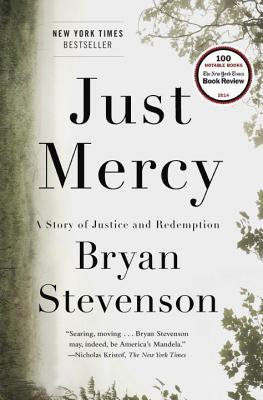
Just Mercy by Bryan Stevenson

The Glass Castle by Jeannette Walls

David and Goliath by Malcolm Gladwell

Exactly as I Am by Shaun Robinson

The Good Soldiers by David Finkel

Enrique’s Journey: The Story of a Boy’s Dangerous Journey to Reunite with his Mother  by Sonia Nazario

Life without Limits by Nick Vujicic

Do you know of any titles we left out?

©Amy Rasmussen, 2011 – 2015

#FridayReads: Learning to WRITE WHAT MATTERS with Tom Romano

IMG_9890With the release of his newest book, Write What Matters, this year marks the tenth year I’ve been reading and writing beside the words of Tom Romano.  If you’ve not discovered his wisdom on injecting writing voice into student work, his guidance about writing to discover, or his brilliance in coining multigenre…you’re missing out.

This summer, at the UNH Literacy Institutes, Tom Newkirk talked at length about the guts it took for Tom Romano to publish Clearing the Way in 1987–the first “teacher book” of its kind.  Guided by the research of Donald Graves and his contemporaries, Romano explains the text’s origins to his reader:

“This book is born out of my own struggles to write well and fourteen years of working hard with teenage writers.  Both the writing and the working have been worth it.  They are fine passions.

Thus began my pedagogical education–I read Clearing the Way in my very first English methods course in 2005.  Chapters like “The Crucial Role of Conferencing,” “A Creative Current,” and “Literary Warnings” showed me the possibilities if I created a classroom full of passion and verve and real writers.

IMG_9889Next I happened upon Crafting Authentic Voice, in Romano’s own writing methods class at Miami University in 2007.  A quote from page five of this book hangs prominently in my classroom to this day: “Voice is the writer’s presence on the page, the writer’s DNA.”  I point to those words when I endeavor to help students develop voice.  Chapters like “Enter Craft,” “The Five-Paragraph-You-Know-What,” and “Imitation” have guided my teaching of writing, and I see in those topics the work of Katie Wood Ray, Penny Kittle, and Georgia Heard.

Blending Genre, Altering Style I read in my Master’s level writing methods course, again with Romano himself.  This book helped me flesh out the nuts and bolts of teaching multigenre, which remains to this day both the most effective, enriching work I do with my students, and their very favorite thing.  Reading and writing about chapters like “The Many Ways of Poems,” “Genres Answered,” and the practical “Evaluation and Grading” led me to present with Romano on the many possibilities offered by multigenre at NCTE13.

I’d been teaching five years and was already living in West Virginia when I read Fearless Writing, seeking more guidance about teaching writing.  Practical chapters like “Easing into Poetry Through Imitation,” “Crafting Narrative,” and “Self-Assessment: Raising the Blinds” pushed me to take my teaching of many genres to new heights, with wonderful student results.

Last year, thrashing in the throes of a difficult PhD program, I sought wisdom from Romano in Zigzag, where his chapter “Meltdown” showed me empathy, peace, and guidance.  “I’d never been more at peace with a big decision,” Romano writes of leaving his own doctoral program.  I did the same, and I’m at peace too.

Now, as I prepare to welcome my first child into the world, I’m contemplating where my career will take me.  I’ve long known I don’t want to try to sustain my level of involvement with teaching high schoolers while trying to be a mom.  But I don’t want to leave the amazing, sustaining, nurturing community of teachers and writers and thinkers I engage with here at TTT, or at NCTE, or on Twitter.  I don’t want to leave my tribe, as Penny Kittle says.

Screen Shot 2015-10-23 at 5.34.59 AMAnd, again, Romano is here to guide me through my next steps–Write What Matters: For Yourself, For Others is lately ordered from Amazon and on its way to me.  I know that chapters like “Trust the Gush,” “Risk and All,” and “Who Are You to Presume to Write?” will guide me as I wonder about my future teacher-writer identity.  I know that this book is what I need right now:

Many want to write. But sometimes they lose heart. They are cowed in the face of so many fine writers of fiction, memoir, poetry, columns, and creative nonfiction. Their confidence wanes. If you want to write, but are hesitant, let Tom Romano lift your confidence. In Write What Matters you will find discussions of writing processes that make sense, demonstrations of effective strategies to try, advice about developing productive habits to get your writing done, and examples of illuminating writing from fearless writers, both professional and novice. Your voice, your vision, your way with words matter. They are tied to your identity. You know that you are more alive when you put words on paper. Accept that you not only want to write. You need to write. Write What Matters will help you learn to dwell in your written words and craft them into writing worth reading by others.

Pick up Write What Matters, or any of Tom’s many other works of wisdom and power.  Let Tom Romano lift your confidence–in your writing, your teaching, and your passion.  His words, and he, have been my single most reliable, important mentors as I seek to be a teacher of writing, a teacher-writer, and a plain old Saturday-morning-notebook-storyteller.

#FridayReads — Oh, Mercy! Have I got a plan for this mentor text

Usually I read about four books at a time. This makes for a mess on the bedside table, the coffee table, the kitchen table. I rarely use bookmarks, which is a shame because I have quite a lovely collection.

I end up leaving books split open and sound asleep right where I left them –sometimes just so I can remember the parts I know I want to use in class. I refuse to read on until I capture the sentence or passage that gives me pause. Such is the case with my new now bent-spine-copy of Just Mercy, a Story of Justice and Redemption by Bryan Stevenson. I’ve been stuck on page 18.

Here’s a portion of the passage I will use with my AP Lang students. You will, of course, find the rest of it when you buy the book, or here.

     When I first went to death row in December 1983, America was in the early stages of a radical transformation that would turn us into an unprecedentedly harsh and punitive nation and result in mass imprisonment that has no historical parallel. Today we have the highest rate of incarceration in the world. The prison population has increased from 300,000 people in the early 1970s to 2.3 million people today. There are nearly six million people on probation or on parole. One in every fifteen people born in the United States in 2001 is expected to go to jail or prison: one in every three black males babies born in this century is expected to be incarcerated.

     We have shot, hanged, gassed, electrocuted, and lethally injected hundreds of people to carry out legally sanctioned executions. Thousands more await their execution on death row. Some states have no minimum age for prosecuting children as adults; we’ve sent a quarter million kids to adult jails and prisons to serve long prison terms, some under the age of twelve. For years, we’ve been the only country in the world that condemns children to life imprisonment without parole; nearly three thousand juveniles have been sentenced to die in prison.

     We also make terrible mistakes. Scores of innocent people have been exonerated after being sentenced to death and nearly executed . Hundreds more have been released after being proved innocent of noncapital crimes through DNA testing. Presumptions of guild, poverty, racial bias, and a host of other social, structural, and political dynamics have created a system that is defined by error, a system in which thousands of innocent people now suffer in prison.

…..

     We are all implicated when we allow other people to be mistreated. An absence of compassion can corrupt the decency of a community, a state, a nation. Fear and anger can make us vindictive and abusive, unjust and unfair, until we all suffer from the absence of mercy and we condemn ourselves as much as we victimize others. The closer we get to mass incarceration and extreme levels of punishment, the more I believe it’s necessary to recognize that we all need mercy, we all need justice, and — perhaps — we all need some measure of unmerited grace. 


Before we ever read the text, and I did pull much more of it than I’ve posted here, we’ll spark our thinking with an image like this, posted at The Sentencing Project, and then write our initial responses in our writer’s notebooks:

Next, we will TALK. I know my students will want to share what they think about this graphic. Many will identify personally with it because they know a family member or a friend who’s served prison time.

When I introduce them to Stevenson’s text, I’ll give them a purpose for reading — besides just comprehending the message (identifying the purpose is a breeze since he tells us the reason he writes the book) — I want my students to notice the structure, the progression between ideas, the repetition and patterns they will see in the language. All the clues that build the tone.

I will ask them to mark the text, noting their thinking about these things. Without a purpose for reading, too many of my students struggle with the stamina they need to make it through even a page when I ask them to read critically.

Next, we will TALK. Talking will help some students understand what they read. It will help other students clarify their understanding. Some students will have noted what I asked them to notice as they read. I will rely on them to help the others — skill level is just one way my students are diverse.

I will also hand them a stack of questions that prepare them to write. They will read something like this:

What do you know about the writer based on what he writes?

What is the Stevenson’s purpose? Why does he come out and tell us so plainly?

What are the facts in this piece? What are opinions? How do you know?

What do you notice about the structure, any patterns, repetition? What do they do for the message?

How does Stevenson move between ideas?

And then we will write. Maybe I’ll give a prompt like this: Based on the text, and our discussion, is Stevenson’s opening argument effective, why or why not?  Maybe I’ll ask students to come up with their own analytical-style question to respond to. (I like this idea a lot.)  [see Talk Read Talk Write]

That’s probably enough for one class period, but my mind is still stirring:

  • What if I ask students to problematize the issue? Who are the stakeholders? Think all the way around the issue. Why do they care? Why do we care? What kinds of questions do we have about the claims Stevenson makes? What kinds of evidence do we need to convince us they are valid? How and when could anything regarding this issue change?
  • What if I ask students to identify just one of Stevenson’s claims and then research it? I assume the author provides support throughout the book. I’ll know when I keep reading. But what if students did a bit of research and then collaborated on substantiating Stevenson’s claims. Collaborative writing can be a powerful learning experience.
  • What if I ask students to brainstorm other issues Stevenson’s text suggests? We could probably create a pretty elaborate bubble map of ideas. These could lead to student choice in research topics.

What do you think? Any other ideas?

©Amy Rasmussen, 2011 – 2015

Top Books for Reluctant High School Readers

IMG_2877“I’m not a reader.” I hear this multiple times during my first weeks of conferencing. The non-readers are easily identifiable; their body language alone speaks volumes of their disdain for books.

“You just haven’t found the right book,” I tell them, and they smirk, knowing they’ve heard that statement before.

The first week of school is a vital week of matching students with books, and while I itch to recommend titles, I hold back, giving my freshmen the independence and freedom they so desperately crave in high school. Too often students blindly accept recommendations without so much as a thought to the contents. They lack self-awareness when it comes to their reading interests or style, which is why those first two weeks are essential to not only organizing but also empowering them through choice.

Throughout the week, I book talk popular titles, engage in “speed dating” with books, and provide ample free time for students to explore our classroom library, but I also get out of their way. Instead of telling them what to read, I model ways to find a strong candidate, considering reviews, awards, contents, genres, and summaries.

While the majority of the class tends to quickly settle into their books, there are always stragglers who remain convinced they’ll never enjoy reading. These students sometimes grab the first book they see off the shelf, and oftentimes these books are too dense, difficult, or in some cases “boring.” That is okay! I settle into conferences with these students, getting to know their hobbies and eventually handing them two or three books that might pique their interest. In the end, they still choose what to read, but in the process they might require some initial guidance.

IMG_2870Regardless of who picks the book, the end result remains the same—to find a plot that envelops and consumes students, forcing them into the story. Here are some of my number one titles that tend to break down the shell of even the most reluctant readers.

Ready Player One by Ernest Cline

I’ve already had three students read this book, one of which is Leah, a gamer and self-identified non-reader. When I asked if she has ever had a favorite book, she thought for a second then said, “I think this one might be the only book I’ve ever really liked.”

The Compound by S.A. Bodeen

Adrian initially picked a sequel to a book he read last year. “You must have liked the first one then?” I asked.

“Not really,” he replied. “I just didn’t know what else to read.” The next day he picked up The Compound, which is full of the fast-paced suspense he craves.

Paper Towns and Looking for Alaskaand basically everything by John Green.

I chased Emily up the stairs for this recommendation. When I asked her which one sparked her interest in reading, she said she couldn’t remember which had sucked her in. She just knew that despite her protestations at the beginning of the year, by the end she “loved them both.”

The Eleventh Plague by Jeff Hirsch

Damion had only ever loved one book and he was bound and determined not to like any in my classroom; that is until he came across this futuristic, survival story. Upon sitting down beside him for a mini-conference last year, he looked away from his book briefly to say, “Ms. Catcher, I’m at a really good part and I can’t talk right now.”

Gone Girl by Gillian Flynn

“I’ve had people give me ‘dark’ books before, but they aren’t dark at all,” Sarah tells me. I hand her three options, one of which is Gone Girl. Three days later she tells me, “I’ve spent my whole life hating books, and you’re the first teacher who ever found one I actually liked.”

Unwind by Neal Shusterman

I book talked Unwind second this year. It’s a given crowd pleaser because of its twisted plot and graphic scenes. The fact that I only have one copy of my four originals is a testament to its popularity.

The Perks of Being a Wallflower by Stephen Chbosky

Carter claims he hasn’t read a book cover-to-cover since third grade, but he has fallen in love with Chbosky’s classic on teenage life. He said to me today, “Ms. Catcher, I love that this book talks about real things, things that are actually happening to us.”

“That book is only the beginning, Carter,” I said

What books do you recommend for reluctant readers?  Which titles are most popular in your classroom?

#FridayReads: Matching Reluctant Readers to the Classics

IMG_9287On Tuesday, during a lull in class, Tyler was staring at the ceiling.

This isn’t unusual, or even discouraged, as our ceiling is covered with tiles that represent books.

“What’s that book up there?” he asked, pointing. “The one with the fire?”

“That’s Fahrenheit 451, by Ray Bradbury,” I replied.  I know that Tyler is a volunteer for our fire department.  I also know that he hasn’t had a lot of positive experiences with reading, so I tailored my impromptu booktalk to my knowledge of him specifically.

Fahrenheit 451 is a book about a fireman.  But he’s not an ordinary fireman–instead of putting out fires, he starts them.”

Tyler looked incredulous, and a bit offended.  “So he’s an arsonist?”

“He is, but that’s the job of the whole fire department in this book. Their job is to start fires to burn books and maintain censorship. Anyone whose house has books in it is the target of the department–they burn the house, and the books inside.”

“That’s messed up!” Tyler said, eyebrows raised.

“Right?!?” I agree, equally outraged for his benefit.  I tell Tyler some more of the plot–the corrupt fire chief, the terrifying mechanical hound, the strange professor that Guy happens upon.  “But eventually the main character–his name is Guy–gets curious.  He’s never read a book.  He starts to wonder, do they really need to be burned?  So, one day, at one house, he takes one.”

“The hound goes after him, don’t he?” Tyler predicts.

IMG_9289“He does.  And a lot of other crazy stuff happens.  I love that book so much…the way that Guy changes is so cool.  I really grew to love him by the end.”

Then, he asks the best question:  “Do you have that book?”  We cross to the bookshelf and I thank the gods–it’s there.

I give it to him, and he starts reading right away.

Tyler has abandoned a lot of books, but I think he’ll finish this one.  This was a case of matching the right book with the right reader at the right time, as Teri Lesesne says.

Tyler wants to read this book, despite its difficulty–he has reading strategies to cope with the challenges in vocabulary, sentence structure, and chronology that he’ll encounter.  I have faith that he will employ those strategies and grow as a reader and a thinker, as I have seen many a student do before, with greats like The Poisonwood BibleTheir Eyes Were Watching GodPride and Prejudice, and Brave New World.

We don’t need every single student to read all of those books.  They are gorgeous works of art that I hope everyone will discover, but thinking the only way to expose students to those books is to make everyone read them isn’t the way to do that.  Our student readers will find the classics on their own, if we give them the tools and the hunger to do so.  Tyler has the tools, and the hunger, so he found Fahrenheit–all because of a simple desire to know more, to find out why firemen would act so radically, sparked by the depiction of a flame on our classroom’s ceiling.

How do you match your readers with classic texts?

#FridayReads I Want All My Students to Experience This Kind of Reading

I’m always a bit nervous about how to introduce the volume of reading we will do in my AP Language class. Although students have heard that AP is “hard,” they don’t really know what that means until they start to see some of the texts they must read, understand, unpack, and analyze.

The biggest problem with all this reading:  most 16-year-olds are not readers. At least not when they come to me. (They do change.) Somewhere along their educational journey, the love of reading has gone by the wayside. Most tell me in our very first conference that they used to love to read. Few can tell with any specificity why they stopped. (I have my own theories.)

I’m constantly thinking of ways to help my readers fall in love again. If students are not reading, they are not growing as readers. It’s pretty simple logic.

And frankly, I want to live in a community of people who read. My current students will live on my street, work in the shops I patron, send their kids to my new grandson’s school. I want to be surrounded by families who enjoy literate lives because their lives will rub shoulders with mine.

Literature could change the world if we let it — if more people read it.

If we encourage what Louise Rosenblatt calls a sense of emotion, an aesthetic experience, in our young people, more of them would read. Rosenblatt explains how our readers need transactional experiences with the books they read:

“The transaction involving a reader and a printed text … can be viewed as an event occurring at a particular time in a particular environment at a particular moment in the life history of the reader. The transaction will involve not only the past experience but also the present state and present interests or preoccupations of the reader.” It’s like the letters on the page come to life, and the meaning of the words dance into the reader’s mind and heart. She has an experience with the text that remains long after she closes the book.

I want all of my students to experience this kind of reading.

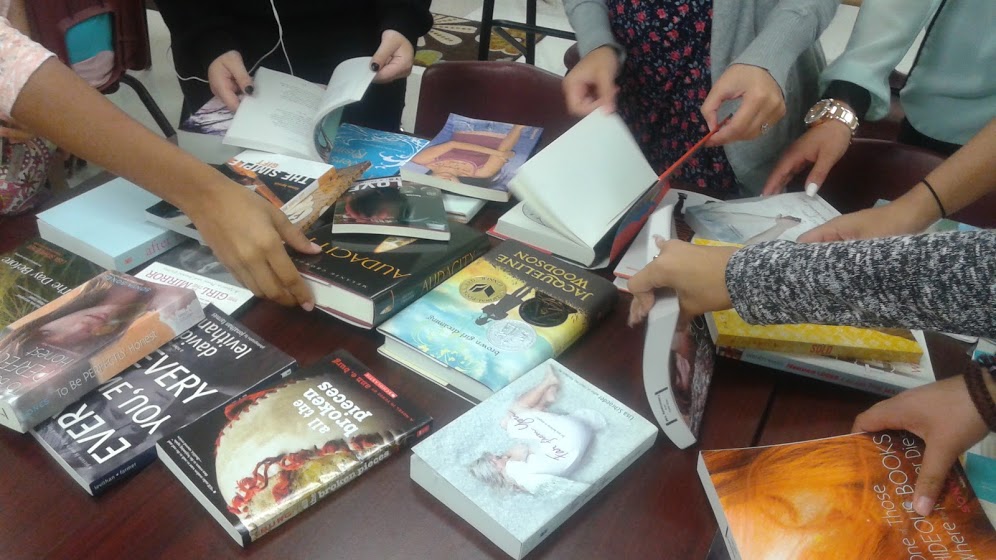
novels in verse 1So the first week of school I opened packages. Thanks to Donors Choose I had package after package arrive at my classroom. Each packaged filled with brand new novels for my brand new students. Most of them novels in verse — a powerful gateway back into reading with next to no stress. Few words on the page, and engaging story, vivid word choice, and a storyline brimming with emotion.

I book talked Chasing Brooklyn. It found a home in eager hands, as did To Be Perfectly Honest, The Crossover, Like Water on Stone,  My Book of Life by Angel, and many more.

If you’d like to build your Poetry shelf, or just add novels in verse to your classroom library, here’s a sampling of the books sweet donors gifted our classroom with this fall:

Like Water on Stone

The girl in the Mirror: A Novel

Audacity

Two Girls Staring at the Ceiling

The Red Pencil

The Vigilante Poets of Selwyn Academy

Perfect

October Mourning: A Song for Matthew Shepard

To Be Perfectly Honest: A Novel Based on an Untrue Story

What My Mother Doesn’t Know

The Simple Gift

The Secret of Me: A Novel in Verse

The Crossover

One of Those Hideous Books Where the Mother Dies

Every You, Every Me

Brown Girl Dreaming

I Heart You, You Haunt Me

Sold

Heaven Looks a Lot Like the Mall

Love, Ghosts, and Facial Hair

All the Broken Pieces

Geography of a Girl

Who Killed Mr. Chippendale?

(Note:  Shana’s the expert on building a classroom library by getting donations. Read about how she does it here. She’s got more ideas than just Donor’s Choose for books.)

Share your ideas on helping students have personal and meaningful experiences while reading…

©Amy Rasmussen, 2011 – 2015

#FridayReads: Some of the Classics

IMG_20150729_181804

Alice in Wonderland pop-up book – full with rich colors, adventure, and 3D visuals.

“Oh, one of your students is reading Alice in Wonderland?!  I love that.  Are they captivated by it?  I wrote my entire master’s thesis on that piece.”

Last year, a colleague of mine was through the roof to hear about some of the children’s classics that my students were engaging in:  E.B. White’s pieces, Peter Pan, The Secret Garden, The Tao of Pooh, Alice in Wonderland – which holds a very special place in her heart.  But, for some reason students across the board have been guided away from these treasures.  Why are we steering them away from the simplicity of tapping into their inner nostalgia, re-entering times in their lives where there was quiet innocence and a simplicity that innately dissipates as we mature?

IMG_20141208_121037

In between reading The Classroom and The Cell and I Am Malala, this young man enjoyed the layered themes of a charming classic.

Charlotte’s Web was just as powerful for me as a thirty-something adult as it was as a seven-year-old little girl.  The latter was an opportunity to finish a chapter book full with robust (animal) characters and an opportunity to connect with Fern, the moralist. The former was a rich experience as I explored the theme of love, relationships, sacrifice, and an understanding of death (as I had recently lost my grandmother).

One of the important elements of the Readers Writers Workshop model is the idea of roller coaster reading. As Penny Kittle adequately puts it; adults read books on all different levels based on interest – students deserve the same.

I couldn’t agree more.

Think back to a time you dedicated your reading to a piece that was difficult – for you – for whatever reasons affiliated with that experience.  Often times, we decide to ‘take it easy’ once we’ve conquered a book of that caliber.  We’ll play with levels and genres and graphic novels and page numbers…and any other factors that play into our decision making.  But, we typically veer from the intensity.

Until we’re ready to try again.  And, we typically are ready at some point because we experienced the pride that comes with such a challenge.  It just may not be our next book…or the one after that…  But, we will find ourselves back there because it’s important to do so.  Students will too.

Roller Coaster Reading : All readers should have the luxury to go on such a ride!

Roller Coaster Reading : All readers should have the luxury to go on such a ride!

And while there is the push for lexile reading, and all of the other ways to monitor student reading, we must let students read what their souls ache for.  Whether it be luxuriating in a time of childhood innocence or challenging their vocabulary with a much more difficult piece.  When we provide space for students to explore (and yes, children’s books included) students find the roller coaster that suits them – a bit of scare and intrigue balanced with comfort and adventure.

A wonderful way to provide students the opportunity to monitor such reading is through the creation of a Reading Ladder.  (Scroll down to Q1 and Q3 to find information on how to create ladders and see examples.)  Simply, by reading various books on differing levels, students have the opportunity to review their learning, progress, fluency, and stamina…all the while having choice.

This year, I intend to watch our I’ll Always Be A Kid shelf grow as more and more students find themselves drawn to some of the classics from their childhood.  A handful of students love this shelf because they reminisce about reading (or having that book read to them) while others are exploring children’s literature for the first time.  Our adolescent parents are intrigued as they scope for titles that they want to bring home to read to their own little ones – because passing on the gift of literacy is priceless.  Regardless of the rationale, students end up falling in love with the magic.

What hesitations or fears surface when thinking about high school students reading children’s literature?

#FridayReads: What do Amy Poehler and Sherman Alexie have in common?

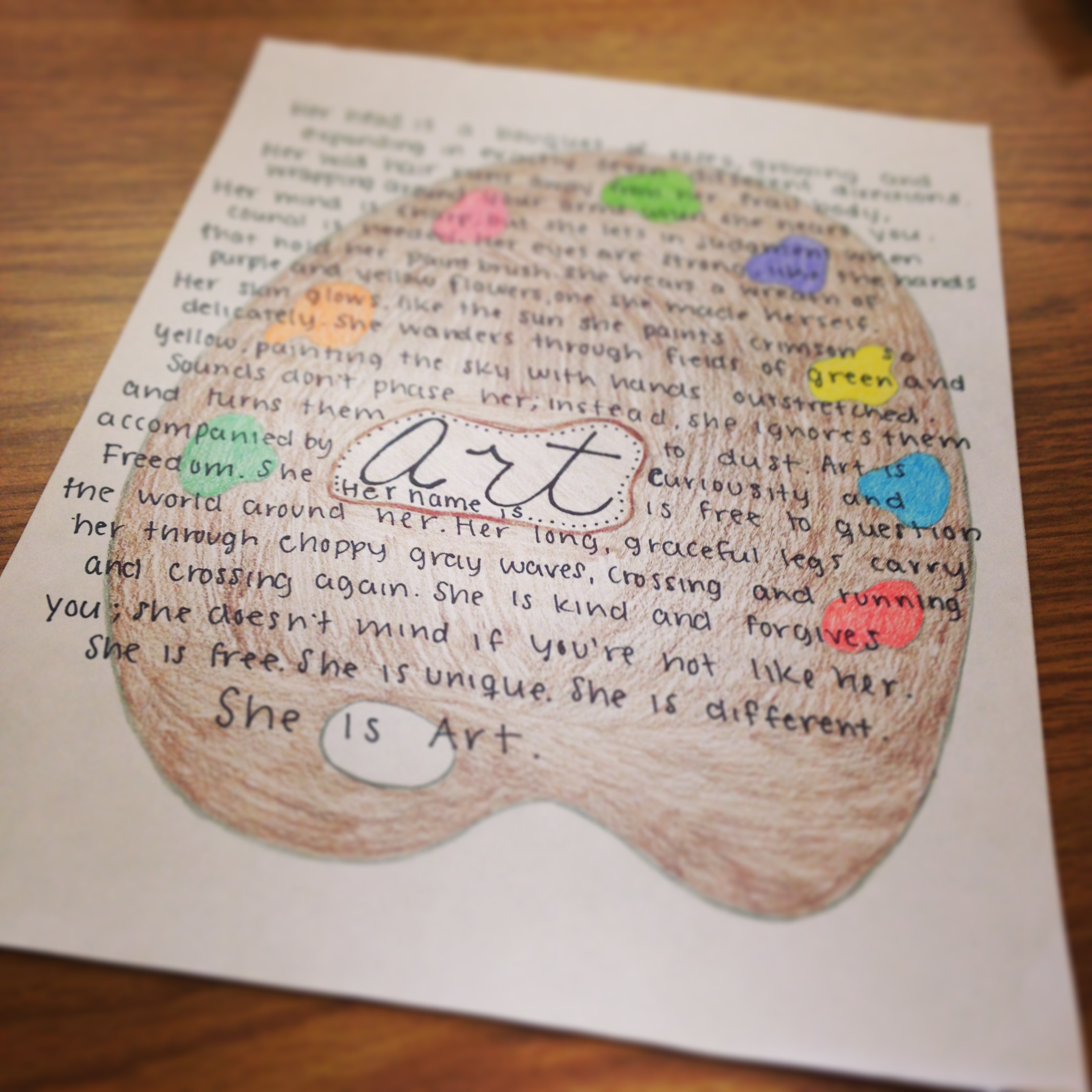
Personifying art--one piece from a student's multigenre project.

Personifying art–one piece from a student’s multigenre project.

Both my students and I love funky writing—the weird eccentricities of modern print where authors dabble with a variety of fonts, writing styles, photographs, and formats. There’s something about that departure from the norm that draws us in, holds our attention, and keeps us reading just to see what is on the next page.

In turn, when I began the multigenre project based on Tom Romano’s book Blending Genre, Altering Style: Writing Multigenre Papers, I knew I needed a new set of mentor texts to help guide my students’ writing. I loved sitting down to stacks of multigenre papers, and my students loved reading each other’s work. The problem was my students rarely had strong examples to guide them in developing the continuity that comes with one paper on one topic written through multiple genres. And so the search began.

This year, one of my new classroom shelves includes “multigenre books.” The benefits are twofold: students will become familiar with the multigenre concept before even being introduced to the project and they will see the unique ways a wide variety of authors diversify their work. The greatest part is that multigenre writing extends across a variety of literary genres.

Here are some highlights from my new collection:

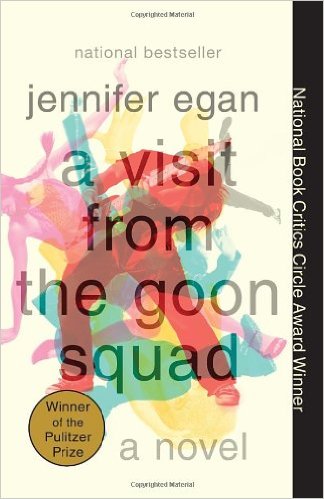
41HGJKFdW3L._SX327_BO1,204,203,200_51uJcmUm23L._SX322_BO1,204,203,200_A Visit from the Goon Squad by Jennifer Egan—Has an entire chapter in PowerPoint slides. How cool!

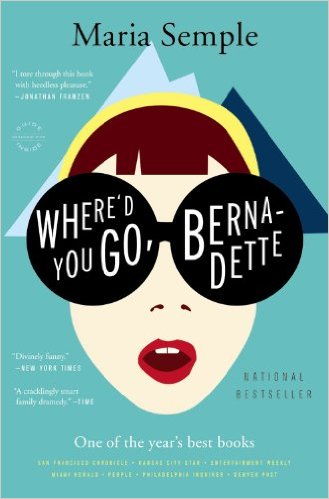
Where’d You Go Bernadette by Maria Semple—Amusing memos and e-mails illustrate character development and voice.

The Absolutely True Diary of a Part-Time Indian by Sherman Alexie – Hilarious doodles, caricatures, and cartoons. One ofmy all time favorite books!

Extremely Loud and Incredibly Close by Jonathan Safran Foer—Every year I have to assure a student that the red ink wasn’t a student’s bored graffiti; it really is part of the author’s the writing.

In the Company of Whispers by Sallie Lowenstein – Includes family letters and black-and-white photographs.

Eyes Wide Open by Paul Fleischman – Great use of infographics for research.

Why We Broke Up by Daniel Handler (author) Maira Kalman (illustrator)—Not only is it written in letter form, but the letters are about individual objects, all of which are accompanied by gorgeous illustrations.

The Art of Secrets by James Klise—Letters, articles, lists, and shifting perspectives keep you interested.

Encyclopedia of an Ordinary Life by Amy Rosenthal—Rosenthal not only wrote a memoir in encyclopedia entries, but she also made reading encyclopedia entries fun.

Yes, Please by Amy Poehler—There are two pages devoted to haikus on plastic surgery. What more is there to say?

Your turn! What multigenre books might you suggest? What are some new shelves you’ll be adding to your classroom library this year?