 Join us for a summer series revisiting our top posts from this school year, and please “turn and talk” with us in the comments section each week!
This week’s post comes from 2017, when Amy Rasmussen dove into defining the term workshop–the umbrella that envelops all we do.
“I need a visual of a ‘workshop.’ That word confuses me still.”
This is not the first time I’ve been part way through facilitating professional development and a participant has made a similar request. There’s a lot for me to learn here.
Before we can begin really sharing the excitement and benefits of a readers-writers workshop model of instruction, we must get on the same page as to what we mean by Workshop. I’ll try to do that here.
Let’s start with the dictionary definition of workshop and zero in on #2.

Based on this definition, let’s consider this essential question:
How do we create open spaces where the children we teach can grow as readers and writers?
To me “open spaces” equates to “workshop.” Open spaces means teachers let go of control, remove themselves from center stage as the holders of the knowledge, and invite students into a space of curiosity and discovery. It’s a space where students thrive in a community of trust and sharing, where they talk about their identities and experiences as readers and writers, where they play with language and take risks as they explore what it means to develop their comprehension and analysis skills — and their craft as writers.
Opening spaces requires planning. It is not willy-nilly choice in books or topics, or stations without specific guidelines and instructions, or seats moved from rows into small groups without modeling the thinking that makes it possible to “engage in intensive discussion and activity” around our content. Teachers must model what this looks like. And we must trust that our students will engage and learn in this model.
They will — if we let them.
Readers-writers workshop is a method of instruction that often requires a paradigm shift, a shift from the teacher making all the choices and telling students what to learn within a text, to students making choices, and through practice and application of skills-based lessons, learning as they read and write.
I’ll return to some definitions found online to help clarify:
“The Reading Workshop is a teaching method in which the goal is to teach students strategies for reading and comprehension. The workshop model allows teachers to differentiate and meet the needs of all their students.”
For our readers, we open the space for students to choose the books they read. By doing so, we meet students where they are in terms of their interests and abilities. The teacher becomes a coach, teaching skills specific to the needs of each learner. This requires time. We must reserve time for students to read when they are with us in class, and we must confer with students about what they are reading — and how they are reading it. This is reading instruction in a workshop model. We teach the reader, not the book. Readers must predict, visualize, infer, comprehend, analyze, and evaluate. These are all skills we model and teach in readers’ workshop.
What about writer’s workshop?
“As in a professional writer’s workshop, each student in the class is a working author. The teacher is a writing professional and peer coach, guiding authors as they explore their craft. … Teachers write with their students and share their own work as well.”
To teach our writers, we must be writers ourselves. We must model the moves writers make as they use language to craft meaning. We must validate our writers and help them recognize what professional writers do to think of ideas, organize those ideas, and convey those ideas in a way comprehensible to readers. In a workshop classroom, we use mentor texts: sentences, paragraphs, passages, essays, poems, stories to teach writing skills that students apply to their own writing. We teach the writer, not the writing.

So, what do I mean when I say “workshop”? I mean students doing the work of readers and writers, “engaged in intensive discussion and activity on a particular subject” — specifically related to growing as readers and writers. This work happens because teachers open the spaces in their classrooms which allow for it.
Questions about your move to a workshop model of instruction? Please ask in the comments.
Amy Rasmussen lives in north Texas and teaches AP English Language and English 4 (new prep in ’17. She loves talking books, daughters’ weddings (two this year), and grandbabies (five). She also loves facilitating PD for other teachers making the move into a workshop pedagogy. Amy adheres to the words of Emerson: “We aim above the mark to hit the mark,” and Jesus: “Love one another.” Imagine a world if we all aim higher. Follow Amy on Twitter @amyrass. And she really hopes you will follow this blog!

 Happy summer, all!



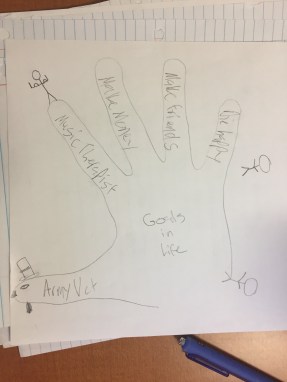 For me, though, this is an opportunity for some fun to finally happen. I ask questions. What do they want? What do they wish for? What would engage them?

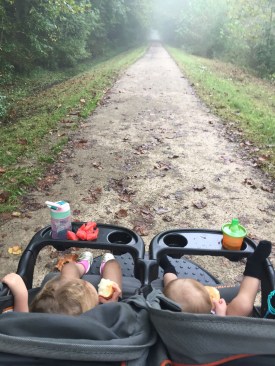 Now, two babies, three years, many pounds, and one shoe size later, I’ve finally begun to run again. It was hard at first–I could barely run a mile without stopping. I didn’t feel the famed “runners’ high” I used to: I just felt sad. Sad that I couldn’t do what I used to be able to; sad that I’d let my running identity dissolve; sad that my days of half marathons were seemingly over.
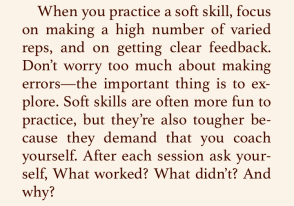 But the key to developing soft skills, as Coyle writes, is in the practice. High reps, new variations, and clear


 The reading arc of a school year is a lovely thing to witness, but an even more enjoyable journey to participate in. We begin the year falling in love with reading: a first quarter of high-interest, riveting works that match each reader where he or she is. The first days of school are filled with YA, novels in verse, pithy nonfiction, and short-but-powerful texts.
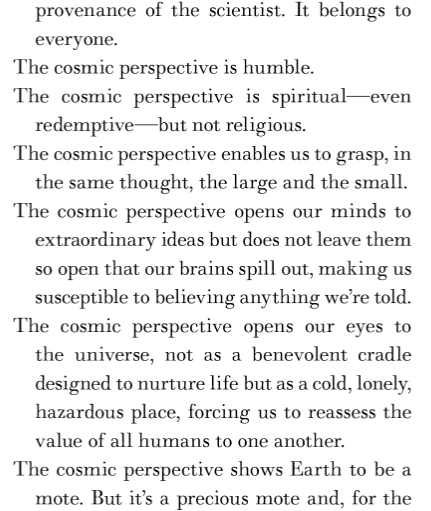
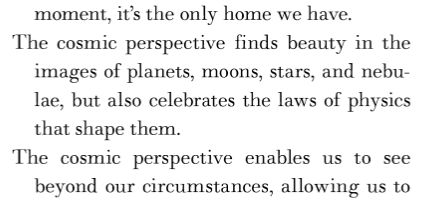

 As we plan instruction for the second quarter, we must center our students’ reading and writing experiences on the highest purposes of those endeavors, and not remain too focused on the skills, structures, and rubrics we often get caught up in. We must not fall into the trap of sharing a passage such as this one with students solely to practice craft study, asking our students to replicate Tyson’s structure without appreciating what he’s trying to say to us by crafting it.
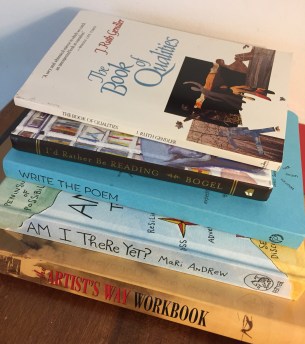 I love going back to school for so many reasons, but one of the frontrunners is definitely that “second chance new year” feeling it provides. Teachers and students have the unique opportunity to have not just one fresh start at the beginning of a calendar year, but a second shot at goal-setting, changes, and achievements that the fall offers.







 But, as ever, reading is the great escape.
 Murder-Mystery
 The Word Exchange was completely, compulsively, un-put-down-able. Alena Graedon is a new author for me, and her tale of a world that loses its grip on language once a massive tech company monopolizes and commoditizes words was, for me, perfectly timed–I’ve been a little unsettled lately by my observations about how addicted to technology everyone is, and how afraid I am of what it’s doing to my students, and could potentially do to my children. This book spurred me to action in terms of deactivating my Facebook and Instagram accounts and making a conscious effort to leave my phone in another room–to make space to just be, and be bored, and have time to think and wonder and ponder.
 The Power by Naomi Alderman was just wonderful. It had all the elements of a gripping adventure story, along with a powerful message about what corrupts us. In this novel, women develop an electrostatic power and a society shifts from patriarchal to matriarchal in the space of a few generations as a result. The effect of women suddenly becoming more physically powerful than men leads to widespread revolution in everything from interpersonal relationships to world leadership. It’s beautifully written, too.
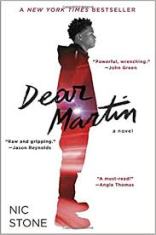 Dear Martin was a book I’d been recommended a thousand times, it seemed, but after reading so many books that felt similar–The Hate U Give, Long Way Down, etc., I just couldn’t pick it up–but I’m so glad I finally did. Nic Stone crafts this novel as a series of letters from young Justyce McAllister to Martin Luther King, interspersed with transcripts of news reports and first-person narrative. It’s complex and thoughtful and plausible and readable and powerful. I loved it.
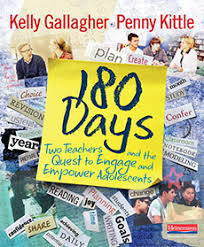 Teaching Books
 Three Teachers Talk