 Join us for a summer series revisiting our top posts from this school year, and please “turn and talk” with us in the comments section each week!
Katie’s post in 2018 details the 100-word memoir, a workshop-ready writing activity students learn much from.
We (my teaching partner, Mariana, and I) never questioned the value of the 100-word memoir, the first piece we would take through a full prewriting – drafting – revision process with our students. After all, it’s what Penny and Kelly do in 180 Days. Need we any better reason? No. Turns out, though, there is major added value we hadn’t realized about this little genre as the first text we ask of our students. (My guess is Penny and Kelly knew, but didn’t have space to elaborate in the book.)
So, here are the values and beliefs that our experience of the 100-word memoir brought to light, mostly after the fact:
1. Short pieces offer even the most reluctant writers a sense of accomplishment. Those writers who need more time than their classmates — and we all see them right away — turned in their notebooks with a complete draft within the allotted time frame. Every single student turned in a complete draft (even if the rest of their notebooks were still in progress). Just a guess, but an early sense of “I can do what’s being asked of me in this class” can set a tone of that invites rather than excludes.
2. The value of re-vision in its truest sense becomes apparent, even palatable. I’m sure we are all used to the experience of reading a student draft that gets to any substance only at the very end, close to the word count. With the 100-word memoir, more students than I can count on two hands (out of 83 total) saw this in their own writing. They were not only willing to but intent on rewriting. Questions went from “Is it good enough if I just fix …?” to “If I’m rewriting the whole thing, should I do that in my notebook first?”
3. Students begin to understand their own processes as writers. The above questions naturally led to a class discussion of the difference between meeting a teacher’s requirements and cultivating good writing. Even my youngest students (sophomores) are mature enough to understand the value of knowing themselves as writers. “Do you prefer to rewrite the draft by hand? Or will you ‘revise’ as you retype the draft into a document?” The offer of that respect to them as real writers was a major trust builder at this critical early moment in the year. The concept of writing conferences is still alien for most students. But when they called for a one-on-one conversation about whether another “first” draft was required if they were completely rewriting, a conversation opened up about their own process. Doing so, I had the opportunity to point out we were in the midst of a writing conference right then. I don’t think it’s overly optimistic (no one has ever accused me of such a stance) to imagine that any trepidation a student had about a writing conference with me was at least a little dispelled — and I made sure that fellow writers at that table who were conspicuously keeping their heads in their notebooks heard that, too.
4. Students writers can benefit by learning the art of DELETING. Kristin Jeschke writes thoughtfully here about the value of teaching students to be incisive. Our 100-word memoirs aren’t long enough for us to do literal paper-cutting (or are they … hmm), but the practice of incision with a short piece can instill this habit early on. In Intention: Critical Creativity in the Classroom, Amy Burvall and Dan Ryder discuss — among other innovative cross-curricular ideas — the notion of “creative constraints.” I’ve pretty much fallen in love with this phrase in place of language resembling “criteria” or “learning targets” (and the meanings can conveniently satisfy the paperwork of performance evaluations). The phrasing helped students to see “criteria” as a creative challenge: at best, inspiring and at worst, less arbitrary than some assignment “criteria” can be. AND, as Mariana pointed out, inevitably our seniors must cure the logorrhea in their college essays, and the 100-word “creative constraint” gives them practice.
 Usually my own post-lesson, reflection phase is a litany of all that I could have, should have done. How refreshing, then, to reflect in a way that identifies value beyond what we’d hoped. What an affirmation that our practice recognizes beliefs we hadn’t even seen.
I have no intention of giving up my private, critical post-practice litanies. But the experience of the 100-word memoir lowered the volume of that familiar, reproachful teacher-self. At least for a day or so.

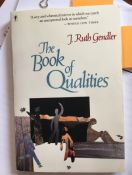 “Qualities.” This year, I’m also using this mentor text to “assess” independent reading in RWW for sophomores.
 specific to their author’s work. Scaffolding is kind of built in: less confident writers can make more extensive use of Gendler’s structure; stronger writers can even start from scratch. Either way, this task requires VERY explicit modeling, so I model with a quality that links to a text we all read together. This year, the model quality is power, arising out of our film-and-soliloquy study of Macbeth (although I think it would work with any shared text, even a poem or short story or article). Essentially, I build in specific details that are specifically text-related. For example, Macbeth’s power is “dressed in borrowed robes,” at least at first. It doesn’t walk but rather “vaults” across an entire continent with a dagger in its hand. Power’s hands never get clean, so why not just drench them in more blood? Even students who persisted in their claim that they just don’t “get” Shakespeare had their “Aha!” moment in this discussion.
 Gendler’s clothing motif in her discussion of power is convenient, as clothing is a motif in the play as well. I just got lucky there. But students are still doing a version of literary analysis of theme and turning to the text for evidence. And it’s way more fun than that albatross of high school English classrooms, the Literary Analysis Essay.
 haracters are either “normal” (Nick), or they are psychopaths (George Wilson). You’re either with us, or you’re with the terrorists. Me Tarzan, You Jane.
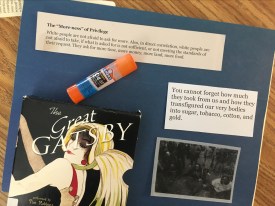 oppression, and the omnipresent concept of the American Dream. We’ve examined images from media as well as the writing of Ta-Nehisi Coates surrounding these issues. Right now, ideas are plentiful and scattered. Ultimately, though, by arranging these images and passages in certain ways, students will compose a visual argument about the interaction of these issues in the America they know. But here’s the cool part — and the iterative part: Using some magic in the form of repositionable glue sticks (yes, those are a thing — see photo!), students can arrange and rearrange the items in their collage to explore the ways various juxtapositions can reveal new understandings. AND — Maguire hopes — discover complex meanings beyond the reductive arguments that plague so much of our current discourse.

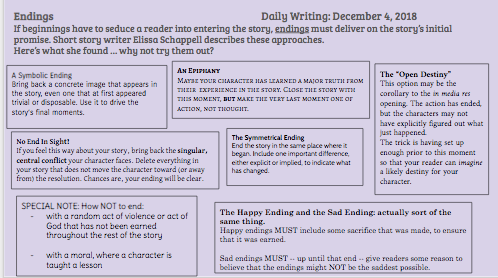

 Students wish for us to tell them what to cut out before the essay has even been developed, before the central story has been identified and fleshed out to its most meaningful degree. Mariana and I brag to students about our 100% success rate in revising with students to pare down their college essays to within the word count: possibly the ONLY 100% success rate we can boast. Still, this critical skill of letting go what isn’t needed in the writing — which also, 100% of the time, results in a cleaner, more gratifying piece — is one students still struggle with.
 Like all great lesson plans, the 100-word memoir was “borrowed” from Kittle & Gallagher. We didn’t even realize the value of adhering to this limited verbiage until we witnessed students engaging and (willingly) struggling with it. While this exercise doesn’t seem to have been quite enough to provide students with enough strategy to pare down their 1000+-word college essay drafts by almost half during revision, we found the concept of a limited word count so potentially instructive that we have decided to turn it on its head with our seniors in our second quarter fiction-writing unit.
 To heighten the deletion and word-choice challenge — and, more importantly to encourage students to boil down prose (their own and others’) to its very essence — one might consider “
 In the meantime, though, I can feel the value of requiring shorter work for both us and our students, on so many levels: precision in word choice, saying more with less (vocabulary development); eliminating redundancy (sentence variation / sentence combining); not to mention the refinement and clarity of ideas that is required to say what you mean with an extremely limited word count. Not to mention the exquisite beauty of conferring on 100 focused words as opposed to 1000+.
 This year, I recommended
  imperfect. Last year, a student was looking for “something edgy” and was willing to try transitioning into fiction from her obsessive poetry reading. So, I recommended a short story collection that a former student with similar interests had found on her own and loved, and which I subsequently added to our classroom library:
  (this from a reader who has little patience with the precious world of Jane Austen). What compels me to bring this text into our classroom, though, is the author’s response to a review in WSJ: the review suggested that the book would have limited appeal due to its “heavy use of slang,” ie, Afro-Haitian dialect. If I can do my job right, we might be able to examine excerpts of the text in conjunction with the WSJ review and the
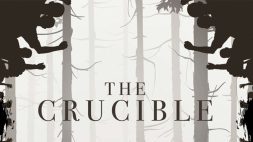 real time. My very first thought was, “I’m going to read
 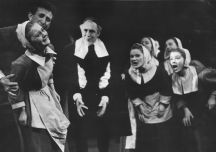 My next thought … politics. In the play, Reverend Hale is one of the few characters who exhibits any change in thinking. He observes. He listens. He struggles to negotiate his worldview when what he sees and hears doesn’t fit. Reverend Hale — indeed the whole village — experiences the crucible of accusation, doubt, and disintegration.
 literary allusions) a little more “equal” than others. And how can this “interaction of elements,” lead to the creation of something new, perhaps some power structures that need to be broken?
 We (my teaching partner, Mariana, and I) never questioned the value of the 100-word memoir, the first piece we would take through a full prewriting – drafting – revision process with our students. After all, it’s what Penny and Kelly do in 180 Days. Need we any better reason? No. Turns out, though, there is major added value we hadn’t realized about this little genre as the first text we ask of our students. (My guess is Penny and Kelly knew, but didn’t have space to elaborate in the book.)
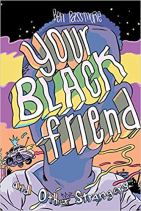 A collection of Ben Passmore’s online comics has been published late this summer as
 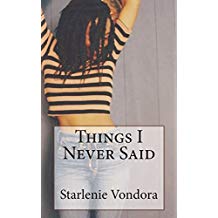 colleagues Mariana and Abdel: the same day I read Mariana’s
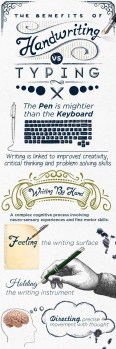 We discuss and experiment with so many ideas for students to develop the habits of a writer, even down to the practical tools — both
  lives, which Amy discusses
 Three Teachers Talk